
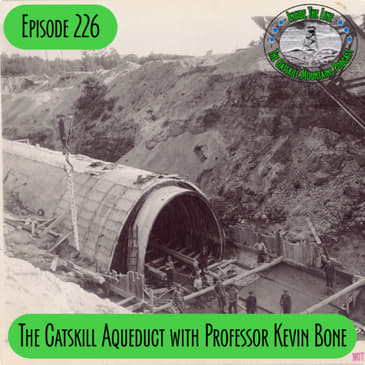
Welcome to episode 226! This week, author Kevin Bone joins me to dive into the incredible story and engineering behind the Catskill Aqueduct—one of the greatest infrastructure projects in New York history. More than 100 years after it was built, this underground marvel still delivers over 500 million gallons of water to New York City every day, requiring remarkably few repairs along the way. I also cover a hiker's mushroom-fueled misadventure in Harriman State Park that ended with an arrest, recap the results of the grueling Manitou's Revenge Ultra, and discuss soon to start construction at the Scutt Road parking lot. Make sure to subscribe on your favorite platform, share the show, donate if you feel like it… or just keep tuning in. I'm just grateful you're here. And as always... VOLUNTEER!!!!
Links for the Podcast: https://linktr.ee/ISLCatskillsPodcast, Donate a coffee to support the show! https://www.buymeacoffee.com/ITLCatskills, Like to be a sponsor or monthly supporter of the show? Go here! - https://www.buymeacoffee.com/ITLCatskills/membership
Thanks to the sponsors of the show: Outdoor chronicles photography - https://www.outdoorchroniclesphotography.com/, Trailbound Project - https://www.trailboundproject.com/, Camp Catskill - https://campcatskill.co/, Another Summit - https://www.guardianrevival.org/programs/another-summit
Links: Water Works, Watershed Agricultural Council, Nydownstate28er, Manitous Revenge Results,
Volunteer Opportunities: Trailhead stewards for 3500 Club -https://www.catskill3500club.org/trailhead-stewardship, Catskills Trail Crew - https://www.nynjtc.org/trailcrew/catskills-trail-crew, NYNJTC Volunteering - https://www.nynjtc.org/catskills, Catskill Center - https://catskillcenter.org/, Catskill Mountain Club - https://catskillmountainclub.org/about-us/, Catskill Mountainkeeper - https://www.catskillmountainkeeper.org/
Post Hike Brews and Bites - Hudson North
#catskillaqueduct #catskillreservoirs #catskillmountains #hudsonvalley #hudsonvalleyhiking #NYC #history #husdonvalley #hikingNY #kaaterskill #bluehole #catskillhiking #visitcatskills #catskillstrails #catskillmountains #3500 #catskills #catskillpark #catskillshiker #catskillmountainsnewyork #hiking #catskill3500club #catskill3500 #hikethecatskills #hikehudson
[00:00:29] The bushwhacks were some of the worst days I've ever had in the mountains, or life really Whereas Pantsy Mountain is totally opposite, it's a mountain on top of a crater I think the weather challenges on this incident were particularly difficult It is really the development of New York State, Catskills will respond to it
[00:00:58] The Catskill Mountains Podcast Alright, gotta get this audio settings, blah blah blah Where is it? Hello? Here we go, alright everybody
[00:01:19] Oh nice! Oh, right, get the settings back So tonight, I'm going solo again, sorry Tad is out with his daughter, and they are celebrating Father's Day So, have fun Tad with your daughter I'm sad to see you, hope to see you back next week And we are talking about Episode 226 tonight
[00:01:49] Professor Kevin Bone joins us to talk about the amazing and marvelous Catskill Aqueduct This was built over a century ago, and we talk about the engineering of the Catskill Aqueduct How amazing of an accomplishment this was over a hundred years ago I'm going to say that so many times in the interview That over a century ago that this was created, that this was built And it's still functioning
[00:02:17] I wouldn't say flawlessly, but it is functioning today So, once again, Tad won't be joining us this week He's out with his daughter celebrating Father's Day So, Tad, have fun Hopefully we'll see you back next week Gonna be some cool stuff next week As we talk with Kumi about the fastest known time set on the long path That will be absolutely fantastic I wanted to break it in real quickly about the Catskill Aqueduct
[00:02:45] I'm going to name off some Catskill Aqueduct facts And you can find this amazing So, approximately 92 miles long It carries water from the Catskill watershed to New York City Construction began in 1907 So, almost 120 years ago The Aqueduct was officially went into service in 1915 It was designed primarily to operate by gravity Requiring little to no pumping
[00:03:12] The system serves millions and millions of New York City residents today At full capacity, it can deliver up to 550 million gallons of water per day Much of the aqueduct is underground and invisible to public The amazing facts of it is that it crosses beneath the Hudson River Near Storm King Mountain and Breakneck Ridge Underneath the Hudson River Almost a thousand feet below the river's surface It was considered one of the most civil and engineering
[00:03:41] Greatest civil and engineering products in the world when it was built And still today, it is looked over and sought upon today Use shafts sunk hundreds of feet below the ground to access tunnel construction sites Required thousands and thousands of workers Many of whom are undergrounds Over 10,000 to 20,000 workers Build using concrete-lined tunnels through solid bedrock Some sections are large enough for a person to walk through comfortably
[00:04:08] And some sections are also large enough to be accessed by a bus even bigger Largest water system Water enters the aqueduct at the Ashokan Reservoir And later connections to the Catskill watershed reservoir Built decades before modern computers, GPS, blah, blah, blah, blah, blah It is a fantastic chat And I suggest that you stay on and listen to this amazing chat So once again, it's just going to be me tonight It's going to be like the old days 125 episodes I did this by myself
[00:04:38] I still can't believe that I did it by myself So let's break into shooting the shit Manitou's Revenge So we, I don't know if you know about this But Manitou's Revenge 53 mile endurance foot race That traverses the beautiful and picturesque landscape of our Catskill Mountains in New York State Highlighted with over 15,000 vertical feet Started in 2013 by Charlie Gattle We've had him on the show several times
[00:05:07] Rock Ascent, stuff like that So that happened over the weekend Previous weekend And I was hoping to get results I asked for results about it So I heard that someone completed it in 19 hours Which is absolutely insane That was, I don't know where I heard this from But I think it was probably online, of course, Facebook So hopefully we'll get someone on the show To talk about the Manitou's Revenge
[00:05:34] And we can get some results in soon I'm going to look up the 2025 results to see Justin Kuski did it in 10 hours So that was the top performances Oh, 2026 I don't have the Oh, oh, 2026 finishers Looks like Daniel Grip finished it in 10 hours and 29 minutes Unbelievable
[00:06:03] Daniel Peterson from Boulder, Colorado Did it in 10 hours and 36 minutes And Justin Lundowski completed it from New Jersey in 11 hours and 51 minutes So unbelievable times that people did that in So, number 4 Charlie Gettle The guy that runs it Freaking 68 years old 11 hours and 53 minutes
[00:06:34] I am now retiring from hiking This is ridiculous 68 years old Charlie, congratulations Daniel Grip, 46 years old Was the number 1 10 hours and 29 minutes So, all I had to do was go on and search this on the webpage And I found it So, sorry I asked for results everybody But amazing Maybe we'll get somebody on here to chat about that From the actual Manitou's Revenge And then maybe somebody
[00:07:03] Maybe I'll reach out to Daniel Grip from Massachusetts And we will talk about his victory on the Manitou's Revenge How he did it You know, maybe One of the, you know What felt like Stuff like that It looks like he is in third phase for fastest known time on that So, and it looks like he's also in fifth, sixth and seventh place as well Unbelievable These people are psychos and I can't wait to talk to them Unbelievable
[00:07:32] Speaking of can't wait to talk to people A hiker tripping on mushrooms makes emergency call for rescue Then gets arrested for having the mushrooms Wow, they need to also stop giving us hikers a bad name It always says hiker tripping on mushrooms makes emergency call I'm pretty sure any of us as hikers Number 1 wouldn't do a massive amount of mushrooms to get ourselves lost We would do just enough to make the trip Pretty nice
[00:08:02] But apparently this person from Brooklyn They did not receive a name but a tuxedo Which was down in the Harriman State Park After 8pm Three hours later One of the 30 year olds became overwhelmed after a verbal altercation with the group And took off running through the woods After reaching Arden Valley Road in the town of Tuxedo The man called for police assistance Likely not suspecting the call would result in his own arrest
[00:08:32] This is from Time Union When the police finally located the man He allegedly had 45 grams of psilocybin Controlled substance of felony So he was arranged in June 16th In Tuxedo town court and released his reconnaissance Released on his own reconnaissance He's due back in court on July 8th The evasion remains ongoing So once again, they are called hikers I don't think these people were hikers You take mushrooms and you wander through these things
[00:09:01] You're walking, you're not hiking So, excuse me, they need to make They need to stop making us hikers a bad name Like the people who went up Tremper Mountain On the psychedelic mushrooms And they had an altercation and got lost once again It doesn't seem like mushrooms do the trick Of having a good time out in the Catskills Or in, you know, the Hudson Valley or anywhere But they need to stop saying that these people are hikers Because they're not They're just walkers They're day walkers
[00:09:29] That's pretty bad to say So, yeah, wanted to give out that And I wanted to say this So it begins The Catterskills Clove project So the DEC Environmental Notice Bulletin Put out a public notice Of the public comment period For shut road parking lot modification So this project involves creating a new entrance Off shut road
[00:09:56] Near the northern end of the existing parking lot The new configuration will include a space At the new point of ingress Where visitors can turn around Or staff can operate the main roadway To speak with drivers and redirect traffic When the parking lot is full This work will include the removal of 26 trees Over 3 inches in diameter breast height And 18 trees less than 3 inches The new area will be graded and surfaced with gravel The project is located, of course, in the Catskill Wild Forest
[00:10:26] In the town of Hunter Public comments on the proposed work plan Will be received until June 24, 2026 Wow, they gave us What the fuck? They gave us like a week to come out with this That's a little thing I got this probably last week about this So thanks a lot This really doesn't do anything for us Sorry everybody But, so parking lot modifications It's already begun So they're gonna have an ingress
[00:10:56] Area located at the northern part So at the top of the part Where you're coming into the north-south lake region That's probably where the ingress Egress will flow out towards Towards the bottom part of the parking lot So definitely gonna be interesting So as we see that That's as we say As I said And so it begins So That was a great Time of shooting the shit, Stosh Thank you, appreciate it
[00:11:26] Let's thank the monthly supporters Chris Garabine Eric Rosario Jeff Jotz Vicky Furr Mikey S Henry Burmeister John Comiskey Summit Seekers Desert City Radio Betsy A Denise W Vanessa And Jim C Thank you guys so much for supporting the show Greatly appreciate it You continue to make me going So I really appreciate it So, also Discover Camp Catskill in Tannersville Your ultimate hiking store
[00:11:53] Find top quality gear, apparel and accessories For all your outdoor adventures Expert staff is here to help every hiker From beginners to seasoned pros We also carry a variety of unique Catskill souvenirs And gifts like t-shirts And much more Visit us online at campcatskill.co Or in the store to gear up for your next journey Adventure starts at Camp Catskill Also, embark on a transformative journey With another summit Another summit is dedicated to serving veterans And first responders
[00:12:23] With free outdoor activities Activities like walks in nature Paddling, hiking And even backpacking Join our supportive community To rejuvenate in nature's embrace Experience commodity, adventure And healing at no cost Take your next step with another summit And ascend to new heights of resilience and joy Apply today on another summit.org So the big question is First question is Are you really outdoors?
[00:12:52] You mentioned the podcast on one of your hikes Through social media And we or I'll chat about it on the show Tag us by typing at ITL Catskill MTM podcast On your post through social media Once again, Facebook is weird So if you tap If you tag at Inside the line The Catskill MTM podcast It might come up It might not I have a tough time tagging Everything on Facebook So hopefully everybody has an Instagram
[00:13:19] But it seems to be a lot of people have Instagram So let's start off with Joe A.K.A. Jake Did not see a turkey on Turkey Mountain But he does get the tag of the week Because he is a super cool dude And he is killing the New York's downstate New York downstate 28er list He also did break next ridge traverse as well So Joe, once again congratulations on ripping up the New York downstate 28er list
[00:13:46] I will tag that in the show notes Once again, when Tad here He gets to go on talking And I get to tag the I get to write this down But Stater 28 list So 28er New York downstate 28 Sorry, 28er list There we go And Next Todd Tebold Outdoors
[00:14:14] He completed his New York downstate 28er list And he also hiked Black and Erebus Mountains Working on that Lake George 12ster And also went up Cray Mountain in the Adirondacks So once again, Tad asked this before Todd does this a lot And he is not retired You know how people have time to do this man In America We can't not have fun We need to just work our asses off until the end So congratulations Todd Todd
[00:14:43] Great to hear you get out there kicking ass Speaking of kicking ass Serena Marie 48, 46er Once again kicking ass Serena Marie, 46er Hiked five towers in the Catskills And was looking at a six But tornado warning stopped her Then it went on Two day in Hadley Spruce Black, Swede In the Adirondacks And then I don't know Let's see Hadley Spruce fights With about 14 fire towers later
[00:15:11] Completed the fastest known time Of the fire towers In the Adirondack fire tower challenge So, Serena Congratulations Everybody wish her congratulations online She got the fastest known time Of the fire tower Adirondack fire tower challenge Up there So, she gave me stats Give me one sec To access this Once again If Tad was here He'd be chatting And I would be looking this up So I have to Go back
[00:15:41] There she is She said It was 108 miles Hiked 30,000 feet of elevation gain And drove 860 miles So, amazing Said she ran into Sean And chatted about how we always talk about His lawn His lawn is very nice So, Sean Good job on your lawn So, also good job Serena Marie Good job on doing the fire tower challenge Great chat that we had with you Doing the fastest known time Of the fire tower challenge Down in the Catskill
[00:16:11] So, then we got Mike At Red Hand Adventure Guides Enjoyed watching eagles On a hike in the upper Delaware Scenic area Jeff Jotz and Orlo Were down in the gunks On Blaze and Unblaze Trilled Enjoyed their traditions of Stewart's ice cream Vicky Hiker got his adventures Did Rocky and Lone Then went up Gertrude's nose And did something else today Once again I got back in such Did a lunchtime view somewhere
[00:16:40] Taconic 12 or so Yocon Seat So, that's a pretty cool place Yocon Seat Taconic 12 or I want to get on Taconic sometimes Got to get over there It's a little bit of a drive So, I have to think about it Joanne Beyond Blazes Without a high peak On a beautiful day Lisa Chaotic Quazotic Was up in New Hampshire And summited Flunum and Liberty Beautiful area I got to admit I love New Hampshire
[00:17:08] Then we got good old Danny Mildly mischievous Was out with Joanne And ran into the Rachel Jean The Gypsy Queen Up on one of their hikes We'll talk about that later Shana Shae 315x Did Westkill For her friend Kathy's 3500 finish Congrats Kathy And then Shana went on And did Balsam Lake Mountain Afterwards Seriously, you don't know How you guys do this stuff
[00:17:37] Especially with all the driving Maybe it's on the way down Back to your house That's amazing And then we got this guy Scott Catskill Mountain Brew With Zorro Did Plateau Mountain Before heading to the Adirondacks And while up in the Adirondacks He did Colden, Grey, Skylight, and Marcy 21.2 miles With almost 6,000 feet Of elevation gain And then did Easy Day Hike of Van Hoverberg And Collable Hill Scott, you were crazy I think that sounds
[00:18:06] Like a listener episode Yes, definitely Rich at Richie's Nature Escape Did an overnight with the kids Involving 4 miles of hiking And 2 miles of bushwhacking For Father's Day So Richie is training his kids To be an awesome future Search and Rescue volunteer So good job Richie Glad to hear that you had A good Father's Day Hopefully it evolved A bunch of brews So that would be nice Hiker Joey NY Was up at Rocks Rondacks Fire Tower
[00:18:35] On Bald Mountain That did the Fulton Chain Trifecta And Stillwater Fire Tower So good to see you out Back out Hiker Good to see you out Hiker Joey NY I always loved seeing your stuff Andy, aka Brownski Did Bear Mountain Via the Major Welch Trail And the Appalachian Trail And then paddled Lakes, Kanoawakee And Welch on Sunday So getting out These beautiful woods We had an amazing weekend
[00:19:04] This weekend was absolutely phenomenal To be out I was unfortunate not to get out So wanted to so bad But I was restricted Father's Day Yeah Next time I'm just gonna say Screw you, I'm going out But So thank you Everybody Who tagged the show Probably over 15 tags Which is amazing Once again for a small Catskill thing And it's just great to see Once again Danny and Joanne Met Rachel Jean The Gypsy Queen
[00:19:34] And they all recognize each other They all had a great time Took a selfie together That I was Like crying about That was just absolutely fantastic To see stuff like this And then Rachel Jean The Gypsy Queen Is out with Long Island Hiker And doing Sean Doing his stuff And it's just It's just crazy To see that this community Is coming together With just the The small Horrible podcast So
[00:20:03] Greatly appreciate you guys Tagging the show Everybody tagging the show Everybody getting out And doing Leave No Trace And Presenting that positive Inner energy out So It's really great to hear Also If you think We are doing a good job Buy us a hard cider To support the show On buymeacoffee.com That is also Buy me a cider I change it I change it The cider And you can just Buy us $5 cider And it goes towards the show And towards the Catskills Really
[00:20:33] You know the sponsors And the supporters And the people Who do buy me coffee Goes right back Into Catskills After Doing whatever we do For the show So Also rate the show On any platform I don't know how you do it On all the other platforms And stuff Just find it out Google search it And I maybe Put that in the tags I guess As you all heard In the beginning Cracked open A good old Hudson North Salted watermelon This is like my
[00:21:02] Eighteenth time of having this You know why? Because At Hannaford At my local Hannaford They had them on sale For $6 So What did I do? One day I bought Four four packs And then the next day I bought Four More four packs So And that equals Four Four Eight That's Four Eight Twelve Sixteen No it's Thirty-two Hudson North hard ciders
[00:21:33] Hey Deal Inflation's high You gotta take the The The Wins when you can get them Right? So yeah So previous hikes So last week I mentioned that I went up Friday And I was kinda hoping to chat about this With With Tad on the show For this week But I didn't get to Because Tad's not here Of course So I'm gonna chat about my last week Thrill hike up Friday So I hadn't been to Friday since
[00:22:01] I think it was around like 2022 I would think 2023 maybe So it's been a while So it's been like three years Which is insane Because Friday is one of my favorite And I was Like just like saying Maybe I go It's a little bit of a drive for me It's probably an hour and 40 Hour 45 minutes To get down there Give or take And You know It's middle of nowhere It's high elevation gain So Not that I was
[00:22:31] I was not craving that But you know It's It's a lot of elevation gain 2.5 miles You can around 2700 2800 feet of gain It's pretty Pretty brutal So If anybody Wants an introduction To like New Hampshire peaks I would suggest doing Friday Over and over again Because that's basically what it is Besides being the bushwhacking And trail finding It's basically Up Up Up Up In New Hampshire So that's That's one thing I was gonna say
[00:23:00] Another thing I was gonna say I started off this hike And When I kind of thought about it The night before Where I was like I am not going to Look at my phone At all Or look at like Maps or stuff I mean I was just gonna use Fully Rely On the informal trail A.K.A. Heard path I was gonna rely on the Heard path To see How Well it's defined How it could take me up How far it could take me up At the mountain
[00:23:29] Without actually looking at my phone And I would have to say 99.1% Of the time I Was just following the Heard path Following the path And It was actually Not that bad I would say Besides the brutal gain That goes Constantly And only like Stops maybe like Once When you get up to the certain part Before the Somewhat cliffs and rocky bands There It wasn't that bad
[00:23:58] I kinda got Lost Maybe I would say Twice There's parts There's parts Where you hit Sort of rocky Legey areas Where of course The rocks They don't have any Kind of like Foot patterns With the Trees The leaves And stuff like that You only have the rocks To guide you And then of course You know You might Think that you're going straight And like Ah it leads right up to this little Climb right here
[00:24:27] But no it takes a left And then it goes around that So There's one or two spots That I kind of Was questioning Where I was But As I drifted a little off I saw the herd path And I got right back on it So I would say That It was Pretty good Pretty fantastic day A little buggy A little warm in the beginning And then later on It creased in warmth And humidity And I was sweating Profusely But other than that It was fantastic Got up to
[00:24:57] Everybody calls it The pregnant tree But I call it The boob tree So that's Once again I'm going to take a swig of this Hudson North Because when I get to I get to take swigs of this So But Got to the boob tree Hung a right And Started to go up Friday Mountain The brutal climb that goes up Friday Mountain You go right past You know The Famous Ralph's ramp
[00:25:25] We've called that because of Ralph Rindach The legend of the Catskills That has hiked Friday Mountain Hundreds of times I would say Friday in Balsam Cap is his area He lived down there He hiked it with his father Previous decades Stuff like that And I actually I'll I'll I'll say it later I stopped over at his house later And had a good chat with him But Went up above Ralph's ramp To the beautiful And absolute stunning One of my favorite viewpoints In the Catskills On Friday Mountain
[00:25:54] They called that Hermit's Ledge I've been confirmed with Ed My buddy that was over in the Catskill Search and Rescue Team I remember that they called it Hermit's Ledge And it is absolutely amazing Showing Cliffs of Friday Devil's Path You know Hunter or Plateau And then most of that And then The amazing Ashokan Reservoir And Ashokan High Point And then Good old Balsam Cap Absolutely phenomenal view The bugs were a little
[00:26:25] Out there Not too bad But Hung out a little bit Had something to eat Had a snack Had some water Kept up in the hydration Started the Crazy ascent That right there Begins the ascent Going up Friday That is just I would say It's definitely If they start These informal trails That it's not going to be used Because It is Brutal Unless they start Cutting down this blowdown And rerouting it Because it's just Totally erosion Total blowdown
[00:26:55] All over the place Ducking Curving Herbaths going In and out Of these areas It's just disgusting And if you look at it on the map A lot of people will be like Oh I've already battled The elevation gain This is going to be easy From Hermit's Ledge up It's not It's a bitch And You got some climbing To do and stuff And once again The erosion Slippery It's always wet There's blowdown I mean I kinda It's a bitch
[00:27:24] But I like I love that stuff And then you get up to the top You gotta move a little bit For the canister Found the canister Signed in Saw that there was one person Before me His name was Rob I don't know if he listens to the podcast But Good to See your sign in Rob Hung out on the The canister for a little bit Beautiful view from the canister I think that's bits That's Actually The place The only place With a view from the canister
[00:27:53] Correct Yeah Actually So Beautiful view from there Hung out up there And then I was ambitious I was like Huh Let me Go West And then I'll go to Like the call Friday at Balsam Cap And From there Maybe I'll decide If I want to summit Balsam Cap Or not And I started to do that And then I found A place of where It looked like
[00:28:24] There was a previous fire So I was like Holy shit Was there a fire A fire here on Friday? So I contacted Ranger Russer Rusher And I was just like Hey man I looked I saw there was a fire Up here on Friday He's like Oh yeah That was Last year During the load And Rocky fire The Rocky fire We also had another one on Friday And then another one on Cornell I was like No shit I don't remember this one on Friday So This is right on the herd path
[00:28:54] Maybe You know It flew by my head And stuff like that That I didn't remember That this was on there But I was just like God damn It looked like they had to Uproot trees And dig And throw around Cut down trees It was crazy And just Once again Very thankful Of the Rangers Going up there And doing their thing Hauling 20 freaking 7 2,800 feet Of that stuff To dig out It's just Absolutely insane So Rangers Hopefully we'll get them On the show
[00:29:24] Maybe later Their battles With the The Rocky fire The Friday fire The Cornell fire That'll be actually Pretty cool So hopefully we'll get with them But as I saw that I started descending the coal And You get some Gritty cool cliffs And it's It's gradual It's nice and gradual And You know Just seeing the Formations Kind of like Of rock It just I was drawn to it So I would roam around Check out this area Check out that area
[00:29:52] And as I was making my way down I felt that I was not On the right path That I lost the herd path And I was like drifting A little off And I was I was actually drifting More towards The west Than I was Towards the southeast That I wanted to go And once again That's That's the big part Of navigation Of where You Kind of feel like You're like Oh yeah I'm going down But
[00:30:22] Once again I wasn't going Like this south That I wanted to go The southeast That I wanted to go I was going down But I wasn't going southeast I was going straight up west And that's That's Pretty crazy I would have been off course But I felt it Once again You feel it Check Once again Check And I was off course So I made my way back southeast And I was heading to Hermits Ledge And I Caught my foot On this This tree When I was freaking Going through this area
[00:30:51] This blow down And I fell Broke my hiking pole And then Smashed my shoulder On the tree That I fell on That I tripped on Or another tree And I got a nice bruise Right here My chin's all banged up It was fun That's the true joy Of bushwhacking You're like Motherfucker This happened But then you're just like Oh that was pretty funny Man what an idiot I am How did I do that And Just Bushwhacking is fun I love it Plowing through the trees Not plowing through
[00:31:21] But you know Least path of Least resistance Is what bushwhacking is So Made my way over to Hermits Ledge And I got the viewpoint again And I had a beautiful view I stopped and had lunch Had some chips and stuff Caught myself full And then In my head I'm like Shit I have Only 2.5 miles to go But I have a loss Of 2600 feet That's a lot That's a lot That's a lot of loss
[00:31:50] If you think about it So As I start going down I usually rely on my poles But I have one broken pole So I put that pole In the backpack Was going down on one pole And it felt so weird And as I I get more and more down the trail And stuff I think the The boob tree The pregnant tree Is hidden now So It's not like The turning point anymore That was You know 3 to 5 years ago Or when I first ascended This mountain back in 2016
[00:32:22] You know It's not well As you can see it As now So Fly pass down that Once again Going down I didn't really need Any of the GPS Or something like that I just followed the herd path Kind of like the crunch leaves And stuff The crunched Pine needles And it was smooth sailing And Got back down to the car You know Went over to the Wittenberg Brook Ducked my head in Got cooled off and stuff
[00:32:50] Very very delicious And then I was like You know what? I'm gonna check out My previous tracks To see How much In the previous times I'm pretty sure I hiked this like 10 times That I followed the herd path And in Like out of those 10 times I would say twice I followed the herd path Every other was a different route I either Started too far Or too early up the mountain
[00:33:19] Or that I went Like a little bit Before the herd path started And I followed more of a drainage Logging route And then there was one where I just Completely missed it And went beyond it And searched for a different area And climbed up some cliffs So it was really interesting to see your Past, you know, routes that you've done On a bushwhacking route Compared to when now There's more of a dominant herd path To see that
[00:33:47] And I suggest everybody do it You know, I've been hiking in the Catskills Ever since 2015 To when there was Barely any herd paths Until you got on the top of the mountain You know, like North Dome, Cheryl Stuff like that You know, now there's dominant herd paths Where you can just fly up the mountain As of Friday, you know 2016 when I first hiked it You know, it was Nothing I just Kind of I would say guessed I would say
[00:34:16] And just had relied on my GPS system At the time And my map and compass skills So, and then I gotta admit The second time I hiked it I ended up almost near the cabin That's over off to the south Of that area So, yeah It's crazy to see that So, once again Check on your old maps And stuff like that To compare your routes To see if you were like me And you just drifted off In different areas You know, the last time I hiked it I kind of feel bad for my friends I took my wife, Jessica
[00:34:46] My friend, Mark up there And I went up a drainage And it was horrible Just, and I apologize to Jessica So, that was my previous hike Back last week So, I wanted to go into Insane detail about that So, thank you For letting me blabble on Catskill News Volunteer New York, New Jersey Trail Conference 3500 Club Catskill Trail Crew is doing work on the weekends Catskill Mountains Clubs
[00:35:15] Visitor Center Jolly Rovers Trail Crew Such Volunteer as much as you can It'll be the greatest Any volunteering makes a difference In the Catskills Also, if you need stickers Get a hold of me This weekend I'll be going to Tannersville So, I will drop off some Stickers If I have them I do have them I'm looking over here I'm just like, shh Shit, I need to bring these Hell yeah Got some stickers
[00:35:45] Get down to Camp Catskill In Tannersville I'll be down there Stopping by this weekend So, let's Break it into the weather forecast Here is your weekend weather forecast On Friday, June 26th Expect morning clouds Giving way to intervals of sun A few scattered showers Or brief thunderstorms Are possible Mainly in the afternoon Summit temperatures
[00:36:14] Will be generally in the mid To upper 60s Moderate wind from west to southwest Will be on exposed ridges And humidity will be lower than normal On Saturday Expect a mix of sun and clouds With cooler and comfortable temperatures In the mid 60s to low 70s A slight chance of a passion shower But much of the day looks pretty dry On Sunday Expect it to be the warmest day of the weekend With suns and clouds during the morning An increasing chance of isolated
[00:36:43] Afternoon showers or thunderstorms Summit temperatures will be climbing Into the low 70s With late northwest winds Once again, it looks to be a great weekend To get out and grab some peat So don't forget to be safe Be prepared And don't become tomorrow's rescue story Have at it, Stash Thank you for that weather forecast Hopefully people are prepared Alright, so let's get on to our last set of sponsors And then we'll get on to Kevin
[00:37:12] Talking about the Catskill Aqueduct The amazing, marvelous piece of engineering history That changed New York City And the Catskills as well So, capture your love story And gets breathtaking backdrop With Outdoor Chronicles Photography Molly specializes in adventure couple photography And she'll immortalize your moments Miss the stunning landscapes of the Catskills, Adirondacks, and White Mountains She'll craft timeless images that reflect unique bond in nature's grandeur
[00:37:42] Embark on an unforgettable photographic journey with Outdoor Chronicles Photography Don't hesitate to get a hold of Molly on all platforms Also, discover the wilderness with Trailbound Project Our expert-led hiking and backpacking education programs Offer unparalleled outdoor experiences Whether you're a beginner or seasoned adventurer Join us to learn essential skills to explore stunning trails And connect with nature Start your journey today with Trailbound Project
[00:38:11] And unlock the wonders of the great outdoors All right, so let's get on to the guest of the night Tonight, author and professor Kevin Bone Joins us to talk about the Catskill Aqueduct So Kevin has an amazing book called Waterworks What, how, I, I don't remember I didn't write down the full thing, so sorry Waterworks, what is it again? The Architecture and Engineering of the New York City Water Supply
[00:38:40] Okay, I looked into that book And Kevin, that book is highly priced now Is it like an antique? Do I have to like hurt somebody to get it? Yeah, well, someday we'll meet in the Catskills And I'll bring you a copy Oh, I, I would look for it I look forward to it But if you, if anybody's looking to purchase this I mean, I can't say I highly recommend it Because I haven't read it But I highly recommend it because I've read bits and articles online And Kevin's here to talk about the Catskill Aqueduct
[00:39:10] How it has kind of reshaped history Of bringing water to certain places Especially the Catskills And it was an engineering marvel of the world This was built in the early 1900s We're talking over a century ago That this was built And it's still doing well today With minor improvements So, Kevin, sorry for me babbling Welcome to the show, sir Thank you very much It's my pleasure And it's my, it's always my pleasure To talk about New York City water
[00:39:39] And I'm going to talk a little more generally About New York City water Than just the engineering of the Catskill Aqueduct I started doing my homework for this podcast A couple of weeks ago And I think that there's a very important message That people in the Catskill Mountains need to know about That has more to do with maybe the last 40 or 50 years And our water supply system Than the historic details of the engineering
[00:40:08] I can go on and on and on About the historic details of the engineering It's an incredibly, incredible story Magnificent enterprise A human undertaking A time when there were incredible innovations Technologically Innovations in concrete Innovations in hydrologic engineering Innovations in labor I mean, a lot of important labor movements Or labor practices were implemented
[00:40:38] But I really thought I would talk a little bit more About what has happened since World War II Relating to our water supply I hope you don't mind that I'm tacking it off on this I mean, we can go back and forth about You know, like the engineering and stuff like that And then you can just tack in a little bit about that Because... Awesome We'll go free-form here Because they are really related Okay, that's perfect That's... I mean, I am, of course, more interested in the engineering
[00:41:07] Because, you know, the 1900s, man, that's insane But first and foremost, let's give the listeners a little background about yourself You know, you can go far back as you want, sir All right, well, my interest here is when I started teaching architecture at Cooper Union Back in the 1980s, the late 1980s One of the things I did was to teach architecture through non-conventional architectural sources
[00:41:36] And that included industrial facilities, engineering works, and infrastructure And in particular, industrial facilities, engineering and infrastructure works that related to New York City So I started off my work in New York City studying the harbor and the piers and the wharfs and the sea walls And we did a book on that in an exhibition And that kind of led to a little bit of a reputation we had at Cooper Union
[00:42:05] Of helping the city deal with the records and the archives of these undertakings in its past The city is overwhelmed in terms of caring for its historical records And I was approached by then-Commissioner of the DEP, Al Appleton Who we can talk about a little later in this discussion
[00:42:28] And he had a charge of about 30,000 square feet of records in a facility in Manhattan That went back to the earliest days of New York City's water supply Incredible, incredible historic documents And he asked if we would help Because they had a hard time imagining a contract Of how somebody would actually organize and care for all of these records They were chaotic
[00:43:00] Treasures were in danger of disappearing In fact, many incredible things did disappear Watercolors of Central Park Reservoir details And things like that This happens in city archives Little treasures end up over the some commissioner's fireplace mantle or something But anyway, we spent a number of years Myself and my colleagues at Cooper Union Working for the city of New York
[00:43:28] To organize an archive that probably has a million pieces in it Wow Yeah, including thousands of glass plate negatives Of photographs of the Catskill Mountains Of the routes that the aqueducts might ultimately take You know, it was really beautiful historic material And that kind of set us on a course to study and tell the story
[00:43:57] The more I looked into it The more I came to realize that this is actually one of the most important things about New York That we have good water It is arguably one of the best large-scale urban water supplies on the planet It is We have been building And continually operating a water supply system that has served millions of people
[00:44:23] For, you know, 180 years The only time that that really stopped And it didn't really stop was during World War II The really big construction stopped in World War II Because the machinery was not available But generally, we have been planning for and building water infrastructure continuously Wow And this all like, once again, just like me You know, I read something about the reservoirs, you know
[00:44:51] I realized the reservoirs were up here And then I started reading about it And then I started, it's like it started a wormhole of me going into this stuff That's what kind of happened with you It's like you found these pictures You found this research And now you're writing books about it Well, you know, the story is interesting And I met a number of people that know much more about it than I do And I brought those people together to help on this To consult on us putting together this project
[00:45:19] And the project being, you know, the organization of the archives Ultimately a major exhibition at Cooper Union And then this book that came out of it And Let's just go back quickly to I don't want to go too far back But New York City, an island city Like the island city behind me on the wall here Venice, I don't know if you're seeing the picture
[00:45:46] But it was famously troubled for its water in the early years New York City, which was Manhattan primarily at that point Got its water from wells that were drilled on the island Dug on the island The water was notoriously poor quality It was actually said that the horses from Philadelphia Wouldn't drink out of the wells of New York City water It was contaminated with cholera, dysentery And it led to a lot of problems in early New York City
[00:46:15] And there was not enough water for fighting fires The fires led to problems So the drama of supplying water from New York City Once it got going in the 1830s has been continuous And they built, of course, this fabulous system That was famous worldwide The Croton Aqueduct Early on By the late 1840s We were getting Croton water And it was studied by people from all over the world
[00:46:44] It was a magnificent engineering achievement For a little perspective If we take all of the water All of the aqueducts that supplied water to Imperial Rome It's like a system of six or seven aqueducts It's maybe, you know, the archaeologists And the people who study this Say maybe between 18 and maximum 25 million gallons per day The Croton Aqueduct When it first set up and got running
[00:47:14] Was delivering 300 million gallons of water per day I hope I have that statistic right But it was by order of magnitude You know, the largest water supply that had ever been realized And when they built it, they said This is going to, you know, take care of New York City's needs for 100 years This is the greatest thing that's ever happened Well, in about 20 years, it was not enough water Because no one had any idea how fast the city was going to grow And how the need for water was going to increase
[00:47:44] It's interesting When people have water When people get water, they use more water The Croton system was It's like 45 miles away, correct? North? Correct, yeah Okay, so that was the first part of the aqueduct system Sorry to interrupt Just to have people have a perspective Yeah, 45 miles away They built a brick aqueduct Wow That is on a hydrological gradient Meaning it's like a river It just flows naturally downhill
[00:48:14] And it's probably about a drop of 50 feet From where the water entered down to New York City And it was able to deliver water under pressure That was also a really, really beautiful part of New York City's water supply But by the... In the post-Civil War era, as industry was growing up And the population was growing That water supply system became stressed
[00:48:41] And they began to look across the river to the Catskill Mountains They began to explore New York City also went through dramatic changes And the... In the... At the end of the 1800s Through consolidation When the other boroughs joined New York City So suddenly New York City's population Quadrupled just by the vote of people to join People that actually voted, by the way The boroughs voted in large part
[00:49:08] To get in on the utilities that New York City was building And in particular water Brooklyn was stressed for water Staten Island was stressed for water So this promise of this infrastructure was appealing And part of the reason that the metropolitan area Became what the metropolitan area was So anyway, that... What gets you excited, Stanley And what got me excited Was this era of the building of water infrastructure
[00:49:38] On an unheard of scale in the Catskill Mountains Aqueducts that are 95 miles from the point of collection Down to the city And that aqueduct building That reservoir building That dam building Happened really from about 1910 All the way up to 1950 In the Catskill Mountains And we ultimately went over the mountains To the west side of the mountains
[00:50:04] And began to develop Delaware River water And that was A much larger scale Those aqueducts became deep tunnel aqueducts The Catskill aqueducts are like the Croton aqueducts In that they are generally On a hydrological gradient They're not under pressure, they flow like a river So that's...
[00:50:31] You know, the Catskill aqueducts still had its foot in one century But it began to be addressing modern science The real innovation with the Catskill aqueduct The real engineering achievement in the Catskill aqueduct Was going under the Hudson River Yeah The aqueduct is a thousand feet below the surface of the Hudson River Where it goes under That's, you know, then, you know, can
[00:50:58] We just like to take a step back and then talk about, you know, when it was created and stuff How did they realize, like, you know, this Ashokan With all these towns Will be a perfect spot for it to be built To be dammed up to be a total reservoir system Like, is it just because, you know, there's several facts that a lot of people don't know about the aqueduct You know, it's gravity-fed There's no pumps, which is insane
[00:51:25] To think that 95 miles flows like you said, like a river Just keeps going down and down And, you know, was that kind of like What drew them to right there, you know, Olive Bridge area And be like, hey, let's build a massive reservoir here All right, well, a few things drew them One is more or less reliably 50 inches of rain a year Okay The Catskills are wet And two is the geology
[00:51:53] The bluestone geology of the Catskills is perfect for water collection The bluestone is, you know, a limestone mountain range is going to be hard water It's hard on the system It's not as good to drink So the bluestone was famously clean, pure water And second there, like Olive Bridge The geology is fairly solid below the surface So you can build dams on that You're not building dams in the mud
[00:52:21] So the combination of availability of water Reliability of water And geologic suitability Geologic suitability for the structures And geologic suitability for a route to come to the city Was what led this I mean, it was a decade of planning It was a decade of planning of several hundred engineers Working to figure out the best route They drilled thousands of borings all over
[00:52:50] To determine the subsurface geology Because wherever they were working They were going to be engaging the ground and the surface And ultimately that aqueduct would have to pass through valleys And there would be siphons The Catskill Aqueduct is a combination of You know, a covered aqueduct on the grade On the surface of the land Occasionally passing through a siphon Where it drops into steel pipes And goes through a valley and rises up
[00:53:19] In those cases, it's under pressure It's the nature of a siphon And then the pressure tunnels of the Like the gigantic siphon that goes under the Hudson River Wow. Now 1907 Let's picture 1907 And it starts Now, going 1907, 1915 When it began When the Catskill Aqueduct was first Kind of working and running How does this
[00:53:49] Like we're talking over a hundred years ago How could this happen? Like I... We're just... We're not just seeing trains But trains are kind of coming up Or into the Catskills and stuff Like digging, building, concrete, stuff like that It's so easy today compared to when it was in 1907 How does that... How does that... On that scale... Go to bow Well, there were labor camps of thousands of people There was... And there was a kind of light gauge rail
[00:54:18] That was built along the lines of the aqueduct That would move materials So the rail would advance along The materials would be placed It would be dug Debris moved out The process slowly moved along Of concreting the aqueduct down this hundred miles But a lot of this was done with animal... You know, animal-driven machinery Wow! And all this stuff is still intact today Like minor improvements We would say, right?
[00:54:47] The Catskill Aqueduct The primary Catskill Aqueduct I believe has been watered continuously Since they first brought it online Holy crap! That's insane to think about Yeah, it is... And it's done really well Yeah... It's done really well It was quite innovative shape It had very little reinforcing steel in it Which was an asset, believe it or not Because that reinforcing steel
[00:55:16] at the surface would corrode Wow! Reinforcing steel in deep sub-pressure tunnels But there's almost no oxygen there And corrosion is much less evident, you know? Yeah... Because there's no air But anyway, the... The... The... The Catskill Aqueduct was well-built, you know? And it was built with a more or less 100-year timeframe for durability And we've exceeded that for the most... Yeah... I would say...
[00:55:45] And now when we talk about the aqueduct total Like, we have different parts Like you said steel There's... There's concrete around parts There's... Like rock and concrete Like all these different places Once again, they had to go and like Do some boring and stuff To find out what they would have to deal with When they dug it underneath them What they'd have to build, correct? Correct. I mean, since we're heading down the engineering road here Sorry, sorry
[00:56:12] We'll stay on the engineering road here for a bit When I discuss this with my wife About what I might talk with you about And I... And I... I said I wanted to talk a little bit about What we've accomplished environmentally In the Catskills And not talk about the engineering She said that's good, you know? Because nobody's that interested in the engineering Oh... See, I have you here, so... Kevin, I... I want to tell you how... How many people from this podcast Love the history of the Catskills
[00:56:41] They are... Like a lot of them want more of the history Because, you know... Like this Who... Who preaches and teaches about this And knows about this amazing piece of engineering marvel That was... Built beyond the scale In the 1900s Like... Like insane And... Like... What? Nine years? Nine... Or seven years that it was up and running Like that? You know, the Catskill... I mean, yes Pretty quickly it was brought online
[00:57:10] Because it was a necessity to get water In fact, they were running water into the aqueduct Before the dams were fully complete Oh, wow They were diverting water from the rivers Into the aqueducts to get it downstream Sorry, sorry to throw you off Sorry The concrete was... Concrete was, of course, a building material That goes back to the Romans But to get the strength of concrete that you need That can perform in a constantly wet environment
[00:57:40] Took a lot of chemistry And a lot of research into the specific formulation of the concrete And what I love about this whole thing is That research was done by employees of New York City It was not outsourced to some big corporation or university There were scientists in the basements of buildings in lower Manhattan That were working on concrete formulas And they were very, very particular about how the different components would be prepared
[00:58:10] And how they would be mixed And the testing of it to verify that they would get the strength that they need And that... And they tested relentlessly That the batching that was being prepared in the making of the aqueduct Was meeting the expectations of the engineers The specifications that the engineers had laid out So all in all The execution... The design and execution of the thing was a marvel
[00:58:38] In terms of our capacity to realize large scale structures at that time This was kind of advanced by the possibilities of using steel cables for hoisting To move large pieces of stone and barrels of cement around And that all came... The steel cable revolution was really put into high gear with the Brooklyn Bridge And then those steel cables became something that could be used anywhere
[00:59:07] Because you can't really move, you know, ten-foot pieces of blue stone On a rope hoist They were using... They would set up essentially gigantic... Kind of almost like ski lifts across the valley That they could move pieces of stone into position on the dam Wow So a lot of the... The technology is not just the dam itself Or the... The end product
[00:59:37] But the technology is also the protection methods How... No way... When they were planning this and stuff I mean, I could almost answer the question Why was gravity chosen? Like... Of course, no pumps So that means less... Less building Less kind of just... You know... Planning and stuff like that But... Gravity... Who basically said like... Oh... Wow... We could bring this all the way down to New York City 500 million gallon... Billion or billion? Billion... Billion...
[01:00:07] Billion... Billion... Billion... You know... That was the way... Gravity is a good way to move water And you go out west to this day Huge farms are irrigated by gravity-fed ditch irrigation I read in preparation for this Cause I was thinking about the energy one uses in moving water around
[01:00:32] 20% of California's electricity goes to the movement and treatment of water that's kind of staggering because California, you know, they have to pump a lot of water from the north to the south and they have to pump it up over a mountain because it doesn't go through a deep rock tunnel. And all over the state, they're pumping and moving water. And the point
[01:00:57] being there, Stanley, is that water, if you ever have a well and you're pumping out a well, you know that pumping water is energy intensive. So the thinking was here, we have basically a low maintenance system. So for the long run, it would be durable. And when they were contemplating for as an example of this logic of durability, when they were contemplating how to get the water
[01:01:23] across the Hudson River, there was some rather grand designs for bridges that would carry pipes that would have the entire capacity of the aqueduct and pipes that would go across bridges over the Hudson River. But the fear was that any sort of structure that was made out of steel that was in the weather on the outside would ultimately fail. And by going underneath the river, a thousand feet
[01:01:51] underneath the river, that they could assure that they had an absolute durable connection to the city. Yeah. And you know, you say the steel, of course, we know, we got rust, we got, you know, common break stuff like that. And that would cut off water to, you know, 500 million gallons of, of water going to New York City would be catastrophic, really, like at once, like, and now, as you, you
[01:02:15] know, you mentioned the Hudson River digging below 1000 feet below the Hudson River, how, how the hell was that achieved back in the 1900s? And, you know, like, what was the guy that thought of that, the person that thought of that was like, you know, let's go below the Hudson River. Did he get looked at like a couple times? Did this have to go through? Like, like, that's, that's awesome. That's insane.
[01:02:39] Well, the insane part of it is if you look at a geologic cross section of the Hudson River, you know, the Hudson River is maybe 50 feet deep at the deep point. But the actual, the ancient riverbed is about three or 400 feet deep. So it's cut down into the rock, it was much deeper a long time ago. And that ancient riverbed has been filled with silt and glacial till and gigantic boulders, I mean,
[01:03:06] boulders the size of trucks. So when they started to try to construct a geologic profile of where the bottom of the river was, so they would know how deep to put that siphon, they would set up drilling rigs, on boats, on the Hudson River, and they would drill down to try to hit bedrock. And for about five years, they did that in an environment where the water was moving and the ice flows were coming down.
[01:03:35] And those little slender drill bits that were two or 300 feet long would hit one of those truck size boulders and deflect off and break. And they kept, you know, these huge probes that were going into the center of the river. They were not able to establish where the bottom of the river was. So then they started to drill diagonally. And one of the engineers, one of the geotech engineers said,
[01:04:03] well, if we could drill from both sides of the river, and we could go down diagonally until the two diagonal lines crossed each other in solid rock, we could determine that that's where the solid rock begins. And in fact, that's what they did. They drilled diagonally for several thousand feet, starting on Storm King Mountain on one side, and over, I guess, West Point is on the other side there.
[01:04:33] And then once they had those two lines that met, they went another hundred feet below that just to be safe. Wow. Like, see, Kevin, who knew this? Like, no, I don't remember reading about this in any books because... Well, you should read that chapter. I'm going to make sure you get a, Stanley, you get a copy of the book because that whole saga of trying to determine the geology of the Hudson River. You know, it almost broke the system because they were afraid they weren't going
[01:05:02] to be able to do it. And it wasn't until they had the courage to just say, we're going to go so drastically deep that we can... You know, and they're down there. They're down there in this environment with dynamite, and they're blasting their way through the rocks. They're trying to keep it ventilated. Some water is trickling in because you're a thousand feet down in water. There's always groundwater, so you're having to pump that water out to get those tunnels done. And then to
[01:05:29] come in there and line that tunnel with concrete, it's just a phenomenal feat of construction. And there's people down there. And there are people down there, and there are also people that are dying doing this work. Yeah, right? Like, just imagine how easy it would be today with GPS and stuff like that, and our, like, survey systems and stuff. They would have been like, yeah, this is easy. Back then, they were going in blind. Like, they were just like, I guess we'll drill here. Here?
[01:05:58] There's a warehouse up in the Bronx. I think it's by the Jerome Park Reservoir, where they have borings of rocks from all over this system. I mean, you know, the little core borings that you pull up, and they're all labeled, and they're all the depth at which they were drilling. And this is like a library of geology, so that if one has to go back in and say, do repairs
[01:06:23] on one of these, that you know what was there. Wow. You see, and that's why, you know, once again, we're talking over a century ago of this, and they thought to keep, once again, to keep this stuff, so we can keep repairing it, and we won't have to, like, go back down, shut the system off, and then dig like this. And they're just like, here, here's the borings. Like, here's what you're dealing with. We're going to save this, so you only have to repair this, like, maybe once.
[01:06:49] And it hasn't really been that repaired. I know there was a leak somewhere, like a really bad leak, somewhere up near, like, not New Paltz, but somewhere around there, there was a leak one time. But other than that, it's, I wouldn't say flawless, but over a hundred years, like, it's over a century ago, and it's still flowing. It's still, like, basically staying the same as it was. So that's just... Yeah, the Catskill, your side of the mountains of the
[01:07:15] Catskill brings about 500 million gallons of water into the system. The Delaware side of the system brings about 600 million gallons a day into the system. And the Croton is, you know, 200 million gallons a day into the system. And I'm going to use that as a pivot, Stanley. Yeah, go right ahead. All right. So we've had this general discussion where we're excited about these, you know,
[01:07:39] very muscular structures, incredible engineering. You know, really, the labor force at one point on the Catskill Aqueduct was 20,000 people. They were living in small towns that had, you know, schools and doctors and translators because they were mostly Italians or island people that had come up. So this is really the era of heroic, large-scale urban water infrastructure.
[01:08:09] Now let's switch to about 1960. The Delaware system was finally being finished because World War II had ended, you know, 15 years before. So they were able to once again begin to divert resources to completing the Delaware system. So, Kevin, we're talking about Delaware, Pecaptain and the Cannonsville? Or just the Pepacton? Yeah, no, Cannonsville and Pecaptain and Roundout. Okay, okay, all three, sorry.
[01:08:37] There are three primary reservoirs and they're connected by one deep rock aqueduct. It's very different than the Catskill Aqueduct. It's 600 feet below the surface and it's a tunnel through solid rock, the Delaware aqueduct. Okay, okay, sorry, go ahead, sorry. Yeah, so this is this era of gigantic infrastructure building, which also, by the way, is hugely expensive.
[01:09:01] Okay, all of this, we get all excited about all of this. You can imagine the cost, every aspect of it, everything is just hugely expensive. So, in the 1960s, it began to, we began to pivot a little bit of how we were approaching the system. For one, there became real concerns that the two tunnels that were built from the Kensico Reservoir
[01:09:29] to New York City, which had never been turned off and never inspected and were 100% dependent upon those two tunnels, city tunnel number one and city tunnel number two, to bring the water down, were aging and problematic. The city decided that the best thing they could do is to not seek larger and new sources of water, but to take care of what they had.
[01:09:53] Okay, and this led to the planning of city tunnel number three, this collection of parallel aqueducts that comes from Kensico Reservoir into New York City through a massive series of valve chambers that allows the water to be moved around and handled more with more flexibility.
[01:10:16] But then, we come into the late 60s and the early 70s, and our perception as a nation about resources began to change. And this was when the Environmental Protection Agency was formed, and we began to talk about pollution, and we began to talk about pollution in our waterways. And in the early 70s, there were two very important pieces of legislation that was passed.
[01:10:46] One was the Clean Water Act. To this day, one of the most important pieces of environmental legislation in American history. And then the next was the Safe Water Drinking Act, two years later. And this began to discuss the quality of our drinking water and the protection of the sources of our water. However, this came also at a time when New York City was struggling to plan for how to get more water.
[01:11:16] We basically were capped out in the Catskills. On the eastern side of the Catskills, we had taken everything there was to take. And on the western side of the Catskills, because it's multi-state water, that was set by the Supreme Court how much New York City could take. So there was no more water to be taken over there. So New York City began to speculate we needed 300 million gallons more per day to deal with growth and to deal with basically an aging system that was leaking a lot.
[01:11:44] And to get that 300 million gallons a day, the idea came to start taking water from the Hudson River. So a gigantic facility was planned from Peekskill to pump 300 million gallons per day out of the Hudson River to filter it and clean it. The facility was planned. It was speculated to cost between $4 and $8 billion.
[01:12:08] And it was speculated to cost between $200 million and $300 million a year to operate because it's energy intensive, like I was saying with California, right? There's a lot of electricity involved. There's a lot of chemistry involved. There's a lot of engineering involved to clean up the Hudson River water to make it drinkable. And there was also a lot of citizen protest led by none other than RFK Jr. And he led the fight against taking Hudson River water.
[01:12:36] And he said New York City should take better care of the system it has. And you can't be trusted with our water from upstate New York. He kind of claimed ownership of the Catskill waters as RFK Jr. would do. And he said, you need to take better care of the water you have. And then we're not going to fight these, you know, mount these citizens' objections to these unnecessary filtration plants.
[01:13:05] So New York began to think along a couple of parallel tracks. They began to say, well, there was this epiphany that if you could save 300 million gallons, 300 million gallons per day in water, it was the same as building $8 billion worth of infrastructure. So, and this was also Al Appleton's thinking when he came in.
[01:13:33] Began to say, if we just change out the toilets in every single building in New York City, and we change out the shower heads in every single building in New York City, that we could save 300 million gallons per day. And they made the argument to the real estate community. And they said, we're not even going to ask you to do this. We're going to pay to do it. And in fact, we'll pay you not only for the toilets, but a fee on top of each toilet for changing it.
[01:14:02] And in addition to that, they also agreed to start metering water. New York City was metered in a really primitive way based upon building frontage. I remember reading about that. Yeah. So the combination of metering and changing of fixtures led to savings in water. And in fact, they saved 300 million gallons per day. And the real estate industry, which is the primary economic machine of New York City,
[01:14:28] was happy about this because they needed a way to plan for the future where water fees and sewer fees and availability of water and sewer services was going to be reliable because you can't build new buildings if you can't get water taps to put your building onto. So the real estate, there began to be a collaboration between two adversarial entities here. You know, the infrastructure community and the real estate community that wanted to do whatever they wanted.
[01:14:58] They began to agree on planning. Then at the same time, New York City had to face the question of filtration, which was now being mandated by the Safe Water Drinking Act. And New York City said to the feds who were mandating that we start to filter all New York City water, it's like, hey, our water's already clean enough. We don't need to filter it.
[01:15:23] They hired 200 new scientists on staff at the New York City Department of Environmental Protection. They began to demonstrate that the Catskill water is really good. Greatest in the world. Yeah, the champagne of bottled waters. I mean, the champagne of urban water. And they demonstrated to the satisfaction of the EPA that we did not, for the time being, need to filter Catskill water.
[01:15:52] But it was put on a kind of filtration avoidance agreement that kicked the can down the road and that we would have to keep constantly monitoring water and prove that we could meet the regulatory restrictions and prevent things like giardia and other waterborne diseases from entering the system. Catskill does have dairy farms and things like that. There are issues.
[01:16:17] So, you know, in order to address this lack of water and to address this need for cleaner water and to address an aging system, New York City began to tack to what could be called soft path engineering. And soft path engineering would be, say, one, we keep the water clean before it gets into the system. Two, we make the best use of what we have already built and preserve the infrastructure that we've already built.
[01:16:47] And three, we limit the loss from the system. So we were limiting the loss was not just toilets and showers and fixtures. It was leaking water mains and finding scientific methods and sonar and radar techniques for discovering leaks. And so they aggressively moved towards caring for the system we had. That brings us to where I'm going to wrap this whole thing up.
[01:17:10] So we had a situation where pollution was increasing in the Catskills. Dairy farming was getting a little more robust. It was a little more industrial. There was longstanding animosity between the old timers of the Catskills and New York City, because New York City went in there and took that water at the turn of the century. And they took the towns and they took the churches and they took the graveyards. And people hate New York City.
[01:17:41] So to overcome this animosity and to say, we want to work with you on a watershed protection plan, they were like, just get out of here. We want nothing to do with this. We want nothing to do with regulations and telling us how to raise our cows. But there was a farmer, a dairy farmer, that saw that this was not a good approach.
[01:18:04] And that this dairy farmer worked for 10 years in this agricultural watershed council that he created. Let me just see if I've got a name here. Yeah, Richard Colm. Richard Colm. Yeah, C-O-O-M-B-E. He helped establish this agricultural watershed council. And for years, he worked with the farmers to say, you know, what could we ask of the city?
[01:18:33] The city is asking things of us. And then the city began to say, well, we're going to ask things of the farmers, but we want to be able to create a win-win. So Richard and the city came up with this model called the whole farm model that basically said, all right, if a farm is operating where there's a lot of cattle that's waiting in the streams and doing their business in the streams, then what if we put up some fences?
[01:19:02] And the farmer's going, well, I don't want to be told to put up fences to keep my cows out of that stream. Well, what if we pay you to put up those fences? What if we buy the materials for those fences? And what if we pay you as the farmer, you know, X number of dollars per fence, per linear foot of fence? So suddenly the farmer is also in the fence business. And we begin to integrate watershed protection with the economic business model of the farmer.
[01:19:27] And in order to make this happen, Stanley, what was required is people like Richard Combe and people like Al Appleton sat in little community meetings in all the little towns of the Catskills and said there is a win-win situation where being stewards of a water supply of 10 million people is going to be good for the Catskill Mountains. It's going to be good for tourism. It's going to be good for the health of the forest.
[01:19:56] It's going to be good for skiing and trout fishing. And there are ways to allow development that won't compromise water quality. So they begin to say, let's create a model of cooperation. And New York City began to divert money back up there so that there were benefits to the local farms.
[01:20:18] And in the 1990s, the Catskill Watershed Protection Plan was a, you know, two-inch thick document was crafted. And to this day, it is a model of watershed protection that's used around the world. And I think that that document is as important as the tunnels. Because to this day, we now understand that, and to this day, Stanley, we are not filtering Catskill Mountain water.
[01:20:49] That's pretty amazing, right? It's impressive. Yeah, it's really, and to me, that whole change, it now reflects everything we're doing in engineering, in soft path engineering. Like, rather than building flood retention walls in cities, and then all the water races through during heavy rains,
[01:21:12] they're now, like, creating areas where water can spill out into water and wetlands that absorb the floodwaters that are coming out. This is soft path engineering. You don't always try to engineer to prevent things from happening. You engineer to accommodate things that happen. And it's less resistance against nature and more in harmony with nature. And I believe that a lot of that groundwork for that kind of thinking started in your neighborhood. Yeah.
[01:21:41] It's, you know, we, I've chatted with people on here before about watershed corporations, like the Catskill Watershed Corporation. You know, we talked about how they bring money back up into Catskills to fund for sewer systems for, you know, water and stuff like that. Proper stuff, you know, that will benefit not only themselves, you know, they won't have to pay as much for a sewer system, and New York City will pay for it to keep the water clean. So, yeah, that is a win-win right there.
[01:22:09] You know, and they might say, well, we don't really care about a sewer system. Well, they do if there are guys putting a trout line in the water downstream and, you know, good water is good health for everybody. Yeah. I mean, how long have we been trout fishing in the Catskills since the Indians, Native Americans were here? You know, how it's become the trout capital of the world over in Roscoe. We want to keep, you know, the beaver kill, pristine water. We want to keep that kill.
[01:22:36] We want to keep the esopias clean water, you know, pristine. So, why, you know, why not put some money, you know, from New York City who's, of course, you know, as a person that has been not up in the Catskills. You know, I live a little bit more north of the Catskills. Now, I wouldn't say total of the foothills, but, you know, I understand the whole New York City aspect of, you know, taking these towns over. I've talked with several people on the show about that, you know, you know, Shokan, Olive Bridge, stuff like that.
[01:23:03] These towns, these people were forced out by basically something being thrown on their front doorstep saying, you got to move out because we're building reservoir here. So, you know. I would say now the proximity to a big prosperous city is it one makes second home ownership beneficial. It is a market for high-quality agricultural products. I mean, our farmers markets are filled with people coming down with truckloads of goods from the Catskills.
[01:23:33] And in a way, it is a water farm. The whole Catskill region is a water farm. And the more that the people of the Catskills can benefit from that through all of these secondary benefits like water quality and recreation and tourism and, you know, nice little places to stay by nice clean rivers. And all of that is a benefit.
[01:23:56] So, there's a mutually symbiotic relationship conceivably between this large, messy metropolis down here and the very nice, clean, pristine Catskill Mountains. Yeah. I mean, it's, yeah, I agree. So, now when you were writing this book, let's just step back a little bit. Did you ever visit any of these places of, you know, the Catskill, the aqueduct, the reservoir, stuff like that?
[01:24:23] Did you ever get to see the engineering behind this? Yeah. I had the good fortune for a long time of having access to a lot of these facilities. Wow. Part of that was because a lot of these records that I talked about at the beginning, the documents that describe the building of these, a lot of times, let's say there was a siphon house along the Catskill Aqueduct. And we would be looking for the drawings of that siphon house in the archives.
[01:24:52] And they would say, somebody would say, well, you know what, you should go to that siphon house and see if the drawings are there. And oftentimes they were because people had taken the drawings from the New York City offices to the place where they were needed to, you know, do the repairs or understand what was going on. So, yeah, I've been down in all of these tunnels in New York City. I've been in all the valve chambers. And that's a starter.
[01:25:19] I used to be able to take students in the valve chambers. And it was just mind-boggling. Yeah. What are your thoughts of just like how, you know, with this scale, you know, how big is one of these tunnels? What are we talking about? They're like as large as European Cathedral. They're magnificently large with stainless steel valves that are the size of a semi-tractor truck trailer.
[01:25:47] Rooms of these valves that can move water around. And as one of the Sandhogs like to say, you know, when I think about the future of New York City, I believe in it because we're building it right now. You know, they're building infrastructure to last 150 years. Yeah. Kind of a nice idea, you know. And that's also, in a way, the same message about this watershed protection. You know, that society has to come together and make plans and think long term.
[01:26:16] That we just can't go from election cycle to election cycle. We've got to say, all right, if we're going to build water supply to last 150 years, it can't be just one administration making decisions. And New York City has more or less has consistently been able to raise up above politics. I mean, Rudy Giuliani did try to sell the water supply system. When there was a financial crisis, he proposed privatizing the water supply system.
[01:26:47] And that went pretty far. You know, there was big Wall Street deals made and they were going to sell bonds and all of that. And everybody's going to get to own a piece of the water supply in perpetuity. But that failed. And I think a lesson that came out of that is to keep public resources in public hands at all costs and at all times. You know, water supply has been privatized. It hasn't worked out well.
[01:27:13] Yeah, I mean, well, when, you know, thinking about the aqueduct and stuff like that with the piece of history, when you're writing this book, when you're doing all these photos, research, you know, prioritizing this stuff. What part of the reservoir aqueduct system can you always preach and teach about that you find the most fascinating that you can just say, holy crap, like this is what happens. And then it wows everybody.
[01:27:41] Well, there are two places that you can easily go to. Actually, one of them, one of the most beautiful places in New York City aqueduct system is on the Croton side. And that is the Croton Dam. The Croton Dam is magnificent. Go to the Croton Dam in the springtime when it's spilling water over the top. And it's just it's a fabulous stone structure.
[01:28:05] People are fond of saying that, you know, in a thousand years, whatever's left of our civilization, that rock of stone that's the Croton Dam is going to be like the pyramids. It will still be there. You know, it may not be functioning as a dam, but it will still be there. That's an amazing place to go. But also Kinsico, that's also on the Westchester side. I mean, all around the Olive Bridge Dam, I think, is glorious. You know, the bridges are quite nice.
[01:28:33] The dam is quite beautiful. It's a little hard to experience. I think that I don't know if it's open to go across the top of it now. Can you go across the top of the dam? I don't. I think they have. I think that's part of the Ashokan Rail Trail. I haven't been on the rail trail. I've been across the bridge that looks over the Burroughs Range, of course. But let me look. I can just look on the.
[01:29:01] Well, they became very security minded. Yeah, after 9-11. Yeah. After 9-11. I remember, you know, reading about 9-11 and just the whole upstate New York watershed system. There was security all over, military, all over these reservoirs, guarding it like thing. And it's been, well, unfortunately, it's been like that ever since. I've always wanted to get up and close with some of these dams.
[01:29:28] Like I live like 40 minutes away from the Schoharie Reservoir. And they just finished the Goboa Dam up there. And that was an interesting restoration. Yeah, it's just, it's crazy. And that Goboa, the area is the oldest forest, you know, up in there in the world. The Cairo area, you know, you can see fossils from millions and millions of years ago. And I just want to check it. I want to see how this works, but absolutely not. They're like, you stay off this land.
[01:29:56] Like you cannot reach past here. There's gates. It's almost like a prison. Well, that is one of the, actually, the glories of our book. Because a lot of those places that are photographed in there, first of all, a lot of them are now filled with water. So when they were photographed, it was before they were filled with water. And a lot of them are high security places that just we wouldn't be allowed into anymore. We really had the privilege of working with the DEP.
[01:30:26] And like I said, I used to be able to take students into those places. And it was just a phenomenal experience. And it makes you appreciate, you know, you ask some New Yorker, you know, where your water comes from. And they'll tell you, you know, the tap in the kitchen. And have no idea of the complexity that we're tied to. So, you know, it's like the organs of the city reach into hundreds of miles away. And that's a vital part of the city.
[01:30:54] As much as important as a park in town. Yeah. And, you know, we, I mean, people like, you know, I've read the history of New York City, the Catskill waters and stuff like that. The aqueduct, the dams, stuff like that. You know, we went from it being what they called the swamp down in the middle of New York City to now what is Manhattan, Times Square, beautiful, you know, skyscrapers and stuff that is supplied by our water up here in the Catskills. It's just something amazing to think.
[01:31:23] And to think that a gravity fed system that, you know, requires no pumps comes from 92 miles away, 95 miles away. Unbelievable to think about. You know, it's just, it's amazing. Now, it's just, now, so, like, have you, from writing this book and your research now, have you visited, like, some of these areas recently, been able to see, like, the updates? And is it, like? You know, not so much.
[01:31:52] I mean, sometimes I'll do, I mean, this was for eight years of my life. I was living and breathing New York City water supply. So, once I kind of put this, and then I lectured on it for a long time. I would, you know, I used to do talks on New York City water supply a lot. I had to go back and do my homework, Stanley. A lot of this, you know, I haven't thought about for a while. But I would do a little bit of water supply system tourism when I would go out. And I, you know, I've dragged my kids over to the Croton Dam.
[01:32:21] And, you know, just to kind of appreciate the grandeur of it all. Right. Yeah. It's not, you know, it's not as easy to see and be wowed by, as, say, the Brooklyn Bridge. Because so much of it is, you know, out of sight. Yeah. But it's there. And we owe a lot of credit, actually, down here in the city to Michael Bloomberg.
[01:32:46] He made a big commitment to water infrastructure, to, you know, to pushing forward the completion of City Tunnel No. 3. And recognizing that, you know, and also recognizing that good, reliable water makes for a good real estate environment. Yeah. Absolutely. Now that, and so, you know, you talk about Al Appleton. I remember you suggesting him. I remember reading a lot about his stuff.
[01:33:11] Now, he was one of the biggest influencers of, you know, kind of like DEP stuff up in the Catskills. Correct? Like, he was one of the places. I would say, Stanley, that he is, when history shakes itself down, he'll be regarded as one of the more important people in New York City water supply history. Is he one of the most unknown, important people? He's a modern era guy. He's not an engineer. I mean, he was an engineer of ideas, though.
[01:33:41] He was the one who pushed a lot of this soft path engineering. I mean, he's ultimately a kind of environmentalist, an environmental scientist. I mean, he knew the engineers. And he tells a story about, you know, it's not easy to be appointed. He was appointed by Mayor Dinkins to be commissioner of the DEP. And there is a thousand engineers out there, and he's not an engineer. And, you know, that becomes an environment where there has to be consensus making.
[01:34:10] Can you get him to get a hold of him? Is he still alive? Yep. Yep. I haven't talked to him in a while. I think he's doing okay. He's getting older. I think I'll have to see if I can reach out to him. That would be fun. You know what? I'll try once again to make an email contact with you. Oh, that'd be fantastic. You know, Kevin, as we kind of wrap things up, you know, is there anything like you would like to say about, you know, your book, your Catskill Aqueduct research and stuff that you
[01:34:38] want to, like, teach and preach about to the listeners of the show? Just to let you know, these listeners are just as eager to hear about this as me because they love the history of the Catskills. It's so crazy. I think that, and this is not to plug buying the book, you know, the book can be bought on Amazon if you pay attention. There'll be an affordable copy of it. Sometimes there are just not that many of them, and that's why the prices have gone up.
[01:35:05] But I think that for anyone who lives up in the Catskills, the book is a nice book to have on your shelf. You know, it is, you know, I'm ultimately not a historian, and I'm ultimately not an author. I'm an architect that was interested in these matters. I was lucky enough to have a really wonderful wife who is an author and who generously helped edit this book for me. And I was also lucky enough to have some really good collaborators.
[01:35:30] Gerard Capel, he is a historian who wrote Water for Gotham, which is the definitive history on the Croton Aqueduct. And I met, actually met Gerard when I was doing research for this project, and we became lifelong friends as a result of that. So I think that there is, you know, there is some reading to be done.
[01:35:58] And one doesn't have to read it cover to cover. But in particular, Al Appleton's chapter in here talks a lot about what it took to negotiate the modern era and the agreements with the Catskills communities. But in addition to that, there's all of the details about the engineering and the heroics and some really incredible... The photography and the art and waterworks came out of that archive that I was telling you about.
[01:36:24] You know, these glass plate negatives and really fantastic, you know, drawings of spectacular structures. And just wowed. It's just like... We tried for a while to get the city of New York. After we had had our exhibition at Cooper, there was a lot of waterworks enthusiasm. And there was a lot of discussion that really we could have a museum of the water supply of the city of New York, you know, kind of an infrastructure museum. And they talked about doing that.
[01:36:54] But Jerome Park Reservoir. But I think that it never really materialized. You know, it would really be good for school kids and all of that to learn the history of it. I mean, when we did it, Stanley, the show at Cooper was packed with the sand hogs and their families. Words got out, you know, among the communities of the people that build these tunnels that this show...
[01:37:19] You know, because they would come home and talk to their families about the hard work and the heroics of working 600 feet underground. And the families, you know, they're like any job, you know. They're, oh, here's dinner, you know. You've got to make more money and we'll see you later. But they all came in there and they all were so proud of their products. You know. I can only imagine. They've got a very strong union. They have a very strong sense of family. And we owe them a debt, you know. Yeah.
[01:37:49] I got to admit, it's crazy. Like once you said, having a museum, I would say down in the city or anywhere would be fascinating for kids to be like, you know, pour this glass of water up here. And then it comes down in a scale to show them where your water comes down into New York City. This is where you get your water. And it's done by that, by simply just the water pouring down or just, you know, the size of one of these things. Like, it's just, I guarantee kids would be like amazed by it.
[01:38:19] And it's the influence. You know, that's another reason why I do this podcast is to influence people kind of to appreciate what we have right now. Well, it's important to know where your resources come from. Kids need to know where their food comes from. Kids should know where their water comes from and not take it for granted. You know, these are part of our world. Yeah, I agree. I agree. So let's wrap things up, Kevin. I greatly appreciate it. But I have one last question.
[01:38:46] This is, once again, a laid back podcast. You know, I talk about post-hike bruising bites. So I know it's been a while since you visited up in the Catskills or, you know, anywhere. It doesn't even matter. I don't know where you live, where you're coming from. What do you suggest that people, a lot of people listen are from the Hudson Valley. So if you want to suggest some place they want to go to, you can suggest it on the podcast. And I will throw in a link, then they can check it out. All right. That's great. I'll do that.
[01:39:17] And we will keep in touch. And I'll see if I can find you a copy of a used copy of Waterworks so you can share that. And maybe the next time I'm up kicking around foraging for mushrooms or something in the Catskills. I actually don't fish that much in the Catskills because the fishing is so hard in the Catskills. Fly fishing ain't easy. I like fly fishing a lot, but, you know, fly fishing in the Catskills is really fly fishing. It's rarely fish catching.
[01:39:47] Yeah, yeah. It's working very hard. It is definitely the high temple of fly fishing. I go occasionally. Okay. So the last question is post-hike bruising bites. What do you suggest for people to get when they're coming down from the Catskills? Do you have any suggestion of something to eat and something to drink or, you know, great brewery, stuff like that? Oh, well, you know, of course, the legendary cider donuts. Yes. Yeah.
[01:40:17] Yeah. That was, in fact, another New York City city planner, Wilbur Woods, was said to drive 10 miles out of his way for a proper cider donut. Any restaurants that you go to up there you want to suggest about? No. I just don't have that information. We eat at home or at friends' houses. Okay. So I don't have that. All right. Well, that's okay. All right. All right. So, Kevin, I really appreciate it. I thank you for joining me.
[01:40:46] Hopefully, you had a good time of teaching and preaching. I appreciate just, you know, you sort of encouraging me to, like, get my notes out and think about this a little bit. And I hope it wasn't too rambling, and I look forward to your editing. Nice. Yeah. I thank you so much. And, Kevin, let's get together in the future. Let's work together and get that museum built. We can get that drink, the bruises, and bites sometimes. Yeah. Absolutely. All right. Have a good night, Kevin. Thank you, and thank your wife. Thank you, Stanley. All right. Thank you. Bye-bye.
[01:41:18] Hi, everyone. I just want to thank you for listening to the show. If you enjoyed the show, subscribe and throw down a smooth review on Spotify, Apple Podcasts, or any podcast platform that you use. You can also check daily updates of the show. Hikes, hiking news, and local news on Facebook, Instagram, Twitter, and the official website of the show. Remember this.
[01:41:47] You've got to keep on living in the cat skills, man. You've got to keep on living in the Catskills, man. L-I-V-I-N. Wicked. Wicked. Wicked. Wicked. Wicked. Wicked. Amen.