
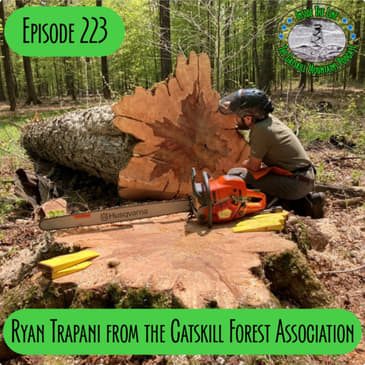
Welcome to episode 223! This week, Ryan Trapani, director of forest services for the Catskill Forest Association joins us to dive into the past, present, and future of Catskill forests. We cover forest health, conservation, invasive species, responsible land management, and why healthy forests matter to everyone who enjoys the outdoors. We also chat about an attempt at the FKT for the 3500 and Stash shutting people down about mountain lions in the north east. Make sure to subscribe on your favorite platform, share the show, donate if you feel like it… or just keep tuning in. I'm just grateful you're here. And as always... VOLUNTEER!!!!
Links for the Podcast: https://linktr.ee/ISLCatskillsPodcast, Donate a coffee to support the show! https://www.buymeacoffee.com/ITLCatskills, Like to be a sponsor or monthly supporter of the show? Go here! - https://www.buymeacoffee.com/ITLCatskills/membership
Thanks to the sponsors of the show: Outdoor chronicles photography - https://www.outdoorchroniclesphotography.com/, Trailbound Project - https://www.trailboundproject.com/, Camp Catskill - https://campcatskill.co/, Another Summit - https://www.guardianrevival.org/programs/another-summit
Links: Catskill Forest Association, Heart of the lion, CFA Instagram, Catskill Forest Radio
Volunteer Opportunities: Trailhead stewards for 3500 Club -https://www.catskill3500club.org/trailhead-stewardship, Catskills Trail Crew - https://www.nynjtc.org/trailcrew/catskills-trail-crew, NYNJTC Volunteering - https://www.nynjtc.org/catskills, Catskill Center - https://catskillcenter.org/, Catskill Mountain Club - https://catskillmountainclub.org/about-us/, Catskill Mountainkeeper - https://www.catskillmountainkeeper.org/
Post Hike Brews and Bites - Hudson North, Running Deer Inn
#CFA #catskillsforestassociation #catskillmountains #hudsonvalley #hudsonvalleyhiking #NYC #history #husdonvalley #hikingNY #kaaterskill #bluehole #catskillhiking #visitcatskills #catskillstrails #catskillmountains #3500 #catskills #catskillpark #catskillshiker #catskillmountainsnewyork #hiking #catskill3500club #catskill3500 #hikethecatskills #hikehudson
[00:00:29] The bushwhacks were some of the worst days I've ever had in the mountains, or life really. Whereas Pantsy Mountain is totally opposite, it's a mountain on top of a crater. I think the weather challenges on this incident were particularly difficult. It is really the development of New York State. Catskills will respond to it.
[00:00:52] Pantsy Mountain to Inside The Line, the Catskill Mountains Podcast. All right, so welcome to episode 223. Jeez, that's a lot of numbers. From one to 223, that's a lot of counting.
[00:01:19] That's a lot of content, but I don't know if we've really conveyed much information. Maybe tonight we'll have like a meaningful, you know, increment to the pile of information with Ryan here. Yeah, definitely. So welcome, Ryan Trapani, right? Is that how I say that right? I'm Trapani. Ryan Trapani from the Catskill Forest Association.
[00:01:43] So he's the Director of Forest Services at the Catskill Forest Association, located down in Arkville, I believe, correct? That's right, yeah. Yeah, so he's going to be here joining us, talking about the Catskill Forest Association, what they do, the events they have, the guide, the tours they have, advice, stuff like that. Ryan does his own kind of like blog on their websites and stuff, so he's got a lot of information. He's going to pour it all out for us tonight.
[00:02:08] Hopefully you're not ready for just a 15-minute conversation, Ryan, because that's not how we do it here. Right, no, I see that. How many drinks do you have in your hand? At least three or four right now? Just one. Okay, okay. We'll talk about that later. All right. I think I told, did I tell you about that, the drinks? Yeah, you did. Okay, good. I got them all prepped for this, Dad, so it's exciting. Okay, so first things first.
[00:02:38] Ryan looks excited. He's just like oozing with excitement there. He's chilling. He looks like a hemlock waiting for the arrival of the Woli Adelgid. He's chilling. Okay. That's the way it should be. So, Alex, this one guy contacted me earlier, like two weeks ago, asking me about a route going down Catskill High Peak, going down or up Catskill High Peak.
[00:03:06] And then he says, I'm going to attempt the fastest known time. Oh, excuse me, of the 3500. I'm like, what? Excuse me? And, you know, it hasn't been done since, Tad, you wrote this down. Thank you. 2018. So, pretty impressive. I have some news that he didn't get to complete it, unfortunately. He did pretty good timing. He was on set and on pace, but unfortunately, when he got on plateau, he hit a lot of rain and a lot of snow.
[00:03:35] Not a lot of snow, but snow and rain, and it dampered his time on the Devil's Path. And then he also got a little bit of a hypothermia. So, he decided instead of being that search and rescue call, he was going to bail and he did. Yeah. Well, I think you ought to put it in context. This was done in May and he's running into like snow in the air. Yeah. Okay. So, he had the weather against him.
[00:04:02] If you went out, you know, on a day where it was cool temperatures without the precipitation, then the odds of him doing it were much better. But when you're in torrential downpours and wet snow, eh, I don't think so. Yeah. And, you know, I said 2018. Alex was doing this unsupported. So, that was 2011. So, the fastest known time of the total 3500 in one attempt was four days, 13 hours, and five minutes.
[00:04:31] The Jan Welford and Corey Delevingne in 2011. Supporters is Mike Sudi. Two days, nine hours, and 16 minutes. You've got to be fucking kidding me. Yeah. Wow. It's like, you say it and then you realize how crazy. And this is just so everybody knows. This is the Mike Sudi who's now out there doing canister notepads. So, that's the same guy. Yeah.
[00:04:57] Our new canister guy hiked all 3500. Two days, nine hours, 16 minutes. Crazy. And then, Philip Bondra who was on the show a long time ago when he did this, did the winter fast and the time of three days, 10 hours, 53 minutes. So, Alex was setting to go on pace to complete it as the fastest known time unsupported.
[00:05:23] And unfortunately, once again, made a great decision and bail actually, you know, Ted, he's going to be on the show to talk about his attempt and then how he's going to revamp his attempt to do it again. Yeah. Well, I'm sure we'll have some meaningful pointers for him and maybe the next time around, it'll be successful. Yeah. And I forgot. I said during when he was doing it, I said to him, I'm like, why don't you ask for help? Long pause. There's no help because it's unsupported. It's like shit.
[00:05:53] I feel like I look like an idiot. So. What does that mean to be unsupported? Uh, means that you don't have anybody pacing you. You don't have anybody bringing you provisions, driving you from one place to the next. You're just out there on your own. I assume you have a vehicle that you can go from, you know, one trailhead to the other. But other than that, you're, uh, you're on your own out there. Yeah.
[00:06:19] One, no, you just one attempt, I think from Peekamoose all the way over to Wyndham. Without a car? Without a car. Oh, wow. So that's road walking stuff like that. That's why unsupported takes four days and supported takes two days. So as crazy, crazy stuff. So Alex, we'll, we'll, we'll have you chat. It will be chatting with you about that, uh, later on. And, and, uh, hopefully, you know, one thing that I, I, hopefully he didn't run into with
[00:06:48] some mountain lions, you know, Ryan, I know you've seen your fair share of mountain lions down in Arkville or seem fair share of people claiming that they've seen mountain lions down there every day. I've never seen a mountain lion. Oh, so see, I mean, finally somebody comes out with the truth. Yeah. So we had a, we had some guy on, was it Steve Russwick from Mohonk? He's been trying to find them with cameras and everything, but I don't think he's ever found one. Yeah.
[00:07:17] It's. Yeah. I'll have to look into that because I had, I'm at work and I hear these guys that are technicians talking about rattlesnakes, one of them being in his backyard. And then they have a start to discussion about mountain lions. And the guy instantly says, oh yeah, I've seen one. And I instantly, my head peaks around the corner and I have to get in on this conversation. And I was just like, whoa, dude, oh, you saw one. Yeah. Why don't you get a picture of it?
[00:07:45] Like, he's like, well, it moved too quick. There's number one. I'm like, well, my dad's uncle's father's brother saw it back in 1986. And he's just like, oh, I'm just like, do you qualify that as evidence that I've seen him out in line? And like. Well, it's part of his DNA now. I mean, we, we, we do know that a rattle off rattlesnake, a mountain line did go through New York state. You know, we had that guy on the radio show. Uh, um, what was his name?
[00:08:15] Stallman. I forget his name. He wrote heart of the lion where, you know, they track that mountain line from the Dakotas. Yeah. Where it was hit on the Merritt Parkway in Connecticut. So we know it went through New York state, but that was a young male that was looking for love and all the wrong places and went and went east. And only 3% go east. Most go west from the Dakotas. The ones that go east, as you might imagine, really get their butts kicked by, you know,
[00:08:43] farmers in the Midwest or when they go by Chicago or around the Great Lakes. But they know that they track this thing from Wisconsin. They lost track of it somewhere in, um, the Adirondacks and then picked it back up in Connecticut, but they kept tracking it back through DNA. Wow. And these, these trackings were based upon visual sightings and then they would go out and get evidence. Is that how it was done? Yeah.
[00:09:10] Um, people would claim they saw a mountain lion, you know, they would go out and have some kind of material from it, but then they started to go back and DNA it somehow that I don't understand, but he writes about it in the heart of the lion. Cool. I'll have to. Yeah. Yeah. It was, it was great to have that conversation with these guys because they say once again, like, like they, they saw one or, you know, their uncle saw one and then I'm just like, so if you think they're about my, and then they say, of course the DEC is covering up.
[00:09:39] And I go, what does the DEC like what covering that up? What is it gained for the DEC? And they all just like sat there. I'm just like, and with all these, these trail cameras that we have here, nobody's caught it. It's like evidence of it. How do you think they exist here in New York state? Like, well, they know when to sneak below. I'm like, they're a fricking animal. They don't know that a fricking trail cameras there. Like you, like, it's just, I had to end.
[00:10:06] Like, they were all just like starting to, they started to get a little bit, uh, not aggressive, but they were just like trying to defend themselves and not say they're stupid. And my friend just peeked around the corner. He's like, they don't fricking exist here. Just stop. And it did. So it was a good conversation. So it was, uh, it was something else. And once again, we had, uh, we had that lady on the show about the mountain lions and they're not over here. They're just not.
[00:10:32] Once again, just the people claiming that they are, they got a camera shot and sorry, but you have 12,000 put peaks in the background of your photo. That's not the cat skills, you know, log cabins, stuff like that. There's so many. It's so funny. It's so funny. Tad, you had, I mean, you had a good time going through the evidence of mountain lions with the DC. Yeah. Well, you know, it's for me, mountain lions, Santa Claus, it's kind of the same thing.
[00:11:02] You know, I still believe I don't care what the evidence is or what it isn't. You know, when I'm out there solo bushwhacking deep in the cat skills and there's that creepy eerie sound coming from not that far away. Obviously that's a mountain lion. Yeah. Cool. That's what I'm thinking. Do you think someday, uh, do you think someday they will be here? Yeah. Well, we're Stosh and I are starting a whole new program called cats.
[00:11:29] It's the cat amount adoption and training stewards program cats. Yeah. So gaining some traction. We're going to, uh, set up a facility on, uh, double top and, uh, Graham mountain. Cause we're off limits. Yeah. Okay. Yeah. Yeah. Okay. Right. Ryan's just like, Oh, are you? What? You asked the goals about that. Yeah.
[00:11:55] We, I mean, it, they're off limits because of one reason and one reason only for mountain lion breeding. That's why they closed it. It's that's, that's, that's it. It's, it's perfect. That's, it's a great, the, the goulds have, we've connected with the goulds. Yeah. What a better way to keep people off your property than to have mountain lions. That'll do it. Yeah.
[00:12:22] Or, uh, Yeti's, you know, a lot of people believe in that too. Yeah. It's, it's crazy with the internet. The internet is, is just exploding with everything that just goes, it goes out of control. And it's, it's, I just love when one person puts like that, that photographic evidence, somewhat evidence, evidence on, on, on Facebook or Instagram, it explodes. It just goes crazy. And then there's news coverage about it and stuff.
[00:12:52] And I'm, I'm sorry, like, like 200 people will comment. Oh, I've seen one. I've seen one. I've seen one. And I'm just like, give me your evidence. Like, I can't say, you know, I've, I saw a spaceship one time, but you know, it was too fast to capture. Sorry about that. Like, yeah. In fact, there's too many trail cameras in the woods. Now you can't even take a leak without, without being on one. Sometimes you gotta really watch yourself now. You know, that is my ultimate fear.
[00:13:22] Really? It's not being eaten by, not being eaten by a mountain lion. It's being caught on a trail cam. The mountain lion thing. I think I would love, I think that would be great. I'd be like, take me now. You know, I told you to be in stuck in a rock. I'd be like stuck in the rock crevasse and being not found would be insane. Just kind of like rotting to the death. But like, just imagine you're, you're on a trail camera and you're taking a leak or something. And then someone just posted on the internet. And then all of a sudden it explodes.
[00:13:51] Like you, you, you are the idiot on the internet. So that's like back in like, like 10 years ago, it would be fine. But now once again, Ryan, you said that now I'm going to be like searching for 25 minutes. And I'm like, yeah, that's why you're supposed to go 150 feet off the trail. That's where they are. The cameras. Yeah. No, there's that one right at the entrance of a giant ledge Panther. Yes. Yes. So the funny thing is like, you talk about trail cameras.
[00:14:21] When I was bushwhacking, I bushwhacked West kill from the West kill brewery all the way over to 23. We found, I don't know. Once again, I don't know how we found this, but we found one on the Southern side of West kill. Just sitting there. I don't know. I like, it just had orange tape around it. And I'm just like, is this a trail camera? Like, holy shit. And I look and I come up and I look at it in the face. So I'm guessing somebody got a good picture, but we told the Rangers about it, of course.
[00:14:49] And I think they went up there and confiscated it. So once again, they could be anywhere. Yeah. Yeah. Yeah. So once again, talk about mountain lions, preach and teach they're out there. Graham and double top. Don't go there. That's where they are. So. All right. So, whoa, a tab. Do you threw this in there? Oh, wow. I didn't know this. Go ahead. Talk about this. Oh, town of Wyndham.
[00:15:14] DEC Ranger reports a wilderness rescue on May 10th at 3 51 PM. The forest Rangers, what is that? Commerford and Dawson responded to a report of an 11 year old acting lethargic on the escarpment trail at 5 14 PM. The Rangers and green County sheriff deputies and the Wyndham fire department reached the
[00:15:40] child who was suffering from dehydration rescues carried the child half a mile to the trailhead. The Wyndham ambulance crew evaluated the child and returned them to their hiking party. Yeah. Well, what kind of, what kind of hiking party is that? If you don't have refreshments for people and they get dehydrated. That's kind of sad. Especially, you know, once again, uh, escarpment trail.
[00:16:10] So once again, that's 24 miles of where we can guess that the kid was doesn't say it was Wyndham. So yeah, I'm, I'm guessing it's over on the 23. Good point. Good point. So they were going up Elm Ridge. So yeah. Yeah. All right. So that's a pretty, that's a pretty popular place for people to hike out of the Elm Ridge, uh, route 23 over there. As you'll be discussing later, right? I wasn't over on that side. Oh, okay. Okay. All right.
[00:16:39] So thank you guys for shooting the shit real quickly. Uh, I want to be good to give a big thanks to the monthly supporters, Chris Garabian, Eric Rosario, Jeff shots, Vicky for Mikey S Henry Burmeister, John Comiskey, summit seekers, desert city radio, Betsy, a Denise W Vanessa and Jim C. Once again, love you guys. Thank you much so much for supporting the show. And like I said before, uh, once again, your, your support for the show just doesn't go in the show goes back in the Catskills as we donate once in a while to the organizations that are
[00:17:09] doing great work out there in the Catskills, just like our sponsors, like outdoor Chronicles photography, like Molly from outdoor Chronicles photography specializes in adventure, elopement and venture couple photography in the Catskills, Adirondacks and white mountains. She's an efficient and forget married a license guide, but most important. She's a story maker. Molly won't just give you photos. She'll give you memories that will last forever. Don't hesitate to get a hold of Molly on all platforms.
[00:17:39] Also, Tad will talk about this. Have you ever wanted to learn more about hiking or backpacking, or even just brush up on some of your old skills in the back country? You need to check out Trowbound Project, a hiking and backpacking school. Scott and Joe from the New Jersey search and rescue team have amazing backgrounds in Wilderness First Aid, Wilderness First Responder and the Mountain Rescue Association. And they are here to teach you new and old skills of hiking and backpacking.
[00:18:04] They teach anything from first aid map and compass to many other skills that could help you and others on the trail. Check them out on their website and all social media platforms. Tad, you ran into Joe this weekend, correct? Yeah, I ran into him and I think it was maybe seven or eight backpackers who were with him. They were out for a two-night backpacking journey.
[00:18:29] They spent their first night behind the Elm Ridge Lean Two and when I ran into them, they were on their way over to the Batavia Kill landfill. Their first night was cold and windy up there and rainy, but they all were in good spirits and eagerly hiking along to their next destination. And they had a great person to guide them along.
[00:18:56] Yeah, Joe, a fellow named Frank who says he knows you from search and rescue was with them as well. Is that the picture that you had with him? I don't think he was in the picture. Okay. I think I know Frank. Yeah. Yeah. Bald? All cool people having fun. It's fun to run into them and be outed by one of them. Try to stay incognito. Nice. Nice. Well, good. Good.
[00:19:23] Uh, so as Ted was outdoors, were you really outdoors? If you mentioned the podcast and one of your hikes through social media, we'll chat about on the show. You tag us by typing at itl catskill MTM podcast on Instagram, on Facebook. Just search for at inside the line and it can tag us. That's a little bit tougher on Facebook. So let's get on with it. Serena Marie 46, her was up on hurricane via the east. And that was her sixth straight day on the trail.
[00:19:54] She had more before this. I think we covered that on the last episode. So Serena Marie was ripping it up all out and about. Lisa chaotic, was on it wrapped up her single season spring. So once again, a lot of these people are doing their grids. It's awesome to see that they're kicking ax and taking names. So. Awesome. Kelsey hiker Yogi was up on Eagle enjoying nice water flow and also enjoy the sunset on red hill.
[00:20:21] So we saw if you looked at the stories and stuff like that, and you follow Kelsey, she had some good water flow going through the, is that the biscuit brook? Right. No. I don't remember where it was. She showed her what's going up. Uh, the Seager brook. Sorry. The Seager area. Yeah. That's yeah, that's right. Yeah. And now I remember the photos. Yeah. She had some great shots going through there. That is a very scenic, uh, area to hike through.
[00:20:50] Although a month from now, the nettles, you know, shine, showing their teeth and biting your legs as you go through. Definitely. Definitely. That is a bad area for Nels. Very green right now. It's very green and lush, but then it gets lush and overwhelmed with the nettles up in that area. So, uh, Cheryl Potter, uh, was recognized as a rising fan on Facebook. I'm glad to catch her, uh, her tag on that. Uh, I really don't know how I got that.
[00:21:20] What does that mean? Rising fan. She engages with her stuff on Facebook. So, uh, she like, likes our stuff. It's, it's, it's different. Facebook isn't as cool as Instagram. I gotta admit it. They don't, they don't tag us as, as often as they should. Yeah. It's weird. So thank you, Cheryl. Uh, Andy Brownski was back in Harriman. Uh, once again, I missed his pet tag last week. Um, so awesome.
[00:21:50] Brownski was got out now. So he was in later and we'll talk about that. Uh, Daniel, AKA, which in the wilderness was up on Hunter and stopped in at Kim's Catskill and grabbed our last sticker. So I got a resupply camp Catskill with stickers. Sorry about that. I'll get ahold of Ryan or Mo and we'll get those things refilled. Uh, Steve environmentality was at Harriman enjoying the green area. A lot of people were at Harriman having fun. So enjoying the beautiful views down there. So I gotta get down there.
[00:22:20] That that's a long drive. Yeah. I actually drove through, uh, Harriman park today on the Palisades. Gazing off to the left and right. And, and wondering what lies underneath that forest canopy. Nice. Nice. So someday we'll, we'll, we'll be there. Yeah. Uh, pink pony 18 Tracy went to Sam's point, the ice caves for Keeter kill falls for Keeter kill falls. That's close enough. We know where it is.
[00:22:50] What is it again? Uh, I gotta look at the name for Keeter kill falls. I'll say it for Keeter. Yeah. Yeah. That's the area that, uh, open space just acquired. Um, a big chunk of it down at the water, the base of the falls. Nice. Yeah. And then she finished at Lake Marzipan. So cool, cool stuff. Can God, uh, just, Ooh, excuse me. See you out.
[00:23:16] Uh, Tracy often the witch Sean was out with Scott doing the triple biscuit. Ted, we talked about that a while back, the triple biscuit. That is, uh, what is that again? Big Indians for Eagle and no end. Uh, South double top South double top. Okay. Biscuit brook. That makes sense. Yeah. And then they have a biscuits and gravy. I think that's when you throw in Eagle. And then there's another combo when you do well. I have no idea what they call that.
[00:23:46] Biscuits, gravy and hash browns. Maybe something, maybe something like that. Uh, as, as we said, Scott cats come out and brew was, uh, out with Sean tagging South double top to triple biscuit. Uh, Joe JK plow was, uh, absolutely stunning. Roman's nose looking over the, the Skoharie Valley. Awesome spot. I care. I, I tell anybody to go up there family wise. That's a great spot just to take the family out. It's beautiful, fun, easy.
[00:24:14] Um, Todd T-Bold outdoors with that black rock forest and joined the waterfalls. Then was out with Jeff Johnson, orla and did bald rocks, Island pond and stah hockey point. I love that name. Stahy. I thought it was stosh. Stay Henley. You should name your next dog. That's the high. I like it. It's good. Uh, Danny mild mischievous went to stop a point, explored the north south lake area, found some awesome crevasses and.
[00:24:41] Uh, different areas that are, are off trail and explored. I, I specifically, I think Joanne did a nice post of the, one of the old signs of North point behind a regular sign. It was pretty neat. Did you see that? I don't remember seeing that. I just know that's a very interesting area. Uh, over there often overlooked by Catskill peak baggers until they move on to their all trails challenge. Yeah.
[00:25:08] Often that's often what brings people over there and South mountain to the extent that you can call it a mountain. Uh, just very interesting over there. It's not, not hardly a mountain at all, but the, uh, the, the rocks and, um, just the terrain. It's pretty cool. Yeah. The geology is amazing over there. And if you go up a little bit further on north south lake and stuff like that or explore. Yeah. There it's very, just, you know, there's several different.
[00:25:37] Like, um, rock. I can't really say rock types, but just different, you know, the sedimentary layers, uh, just have a different composition of cobbles to the fine layers to the big chunky blocky stuff. It's all very cool in that area. Definitely. I suggest anybody who knows, uh, their navigational skills to explore off trails up there, because like I said, the geology is awesome. You've got a conglomerate rock. You've got a sedimentary rock.
[00:26:06] You've got, uh, what's the other ones? Uh, what's the, the stone that you like you and Danny Davis always look at that has the layers? Uh, well, that's the sedimentary. Is that the sedimentary? I'm sorry. Yeah. Um, yeah. You know, when, uh, Bob Titus does a interesting write up on that, you'll have to Google it, but you know, Google, uh, Catskill geologist South mountain. And he gives the, like the whole history of how that was formed. Yeah.
[00:26:36] Good stuff. Yeah. Uh, Sean Long Island high school was up on plateau and sugar loaf with an overlay at link mink hollow. So Sean is out there just banging away of getting out in the trail. So good to see you back out, Sean. And, uh, he's having a good time. Uh, Vicki hiker goddesses adventures did the stone town circular for training for the Prezi traverse. So can't wait to hear about her Prezi traverse that's going to be happening. I think it's in August that she said, so it's going to be pretty fun.
[00:27:04] Um, Andy Brownski had a nice hike down in the Hudson Valley. Uh, Brownski doesn't tag where he is. Uh, I don't think so. Good to see him out and about had a nice encounter with a deer that a, uh, a runner and stuff kind of totally ruined. Did you see that video? No, I didn't. Like the deer was coming within feet of him and then a runner came through and the deer scampered up like, like the, he was within like eight feet. And all of a sudden the runner came through and the deer saw him and just ran off.
[00:27:34] It was, it was insane. Yeah. I did see the video you sent me of the cyclist getting back by the. By a deer. Yeah. I thought of you. I was just like, oh, this is going to be Ted in the Hudson Valley. So, so cool. Thank you. Uh, 17 people. Thank you for tallying that up, Ted. Really appreciate it. Uh, I really appreciate everybody tagging us. That's awesome. Get out, have fun. I mean, it's going to be beautiful weather. We have beautiful weekends coming up, so get out there and have a good time.
[00:28:02] Just, uh, bring some bug spray cause it's going to start. If it gets muggy, it gets buggy. That's what I say. So who is drinking something tonight? What do we got going on in terms of drinks? Ryan, let's start off with you. Well, I'm a one flavor guy. I usually just drink Jack Daniels. Oh, oh, we got some harsh guy. Nice. Nice. Awesome. I like that. Uh, Ted, what about you, sir?
[00:28:30] Uh, it's the first Tuesday of the month. So I'm no brew Tuesday. So I've just got a cup of home brew, um, that I'm drinking. Nice. Nice. Home brewed coffee, home roasted round and brewed up. Nice. Nice. On one hand, I have my rum and Coke.
[00:28:52] And on the other hand, I have this beauty that I'm going to open up is a Hudson North salted watermelon. Hmm. So, so good. When you say salted watermelon, is that like a electrolyte replacement drink? So like that 11 year old kid, could he be rehydrated with that on trail? I mean, it would bring him some superpowers. He would think it's pretty good. Yeah.
[00:29:20] A couple of those after you're dehydrated. I think he won't be running down the mountain. You'll be tumbling down the mountain. So I find that dating himself back to the parking area. Yes. I can see that. Oh, he does. He's like, I don't know how the hell I fricking got back to my car. That's what that's, that's why I can't have like tour, like, like one of these on the thing. Cause I will know how I got back to the car. He'll tell us folks.
[00:29:46] Last thing I know, some guy named Stosh with like a 40 pound backpack came up and was cracking open these popsicle and salted water. They're made of melon flavored drinks. They were great. It was definitely great. Uh, so how about previous hikes? Ryan, do you got anything for us that you want to chat about? You know, any previous hikes that you've been on in the last couple of weeks that you want to brag about? No.
[00:30:12] Um, I mean, I went camping last weekend, but, um, over on the ridge, you know, the Chalanc Ridge area. So I went on a little overnight, but, um, I don't get to camp or hike as much as I, as I used to. But so where'd you, where'd you camp on the ridge? Well, was it a legal spot? We'll just start there. We'll say it was, uh, over by the witches hole area or something. Okay. Yeah.
[00:30:43] Cool. Cool. Any like, Oh, what's the weather like and such like the just nice, perfect weather for camping or did you have to go all out? It was beautiful out. You know, some wind like 14 mile per hour, gust, some clouds, sun, clouds, sun, the whole kind of day, just enough to keep the rattlesnakes at bay. Cause actually I have, that's actually a place where I do walk on rattlesnakes, um, quite a bit. Yeah. Um, I've actually almost stepped on a numerous times up there.
[00:31:11] That's the one place where I'll wear snake chaps. Actually. Is snake chaps like, uh, what are the gators or is there a thicker? Yeah. Yeah. They're a little thicker than gators and then they keep the blueberry and the azalea out of your, at your pants too. Yeah. Yeah. That's crazy. I don't know. That's, that's another like thing that I don't want to deal with is, is rattlesnakes. I'll, I'll, I'll back Ryan up on that though.
[00:31:37] When I, my daughter and I used to hike over there quite a bit and I can say quite a few times in the warmer months, um, you would be going through these narrow confines, you know, with the rock ledges on either side of you. And you would be within feet of a, of a rattler. I mean, when I say within feet, yeah, within feet, you had no, if you wanted to continue going on your hike, you had to walk right past it.
[00:32:05] Sometimes you would be standing on a rock that would have a gap between it and the hard pan table surface of the ridge below it. And you could hear the rattler underneath that rock because they would take refuge there during the day. So it's, it's definitely the, the gunks is definitely one of those places that when you're on trail, uh, you're, you know, it's generally safe and easy traveling. And then when you go into the more rugged areas, it, it's very, uh, rugged, very interesting.
[00:32:32] I've been over there and in late June and you run into the crevices, you run into snow and ice down there. So it's a totally different world. It's, it's gotten way too thick. Um, it's extremely dense off trail. Mm-hmm. It really needs a fire. Um, and it's one of the few areas where if there work was a fire, it actually might be a little dangerous because there's so much fuel on the ground there.
[00:33:00] And then there's a mid story, but, uh, it's very, it's getting extremely thick. Yeah. What are we, what are we talking like of somebody that's not formally known of the gunks? What are we talking about thick with like what kind of brush? Like mountain laurel. Oh, that's plant ever. That's the shit that you don't want to deal with. I think mountain world role in this world is to piss humans off so much that they want to burn the mountain down. It's really bad in places.
[00:33:30] I mean, you know, that Ryan, you're with what organization again? The cat still forces to preserve the forest. Yeah, that's right. Okay. Yeah. Yeah. No, and they do, you know, I don't remember the last time they did a control burn over in the gunks, but they do them from time to time, time to time over there. Then I think sometime in the last four or five years, they had a big fire over, I think just south of the witch's hole area.
[00:33:59] If I remember correctly. That was a wildfire. Yeah. Yeah. As far as I know, Minnawaska has given up on their prescribed burning for a number of years since I think Gabe left. Um, so no, I don't think they have any prescribed fire going on. Mm hmm. I think that says, I mean, that it makes sense, you know, once again, like, you know, the mountain lower overtaking every damn thing because they offer no sun when they're grown to anywhere on the forest floor.
[00:34:28] I used to talk to old timers in Ellenville and they would, this one guy I met at the blueberry festival. He said back in the forties, he would pick anywhere from 40 to 80 quarts of low bush blueberry in one day. Hmm. And, and now if you've ever picked blueberries, there's only one place I've ever picked blueberries with a rake and it was after a fire on the Brnoi kill. But it's just, you're lucky, you know, you get like a gallon and you're doing pretty well. Wow. Yeah.
[00:34:57] It's just, it's very overgrown. But, um, but when you do get a fire low bush actually comes in on these, these heads, these clusters that are easier to pick than high bush, but you'll, you'll never know unless you saw it after a fire. Hmm. Wow. And that's where like, is the mountain laurel kind of a place where these rattlesnakes kind of make their, their areas and then they move out into the sun or like the rattlesnakes prefer the crevasses and stuff like that of the rocks. Yeah.
[00:35:26] Well, there's, there's areas where mountain where, uh, rattlesnakes are common. Like one would be the shillongs. The other would be like that, um, forest bird Eldred area where it's very rocky. The, those big deer hunting camps down there, Iroquois hunting club, very bony, you know, and they, they need that to access sun. Um, you need an oak overstory at the most. If you start getting into maple and beach and birth, the Northern hardwoods going to be too shady for them to cold.
[00:35:54] You know, they need sun filter, sunlight or openings through pitch pine would be the best. Hmm. Interesting. Interesting. Once again, I don't want to deal with that shit. So. You know what though rattlesnakes that, you know, they don't really bother you. Um, they've heard that they really don't. I mean, they rattle for a reason. I've literally almost stepped on one by Lake of losting and it didn't bite me and it damn near should
[00:36:21] have, but they really don't want anything to do with you. Good. That's good to hear. Yeah. For all the, the hiking traffic that you get in Minneapolis and Mohonk. Um, with the, you know, the level of, uh, rattlers that are over in that area years go by without anybody getting bit. Yeah. True. Yeah. True. I grew up in new Paulson.
[00:36:46] The only time you'd ever hear of someone getting bit was maybe a mountain bike or messing with them or something. I never heard of. Yeah. It's very rare. Crazy, crazy. So Ted, what about you? You were all out and about once again, I I'll, I'll interrupt with saying that I didn't do something. I went disc golfing today, but I wasn't, I had a wedding to go to on another wedding on Sunday. So it was a good time. So you were out and about, I saw that. Yeah.
[00:37:15] So, you know, as, uh, we, as, as we led up to last weekend, you know, and the weather just, uh, seemed the forecast seemed to go from being an okay. Uh, weekend to more inclining towards precipitation, colder weather. And then when I woke up Saturday morning and I did the, my pre hike check on the weather, uh, you could see some bands of rain that were coming down from the north towards the Catskills.
[00:37:45] Uh, I saw somebody's post on Instagram, Sherry Rolson. She was over on Wyndham early in the morning and you could see it had been raining up there. And that was my plan all week long was to do the big hollow traverse of Thomas Cole, black dome, blackhead and Wyndham high peak. And I kind of, for a minute paused and thought about doing or not doing that hike, but the better part of no reason or lack of reason prevailed.
[00:38:10] And next thing, you know, I found myself in my Jeep heading up to, uh, the big hollow and park the Jeep over the end of Peck road and hopped on the bike road over to pine kill. Meadow. Meadow. Which is where you hiked out of a couple of weeks ago, Stosh. Correct. Yeah. Yeah.
[00:38:30] So I parked the bike, uh, that, uh, cul-de-sac traffic circle roundabout, whatever you want to call it up there, uh, little off in the woods and set out. And, uh, I would say, I don't know if Ryan's ever been up there. Pine kill meadow. Does that ring a bell to you? Where is this? This is off a big hollow road. We're almost opposite of Peck road. And which Peck road? Uh, Peck road off of big hollow. And wind up.
[00:39:00] Yeah. Wind up. Uh, maple crest. Yeah. Okay. So very rarely get up in maple crest area. Yeah. So this, this, the DEC is bought, um, not DEC. The DEP is bought about two thirds of the land on either side of what I'm going to call this subdivision road. It's undeveloped. Um, but when you hike through the DEP land, it's, you know, it's a really clean forest.
[00:39:25] It looks like it'd been logged sometime, maybe in the last 40, 50, 60 years. Um, not a lot of undergrowth, uh, very easy hiking up through their very low pitch until you get to the DEC, uh, property or the state property line, which is right at a small ledge. Uh, which I was expecting from the topo I looked at. And then, you know, it gets rockier.
[00:39:50] It transitions into one of the older growth styled, uh, Catskill hardwood forests all the way up to that cold between, um, uh, Thomas Cole. And what is it? Claudia? Claudia. All the old hill. Yes. Yeah. And that's where I made the trail. It was, it was really windy and gusty. I will say on the way up there, it kind of lightly rained. Uh, the way up.
[00:40:16] And then there was this, I got to this one spot where going uphill, I'm generating enough heat that I'm saying to myself, well, you know, maybe I'd be better off taking off my rain pants and windbreaker. And so as I was planning for a spot to do that, um, you could hear the wind whipping in from away far away. And by the time it got to me, it was like just one of those like five second torrential downpours. So I was kind of glad I didn't take off my gear. So nonetheless, I made the trail.
[00:40:45] I got to say that I don't know who the trail maintainer is up there, but kudos to them, man. That trail is in such pristine shape. There's like not a speck of trash. All the trail markers are like perfectly orientated. You know, there's no greenery growing up against the trail. You could kind of have a parade going through there. So whoever that guy is or gal is that maintains that trail, uh, kudos to you. So nonetheless, I, I started heading out towards, uh, Thomas Cole, um, black dome blackhead.
[00:41:15] I did not see anyone until I was coming down black dome. Then I ran into a group of, uh, six guys who had spent the night before Batavia kill. They were going to hike out to black dome, double back to Batavia kill, uh, lean to, but it was kind of, you know, it was windy, gusty. The rain had started to subside. And then I did, um, blackhead coming down blackhead.
[00:41:43] I started running into, I ran into one group of hikers. Uh, it was a, a woman who taught at a small, she described it as a small Christian high school. It looked like she was out with some of her students hiking blackhead. I ran into a bunch of people, bunch three or four were training for the escarpment trail run. Uh, it's always fun when you see those people coming along. Running, you know, uphill. Yeah. And you're, and you're just like, you know, kind of like almost out of breath, you know,
[00:42:13] Cautious downhill. Just getting by. And these people are just like, you know, they look like they're out on a track running. It's pretty humbling. Uh, and they can strike up a conversation with you while running. Yeah. And then you're sitting there trying to say like three words. Yeah. They can strike up a coherent conversation and your responses are, uh, what? Yup. And then you just keep on going. So at any rate, uh, you know, it was just, I, I have to say, I haven't been on that section
[00:42:43] between, uh, Blackhead and Windham on that section of the escarpment trail and quite a while other than short little segments where I'll bushwhack to it, to get up, uh, Windham. Um, um, but that's such a nice trail going through there. And the only traffic I saw other than the escarpment runners were just a bunch of campers that were, had been going from, uh, Elm Ridge over to Batavia kill.
[00:43:09] And I remember telling one group of people and that's before I, I bumped into the trail bound group that man Batavia kill. It's probably going to be by reservation or standing room only. Cause there was just so many heading over that way. Uh, so at any rate, you know, it was, um, it was a great day to get out and hike. Uh, I think in large part because the weather was just balmy, windy, just not, not your typical
[00:43:38] sunny or dry hiking day. And I have to say all my gear worked out really, really well. Um, I'm going to give a shout out to my Patagonia Houdini jacket, which weighs in at 3.9 ounces. I checked out the specs, um, afterwards, 3.9 ounces. It's got this water resistant breathable finish on it that it's, it's just light enough to be, gives you the protection from the wind.
[00:44:07] It's highly breathable. And I, like I said, I got caught in that one downpour, mainly rain on and off light drizzle at times. I swear I saw some snow on Thomas Cole, but I didn't get wet. You know, I just was a, between the wind and that jacket being able to wick, um, moisture off of me and dry out quickly. It was just the perfect thing to have.
[00:44:32] So overall 13.4 miles, 3,700 feet of vert. How much time did it take me? Stosh? What do you think? 6 hours and 13 minutes. Oh, you're so close. How about you, Ryan? You want to take a guess? Fastest known F K T fastest known Tad time on the big hollow loop trail. 6 hours, 20 minutes. Not bad. Yeah. Nice. Nice man.
[00:45:02] Congratulations. It's awesome. Yeah. Sounds like a good day to be out in the forest. Like you, like you said that, that one section going from the Batavia kill all the way over to like that ledge on Wyndham is special. It's got different forest. Yeah. If you go over there during autumn, it is absolutely phenomenal. Yeah. So yeah. And the trails in really good shape, um, over there. Cause it doesn't get a lot of traffic. It does seem to drain.
[00:45:30] Well, there's really, there's only one boggy spot along that whole way. And you are treated with on a day without the clouds, the overcast, the whatever you are treated with some great views along the way, uh, but not on this past Saturday. No views. Of course. Yeah. Of course. Awesome. Awesome. But it was fun. Good. Love to hear Tad's adventure.
[00:45:58] So he has a good, good time of explaining his adventure. So good to hear. So, uh, once again, Catskill news volunteer 3,500 club Catskill drill clue Catskill mountains club visitor center, Jolly road versus trail crew. Grim Bramley mountain fire tower. Uh, does the Catskill forest association do any volunteering activities? Do any say again, I volunteer in what do you guys do any like volunteering activities, stuff like that?
[00:46:26] Well, I mean, we have a lot of workshops, woods walks demonstrations, you know, for our members and stuff like that. Okay. All right. Cool. Cool. Uh, I'll tag that though. We'll talk about our events and your events and stuff like that later. So cool. Um, also if you need stickers, just get ahold of me. I guess I got a resupply camp Catskill with their stickers. So, um, Tad threw in some, uh, that Catskill mountain trail crew is doing some work on the Warner Creek trail.
[00:46:52] Uh, to me, one of the best trails in the Catskills on June 6th and 7th. So check that out, uh, upcoming weekend, actually. Um, it would be tomorrow and Sunday. So, uh, after this comes out and then the next week, they're doing June 13th and 14th to touch me not trail over on the Western Catskills down in the willowemac area. So it's a beautiful forest, beautiful area. So.
[00:47:17] Yeah, this, this, uh, this coming Saturday, we have chainsaw maintenance and sharpening demonstration over in Grimesville. Nice. Nice. I will throw that in the show notes. Where's that at the, uh, the fairgrounds over in Grimesville? No, it's at a guy's, uh, house. He has a saw shop over on Dean road above black of whack Hill. Okay. And, uh, he goes over, um, chainsaw sharpening and maintenance. Sweet. Crazy.
[00:47:47] Cool. Cool. How many people do you typically see it? Uh, but an event like that chains saw sharpen. It's like a whole different crowd to what our listeners normally, you know, interface with. Anywhere from three to 15. It totally depends on whether or whatever. Wow. I'll be honest. It's, it's harder to get people out. I feel like more than it used to be. Yeah. I think the changing demographic is definitely.
[00:48:15] Change the way people participate in events. So is that, is that because it's more of a second home crowd or urban crowd moving up to the Catskills or something else? I think the urban and second homeowner has always been in the last 60 years and the Catskills. Um, it's a different city demographic. The baby, the baby boomers were mainly like when I first started working in 2007, most of our demographic were about 55 years old. Um, baby boomers from long Island in New Jersey.
[00:48:45] They came here to hunt, they dragged their wives up. Right. And, uh, they want to talk timber maybe once in a while, but now it's mainly people who have never owned a home. They're from Brooklyn. They're not really from Brooklyn. They moved to Brooklyn like 10, 20, 30 years ago. And this is the first property they've ever owned. And, uh, not really. Some of them are outdoorsy people. Most are not. So maybe the, the podcast.
[00:49:14] So I will reach out to them and they can get, uh, with the, the Catskill forest association and get that education and stuff that they need when they're have their land ownership that they need to maintain and stuff. So Ryan's comments, though, remind me of a couple of years ago.
[00:49:28] I was, I was having this conversation with some people that recently moved up to my neck of the Hudson Valley and they kind of freaked out when I explained to them that their household water came from a hole in the ground called a well. And they didn't, they didn't really grasp that. And it kind of like freaked them out when they realized that they were drinking water that was pumped out of the earth. Instead of the Catskills.
[00:49:57] Well, you know, they, most people don't even know in the city, don't even know where their water comes from. We're just talking about that yesterday in the car. Like, um, this lady is from the city. I had no idea that the reserve, she thought that was a lake. Wasn't a reservoir. Where's the power boat? Yeah. That all the time people think their drinking water comes from a river or something. You know, we don't get our drinking water from rivers around here. We get it from groundwater. Yeah. So crazy.
[00:50:24] So, uh, so if, if you wanna, if you, if you listen to this podcast and you have a second home up in the Catskills, which I highly doubt many people do, uh, for listening to this podcast, because it's so low profile and fun. Uh, that, uh, that you get ahold of the Catskill forest association and you, you check about land management and stuff like that. Catskill forest management. So, uh, so let's get into the weather forecast.
[00:50:56] Here is your weekend weather forecast. It looks to be a decent weekend with a couple thunderstorms here and there, but overall a great chance to get out there and bag some peaks. On Friday, June 5th, expect clear skies throughout the day. A high of 63, a low of 57 and wind chills only dipping down to 54 degrees. Very little wind chills on Friday.
[00:51:22] On Saturday, June 6th, expect clear skies in the morning with a risk of a thunderstorm in the afternoon. Percentage wise of 30%, a high of 61, a low of 54 and wind chill dipping down to 40 degrees at night. On Sunday, June 7th, expect short range showers in the morning with a risk of a thunderstorm in the afternoon, a high of 54, a low of 48 and wind chills at night reaching down to 41 degrees.
[00:51:51] It looks to be a good time to get out and enjoy the Catskill. So once again, once again, be safe, be prepared and don't become tomorrow's rescue story. Rip it up fellas. The awesome weather forecast looks to be whatever it is. So that's what is the Catskills. It's always whatever it is. So let's get our last set of sponsors and we'll get on to Ryan. Ryan. So is it time for some new gear hiking in the Catskills? Say no more.
[00:52:19] Camp Catskill in Tannersville has all your hiking needs. Footwear socks, moisture wicking shirts, freeze dried meals, Catskill merchandise and more. They have all the essentials for your hiking need located in Tannersville and online. Check out Camp Catskill. If you want free stickers, get a hold of me because I guess I don't have any there. So glad everybody's visiting Camp Catskill. Also, you need to check out another summit, a nonprofit program that leads outdoor adventure activities for veterans and first responders for free.
[00:52:49] Outdoor adventures like walking, hiking, paddling and even backpacking. We welcome guardians of all ages and ability levels, including those with accessibility needs. Our adventures are located throughout New York and the Northeast and we organize transit accessible adventures throughout the Hudson Valley in the New York City area. Apply today on another summit dot org. All right. So let's get on to the guest of the night. Let's go.
[00:53:16] So tonight, director of forest services, Ryan Trapani from the Catskill Forest Association joins us to talk about, of course, the Shrackskill Forest Association and what it does, where it's located, what they do, their events. They have everything in depth about the CFA. We're going to say that right now to let everybody know CFA. We're not going to say Catskill Forest Association all the time. That's gets a little mouthful. So, Ryan, welcome to the show. Thanks for shooting the shit.
[00:53:43] Once again, it's great to have people doing that because once again, it gets a flow going. And it looks like, you know, you've had a couple whiskeys, at least three or four, because you have to put up with our crap. No, no, not three or four. I got to be able to talk a little bit. He's like, I've had two, not three or four. The third one's coming. All right. So, Ryan, you know, let's start off with, you know, a little background about yourself, you know, childhood, stuff like that.
[00:54:10] And then we'll bring it into where you are right now with the Catskill Forest Association and such. All right. Yeah, I grew up in New Falls in the Walk Hill Valley. And to me, the big mountains were the Shongam Ridge. So, you know, I would look at the Catskills from the Shongam Ridge and thought they're pretty cool. And they're always kind of mysterious things that I wanted to explore. But I didn't really go into. And to be honest, the Shongams have everything.
[00:54:36] I mean, it's an anomaly in the landscape, you know, between the conglomerate and the White Rock, the pitch pine, the blueberries and everything else. And it's got all the northern hardwoods in between. And then it's got all the central hardwoods like Oak Hickory and some chestnut. But it was a cool place to mountain bike and hunt and to hike around. So that's where I grew up.
[00:55:00] I went to school, College of Environmental Science and Forestry at the New York State Ranger School and in Syracuse. And I was an assistant forest ranger for two seasons. So I got really familiar with the Catskill 35ers. I covered the Burroughs range, which and my favorite area is really the Upper East Branch, Never Sink. I covered that as well. But mainly the Burroughs range for two seasons. And it was it was fun.
[00:55:27] It was pretty dead back then, though, when I was when I was an AFR. What are we talking about back then? What dates are we talking about? 2004, 2005 compared to now is dead. I mean, it was dead back then. We would never see Giant Ledge full even on a Friday evening was kind of rare. Saturday morning is when they would be here because they came up Friday night. Thursday is the new Friday, from what I noticed, because I commute every day to Margarville.
[00:55:56] And now Thursday's 28 is pretty crowded. Wow. But, you know, it was the in between. And the Forest Service warned us. They said right around. They we went to a talk and they said about 2015, plus or minus the biggest land ownership turnover in American history is about to occur. I'm like, what the hell are you talking about? What they meant was the baby boomers are moving on and this younger demographic is coming in.
[00:56:22] And before then, I very rarely met anyone younger than 55. And it happened. I mean, all of a sudden there's 30 somethings and 40 somethings and they moved into the Catskills. And that was that. And and that's all within since 2018 or so. So things are maybe a little more crowded. But back then, no one was really in the woods. If you bushwhacked, never really saw that many people, if ever. Saturday, Sunday.
[00:56:52] But anyway, I landed a job with the Catskill Forest Association in 2007 after working for Frost Valley and the D.C. doing other things. And I've been lucky. It's been almost 20 years that I've been there. It's a dream job. I get to work with private landowners throughout the six counties of the Catskills instead of going up the same damn trailhead up Wittenberg or something. It's different. It's a different piece of private every single day.
[00:57:20] And also, we besides education, we also do field services where we do the work ourselves. So it's just good for my mind. And it's very fulfilling. Sounds like it's very diverse. Like, it's not like one day is the same. No, one day is not the same. But CFA has been around since 1982. The Forestry Education Organization, it's a private nonprofit, 501c3. It's membership based.
[00:57:47] And it split off from the Catskill Center in 1982. And it's the old, it's the old disagreement in environmentalism, right? You have conservationists, true conservationists, and you have preservationists. And it was two directors. One said, maybe this is what I've been taught. One said, yeah, there's a time to cut. And the other said, never. And that's when the CFA moved down to that little red barn outside the Earps Gallery.
[00:58:12] And from there, they went to Hubble's Catskill Reynolds in Hawkinsville where the chainsaw shop is. And from there, we went back to Arkville and several places. And now we have our own place in the in-between in Margaretville and Arkville. So. Wow. Now, 1982, you guys separated. Now, you talk about conservation and preservation.
[00:58:35] Now, to people who like, like, I mean, I wouldn't say don't know the difference, but not our experience with the difference. Now, what is the difference between conservation and preservation? Like one is, of course, to keep the forest the way it's been, has been, always been. And then one is to like, make it grow, correct? So, the basic definition of conservation would be wise use. Right? Now you could say, well, it's wise. We could get into what that means.
[00:59:04] Preservation is almost no use. Although you can never have no use, but it's more recreational use. So it's the old Gifford Pinchot, father of forestry conservation versus John Muir, father of preservation. That kind of thing. And I think preservation made sense in the late 19th century when farming peaked. Right? We have massive land clearing. We're a growing nation. And it meant, I call it the age of Aquarius. It made sense to try to preserve everything.
[00:59:34] Conservation, all you do with preservation is you put a line around it and you call it a day. It's, you know, as long as there's no development, it's, you know, when conservation is harder, it's more nuanced. You can't just put a line around it. You have to manage it. You have to know what you're doing. You have to make mistakes. You got to learn from those mistakes. You got to go forward. It's much more difficult. And you can't really learn unless you try. So, you know, like, like whether it's hemlock, will you delge it or it's wildlife? Like look at wildlife habitat.
[01:00:04] I could go on that for hours about the deer issue. Not doing anything has really caused our deer issue. You know, just, it's a dense forest out there and the deer are starving. It's that simple. So, what do you do? You know, you can't just step away from it. You got to get in there. You got to, you got to use your thumbs and put light in the forest. Correct. Correct. That's, I mean, that's a great definition and such like, you know, and now, you know, we're talking about the CFA with how they got involved.
[01:00:32] Well, how did you get involved with this in 2007? Yeah. I was hired as the education forester and it was only three of us. There was Jim Waters, who was the director at the time, executive director, our office manager, Michelle and myself. And basically all we did was, was education back then as far as just events. And I do a consultation.
[01:00:54] We started getting more into programs or services for people because I'd make recommendations all the time on people's properties, you know, for cutting. Like, say you have a red oak in the middle of your woods. Well, if you don't cut around red oak, it gets out competed by maple over time because maple is a shade tolerant tree. And red oak is not as shade tolerant. Well, they'd be like, well, who the hell is going to do that? You know, who's going to cut around this was one red oak. So we would start doing stuff like that.
[01:01:23] We would do crop tree releases or we would do invasive species management, portable saw milling, apple tree grafting, apple tree pruning. We would demonstrate to the member if they wanted to know how to prune, how to graft any of that stuff while we're out doing the work on their land. So it's very personable. Nice. Nice. Crazy. So Ryan, where, before we dive deeper into what the Catskill Forest Association does, you referred to,
[01:01:53] you, the member. Yeah. And I get a sense that it has a different funding source than many of the other Catskill based or Catskill centric organizations. So why don't you tell us what the CFA's funding sources are and, you know, how it works with the community in terms of funding and just working with the community. Yeah. As far as environmental groups, I feel like our funding and culture is a lot different than others.
[01:02:22] Most of our board members, at least half or more are actually from the area. They are born and raised in Delaware County. Our funding comes from the O'Connor Foundation, which is it's based in Hobart and Delhi. Same people that do the hospital in Delhi, right? Yeah. Wow. Yeah. So we have ties to the O'Connor Foundation and thank God, because that's about 50%.
[01:02:49] That's what makes us be able to target that small forest owner, which it doesn't entice anyone else. So we're not competing really against anyone else for the for the for who we serve. We serve small forest owners, people who own less than 30 acres. The average parcel size is 17 acres in the Catskills, plus or minus. So our funding, we receive zero dollars from the government. And you know what?
[01:03:14] That's saying a lot these days because a lot of nonprofits, a lot of them either have contracts with the government and it's hard to be objective. To me, our motto is impartial forestry advice. Hard to be impartial if you're you're taking the government money all the time. It would be the same thing as if you were working for a sawmill. Could you give an objective opinion about timber if you're getting paid by the sawmill? Sometimes, yes, sometimes not. But, you know, usually you're going to be biased toward that money is coming from.
[01:03:42] We don't have that, fortunately. We don't have many. We don't have any government contracts. We don't see any government funds and we don't see receive any money from private companies either. So I think that's a huge advantage. We're really just there to serve the forest owner who, even though they own most of the land, there really isn't a group to speak for forest landowners in New York State or private landowners. There's really no group out there anymore. And there should be for private property rights. There's tons of advocacy for public land like they need it.
[01:04:11] But there's really not anything for private landowners who are paying all the taxes, which is a shame. Yeah. So I can echo those comments because I inherited quite a bit of woodland further upstate.
[01:04:26] And one of my interests was bringing in somebody to walk through my wooded areas and come up with a management plan for myself in terms of, you know, what to harvest, when to harvest it and just promote the healthy growth of that forest area.
[01:04:45] And there wasn't anyone in the area that didn't have some personal agenda, whether it was to come in and log the land for lumber purposes or to come in and do it for like the local snowmobile club to have trails going through there or something else. You couldn't bring in anyone that you could really rely on to give you that objective advice.
[01:05:12] So is the Catskill Forest Association like a one-off in New York State? There's no other community-centric organization promoting healthy forests like it in the rest of the state? It's a great question. What comes close would be NIFOA, New York Forest Owners Association.
[01:05:34] Another similar would be MFO, Cornell's Master Forest Owners Program, where they take like landowners and they can get some training. But not really. Nothing like the Catskill Forest Association. And NIFOA and MFO, those are statewide organizations? Yeah. Yeah. I should have said that. Yeah, they're statewide. And let's talk about this membership concept. Who are the members? What is membership? What does it cost?
[01:06:05] Okay. Yeah. Membership is $75 for basic membership. And that includes everyone on the property. So you have five people on your property. They're all members. All right. So those are family memberships. So on average, you could really double our number I gave you. Well, I didn't think I'd give you a number. There's 1150 members is what we have. Wow. So it's really, those are family memberships throughout the six counties. Most of our members are in Eastern Delaware County. Second is Ulster County. Third is Sullivan.
[01:06:35] And then green, Scoheria, Seagull in that order. I think. I think so. Don't quote me on that. But I think that's right. So about 85,000 acres is what it accumulates to. They're mainly second homeowners, which is fine. A lot of the second homeowners are very enthusiastic about managing their land. They moved up here because they love it. Right? So yeah, that's, that's our demographics, but it's $75 a year. Most events are free to members.
[01:07:05] Unless we have to pay an instructor, like we do game of logging. That's chainsaw education where you learn how to fell a tree. We have to pay the instructor, you know, like over $800. So we have to charge for that. But yeah. Or mushrooms. Like we have to pay a mushroom person. Then we'll charge a little bit. Do you have to be a landowner to, to purchase a membership or can you just donate? Yeah, you can. I mean, we're a 501 C three. You can always donate, but you don't have to own any land.
[01:07:33] Um, a lot of our landowners own less than five, five acres, postage stamps in the village of Ellenville. Doesn't matter. I've been in New Paltz. I've been in Oneonta. I was spraying their hemlocks at the, uh, rivers, the cemetery right, right in town. That's nice. It's hidden beautiful cemetery, by the way, right, right in the middle of the city of Oneonta. Oh, down downtown, like right. Yeah. Right. Right. Right. Right. Right. Right by the bars. Yeah. Right by the bars. I never even knew it was there, but, um, they're hemlock. So they have the.
[01:08:03] So, but before we move on to other questions, other topics, any reason why most of your members are from Eastern Delaware County and not elsewhere in the cat skills. Yeah. Our office is there. Okay. Yeah. All right. You know, again, we came from the cat skill center and a lot of the board members in 19, what 68, I think was when 68 or 69 is when the cat skill center was created. They were all right in that part of, of the cat skills.
[01:08:34] And, um, so that's, that's where we are. And if we, you know, if we were, if we were in all of, we might have more in Ulster County. You know what I mean? So like with your, like, like, are you looking to gain like a social media presence? Because I don't really see much on the cat skill forest association. Like I, I would love to see like, you know, maybe like a snippet of somebody doing some chainsaw
[01:08:59] management into their area and, and kind of showing off what you guys do, because this is, this is fascinating stuff to manage your forest, you know, for the better. Yeah. I mean, I know Giovanna does our, um, she's our education forest or does our Instagram and stuff, but to be honest, it's like we can, we can only handle so many members after a while. You know what I mean?
[01:09:26] Like, I think if we got to 1500, I don't think we would be able to provide quality service without increasing, you know, employees or something. But so I don't know. I maybe, maybe we're doing a bad job at that. Maybe we need to do more social media stuff, but most of the time to be fair, we're out in the field and, and, and, and that's, and I will say being out in the field is great and we're serving the members, but a lot of times we fail to document it. Do you know what I mean?
[01:09:54] Like, like we have a drone that I bought that follows you around. I haven't used it. You know what I mean? Like that would be cool. Right. I mean, we do structural pruning of large trees. We do cabling as well, but I haven't had this damn thing. You can follow me around yet and I should do it. Yeah. So that's probably our fault. I mean, it would be cool to see. I mean, I'd love to see some, once again, forest land management, like would be really neat on private properties, what to do, what not to do. But I also agree.
[01:10:23] Like, I also think that you don't want to do this. So people become members that you can do this and you can keep the CFA going. Like I see it like both ways as double-edged sword. Like, it'd be cool to get the word out there. But then like people once again, like learn, like, you know, I've learned to do some plumbing issues on YouTube. And then I want to call the plumber. So then that screws out the plumber. So once it. Yeah.
[01:10:49] You know, it's, it's some people, they, they learn, they start doing themselves like this one guy in Accord. I mean, I visited his property 10 years ago. I never thought he would cut, you know, release all the Oatry. He did it. I mean, it's his therapy. I think he comes up from New Jersey, gets his chainsaw going and just cuts around his Oatry so that they continue to produce acorns. He loves it. You know, you and I might go hiking or fishing. He comes up with a chainsaw and just thins out his woods on the weekend, you know, but he's rare.
[01:11:17] I think I know that property when you drive by it. It's the guy with only one tree now and a lot of stumps in his land. Yeah. Yeah. So Ryan, before we move on, um, cause the CFA has a lot of interesting. I think it's interesting programs, but can you just tell us how, if at all its mission and purpose has changed since 68, 69 to the present time? We're since 82. Oh, I would say it's really the demographic.
[01:11:47] We went from mainly talking timber with people, you know, what to do when a logger knocks. That was the big thing. Um, focusing mainly on high grading. Are you guys familiar with that term? High grading? No. Right. Now the foresters call it the green lie. Um, it's, you know, you drive down the road, you're happy. You see woods, right? At least there's not a clear cut, but, but then what you're not seeing, it's actually worse than a clear cut because they took out all the best quality trees, right?
[01:12:15] Cause the biggest trees and the smaller trees, if they're the same height, they're the same age. So if they took all the fattest trees out, they high graded it. They took out the fastest growing trees and left the worst ones. And that's what CFA mainly focused on for, for a long time was to come back high grading. And, you know, to, uh, we didn't want to see our woods in purgatory, you know, with the, with the least quality, poorest quality trees left behind for decades, just sitting there with no sunlight.
[01:12:44] Now, fast forward to today, people don't want to know as timber as much and any demographic study done on landowners shows us they're mainly interested in wildlife management. They don't know how to do it, but they're, they're interested in managing for wildlife because wildlife is a lot of cutting. You actually need to make big canopy openings in the Northeast, in the Northeast to make a positive impact on wildlife.
[01:13:09] You actually may have to do a true clear cut, but I can get into that later, but, but timber is low down on the list. They're more interested in medicinals, um, edibles, you know, mushrooms, ginseng, maybe, maybe a sentimental board from their woods, like portable saw milling. So is this, this sounds like profit stuff, like, like stuff for them and stuff for profit instead of, you know, it's mainly hobby. Hobby. Okay. Yeah. Hobby.
[01:13:38] Mainly people are doing backyard sugaring that they're foraging, uh, maybe making a few boards. No, not to be honest. I wish some of them were making a little money from it because I think that'd be more sustainable and preserving forests in the longterm, but it's mainly hobby and, um, that's fine. But, but the timber thing has gone way down. Yeah. I'm sure. The interest in it. Yeah.
[01:14:03] And I think timber prices have also gone down from what they were years ago with the lack of furniture making these days. At least that's what I've been told. Yeah. No, no, it ebbs and flows. I mean, it's really by species. Like black cherry used to be the best thing ever, like 10 years ago. Now it's, it's not, you know, now it's, you know, white Oak, red Oak. Asher's hot, believe it or not. I mean, they're selling logs to China.
[01:14:31] So, uh, you know, my, uh, my college roommate, he, he's, he lives in deposit and they own, they own Cannonsville lumber. And it's like, it's amazing. The business, you know, the business, you know, the business, these guys do internationally and out of deposit. You know what I mean? Yeah. But no, no, I mean, timber is still worth a lot of money. It's, um, because you know, there's still flooring and everything else. And it really, it really ebbs and flows with species, you know, sugar maple is still great.
[01:15:01] You know, hard maple, but. Crazy. So getting back to like the Catskill Forest Association. Now, what programs do you run? I mean, I see you have definitely a lot of programs going on. I, is this, and we talked about for, for membership. Do you have kind of like an internal membership, non-membership stuff? Or is this all these events just for members? They're for anyone. Anyone can go. Okay. So they're free for members mainly. Awesome.
[01:15:31] So what about this Forest Bird program? Oh, okay. So let me differentiate programs or field services. We do have people's properties. So the Forest Bird program is, um, me going up a tree and putting up a bar. Okay. Sorry. Okay. Events are educational in, in that it's a woods walk. It's a demonstration on how to plant the tree, something like that. It could be, you know, presentation. Okay.
[01:15:58] So your, your Forest Bird program, you, you, some people, you know, are members and then you do this for Forest Bird program. What do you do? So yeah, Forest Bird program, it's twofold. So this is, this really saved a lot of people during the pandemic. Um, we do for it. We do bird boxes and canopy bird feeders. So the bird feeders. I mean, we're at a person's property one day. I was doing a consultation and, and this guy, he's like wasting so much money feeding the damn squirrels basically. Right.
[01:16:28] Like every day he feeds the birds, but he's really feeding the squirrels. So he gets this idea to put a fishing line over a branch and then attach a feeder. And now it's at a nice view where he can see it from his window. I looked over at the guy working with me. I was like, we can do that. We climb trees, you know, we'll put it on a nice pulley. We'll put it on a cable. So the squirrels can't get it. So that's the canopy bird feeder program. It's on a ratchet system. You know, it's just a bird feeder basically. And, um, a lot of people during the pandemic, man, they really enjoyed that bird feeder.
[01:16:58] And then, and then there's bird boxes, pileated woodpecker boxes. There's barn owl, um, barn owl as well, or screech owl. So stuff like that. We'll put them up in trees. I can't promise you an owl, but we'll put them up in trees. What about like bats? Like, do you guys do bat stuff? We'll put up a bat box. They should really be, the problem with bat boxes is people want to put them on trees.
[01:17:23] We have the bat guy from the Penn state on a radio show in Northern areas, which we are, you got to put it in on the Southern facing side, full sunlight side of a barn or your house, not under the canopy of a tree. So full sunlight. Oh, I mean, that's that, that most people don't do that. They're just like here by a bat box. Yeah. Before we move on to other programs, what do you charge to go out to somebody's house to
[01:17:50] put up, um, a canopy feeder or a tree feeder? What, what are these things cost to do? Talking thousands, tens of thousands of dollars for the, the system is fully on. Do you have, does that come with an app? No, no app. It's not the cheapest thing in the world, but it's a hundred dollars for the box. It's a big box. A lot of them, a guy, that guy, Charlie, uh, over in Gramsville makes them personal personally. And then $200 to climb the tree and install it.
[01:18:20] You know, I got to put a line up in the tree and put it around like for barred out should be 20 to 40 feet high. Anyway, that's a good climb. Yeah. You put it up with lines and stuff and, um, it's secure. What's the success rate? You put up a, an owl box. What's the likelihood somebody is going to get an owl in their box within a year? Not good for a year. At least two, two to two to two to four. It's got to be up two to four years before somebody residence in it. Okay.
[01:18:49] They got to find it. Some areas there's a lot of competition competition because there's a lot of dead standing trees. Right. So you got a lot of dead standing trees. They're going to, you know, they've been seeking those dead ass trees out for years. But, um, yeah, I would say two to four years. Nice. And so, uh, moving on, what about your legacy tree program? What does that mean? So we plant only two trees per member per year, and it's meant to, we get the tree,
[01:19:17] we get the fencing and, and we show you how to, you know, how to site the tree, how to plant the tree all, all too often. People plant trees too, too deep. All right. And then we put the fence on in a way that's very simple. We raise it up two feet so you can still weed whack under it. Um, and we only choose trees that we want to see in the landscape for a long time. All right. Like yellow poplar, sugar maple, um, standard apple trees.
[01:19:45] So things that, you know, are going to stand the test of time. We're not doing spruce or anything for a screen that, so you don't have to see your neighbors, no landscaping kind of stuff. Long-term white Oak, red Oak, you know, sycamore stuff, stuff that's quality. And it's meant to demonstrate proper, proper planting. And we do it backwards. Yeah. We actually, we kill the grass in the summer with a mat, rubber mat. And then in the fall, we plant, we don't do it in the spring.
[01:20:14] It seems like that program does longevity. Like you want trees to last a long time instead of just, you know, some of these bushes that'll, you know, last for like 10 years and then die. Yeah, exactly. I mean, if they don't water it, they'll die. Like the last two summers, as you guys probably know in the fall rather was dry. So some people lost their trees because they didn't water. They are second homeowners. So true.
[01:20:40] Um, yeah, but you know, the Catskills is missing fruit and nut trees in many areas. So the more we can get, especially in the interior inside the blue line, right? Where you have a lot more Northern hardwoods and lack of fruit trees and nut trees, the better. I think like mulberry, that tree should be planted all over the place. It wants to grow. It's great for wildlife. Plant the mulberry.
[01:21:04] So with these programs, do you have like limits that you need to follow with the DEC and the DEP, stuff like that on their properties? Or is this private property screw you? I can do whatever the hell I want. This is private property. We can, yeah, we don't, we don't work with the DEC really too much. Once in a while, we have a board liaison on our board from the DEC who's a forester.
[01:21:29] And we've always had that for as long as CFA has been around, a liaison with the DEC. But we are starting to work with the DEC now because we started a prescribed burn program where we want to burn on members' properties. Nice. So I have to, I have to submit a prescribed burn plan to the regional forester, which I'm hearing the forest ranger is going to probably oversee it as well. So we'll see.
[01:21:57] yeah they are they are very actually uh well with forest fires now they have been getting trained constantly with forest fires so those rangers are up to date with everything uh i met with ranger fox a little while ago when i was uh last week when i was on the the windham high peak and she said she got sent out to uh out west to you know battle of forest fire just for training and i was
[01:22:20] like well that would be the job it is but that's fire suppression and you know they spend so much time out west i want them here in new york state doing prescribed fire or at least on their own lands because they can't to be fair to them they can't they can't as one captain told me they can't even look at private land so they can have nothing to do with private land but we have a lot to learn
[01:22:46] with new york state and fire fire used to be a part of our history in some areas not everywhere in some areas you know not in claryville right not in frost valley but but in some areas it was a part of it and um you know we have to first be able to introduce it safely but then we have to learn the sovix of it like how to actually use it so it is beneficial to the ecology right that's a lot to learn definitely definitely what do these trees cost before we move on to something else it's a few
[01:23:16] hundred bucks to get a a bird habitat or owl habitat going what does it typically cost to get my two trees and fencing planted i think i think they're up to like 300 bucks now with that tree well it's still a bargain and what's i you've mentioned several time apple trees is that one of the things you encourage folks to plant for animal habitat yeah you know apple tree is still good you know a lot of people talk smack about them with the diseases and stuff but there's so many
[01:23:44] different apples you know some are terrible right they're disease ridden but some aren't and um i always try to recommend standard varieties or semi dwarf at the at the most never a dwarf like semi dwarf the standard rootstock interesting all right so we're going to get all of our listeners to lean in for the next topic are you in are you in windham no you're in green county i am south of new paltz
[01:24:14] oh yeah we're both outside the line yeah so well i grew up in new paltz um manza's family farm has apple trees over there in montgomery yeah and then there's that tree farm i forget what the name of the road is but it's just outside of gardener just south of gardener plank uh yeah down by plank or whatever road that is yeah yeah so and they've got a great view of the gunks um from that place
[01:24:41] all right so let's talk about uh instead of planting trees let's talk about saving trees what does the cfa do for saving trees and the the catskills particularly hemlock trees yeah so i'm the one who administers the tree saver program and in april all i did was chemically spray hemlock trees now this is just a
[01:25:07] biased time until we have biological controls you know mark whitmore at cornell and the hemlock initiative they're working on those biological controls but in the meantime the only thing to uh stave off the diseases with hemlock is to spray them and um they get elongate hemlock scale and hemlock folio diligen which are are pretty bad so how effective is the spring it's very effective it's
[01:25:35] just not cheap it's not cheap it can last up to three to seven years it's not really meant to be a stand-wide thing it's more of an agricultural treatment you can do it stand-wide but it's going to cost a lot and and then you have restrictions on how much chemical per acre you can put down do you follow that or you just do you just tell them to fuck off no no yeah so that is where i work for the dc of actual chemicals um no no we follow it pesticide we're pesticide applicators
[01:26:05] and uh we have to we follow through a t so when you spray the tree for chemicals how far up the tree or is it the root base that's getting spray what's the the means and methods of chemically treating a hemlock tree basil bark spray is how it's administered and it's just a simple sprayer basil bark spray up to five feet okay there's other other ways you can do it you could do a
[01:26:32] soil drench you can do an injection but basil bark spray is preferred and mark whitmore from cornell he got the approval to do two chemicals imidacloprid and dinotehran they are neonics which new york state banned through the uh birds and bees act but they made an exception for hemlock woolly adelgid so and hemlocks don't produce fruit so it's not like you're harming bees or anything true
[01:26:56] so we talked about the hemlock woolly adelgid like what is the lifespan of them going through our area like i don't remember us talking about that like do we see them as an existence through the the catskills and then moving on like five three to what did you say three to seven years right well is what the treatments will last but as far as the will you delgid i mean when i first started
[01:27:22] working in margerville eastern delaware county in 07 it was so rare west of high mount ulster county belair now only i'm in oneata now i mean i'm in uh cooperstown doing treatments so it's everywhere green county used to be kind of rare up on the mountaintop now it's it's all over there you know
[01:27:44] so i mean yeah so um in general not just restricted to homeowners backyards what what's your prognosis for what the catskills will look like particularly the hemlock forests or groves five to ten years from now well you guys bushwhack a lot you know what's coming underneath hemlock yeah what
[01:28:08] but fucking vines goddamn pricker bushes yeah black perch in the forest preserve so in the forest preserve black birch is coming up like crazy yep i mean some of these waterfalls and pools i love in the middle of nowhere and slide mount wilderness area are all black birch coming up and um it's so thick in places i can't even get to the damn stream to fish but um so that's too bad so someone like me
[01:28:35] that doesn't know what black birch is what is like like just pricker bushes shit no no no it's like yellow birch it's very similar to yellow birch you know okay yeah sorry you know yellow birches has a golden bark you know the golden papery bark you'll see it stretching across like streams and stuff you know arching around it pretty looking tree black birches doesn't have that yellow bark it's more
[01:29:00] blistery but very similar okay they grow relatively close together when they start off yeah they'll grow on like rocks anything old roots you know what about i've seen a lot of um what is it uh moosewood is that the name of it say it again moosewood is that the name of the tree oh um you're talking about um striped maple or moose maple yes that comes up a lot too just because the deer don't
[01:29:30] need it mm-hmm yeah i see that i see that all over the place now new york fern hay scented fern um and then when you get below a thousand feet especially um japanese still grass god the japanese not weed japanese not weed that's fucking horrible i think that if you know we're blessed to have the forest we have but in my mind the future is it's too dense our forests our weight we have the quality we have the
[01:29:59] quantity rather we just don't have the quality force that we should have so you back and work in 2007 compared to 2026 you know that's almost 20 years now what like is a change astronomical or has we seen like a slow and steady change of decline and stuff i think anecdotally in most of
[01:30:25] the catskills it's it's very like slow right okay in the shawangham ridge where i grew up it's noticeable it's really dense up there now because i remember going up there 20 years ago or 30 years ago really more more and it was much more open now it is so thick i mean if you bushwhack around there whew man it's tough i mean that that even the blueberries hold you back after a while
[01:30:54] and that's that's not the thing i would be worried about is i'd be worried about the fucking ticks you know i i it's weird i was just up there bushwhacking i didn't pull off one tick and i said the same thing last year i don't know if it's an anomaly but but yeah you would think so you'd think so to douse yourself and jump in in a bottle of permethrin and then jump out is that what you did that your method nothing i don't i don't put anything i've given up trying to do anything with
[01:31:21] ticks you know i'm just gonna die from lyme disease and call it a day maybe it's all that chemical treatment for the hemlock trees yeah yeah more a vaccine for uh lyme disease that'd be yeah so when you talk about the understory getting thick and in these areas what how long is it going to stay like that until trees start growing again and creating a canopy what do you think the transition is going to be in
[01:31:50] the catskills yeah the the understory like the forest floor is not that dense because it's so browsed right from five feet down it's pretty browsed the mid-story and overstory is what's dense that's what i'm really talking about um it's just basically so what so we always we always educate people what are the costs of doing nothing right like what if you do nothing like if you have a forest preserve
[01:32:18] or you're a private landowner that says i'm never going to cut then what are you managing for no take a guess what you are managing for something if you do nothing only shade tolerant plants which are maple beach birch now we need those trees those are great but that's at the expense of oak hickory and once upon a time
[01:32:42] american chestnut right a lot of our fruit and fruit nut trees they're all shade intolerant they all need light they're all disturbance dependent the reason why the schwank ridge has so much oak or long island has so much oak or albany has so much oak is because they share one thing in common humans burning the piss out of it for a long long time and they were managing it for something edible
[01:33:08] right long island's a beautiful place if you're a human being it's out in the ocean you can fish you can do whatever that's why their vegetation is so similar to albany pine bush or the schwank ridge it's because they have a they have despite such different climate right going from albany to long island they share a similar forest management land use history so if you do nothing though
[01:33:33] you're basically only managing for maple beach black birch yellow birch hemlock it's too bad about the hemlock they're dying from the woolly adelgid but basically a lot of the forest would would have gone back to hemlock if it wasn't for that woolly adelgid hmm interesting wow yeah so when we're like like hikers like like us most of the people that listen to this podcast when we're walking through
[01:33:58] the forest you know you've been through the catskills and such like we're out in the trail what can you say is a pristine forest that you can look around and say this is top-notch shit this is what it needs to be yeah we've talked about some radio show to me like there now i've been talking a lot of crap about how you need to do stuff right all that spiel but there are forests and we're blessed to have them
[01:34:24] we're doing nothing like they're they're awesome and i think where the cat skills really shines as a bushwhacker or a hiker are those older growth like between if i'm just guessing here but between like 1800 to 2200 feet in elevation of sugar maple and it's old growth sugar maple it's letting in a little
[01:34:45] bit of light and you get all those spring wildflowers you see right ginseng trillium nettle to me that's such a cool forest that's like very unique um because it still has a lush forest forest understory but it but notice that in that old growth sugar maple forest with basswood and stuff like that there's no mid-story right it's not this dense mid-story you just have this overstory of old growth sugar maple
[01:35:15] and then a lush understory because it's getting a little bit of light and that's where you find such such great like um herbs and forbs and your your spring ephemeral flowering plants and everything dutchman's breeches squirrel corn that's one of the coolest forests i think the catskills has and my that's a totally subjective thing but no but only then old growth hemlock but yeah i mean
[01:35:40] i love hemlock but but they're all there's so many of them dying so i would say you know i mean it sounds like to me i'm not once again like like tads is a total explorer but i'm more of a trail person like the rider hollow going up to balsam and eagle and stuff feels like kind of like a a lush kind of thing there's all over the place of ferns nettles hemlocks stuff like that uh am i am i
[01:36:06] wrong no you're totally right rider hollow is exactly what i'm talking about yeah that's that's you know that's where the catskills shines we have we have actually really good soil forget about the rocks trees don't care about rocks um our soil is just as calcium rich and well-drained as anywhere in vermont um but you know if you can grow a sugar maple what does that indicate sugar maple needs the
[01:36:31] best soil the best sites calcium rich well-drained well guess what the home of sugar maple is the casco mountains i remember uh we had this guy in the radio show and the most potential maple taps in the country's new york state the county with the most potential maple taps in new york state is delaware county and if i had to guess it's bovina in delaware county but that's a guess we have the best mountain soil you can get so which means we have some of the most lush vegetation and spring
[01:37:00] ephemerals and anywhere but yeah rider hollow that's i mean that's that's a pretty amazing place yes i'm glad i'm right yeah well i mean as you say rider hollow i was i was actually pulling that up on my gaia but but when you at the rider hollow trailhead if you picked up that ridge that's immediately to the south of the the trailhead going up pains the parking area uh yes yes with the hemlocks
[01:37:28] uh no hemlocks it is there's a hemlock grow up there yeah it's a maple forest nope no mid-story no little to i went up in the winter i don't know what the understory was but it was just it was it was a remarkable one there's a lot of really around the balsam mountain a lot of really great uh forested areas as well as lost cove unit there's an old growth area isn't
[01:37:55] isn't it crazy that that's like that with with high mountain you know being bel-air being to the north of that that it's just crazily developed over there and then balsam and eagle and stuff like that has beautiful forest yeah just left it alone ryan does anything does that have to do at all with how it was logged or not logged over the years yeah i mean if you if you get like where they just take
[01:38:20] out the best quality trees especially now you've seen it how many times you've been bushwhacking get hit in the eye with a beach whip right a lot of times after these cuts the cuts aren't big enough they're just selectively taking out the best trees and it flushes it with american beach or leaves behind crummy maple so it creates this mid-story of like beach hell that shades out everything underneath
[01:38:46] it so nothing really grows under that except for maybe some fern or or nothing and you don't get any of those spring flowers or anything because they're not getting enough light so yeah if you get a if you get poor you know poor logging practices you're not gonna you're not gonna get that that force we were just talking about so and when you talk about cat skills particularly um
[01:39:08] uh the eastern cat skills being the haven for maple tree sugar maples why isn't the cat skills known for maple syrup i mean i don't know vermont's kicking our butt and uh even though they're so small i mean come on how many vermonts could you fit in new york state they're just tapping their potential uh they must have a better i mean i'm just guessing that was outside of my pay grade but new york state's not
[01:39:37] very friendly to businesses our our cost of living are very high no one's buying land for any rural land uses in the cat so not just maple sugaring but you know you would hear stories of old timers buying a woodlot for firewood you know what i mean i mean who the hell would do that today how much how much land costs in ulster county i mean it's not gonna happen but it's like yeah our costs our costs are way different plus you know like vermont they have current use taxes where you're only
[01:40:06] taxed on what you currently use it for in new york state we have uh best use they call it right so you're taxed on what it could be best used for which is usually a house or something um that totally incentivizes poor management you know i always i used to give talks to towns they always tell me that they want to manage for forest and open space well i'm like well then why are you penalizing people for owning
[01:40:34] forest land you know the trees don't go to school guys but you know the taxes on owning forest land are a lot and it's too bad because think about it if you if you tax the crap out of land then what does a landowner do treats it as a liability what do you do with liabilities you liquidate liabilities you get rid of them so that's that's not the way to treat land i don't think it is
[01:41:02] yeah agreed agreed it's it's it's becomes this whole complex situation within the the catskills and stuff with uh private landowners and you know new landowners you know they don't have the the ideas the former kind of like uh in the knowledge of the forest that they want to continue on they just buy the land because it's pristine land and the catskills it says catskills on it
[01:41:30] and they they did they're not like once again that's like i guess i feel like i like feel like like what you said a boomer or something like that you know saying like they don't know they do they just buy the land because it's up there and that they have these these forest areas but they don't know how to they just cut shit down and then all of a sudden these all these pricker bushes grow or nettles grow and they're they're they don't want this land anymore and they're gone and they sell it
[01:41:57] it's ridiculous maybe you know i think it remains to be seen how this generation does um you know the boomers i'm totally generalizing here a lot of them never cut a tree like they wouldn't cut anything a lot of people came in now they had they inherited a lot of tree work like around their house i mean i think of like so many people who bought homes and and then they realize they have white pine that have been growing for the last 50 years and they have twenty thousand dollars of tree work
[01:42:27] you know what i mean because those trees can't lean over your house i mean it's just you know there's certain tree species you can't do that with but um i don't know owning land it's a responsibility it's not easy um most of the landowners moving to the castles now are have been renters their whole life you could probably do what we're doing for just owning a house an education organization
[01:42:51] just on owning a house or land before you asked about second homeowners and set and city people the second homeowners that came up before from long island well long islanders own land so they were familiar with land ownership the people today are not as familiar but i don't know whatever the future is i think we need to make owning land somehow cheaper because um the private landowners are
[01:43:17] are paying the taxes and i see all too often it's like all these big parcels are just getting bought up by osi or the nature conservancy which they just turn around sell it to the state that's okay maybe but they don't pay taxes all that time on on the land but meanwhile we've been taxing the crap out of that private landowner you know what i mean so like what's the incentive just to just to create tax-free
[01:43:44] land i i don't understand like what the end game of this is for me to hike on it for free for free i guess but we still need we still need wood products um and we have a lot of land to hike on you know we really do i mean i love hiking every year i go i go on the slide mountain wilderness area i love it but that's you're also assuming that you wouldn't be able to hike if it was private you know
[01:44:13] my predecessor before me he used to work land in maine and new hampshire and the adirondacks where up there he said they would you could hike and hunt on paper company land all you wanted essentially and the paper companies were paying the taxes and the communities in the adirondacks actually were communities now they're dead you know what i mean like they have no culture in the
[01:44:41] adirondacks anymore i don't want to be unlike the adirondacks you know where they have no they have no industry it's sad you know like you ever go to newton falls like near the ranger school where i went to school the whole paper mills closed i did a forest ranger on my road told me his parents can't sell his house for more than 50 grand it's insane yeah meanwhile they've had two olympics up there they have the adirondack park the adirondack park agency and their economy still sucks with all that
[01:45:10] tourism that's terrible yeah that's what i love about the cats because at least we had that farming at one time to rely upon and we have other industries but um and we have just better land you know we just have better flow we have a tight community you know tad and i have talked about this on the on the podcast a lot our community that comes up you know within this the podcast is tight that we all stick together we all have the same kind of like thoughts and stuff and then we all back
[01:45:40] each other up and you know we all like once again i i i started this podcast for educational purposes you know just to teach and preach about the cat skills and you know it's developed into this that we have you on to talk about private land ownership uh like forest management which is pretty crazy i never thought it would come to this i was like seeing like eight episodes and then i was like man
[01:46:04] i'm i'm done and then 223 and then you have 700 you know that's just that's incredible that means you know we're doing good with this catskill community well there's never you know there's so many things to talk about in the forest right i mean that's what keeps you interested in you know what i mean it's just there's so many topics that you can go into i mean that's what keeps me into the forest but we're going to change topics now ryan yeah because you you've mentioned
[01:46:32] uh the slide mountain and east branch of the never sink a couple times and in bushwhacking so i i've pulled up my my tracks on gaia and there's a few of our um diehard listeners who are going to lean into what you're about to say but what what is your like your favorite area in that area to go not gonna happen you're not
[01:47:02] gonna give it up you're not gonna give it up but you said you said before the you like going up the east branch do i remember that the upper reaches yeah well i used to be an assistant forest ranger or wilderness ranger in that area you know i had a dream job back then um in in 2005 i didn't have to go back to college because i graduated and and usually you go you leave the afr job um when during
[01:47:25] um not columbus day yeah no labor day yeah let's say to labor day yeah labor day labor day they kept me on till columbus day and i got to go anywhere i wanted you know and that's when i usually only patrol the boroughs range but then i could go down to peekamose where the other afr was doing and it's just beautiful in there i mean the east branch is just that fisherman's path the light the way the light goes in there it's really beautiful yeah definitely early morning
[01:47:54] hikes up the fisherman's path as the sun is cresting over the ridge shining you know in you know towards you as you're walking upstream through those hemlock groves which my last time up there was a couple weeks ago they're still very healthy as best i can tell oh really yeah and it's uh it's really a treat going up there but you get to that that point on the east branch
[01:48:20] where it splits straight ahead is the dink and friday get up that far oh yeah yeah yeah right and there's a little campsite up there yeah well there's there's two streams that come in kind of close to each other on the right yeah um and there's a campsite there yeah it's is that your campsite
[01:48:43] all right no no no i did camp there um my wife and i when we got married we we bushwhacked from um the wedding place what's the place over in uh over in front um frost valley road yeah i know where it is yep yeah yeah we go back from there to where we live in samsonville so we went through that area jesus down the fisherman's path and then up and over in her
[01:49:12] wedding dress no but we did camp at that spot you're saying actually really right there yeah right there yeah i think that whole area in there is just really like magical and pristine yeah it is pristine yeah and one of one of my dreams is to get up there when those um drainages coming down you know off of cornell slide the dank are just raging with water because that's got
[01:49:41] quite a sight to watch them all converge there all right yeah i you know but you're you're not going to tell us of any other places that you find of interest over there now you're just going to grin what's your what's your view of woodland valley hiking up woodland valley yeah man i mean i used to patrol that a lot and i don't know um i hate i don't know if i could ever hike from woodland valley
[01:50:08] up the windberg ever again just because i did it a lot but i like going for moonhawk okay nice van man shoten is that what it's called the van van shoten tarot yeah the old uh the old uh oh van van scoten yeah that's the old uh uh boy scout yeah it's steep as hell though that's the problem but i don't know i used to like going up that um i haven't been up there in a while there was the uh
[01:50:39] that cool little area to camp out with the rocks that table rocks over by the lean to that was pretty neat off of the trail going up the windberg if you want left but i haven't been up there in a while i do miss the hole you know between uh cornell and slide i haven't been there in a long time oh that's magical there's very few people camping there when i was a ranger i mean they would be in
[01:51:06] there once in a while but not too much i went there maybe eight ten years ago and i was surprised at how much usage it was now oh you'll be you'll be surprised now yeah it's really popular these days well the problem too is they're not going to have the afrs camp out anymore i heard so i don't know what that's going to do it's it's it's a tough gig that that is a very the burrows range is a very popular truck and it's it's and it's reasonably popular because it is beautiful it's absolutely
[01:51:35] phenomenal but you know it's the one thing i'll say is with all the camping activity that's occurred up there the folks that have been doing that seem to be fairly responsible if not more than just fairly responsible because you don't see that much harm or damage to the the environment you don't see like sometimes you'll come to these uh formal camping areas the marked camping areas you'll see where
[01:52:00] they're cutting down trees for firewood right and that's a shame um but i haven't seen any of that through there obviously the the dead wood on the ground is is more picked out because they're using that for firewood um but you don't see trash um it's fairly clean although i did coming off giant ledge a couple weeks ago i did pick up a long sleeve shirt on the trail that was kind of an interesting
[01:52:25] find nice no i agree if when i when i was working up there i almost never had problems you know if you're willing to hike up there you usually have your your shit together so yeah true true so so ryan ryan is is is going to keep his cards close to his chest and not let us know his his favorite favorite areas i can't do it no and i appreciate that because you know um i enjoy getting up there and i
[01:52:53] enjoy the fact you get up there and nobody else is around there you know doing anything you can kind of get lost up there i will say uh i did go on the trail it's range now i hadn't really been up there since oh four or oh five right wow back then back then i mean there were some herd paths but it was only as you got kind of close holy crap the difference yeah um there's some trails on the trail trail is
[01:53:22] range now i couldn't believe it i was going over from one peak to the other and i could just follow it that would that's new that was never like that before you know i could say that you know i could say that when i started hiking in 2015 like there was like once you got to the top then that's kind of when you picked up the herd path right but now you pick up the herd path from the the trail like
[01:53:49] the beginning of the trail they had the way you park it's it's crazy like there are very few times you know unless you're you're like ted of when like i'm just gonna fucking go here and then go up you know like or you know once in a while i'll do that as well but if you do that from you know like shaft road going up cheryl or cheryl whatever you want to call it friday moon haw or even going over you
[01:54:13] once again from table to to lone and rocky there's there's there's something there that'll guide you easily to the top and back yeah yeah rocky mountain has a good good spot like like people are up there i mean yeah totally which mountain rocky yeah all right ryan so now that we've left the uh formal confines of the catskill forest association we're talking about bushwhacking in the catskills
[01:54:43] and you've also told us that your organization is not affiliated or funded by the dec although you have a working relationship with them yeah what's your what's your view of the dec coming in and marking the now unmarked informal trails to these yeah so this has nothing to do with cfa it's just personal
[01:55:07] opinion you know i i thought the trellis range was was kind of cool or or those unmaintained things like the fisherman's path like like we just talked about i think it'd be a shame to do more like than that i don't know there's something about the self-reliance like i still use a map and compass i still use a hand compass when i do my trip each year it's challenging i like it i enjoy it you know that's the beauty about i
[01:55:34] thought state forest preserve you know we we teach orienteering that's one of our classes at cfa actually we teach to members or non-members and i always say this thing silver ranger or a sunto it's less than 80 dollars you can go anywhere if you know how to use it it's pretty cool if you know how to use an altimeter and a freaking compass the sky's the limit it's so awesome and it's challenging it's fun but yeah i don't know start marking those trails and stuff but
[01:56:04] if they want to mark them it's not the worst thing in the world i mean it wouldn't be the worst thing um yeah so i mean we've seen it before you know in the adirondacks and stuff like that i mean that could preserve you know what's left out there of our pristine upper management forests is forests and stuff like that um but you know also once again it makes they're they're there they're they're not going away i don't see them going away tad i don't know if you ever do but i don't think they ever are
[01:56:34] it's going to take a long time yeah the only benefit of of marking them is you're going to minimize and potentially over time eliminate the duplication of that braiding of other trails where they crisscross one another and you know multiple sets of trails between lone and rocky and between rocky and
[01:56:56] balsam cap and let those areas grow back in and then those of us who you know like to wade through the the low ground cover and get hit in the face with a branch from time to time we can go off trail and do our thing so i i think there's a benefit to marking them the problem is it at what point
[01:57:20] do you really reach overuse when they become marked and who knows i mean who knows how much more popular hiking on these trails is going to get over the next 20 30 40 years and presumably going outdoors and getting back to nature is going to get more and more popular but the one thing that they can't do is they can't create more catskill mountain terrain for people you know we just have the the 33 35
[01:57:49] mountains that we have over 3 500 feet we'll put an asterisk next to rocky if it's over 3 500 or not but they they certainly can build some some trails and i'm i'm a proponent of why don't you just create some viewpoints out there on the lower mountains to kind of disperse that trail traffic elsewhere that's one of my solutions and we can get ryan to go up there and mark the trees they should cut
[01:58:16] yeah i mean i will say like uh a lot of the old campsites though i don't i think people are hiking the catskills i don't know if they're camping more or at least maybe they're camping at designated sites but all the old sign i used to find as a ranger were from the 70s 80s and 90s i mean like i don't know i just don't find people camping unless it's at a designated spot as much but that's totally anecdotal
[01:58:42] i have no idea yeah one of the last times i bushwhacked over to the balsam cap and friday from the the peekamoose valley notch i found like a an entire abandoned tent and camping gear wow yeah in the middle of nowhere so so people yeah people do go out of these designated areas that's what that shows i remember i was uh one day i was the only day i patrolled out the rocky or
[01:59:10] something but back then you're like i had to like rely on my compass to get there because those herd paths i never trusted them you know what i mean and they weren't as they weren't as obvious then so anyway i'm following one and i like i find like glasses or something i find like a hat i find like a compass i find a map i'm like all right what is going am i gonna find a dead body like i couldn't
[01:59:36] believe this person like you know what i mean but they must have made it out i never heard it's amazing what you find though yeah you find some weird stuff out there so all right so we're we're closing in on the allotted time um why don't we go over you we have here uh the cfa events game of logging on june 20th what's that about yeah we hold a lot of those most of them are level one
[02:00:05] so game of logging was created by a swedish guy in i think the 1970s and he he basically went around america and looked at how people cut trees and he developed this course and that's where it comes from but anyway long story short it's just teaching people how to fell trees um in a methodical way whether they're a logger or they're out of the box literally some people come they take it out of the box you go right through the numbers and at the end you compete everyone fells a tree
[02:00:35] you get graded it's stressful it's meant to be stressful but you learn a hell of a lot and it's all day it's 7 30 to like 5 p.m wow so has anybody ever lost an arm or a leg during this game not that i know of no okay is there an entry fee for this yeah yeah i think it's might be like 135 for members
[02:00:56] and 175 or 65 for non-members i forget but it's you know it's a chainsaw you know it's dangerous and you got no to use it does do you guys provide the chainsaw or you got to show up with your own you show up with your own gear chaps hard hat hearing and eye protection chainsaw uh-huh yeah okay there used to be an event in margaret phil uh what was that called forest festival
[02:01:25] yes do they still have that yeah that was us we ran that i thought so like i went to it a couple years ago that was really fun i know yeah we haven't done it since the pandemic yeah i mean i wouldn't say the pandemic it was like i i didn't have to wear a mask uh at that time but it was like 2023 that was super i thought that was super cool and super it wasn't the forest festival then okay we we haven't done it since the panda it was probably maybe the cauliflower you went to or something i don't
[02:01:55] know we haven't done it we did it for 10 years wow you guys gonna bring it back just talk of it you know i don't know we we should i don't know we talk about it what's what sucks is it it's in i mean that sucks for me but because it's close because it's in margaretville so that's yeah that's that's only 45 minutes away from me but like you know you're bringing it to kind of like woodstock or
[02:02:20] something like that would be kind of like a more variety to the city folk and stuff yep but the heart of the margaretville is the heart of uh you know the cats go for us to see if i it's like that so all right so wrapping stuff up do you have any more events that you want to talk about uh that people could attend to uh with the cfa well i gotta look at our events list but um
[02:02:48] like i said we have that chainsaw maintenance coming up in uh in gramsville and the most frustrating thing about using a chainsaw if it's dull i mean just forget about it but let me see we usually have a lot of edibles and medicinals thing catskill foraging for beginners june 13th uh millen and chilling at john burroughs woodchuck lodge june 13th game of logging june 20th blueberry cultivation june 20th
[02:03:16] excelsior wood products tour kingston june 25th um and i'll just say one more july 17th um cfa speaker series mushrooms of the catskills so yeah it's all on our website yeah nice a lot of stuff going on yeah that's a good amount of stuff yeah nice you know what i mean yeah that's that's that's what we do so but um yeah i really appreciate you guys having me on yeah yeah it was a great time so
[02:03:45] last last question post hike bruising bites so we do this to shout out to a local restaurant lake pub and business uh after you hike or you do like in local forest walk and stuff what do you have suggested that you want to throw out there for for a place to to go out to eat yeah oh okay yeah yeah the running deer inn man napanak so whether you're on the shongam ridge side or you're hiking
[02:04:10] where i like to hike in the vernoi kill or something um go out to the running deer inn and napanak we're off 209 nice i don't think we've heard of that yet tat yeah it's a nice local place when you say i i think i might know the place is it a white building no it's um it's is it near the old actually off of i misspoke it's just off 209 on route 55 as if you're going to gramsville yeah is it near the old paper mill
[02:04:39] yeah it's not far from the paper mill but yeah you can walk to the old paper mill from there yeah the short log yeah i think i know the place yeah you could but it's under new management um for now two years maybe i forget but you know you can eat there and everything now it's nice yeah nice nice cool well excellent well once again ryan thank you for joining us tonight really appreciate it you know had a good chat about you know the Catskill Forest Association
[02:05:08] about your roles and that and stuff you know it's it's really good to hear the in-depth areas of the the katskills and to hear you know organizations like yours that are still thriving you know after you know 40 years uh of course of just like kind of like being secluded in the katskills and that you're you're still going and such you know is is there any way that like a local person and stuff
[02:05:34] can help but we can just be a member right correct anybody can anyone can be a member awesome so if you want to be a member of the Catskill Forest Association the link is in the show notes check them out you can go online check them out ryan thank you so much for joining us i hope you had a good time buddy absolutely thanks for having me on thanks ryan it's fun this is great time have a good night
[02:05:57] buddy all right hey everyone i just want to thank you for listening to the show if you enjoyed the show subscribe and throw down a smooth review on spotify apple podcasts or any podcast platform that you use you can also check daily updates of the podcast hikes hiking news and local news on
[02:06:25] facebook instagram twitter and the official website of the show remember this you gotta just keep on living in the katskills man l-i-v-i-n wicked wicked wicked wicked