
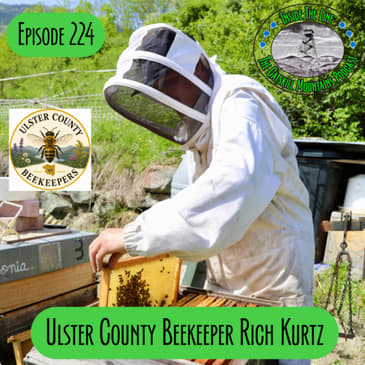
Welcome to episode 224! This week, Ulster County beekeeper Rich Kurtz joins us to talk about the fascinating world of beekeeping in the Catskills, the vital role bees play in our ecosystem, and why these tiny pollinators have such a huge impact on the natural world around us. We also dive into a recent bear attack in Greene County and chat about Mike Suidy, who somehow managed to complete all 35 Catskill High Peaks in just over two days. Inspiring or insane? You decide. Make sure to subscribe on your favorite platform, share the show, donate if you feel like it… or just keep tuning in. I'm just grateful you're here. And as always... VOLUNTEER!!!!
Links for the Podcast: https://linktr.ee/ISLCatskillsPodcast, Donate a coffee to support the show! https://www.buymeacoffee.com/ITLCatskills, Like to be a sponsor or monthly supporter of the show? Go here! - https://www.buymeacoffee.com/ITLCatskills/membership
Thanks to the sponsors of the show: Outdoor chronicles photography - https://www.outdoorchroniclesphotography.com/, Trailbound Project - https://www.trailboundproject.com/, Camp Catskill - https://campcatskill.co/, Another Summit - https://www.guardianrevival.org/programs/another-summit
Links: Ulster County Beekeeping, Mike Suidy’s direttissima, Bear Attack in Greene County, My Sunset App Google, My Sunset Apple, mountain mint, Pollinator Pathways, Catskill Native Nursery
Volunteer Opportunities: Trailhead stewards for 3500 Club -https://www.catskill3500club.org/trailhead-stewardship, Catskills Trail Crew - https://www.nynjtc.org/trailcrew/catskills-trail-crew, NYNJTC Volunteering - https://www.nynjtc.org/catskills, Catskill Center - https://catskillcenter.org/, Catskill Mountain Club - https://catskillmountainclub.org/about-us/, Catskill Mountainkeeper - https://www.catskillmountainkeeper.org/
Post Hike Brews and Bites - Hudson North, Lola’s, Garden Cafe
#beekeeping #bees #catskillbees #catskillmountains #hudsonvalley #hudsonvalleyhiking #NYC #history #husdonvalley #hikingNY #kaaterskill #bluehole #catskillhiking #visitcatskills #catskillstrails #catskillmountains #3500 #catskills #catskillpark #catskillshiker #catskillmountainsnewyork #hiking #catskill3500club #catskill3500 #hikethecatskills #hikehudson
[00:00:29] The bushwhacks were some of the worst days I've ever had in the mountains, or life really. Whereas Pantsy Mountain is totally opposite, it's a mountain on top of a crater. I think the weather challenges on this incident were particularly difficult. It is really the development of New York State. Catskills will respond to it.
[00:00:52] Passing into Inside The Line: The Catskill Mountains Podcast. Alright, so I will break that open later, Tad. So Episode 224. So Rich Kurtz will be joining us later on. Talk about beekeeping in the Catskills. Ulster County Beekeeper.
[00:01:21] And he, you know, beekeeping is essential. Bees are essential to the Catskills, to Mother Earth, basically. And, you know, it's great to talk about that. We had, oh, I want some Marilyn on here talking about how butterflies are essential. She was a great guest. Oh God, she was so much fun. Rich is joining us tonight, so that'll be a good time. We'll have a fantastic time with him. And we'll talk once again about beekeeping, how it's essential here in the Catskills,
[00:01:50] and how we can help out maybe as a, you know, community, as hikers and stuff and such. But the one thing that I wanted to big up is, Tad, last week we had, we talked about the fastest known time. Yeah. Alex attempting it. He was going to do the fastest known time for the 3500s. I got stuff wrong. Unsupported. Unsupported. Yeah. I said something wrong about Mike Sudi, Mike Sudi doing it.
[00:02:15] I said that I don't, I didn't know if he was doing it, you know, like escorted from trailhead to trailhead. And I got called out. So I've, I made a mistake. I'm very sorry, everybody. But Mike Sudi did this in two days, nine hours and 16 minutes running everything, not transported anywhere. The guy fricking did it on foot.
[00:02:42] And before that, Ted cave dog Kaiser held that record for 16 years and he did it two hour, two days, 15 hours and 24 minutes. So Mike beat him by two, by six hours. That's insane. Yeah. He was, so he wasn't running. He was fucking sprinting. Yeah. Like, I can't imagine that. Like coming down, like today, coming down Panther, like, you know, you don't like, like we talked about before, like rolling your ankles.
[00:03:11] Like I, I must've done it like five or six times. It, this guy's looks probably like leapfrogging fricking rocks, like eight different rocks and stuff like that. Like that's scary. Yeah. Well, you know, Mike Sudi is a, uh, very, uh, multi-talented, uh, athlete. You know, I know he's a rock climber, uh, does bouldering.
[00:03:33] You know, my daughter, when she worked at one of the local, uh, rock climbing gyms would see Mike in there all the time, you know, sending some routes. So he's, he's real hardcore. Yeah. And now he's taking care of the canisters. So don't fuck around with the canisters. He'll have Mike's be after you. You'll have, and he'll catch you. He will fricking catch you. And I guess this brings me to what I've been meaning to say for quite some time.
[00:03:58] And that is when you open up the canister and you go to sign in, make sure that you're not leaving a blank page. Cause all the time you open up the little pamphlets, the booklets inside the canisters, and you'll see that people are just signing on one side of the sheet and then flipping to the next, but not going on the backside of any sheet. So that's eating up those booklets, uh, quicker than they need to be means that Mike has to get out there more often.
[00:04:27] I'm not saying that Mike isn't capable of getting out there more often. We know that he could hit every canister in the Catskills and probably a day and a half if he had to. Without, without increasing a carbon footprint doing so. Cause he just, you know, bolt from one to the other. So try to use all the pages. And when you see Mike out on trail, if he slows down, give him a high five. Yeah. Give him a high five, give him a Snickers bar or something. Then he'll just, he'll be like gone like the wind.
[00:04:57] Yeah. Or you might catch him at, uh, Woodstock brewery on route 28 in the afternoon and you can buy him a beer. Oh, well, what is he there? Yeah. He's known to hang out there. Oh, nice. Okay. Okay. Okay. I'll have to stop by there sometime. So once again, Mike did that, uh, from Peek and Moose all the way to Wyndham, 140 miles, 30,000, 30,000, over 38,000 feet of vertical ascent. Unbelievable. It was called the diartissima. Yeah.
[00:05:28] So, sorry, once again, for, uh, for making that mistake. Mike did that on foot all the way. So two fricking days, absolutely insane. Uh, but wanted to, to bring that up. I also wanted to bring this up. You know, we talked about a couple episodes ago, talk about mountain lions and people not claiming that they've been met mountain, attack by mountain lions.
[00:05:53] And they probably really have, but, uh, now in Catskill down in green County, we have a lady that was attacked by a black bear. So, uh, when was it June 4th? Jeanette Ruchichi, Ruchichi was extinguished in the fire near the backyard. Uh, when she felt an eerie presence and approach from behind, uh, there he wasn't as high in length.
[00:06:19] She said 70 year old said he whacked me in the face, knocked me down and trampled over me. Uh, the black bear disappeared in the woods, leaving her stunned and on the ground. After several minutes, she pulled herself up and went inside to call for help. Paramedics who responded that night, examined her for scratches and other injuries. She ultimately does decide. She ultimately decided against going to the hospital.
[00:06:42] Uh, but this left her with a deeply shaken and thought bruised and sore slept a little days since, and she feels too anxious to linger in her backyard at night. And she now keeps a shotgun near her front door in case the bear returns. She said, it's been a nightmare. Uh, this really rarely happens, uh, that in the, in the Catskills and in the New York state, uh, despite their increased populations, uh, attacks on black bears remain rare.
[00:07:11] In the past year, between 1960 and 2007, 10 people were attacked in New York with eight resulting in non-seriously injurious. Uh, according to a 2007 report by the DEC, uh, one of the attacks was serious. An infant was snatched from her stroller in the front porch in Fallsburg, Sullivan County in 2002. Uh, the bear had dropped the infant, uh, uh, after neighbors screened at it after and the baby was unfortunately killed.
[00:07:37] Uh, so she is still, uh, Rich, Rich, Rich, Rich is still healing from last week's attack. The bruises on her face and body are slowly healing, but she has a nice piece of land and she's gonna go out and sit, but she is still terrified. So that's a, that's a little crazy. Those domesticated bears down there, I guess. Yeah. Yeah. Yeah. You know, I mean, I find it interesting. Number one, that she declined to go to the hospital.
[00:08:06] That's telling of superficial injuries, right? She wasn't bleeding and needed, you know, sutures or something else to control the bleeding, no dislocated TMJ, you know? Uh, so that's fortunate that she wasn't all that injured other than maybe emotionally.
[00:08:26] And then what you didn't point out is I saw in another news source where it reports that she had previously alerted the New York state DEC about a bear in the area that appeared sick, injured and walking in circles. So I don't know if it's the same bear.
[00:08:50] Um, and if it was the same bear, you know, is it a rabid bear or did it have some other condition or disorder that made it more prone to do that or not? But I thought that was interesting. I didn't find any follow up reporting if the DEC, um, found this bear and euthanized it.
[00:09:13] So presumably the, this bear, whether it's sick or not is still out there, but that's not the most interesting thing about the story. Stosh. Go ahead. Like, uh, but now I'm, I'm, I'm curious. What, how, how much shit did I miss? Well, what I thought was interesting is that she was burning stuff in a 55 gallon barrel in her backyard. True. Isn't that illegal?
[00:09:36] Well, whether it's illegal or not, what was she burning and did the odor, the fumes from the burning, um, smell like, or similar to the smells and odors that this bear and other bears are accustomed to smelling and encountering.
[00:10:00] When they go dumpster diving, trash can tipping, you know, eating out of trash cans along the side of the road on garbage pickup day or in people's backyards. And so when she starts burning that, you know, the, the, the flames, the fumes, the odor is now coming out, presumably more stronger from the barrel. At least initially, is that something that attracted this bear to her backyard? That's my hypothesis.
[00:10:27] I know I, the most often I see bears is when I'm out riding my road bike in the morning on garbage pickup day, you'll be coming down the road and you'll see a garbage can, uh, tipped over and the butt of a bear sticking out of it. Is it's rifling through the inside of that garbage can for stuff to eat. They're like, Hey, Todd, how you doing? Yeah. I see that all the time.
[00:10:52] And really the concern is, is when they, when they hear you coming and they, they back out and they see you, then they bolt across the road and you got, if you're coming along fast, you know, it's a conflict, potential conflict between you and the bear. So true. Yeah. Not that it's ever happened to me, but I, I have seen videos. Thanks to you with people, uh, on bicycles getting hit by deer crossing the road. Yeah. That was a little crazy. Yeah. That did that.
[00:11:22] Was that the one that clipped the kid? Right. Yeah. Well, kid, I mean, I think the guy must've been in his twenties or thirties. Okay. Okay. Yeah. There was another one. I saw there were a guy like it clipped a kid and he was like, Holy shit. Like it was just, it was pretty crazy. So, and then like, I mean, you see, I remember seeing a reel where like a guy was being chased on the side by a bear, but I found out that that later was AI. Like it was, it was weird, but you know, like we don't. What made you think it was AI?
[00:11:52] Did the bear look too perfect? I mean, it was like, just a lot of people commented that it was AI. It's not real. It's just certain different things about the bear went through the trees. Like weird. Like there's no like stopping the trees. Like he just plowed through, didn't plow through them, but there was, he just went through them. Like. But bears do that. Every bear that I've seen running through the woods doesn't like slow down for trees ahead of them. Yeah. They just like navigate seamlessly through stuff like that.
[00:12:20] It's like when you see an owl flying through the woods or a hawk in the woods, you know, man, what navigation skills they have. So yeah. Bears don't slow down for stuff like that. If anything, a tree's ahead of them. They just bam, bolt up it. Yeah. It's, it's crazy. So it's once again, I mean, the bears up, up here in the Catskills seem pretty nice, except for that one over on plateau that we haven't had heard anything about in a while. Correct. Was he, that boy was a euthanized, right?
[00:12:50] I don't remember if they even found that bear. So I think two years ago, two summers ago. And there was also at or about that time, one over in the North South Lake area that was what they call a nuisance bear. It's not a nuisance bear when there's people that like don't know what they're doing and leave their food out and stuff like that. It's a bear. Yeah. Man, if I fricking smell some good cooking chicken, I'm going to walk over and be like, hey, you got any leftovers? Like.
[00:13:17] They either leave their food out or they eat it in their tents. Yeah. It's almost like a, it's almost like an open door to invite the bear to come inside. Yeah. My fricking neighbor has hamburgers. I'm like, what are you cooking over there? Like I, I, and they're just like, oh yeah, yeah. It's not like a bear is going to be like, oh man, this doesn't smell like your normal shit that has flies all over it. This smells delicious. I don't know people, man, stuff crazy. Well, yeah.
[00:13:45] So wanted to bring those two things up. That's about all I got for news and stuff like that. I know my friend pointed out, I haven't really researched it, that there was a manhunt going on over there in California for a 70 year old man or around that age. And there was countless amount of hours and such. So I got to look at that. Maybe we'll look, we'll get that into the next week and stuff. So crazy stuff.
[00:14:10] So, uh, also, Tad, you threw this in here on Balsam Lake wild forest on May 30th at 8 11 PM. Rangers Horn and Sweeney responded to a call for an overdue hiker in Balsam Lake, uh, forest in the Catskills. A 50 year old split up from their hiking partner and may have hiked up Balsam Lake, Lake mountain by mistake.
[00:14:32] At 8 53 range was located the subject in good health near the Alder Lake lean to the hiker plan to camp overnight with the hiking partner and resources were clear at 9 24 PM. So interesting. Yeah. I mean, that's a pretty sketchy report because for those of us who have hiked over there, um, and know the terrain and the entry points, you, you kind of wonder how that went down.
[00:15:01] That was he, did they start over, uh, at Alder Lake or did they start elsewhere? Right. You know, and if they started at Alder Lake, how is it that he went up Balsam Lake mountain without realizing he's going up Balsam Lake mountain? I mean, that's a lot of distance and a lot of vertical gain at the end. Yeah. To be lost or mistaken.
[00:15:24] So the obvious inference is lack of something to navigate with and orientate yourself with, but, um, you know, pretty happy ending for this fellow. Wasn't attacked by a bear. Yeah. Alder Lake. Like, I mean, that's, uh, might've hiked up Balsam Lake mountain by mistake. So like where the hell, like, like we, we need more details than that.
[00:15:52] That just seems a little weird by mistake. Yeah. And then if he hikes up Balsam Lake mountain and ends up at Alder Lake, there's a lot of signage coming off of Balsam Lake for you not to make the correct turn. Correct. Notice, notice how I said not to make the right turn. Cause some of those turns would be left. Yeah. Right.
[00:16:15] So, yeah, but there's, you know, I granted some of the signs are obscured by tree branches, but I would think once you reach a destination, like the summit of Balsam Lake mountain. And you weren't sure where you were on your way there, you would be damn sure that you would figure out which way to go coming off of it.
[00:16:34] Um, but you know, maybe the person just had a low level of information going into this and navigationally didn't have the right stuff to get orientated and know what way to go. So no injuries, happy ending as it should be. Yeah. Right. I'm just, I'm just looking at the map and I'm just like, God, damn, that's, you know, that's like six miles away from Balsam Lake mountain. Up and back. Yeah.
[00:17:03] That's just interesting. So, well, good. Once again, good, happy ending horn, Sweeney doing their shit like they do. You know, we had to horn on the, the episode. So, uh, good job. So we'll hopefully we won't hear more of this. We're starting, I can start and get a little bit more popular because of the weather. So speaking of the weather, Tad, what was the, the, this, we're at Tuesday. It is 7 30 PM. What was the high there down in, uh, where you were at in like New Paltz area?
[00:17:31] Uh, I think it was 85, 86. It was a lovely day. Yeah. Yeah. It was 87 up here in Oneonta. So we've been having some warm days and the warm days are continued to keep coming. So it's supposed to get hotter and hotter as the week progresses, as we're talking right now, but it comes to the weekend. We, we, we don't know as of yet, it looks to be a decent weekend and decent weather. So we're starting it's starting. Yeah.
[00:17:58] So long as the humidity doesn't come with it, we're okay. Correct. Fucking flies. I'll talk about that later. Yeah. And remember to bring copious amounts of fluids and electrolytes. Correct. Correct. Or, or hard ciders or hard ciders. Yes. Yes. Just saying that we're running the stosh and he's electrolyte depleted. Let me crack it open. Oh, well, actually crack it open in distance. I'll be there like Mike Sudi. I was like, Hey, what's going on?
[00:18:28] You'll be there like a, you'll be there like a bear in the Hamlet at Catskill. Correct. Wow. Looking for an open burn in somebody's backyard. Cracking jokes tonight. Right. Jesus. So big. Thank you to the monthly supporters. Chris Garabian, Eric Rosario, Jeff Jotz, Vicky Ferraro, Mikey S, Henry Birdmeister, John Comiskey, Summit Seekers, Desert City Radio, Betsy A, Denise W, Vanessa and Jim C. Thank you guys so much for supporting the show. Greatly appreciate it.
[00:18:57] Also, big shout out to our sponsors like Outdoor Chronicles Photography. Molly specializes in adventure couple photography. She'll immortalize her moments amidst the stunning landscapes of the Catskills, Adirondacks and White Mountains. She'll craft timeless images that reflect unique bond in nature's grandeur. So if you want to embark on an unforgettable photographic journey, you should do that with Outdoor Chronicles Photography. Don't hesitate to get a hold of Molly on every single platform.
[00:19:27] Also, you should discover the wilderness with Trailbound Project. Their expert led hiking and backpacking education programs offer unparalleled outdoor experiences. Whether you're a beginner or seasoned adventurer, join them to learn essential skills, explore stunning trails and connect with nature. Start your journey today with a Trail Bomb Project on the Moloch the Wonders of the Great Outdoors. So, this previous week, were you really outdoors?
[00:19:55] It's our little session of mentioning the podcast and one of your hikes through social media. We'll chat about it on the show. Tag us by typing at ITL Catskill MTM Podcast on your post. So, to start it off, Dickie at Hiker Goddesses Adventures. Was that the Neemam Fire Tower? Am I saying that right? Neemam? It's close enough. It's close enough. God damn it.
[00:20:23] But it's not close to Alder Lake, so you won't get lost if you hike it. True. True. Start off there and she had a great view and such. And then she did a four-mile adventure. Oh, it started off as a four-mile adventure on Gilder Pond up to Mount Everest. Turned into an all-day two-mountain adventure. They hiked Gilder Pond. Then went on the Appalachian Trail to Mount Everest, where there used to be a fire tower.
[00:20:50] They decided that they continued to Mount Race and had lunch atop of Mount Race. And then before heading back to the car, they slight detour to Racebrook Falls. So, once again, a four-mile adventure turned out to be a two-mountain adventure that extended. So, once again, good job, Dickie. You are getting out there and getting out and about. It's great to hear your stories. Yeah, I never knew that Mount Everest was on the AT. Everett.
[00:21:20] Oh, Everett. So close. Oh, okay. Everett. Close. I mean, Everest. Somebody should change that. Rename it. Yeah. Also, Kelsey. Mount Stosh. Mount Stosh. I don't know about that. I ain't ever going to do that crap. Yeah. I'm good with the Catskills. I'm good with this stuff. Yeah. Okay. So, hiker Yogi Kelsey was out on Twin Mountain taking some beautiful pictures. Tracy Pink Pony 18 was at Melt's Lookout.
[00:21:49] She went up North Mountain, correct? And up to South, or North, yeah, North Point to South Point. Oh, yeah, yeah, yeah. She commented on how unique and interesting those areas are, which they are. There's a lot of diversity over in that area of the Catskills. Yeah. Not just in like, you know, like it's geological and like plant diversity and tree and stuff like that. They have kind of, what are those called?
[00:22:18] Pitch Pines? Yeah. They have the pitch pine trees like we see in the gunks and elsewhere. A lot of, you know, different types of sedimentary rocks over there. Just a very interesting area. Often overlooked because everything in that area is under 3,500 feet. So, Tracy is doing what all hikers in and around the Catskills should do. And that is like in and around the Catskills, like along the escarpment. Correct.
[00:22:48] Explore. Yep. Explore. So, Mike, good to hear from him. Hardcore Ham was up on Bull Hill and looking like when he did his little data was reaching people out in South Carolina on his ham radio. So, that's pretty cool. Yeah. That's really cool to see his stuff because, you know, once again, like everybody's like, oh yeah, I could call somebody in South Carolina or something, but it's a little different reaching, but it's a Spotify radio and random person.
[00:23:15] But why isn't your smartphone the same? I mean, it's wireless. It's kind of like a radio. It is, but you don't hear some random person say, hey, I reach you from whatever. It's the randomness of it. Oh, spam caller. Yeah. That should be a new thing. That should be like a new challenge is to make a spam call on the top of each of the mountains over 3,500 feet in the Catskills.
[00:23:45] Spam or ham call? Well, if it was a ham call, you'd have to use a ham radio. But if it was a smartphone, then it would be a spam call. Yeah. So, I think you got something going on with Mike. Mike might be a 3,500 ham guy and like 3,500 ham or something like that. Are you calling me a 3,500 spam guy? I think- I think- Never fight in words. No, never.
[00:24:15] Never would I fight with you. You do too many pull-ups per morning. I don't want to mess with that shit. You know it, buddy. I barely get up in the morning, so. You know what they say, 63 is the new 83. What? You're a little, what the fuck? Like, no, no. It's just Diet Coke, I'm telling you, man. They put in there to make it taste sweet. I mean- All right, moving along. Moving along. Moving along.
[00:24:40] We're getting to Todd Bold, the guy who allegedly works full-time but gets out and does more adventures than a retired person. Yeah. Sticking with the age theme here. It seems like it. So, Todd, Tebold Outdoors did the Five Sisters with Danny, Kate. It's great to see this. I love seeing this because once again, did the podcast bring them together? I mean, before that, did Danny and Kate hike together or, you know?
[00:25:10] I don't know how those two got together, but what I was interested in when I saw this trio is where was Beyond Blazes. Yeah, right. Because she fits right in with that group. Normally her and Danny are joined at the hiking boot together and seldom do you see one out without the other. Yeah. Yeah.
[00:25:38] And I, you know, once again, it's Todd, Danny and Kate. So, like, Danny and Kate have hiked before but Todd hasn't hiked with them. So, it's great to see- Oh, wait, I think he did. He did hike with them and Tom Hoos one time. So, like, it's just great to see all these people coming together, like, hopefully through the podcast and stuff like that and have a good time. He did Bear Mountain, West Mountain, the Timp, Dunderburg Mountain, and Bald Mountain.
[00:26:05] So, I have no clue where those are. I know where Bear Mountain is, but... Yeah, I think all of that is in or south of Harriman State Park. Okay. Okay. So, good to hear them all getting together and doing this awesome hike. Ascana, Catskills Ever After was up on Hunter Mountain. Catskill Mountain Hiker was up on Bear Mountain, West Mountain, the Timp, Dunderburg Mountain, and Bald Mountain with Todd, Kate, and Danny.
[00:26:35] So, I mean, that's cool. Once again, those four were out doing their thing and hopefully, you know, the podcast brought them all together. We should get like a crew of like 80 people to go up Panther, Giant Ledge. Yeah. Yeah. Well, that's gonna leave a trace. Yes. I think the DEC, what are they? Cap hiking groups and the Catskills to 13 people. 13. Yep.
[00:27:05] Yep. But 80, you know, we can do 13 and then 20 feet later, 13. Just bunch it together. Always looking to bend the rules. I would take my group of 80 to Snyder's and say, screw the hiking. We're just gonna go have a couple brews down at Snyder's. Support Snyder's. I agree. I agree. Speaking about the group, Kate tagged us. Henderson hikes was with them.
[00:27:35] Bear mountain, West mountain, the Tim Dunderburg mountain involved mountain. So good to hear that. You guys all got together and had a beautiful data hike. Scott cats go mountain brood did the Spruced in straight shot, which is West kill St. Ann's, North dome, Cheryl, and then later on the next day did Indian head with Zorro. So Scott's going after his grid like crazy. He just keeps punishing them out. Yeah. I think he just crested over 200. So that's a good milestone. Jesus. Closing in on halfway.
[00:28:04] That's crazy. That's crazy. And he said he's going up. Uh, this was, he's gonna be doing the nine, I believe this weekend. Oh yeah. Good for him. I hope the weather's great. Yeah. And he's, uh, prepping to do some like intense days up in the Adirondacks. So he's doing like seven days of hiking in the Adirondacks. So. Yeah. Sounds like he's got an addiction. I mean, yeah, I'd hope so. Yeah. That's a good addiction. I agree. I agree. Andy Brownski did a 12 hour, 25 mile walk.
[00:28:34] Uh, let me pull this up, uh, for actual stats like that, not stats, but, uh, his location to location, because I remember him talking about this and someone said he like, or he stated that he hiked what the Croton dam all the way over to the walkway over the Hudson. I'm pretty sure that's. On this hike. Wow. That's pretty interesting. Yeah. Yeah.
[00:29:03] So, uh, it's gotta be more than 25 miles. Ah, so hold on. He went Croton dam, the old Croton aqueduct trail, the Mario Cuomo Tappan Sea bridge, the old Erie path in Piermont. And then the Joseph B Clark rail trail. Hmm. I'm not familiar with any of those, except the Tappan Sea and the Croton dam. Yeah. But 25 miles, 12 hour walk.
[00:29:30] I think it was like a challenge, like 12 mile or 12 hour walk and just keep, keep going. So. Yeah. On the one hand, it does sound kind of random, but I guess if you're, if you live downstate in that area, it might make a lot of sense to you. Yeah. Maybe it was a bar hop. Maybe there was a, you know, a bar every few miles. And that was the reason, you know, instead of a fire tower challenge, it might've been, you know, uh, uh, gin and tonic to it. I mean, I, I'll allow it.
[00:30:00] That's, I mean, he's no, as I remember, he's into the, um, industrial arts, brewing out of beacon third beers, which are all very good beers. And so maybe that's what he was doing every few miles. Popping one open and keeping going. Yeah. Just making this up. I'll allow it. I will allow it. Uh, hiker Joey and why did sleeping beauty, which makes four out of the 12 Lake George 12 star list. A lot of people going after their list, which is awesome.
[00:30:29] Um, Jim C did platykill mountain run, which was 6.73 miles and 3,370. 376 feet of gain. And he's training to do, this was a training to do for the cog race up on Mount Washington. So Jim is ripping it up. He's crazy. Yeah. Good for Jim. Yeah. And good for, good luck, Jim. Uh, once again, I remember him saying that up at platykill, it was a bunch of black diamond. Uh, I think it was two or three black.
[00:30:56] I think it was three black diamond, uh, rubs. Some are some steep ones. Yeah. They're black diamonds over there are worthy of the black diamond. So after he does his cog race on Mount Washington, let us know if you want to get Jim C on the show to our listeners, just send us a bunch of messages and comments, and then we're going to cut and paste them and send them all to Jim C and tell him that it would be so uncool
[00:31:23] if he refuses to come on the show after this. I highly doubt he would refuse. He's a cool, super cool guy. Um, Lisa chaotic. Cousatac drove her new Subaru to the Adirondacks and some of the lower and upper Wolf draw am Armstrong Gothic's pyramid and saw teeth on the weekend. So yeah, awesome job. And she said she loved, I remember her comment, um, saying that, uh, she could probably live
[00:31:52] in this Subaru. Oh yeah. Good for her, man. My daughter actually does live in her. My daughter actually does. That's awesome. Yeah. I mean, when, you know, it's when, when I want to send her a mail, I just, you know, put her name, her license plate number, and I put a postage stamp on it and send it to her. And you know, the postal service, they don't let me down. They get it to her. No, she's off in France.
[00:32:15] Now her Subaru, I am told is sitting in somebody's driveway in Colorado with a couple flat tires. Cause it's been there so long. She's, she's been out of the country, I think going on her fifth month. So good for her. Crazy. Yeah. Maybe Lisa someday can head off and live in her Subaru for a few hundred thousand miles. Sounds like a plan, right? Yeah. I won't complain. Yeah. I don't know if I would be able to do that in the Subaru. That's, that's a little tight.
[00:32:45] Yeah. My, my daughter who has been to a lot of different countries, a few different continents. Now she's in France and she says the people there are just fantastic. And the countryside is, you know, fabulous. She's really enjoying it there. So if you have the opportunity to go to France, do it. Rock on, rock on to live your life, live your life. Like a Sophronia doing it.
[00:33:15] So Rob at Rob rock photo did caters go high peak Friday, fly in bear pen and how can hockey on Saturday. And then Sunday did a Southwest center. Yeah. Is he new? Is this his first tag? I don't, I remember he's done it like once or twice before, but he's not a regular. No, no, he's not a regular. So it's good to hear. Yeah. We're going to have to see if he becomes a regular. We hope he does. Yeah.
[00:33:42] So check out, check out Rob's Instagram profile, Rob rock photo, R O C K E photo. Uh, uh, last but not least, Joe tagged us today. Joe Kaplow went up with him high peak on the weekend. Just said it was a great time at a lot of people. He saw completing his all trail challenge, not completing, but he's continuing his all trail challenge, uh, from Elm Ridge. And he said, he saw a lot of people.
[00:34:09] He said it was a little, uh, the views were a little obscured because of the, the, oh God, the humidity and stuff. But, um, you know, had a good time. Loved it. I always loved when my peak, when them high peaks, a good one to do when you don't want a crazy push and you want to just glide. That's what I call it. Glide up. Wouldn't them high peak. Hmm. And there's people like Tad and me who liked to bush, whack up it and have misery.
[00:34:39] It's not that bad. I mean, but you went, you went that other way. You went from the, the, the north and that was actually pretty nice. My last time up it. Yeah. Yeah. Yeah. Yeah. I, I hadn't been on that part of the escarpment trail. I mean, the whole from a black head over to Wyndham, that whole stretch and at least a couple of years, it seems. So it was nice to revisit it. Yeah.
[00:35:07] It's, it's, it's a beautiful section that it really is. Mm-hmm. So, uh, so that makes a total of 15 texts. Yeah. Awesome. Thank you everybody. Once again, tagging the show, getting out, enjoying your stuff. Love to hear the tags because, uh, this kind of gives the community a sense of what's like, Oh, but the trails are like and, and stuff like that. You know, what's going on, you know, we'd love to hear about that. We're almost like the, the podcast, almost like it's drawn trail conditions page. Yeah.
[00:35:35] And also kind of like encourages Stash and I to do more of these episodes. Cause we know people are out there listening to the podcast and hiking up a storm makes us feel good. Yeah. That you are enjoying the product that we're producing and you're tagging us. So tag us more and more often. Yeah, please. Here we want to hear about your mentor. So also if you like us, you know, buy us a hard cider to support the show.
[00:36:05] You can do that and buy me a coffee. I renamed it to buy me a cider because that's what we like. We like ciders and he likes IPA and Ted likes IPA. So yeah, buy us up to support the show or support the cat skills. Uh, also rate the show if you can. Uh, I remember Todd said he rated the show. So was that Todd bold? Yeah. Yeah, he did hold the, finally, finally. Yeah. Yeah. Right.
[00:36:33] He said, love listening to the podcast. It's incredibly entertaining, but also delivers a tremendous amount of education to listeners. Even if you've been hiking with, uh, or involved with the community for decades, there's always something new to learn from the conversation experiences they share beyond the podcast itself. They've also created an amazing forum for the hiking community, a space that has fostered genuine friendships, hiking partners, and deeper sets of connection among outdoor enthusiasts. Thanks for what you do.
[00:37:03] Stosh and Ted. Wow. That's quite an endorsement. Powerful. That's powerful. So thank you. It was T. It was T bold is what it was. Yes. It was nice. Nice. So thank you. I'll rate the show. Uh, and that'll be, that'll be fantastic. So Ted, you already cracked yours open tonight. Am I correct? I suppose I'm cheating and that's only because it is a 100% jacked.
[00:37:34] It's a genuine Coca-Cola zero sugar. Cause I can't afford the sugar. So I get mine without it. Nice. Cuts off a couple, a couple cents or something. Yeah. All right. So what do you got? Oh, I got it. Sounds like a hard cider. It is. It's a Hudson North. Um, I don't know. I saw the orange thing. So it's a popsicle something. No, no. Close. Close.
[00:38:04] Oh, it's, it's tough. Okay. Big apple. There you go. Yeah. Big apple. North big apple. Good. 8.2. Uh, wow. That's, it's a good one. It's a very good one. Yeah. So it's, it's been hot here. So we've got, I got to gulp this down quick and then have another. Well, I got the fan going on here. So, all right. After that gulp, why don't you tell us about your previous hikes?
[00:38:31] So, uh, previous hikes for me on Thursday, uh, me and Jessica, Jessica and I were thinking about doing a sunset hike. And I have this app that I want to show everybody and tell everybody about called my sunset. It's called my sunset. It sounds romantic. If you went out with your wife and you're using the, my sunset app. Right. Right. Right. Actually, my friend John joined us.
[00:39:01] So, um, really it wasn't romantic, but it was great. It was great. Uh, this, this app shows you percentage wise of how good of a sunset you're going to get. So we had on Thursday for, they show you sunset, sunrise, golden hour, and something else. What is, what is the pre sunset or sunrise? Is there, is there anything called that? So we had, you have golden hour before sunset.
[00:39:31] Um, I don't know what, like after sunrise or stuff, but it shows you your percentages wise of what you're going to get, you know, cloud coverage compared to the low height of the sun cast casting that, that color onto the clouds. So when I looked at it the day before we had an 82% chance of seeing good colors in the golden hour. So I was just like, let's fricking do it. It's going to be a beautiful day. Let's go up there.
[00:40:00] I offered my friend John to come up and he said, hell yeah, let's do it. We're going to go Bramley. So we did it. And it was a beautiful fricking hike. Uh, got a, it was not windy. There was a lot of bugs. Um, we just went up to the fire tower road and got up there considerable amount of time before the golden hour. So we had dinner up there. We had all had subs.
[00:40:25] We had subs from daddy owls and ornianza and we just went up in the tower and waited for golden hour and golden hour was okay. Was nice stuff. But then right after that, the sun started to go down a little bit more after golden hour and it just started getting absolutely magical to wear like dark red, dark orange.
[00:40:48] I mean, it wasn't on the, the clouds, but the sun was, was doing that kind of disappearing, reappearing with different colors. And it was just one of those phenomenal times. The wind was blowing very lightly up in the fire tower. So you didn't get super cold or the wind didn't disturb you that much. And we just like, we were only going to stay for golden hour. And then I, I was like, Hey guys, we have a, it looks like it's going to be an actual like really good send let sunset. Let's stay.
[00:41:18] And we did. And, uh, one cool thing that I didn't think would happen is when you, you, the sun, of course you're facing Southwest. Now, uh, when, when in the winter you'd be facing totally West, I'm Bramley as I turned around and I looked Southeast and I see the shadow of Bramley and I'm just like, Oh shit. That's super cool. I didn't, I didn't know. Like you could, I mean, you could do that like in different places, but like in Bramley,
[00:41:47] it just doesn't seem high enough that it would cast that kind of shadow. And it did, you know, you see those pictures from like Mount Rainier or something when they had the sunrise or sunset that it just cast in this massive shadow. And, um, it was really cool, really beautiful day. Um, really beautiful night walk down. We probably did halfway down without headlamps. And then we just had Jessica was in the back shining the headlamp for us in the front.
[00:42:15] So she didn't have to, you know, feel crazy that, uh, you know, she was going to trip or anything, but it was beautiful time. Uh, fantastic, beautiful day. Uh, just, I suggest anybody to download this app, uh, to check it out. My sunset app, I will have it in the show notes, pretty cool app. Uh, it's not 100% accurate. Like always, you know, we had a, uh, a decent chance at a golden hour, golden hour was okay. But then the sunset was, was phenomenal.
[00:42:44] So it's, it's really cool. Hmm. Yeah. Did you, why'd you pick that sunset predicting app versus others? Did you look at any others and settle in on this one or. I didn't. Do you, do you know of any others? Oh yeah. There's a few of them out there. I used to use one quite a few years ago and then it it's accuracy, uh, or what I thought was initially accuracy just kind of seemed to get diluted over time.
[00:43:13] And it was more or less 50, 50 and I stopped using it. Oh, okay. I didn't know if there was other ones. Yeah. So how many apps do you have on your phone roughly? Jesus. More than 50. Do you have like pages of apps? You're one of those people. I near, I seriously need to get rid of a lot of the apps, but I use them once in a while. So I mean, hiking apps, I have my own page. I have probably like. Like a hiking page of stuff. Yeah.
[00:43:39] I would say like 15 apps, you know, weather, uh, navigation. Uh, what else? Uh, like, well, I, my fricking, uh, SAR apps that I probably could get rid of, you know, like contact and stuff. So, I mean, what do you have guy on that said? Uh, for hiking. Yeah. Yeah. I use Gaia for hiking. Uh, I don't have Cal topo on my phone. I have Strava for cycling.
[00:44:07] Um, and I do in connection with Strava. I do have the Garmin in connect app, but overall, I think I have less than 50 apps on my phone. Oh, total. Yeah. Nice. And that includes like, you know, the, the message app outlook is an app. Instagram, stuff like that. Yeah. Instagram. I, I, on my phone itself, I don't have many nor on my tablet. Yeah. I gotta get rid of stuff. Yeah.
[00:44:37] You can spend too much time. People, my, my one daughter, Sophronia calls it vaping that people vape on their phones. Oh, she has, she has friends that, you know, she's yet people. People in general that just sit there and just like scroll all day long. Like they're vaping on a, a nicotine vape. Yeah. That's not me. Yeah. Yeah. So you have, you have sunsets to go chase. Okay.
[00:45:01] I see from the list that there are a few other previous hikes. So many that we're not going to talk about my previous hike. So on with your next one. Oh, come on. My, I mean, you, I, you, I remember you saying you weren't able to get out. So I mean, that's, did you, did you sleep like 35 hours? I was, I was trying to punt on, on my not previously hiking. So I see you, you did the Bromley sunset. Yes.
[00:45:30] I wanted a 3.46 miles with eight, 886 feet of gain. So that was just going up the road and back. So, I mean, that's still, you know, it's still, what is it? 1.8 miles with 800 feet of gain. So that's, that's pretty good. That's pretty good for a small mountain out in the Western Catskills. Yeah. And you were loaded down with some subs I hear. Subs. And I had a lot of water and a, and a two hard ciders. Actually I had one up top.
[00:46:00] I said, Oh, I gotta do. I gotta post that picture of me cracking one open up top. There you go. That was good. Good thing. I mentioned that. Yeah. Yeah. So, and then today, today I was a couple days ago. I was alerted from a friend of mine who's been on the show, James Hobson, the ledge founder, the ledge finder, ledge seeker. I gave him a special name, ledge, ledge hunter.
[00:46:28] And this guy, if you want to talk about bushwhacking and crazy and stuff like that, this guy is, it's it. He has done, I'm pretty sure he's done all blue lining, every single blue line. He's done every single 3,500 peak bushwhacked. And he's done every single 3,500 peak like two or three times. And he goes up in the Adirondacks and does this shit like constantly. Like he is out every day.
[00:46:56] He's gotta be, I'm like over 60 years old and he's pushing it like crazy. He's always wanting to find new spots to like find and stuff. And it doesn't care. It doesn't matter where he just does it. Um, he, I know he's helping a friend up in the Adirondacks summit every single peak that they have up there, which is over 3000. I think. Wow. Yeah. So he's, he's helping to that stuff. So James posted on his Facebook.
[00:47:26] He loves posting stuff and he posts great stories about a new slide on Panther mountain. So I did the research. Uh, I didn't contact him at all. I just did the research with his stuff. Um, I decided today I would like go check it out. I was like, what the hell man?
[00:47:44] I haven't, I haven't, the last time I, the last time a new slide opened up was over on, I believe it was Cornell mountain was that big, huge rock slide that happened over on the south facing part of Cornell. I don't know if you knew about, know about this. You went up there. You had to you and Danny. Yeah. Yeah. So that, that, that's all, that's all grown in now. It's fucking grown in. Yeah. But that's not the most recent one. Where was the most recent one for this one on?
[00:48:12] Well, I'm not going to say, but the, uh, I know what you're talking about. Yeah. Yeah. I remember you said a minute, but it was, it was a semi, but this was, this was the Cornell one was significant. Big, huge boulder just went down and ripped apart this part of out, went up there. So I was just like, I'm excited. I'm like, sweet. You know, not, this doesn't happen often in the Catskills.
[00:48:33] So, um, well, you got to define often and in your sense of time, it's not often, but in geological time, it's like a blink of an eye between these occurrences. That's very true. Yeah. Good point. Good point. So set off, get up to giant ledge, giant ledge, giant, not giants, giant ledge. There's signs everywhere. Yeah. Is that next to giants ledge North or giants ledge South?
[00:49:02] So that would be the middle ledge giants, North, South East ledge. Is that the one with the, uh, newly installed, uh, kiosk or is it the one with the old banged up kiosk? Newly installs leaning at 45 degree angle. I saw that. So it's the, um, the leaning kiosk of giant ledge. Correct. Correct. So go up there.
[00:49:26] Uh, I see two people coming down and two people going up and that Mac and Emily, who I introduced myself and told them about the podcast because they're starting to do their 3500. So, uh, really cool to meet you, Mac and Emily. I told them, I'm just like, I'm going to do a bushwhack to a newly slot, a new slide on Panther. So if you hear me screaming, dial 9-1-1 and get the Rangers out here. They were all cool with it.
[00:49:54] Um, went past them beautiful views on, on giant ledge ripping it. Always as always, um, get to the point of where I want, uh, to start bushwhacking and I start bushwhacking side hilling over. And I, you know, you sometimes when you're doing this, you, you feel like, you know, especially with this, with something new, you're like, man, I'm never going to find this. I'm never going to find this. I'm never going to find this.
[00:50:22] And then finally you get to something and be like, all right, that might be it. And then when you find it, you're like, woo, you know, you fricking get all excited and crazy and stuff. So I found the opening. Do you really, is that what you do? Do you, do you make those sounds? I say, I, what I said, fuck yeah, baby. I was just like, hell yeah. Cause he knows. Do you like slam your hard cider down on the ground and stomp on it when you, when you do that, like, like stone cold or something like that slap them together and drink it down.
[00:50:51] I mean, I wish I should have brought a hard cider. Yeah. I mean, I, the bushwhack wasn't that bad. There's, there's those. There's a bunch of sketchy areas that I went across. Um, and this was just only because of the way I took it. You had, you can, you could have two different approaches to the slide. You can either just go to the flat spot where you can approach it from the bottom and then go up or the top. Well, that narrows it down.
[00:51:16] I don't want to give away like people, but you know, I do want to say like, you know, I know the people that listen to this. The only people are going to pursue it are the ones that want to pursue it. So like, I'm not afraid to give away like not locations, but you know, like certain aspects. So like once I got to the. It's also, it's also not as if this is something that people are going to deface when. Yeah. Right.
[00:51:42] I mean, the whole nature of the slide is it's already defaced. Correct. Right. Correct. So like, okay. So if I, if I'm going to say this, you know, there was, there's a first part of ledges on Panther that I saw and I was just like, I'm going to just start bushwhacking from here. It feels, it feels fine. It feels right. Um, so I did. And it just, there was a bunch of sketchy sections of where, like I had to, I wouldn't
[00:52:08] say like boulder, but like boulder climb, like hold myself and then dip myself under the boulder to get onto the next ledge. And there's a lot of potholes and stuff, a lot of little slidey areas and stuff, but it wasn't too bad, but it still felt like, like a long time. Like I was like, fuck man, I don't know if I'm going to reach this. And then all of a sudden I found it and it's not that wide. I would say it's about 50 feet wide. Uh, maybe. Uh, maybe.
[00:52:34] So yeah, like maybe 30 feet wide, sorry, 30 feet wide, about 200 feet tall up and down. So I reach it and I'm just like, holy shit, this is like ripped apart brand new. It's probably only happened. Uh, the first time I heard something about it was May 5th that it happened. Somebody was over. You can only see it when you're on the summit of slide and, and Wittenberg. You cannot see it from any other part of the Catskills.
[00:53:01] I would say, yeah, because it's all enclosed in even on giant ledge, the ledges, the trees are blocking it right now. So, um, Sebastian Seabacher, uh, he's a big, prolific Catskill hiker, uh, saw it and explored it and then James found it and stuff. So, um, once when I got to it, it just felt crazy because it's total destruction. It's this ledge. There was three ledges that I found that fell.
[00:53:31] So one probably knocked over to the other, knocked over to the other and just created massive wave. It looked like a bulldozer fricking just came right down, which basically it was and just destroyed everything. Um, I'm pretty sure where I came out was exactly the middle of it. So it was good. There's a lot of blow down. Of course, a lot of loose rocks, but it's, it's fairly, fairly fine to climb down to the base.
[00:53:58] I climbed down to the base first to get a picture and then to kind of get a, uh, like an elevation gate to see how high it was is about 203 feet. Hmm. And height. Um, once you get to the middle, a little bit more than the middle, then it becomes way to sleep steep and loose rock. It's almost like bear that you can't climb up it. You have to go to the side and do handholds.
[00:54:23] Um, but these three boulders were huge, like probably like at the bottom. Yeah. There was two initial at the bottom and then one, like a quarter of the way above that. And, uh, larger, larger or smaller than a compact SUV. Larger, larger. And so they're larger than a Honda CRV. Yes.
[00:54:49] I would say probably the size of your normal RV that you see on the side, you know, like a normal. Well, your side is size of normal RV is 35 feet and mine's 105 feet. Oh, God damn. Meet the fucker. It's kind of the RV size there. There you go. Right, right there. So that's what I'm talking about. Um, yeah, very cool. So like Ted, you know, uh, you're, I mean, Danny has, has taught you a lot of geological stuff. You already know a lot of geological stuff.
[00:55:18] So with stuff like this, how does this happen? How does a slide, not a slide, but how did these ledges break apart? I mean, over time, once again, whether. So that's, so you're, you're, you're the, from the photos you said, you posted or you sent me, you see, first of all, you see all angular rock in, in that area along the side
[00:55:40] of one of the, um, walls of this, it is bedrock, but in the center, it's, um, where the trees are, the destruction, the slide proper, we should say. It's all angular rock, which means that it hasn't been, uh, worked over by water, uh, turbid water. So it's, it's kind of fresh, uh, material that was probably a glacial deposit from way
[00:56:08] back when, and I'm not talking like a, a glacial moraine. This is just stuff when the glacier melted and receded or the ice sheet melted and receded. This stuff was more or less left in place is maybe moved down mountain a few times over the past 10, 15,000 years. Um, but this is an unstable area. And when, when you get enough water in it and maybe when there was a bunch of dead trees,
[00:56:37] presumably, cause we've had a lot of that recently, the, the roots of the trees are no longer helping to hold that material in place. You get a lot of rainfall, the soil gets saturated. It turns in kind of this plastic, uh, consistency. And then the weight of the boulders just start pushing it along and gravity takes over and it just slides down the mountain. And so you, you, when, when you really, really look at this stuff out there, you'll see evidence
[00:57:04] of old slides all over the place. Um, particularly when you look uphill from these boulders, you'll see how the soil was moved out to the left and the right, kind of like the wake of a boat is there. They moved downhill. Uh, but within probably 10 years, this will start growing in, um, and become less and less recognizable, but it's, yeah, it's a cool feature. Uh, and it shows you, this is how these, what we call mountains are continue, continuing
[00:57:31] to be formed and shaped over time. Yeah. So, yeah, I mean, look, that's, you know, that because of now it's been cleared out and that soil can erode away easily with, you know, rainstorms, that's likely to become over the next 25, 50 years. That could become a stream. Yeah. And drain and better drain that area of the mountain. And, you know, eventually, uh, show up on a map someplace. Yeah. Like Gaia.
[00:58:01] And the, you know, when you're in the middle of it or when you're actually just anything, you get a fantastic view of giant legend slide and then Cornell and Wittenberg at the same time. And it's just, it's super cool with the, with just once again, the destruction. Yeah. Like one side, you have this, I took a video and I said this one side, you have, uh, just life, you have greenery, you have that. And then you have the beautiful view of, of sliding and giant ledge.
[00:58:31] And then you look over to your right and it's just fucking destruction, absolute chaos. And just imagine, you know, you, if you were like there and you could, you know, you were up on giant ledge in may or something. And you heard this like just the, and just every tree cracking and the thumps like, God, that would be crazy. Yeah. Like a bulldozer going down mountain. Yeah. It's it's.
[00:59:01] And there was three of them. There's freaking three massive boulders. Yeah. So, and it, this is a, an instance where we can clear up a common misconception that, um, when you see these large boulders and the Catskills and the forest along the sides of these mountains, they're coming to that location. Their position where you see them today doesn't necessarily mean that they were moved there by the ice, right? Yeah.
[00:59:31] These boulders that you're looking at in this slide, um, were moved there by, you know, uh, stormwater, stormwater runoff, uh, the soil, like I said, becoming like the consistency of like, uh, fluid plastic and it just floats downhill. So not every large boulder in the woods is a glacial erratic. Often they're, they are where they are because of other forces or factors. Yeah.
[00:59:59] And you know, I always, I always think that as well, you know, like there's a massive boulder that you see with the shape, the contour of like, like 20 feet away is the, the, the ledge that it's separated from. Like, like was that pushed there by a glacier or did that simply just like slide away 20 feet? Like because of, and you know, this also, you know, also has to do with ice. You know, that's what cracks, what, what separates the, the ledge from the, the, the other part
[01:00:28] of the, the rock is the ice gets in there, expands, expands, contracts every year. Yeah. So sometimes when you're, you're off bushwhacking and you're hiking up these, uh, drainage areas that don't have a lot of fine soil material. And these boulders are resting on almost what is like a bed of talus rock. You can imagine in the winter, uh, water getting under these boulders underneath that talus rock
[01:00:57] and then freezing and expanding and pushing all of that up. And then it thaws and it moves, everything moves back down. But as it moves down closer to the mountain, um, it also goes downhill a little bit. And so sometimes when you look at these trees growing on top of these big boulders on these steep slopes, you'll see that the tree roots are actually, uh, not perving over the top of the boulder on the uphill side and going immediately into the ground.
[01:01:25] They're actually like they're reaching uphill and going into the mountain. And then there's that gap between them coming off the boulder and higher up on the mountain. And that process is actually part of the boulder moving down hill because otherwise the roots would just be going straight down the uphill side of that boulder and into the mountain. Cause that's the shortest way for them to get to the water.
[01:01:52] But the fact that they have that extension going uphill is an indication that over 25, 50, 75, maybe a hundred years that boulder has been moving downhill. Not as fast as your slide went downhill, but yeah, in geological terms and 75 for a hundred years, that's a lot of movement. Definitely. Definitely. Yeah. And geological times 7,500 years, that's nothing. That's not even a split second. Yeah. Right.
[01:02:21] It's crazy to think that. Yeah. When those boulders were formed, you know, 380, I mean, they were boulders then, but that rock was formed 380 million years ago, more or less. Right? Yeah. What's the 12,000 years since the last, uh, you know, uh, ice sheet retreated? Yeah. Not much. Right. Well, fun stuff. Yeah. Yeah. I, I admit.
[01:02:46] And the one thing that I want to like point out that I love to hear is that the thrush is back, the wood thrush and the, maybe the Bicknell thrush, they're probably gone and extinct. And that's why we're freaking out of here. Yeah. Well, you know, there's no more near that slide because you're bushwhacking over there. Oh yeah. Sent them all north. Trampling on them. Yeah. And they're babies. But I, I love hearing that the thrush going out in the conifer area and stuff like that. It's great to hear them. Yeah.
[01:03:16] And then, uh, total, I wanted to say once again, I love when you do the total stuff of your thing. So today was total. I went back, I went after the slide. I went and summited, uh, uh, Panther went over to the viewpoint and then back down to the car. So total of 7.5 miles with 2,200 feet of game. So good stuff. Uh, black flies, the flies are shit. They're absolutely disgusting. Yeah. It's not fun.
[01:03:44] So are they just annoying flies or are they, uh, flies or bugs that have acquired an appetite for human flesh? 10% appetite for human flesh. Everything else is just annoying. Okay. I don't have, but if, yeah, but if there's a lot of bugs, 10% is a lot. Yeah. True. True. I got probably, you know, like five or six bites on my air. And I have a, I mean, I, you probably see me.
[01:04:13] I know you haven't. You, we've been in the winter, so I have a lot of hair. So I, I got protection, but on the areas. Your hair, your hair is protection. Yeah. It is. They just land and they get caught. It's like a, it's like a safety net. Like they fricking get caught. It's a hair net. That's lovely. That's lovely. So you walk around with like all these, you know, like, uh, trapped bugs in your hairy arms that are trying to climb out for survival. Yeah. Yeah. And smack, they're done. So they're annoying. They're annoying right now. I don't, biting.
[01:04:43] I mean, not to, not so much, but, uh, generally speaking, they're always annoying. True. True. I got it. So when you, when you ask somebody, so why do you hike? Nobody ever says I do it for the bugs. Cause I love going out and having bugs flying around me, flying in my face, you know, trying to bite me, you know, uh, crawling around on the hair on my arms. That's why I hike. Yeah. I hiked so I can, what is it?
[01:05:09] Uh, I hiked so I can, I can have the bugs live on with my blood and they can thrive. So when I first started, uh, I'd noticed at the Porter John right upside the Porter John was massive amount of garbage. So on back down, I think of you and I think of your, uh, take five. Yeah. Take five. Yeah.
[01:05:33] So, um, I mean, I've, I've done this several times before I have contractor bags in my car and I put, I have, I have gloves, you know, uh, first day gloves, somewhat plastic gloves, put them on and I clean up two bags, two full contractor bags. So there are 35 gallon bags of garbage. Yeah. Um, this is generally all small stuff. So that's a lot of stuff to clean up. It was, it was weird stuff. You know, it was a lot of Brooklyn. What have you found?
[01:06:04] Uh, 12 pack of fricking dose of keys. Hmm. Yeah. Uh, that, and there was a lot of Brooklyn brewery. Is it brewing? Brooklyn brewery. Wow. Yeah. There's like at least eight cans of that weird, weird stuff. You know, there was, uh, like sausage, uh, sausage, like raw sausage to stuff, you know, like a primo sausage, uh, stuff that somebody must've took up for breakfast up on giant ledge.
[01:06:32] Um, like three or four. That's really, that's, that's like so sad that somebody went up there to hike and backpack. Presumably because they knew, and it was going to be an enjoyable experience because you're getting out in nature. Yeah. They didn't show it the same respect as people before them by, they left stuff there. Right. Kind of like tarnishing it for others to come in the future.
[01:06:56] So tell us for your two contractor bags full of an assortment of trail trash and parking area trash, how much time did you spend accumulating that stuff? Love that you asked this question. Probably seven to 10 minutes. Yeah. Not that long. Not long at all. And this was two, once again, two contractor bags that was right around the, the, the poor
[01:07:22] John and, and a little bit into the port outside of that, you know, some weird. I mean, there was a diaper in there as fucking fucked up. Um, but was it a diaper or was it like one of those adult garments? Like it depends. I hope it was not. I didn't really, I was talking to, I met AFR Matthew. Uh, so he was like wondering why I had plastic gloves on and a contractor bag. And I'm just like, I'm a proctologist. I was going to say, love. It's like, listen, I've done dead bodies here.
[01:07:52] There's dead body in the back, but he looked like he was hiking up from the Panther kill gorge. Hmm. So I think he bushwhacked, uh, around Panther and then came back down and back up. So I was, I didn't really ask him, but it was good to meet AFR Matthew. He apparently knows Russia and horn. He's worked with them. And I'm just like, you know, Russia and horn, but you don't know about the podcast. I'm like, really? I'm like, come on. What's AFR referred to? It sounds like no assistant force ranger.
[01:08:22] Oh, okay. There you go. So he's patrolling the area of Panther and I think slide mountain wilderness area. So he was very grateful that I did this because apparently him and, uh, Russia were going to, or him and Martin Martin. We're going to come back up and do this in two days. And I was just like, listen, I'll just fricking do this. And, uh, I asked Martin or, or, and Slade where I could like throw this out. Like, you know, I've cleaned up two bags of garbage. Where can I throw it out?
[01:08:49] And they're like, we don't have, uh, any areas thing. I was just, I was just thinking of going down to the DEP, like all those, they have a place in like Pine Hill and just like saying, Hey, I just cleaned up trash up there. I'm creeping it out of your goddamn waterways. I'm out of the esopus. Let me throw this out. But I just took it home and threw it out my, my garage, my garbage. Well, you also, you also at the end of that road, as you head into big Indian, there's a town park down there. Oh, the big Indian park.
[01:09:18] They have a, like a, I'm sure they have something there. And then as you drive out 28 in either direction, you have like the Shandaken DPW is. Yeah. I was thinking about that. Yeah. There's a bunch of places along the way. I just didn't want to get like caught on video of tossing black bags in there and then get fun. What you should have done is put it all in the bags and then head back out on the trail. And when you get in front of that trail cam, that's supposed to count trail traffic, you know where it is?
[01:09:48] Yeah. You could have dumped it out all in front of that. Blocked it. Yeah. Blocked it. Yeah. So that was, that was cool. Uh, yeah, I posted about that today. So, uh, uh, once again, you just, you know, the tad, you know, you, once again, you give five, take five and you know, you go around, walk around the parking area. We shouldn't have to do this. But once again, if people see that there's no garbage out there, they won't throw any garbage out there. Hopefully. Yeah. So surely helps.
[01:10:15] So there should be some type of patch or recognition for doing that to kind of just like the fire towers and peak bagging and single season and whatnot. There also should be a patch for like, you know, how many things you collect on average, like at the end of the season, you collected 10 garbage bags full of trail trash or something like that. That would be very cool. Yeah.
[01:10:38] That should, that should be worthy as, as much recognition and esteem as other hiking challenges. Right. Yeah. So we'll, I guess we'll start something. Yeah. Start it. Get a logo. Get a logo. So starting something, you got to do the volunteer stuff. And then we're going to talk about something at skill center. Oh, okay. So volunteer.
[01:11:03] Uh, once again, New Jersey, New York, New Jersey trail conference, 3500 club, Catskill trail crew, Catskill mountain club, visitor center, Jolly Rover trail crew, but I'm the mountain fire tower. Uh, if you want to volunteer, please volunteer anywhere. Um, currently working with someone from the New York, New Jersey trail conference to create a map to see where we need some, um, trail maintenance and, uh, trail maintainers for. So, uh, get that out to you as soon as possible. Also, if you go ahead, go ahead.
[01:11:32] No, and there's also the Catskill trail crew. Um, I know that on there, they have a, a link on the New York, New Jersey trail conference webpage that lists where they're going to be maintaining in the coming weeks. So if you want to go out and have some fun with the Catskill trail crew, they've got some great swag that they give away to people who show up and volunteer. So hook up with them. Yeah. They're doing the touch me not trail this week. Okay. It's a nice place.
[01:12:02] Yeah. Over the Western Catskills. Nice. Good stuff. Uh, also, what is this? Oh, some here. Look at that handsome guy. Nice. So proud of you, man. You got like, you know, a whole article in the Catskill Center, Catskills Magazine for 2026.
[01:12:25] It's the Catskills, one of New York's most surprising landscapes by Stosh. And you go into all sorts of interesting and surprising things. I guess you give five of them in the Catskills. And I will point out that number three on your list of five was Nettles.
[01:12:55] Number three. Number three. Our favorite. Yeah. Yeah. Was that your way of like trying to tell people that the Catskills are nice, but stay the fuck away? Yes. Yes. And you know, I thought, I thought of the Nettles on the way to Giant Ledge today. I'm just like, just imagine how many people bring up their kids and they play in those plants. They're like, oh, and all of a sudden he's like, ah, it's birds. I'm just like- Those are the kids that weren't good during the week. Right.
[01:13:24] And so mommy and daddy said to them, if you keep that up, Johnny, I'm taking you up to the Catskills where the Nettles are. We're going up to Hockett and I'm throwing you in those Nettles. You're going to have to hike in the tall Nettles, Sally, because you didn't do your homework. Nice. Clean up your room, Bobby, where you're going bushwhacking. Right? You have Uncle Stosh. I like that. I like that. You're going to have to go through freaking Big Indian. Sorry.
[01:13:54] In your shorts and tank top. Speaking of that, I mean, well, we're not going to veer off topic. We never veer off topic. Why should we start tonight? How do you get the Catskill Center Journal? I'll have to look that up. So if anybody will like you make a donation and they send you this. Okay. Okay, cool. I'll have to see if I see our pal, Diane. She's their communications director and she'll hook you up. Yeah.
[01:14:21] I will have her email in the show notes if you want one. So let's break it into the weather forecast. Here is your weekend weather forecast. It looks to be a great weekend to get out and bag some pizza in the Catskills. Just prepare for warmer weather and massive amounts of humidity. So keep hydrated and keep your energy and food amounts flowing.
[01:14:50] On Friday, expect the chance of showers and thunderstorms mainly after 3 p.m. Some of these storms could be severe. Chance of precipitation is 30%. There is going to be a high near 84, a low of 71, and a wind chill that doesn't really even matter because that's not going to do crap for you. But keep those bug nets because the bugs and flies are going to be crazy.
[01:15:13] On Saturday, expect sunny skies with a high near 75, a low at night of 61, and wind chills reaching down to 59 degrees. On Sunday, expect a chance of showers after 2 p.m., mostly sunny in the morning with a high reaching near 76 degrees, a low of 48 at night, winds reaching up to 45 miles per hour in the evening with some storms that could be rolling in.
[01:15:40] So this is going to be a muggy and hot weekend, so keep your hydration going. And always remember to be safe, be prepared, and don't become tomorrow's rescue story. Have at it, fellas. Weather forecast looks to be promising of weather. That's what it's like in the Catskills. You're going to freaking get a 50% chance of whatever. Yeah.
[01:16:07] Well, I heard it's mountain lion training weather. That's what I heard. Yes. Run, run, run. All right. So let's break it into the last set of sponsors, and then we'll get on to Rich for Ulster County Beekeeping and talk about bees in the Catskills and why they are essential. So discover Camp Catskill in Tannersville, your ultimate hiking store. Find top quality gear, apparel, and accessories for all your outdoor adventures.
[01:16:33] Our expert staff is to help every hiker from beginners to seasoned pros. We also carry a variety of unique Catskill souvenirs and gifts. Visit us online at campcatskill.co or in the store to gear up for your next journey. Adventure starts at Camp Catskill. Also, embark on a transformative journey with another summit. Another summit is dedicated to serving veterans and first responders with free outdoor activities.
[01:17:00] Activities like walks in nature, paddling, hiking, and even backpacking. Join our supportive community to rejuvenate in nature's embrace. Experience commodity, adventure, and healing at no cost. Take your next step with another summit and ascend to new heights for resilience and joy. Apply today at anothersummit.org. All right, so let's get on to the guest of the night.
[01:17:26] So tonight, Richard Kurtz joins us from the Ulster County Beekeepers Association. And he's going to be chatting, of course, about probably, I'm guessing, bees, right, Rich? Or you got anything else? I mean, I could talk about a lot of other things, but bees are me. That's the thing. Awesome. Bees are, ooh, you better trademark that. Yeah, I don't know, maybe. I would do that. So welcome to the show, Rich. Good to have you on.
[01:17:56] Thank you. Yeah, I can't wait to hear about, like, bees, how they're essential to life, how they're essential to Mother Earth and such, and how, you know, they help out the Catskills and such. So why don't we start this off by you giving just a little background about yourself. You can go all out if you want. Okay, I'll just let you know. I'm actually from Canada. I was born and raised in Toronto, outside of Toronto.
[01:18:21] And I spent my youth there and went to the University of Waterloo, which is a big university in Ontario. And I studied environmental studies and biology. I was always interested in critters and bugs and collecting stuff like that around our area where I live. And I studied it in college.
[01:18:46] And then I did a master's degree in entomology, which is the study of insects. And actually, my first love is not these. It's mosquitoes, believe it or not. What? I'm really fascinated by mosquitoes. And when I went to university, I actually spent three years doing a research project on a particular kind of mosquito.
[01:19:11] So I know it sounds a little bit weird, but it was always it was fascinating to me. So I've been interested in insects for a long time. After university, I met my wife and while traveling and she's actually from New York or Brooklyn. And we got married and we settled in Long Island. And basically, we had four kids and six grandkids.
[01:19:39] And finally, you know, after I retired, I found my niche as a teacher, you know, as a high school science teacher, which is my passion. I love teaching and I love being with kids and young people. And what happened was when we retired, we said, you know, can't take Long Island anymore. Can't take the traffic. My daughter went to New Paltz at University of Sydney, New Paltz.
[01:20:08] And she always said she wanted to move up here one day. And we just we moved up here first to Marlboro about five years ago. And then she lives in New Paltz now with her family. So that's why I'm here. That's why I'm in this amazing place, which, you know, I just can't believe how lucky I feel to live up here in the Hudson Valley now. Yeah. And, you know, it's a beautiful place. We all know that.
[01:20:36] And that's why we do this podcast is because it's stunning and beautiful. Yeah. Let's you got to scream it out to the world. It's a pretty amazing place. Yeah. Not too loud because, you know, it's already getting crowded. It is. It is. We've seen a little bit of a decline with the visitors, stuff like that. But, you know, we're going to see a massive decline up in Catterscope Falls and the high peaks, I guess. They're going to restrict everybody going up there.
[01:21:02] So hopefully they won't restrict how many bees you have and stuff like that. They'll count the bees. Pretty tough to regulate that. So now, how did you get into beekeeping? How old were you when you got into beekeeping? What inspired you to? I guess I've been beekeeping. I think it's about 35 or 36 years ago. I had no interest in bees at that time, really. I mean, they were interesting to me, but I wasn't fanatically interested.
[01:21:29] And my wife, she actually was the real beekeeper in the family. She did it when she was younger. She was a beekeeper when she worked on a farm in Pennsylvania. But what happened was she got a job as a state bee inspector, a New York state bee inspector in the Long Island, New York City, Westchester area. And there are bee inspectors, really.
[01:21:58] They go around and they check off. Can you tell us what a bee inspector is? Like, break that down. Absolutely. So you're supposed to register your hives with New York State. And what happens is, in particular, there's... So a bee inspector will go into your hive, check it. And one of the most important things is, especially back then, is a disease called the American Fowl Brew, AFB.
[01:22:27] American Fowl Brew is a very nasty bee disease. Basically, it's bacterial. And what it does, it infects the larva, the babies, you know, in the hive, and kills them. It's a spore that could sit there for a long time. In fact, probably every hive has this spore. And in certain environmental conditions or whatever, the bees get infected with this. And it's very contagious.
[01:22:56] So there's only one thing you can do is you... And this is tragic, but you have to burn your... You have to kill the hive. You have to burn all the wax, all the frames, because it's so contagious. And a bee inspector goes around, and that's one of the things they do. They check to make sure that the hives are free of American Fowl Bird. Wow. I mean, it's... They don't check every single hive in an area.
[01:23:24] They go to certain ones, and they kind of get an assessment of the possibilities of that condition being a bee. So that's how you initially got into beekeeping and stuff? Right, because I was... We had a little kid then, and someone had a babysitter while my wife went off, you know, doing this. And then Melissa, she had to... I had to start helping her because it was hard for her to lift the boxes off the top.
[01:23:52] So then we recruited her mother to come with us to take care of our son, and I started helping her, and that's when I got really interested. I said, this is pretty cool. You know, let's... Why don't we get some hives on Long Island? And basically, I became hooked. And I joined this group called the Long Island Bee Coopers Association. On Long Island, I had a couple of beehives in Suffolk County. I went all...
[01:24:21] I went up to 10 hives at my peak. And then, you know, so I spent a lot of time learning about bees through connections in that group. Recently, last year, I received my... It's called the Master Beekeeper, which is a course that I... Which is a... It's not a degree, but it's kind of like a... You know, some kind of like, you know, diploma sort of thing.
[01:24:51] Like, with Cornell University, it's a two-year thing where you take classes, you do exams, practicals, and all, and so on. And then you're... I called the Master Beekeeper. You know, so I had that experience. Yeah, it was exciting to get that. I really loved it. It was really challenging, and I learned a lot.
[01:25:11] So, the one thing about beekeeping, and we'll probably talk a lot about this, and why I love it so much is because, you know, I'm really intellectually curious, and I love learning. You can never not... You can't know everything. And there are so many ways, different ways of being a beekeeper.
[01:25:35] There are so many ways, so many new things that happen, new challenges, so that, you know, there's never, there's never ever a time when you're not learning. So, once you say, yeah, I know what I'm doing, then you know you don't know what you're doing, because it's just a new challenge every time you open a hive, to be quite honest. Richard, let's use that as a segue to the Ulster County Beekeepers Association.
[01:26:06] Because I'm assuming that when you tell us what the association is about, the UCBA, if you will, part of that is going to be education. So, when did you get involved with it? What does it do, and what's your role with the association at the present time? Oh, okay, sure.
[01:26:24] Sure. So, one of the first things, I wanted to learn more about the beekeeping world up here in Ulster County, and I found that there was this, the Ulster County Beekeepers, and I spoke to them, and I said, yeah, I'd like to join. And basically, it's, I think it was formed, like, around 2010, which for a beekeeping association is quite new, so it's not, like, old or anything.
[01:26:52] I think someone named Gray Rice and Chris Harp were, like, the founders. And basically, it's a local group. Well, we have people from all over that come, but it's primarily a place for education. So, it's a place where people come to our meetings. We meet once a month on the fourth Monday of the month. We usually meet at the New Pulse Rec Center.
[01:27:22] And we have guest speakers. We have, you know, we have discussions. We have question top periods and so on. It's kind of, it's not, like, super formal or anything. My job is the program director. So, my job is basically going out and finding people who would like to talk to our group.
[01:27:47] And it was, it, things, a lot of things changed, like many things, when, during COVID, I think. Of course. And that's when I actually joined. I never even met anyone until, like, a year after COVID. So, basically, everything went online. And what we do now is kind of, we saw the advantage of that because some of our members are older or some went too far. And we were able to capture more people. So, our meetings are both live and online.
[01:28:15] So, and sometimes the other thing that's really cool is we can get some really amazing speakers. Because we can get someone, let's say, that's a scientist or a beekeeper or whatever in California. And, you know, they're obviously not, you know, we can't afford to have them, you know, get them to our venue. So, basically, we have a lot of great speakers, a lot of interesting things.
[01:28:40] We have, we loan equipment out to beekeepers. So, if you're a new beekeeper and you need to spin down your frames, which means extracting honey from your hive. You know, we lend out equipment. We help people, like, newbies. We give them stuff. We have a website. It's ulsterbees.org. All the information you need about our meetings and Zoom and all that are on there.
[01:29:10] We have a library, an educational library that people can borrow books from. And we also have, I guess, a hot, like a bee yard at Shawanagong, you know, the national park in Shawanagong. And there's a bee yard that we, well, we run, but one particular person is really heavily involved in maintaining that. Wow. So, it's good.
[01:29:38] I mean, if you're out there and want to learn how to beekeep, I mean, that's a great spot to start. Cool. We'll go back to Stosh with the next question. Let me just say one more thing. I'm sorry. Definitely. There's not just my, there's other beekeepers. In the Catskills, there are other beekeeping organizations. Okay. So, there's all just lists of them. There's Northern Duchess County Beekeepers, Columbia County Beekeepers,
[01:30:07] Catskill Mountain Beekeepers, Delaware Hudson Valley Beekeepers, Bedford Beekeepers, even up in Albany. If you're, you just type in beekeeper organizations near me, Google it, and you're going to find websites with a lot of information. So, I mean, I'm promoting my organization, but yeah, there's so many cool places that you could get information from, for sure. Yeah.
[01:30:35] So, Richard, after 35 years, you know, of beekeeping and stuff, like, you know, after five years of my job, I'm sick and tired of it. I'm bored. And I get paid. I get paid to do that. How do you keep, like, passionate about beekeeping? You know, I'm guessing stuff has evolved with technology and stuff, but what keeps you, like, going with beekeeping? You know, it's a very interesting thing you said about the evolution of technology.
[01:31:02] Yes, there are some really interesting things going on in the, especially monitoring of hives using, you know, high-tech instrumentation and all that. But I almost would say the opposite is true. It's actually because it's so maintained as a low-tech kind of thing. You know, you could put all that electronic stuff and just blah, get it out of my life for a little bit. So, it's kind of like, I would say it's like a healthy addiction.
[01:31:31] I mean, one of the things about beekeepers that you will find out if anyone out there becomes one or knows one, it's this desire to keep expanding, to have more hives. Because it's been a very difficult scenario for me because I don't want more hives because it's a lot more work, right? But the nature of beekeeping is this.
[01:31:58] When your hives get really crowded, they're going to swarm, right? So, half of your bees leave the hive. It's a natural thing. That's how bees go out in the world and make more hives, right? So, in order to not have that happen, sometimes you, what we call split your hive. Like, you take one half of your hive, you leave it, and you take another part of the hive, and you make another hive.
[01:32:27] Well, sometimes you can't stop yourself, and you keep making bigger and more and more hives. I try not to do that, so as best I can. But I think I love it because, you know, it has things like the science, which I love science. Lots of friendship because you meet the coolest people in the field. You get to be a teacher and a learner. You make great, like, bees make great stuff for you, so it's wonderful.
[01:32:55] I find it very calming when I'm with the bees. I don't know if they settle me down. They're just so beautiful. I mean, sometimes they can be nasty, but for the most part, they're not. The other thing that's really cool is I'm not like – I used to sell a lot of honey, like, on Long Island. I don't really – I'm not into selling a lot of honey. I do go to some markets and stuff, but not much.
[01:33:18] But I decided I would put a little sign on the outside of my house and put a bunch of bottles out by the road where we live. And that turned out to be so cool because, like, I got to learn and meet my neighbors. There's nothing like honeybees to break the ice and talk because people always have questions. So I love that. I love interacting with people and just, you know, just talking about bees. They have so many questions.
[01:33:47] And you could be, like, older people and young little kids. There's always a curiosity about bees that – Yeah. It's very exciting. So let's get into some of these curiosity questions. For you, Richard, we're going to – these questions will start off low-tech because we don't know much about bees.
[01:34:08] So tell us, what's the difference between, if you will, native bees and managed honeybees that a beekeeper would keep? Okay. So basically, this is one misconception that some people have. These honeybees, the species name is Apis mellifera, are not from North America.
[01:34:34] So if you were here in the beginning of the 1600s, you would never have seen a bee, right? How do you think? The first bees came to America around – I think there's some evidence around 1622. They actually came through Virginia from Jamestown, the original colonies of America. And they were brought over by Europeans who, you know, that was their source of – a lot of their source of sweet sugar because, you know, there wasn't a lot of sugar there at the time.
[01:35:02] So they brought them over and inevitably bees swarmed. So they swarmed from one place to another and soon eventually inhabited a lot of, you know, what we know as North America. In fact, it's interesting. I was reading that they were called – the Native Americans called them white – they called them – I think they called them white man's flies.
[01:35:32] Because, you know, it was something that they – there was not in their tradition, you know, at all, at all before they came. So – but a Native bee would be obviously a bee that has evolved in North America or in, let's say, the Otter – the Catskill Mountains that have been here probably, you know, hundreds of thousands, if not millions of years. Bees actually – honeybees are thought to have originated or evolved in Africa.
[01:36:00] And they were – they moved from Africa to North into Europe, from Asia, Africa, and Europe. And then finally they were brought here over the ocean. So there's such a contrast between honeybees, Apis mellifera, and native bees that have been here for a long time. There are only about eight species of honeybees in the world.
[01:36:26] The only ones that are actually domesticated are Apis mellifera, and there's another one called Apis serrana, which is not in North America. So here's what's unique about honeybees. First of all, they can – they form large cavities. Usually in nature they would be in trees and cavities of trees. And they can cluster, and they're able to regulate their temperature no matter what the outside temperature is.
[01:36:54] So it – so if it's too warm or hot, they can cool that cluster down. If it gets too cold, they can heat the cluster up. So therefore they have the ability to go through like harsh winters or really hot summers. Okay? The other thing that's really cool about them is they have the amazing ability to communicate information.
[01:37:18] And basically they do that – they can – so if I'm a bee and I go out and I see a beautiful field of flowers, the question is how do I tell the other bees that you've got to come here and exploit this resource because we want to get food? So bees go into their – so forager bees return to the hive, and they do this dance. It's called a waggle dance.
[01:37:44] And this waggle dance conveys information through vibrations because it's dark in a hive. So it's not a – they're not looking at the dance. They're feeling the dance on the surface of the wax. It's kind of amazing that – but this was figured out by this guy named Carl von Frisch probably – I think it was in the 1800s or early 1900s.
[01:38:10] It's the way that the bee goes in a figure eight. And some of the angles within that figure eight and the length of time and the intensity of the waggle tells the other bees the exact position of the flowers out in the world. So it's based on the attitude of where the sun is.
[01:38:37] And when the animal dances, it changes its angle. So the other bees know based on the angle of the sun, and even though it's moving, they can figure out where to go. And they also – in the dance, there's certain things I can tell them, the distance of that. So it's very cool. There's not too many other animals that can do that. And so basically they have the ability to recruit other bees to go find things.
[01:39:07] And also one other thing that honeybees have done so well in a new habitat in North America is that they're generalists. In other words, they're not really amazing at pollinating and getting nectar from, you know, overall – but sort of on a specific plant. But in general, they're pretty good at a lot of plants.
[01:39:33] So they have a lot of food sources that they're okay at getting as opposed to a native bee. So native bees – here's the thing. Most native bees, almost all, do not live in large collections of other bees. So, you know, a nest of a native bee would be like, you know, 15 individuals or solitary.
[01:40:00] Most – actually 90% of all bees, native bees, are solitary, non-social. And I think there's about – in New York, I think there's 400 – apparently about 460 native bees that are known. In North America, there's about 18,000. Wow. But we have our own, you know, our number of about 416.
[01:40:22] So basically what makes native bees unique is that they've evolved with more of a specialization on individual flowers. So let's say I'm a mason bee or there's digger bees or so many different kinds. They could be really good at pollinating a particular plant or a few plants. And they're amazing at doing that.
[01:40:51] So, like, I know that mason bees are really good. Like, a mason bee, which kind of lives in these holes, like these round – like, it's explained – like, they build, like, mud kind of – that's why they're called mason. They use mud to build their homes.
[01:41:12] A mason bee – it takes so much fewer bees to – mason bees to pollinate compared to a huge number of honeybees because they're just so more efficient at it. So – So, Rich, you talk about, like, native bees and honeybees. So you said, like, you know, the native bees are more antisocial. The honeybees are social.
[01:41:39] So how many – like, we're talking, you said 9 to 15 bees of the native live together. How many honeybees can you get to, like, being together? Is there a max? Well, yeah, there's – I mean, there – I would say on average there's about 60,000 in a hive or something like that. No way. That's incredible. And there's one bee that comes in and does the waggle, waggle dance that tells them all. Well, no, it's not just one bee.
[01:42:06] There's – you know, there – okay, so if I take my frame out of a hive and I'm looking at it, I can see a bunch of bees doing this because, you know, there's so many sources of flowers up there. So they're all, like, not a lot, but there are many foragers that are coming back and saying, hey, this is a cool spot.
[01:42:29] Now, if the nectar source is close to the hive, maybe within, like, 50 yards or something, they don't really have that because they can just go out and figure it out by themselves. But, yeah, there's a huge number of bees in a hive. Like, you know, it depends on – you know, you can go from thousands to tens of thousands. So now I'm – all these bees, different bees have different roles, correct? Yes. Like the foragers.
[01:42:59] I mean, what else is there? There's – Oh, within a honeybee colony? Yeah. Okay, so within a honeybee colony – okay, so it's sort of like there's a hierarchy of what you do over time. Okay, so all bees, all – most bees are worker bees, right? And those are the females, okay? The queen is the only individual in the hive that actually lays eggs.
[01:43:29] There are two kinds of basic eggs. She'll lay females and she'll lay males. Males are called drones. And when a female – when a worker bee emerges from her cell, right, she goes through an egg, a larva, a pupa, and it takes, you know, let's say a few weeks to go through that. They come out and they have a job. They have a job.
[01:43:58] So their job is to – they're – what do we call them? They're kind of like taking care of like the brood or the larva. So their job as a new bee, as a newly emerged bee, is called – yeah, they're called nurse bees. So they feed the bee, you know, the young. They, you know, they keep the brood the right temperature.
[01:44:28] They're very connected to the brood, right? And what happens is the bees go through a succession of jobs through their life. So then maybe the next job would be – okay, the next job is their cleaners. So they become – okay, now I graduated from that. I'm a certain number of days old. I go and I pick up debris on the bottom, dead bees, you know, poop, all that, or, you know, pollen has fallen out. And I get it out of the hive. I'm cleaning it up.
[01:44:58] Then maybe their next job might be something like their guard bees. Guard bees stay at the entrance of the hive, obviously, to check in. Okay, a bee comes in. Yeah, is this one of us? Yeah, let them in. It's like mafia. Exactly.
[01:45:17] If a wasp tries to get in or some other bee that gets lost and comes in, you know, it decides, okay, yeah, we let this other animal or insect in. If all of a sudden, middle of the night, a skunk starts to scratch on the front of the hive, guard bees go out and try and defend the hive by, you know, stinging the animal.
[01:45:46] And then one of the last jobs, and then there are bees also that are like, what they do is they receive the nectar from incoming bees. So the foragers bring the nectar to the front of the hive. Other bees take, so the forager regurgitates the nectar. The nectar is then taken by these other bees. These bees take it into the hive. They put it inside the little cells. Everyone has a job, you know.
[01:46:15] And finally, I think the last job before the bee actually dies is they become foragers. And that's when they go out and find the food and the pollen and the nectar for the hive. Wow. And also there's something called propolis, which is another product of a hive. Propolis comes from like secretion glands from plants. And propolis is an amazing substance.
[01:46:44] It's very hard. It becomes very hard and brittle. It's very antibacterial. And you can actually buy propolis in a store. And I actually extract it from my hive and I use it for sore throats. And, you know, it's really kind of an interesting substance. But many natural hives on the inside of the hives are completely coated with propolis.
[01:47:11] And propolis is a way of helping the hive decrease. Well, they seal cracks up with it. So if there's any crack in the hive, like that where the outside sort of can be sort of seen, they'll seal it. That's why when you go into a hive and you try and open it, sometimes it's really hard to crack it open because they seal it up with this propolis. Wow. All right, Richard.
[01:47:38] Before, you've told us about the different jobs that a bee has over the span of its lifetime, going through some hierarchy. And next we're going to get into what the beekeeper does.
[01:47:53] But before we get there, can you give our listeners one tidbit of information about bees that is totally fascinating and not well-known amongst the general population so our listeners can share with others the next time they want to impress them with bee knowledge. What is this most esoteric thing about bees? Richard's going off screen. He's disappeared. I'm just kidding.
[01:48:23] Hold on. I'm just kidding. I thought something. His notes. He's got a big grin on his face. He's going to impart on us now the secret. No, I'm looking for some fascinating facts here. There's, I mean, the whole, like working hive and that, you know, there's certain different jobs is fascinating. It sounds like, you know, we all know that. Yeah.
[01:48:53] We all know that. We all know that once you start working at some place, you kind of progress over the years from entry level to, you know, middle management to management and whatever. None of us ever get to be the big boss that's left for the queen. The only thing is they don't live that long. So they got about, if they don't get eaten by a bird on the way there or back or something or by a car or whatever, they maybe last a month or so. Oh, wow. Yeah.
[01:49:22] So, you know, they're not on the job that long. That's like any bee lonely lasts that long? Well, there's two. Okay. I'll get back to the interesting facts. Yeah. Sorry. Sorry. Sorry. No, it's fine. No problem. Okay. So when the fall approaches, right, and you're heading into winter, things change quite a bit because the population of bees begins to drop down because they're not going to hold a lot.
[01:49:50] They're not going to have a huge population over the winter because it's going to be too many bees. So basically, the numbers start to drop, but the bees that emerge in the fall, late fall or mid fall, they are what we call winter bees, which have a very different physiology than normal bees because they have to last and live from, let's say, November, December, January, February, March, all the way to sometimes April, right?
[01:50:18] So these are really different kinds of bees. I mean, they're the same bees, but they have to last six months, right? They have to last inside the hive for the most part for six months. So what happens in the fall, the bees are taking on a very different physiology and they have a lot of fat cells in them and they're storing a lot of fat at this time of year.
[01:50:45] Kind of like for the sense that they don't really hibernate, but they need to have the ability to last a long time. So they're living like, you know, five or six times longer than a normal bee would. So that's it. That's because they're fed in a different way. They they store their food in a different way. There are probably lots of different hormones that are involved in switching over to a new kind of mode. So they're basically like the Navy SEALs.
[01:51:15] They have to go through the long lasting thing to outlast the winter and stuff and then go get the dirty work that has to start it up again. Wow. Impressive. That's crazy. Okay. So here's one thing. How many flowers must be topped by bees to make one pound of honey? And that is 2 million.
[01:51:39] So to take one pound of honey, they need to visit at least 2 million, 2 million flowers, which is like spectacular, amazing. Because just think about this. Let's say a good hive. Okay.
[01:51:56] So I, in order to get the bees through the winter, they probably need about around here in this area and the Catskills, probably 70, 60, 70, 80 pounds of honey, right? Have to be left on the hive for the bees to survive because there's no flowers. Did you say 80 pounds? Yeah. 60 to 80 pounds. And a little hive. And a little hive. We're talking how many tiers of those? Like five?
[01:52:24] That would probably be one very deep box, which weighs quite a bit, which can weigh like 50 pounds. And then some, I like to put extra. So then I would put another smaller one on top of that. Wow. 80 pounds? Yeah. And considering that, for example, I had four hives last year. I got about 140 pounds of honey for myself. For myself. Like not for, but you know, like. Yeah. No, no. It's funny.
[01:52:54] I want to, what's your waist size? Were you like a 52 inch waist? 40 pounds. No, I'm actually not that. My God. This is, but I usually basically give the honey away or sell it to friends for a little bit of money. That's the only way I keep my habit going is I can get some money from the honey. Gotcha.
[01:53:16] But, so in one trip, when a bee goes out, it goes to about a hundred flowers, let's say on an average trip. So it's got a, it collects nectar from about a hundred flowers or it's pollen from a hundred flowers and brings it back into the, into the hog. So I don't know. I mean, there's, there's so many, I'm not sure. I mean, those are something. Yeah. Those are very interesting.
[01:53:44] So why don't we now you've presumably in the, I think last count we had, what was it like 2.8 million listeners? Stosh? Yes, at least. We have to 3 million. Okay. So we're just under 3 million listeners. Very intimidating. Richard. Yeah, I know. I know. And they're, they're very critical people. They take things very seriously. Let me just, can I just make one, one caveat? Yes.
[01:54:11] Here's one thing about beekeeping and every beekeeper knows this. You're going to get stung. No, they're going to get stung. But for every, for every beekeeper, like if you have two beekeepers in a room, they'll, they'll have like five or six different opinions. Right. So if, if you're a new beekeeper and somebody tells you that they know what they're like, this is the way you got to do it.
[01:54:40] They're probably not the person you wanted to work with because you have to feel as a beekeeper, you have to be modest enough to realize that. But the way that I do these is not the same as someone else does it. Everyone has their own way. And it's like, it's, that's another beauty of it. There's no right, right or wrong way of being a beekeeper. Right. So it's more of like, you find your style, you find what you can do, how you can do it. So it's important.
[01:55:10] So I know anybody out there should know that. Well, that's, that's a perfect segue to you are now going to give us, if you will, almost the, in general terms, the flyover in terms of what it is that a beekeeper does year in, year out to maintain his or her hives. Okay. How much work is it?
[01:55:37] And, or how much work isn't it? I would assume that there's busy times of the year and not so busy times of the year, but you know, just, you know, what is it like? Because some people, you know, they're, they're almost like slaves to their house because of pets or other things that go on on their property. And it's hard for them to get away.
[01:55:56] And to, to what level of a commitment like that are you making when you say, I want to have a beehive two, three, four, or you'll probably tell us later on that your max, you had, I'm guessing 18. I think, well, the max I had was around 10 and, but there are beekeepers that have a hundred hives, you know, it's, it's, you know, it depends on. Okay. That's a great question. So let's, let's put it this way.
[01:56:24] Let me go through the year and then you could, you can do it. But the thing is I can go on vacation. Okay. And I can, I don't have to have my neighbors. It's not like, oh, could you look, first of all, you couldn't do it. Hey, Bill, will you come over and look after my bees when I'm gone for the weekend? We, you know, like no one's coming over to help you. Right. That's not something that. They don't want to get stunned. Right. They're not inclined to do that. It's not like mowing your neighbor's lawn. Exactly.
[01:56:53] So let's say, for example, we'll start off, let's say in the fall because, okay. So what happens in the fall? It's kind of like the beginning of the sort of the slowing down of the season. Right. So your bees are beginning to finish what we call capping the honey. So in other words, honey has to be a certain percentage of moisture because if you have,
[01:57:21] it will start to ferment if it's too moist. Right. That will turn into like a mead like product, you know, like a wine. So basically what they do is they fan their wings over the cells with the hive, with the nectar in it. And the nectar begins to lose water by evaporation because they're fanning it. When it reaches a certain percent moisture, it will then cover the cell with a layer of
[01:57:51] wax. Right. Right. So that wax is basically in a sort of a barrier to moisture. So your bees are busy doing that. The bees are busy making winter bees like I talked about before. As a beekeeper, you're very concerned about one particular pest and those are something called varroa mites. So those are the that's the bane of all beekeepers. OK. Varroa mites.
[01:58:20] So you have to try and make sure and there's various ways of doing it, of making sure the load of mites is really low because if they go into winter with a high level of mites, it stresses the bees out and they become very vulnerable to like just like when we're stressed or something, we are vulnerable to getting sick. Like so viruses and different kinds of things that will affect bees if you're not if your bees aren't in tip top shape going into winter.
[01:58:49] They also have to have a lot of honey. So some beekeepers, if they're not, if they don't have a lot of honey or some beekeepers, one of the ways they do that is they feed it sugar water. Usually I think it's a ratio of two parts regular cane sugar with one part water and they actually feed the bees sugar water. I don't do that, but a lot of bees do it.
[01:59:15] A lot of beekeepers do it so that it ups the amount of honey in their high for the winter. Sure. So going into, so everyone has a different philosophy, but some people wrap their hives with a insulation for the winter to keep the bees warm. Well, not warm, but keep them, keep the hive insulated. So in the winter, the bees cluster around the queen, right?
[01:59:42] So they kind of ball up around the queen and they start, they have muscles that will start to shiver. And when you shiver, you produce heat. It's still, even in the dead of winter when it's freezing, you have to have a very high, you have to have a 90 degree temperature in certain areas of the hive around the queen. It has to be quite warm. So basically over the winter, you're just kind of like going outside every once in a while,
[02:00:11] putting your ear on the hives. I like to tap it and I'll hear this buzz and I'll be really happy because I want to make sure they're there. If it's a warmish day, like in the mid 40s or something like that to 50, you know, sometimes we get those breaks during the winter. The bees will fly out and they'll take what are cleansing flights. My grandson gets a kick out of that because all over the snow, if it's snowing, there's
[02:00:40] yellow spots of poop. So there'll be poop everywhere around the bees because they build up all this waste products during the time that they can't get outside and finally they get outside and they can relieve themselves. So they're really happy. So what happens is as winter progresses, and again, there's really no time dedicated to actually inspecting the bees and so on in the winter. You really don't want to open the hive.
[02:01:07] So if you wanted to go on vacation over the winter, you certainly could and not feel like your bees will not survive because you're not there. I think things start to get cooking in the hive in March, February, late February, when the queen may start laying eggs for the first new generation. And basically, I don't usually open my hives and take off the wrapping that I use around
[02:01:34] it until I start to see dandelions. Like the first dandelions out, I recognized that, okay, there's forage out there, there's food for them. So I open up my hive. I check to see if they're still alive, if there's any damage. Sometimes mice get in there in the winter, which is a real problem. That's why we put up these things called mouse guards to prevent that from happening, but it doesn't always work.
[02:02:02] And basically what happens is you have a time of renewal. So the bees start, the old generation, the bees that were the wintering bees start to die off pretty quick. And then the new bees that were, the eggs that were laid in, let's say, February and March begin to emerge. And they start to forage and they start to cycle all over again.
[02:02:26] And it's a very important time also to check for varroa mites to make sure your counts are, you know, not out of this, out of line. And there are ways of treating your bees. Just like you could treat them in the fall, you can treat them with certain things in the summer and in the spring. And really, the next concern is swarming, right?
[02:02:52] So when bees get crowded or for whatever reason, there's lots of different cues, they'll begin to get the urge to swarm. What is swarming? Basically what swarming is, is you have like a, the bees say, you know, we're getting too crowded here. We need to leave. We need to take a bunch of bees and go. So what the hive does is it starts to make a new queen.
[02:03:17] So one of the eggs that is laid, or more than one, can be, the workers select which one and they feed that something called royal, a very high level of something called royal jelly, which is another product that you can buy in stores. So royal jelly is like a substance, like some kind of super substance with specific kinds of
[02:03:40] enzymes and such that promote the, the, the, the, the regular egg to become a queen. Wow. And you get this big queen cell, which looks like a little peanut that hangs down on the side of the comb. And they can make a lot of these queens cells. And what they're doing is they're trying to make a new queen.
[02:04:05] So that, so that new queen will remain in the hive and the old queen will take a bunch of her bees and will leave and go off and, and inhabit some other area or some other place. The way, the way you describe it, you make it sound like it's a mutiny. The bees are getting agitated, upset, concerned. There's so many of them there. They want to get rid of the old queen.
[02:04:34] So they, they make a new queen. They're not necessarily getting rid of the old queen. She'll remain. She'll go. She'll leave. But, but you're right. Um, so Richard, like we were talking about queens real quick. Uh, like, so you said like the expectancy life expectancy of a, of a bee is very short. What about a queen? How long does she last within the hive and such? A queen is special. She can last.
[02:05:05] I mean, theoretically she can last probably four, like up to four years. If she gets really old though, she begins to fail. Yeah. Like her egg production, her egg production drops. I mean, they're late. She can be laying like 1500 eggs a day. Yikes.
[02:05:24] This sort of thing is eventually she runs out of viable sperm probably, or the sperm becomes degraded or she, her, she's just not producing very well or as much. So, um, sometimes what they'll do is the, the bees, the worker bees will know like, oh, this queen is failing. So what they'll do is they'll make a new queen cell. And sometimes we call that like supersede, like they'll supersede her. Like they'll make another queen cell.
[02:05:53] And in order to, to, to prepare the fact that we need a new queen. So in May, this is what's happening. You're a lot of beekeepers like are trying to prevent swarming because they, because you're going to lose a lot of bees. Right. And there are ways of doing that. Sometimes it's successful. Sometimes it's not, it, it really depends on, um, you know, on, you know, on a lot of things, but I find it difficult to prevent swarming.
[02:06:23] It's like a natural thing, but what, but then what happens in June, which is right where we are now, this is really the time where there's a lot, there's a high nectar flow in our area. In Catskill mountains, you get a lot of the nectar in May and June and late March, let's say. So you're, they're beginning to, basically what they're doing now is preparing for the winter. So they're collecting all this, this, this nectar, um, and pollen.
[02:06:49] So the pollen basically is used to make something called bee bread, which is like the substance that they feed the larva. So when I'm looking at my hive and I see them bringing in a lot of hot pollen, which I can see on the, like they have in their legs, they have like baskets called pollen baskets. And they're bringing in lots of honey, uh, pollen. And when you look at your hive, if you're inspecting it, you see all these little cells with beautiful array of colors.
[02:07:17] And all those colors are just from all the different kinds of pollens they're collecting. One thing that's great about where we live in the Catskills, we have such a, such a, um, a diversity of pollen sources that, um, you know, you could, that's great for bees. Because they're getting a lot of, uh, a lot of amino acids and nutrients from this variety of food that they're getting.
[02:07:41] And so they're bringing in a lot of, like through the summer and in the fall too, there's a lot of flowering plants in the fall that arise. So, um, they're, they're getting, adding surplus honey and so on. Probably many beekeepers, including myself, we take our honey off around, um, like late June, early July. It depends. Um, I have, I harvest the honey.
[02:08:09] How much I harvest depends on how much it gets that year. Cause I, I always want to leave at least 60 pounds on the hive for the families and whatever's extra I'll take. And so you're, you're also always busy checking varroa mites all the time, especially as you get into the later parts of the summer. Make sure your numbers are low.
[02:08:33] So, and I would say that, um, some people also get a harvest in the fall. Like, um, they'll get another harvest or, you know, not depends on the year, depends on rainfall. There's so many, you know, weather factors that are involved in determining how successful or how much honey they'll be able to collapse.
[02:08:54] So Richard, you talked earlier, like just a couple minutes earlier about, we have such a variety of, of pollinators, stuff like that pollen here and the cat seals. Like what, uh, is like the, the best known for the bees? What is like perfect for the bees? I mean, is it anything or, you know, we all like a lot of us has the rhododendron, which are, we're great for, for pollen.
[02:09:18] And, uh, we, we see when we're hiking right now is the pink azaleas, uh, or the pinksters, uh, up there on the mountains. But like, are there any specific ones that are like perfect for the bees to like, like totally get the, their, their pollen from? Um, okay. So getting back to that, remember the perfect action, perfect in quotes, um, the perfect relationship really is more of a native bee with a specific, specific flower.
[02:09:46] Uh, again, uh, honeybees are quite good at, and they're generalists. Um, so basically if you, so they're not, they don't pollinate big, big trees because those are usually wind pollinated, the big trees, but they'll like sassafras, um, um, dogwoods.
[02:10:13] Um, I'm just trying to think about service berry. All, any, any berry type plants that produce berries are, are usually are, you know, are pollinated by bees. Um, you have, I'm trying to think of some other ones. You have, uh, oh, red maple, willow trees. Um, black locust is a very important one, especially early, um, apple trees.
[02:10:43] Yeah. Mountain mint. There's all, there's such a variety of possibilities. Also, um, um, yeah, those are the main ones. Um, but almost there's golden rod is a big one in the fall. Cause yeah, yeah, definitely there that's, that produces a fall hunting and big crop milkweed, Joe pieweed.
[02:11:11] Like what about the, we have what they call flocks up here. I have shit loads of flocks all over the, uh, the sides of the roads and stuff like that. It's tough to there. We have a lot of flocks too. Yeah. Are they good pollinators for, for thing? I've, I've stolen some from state land, by the way. Oh, that's a perfect good one. I don't steal. I borrowed it. I, yeah. Believe me, it's not. I think that's what they're called. I'm not sure.
[02:11:39] They're, they're the pink, purple, and white. They're all over the place. Yeah. Yeah. They support bees. Um, I not sure if honeybees though, let me see. I'm just looking it up. Yeah. It's, it's bumblebees. Yeah. Lots of different. Okay. And we have the, yeah, the rhododendron here are popular that I have with the, uh, with the bumblebees. They have a lot of bumblebees and carpenter bees love those. Yes.
[02:12:06] And there's with, speaking of that, like, is there a competition between native bees and honeybees? Like. That's, that's an, that's such a great question. There's been a lot of research on this, um, in the literature about like the competition, about like, how does it affect? I think, I think the, there is a question about that. You know, personally, I think there might, there is probably for certain species.
[02:12:32] I think more serious is competition with humans, because I feel like we're wiping out so many natural, like, so if you're a native bee and you have an association with specific plant, right? Right. And maybe that plant is limited in an area. If something happens, like there's a new development that goes up and then the plant that this particular native bee that relies on is, is destroyed. That's a problem.
[02:12:58] Or if a native, some native bees, many native bees are burrowers, you know, they make little tunnels, um, under the ground. So if you disturb the soil or change the landscape, it will definitely have a negative impact on their habitat. So it could be a problem. So, but there, there is a lot of work going on to say, oh, are there too, so the question is, are there too many honeybees?
[02:13:26] Well, you, you tell us, Richard is, is there too many honeybees? Is there too many native bees? Is there an issue with overdevelopment and climate change where we're destroying all these essential things that are vital to food production? I think it's interesting. There's so much controversy about this because a lot of people have this idea that, oh my God, you know, the bees are dying.
[02:13:55] You know, you've heard that in the news. Like certainly there are an incredible amount of pressures on honeybees. There's pesticides, you know, diseases, mites, which are a big problem, um, competition for land and stuff. But I think native bees are really, because we can domestic, in a sense, we don't, we're not domesticating honeybees, but we can move them around. We can build the boxes where we want them.
[02:14:23] Um, I think native bees are some, there's a lot of native bees that are, are endangered because of human activity. Um, there's only so much nectar out there. It's interesting because one of the reasons why honeybees are so important is because we have these vast, um, farms that are monoculture, right?
[02:14:47] So big orchards, you know, around here or, you know, one big one is in California. The almond industry is huge. You know, they need so many beehives out there and they have this thing called migratory beekeepers. And these are beekeepers that have their, uh, their, these large flatbed trucks that carry bee hives on skids and they start in Florida.
[02:15:15] And as the season progresses, they go up all the way up to Maine and they plop their, their skids, usually with four hives on them in the middle of the fields of farm, farm fields. A lot of the money that is made in beekeeping is really through what are called pollination contracts. In fact, I don't know this, but the numbers are, but a lot of beekeepers are like big guy, you know, got people have 10,000 hives.
[02:15:45] Their money is coming. A lot of it, a big proportion is coming out of it through pollination contracts, because if you don't have enough bees, you can't pollinate these vast fields. There's a lot of work going on to find native bees that can, um, pollinate large crop areas. But, you know, you need a huge number of bees to pollinate hundreds of acres of a particular, um, crop.
[02:16:12] So, um, yeah, it's, it's, it's an interesting story. Yeah, that's pretty interesting. And I've, I've seen, um, you know, some reports on that and seen the images of these tractor trailers of tractors with flatbeds and the, um, the beehives, uh, on the back of them. Yeah. Every once in a while you hear about an accident where a vehicle tips over or something on the
[02:16:40] highway, all these bees are released into the world. Wow. That, that, that's, that causes a lot of problems. A lot of problems. So, and. In the years that you have been a beekeeper, what is the most, uh, helpful advancement in beekeeping that you're aware of? In my years? Yeah. Or has it been relatively static over the time you've been doing? I don't think. Okay.
[02:17:10] So I think, okay. I think for me around 1984 is the big year of change. Maybe a little bit after, because I didn't really start, I was doing that much beekeeping in 1984, but there were no or very little, like there were probably varroa mites, which were imported from Asia. Right. Somehow got here. All right. Sorry. Sorry to interrupt. How do you, when you inspect, how do you find a varroa mite? Like what, what does it look like?
[02:17:40] Does it look like a simple, like worm or something like that? Like. Okay. So a varroa mite would appear on a bee as a little brown oval shapes thing. It's an ectoparasite. So it's on the outside. It will also be very, so it reproduces actually inside with the pupa and the larva. So in other words, its reproductive stage is not on the bee itself.
[02:18:07] It's inside where the bee is developing as a baby. And so, but I can sometimes see the, see them on the bees, especially they like to be on the males because the males are much bigger, but, and for some other reasons, but you actually, there are tests to do. It's not easy to see them. They're very small, very tiny.
[02:18:33] There's something called a mite wash test, which I don't do, but people do that and it gives you kind of a quantitative, semi-quantitative way of estimating the number of mites in your hive. What I do is I have a bottom board with a screen on it. So the bottom of my hive is a screen and I put a, I put a tray under there.
[02:18:58] And when, you know, mites will fall off the bees or sometimes the bees, especially if they're very hygienic, will bite the bees off their bodies and then they'll fall to the bottom and they'll fall through the screen. And that's one way that I check. Like today I put a screen under, I put a board underneath my screen. And in a couple of days, I'm going to look to see what, how many mites I have. Right. And if you find those mites, what are you going to do?
[02:19:27] Some way of disinfecting or scrubbing the hive? I know that, okay, so I know that there's going to be mites. Okay. So there's not, it's pretty hard to find a mite free hive now. So if they get to a certain threshold, then I will treat. So that's another controversial thing because there are many ways to do this.
[02:19:50] I use, I like to use sort of organic treatments, hopefully. There are different ones that I use. I don't want to use one kind because if I'm using, always using one kind, the idea is that the mites will begin to get resistant to that treatment. And that's happened a lot where they've used one kind of what is called a miticide.
[02:20:17] And it's turned out that everyone's using it so much that the mites evolve a resistance to that miticide. It's like any other kind of pesticide or whatever. It's a very different issue in a hive because, you know, you have food there, right? So you have, you have to be really careful. And there are very strict rules and regulations as to how to use these things to reduce your mite loads.
[02:20:46] So some things like the temperature outside, what time of year it is. If there's nectar coming in, are you allowed to use this particular substance? Legally, you're supposed to use the ones that are approved for New York State. And so I'm very conscientious about that. So everything depends on my mite loads.
[02:21:15] But I would say most people now eventually have to treat. I mean, they're trying to, people are doing research and trying to develop B lines genetically that are more resistant to these mites. They're called hygienic bees. I would say hybrid bees. Yeah. If you're a, if you're a hygienic bee, that means you're very, very like a neat freak. You know, you really want to clean.
[02:21:44] So these kinds of bees will pick off the mites and try and, or if they see that a particular larva is infested with a mite, they'll pull the larva out and get rid of it with the mites. So it's really like a key thing. Like, I mean, this is really, I think the thing that drives a lot of the bee research now,
[02:22:08] a lot of the bee technology, a lot of our thinking about bees revolves around treatments of mites because not, mites weaken the hive. They also carry viruses and viruses that infect bees can be very deadly. And that, that's a big issue. Yeah. It sounds, besides humans, that sounds like the, the second biggest issue. Yeah. Signs of our bullshit. Also, also pesticides. Yeah.
[02:22:37] I mean, we've, we've, we've gone over that tad several times with the, the butterfly lady. Uh, and we've got it, got it, gone over it with the, of course, like, you know, just birds and stuff like that, you know, animals, just the pesticides are freaking destroying it. There are very strict regulations and rules of use of pesticides, right? When, when you can use them, how you use them. Um, of course, not everyone follows those rules.
[02:23:03] So I remember this year, this was very dramatic for me. I think it was in May, just around when the apples were blooming and peaches and stuff. And I, and I was like looking at my hives and I was getting a tremendous number of dead bees on the outside of my hives. Like bees were dragging, I talked about those cleaning bees. They were dragging bees out and just dropping them. And I'm like in full panic mode, right?
[02:23:32] Cause I'm saying, Oh my God, what's, do I have like some viral infection and so on? I have no, and then eventually they became fine. There isn't like right now they seem very healthy. That is kind of a indication of a pesticide poisoning event that my bees were either sprayed or came into contact with a pesticide in the field and a large number of died. I have no proof of that.
[02:24:00] I guess I could have sampled them and try to take them to a lab somewhere to find out. But that was traumatic and it's not uncommon. So Richard, let's talk about traumatic events. It's probably the line of questioning that all listeners have been waiting for. Traumatic events. Yeah. Let's, let's talk about the beekeepers suit and getting stung by bees while beekeeping. Is that great?
[02:24:28] I imagine that's like a real thing that keeps a lot of people from doing it. Yeah. So let's just dive into that if you will. So it's interesting. You know that there are, there are lots of beekeepers that don't wear a suit. Like they'll just wear a veil. Well, and some people are so good at it because they're so gentle and their bees are really good. And I admire those so much. I feel like I can't do that.
[02:24:56] I'm not that elegant a beekeeper. So I do wear a bee suit. I do wear a veil and sometimes I wear gloves or sometimes I wear, it depends on the scenario. Every hive has a different personality, right? I guess a bee now is the personality. But like I have one hive. You can buzz with that. I have one hive. It's hive number four.
[02:25:26] Nasty. Wow. They're really nasty. They have a very tendency to be quite aggressive. Although today I inspected them and they were quite nice to me. Things like weather, you know, humidity, maybe your attitude, the way that you approach the bees. I try and be very calm. I go into like kind of a zen state and I'm working very slowly. They don't even care. Like sometimes it's no problem.
[02:25:55] I don't like getting stung. So I wear, you know, my equipment, whatever I have to do to depending on the bees. And if they start to get, you also use a smoker, right? So you have this device that's like a little bellows, hand bellows that you put material in and it generates smoke. That has a tendency to calm the bees down, to confuse them a little bit.
[02:26:23] So I definitely use a smoker when I'm inspecting the hive. Well, let's stop there. When you say put material in, I mean, what is this? Is it like something from the dispensary? Yeah, that's what I was saying. It's just weed, man. It's just... Yeah, no, I don't know. I'm sure someone's dried it. No, different substances. I use pine needles, white pine needles that are dried up. And I just light it on fire and it produces smoke. I also use burlap.
[02:26:51] So I'll use that. And I usually puff the entrance a little bit and say, hey, guys, I'm coming in. And I'll crack the hive open and put some smoke underneath the lid. And they usually are quite cooperative. But sometimes, you know, they'll get a little angry. So if you have all this gear on as the beekeeper, how is it you get stung? You think you don't have...
[02:27:20] Sometimes you're just lazy or you don't do your suit up properly. And you leave an opening. For example, today, usually, even though I have a suit, I usually wear a long-sleeved shirt underneath. Because they can sometimes sting through the material. So today I got it. Because I forgot to put on my long-sleeved shirt. So I got stung a couple of times. A couple. Interesting to note, though.
[02:27:45] So when a bee stings you, like a wasp, its stinger goes into your body and the bee pulls out. When the bee pulls its body out, the stinger remains inside. Because on the end of a stinger of a bee, of a worker, there's a little barb. Which does not allow the stinger to be extracted from the skin. So on the end of it, there's a little sack, a venom sack.
[02:28:12] One of the things people do sometimes is they pinch this little stinger and they sort of pull it out. They don't realize when they pinch that sack, it's very small, they're injecting more venom into themselves. So when you get stung, you should use your nail and sort of scrape it. Try and scrape it off as opposed to grabbing it and pulling it off. But yeah, singing is pretty nasty. I mean, I'm sure a lot of people have heard of killer bees.
[02:28:42] That's another interesting myth. They've made movies about killer bees. Oh yeah. So what's the difference between the wasp and the bees? Like wasps don't lose their stare? Wasp stingers, many of them are straight. So they don't lose it. So they can sting you multiple times. I freaking hate wasps. They're tough. There is a bee called the Africanized bee. Oops, one second.
[02:29:10] So, and Richard, while you're looking that up, can you hear me? Yeah, I got it. I'm sorry. Yeah. So let's just stick to your common bee sting. What are some remedies that the beekeeper uses to minimize the effect of this sting? You've already gone over what you do to get the stinger out, but is there something you put on it? Yeah. Something you take?
[02:29:32] I would definitely put ice on it and Benadryl sometimes if you've got multiple stings. Of course, if you're allergic to them, you need an apipan. Those are usually the main things that I use. You can maybe even put a little dab of honey on it or something. Yeah. But... And what would you...
[02:29:57] What is the most times that you've been stung? Personally? Yeah. What's the max? I would say like 10 times maybe in my hands once. Out of 60,000 bees, that's not bad. What happened was... What happens is when they sting you in a specific spot, they leave their sort of a trait, a pheromonal trace of themselves. And most bees, they'll start going for that area.
[02:30:27] So they'll try and sting you multiple times around the same area. I guess that increases the effectiveness of their defense. Wow. And those are like the defense bees, right? You know? Like... Yeah. Those are the ones that are defender bees. I've seen online, like sometimes there's intruders that come in like wasp or stuff and there'll be like one bee that like stings it and then all of a sudden there are 50 bees going after and they attack it. And within seconds that wasp is gone.
[02:30:56] It's intense. It's crazy. You know? Like this is... The beekeeping is so fascinating. Like just how much they work together. And like you said, the different layers of workers they have, it all makes sense. And it all seems like, you know, kind of like us as human, like have evolved from bees. Like we have those certain different levels of workers and stuff, you know, the queen. It seems like bees are a little bit more passionate about their jobs than we are.
[02:31:26] So... Yeah. They're pretty genetically programmed to do what they have to do to survive. So it's sometimes... It's called a super organism, right? It's this large collection of organisms that basically have one job to maintain the hive and keep the next generation going. So it's interesting. Yeah. There are certain bees that actually are called heater bees and they produce a lot of heat
[02:31:53] in the hive or to protect themselves. It's kind of going off unintentionally. So Richard, you're out hiking. A lot of... Most like 99% of the people that listen to the podcast are hikers and stuff like that. Like they love spending time on a trail right now. You know, once again, I said we're seeing the pink azaleas, the pinksters, the rhododendrum, the trout lilies are starting to... Or the lily... What are they?
[02:32:22] Oh my God, Ted. Yeah. The trillium are starting to go down. Are like... Are all these good pollinators for bees and stuff like that? Can you like tell us when you're out in the trail, what can we look at to say at this time of year we can see these awesome pollinators that help the bees thrive? Well, things like we talked about before, like there's a lot of like... There's a lot of flowers that are just starting to flower, like milkweed, you know.
[02:32:52] Clover is a big one. So white clover, purple, like, you know, red clover, milkweed, I said. Bee balm, which is our... Bee balm. Hyssops. Yeah, those kinds of things. There's a lot of... Like, if you... Yeah, when you're out in the woods, there's so many layers of flowers. You know, the ground, you know, bushes and so on.
[02:33:16] Any kind of berry, blackberries, raspberries, strawberries, they're starting to, like, flower out in the wild. So, you're going to see a lot. When we're at home and stuff, like my wife and I are starting, our front yard is now going to be a pollinator garden. We have lupine started. We have bee balm started out there. We have a bunch of different other ones that I know she has.
[02:33:44] Sunflowers, we have a bunch of that. What do you encourage us, like, if we wanted to start our own, like, garden, like I said, what would you encourage us to plant? I know, like, it's native, right? We want all native stuff. Yep. So, anise hyssops. That's really cool. It's a beautiful smelling plant. Bee balm. There's a plant called mountain mint that I think is one of the coolest plants.
[02:34:11] It's incredibly, and it likes kind of wetness. It likes wet areas. So, I think it's really cool because mountain mint, you get a lot of that. So, mountain mint, and that's cool because it flowers later in the, like, closer to the fall, and it lasts a long time. So, you don't have a lot of flowers then. So, that's a good one. Yarrow is a common one.
[02:34:38] I'm putting all this down, like, because, you know, we have, like, different seasons, you know, of flowers right now, you know. Yeah. Trying to think of the one, you know, daisies come out a little bit later. Black-eyed seasons. Yeah. Yep. I have a shitload of them. Those are expanding a little bit too much. Yeah, you can take over. Yeah. The bee-bomb is starting to take over.
[02:35:05] I want to suggest that, have you guys heard of Pollinator Pathways? No. No. Okay. All right. So, this is an incredible organization, and they're out of, well, they're all over the country, but they have a chapter in New Pulse, I think. They're out of the country. They're out of the country. And they actually, I gave a donation. They came to my house, and they kind of looked at my house and gave me a lot of, they helped me identify a lot of the plants that I didn't know, being new for the area.
[02:35:35] They also have meetings and stuff like that. And their goal is to increase pollinating, increase flowers and natural native flowers in the area. Yeah. So, I would recommend to go to their website and get in touch with them, because they are so cool. They're really, they're expert, and they were very helpful.
[02:36:02] I'm sure you've heard of the Catskill Native Nursery, right? No. Okay. So, my all-time favorite place to buy plants is the, I'm giving them a shout out. Catskill Native Nursery, which is in, no, they're in. Samsonville, Carhonkson. So, it's down in the Hudson Valley. Yeah.
[02:36:28] So, that place is amazing. Okay. So, it's beautiful. And they sell mostly just native plants. It's incredible to go there. So, if any of your listeners want to, not only are they great people and really very talented, they can give you a lot of great information. And they have an incredible variety of plants that are native.
[02:36:58] And much of our, we have very, our, where we live, we've really put in a lot of native plants. And I would, I always went there. That's where we started. So, anything you want that's native, they've got it. Nice. Nice. So, we're going to put, Tad, this is going to put Sean out of the business. He's going to start doing some butterfly gardens and stuff like that. He's not going to be able to mow anymore. He's not going to listen to the podcast. Yeah. Yeah. I sense that.
[02:37:29] But I'm, yeah. Yeah. There's really cool people out there that are involved. So, do you, do you do no mow till May? Have you ever heard of that? Yeah. I don't, I know what that is. I try to wait as long as I can, but, but I mow. So, I wait until my dandelions are really shot because I want my bees to really go in there.
[02:37:56] We have a big lawn and I think my neighbors, I would be just really tough because I, when I, some parts I leave, but, but, but much of our property is like, I got rid of the lawn. Right. So, I made a lot, we've made a lot of flower beds with wildflowers and I do have to mow around certain areas, especially because I got grandkids and I'm worried about the ticks for them. True.
[02:38:27] What I try and do though, and some advice is mow closer to the evening than during the day because most bees that are out foraging are going to be on your lawn or in that area during the day. So, you have a very good chance of killing bees as you mow.
[02:38:48] If you do wait a little bit later in the day, you have less of a chance of, you know, destroying them. Okay. Well, that's great advice actually, you know. Things like, things like, a lot of the things you can do is like, like, you know, when you're in the, in the fall, when you're raking leaves, leave some areas with the leaves there.
[02:39:15] Because there are many bees, native bees that will like to, will go under the leaf mass and, you know, that's where they'll live. Another thing that you probably, if you can, avoid using like a lot of plastic, you know, mulch on your garden. So, that's, you know, keep the weeds down and stuff.
[02:39:40] But it makes it impossible for native bees that want to dig to go past, to get in, to, into, to make like burrows in the mud or in the soil. It makes it impossible for them to go through the plastic. Plus, like, plastic will deteriorate and get into your soil. But I'm not, I'm not trying to say don't use plastic because, you know, it has its place, but it can be a problem sometimes.
[02:40:08] If you have like a little area where you can make a little mud in your bed, like every once in a while, you know, you spray water on a muddy area. There are bees that will use that muddy material to help them build nests and stuff like that. So, there's, you know, there's lots of things that you can do, you know, just for burrowing bees, for different kinds of bees.
[02:40:37] Mason bees use the mud, for example. So, yeah, there's lots of things that an individual homeowner can do to sort of help improve the native bees in their area. Well, so once again, like, that's, that's great to know, you know, a bunch of different stuff. Stop freaking using pesticides. That's basically what it is. I think, I think that is such a central problem.
[02:41:05] You know, when they spray lawns with pesticides to kill the weeds and stuff like that. I mean, weeds are, many weeds are native flowers too, but that is a big issue. I have to say, especially around here because of the agriculture and stuff. Yeah. It's a problem. But, you know, like, you always look at the other side. These people, you know, it's their business and everything, but it's problematic. There's no doubt about it.
[02:41:33] So, last question to go around is why should we buy, I mean, we should anyway, buy local anyway, but why buy more locals honey than going out and getting something at Walmart or, you know, your local market, your big market? That's a great question. I think there's really different reasons.
[02:41:56] I think just from a practical standpoint, a lot of honey that is imported or you don't know the source of it is sometimes called adulterated honey, which means that it may have come from other countries. For example, China, which dumps a ton of honey on the U.S. market, is sometimes mixed with corn syrup.
[02:42:24] And you're not necessarily getting pure honey. I mean, you know, obviously there's probably not enough honey being made by, you know, by beekeepers in the United States to supply them for the demand. But that's one reason, I think, just the fact that you don't know what you're getting.
[02:42:45] The other thing is that apparently there seems to be some relationship between helping with allergies and buying and using honey that was gathered and produced near to you. So it would have a lot of the same mix of some pollens, like pollen in it and so on.
[02:43:12] And maybe somehow it makes you a little more protected from allergies and stuff like that. Plus, I think it's cool. People who drive by my house, who live on my street and buy my honey, just like they think, wow, this is really cool. Because probably some of the stuff in this bottle came from my house because I have flowers. So it's about that sort of appeal, I think.
[02:43:40] So if you're out of honey, stop locally. And if you see something, slam on your brakes, pull your e-brake, whip it to the side, buy that local honey. Absolutely. A lot of people sell it by the road. You know, a lot of farmer markets have it. Yeah, definitely, definitely. And if you shop like that, talk to the beekeeper because they're really cool and they'll tell you a lot of stuff about what they do and how they work their bees and so on. I always like to do that. Awesome.
[02:44:11] Awesome. So, Richard, the last question we have, we ask everybody this to support your local business organization. We call it post-hike bruising bites. So give a shout out to your local restaurant, like pub business. After you hike or you do some of your beekeeping and stuff like that, where do you like to go for a restaurant or a drink and such? Hmm, that's a very good question.
[02:44:40] I got to remember the name. One second. Okay. So I have strange eating habits. I have to admit I'm very particular. Like I don't eat meat and stuff. I'm vegan. So I have a plant-based diet. So Karma Road, which is in New Paltz. I like that place. I like Lola's in New Paltz. All right. All right.
[02:45:06] And also there's another really cool one in Woodstock that I like a lot. The Garden? Garden Cafe in Woodstock. You know that? They have a plant-based menu. Oh, nice. That I really enjoy. So I guess those places are pretty cool. Okay. I really enjoyed them. Okay. Awesome. Awesome. I've been to all of them. They're all worthy containers. Yeah, yeah. They're different.
[02:45:35] They're definitely different. Yeah. But yeah, they're great places. Awesome. Awesome. So Richard, once again, thank you for joining us tonight. Definitely appreciate you taking the time out to explain, you know, beekeeping bees, why they're essential, why, you know, you should support local stuff like that, why you should talk to the beekeepers, because I know Rich wants to talk a lot about this. So once again, check out Ulster County Beekeeper Association.
[02:46:01] That is, they do stuff once a month, right? Was that once a month? Yeah. The fourth Monday of the month, ulsterbees.org. Okay. And there's a way of contacting us right on there if you have any questions or concerns. Yeah, let us know and we'll be in touch with anybody that's interested. Awesome. Awesome. Once again, thank you, Richard, for joining us. I had a fantastic time. I definitely freaking learned a lot.
[02:46:31] That's great. I'm so happy. You know, as a teacher, that's my, that's kind of like the thing I like to do. So I appreciate that. Thank you so much. Yeah. Thank you. Great.
[02:47:09] Thank you. Thank you.