
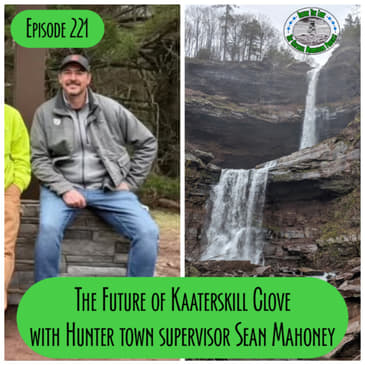
Welcome to Episode 221 of Inside The Line: The Catskill Mountains Podcast! this week, Hunter Town Supervisor Sean Mahoney joins us to break down the recently released Kaaterskill Clove VUM and what it could mean for the future of one of the Catskills’ most visited towns. We also dive into the tragic discovery of a missing hiker’s remains in Vermont, a terrifying grizzly attack out west, and a rescue mission on Wittenberg Mountain. Make sure to subscribe on your favorite platform, share the show, donate if you feel like it… or just keep tuning in. I'm just grateful you're here. And as always... VOLUNTEER!!!!
Links for the Podcast: https://linktr.ee/ISLCatskillsPodcast, Donate a coffee to support the show! https://www.buymeacoffee.com/ITLCatskills, Like to be a sponsor or monthly supporter of the show? Go here! - https://www.buymeacoffee.com/ITLCatskills/membership
Thanks to the sponsors of the show: Outdoor chronicles photography - https://www.outdoorchroniclesphotography.com/, Trailbound Project - https://www.trailboundproject.com/, Camp Catskill - https://campcatskill.co/, Another Summit - https://www.guardianrevival.org/programs/another-summit
Links: Vote in the Chronomgrammies, Sean Mahoney Town of Hunter Supervisor, Kaatterskill Clove VUM, Send your comments to forestpreserve@dec.gov
Volunteer Opportunities: Trailhead stewards for 3500 Club -https://www.catskill3500club.org/trailhead-stewardship, Catskills Trail Crew - https://www.nynjtc.org/trailcrew/catskills-trail-crew, NYNJTC Volunteering - https://www.nynjtc.org/catskills, Catskill Center - https://catskillcenter.org/, Catskill Mountain Club - https://catskillmountainclub.org/about-us/, Catskill Mountainkeeper - https://www.catskillmountainkeeper.org/
Post Hike Brews and Bites - Brave the Flame, Hunter Mountain Brewery, Pancho Villa
#kaaterskillcolve #kaaterskillVUM #NYSDEC #catskillmountains #hudsonvalley #hudsonvalleyhiking #NYC #history #husdonvalley #hikingNY #kaaterskill #bluehole #catskillhiking #visitcatskills #catskillstrails #catskillmountains #3500 #catskills #catskillpark #catskillshiker #catskillmountainsnewyork #hiking #catskill3500club #catskill3500 #hikethecatskills #hikehudson
[00:00:29] The bushwhacks were some of the worst days I've ever had in the mountains, or life really. Whereas Pantsy Mountain is totally opposite, it's a mountain on top of a crater. I think the weather challenges on this incident were particularly difficult. It improves the development of New York State. Catskills will respond to it.
[00:00:52] Passing into Inside The Line, the Catskill Mountains Podcast. 2-21, correct. Yeah, so Sean Mahoney joins us again to talk about the good old Catterskill Clove Visitor Unage Management Plan.
[00:01:22] So Sean's going to be giving his expertise on this. He's the town of Hunter and Tanner's Thrill Supervisor. So we're going to be getting down low on this and we're going to be drilling Sean of what the town thinks of this and how far we should take the DEC to court on this. And we should take over as a town and a community. I'm just kidding. This is like, God. Hold on. I just, I got to open this email. It's from Amanda Lefton.
[00:01:51] Oh, she's got some questions she wants me to ask Sean tonight. Oh, Amanda. Yeah. I'll add those into the outline, Sean, if you don't mind. That's a heavy hitter. So yeah. All right. Why not? We're throwing them in. Nice. Well, thank you for joining us, Sean. It's good to have you back again, man. Good to hear from you. Thanks for having me. Absolutely. And last time I was here, pre-Tad, it's good to be here with Tad.
[00:02:17] I think Tad brings a good element, a good dynamic to the show. Definitely. I agree. We're going to ask that question again later on tonight. Sean's opinion remains the same throughout the recording of this episode. Correct. Correct. Is this an election year for you? It is. Okay.
[00:02:36] It's kind of been an election year for me for a while because of that whole, I don't know if you know, but the state put on this even year election where if you were on an off cycle, you had to like sort of run until you were on the even cycle. So I ran last year, two years prior and I'm running again this year. Wow. So what's a campaign cost in the town of Hunter? Super expensive. Really? Super expensive. No, not really. Sorry. It's an odd question.
[00:03:06] I don't really campaign that hard because I'm the incumbent, you know, and I'm doing the people's business. Yeah. And an old, an old friend of mine who was like, you know, basically you're doing the people's business. You're, you're campaigning every day by doing good work. So I don't really, you know, do a lot of that.
[00:03:29] I did when I first ran, I hit every single house in the town of Hunter and I knocked on their door and talk to them and made sure that, you know, we had an understanding of, you know, what they wanted to see and why I was running. So, and it was good. I, you know, I met a lot of people learned a lot, but I've been there a few years now. So confidence. You've gained their confidence and trust. I hope so.
[00:03:58] I mean, you're back on, on the most important podcast in the Catskill. So, I mean, what else could you like? That's, that's true. All right. So, once again, nominate us in the chronogrammies. I, you know, to be honest, our, our fan base, I just, I totally love our fan base. You know, if you nominate us in chronogrammies and we win pretty cool. If we don't. Oh, well, like it's, it's, we, we still have the best fan base.
[00:04:27] We still have the best community, I think. And I'm very grateful for that. And so do what you can, but also do what you can to protect yourself out in the wilderness, because we had an incident on April 27th at 3 PM. Uh, the member of Pine Hill fire department and alerted force Ranger Martin about a hiker have an allergic reaction on Wittenberg mountain Rangers Franceschina, uh, Martin and Martin
[00:04:56] responded with Chandak and emergency medical technician. Uh, the hiker was allergic to tree nuts and didn't realize that there were tree nuts in their trail mix. The hiker broke out in hives and had swollen lips at 5 15 PM. So two hours and 15 minutes later, Rangers met the hiker on trail. The hiker symptoms had subsidized and the Rangers escorted the subject to the trailhead where the Sanddaken, Sanddaken emergency medical service evaluated them.
[00:05:23] The hiker refused further medical treatment and resources were clear at 6 16 PM. And that's the only incident in the Catskill. So that happens. The trail mix doesn't have tree nuts in it. You know, I was, I think it's Walmart, Walmart brand. That doesn't have tree nuts in it for real. I don't know. I have no idea. I'm just trying to make a joke there, but if you're allergic to tree nuts, aren't you like hyper vigilant? Yeah.
[00:05:51] When, when somebody hands you a bag of tree nuts or you buy one or tree nuts trail mix, or you buy one in the store, you, your radar has to be like on full alert mode. In fact, maybe so high alert that you just don't indulge in trail mix. Every trail mix that I've ever had is like 80% tree nuts. Yeah.
[00:06:16] It's, yeah, it's M and M's raisins, maybe some other dried fruit. And then the rest of it's nuts. Yeah. Salted, basically salted nuts and stuff. Yeah. I read that and I was just like, interesting. Like they, was this their first time eating trail mix? Like that's, that's my first thing, but I mean, yeah, I'm going to say not to judge, but I'm going to judge you on this one because that like trail mix, like is nuts.
[00:06:46] Like that's what I see. M and M's nuts and raisins. Yeah. Yeah. That's, that's, that's, I mean, it's a serious thing. You know, I've seen people with a peanut allergy, you know, react, but you know, I don't know. Yeah. And that's just, that's just something else. And it's surprisingly all around the state, not surprisingly, actually, we're seeing forest fires going on and stuff like that.
[00:07:12] Small ones, they're being contained pretty quickly and they're doing great work containing them. But once again, you got to do that dual diligence of, you know, keeping the fire maintained. If you're having a fire, it's gotta be below 3,500 feet at desidated areas. It's, it's very, very important to do that. Put out the fire when you're done. Totally make sure spread the ashes, stuff like that. Make sure it's totally out because one little spark, you know, we, we, we know that little
[00:07:40] dry, everything's dry in the Catskills. Everything's dry everywhere else. That can make a huge problem as we seen like the past couple of years up in Peekamoose down at the Sterling forest, uh, state park and stuff like that. You know, just be responsible and be respectful of the forest because you know, something might happen. And it just one little thing could, could spark fire. I didn't say that.
[00:08:09] That was weird, but, um, so anyway, uh, I wanted to throw this on here because this has been a big, uh, topic. Uh, not much has come out about it. Um, besides that the people found it. So there was hiker remains found in the Appalachian trail in Vermont. Uh, they are investigating, uh, that a group of hikers that discovered the human remains in Vermont's green mountain national forest in the town of Mount Tabor late last month.
[00:08:34] They contacted police on April 25th, discovering what appeared to be human foot bones inside a partially buried pair of hiker boots in the body area. Now I looked up this area. Uh, it's not one of the higher peaks of the Vermont area. It's more towards the South. So, um, it's once again, not, not kind of like the higher parts of the green mountains, but one of the more boggy areas, more of the, as we know, Vermont always gets muddy, just like the Adirondacks and stuff.
[00:09:02] So it's, they, they actually close those areas during mud seasons. Crazy. Um, troopers responded to the scene and did not initially find any additional remains, but on May 4th, a more extensive research, uh, aided by North country search dogs and the U S forest service turned up an additional humans rains nearby. Investigators also found outdoor game personal items covered with leaves and soil. So apparently this person has been out there pretty decent amount of time, probably over winter.
[00:09:30] Uh, the Appalachian trail runs East through Mount Traveller through the national forest, but they have not specified whether the remains were discovered on the AT or another location. The hikers, I remember seeing saying something that they was on the AT and just off of the AT. So, uh, the state police, uh, have secured the remains and confirmed that they are human. No further information is available, uh, nor the deceased name and, uh, death is unknown at, as of this time.
[00:09:58] So crazy incident once again to, once again, come upon human remains while you're hiking. I mean, one of the most unexpected things, uh, unexpected things that you can think of to a pair of boots with, you know, feet. Yeah. I couldn't imagine that happening to me. I feel for the people that, that found the remains as well as the family of
[00:10:26] of, of whose ever remains were found out there. But it was the person identified. Uh, they haven't disclosed that yet. Yeah. There has been very little information released, uh, since I, I think I got this like four days ago. Um, and there has been absolutely no information released because you know, I, I, once again, it takes time. I've, I've heard that from the forest rangers and stuff like that, that it takes time to process this.
[00:10:54] And, you know, once again, this is a hiker who, if you buried in leaves and stuff that makes me think not even just the winter, but that's a long time and a bog sucks. That sucks. Tad, we've, you've been through many. I've been through many. Yeah. You know, it, how many hikers have gone missing on the AT or near the AT in the northeastern
[00:11:22] states in the last five years that haven't been found? Right. Like three or four, three, four, five. I'm pretty sure. Right. Doesn't that narrow it down? Right. Yeah. I would, I would think so. I think it down to, and, and maybe by the time. The boot size, you can narrow it down even more. Eliminate one gender maybe.
[00:11:48] So it's, it's interesting that, you know, they apparently haven't identified or disclose the identified identity of the hiker. But again, man, I was bushwhacking this weekend. And if I like came upon a foot sticking out of the ground. Oof. Yeah. It would freak me out. I don't know how much long, how, how much longer after that it would be before I started going out in the woods again, but it would probably be quite a while before I ventured off trail.
[00:12:18] But the tad with you doing that, uh, like very many people, very few people do where you, you go, where you go. So you narrow that down to you, who it is. You'd be like, oh, I know this person. I've seen him before on this area. Oh, they're stock. There's, or there's down there area 51. Oh yeah. Graham double top. You know, speaking to that real quick, before we go on the next topic, I was going over my pictures on the, uh, on my, my phone to make some room for the California trip.
[00:12:48] So I can take some pictures. And I see that sign posted for double top and Graham saying this area is closed due to forest preservation. Like, all right. Is that the private landowner that did that? Correct. The Goulds. I was seriously laughing so hard. I was just like, okay. All right, buddy. You, you let those, those, uh, hunters go out there and throw their beer cans and shoot the shotgun shells all over the place.
[00:13:18] But you don't let the hiker go up a single trail going up to the top. Same, same family that put a rail radio relay tower on the top of Graham mountain with a Cinder block, you know, building the radio tower itself, uh, helicopters going up there to do maintenance. Mountain lions being dropped off. Yeah. I mean, it was the, the industrial activity and the radio waves coming off that tower.
[00:13:46] I think we're so intense and Mike Kudish can back me up on this, that the radio waves and frequency was so intense that it stunted the growth of the hardwood forest up there. And it became known as a pygmy forest. Look, look, look that up, Sean. You can take that to the bank, but that's what it did. And then, and then they shut him. No, you're not. Well, we are, we go there often both on the show and physically. No, I mean, I didn't read the last part. Yeah. Oops.
[00:14:16] We'll edit that out, but yeah. Yeah. I mean, radio towers. Yeah. Like hikers were the ones that ruined the summits. Okay. I, I, I don't know why I brought that up. So moving along, um, last, uh, like topic, I wanted to bring this up because Ted, you know, we talked about, uh, the mountain lions previous episodes. And I asked you how many times you see a bear on the trail and stuff, even off the trail.
[00:14:41] And it's, it's very few, you know, and then after this, we have a, a grizzly bear attack and death over in glacial national parks, the glacier national parks. So, I mean, the body of the hiker who was not identified was found off trail injuries. Uh, do point to a bear attack and they, it seems like, uh, search and rescue to found the hiker's
[00:15:07] body around nude after somebody had, uh, contacted the forest rangers saying that they had a kind of like sense that there was something going on in the area. They smelled it and they went off off trail about 50 feet off trail and found that the body two and a half miles up Mount Brown trail in a densely wooded area near down timber. So it's the first deadly bear attack in glacier national park since 1998. And the first attack by a bear since August.
[00:15:36] I mean, that's not too far, but seriously, since the first death since 1998. So we're almost talking almost 30 years, uh, around 1000 bears live in glacier national park, including back bears and grizzlies. Uh, according to park and estimated 300 grizzly bears were living in the park in 2023. Uh, did they, once again, they're waiting 72 hours, uh, after the family does notified to identify the victim.
[00:16:02] Uh, and it said that later on, it said that there would a hiker that had been, they said they were missing, but they had communicated plans. Mount Brown, a fire lookout. I looked this up. It's kind of like a switchbacky, uh, area going from a little park and stuff. It looks pretty actually neat. Um, excuse me. I'm still getting over this cold. So I communicated plans to hike towards the white Brown lookout. And the last known message was on 8 20 PM Sunday, which was a week ago.
[00:16:32] And notified news missing Monday. Uh, hikers ages that located him were 15 and 28. Uh, and lifted by, hold on. Sorry. It was weird. Hold on. Sunday's park said that just, that's weird. Sorry. Sorry about that. That totally has nothing to do with that. Um, but is to show that the glacier park has a grizzly bear population.
[00:16:57] And once again, in that area, they could be aggressive due to the fact that humans are up there all the time and they're looking for food. They're always on the trails and stuff like that. They're huge coming out of hibernation and you know, grizzly feels threatened. Grizzly is not one of those ones that would just run away and, uh, get off trail. The, that was the black bears that we encounter in the Catskills and stuff like that. Grizzlies will, they're huge.
[00:17:25] They're massive and they will take you on. Uh, but this is the first death that we've had in 28 years. So that's good, but it's very rare encounter. Just wanted to bring that up. Crazy. A little incident out in glacier. So while you were reading that, I asked my, uh, research assistant Google L here, how many fatalities have there been in glacier national park since 1998?
[00:17:52] And there has been 30 to 40 deaths averaging 2.6 deaths per year. Sean, what is the leading cause of death in glacier national park? Obviously not bear attacks. No. Um, I'm going to go with like climbing.
[00:18:20] Climbing falls from steep terrain that would include climbing and drowning are the most common causes of death. Human air. Yeah. Not the animals. Yeah. It's, it's crazy to think about once again. And then we talk, you know, I see some places having like, uh, you know, bear attack, uh, classes and stuff like that.
[00:18:48] And it just, you know, I've never really heard of a bear attack in the Catskills, nor a bear getting close to you in the Catskills, maybe down in the Hudson Valley where they get in your garbage or your backyard to get your bird feeders. But very rare. Can you go out and be within five? I mean, I got 200 feet within the bear and then noticed me and just ran up the mountain, which I wish I had the skills of a bear to run up Balsam Lake mountain like that. God damn. That was quick. Well, they have four. They're fast.
[00:19:18] We only have two. We've done some public stuff here with, uh, bears. Oh yeah. Living with bears. We, we, we had the DC come down and they, uh, they've done it a couple of times and you know, it's public meeting. They would come and tell you how to act around a bear, what to do if you have a problem bear things not to do to avoid bears.
[00:19:41] Um, it's a really good little seminar that they do because we have had a lot of bear interactions, you know, um, specifically with people that, you know, are not from here and they come and they have their barbecue. They leave their stuff outside, um, put the garbage outside, you know, the bear comes, thankfully not anything like that, but more putting the bear.
[00:20:11] They're at risk because once a bear comes into a home around here, you know, the DC will, will euthanize it, which is unfortunate. Like it enters itself within the home. Not like, yeah. Okay. Yeah. That's all. I was just like, what, what? It's been a very long time since a bear has been euthanized though in the, in the Catskills. So Sean wasn't there. Sean, when was the last time?
[00:20:37] Sean, I mean, a few years ago we had a bear in the town of Hunter that, uh, was a problem bear. I mean, this is like two or three years ago and you know, this was during the summer and people had sort of cooked, left their, uh, kitchen windows open. Uh, the bear came in during the day, rifled through, they weren't home. Thank God. They were rifled through everything.
[00:21:05] And, uh, then exited the property and you know, uh, and con had to, uh, had to unfortunately euthanize that bear. I mean, that is breaking and entering times. Yeah. And at that seminar, they explained it to me.
[00:21:26] It's like, you know, typically you just try and avoid it, avoid these interactions, you know, but if they get into your trash outside, that's one thing, you know, stop doing that. But if they come into your house, that's a different thing. The bear has changed at that point. The bear is got no fear anymore and will. Yep. So. Yeah. Yeah. And wasn't there that, uh, bear up on plateau last year, the year before that was like stalking hikers up there. Correct.
[00:21:56] Was that, was that taken down? I don't remember. I remember that being subsidized at the bears. It finally went away. It wasn't. Yeah. That's my recollection. Okay. I think they, then I think they also had a bear over at North South Lake in that area. That was awesome. Of course. Yeah. Stalking people. Yeah. Eating their trail mix as they walk down the trail. Yeah. Right. They don't have nut allergies. Yeah. Well, and that, you know, but the people that do it throw the tree nuts on the trail and then the bears and chipmunks would come along.
[00:22:26] Come here, buddy, buddy. Come here. Yeah. Causing havoc. You know, totally understand within, you know, the perimeters of like, like the bear was breaking and entering. And he ripped apart the house once again. And, you know, it's a bear, but you know, that bear can absolutely destroy you. It's yeah. And it's like having a weapon on it and stuff, but like, it's just, it's sad to hear once again, well, they become domesticated.
[00:22:54] So they, they, you know what? I smell Mexican food. I love it. I want to go into the restaurant. I smell somebody cooking some Mexican food and food. I'll just be like, Hey, you guys, you know, got a burrito for me or something. So there's, I don't, there, you know, we have garbage bears and then there's mountain bears. And the mountain bears are the ones you really got to watch out for.
[00:23:16] I mean, the garbage bears, you know, unfortunately they get in, but you know, dumpsters, they look for dumpsters, you know, Tannersville Hunter, you know, and those garbage bears, they don't want to bother with you. They're, they just want the garbage. But if you run into a bear on one of the high peaks, that's a mountain bear. That bear is different. Right. You know, be careful around that bear. Yeah.
[00:23:43] If it does go on Windham high peak long ago, 15 years ago. And, uh, I looked at it and I was with two people and we were just like, Oh wow, that's a big bear. And we were right on the trail to wind of my peak from a camel's hump. And, uh, he charged at us and, and he was a big boy and we ran, which we shouldn't have done. And we ran for a long time and he didn't catch us. Yeah.
[00:24:14] Got lucky there. I don't know that he ran after us. I think he was just like charging us, you know, but we were scared. He was a big boy. And he, that he didn't look fat. He looked muscular. Hmm. Interesting. Yeah. So, you know what? Uh, once again, out west, I'll have to look for grizzly bears out in the, uh, Sequoia and Yosemite, but I haven't heard of any incidents out there.
[00:24:41] So the one thing I gotta look for Tad is that I've been seeing is the goddamn long lines that I'm gonna be dealing with. Jessica and I are like, are talking about like leaving where we're staying at like three o'clock in the morning to get away. Okay. Ahead of everybody. Yep. Maybe for a sunrise hike at Sentinel dome and then maybe another place to go up the mist trail on Vernal falls, but oh my God. Yeah. Well, it'll get you in good practice for Catterskill falls this summer.
[00:25:12] I actually know, you know, I can apply for early entry if they, if everything goes in and I'll just be like, ha. Yeah. I, I heard to get in early. You need to have political connections up there. That's what it comes down to. But that's why. Well, that's why. Connections are gonna get you anywhere. No. That's why we got Sean here. Yeah. So once again, Sean, thanks for shooting the shiznit with us. I appreciate it.
[00:25:39] Uh, I love having, uh, the guest on here just to chat to kind of get the comfort. I'm happy to be here. Thanks for having me. Yeah. Yeah. Uh, big, big thank you to the month of, uh, supporters like Bob McClend, Chris Caribbean, Eric Cesario, Jeff shots, Vicki fair, Mikey S, Henry Burmeister, John Comiskey, summit seekers, desert city radio, Betsy, a Denise W. Vanessa and Jim C. Thank you guys so much. Really report. You really appreciate you supporting the show. It makes a big deal.
[00:26:08] Also our amazing sponsor of this show, like outdoor Chronicles photography, Molly from outdoor Chronicles photography specializes in adventure, a little open and adventure couple photography in the Catskills, Adirondacks and the white mountains. She's an officiant for getting married a licensed guy, but most important. She's a story maker. Molly won't just give you photos. She'll give you memories that will last forever. Don't hesitate to get ahold of Molly on all platforms.
[00:26:34] Also, have you ever wanted to learn more about hiking or backpacking or even brush up on some of your old skills in the back country? Check out trail bomb project, a hiking and backpacking school. Scott and Joe from the New Jersey search and rescue team have amazing background as wilderness first aid, wilderness first responder and the mountain rescue association. And they're to teach you all the new skits of hiking and backpacking. They teach anything from first aid map and compass and many other skills that could help you and others while on the trail.
[00:27:04] Check them out on their website and all social media platforms. All right. So we're going to switch this up. We're going to have, are you guys drinking anything tonight? Ted, I'm switching this up. Sorry. Wow. Well, you really caught, you caught me off guard here. Yeah. I'm switching gears myself. Okay. Am I drinking something? Yes.
[00:27:29] I am drinking some Costa Rican micro lot coffee that I roasted this weekend when it was raining on Saturday and rooted up before tonight's show. Roasted this weekend. Yes. By home roast. If you're going to be a coffee snob, you got to go the whole way. Okay. You just can't like grind your own beans. Yeah. You got to get up. You got to buy the green beans green.
[00:27:54] You need the roasting equipment, you know, the thermometer, the countdown clock, the cooling device. Yeah. It's a lot of work. Yeah. Well, it seems like a lot of work. Yeah. Well, you know, it's, I mean, it keeps growing my beans. That's not that bad. Well, we call that a start, Sean. We call that a start. True. True. You know, Taddy and Sean, like I've never, we were in the Shenandoahs and they only had a French roast. Yeah. It's a coffee thing.
[00:28:24] Is that, that was called, right? Yes. So we had no clue how to use it. So I had to, we had no internet. So luckily I had internet on the Tesla and I watched how to do a French roast and we fell in love and we have a French roast right now. Oh, a French press. French press. God. Yes. French roast coffee with a French press, but, but yeah, so French press, I've never, we saw this and we're like, where the hell's the coffee maker?
[00:28:51] So what the operative question is you see this in the morning, right? That's when you're looking for the coffee makers when you wake up in the morning. No, this was at nighttime. This was at sunset when we arrived there. Cause we wanted to set up the coffee for the morning. Cause we wanted to get up early. Got you. So did you go through this whole routine and figure it out before you went to bed that night? Yes, we did. We didn't try it, but we, we checked it out and like, we sat there in the morning. We were like, this is the best goddamn coffee we've ever had in our lives.
[00:29:21] Yeah. How long did it take you to make it? Was it like the first run through in a few minutes? Yeah. Yeah. It's, it's not that bad. If you watch a YouTube tutorial, it wasn't too bad. Like we were, but like everything, like, you know, Sean, we should probably grind our own beans for the French press. We only do it once, like once a week when we have the time. But like, I guarantee that would be a whole nother story to, to grind the beans and then do what you do to add Jesus.
[00:29:49] Like that's, that's a lot of work. Fresh, fresh coffee every week. Ah, cool. All right. So this is courtesy of Todd bold. So we're going to do this. So when we did our hike a week ago, he bought me a 1911 orange creamsicle. So first step, let's see. It's pretty good. It's pretty good. Let me change that up too. All right.
[00:30:18] Yeah, it's pretty good. So thank you, Todd, for buying the hard ciders. Sean, how about you? What do you got? You got anything? I am drinking a beer, a root beer. Oh, nice. It's blurring it out. It's blurring it out because it's like, it's like no solicit. We don't want that. Root beer. Is it good? It's delicious. Yeah.
[00:30:44] I, you know, you never know when you might be on call or when you might have to leave. So yeah. Yeah. That's that. Yeah. Yeah. That's, that's, that's tough. Save my moments, you know? Yeah. Um, when nothing's going on. So, so when's the last time you had a root beer float? That's been a long time since I've had a root beer float to be perfectly honest. Yeah. But they're delicious. Yeah. And I love root beer. Yeah.
[00:31:11] I heard this summer, part of the entry fee is going to, they're going to have a bunch of food trucks down at the bottom of Catterskill Falls. And one of them is going to have root beer floats. It's going to be delicious. I will be there then. There you go. Be like old times. Yeah, exactly. The lemonade stand. There might be some parking problems. Yeah. How are they going to, they're going to airlift that thing down in there. Yeah. All right. So the next question, were you really outdoors?
[00:31:41] So mention the podcast when he hikes through social media and we'll chat about it on the show. Tag us by typing at itl Catskill MTM podcast. So also if you're on Facebook, I think you just got to put at, and then inside the line and then find it. It's, it's tough on Facebook. It's not as easy on, and Instagram. So you just got to search for inside the line. So yeah.
[00:32:06] So first off we would like to congratulate Nigel, AKA Ferrell hollows for completing his 3,500 as well as he's completed his 3,500. He is now going to this Catskill mountain search and rescue team. So congrats Nigel. That's awesome. We look forward to hearing your future adventures. Definitely. Yeah. And Tad, you met him up on Panther, correct? I met him on Cheryl.
[00:32:36] Cheryl. Okay. Yeah. And I see on Instagram that he's a cyclist and he has some old, I'm going to call vintage, maybe just call them classics. A couple of old classic bikes that he gets out and hammers down the road on. So cool guy. Oh yeah. Definitely. Check him out. Congratulations. Once again, Nigel. Uh, also Vicki hiker goddess adventures went up Turkey mountain in Yorktown.
[00:33:03] And she also took place in a reblazing celebration and then hike Lewis mine, stock bridge, bridge and cave shelters. So Vicki always out there. And, and once again, doing her thing and enjoying the wilderness and also spreading the love of the wilderness. So we appreciate it. Vicki. Also Rachel Jean, the gypsy cream has an amazing stories that I suggest you check out on Instagram. Uh, she finished the Palma. Ted, how would you say that? Palmanic.
[00:33:33] That's close enough for me. Probably the only, it's the only trail on long Island. So if you just say the trail down there, you know, I think the only trail on long Island. Yes. It's either just expressways, the, uh, the long Island railroad, or this hiking trail. That's basically it down there. Palmanic. I'm going to say Palmanic. There we go. Okay. The Palmanic trail. Uh, definitely check out her stuff. She was with Sean, AKA long Island hiker. They were doing their stuff. Uh, a matter of what was it?
[00:34:01] Like nine days. Yeah. I forget. Yeah. They were at it for a while. It looked like a good time. Plus you end up on the shore. That's pretty cool. Yeah. Sure. Sure. Right. Yeah. It's pretty cool. Pretty cool. Uh, Nicholas golden money cat found something interesting on the trail, which was kind of like, like some weird writing and stuff. Uh, didn't really mention where he was located. So cool stuff. Uh, off in the woods.
[00:34:30] Sean took the day off and went up gig a hall on Belair, which is right in his backyard. I'm very jealous. That's a good area. Uh, maybe he's starting to do his, uh, all trails. So we'll see. He finishes 3,500. So all trails grid, whatever Sean is up to. So we'll look forward to hearing about it. All trails is definitely worthwhile. Definitely. He's got a lot of trails to complete up in Belair area too. So that would be pretty fun.
[00:34:59] Uh, Lisa chaotic, quesotic went up plateau from two 14 and up sugar loaf and black back over to plateau. So that's a hell of a hike, a good hike. So good amount of, uh, miles and actually elevation gain. So Lisa skin is back at it. Uh, I did a spelling error. I saw you just did that. Tad we're in real time. So I'm trying to make you sound good. That's my job. What did I did? I it's not, it's Bonnetu. Bonnetu.
[00:35:29] Bonnetu crag. Uh, Tracy pink pony 18 with Bonnetu crag. So that looks fun, dude. Like let's scrambling like right up straight up. Right. It's a whole new dimension of, uh, scrambles. It's, it is probably the longest marked, uh, scramble in, uh, minnewaska mohonk with the exception of what they call the lemon squeeze, which is totally different, but there, there
[00:35:56] are a few other scrambles over there. And then, you know, bottom line is if you can go bushwhacking in the woods, you can go scrambling up any talus slope over there and, and have a good time. The question is, is how do you get down? So that's what you need to be prepared for. But I think that's kind of where my daughter started expressing her vertical adventures was over in Mohawk, minnewaska doing those scrambles.
[00:36:26] Nice. I mean, I looked at, I saw the pictures and I was just like, well, that's a whole nother level than devil's path and stuff. Yeah. So I like, I like, I, God, I wish I wasn't like two and a half hours away. That'd be so much fun. You know, you come over sometime, we'll hit, we'll hit up some of those scrambles over there. And you, you see definitely there's some people that show up and they are pretty tentative going up them. And then you see some of these locals that just fly up these things. They're almost like the trail runners of talus slope climbing.
[00:36:56] Cool to see. Interesting. Okay. We'll have to do that. Yeah. So Todd, T-Bolt Outdoors, once again, thank you for the 1911 Orange Creamsicle was doing the beautiful views in the Grand Tetons. I was just like, holy shit. So he's out there enjoying the Grand Tetons out west. So it looked like there was still a good amount of snow. So how does he make this happen? He was up in the, the Adirondacks like last week. Now he's off in the Grand Tetons. He was like over in Harriman the week before.
[00:37:26] He was with me last week. Yeah. Is he retired? Is he independently wealthy? Was he like a, uh, the first social media influencer and living off the royalties? How does he live this life of perpetual outdoor activities? I couldn't tell you. No, he figured it out somehow. Yeah. Yeah. And he's like, you're maybe just, he's like a cider dealer and he's supplying you with
[00:37:54] ciders and you know, it's like this distributorship and that's how he makes his money. That's how it's done. And he's like, he's like, you know, don't worry. I'll get you this art cider. Just make sure you pop it open on your podcast. Yeah. Oh my God. So good to see him out west. Uh, you know, I'll wave to you from, uh, Yosemite park when I'm out there. So Yosemite, Lisa, Lisa hikes mountains, uh, did some barefoot hiking up Rusk.
[00:38:21] And, uh, the one quote that I saw that in her, in her post, that was great. She said she purposely loves doing things uncomfortable and comfortable, uh, unconventional for fun now. So I thought that was, yes, that is definitely the thing. That's like bushwhacking them. I thought, ouch, that's the only thing that comes to my mind. Rusk, which is steep. Talus stuff. Yeah. Barefooted. Ouch.
[00:38:51] I need to see times on this. Like we can do it in this amount of time. How long does it take you when you're first doing it? Barefoot. How long does that take you? Yeah. Work up to that. I'm sure. Right. Like you can't just start there. Yeah. Dude. Just starting. I just, my, my thought of going even on just the hunter trail of all the, the, the loose rock and the gravel. Like, I'm just like, I'm like clinching. I'm like, Oh God, that's gotta hurt. Yeah.
[00:39:21] And let's, let's just, I'm going to throw one word out there. That's the game changer on Rusk. Nettles. Yes. A couple months from now, nettle season, barefooted. Oof. Yeah. Okay. Wow. Go native American style. That's what. So good. And she also went up with barefoot cannon 3500 club. So it was pretty cool to see. So doing some cool stuff with barefoot.
[00:39:48] So also Joey T AKA hiker, Joey. And why was I exploring the Allegheny state park and the Allegheny national forest looks similar like cool stuff. Uh, the cool thing is, is he was pretty supply surprised that spring. Spring wasn't as crazy as it was supposed to be like down, down south as it is up here. I see spring. My backyard is blooming like crazy right now. And you know, I would think down in Pennsylvania, it would be going a little bit more faster, but I guess not.
[00:40:18] Yeah. Well, Allegheny state park is in New York. Um, the national forest area is in Pennsylvania. Oh, okay, cool. Yeah. That's what growing up. That was, uh, kind of like within an hour of my house. Oh, that's pretty cool. That's pretty neat though. That it's separated that New York's has state forest and then Pennsylvania has a national forest. Wow. Yeah. It's a big area. Um, a lot of activities to do over there.
[00:40:44] And, uh, it's kind of like a, an extension of the Catskills without the huge vertical relief that we have here. Nice. Nice. Good to hear from you back, Joey T. Uh, Scott Catskill mountains brood did the Eastern devil's path with Zorro looks to have a good time. He said it was a little bit slippery, which is what I fear all the time going on the devil's path, but nonetheless, he fricking nailed it.
[00:41:10] So, and last but not least, Oh, I was gone on did red hill from Dinch road. And, uh, that makes a total as tad tallies 12 tags. Thank you. It doesn't. Yeah. I like it. I like it. I like it. So let's move on to our hikes. I think that works well with that, you know, cracking it open for them talking about their hikes and our hikes. Sean, you, were you up to do it doing anything this past week or two weeks, three weeks, anything?
[00:41:41] I walk my dog a lot. Um, not really big hikes, but, uh, this past week I went up the Catterskill rail trail from the Mountaintop historical society up to Catterskill falls. Um, and that is a, uh, it's a nice, if you, if you go to the falls and then you actually go over the bridge and take it right to the campground, right to the South Lake campground road,
[00:42:08] and then come back to Mountaintop historical society, it's about 4.3 miles. So it's like, uh, you know, hour and 15 minutes, hour and a half, you know, and it's a nice leisurely walk. Then I walk my dog every day. Sometimes I take, uh, the Huckleberry rail trail. We have some great hiking trails in the town of Hunter on the Hunter regional trail system, working on, uh, making some more, but I don't really know.
[00:42:38] I don't really have a lot of time to go on big expeditions anymore. I used to go hiking a lot. You used to be also on a hundred mountain ski, uh, team, right? The rescue team up there. I still am. I'm a ski patroller at Hunter mountain, uh, on the weekends, uh, in the winter time and sometimes midweek to holiday weeks, stuff like that. I love, I love it. Is he busy?
[00:43:07] I'm a big skier and, uh, my family's all into it. My daughter's a ski racer. My wife is a ski race coach and I'm a ski patroller. So I help people. Very cool. Yeah. Busy family. Yeah. It's cool. Cool. So Tad, what about you? You know, I have nothing. I was off, uh, nothing. I was off celebrating the play Bighamton black bears, uh, three Pete. So they're, they're dynasty now over there, the hockey team. So that was fun.
[00:43:37] That was a really energetic. I love the energetic, the city come together and stuff like that. So that was good. Wasn't able to get out, but nothing like a good hockey game. I know. Oh, it was, it was awesome. So let's keep this with hiking screw hockey. No, I'm just kidding. Okay. How about you? What were you up to? Yeah. So as everyone knows, my normal day out for hiking is Saturday, but this past Saturday it was raining.
[00:44:02] So, as I mentioned, I stayed home, did some coffee roasting and read some of my Kudish's stuff. And I went out hiking on Sunday, Mother's Day. Um, and as always the, for me, it's kind of like sorting through the open boxes on the list of the figure out which hike I want to do. And I have been wanting to get to do the six for a few months now.
[00:44:29] Um, but it just, a, it hasn't come up in rotation in the winter months. And this past weekend, cause I wanted to get home early on Sunday. I thought it wasn't best to do it. So I was considering all these other mountain options to do and, um, Hunter and Southwest Hunter were open for the month of May, but then I had to decide which way do you want to go up those? Right.
[00:44:58] So I looked at what drainage is and what ridges I've been up before to get to Hunter. And I decided to do the ridge that is off to the Northwest of the Monica hollow trail. Sean, you know where the Monica hollow trail is? So named after Monica Lewinsky. No shit.
[00:45:29] Oh, now I know where it is. Supervisor knows. You want to tell the story? You want to tell the listeners, the story behind Monica Lewinsky and the Becker hollow trail. Oh yeah. Go for it. Um, yeah. I mean, so there's a resort hotel that it's been sort of defunct for a while, but I actually heard that it was just recently purchased.
[00:45:55] But when I was growing up, it was called the Vatra and the Vatra lodge. And they, you know, they, they had people stay there, but they also did like a weight loss camp there, um, for many, many years. Um, and apparently Monica Lewinsky was a, uh, was a, was a guest.
[00:46:22] Um, and, uh, there might've may or may not have been some drama associated with that, but I wonder why, I wonder why, but that, that resort is on Clover road, which is off of two 14, which is right next to the Becker hollow trail. Wow. Yeah, that looks, uh, oh yes. DEP land.
[00:46:51] Um, well, no, it, it's on the other side of the road. Yeah. It starts off on, uh, state land, state land. But the, the story goes is that Monica was hiking, uh, to Hunter mountain on the trail out of Becker hollow. Oh, so you didn't know my part. Uh, with her being at the camp, the, the spa. Oh yeah. I knew that she came up to this weight loss camp. The story goes because this is in the star report.
[00:47:21] Um, uh, I forget what his first name was, but the, the fellow that investigated Monica and, uh, what was the guy's name again? Ken star Ken star. And what was the guy that Monica had the affair with? Who was it again? Sean, do you remember that person's name? I think it was a Democrat. I think so too. Bill Clinton comes to mind. William William something. Yeah. So, so she's, she's up here staying at the spa.
[00:47:47] She goes on a hike and apparently on that hike is where she told somebody for the first time that she was having an affair or had an affair with the president. So when I, when I, I've only hiked the Becker house. I didn't know that aspect of it. Wow. Really? Yeah. Yeah. Well, our fact checkers are all over this, so I'm, I can report that. Yeah. We actually had to reach out to Bill Clinton to confirm, but yes. So we have it from good sources.
[00:48:15] Um, whenever I hike in or out of Becker hollow, I have to think of that story. So nonetheless, I decided I was going to hike out of Becker hollow and the one ridge that I haven't hiked up to Hunter from in that area is the one, like I said, off the, uh, South West of the Northwest. Yeah. That's what I said. Northwest, but good thing I made it home. Damn. So at any rate, uh, I did a little checking out of the topo on Cal topo beforehand.
[00:48:45] And it did look ledgy. So I was expecting anywhere from six to eight ledges going up, you know, that I'd have to navigate up and over. But this time of year, it's pretty easy to do that with the absence of ground ground cover. You can really see uphill really far. Um, so I was looking for forward to that was some sense of enthusiasm. Uh, so I, I set out, uh, banged my right hand turn onto the ledge, hiked up.
[00:49:15] And as I got to the first ledge I was expecting was, you know, a pretty easy, um, maybe four feet. If that had a little hemlock grove on the top. And then as, as I got up and over that, I looked uphill and then the second ledge looked from where I was pretty far down slope, but look like it was going to be really difficult to get up and over. I mean, it was easily 30 feet at the point of the ridge, tapered backside to side.
[00:49:44] You don't know how steep it gets back off to the sides. Cause you really can't see it until you get up there. And as I got closer, it still had that intimidating look, but once I got right up to it, it was apparent that there were shoots off to the left and the right. And, uh, I was up and over it easy. And it was like that the rest of the way up, you know, like I said, there was going to be six to eight pitches and the next two, you know, were intimidating in appearance from downslope.
[00:50:13] But once you got up to them, they were pretty easy to get up and over. Um, so it was a fun hike up to Hunter. The good, the good of this hike was there was no low ground cover this time of year. You could see, um, from what was leftover from last season that you get a lot of fern groves, you get a lot of other loan, low ground cover going up that ledge. So this is a good time to hit it.
[00:50:38] Um, there was, um, a lot of nice birch and paper birch, yellow birch and paper birch groves going up. Um, the only thing to contend with, uh, were the bugs, uh, that were out in abundance at the lower elevations. I'm going to say that they kind of thinned out above 2,800 feet. And interestingly on the way back down, I didn't see them. So nonetheless, I made it up to Hunter.
[00:51:03] There was nobody at the fire tower, uh, took the trail all the way over to Southwest Hunter. Didn't run into anyone until I was back at what devil's kitchen. And then I ran into my first group of, uh, two people, uh, ran into a trail runner on my way over to Hunter. Well, really to the Monica trail or the Becker trail. Then going down that I ran into some other people. So not a lot of people out hiking.
[00:51:32] Um, but it was a great bushwhack up Hunter. I think it was my, I wrote it down here. Um, my sixth time, uh, bushwhacking up Hunter. Nice. Yeah. So this was a good way. Very cool. Yeah. It was a nine and a half miles, five hours, five minutes overall, 2,842 vertical and moving time just under five hours at four hours, 51 minutes. Nice. Yeah. So it was a fun hike.
[00:52:02] And I knocked a Hunter and Southwest Hunter off the list. You didn't get any views, right? Do you, I remember you posting. Yeah. So I sent you that one video. I, I, I will, I will admit, Ted, I should have known where that was from. I'm sorry. Forgive me. Well, but it's all grown in now. It is. It's got your point. Yeah. Unless you're like seven, two and I'm only six, eight. So, um, little joke. It is.
[00:52:32] But, but yeah, I mean, you, you can't see over those trees. I mean, that's, and that goes to one of my points that maybe we'll talk about later on. If you want to get people away from Catterskill Falls, why don't you just go up and create some viewpoints on these high peaks and give people more of a reason to get up there. And it doesn't have to be on the peaks over 3,500. You could do it on the lower ones, looking at the higher ones. Yeah. Get dispersed that trail traffic. Great. Scenic view sheds. Yeah. So.
[00:53:00] I have a question for like both of you, because once again, Sean, you're, you're kind of acquainted with Hunter and then Tad, you just said Hunter mountain. So let's say I wanted to hike up one of the rims from the ski area, because whenever I come down from Tannersville up to Hunter, I see that one rich that just, I look, it's a beautiful rich, nice slope going up, but it is on Hunter mountains properties. How would I go about that?
[00:53:30] Could I just like, do I contact somebody like, would they let me or would they say F off? Show up. They don't mind you hiking at Hunter. Okay, cool. That's my impression. That, that fellow a couple of years ago. Um, who tagged the John Rob lean to drove up one of the ski slopes. Okay. True. So yeah. So he drove up. Yeah, he drove up and he was actually like that Sean. Yeah.
[00:53:56] He was almost like, um, live streaming going up there and then he gets stuck. He, and his, I figured it was like a Tacoma or something like that. He got stuck going up. So he just leaves it there and he's going to deal with it on his way back down. And he hikes up the rest of the way to, to try to de vandalize. If you face, he face, that's what he said. Oh yeah. He face the, the rock in the, the lean to that he spray painted.
[00:54:23] So Sean, a while back, I got, I don't remember this. Uh, there was like 2022. He went up there and just spray painted, uh, the shit out of the lean to the John Rob lean to. Oh, I remember this. I remember seeing that on social media. Yeah. And he put his tag on it. So now somebody goes up there and hike sees his tag and this guy's plastered over the internet. So now he feels shamed. And he, he's just like, I'm going to go back up there and try to take this off of there.
[00:54:53] I thought he had like a sander or something with him. He drove like halfway up the trail and then got stuck. And like, I chatted with the guy. Um, I don't know. It was, I forgot the Adirondack fun police. He watched it as it was happening. And he called Dawson. He's like, Dawson, listen, I've got some guy trying to go up Hunter mountain to take off his tags that we remember he had. They went up there and they caught him red handed and he was like live.
[00:55:21] And he like turned and Dawson was right there. He's like, what the hell are you doing buddy? And it was, it was so good. It was so much fun. I remember seeing that, but I didn't know how it was resolved. So he was supposed to go to court to get his shit, but no, no, he didn't. Cause COVID happened. No, he, no, he got sentenced to like 40 hours of community service at the transfer station. That's okay.
[00:55:48] I didn't, I don't, I thought he, I thought it all got dismissed because of fricking, uh, COVID. It was, this was post COVID. Um, that this happened. Okay. But crazy. He, uh, did his community service, um, in the town of Hunter. Yeah. Um, but yeah, you, when they're doing big capital projects, sometimes they limit the hiking, but people hike there all the time. I walk my dog there sometimes. Thanks. Well, looks like I'm going up Hunter Ridge next time. So sweet.
[00:56:17] Give me a ring. It's on my list. I only have a few left. Sweet. Oh, cool. All right. So awesome. Glad, uh, everybody had a good time and, uh, hopefully everybody's going to get out this coming weekend is Friday, stuff like that. We'll see what the weather is in a little bit. So, uh, once again, Catskill news volunteer as much as you can. 3500 club Catskill. Oh, excuse me. Catskill trail crew. Catskill mountains club visitors center. Jolly rovers trail crew Bramley mountain fire tower.
[00:56:46] Or anywhere you can volunteer volunteer. Also, if you want free stickers, go to camp Catskill or send me a message and I will send them for free. Sean, do you have anybody else to tag that you, uh, for volunteering and stuff like that? That's a great question. Sorry to put you on the spot. Unprepared to answer it. I'm sorry. There are. I'm sure there are. And, uh, yeah, you know, every, everybody that needs volunteers, uh, there, there are a
[00:57:14] few in the town of Hunter, um, get out there and do your part. How about that? Perfect. Yes. All right. So let's break it into the weather forecast. Here is your weekend weather forecast sponsored by cats. So you've heard of adopt the road. So you've heard of adopt the trail. And now you're going to hear about the newest adoption program to hit the Catskills.
[00:57:40] It's called cats for cat amount adoption and trading stewards. Yes. Cats for the low price of $19.95 a month. You can adopt the fledgling cat amount cub and give it a home in the Catskills where we will be trained to reeducate hikers who leave trash on the trail. Help us recolonize the Catskills with mountain lions to keep our peaks wild cats for the Catskills. Very interesting. Thank you for that sponsorship on to the weekend weather.
[00:58:10] This weekend looks to be a great weekend for hiking. So get out there and bag those peaks. On Friday, May 15th, expect light rain in the morning to rain showers in the afternoon. Total accumulations of under a half an inch. A high of 43, a low of 36 and wind chills going down to 23 degrees in the morning. On Saturday, May 16th, expect clear skies in the morning to some clouds in the afternoon.
[00:58:36] Highs reaching 55 degrees, a low of 46 and wind chills going down to nothing but 39 degrees. On Sunday, expect clear skies throughout the whole day with a high of 59, a low of 54 and a wind chill going down to 46 degrees. Once again, it's going to be a phenomenal weekend to be out there in Baggy Peak. So don't forget to be safe, be prepared and don't become tomorrow's rescue story. Have at it, fellas.
[00:59:08] Oh, thank you for that weather forecast. Interesting. So let's get on to the last set of sponsors and then we'll get on to Sean and we'll talk about the good old Catterskill Clove visitor units management. So is it time for some new gear for hiking in the Catskills? Definitely say no more. Camp Catskill and Tannersville Hubs are your hiking needs. Footwear, socks, moisture wicking shirts, freeze dried meals, Catskill merchandise and more. They have all the essentials for your hiking needs.
[00:59:37] Located in Tannersville and online, check out Camp Catskill. If you want free stickers, stop there. It's in Tannersville. It's very easy when you're on your way. So also check out another summit, a nonprofit program that leads outdoor adventure activities for veterans and first responders for free. Outdoor adventures like walking, hiking, paddling and even backpacking. We welcome guardians of all ages and ability levels, including those with accessibility needs.
[01:00:06] Their adventures are located throughout New York and the Northeast, and they organize transit accessible ventures through the Hudson Valley and New York City area. You can apply today on another summit.org. All right. So how about we get on to the guest of the night? Let's go. So tonight, Sean Mahoney joins us. A town of Hunter and Tannersville supervisor to talk about the good old Kaaterskill Clove visitor units management.
[01:00:35] So once again, we heard about this a couple of weeks back. There's a lot of controversy with this. It's going to be limiting people to come in into the town's areas and stuff like that. So Sean has gone into depth about this, probably discussed this several times. I don't know why he's coming on. He's probably sick and tired of talking about this because you have been all over the place, Sean. It's really good to see that though. I was, I was just like, Sean's everywhere. It's cool to see, man.
[01:01:04] It's, it's important, super critically important to get the word out, you know, about how we feel about it, about the VUM. And just quick correction. I'm the town supervisor of Hunter. Village of Tannersville has a mayor. Okay. Village of Hunter has a mayor. Both of those villages are in the town.
[01:01:32] I know it's confusing, but just so that, you know, every, everybody in the town knows, I think everyone in the town, most people know. So everybody that's in a village votes for both a mayor and a supervisor. However, the town laws only apply to the areas outside of the villages. And, you know, there's great mayors in both villages that I work very closely with. Interesting.
[01:01:59] I'm just, I'm trying to picture the demographics of them. I'm like, Jesus. All right. All right. We're a unique town in that we have two villages incorporated. Nice. So, I mean, welcome to the show. Once again, we had you, I can't remember the episode, but it was pre- It was early. It's definitely early ones.
[01:02:20] And we talked about your role as, you know, the, the supervisor and such, you know, how big of a role you have because such popular area that, that, that is, of course, we got, you know, black clove, caterskill falls, stuff like that. I mean, the hunter mountain, you know, it's a big role. And, you know, I really appreciate you coming on the show because, you know, we're not a popular podcast and, you know, I didn't know it's Sean with your, your popularity. Now you would be jumping back in on this.
[01:02:51] You know, I speak to all my constituents on a daily basis, you know, and I, I actually am a listener. You know, that's Josh. I listen, you know, maybe not to every episode, but to the ones that catch my eye that, you know, I do do a fair amount of driving. And so, uh, you, you, you, you make a great show and, uh, but this is an important issue and I appreciate you asking me to come on and talk about it. Oh, yeah. Your, your thoughts.
[01:03:21] I've, I've, I've reasoned with your thoughts and everything. So I'm sure Tad as well, uh, you know, you, you give great information and education about this topic and that's why we wanted you on. We were just like, this is going to be some good stuff. So, um, how about we start off with a little, uh, like background about yourself, you know, with your, your Catskill community such. And then we, we already know that you're, you're big with the hunter mountain resort. So stuff like a resort or whatever, you can counter mountain. So how about you go a little bit further beyond that?
[01:03:49] Uh, you know, I'm a local kid that grew up and decided to, uh, make my home in the town of Hunter. I went to high school at Hunter Tendersville central school, but actually my parents lived in Lexington Westkill. Um, so that's where I lived when I was a kid, but my wife long had a business. Uh, she's a physical therapist in our town.
[01:04:18] She, she's a Tendersvillian. Um, and so when, you know, college was over and she wanted to start her business, we came back home. We lived in Albany for a while and, you know, getting involved in the community was sort of an organic process. And now it's become a big part of my life. Uh, I have a daughter who goes to Hunter Tendersville central school. Now she's into all a variety of different things.
[01:04:46] And I work at Hunter mountain on the weekends, uh, as a ski patroller. Um, I'm involved with the Hunter foundation as well, which is a sort of big economic development, not for profit in our town. We do a lot of great work. Um, but I also serve everybody in the town as town supervisor.
[01:05:09] And I had for the past five years, I was a councilman before that sort of, you know, got my feet wet in the local government arena. And, uh, you know, the opportunity to become supervisor presented itself. And, uh, I talked to a lot of people and they were like, you should definitely run.
[01:05:28] And, uh, it's, it is a big job, but, uh, I enjoy the work and, you know, my only agenda is really trying to make our town better, making the best decisions I can, you know, uh, a place that, that people, you know, the families can raise their kids.
[01:05:46] And that there's lots of good things to do and, uh, try to keep taxes low, try to make sure our, our, uh, you know, services like such as highway police ambulance that they're managed effectively as well as all of the other services that the town provides. But which is, which is, which is robust where we're kind of a big little town.
[01:06:12] So, of course, I mean, we've, we've chatted about this before your, your role is, is kind of bigger than people expect. You know, we see the popularity you say five years ago, that's 2021. That's right after COVID. So that's that you, you took on a big role that, uh, got a lot of weight on your shoulders because we all saw the popularity within caterskill falls, the plaque clove area just increased by God.
[01:06:41] I wouldn't even say hundreds of thousands. We just saw everybody coming here. So that's a big role that you had to take on within five years. That's, that's incredible. Yeah. COVID was, uh, COVID. I've, I came on right after COVID, as you said, 2021, um, COVID was an eye opener and, you know, it was trial by fire.
[01:07:04] And, you know, thankfully I do have a, a great experience board that, that serves along with me, um, who, you know, we talk about all the decisions, but we made some big decisions and, you know, they were noteworthy. They were newsworthy.
[01:07:22] So, you know, the biggest one was, uh, when we chose after, after being punched in the face, you know, for, for at least a year and a half, uh, we prohibited parking in route 23 a.m. Caterstool clove, um, because it was out of control. It was just simply out of control.
[01:07:47] People were parking all along the roads, all along the highway, leaving trash, you know, having these big parties down in the swimming holes and just abusing the place. And, uh, something had to be done. Um, and we put in that parking prohibition and we started towing cars, um, which, you know, at the time people were like, wow, you know, that's, it's pretty heavy handed, but it was necessary.
[01:08:14] And we didn't want to have to do that, but it ended up solving the problem, you know, for, for the most part of all of the, the sort of visual abuse that you had to drive through. If you were coming to my town, um, to see, cause it was right out in the open and, uh, people were the pitchforks and the torches were out. So as they say, so we had to do something.
[01:08:43] And, uh, I definitely do not regret doing that. It was definitely a difficult time, you know, sorry, Ted. Yeah. Did you get any pushback from the state when you did that? Uh, there wasn't, you know, what, what I'll say is DOT, New York state DOT, which, you know, they own the road. They've been great. They were like, you know, supervisor, what do you want to do? And I was like, I want more signs.
[01:09:10] Let's say no parking, no stopping, no standing all along. Nobody parked. I want to close those two lots. And they were like, great, we'll get it done. And DC really didn't have much comment outside of wanting to know sort of how it was going to impact, for example, Bastion Falls, which is the lower falls at Catterskill.
[01:09:35] You know, because people had parked at Molly Smith's, if you're familiar with Worship Bend, the Molly Smith's parking lot. But, I mean, that was just, it was just pure chaos because people would come in, you know, and they'd park and then someone would literally come behind them and double park. And then you'd get people that would triple park. And then the first people would come out and be like, I need to leave. And so we would have to tow those cars to get them out.
[01:10:06] And it was just, you know, it was mayhem. So, and that was the same down lower at the Ice Climber lot. So the best thing, and this is pre-shuttle. We're just like, we're shutting it down, like completely shutting it down. And people will have to deal with getting to those places in other ways. Ted, it's great that you bring that up.
[01:10:30] So this was a town decision rather than a DEC decision to close the Molly Smith area? Or was this mutual? Oh, wow. Ooh, I didn't know that. Oh, yeah. Did you have to do like a CEQA review for that? Or was that just law enforcement type of thing and it's immune from CEQA review?
[01:10:49] I mean, you know, I don't know that I, that the town actually mandates it, but we requested it from New York State DOT. And New York State DOT said, absolutely. Wow. Nice. So before we focus, because I think this is relevant, before we dive into the Catterskill Visitor Unit Management Plan.
[01:11:14] Was there a spillover effect by closing down those parking areas, formal or informal, along 23A? Did you find that those people or that user traffic went elsewhere once those were closed down? You know, I think there's definitely not a scientific answer to that.
[01:11:41] And I think, you know, both of those, there's two lots in question on Route 23A, and I think they have different audiences. So the Ice Climbers lot, which is closer to the swimming holes, was definitely more swimmer traffic, not hikers, right? That's people coming and going to the swim holes. Molly Smith was definitely waterfall, you know, Bastion Falls based, Catterskill based.
[01:12:11] And I wouldn't say that there was a direct correlation. So anything that I say would be anecdotal. But I mean, the other parking lots were really busy then, too. So it's hard to tell if they got busier because we closed Molly Smith's. You know, they've just been busy, all of them. And so you didn't notice like an increase in calls and the need for towing and police intervention elsewhere following this.
[01:12:41] Is that what we're hearing? I would say I wouldn't necessarily say that. And I would say, you know, Platclove at the same time period was having its own issues. And we put a parking prohibition on that road as well. Like it wasn't sort of marked. It wasn't marked well.
[01:13:04] So when we marked it better, we worked with the Catskill Center because they have the Platclove Preserve there. And there's a steward there. And I don't know the guy's name, but there's a steward that has been working there the past two years. And he does a really good job. He puts out cones. Prior to him getting cones, he was putting out rocks. So like block people from you can't park here. Here's where you can park.
[01:13:33] And that guy was great. But past that, like when you get to sort of the trailhead on Steenberg Road, and that was just mayhem over there. And it was kind of happening at the same time. But to answer your question, we did tow a lot of cars out of there too, which is, you know, not a great thing. It's not anything that we're super proud of, but at the same time, it's necessary. And I fully believe that. Yeah.
[01:14:03] And we could have a whole show on, you know, where parking's permitted, not permitted, and what's done to address that. But what I'd be interested in knowing is our segue into the Catterskill Falls situation is when you're shutting down the parking areas that are being overused and abused on 23A.
[01:14:24] And when you're addressing the spillover parking on Platte Cove, you also know at the same time that the state of New York is doing this study, a big study. They're spending lots of money on the Catterskill Falls visitor unit management plan. And were you wondering what the product of that study was going to be?
[01:14:49] Was that like in the back of your mind, you're waiting for that to come out? So did you have any like premonitions what it was going to be when it comes out? Did you think it was going to be this versus that? Or were you just like, okay, I'm going to wait and see what it is before I prejudge or pre-think what the DEC is going to do here?
[01:15:15] So I do remember when we were sort of getting rolling with the VUM, because I was a stakeholder. I was on the local stakeholder group. I let them know like this is happening, right? We are doing this and we're doing a parking prohibition. And they didn't really, they didn't have any, the consultants were like, okay, well, what was it like before that?
[01:15:42] And I have tons of pictures and video and, but it did sort of happen at the same time. And I felt, you know, and everybody on my board felt, it was like, you can't wait for this study. And they were very upfront and saying, the study is going to take multiple years. And I was like, well, I don't have multiple years. I need to do this now. So this is what we're doing. Come hell or high water. And we did it.
[01:16:10] And I'm glad we did. And they studied, they studied the clove, but because people still walk all along it, you know, and they access it from different locations. And at the time that they were doing their studies, the trolley was operating.
[01:16:32] So, but I had given them all of the, you know, documents, all of the photos, et cetera, that shows when we were not managing it. This is what you can expect. But yeah, I didn't really care too much that the study was going on. We had to act. Didn't you also at the same time have the problem with parking on shut road? Scott road. Yeah. Scott road. Yeah. Yep. We do. Scott road fills up very early, just like Laurel house.
[01:17:01] And then you have all of the overflow parking that's provided by local homeowners renting out, you know, parking spaces. It's almost like going to, you know, I grew up outside of Buffalo. And when you go to the bills game back in the day, you'd park in somebody's yard for five or 10 bucks. And that's what the people were doing out there was renting out spaces. Was that, was that creating congestion along that road? Or was that the traffic flowing?
[01:17:30] Okay. So, you know, it's super interesting that, you know, and I think this sort of begs the whole thing. And I made this point to DC is like, if you go back to why this study was started in the, in the first place, like why was there a caterskill clove or caterskill falls? It's the U M. So. The issue really.
[01:17:57] At caterskill falls at Laurel house road, there was an issue. I'm not, not maintaining that. There was no issue, but it's a managed manageable issue. And I think in my opinion and everyone else's opinion, the true issue for this study and why it was called for was the issues in caterskill clove.
[01:18:18] The issues along the state route 23 a, that is what inflames the public when they see the trash, the people walking in the road, the parties, the parking, the tow trucks.
[01:18:35] You know, I, if, if I was going to, you know, give a percentage, a pie chart of the amount of negative feedback relating to this issue, looking at that issue as a whole, you know, 95%, 98% of it was about the clove and not the falls. And then when we did the VUM, you know, the focus shifted, not because of us, not because the town of Hunter or anyone else.
[01:19:04] I would have to assume that that, that direction came from the DEC that, you know, Hey, let's manage the lands that we manage. Right. Let's study the lands that we manage.
[01:19:19] And to me, it missed the mark big time because, you know, if you read the report, there's, there's nothing really, there's nothing past what we're already doing to further manage the caterskill clove, which is arguably the, that, you know, the gnarliest part of the issue. Yeah.
[01:19:44] But, you know, Laurel House Road was getting, you know, and to speak accurately about the challenges of Laurel House and Scud, Laurel House Road, which is the main access to the top of Catterskill. The easiest access. Yeah. It has houses on it. People live there. And what was going on prior to any intervention was the lot was filling up super early.
[01:20:11] People were parking all along the road that has no shoulder and they were impeding traffic, getting in and getting out. And not only that, they were really sort of being invasive to the people that live in those houses. Like, seriously, like people were going to front doors and being like, I really got to use the bathroom. Can I use your bathroom? And people were like, no, no, go away. Like, I don't want you here.
[01:20:41] And so, you know, interesting story. So, you know, all along I'm talking to the DEC and I'm like, this is a problem. Help us out. You know, they were like, well, you know, we don't have a lot of manpower and Rangers and the Rangers got a lot on his plate. And I'm like, the Rangers, not the guy. So. And you got to pull out paperwork that'll take three years to fill out. Yeah. So.
[01:21:08] So at first what we did, like sort of the rapid prototype is we we had one of our highway guys work the top of Laurel House Road. To just manage it. And he was working with one of the stewards, either a steward or an AFR that was down below to let him know when the lot was full. And he was wearing like, you know, a high vis vest like like highway guys do. And that lasted for about three weeks.
[01:21:37] And he was like, I'm done. I'm not doing this anymore. Like people are they don't listen to me. Right. They don't listen to me. They don't think I'm anyone in authority. They just think I'm some guy. So that's when I was like, OK, we need a police officer. So, you know, I spoke to my chief and we got we created the Laurel House Road detail. And we ran that for a few years and it solved the problem.
[01:22:06] It literally solved the management problem of getting people. So there was no parking. We were counting the cars at the bottom of Laurel House Road. And there were signs, you know, really crudely made signs that said lot full. Keep going to North Lake. And we would we even created a sign. Nobody was managing. But for Scout Road as well. So when that lot was full, there was a sign there that said lot full in the hopes that they would go to North South Lake.
[01:22:35] So it worked pretty well. And but it wasn't ideal because you're locking up some manpower to manage this. And in a way, you know, I'm spending town taxpayer resources to manage state lands. And that's the sort of point that I made.
[01:23:00] And now I'm happy to report that the AFRs, the assistant forest rangers, and I believe sometimes the rangers, they're doing it. I think this year they're going to have DEC operations staff, you know, people that work in the campground who do have official looking DEC gear on.
[01:23:20] But the other problem was, is that, you know, North South Lake campground, which is right up the road with that one lane in one lane out that was getting backed up. So. So now, Sean, it took kind of like a power of authority to get the message across. Correct? Yeah. Yeah, absolutely. You know, we had to make some big moves.
[01:23:45] And that, you know, took away like kind of like people's time, you know, and they might have had to work overtime as a sheriff. And, you know, like you had, what did you have? Like what power of authority did you have there at the, was it sheriff? Town sheriff? We have a town of Hunter Police Department. Okay. And, you know, we have our own police department.
[01:24:06] Overtime and such like that with the summer hours, just, you know, spending away from family time, just like these rangers have, you know, it's just, it's crazy. I mean, we, you know, we do have a number of people on full-time and part-time. And we have, you know, pretty robust police department, all good people, you know, but it did cost money in order to do that detail. But it was the right thing to do, right? Like, you know, we would send those people to a detail.
[01:24:35] If it was another road in our town that people were having any sort of issue, we would make it happen. And so this road in particular, specifically those people that live there were impacted. So we had to do something. Yeah. So now, I mean, as we go into the, let's kind of break it into the visitor units management plan that comes along. So a little couple points.
[01:25:02] The reason why they did this, of course, was because of the growth of tourism that came to the Clove area. And as you said, they focused a little bit more on the Catterskill Falls area, which probably would, they shouldn't have. And what they're trying to do with the DEC is to better manage the crowds by shuttle systems, which we don't have. Parking management, which we don't have. Trail and infrastructure improvements, which is very limited.
[01:25:31] Education programs, which people don't care about. Reservations or permits, which we know in the Northeast is not going to go well because we do not have the space to do that. And we do not have the resources to do that. And then redirecting visitors to lesser used areas, which we freaking know that doesn't happen because of social media.
[01:25:57] A lot of this, once again, the BUM definitely could limit our access to public lands, you know, local and people outside the area. This could hurt local businesses. This could favor tourists with money that, you know, want to visit this area that, you know, other people could visit this area who's never seen this, who will never see this again, who wants to visit Catterskill Falls for once in their life.
[01:26:23] It could give too much control to the state instead of our local area, which we see that Sean is trying to do is kind of give this local area, which has he done. And it definitely is one of the biggest topics that we have handled on the podcast, I would say, besides Ted, what else? Well, we've had the- Trailers Peaks. Yeah, that's a big thing for us.
[01:26:51] And then the one that you and I have adopted as our pet project, pun intended, the relocation of mountain lions into the Catterskill. Yes, yes. We're pursuing, yeah, we're- So somebody's getting a smile right now. Yeah, next podcast, Stash and I are announcing our Adopt a Mountain Lion program. You can adopt a road, you can adopt a trail, and yeah, we're going to do an Adopt a Mountain Lion program.
[01:27:21] In the falls. Yeah. So Sean, there's just a whole lot of moving parts going on here. And one of the things I think you said, and I want to make sure I heard this correctly, is that you understood that the DEC started off with its study to study the entire Catterskill clove area, including the falls.
[01:27:47] And then the report comes out, and it seems that they focused on the falls and put in the back of the bus the other areas. Is that what we heard, and is that what you saw? Definitely, yes, that's what you heard, and that's definitely what we experienced.
[01:28:07] You know, without the mountain road and the issues there, there was no sort of big issue at Catterskill Falls, outside of a minor parking issue that doesn't require a major study, et cetera. And to even take that a step further.
[01:28:26] So, and this was a point that I made early on when this was being scoped out, was that basically, you know, the clove, the falls, they were part of the study area. But notice what was not in the study area. Anyone? Anyone? The community?
[01:28:51] North South Lake Campground was not part of the study area. They do mention that by imposing the restrictions of 1,000 visitors on a weekend, that they do understand they will displace people to go to North South Lake and Colgate Lake and potentially other areas. And they didn't look into that.
[01:29:17] They just, the first thing they do where they're hitting, they're slamming the brakes to curb and limit the usage on weekends. But they haven't considered where are people going to go? Where's the alternate activity area? People are going to drive up and they're not going to know that they need a permit. They're going to drive up and not know that the parking lot's full. Well, what are they going to do?
[01:29:41] Just turn around, go back to where they came from, or look for something else nearby to go and use. And that should be addressed as part of this impact assessment, I would think, is what are you going to do with all these people once they get up here? Absolutely.
[01:29:59] So what is, from just like 10,000 feet, if you will, what are the highlights that you see in the draft visitor use management report? What do you see as the supervisor, as the DEC recommendations that they want to impose? The good things? The good and the bad.
[01:30:26] What is it that hits your radar screen is either these are positive things or these are negative things, but the things that you look at and that are part of your decision-making when you read that report? You know, I was super excited to read the report, right?
[01:30:47] I feel like I had invested a lot personally into this process and a lot of time, a lot of town resources, and there's a lot of meetings. And when I was told that it was going to be released, I was excited. I made time to read it. And unfortunately, when I first read it, you know, I was super disappointed and, you know, angry.
[01:31:18] Because there's some good things in the report. There are, right? And I can talk about some of them. But overwhelmingly, you know, the one recommendation, the one management action that they talk about is gated access restrictions to Catterskill Falls.
[01:31:38] And that sort of, you know, leaks into everything else for me because, you know, Catterskill Falls is a major destination. It is, I call it the crown jewel of the Catskills. It really is, right? It is a destination unlike any other in the Catskill Park. And we're blessed to have it here.
[01:32:04] And I felt angry because we put in so much work, you know, just as stakeholders. You know, and I recognize the DEC put in a lot of work. And I recognize the consultants, you know, appeared to be doing a lot of work. But I feel like, you know, in the end, all of these cool creative conversations and creative tactics, you know, there's small mentions of them.
[01:32:32] And they leapt to this huge extreme restriction approach, which is like, are you kidding me? Yeah. What do we do here? Like, what are you talking about? So, Sean, it's like the last thing that you would ever do without trying any of the other things. And they went right to that thing. And, you know, just intense disappointment. Yeah.
[01:33:01] So, as we, like, I interviewed them before. And they had all this experience in Utah and Acadia National Park and Zion and stuff like that. And I'm excited. I'm like, okay. So, they're going to totally overlook everything. And maybe, you know, what they did, expand parking lots or do this and stuff. And then they come up with this report. And I'm like, shit. This is it? That's it? Yeah. $600,000? That's it? From how many years?
[01:33:31] Three, four years? That's it? Yeah. It took a long time. It took a long time. And it was $300,000 because $300,000 was spent in the Adirondack High Peaks. But still, you know, and that doesn't take into account all of the time from the variety of people, you know, that were working on this alongside them. You know, the town of Hunter, you know, I had multiple people. I had the chief of police, myself, another council member.
[01:34:00] We were really working hard on this, focusing on this, trying to facilitate them. And trying to make this study something that would meet the needs of both residents and visitors to the town of Hunter. I was hoping that in the end that they would see that there would be justification for further investment by the state and DEC into doing things in a super intelligent way.
[01:34:29] So that it would, A, help them, and then B, help our town for a variety. Traffic, economy, you know, quality of life. So, but that's not, you know, to some extent, there are certain things, like I said, in there that are good. But the restrictions overwhelms everything else. And you can even tell by the content of the report.
[01:34:57] So much of the report itself, desired conditions. Do you feel crowded at the middle pool? Like, come on. Did they, Sean, did they ever professionally, like Otech, ever contact you or, you know, have a meeting with you guys to talk about this? Oh, yeah. I mean, I was at every meeting. Okay. No, no, you at every meeting. But did they have a personal meeting with you guys?
[01:35:22] They had one personal meeting with me. So, you know, as part of the stakeholder, you know, the external stakeholder group of which the town was part of it, the Catskill Center, Green County, law enforcement, and then a number of the trail groups like New York, New Jersey Trail Conference was on it.
[01:35:47] And there was a one-on-one meeting for each of us with them where we could sort of speak our minds and let them know what we were hoping to get out of this and, you know, what ideas that we had. But outside of that, the rest of it was all sort of group sessions and emails.
[01:36:11] Does there come a point in time when they're doing their reconnaissance and survey that you get the sense that they're going to put a per capita limitation on the number of people that can go to the falls? I suspected it as soon as we started looking at pictures of swimmers at the middle pool.
[01:36:37] So, you know, they started out like, do you feel crowded with two people at the middle pool? No. Right? Do you feel crowded with five, 10, 20, 30, 50? And I mean, it's human nature, right? Like, it's human nature that at some point you are going to break down and say, yes, I feel a little crowded. But I also disagree with this entirety of that premise, right?
[01:37:07] Like, I can be crowded and still have a good time. I can be crowded and still have an enjoyable experience at a place. That is not a demarcation line of, it's bad, time to restrict because I feel crowded. But yeah, as soon as we went through this group exercise of, do you feel crowded? I was like, what are we doing? This is, and I felt it then. Yeah.
[01:37:33] So I would say that there is at some level a sense that folks are going to feel crowded. That's a personal or subjective perspective that each person would have. And somebody who grows up in upstate New York is going to have a different perception of what a crowd is versus somebody who rides the subway every day and is like wall-to-wall people, sardines in the subway, if you will.
[01:38:00] But there's also other considerations in terms of the number of people that can be there safely, the number of people that can be managed there safely. Those factors are relevant. So theoretically, when you take all of those factors into consideration, there is presumably some maximum number of people that can be accommodated at the falls on a day. Do you have a sense of what that number is in your head?
[01:38:30] If the DEC says it's a thousand and they say that the average weekend usage was about 1850, what does Sean Mahoney say the number is? I don't have a number. And I don't think there should be a number. No? So you would let 3,000 people come in on a weekend? Sure.
[01:38:50] I hope they all park legally, lawfully, out of the way of oncoming traffic, that they enjoy the town, that they could ride a now imaginary shuttle somewhere into that location. Or go to North South Lake, which has the infrastructure to park those people. They can walk around unimpeded. And they can actually walk from North South Lake in seven minutes. They can be at the falls. And North South Lake can handle thousands of people.
[01:39:20] Correct. And on top of that, there's other ways to get there. Mountaintop Historical Society, they can fit a significant number of cars. Laurel House, Scut Road. And I don't think that there's a number. I think physical characteristics sort of determine the number, like meaning where you can park, you know.
[01:39:48] But I also think that it's an opportunity for better communication and better signage in the area to let people know. For example, you know, if you want to swim, there's other places to swim. If you want to hike, there's other places to hike. If you want to see the falls, there's only one place to do that. And that's Kaaterskill Falls. But some people come there with that and then sort of ancillary goals in mind.
[01:40:18] And I don't want to limit the people that want to come to the falls. I want to manage them responsibly. That's the important distinction. So to what extent is the town concerned with negative economic impacts on local businesses by limiting the number of visitors to 1,000 a day? To what extent is the town concerned?
[01:40:48] Correct. I mean, is that a significant concern? Going back to your pie chart, is that a small slice at 5%? Is that a big slice at 50% of the pie? What level of economic impact drives the town's position or view on the visitor use management plan? I think economic impact plays a large role in that distinction.
[01:41:17] But I also refute that there is an environmental impact really at the falls, right? So, you know, take it again a step back. That entire ridgeline on the escarpment, including at the top of Laurel House Road, had these massive resorts there for 150 years, right? The Catskill Mountain House site, which is at North South Lake Campground, right?
[01:41:46] That was the biggest structure in the country that literally housed thousands of people for, you know, over 100 years. The state has invested an incredible amount of resources, money, and time into sort of further hardening that area, right? If you go to Catskill Falls, right, it's like ADA.
[01:42:14] It's like, you know, wheelchair accessible, basically, down to the observation platform. So I think that, you know, and this is my personal opinion, you know, somebody from the DEC likely will have a different view. But I feel like they have done incredible work to mitigate any environmental impacts.
[01:42:38] But for me, you know, I have to take this stand because it's common sense. It's logical that if you are talking about a restriction, right, now you are going to enter in an extremely negative connotation to anyone that wants to come here. That, boy, it's a big pain in the ass. I, you know, like, I'm not getting a permit. I'm not going there.
[01:43:04] Or if they come and they have a really bad experience because they didn't know and they're turned away. Well, then they're never coming back here, right? That they're literally going to leave here in a huff and have a super negative experience associated to that place, my town. And they likely will not be back. And I think that is absolutely the wrong approach.
[01:43:31] So do you have a sense of how much money is thrown off in terms of positive economic impact by visitor traffic to Catterskill Falls? I mean, are we talking about $1,000 a weekend, $10,000 a weekend? I mean, do you have any sense of what the real numbers are? I buy that in hard ciders on a weekend, Ted. Yeah.
[01:43:56] I don't have economic impact numbers, but what I'll say is, you know, here's sort of the ancillary anecdotal facts. So North South Lake Campground is the highest visited campground, not only in the Catskills, in the entire state of New York. Wow. It is the highest number of campers, and it's the highest number of day-use people in the state of New York. Wow.
[01:44:24] So those numbers are both over 100,000 people. Over 100,000 people staying the night at North South Lake and over 100,000 people and, you know, many tens of thousands over for days paying a fee to come in, swim at the lake, hike around, etc. And leave at the end of the day.
[01:44:46] That does not take into account, you know, everybody that's coming in at Laurel House, everybody that's coming in at Scott, anybody that's coming in from Harding Road down in Palinville or anywhere else along the way. Mountaintop Historical Society. So all of those people are coming into the town. And I know because of the nature, it's on the eastern edge of our town and, you know, the villages are west of that.
[01:45:13] Not everybody comes into our village area and spends money, but a percentage does. I don't know what that percentage is, but, you know, it's significant enough. Green County, right, is also, they take the sales tax from every town in the county.
[01:45:37] And what I'll say is that Wyndham and Hunter are typically the top, the top of the heap because we have the ski areas. And, you know, in the summertime and the fall, we have people coming here to hike. And they do. They go to the local restaurants. They stay in the hotels. You know, they're collecting sales tax now from Airbnbs even. And we are the economic engine of the county here.
[01:46:07] So, you know, that is true, real.
[01:46:14] So, before I turn it over to Stosh, it's interesting to me that, and you bring up the county collecting the sales tax revenue, that between the town, the villages, and the county, and maybe the local chamber of commerce, that you folks couldn't get together and really distill what the perceived economic impact is on the community by the people coming to Catterskill Falls.
[01:46:41] And basically, the DEC wants to whack it in half. They want to go from 1850 on average, which means there are days where it's a lot higher than that because that's the average usage, down to 1,000. And what level of economic impact that's going to have. And maybe this is upsetting to some of our listeners because it sounds like economics are driving our analysis. And in part, it's relevant to the analysis.
[01:47:08] But I also think that when you talk about what should be done at Catterskill Falls and what level at which people perceive to be crowded there and the hardening up of the trail down there and all that stuff, I think the Rubicon was crossed a long time ago when they made that place so user-friendly that people could walk down there with coolers and grills and floaties.
[01:47:35] To go swim down there that the DEC, by letting it continue to what it's become, has put it in a state now where it's no longer really a natural wonder. It's just an amusement to people. That's all it is to them. And it's a shame. I don't think so. What's that? I disagree with that. I think it is a wonder.
[01:48:00] And I think most people, if you go to Catterskill Falls, right, it's not hikers, right? Yeah. This is a very diverse global audience that is coming here every single day. I'm not just saying some days, right?
[01:48:21] If you want to do some people watching, go hang out in the Laurel House parking lot and you will see not only different state license plates, but different people of all shapes, sizes, colors. And it's a beautiful thing to see. They're speaking a variety of different languages. And they're coming there for that falls because it is so incredible. And it's a world attraction. It's just this incredible thing that God created.
[01:48:51] And it's a wonder to see. And, you know, to take an even further step back, right, tourism is our business here, right? Tourism is the business of the town of Hunter. And that tourism and recreation are very closely tied together. I like to sort of, you know, if you think about branding in any way, right?
[01:49:21] So the town of Hunter is sort of like the outdoor recreation capital of the Catskills, I would say. So we have swimming. We have hiking. We have mountain biking. We have, you know, all sorts of different things that you can do outdoors. And we embrace that. It's part of our identity. And people come here to do it. Prior to, you know, sort of this, you know, there was come and see the escarpment, see the views of the Hudson Valley, see the views of the Catskills.
[01:49:51] And, you know, many, many presidents have come here to do just that. Thomas Cole, Frederick Church painted these incredible landscapes. It brought people here. And for the past hundreds of years, the entire economy has really revolved around being friendly and welcoming to tourism.
[01:50:17] And this, you know, Catterskill Falls and these issues didn't just fall out of the sky and land in our lap, right? They have grown alongside this town. And, you know, once again, I am just asking for, you know, begging for active management, right?
[01:50:42] This place is of the location itself is worthy of being like a national park. It really is. And in a national park, right, you have all of those things. You have people dealing with the trash. You have people out there talking to others and showing them what's right and what's wrong and where to go and sort of customer service. You have highway beautification.
[01:51:12] You have a lot of different things. Great signage. Great wayfinding. A lot of different things in national parks that we are 100% deserving of that we do not have.
[01:51:26] And I would like to see those things added before we take, you know, an incredibly unrealistic logistically and economically approach, which is going to hurt a lot of people. So, my question is, I've been to, you know, Tad, we know you've only been there like once. I've been to that parking lot two times. Yeah.
[01:51:54] One time, Sean, one time I was there and I have, I recorded this. It's great. Literally, literally in front of my Jeep, a pushing, shoving, fighting match broke out where somebody in a car started driving into a group of people walking to the false. That's how chaotic and heated it was.
[01:52:20] And so, your comments about more active management by personnel, boots on the ground, if you will. Yeah. I totally agree with that. Yeah. The Ranger was, you know, one Ranger was, you know, five, 10 minutes away. And by the time the Ranger got there, it was dispersed. But it was, it was. Spread then. Yeah. It was an intense situation. Totally. I mean, yeah, there's incidents, you know, I mean.
[01:52:48] I mean, that's not, that's not even what I was thinking is, you know, some of these people along the North South Lake area, you know, kind of like have those parking spots for the people to go down to Catter School Falls. You know, they have this on their lawn and stuff like that. They rely on these people for kind of like their, their income for the year, you know, that they've been there for a long time to, you know, park there and stuff. What are your thoughts on that?
[01:53:18] You know, we see like parking $10, parking $5. And like, I know that was a big thing with the town and such. Yeah. North Lake Road. There are a couple. Right. And what I will say is, is, you know, there's, there's the one, there's the big one. Right. Which is right just before you get to Laurel House Road. But that guy, you know, he's got a business. He's got a little camp store there. He went through town planning.
[01:53:48] He went through planning board approval, got all of that laid out, you know, had an engineer lay it all out. And, you know, he put in the work and he's got himself a business and I can't take that away from him. I mean, he, he invested in it, you know, he improved that property and it is what it is. Now there are a couple, and I will say this absolutely publicly.
[01:54:10] There's two others that are doing it and they're trying to fly under the radar and that, you know, they're going to have to do it his, the way he did it. Right. Because it's not a free for all. Legally, legally, right. They're going to have to do it legally if they want to do it. And, you know, the, it's a pain in the butt to do it legally, you know? And so, and sometimes depending on what your parcel looks like, it may not be able to be done.
[01:54:39] So you may need to improve and, you know, AKA it may cost you money in order to approve it in a way, you know, improve it in a way that the town would approve you to do it. Um, and there's only one guy there that, that is approved to do it through the town, you know, and everyone else, you know, I think it gets a little muddled. You know, they sell their firewood and stuff.
[01:55:02] We don't really, uh, they're for the campers because they don't sell camp, but they don't sell firewood in the campground and every place has a fire, uh, fire pit. And, you know, as long as there are these little small bins, you know, firewood, I don't really get involved too, too, too hard with them. But the parking is a, is a little different, right? So what's that, what's that guy's name? Let's, let's salute him. Mark Rubinger. Mark Rubinger.
[01:55:29] So Mark, you know, thank you for, for doing what you do legally. You know, I mean, I've seen several places of just like cardboard sign parking $25 parking $50. Yeah. People, people will park there because they want to get to the falls, which is to me, absolutely insane.
[01:55:47] Like, yeah, I mean, you know, I don't think he is that, that location is, uh, is a favorite topic for, for those in the DEC because, you know, I think that there is an opinion that that exacerbates the situation in a way. But, you know, at the same time, he's doing it legally. He did it the right way. Right. Um, so I, you know, who am I to say that you can't, you can't.
[01:56:17] Right. Like he did. That's phenomenal. It meets all of the criteria of parking. Yeah. What's the difference if, if somebody shuttles in from downtown Tannersville or walks from this guy's parking lot? What's the difference? Yeah. There's no difference. There isn't. You know, they're, they're just, they're parking closer. They're not parking on the road. And, and this guy, as you say, has gotten all of his local permits to do that.
[01:56:44] Um, and speaking of handing out permits and doing things, what is it then, um, you recommend that the DEC and the state do? What, what actual things would you, if you had the DEC's checkbook and could assign personnel, what is it you would tomorrow morning when you go in the office would do?
[01:57:14] Great question. And so, first of all, I would put together a strike force committee of smart people to start figuring out how to communicate more effectively to everybody that is coming here. And that can take a variety of methods, right? That can be signage. That can be through digital media. That can be QR codes. That can be shortwave radio.
[01:57:44] We've all driven on the thruway, tuned to, you know, 81 AM, you know, uh, for local information. You know, there, there could be signs that, that handle all of that. So communication, um, the elephant in the room is we need more manpower. Right. We need more rangers. We need more assistant forest rangers. We need more DEC operational staff. Um, we have stewards.
[01:58:13] I would welcome more stewards and we need more people walking around trying to help people. We need, um, and these are, you know, now I'm going to talk about two things that I've actually talked to DEC about. Um, and you know, DEC is, is embracing. So we need to manage parking better. Right.
[01:58:37] Um, so I think there should be a capacity occupancy for these lots, like a determined occupancy for each lot. And I do think Laurel house can be expanded. Right. To handle it. So I saw the data that supports this. They showed data where there was 50 cars, 50 cars, 50 cars.
[01:58:59] And then certain hours of the day, like 11 to one, you know, it was like, oh, the demand exceeded the capacity, but only by 15. Right. So we needed 65 spots when there was 50. So to me, okay, great. Let's create those spots. Right. Let's manage them appropriately. Um, and let's, let's accommodate the demand.
[01:59:27] But I also think from a traffic perspective, right. And these are some things like at North South, North South Lake campground, where there's one gate in and one gate out. They are, they're expanding it to two gates in to get more people in the campground quicker, faster, more efficiently. Right.
[01:59:51] So, you know, the point is, it's like when they come to Laurel house and if they come, you know, at one o'clock in the afternoon, prime time, and it's full, they can get right into the North South Lake. They can park and they can get to the falls. The other thing is Scott road, you know, is, is likely going to have its access, uh, changed a little bit.
[02:00:12] So you'll be able to get on directly on the corner of Scott road and North Lake road, um, instead of having to go down in Scott road. And if the lot's full, there'll be a loop that, that brings you out and it doesn't impede traffic. So little incremental small modifications to the way that it flows, I think are going to go a long way. I think we need to bring the shuttle back into the mix.
[02:00:40] You know, unfortunately the Catterskill trolley is, uh, no longer operating. Um, and you know, it was an entrepreneurial endeavor. And I believe that for that to be successful, it truly needs to be like either fully public funded or a public private partnership with some help from the public entity.
[02:01:07] And by the public entity, I mean the DEC, that shuttle concept needs to be embraced by them. They need to make modifications to the way that they do things to make that thing truly valuable. And, you know, and I, and I've talked to Ryan Chadwick many, many times about this. It's like, you know, he made a commitment to run it and it was expensive.
[02:01:31] And there was a lot of times, you know, because of access, because of weather, because of whatever reason, you know, his commitment was still there. He was driving this bus, this shuttle up and down the clove and up North Lake road with nobody in it, because there might be one person who needs a ride. And he was doing that all day long or would be willing to take that ride. And that's, that's, that's the thing. Yeah.
[02:02:02] So, but on the, the days of high demand, right. That is super critically helpful. But what sucks, Sean, with the, the, the, the shuttle is that if the state provides us, would this be at the taxpayer's expense rather than paying somebody like, you know, the Caterpillar Trolley to do this? Like, that's, that's what I see is like, can we, can, will the state pay somebody to do this or will they provide their own system?
[02:02:32] Will it be at our expense? I think, you know, I think the state, you know, and I've had some conversations with them. I mean, they, I think they, they've entertained and I don't know where this is in their sort of world, but they've entertained both scenarios. Um, I do know that it, like in Keene, right. And, uh, in the Adirondack high peaks, they did have a shuttle, but then it like immediately was shut down.
[02:03:02] And I know the, the supervisor up there, I talked to him, Joe Pete Wilson, good guy, similar challenges to, uh, to down here. He, they operate a shuttle, but it's, it's a major drain on his small town. You know, it becomes his focus. You know, Joe Pete told me sometimes he was driving the bus, you know, like, it's like, that's pretty heavy duty, um, just to try and help the situation.
[02:03:32] Um, and so while he understands and, and I believe that it is a critical piece to the solution, it really needs to be embraced by the DEC, the state of New York.
[02:03:45] You know, I won't, you know, target them, but the state of New York, because of the importance of Catterskill Falls, because of the importance of the forest preserve, this is just an investment that should be made right to manage it appropriately. That's it. Yeah. Well, if the shuttle, if the hub of the shuttle system is Tannersville, then you're bringing tourists right into downtown Tannersville.
[02:04:15] And when they get on or off the shuttle, there they are. Camp Catskill, they can buy something. They can go to beautiful town, get, get a burger to, you know, last chance. There's a lot of places for them to walk around, spend their money. Plus there's the, the boathouse just outside of town. There's a lot of other things to do.
[02:04:36] And it kind of, it goes hand in hand with more of that larger tourist community than people just coming up here to see Catterskills Falls and moving on. It disperses people and makes the traffic flow efficient. So going back, I have, you want a strike force. You want a communication, manpower boots on the ground. You want to promote the shuttle system.
[02:05:05] What else is on your top five or top 10 list of things that would solve the Catterskill Falls, Catterskill Clove situation once and for all? You know, I think that would be a great start.
[02:05:23] And what I will say is, you know, you know, I want to just paint a picture, though, that my relationship with the DEC is not adversary, right? I am adversarial with this particular report and this particular issue, right? I have worked since I've been supervisor extremely well with the DEC.
[02:05:50] We meet multiple times per year to talk about the clove, to talk about what I'm doing. They tell me what they're doing. It's clothes, by the way, not just black clove or not just Catterskill, black clove as well. You run that pretty well, too. So sorry to interrupt you. You know, so, you know, where I could add to my list of recommendations to you, Tad, is that, you know, more increased collaboration.
[02:06:17] The collaboration between the DEC, the Town of Hunter, is there, has been there, and will continue to be there. You know, what I think we need is more targeted resources coming from DEC and any other department. You know, DOT plays a role in this. You know, I would say I Love New York plays a role in this.
[02:06:44] I would say other departments within state government should take a look at this problem, this challenge that we have, and say, how do we make Catterskill Falls the best thing that it can be, that it is actively managed, environmentally friendly.
[02:07:02] It is a model, a picture for what we can do as the DEC to show people how great it is to come to the forest preserve and the campground. You know, it's not because, you know, like I said earlier, North South Lake is the most, it's the busiest campground in the state, right?
[02:07:27] If that alone does not sort of justify how do we sort of invest and how do we make this as best as it can be, you know, what will? What does? Yeah. All right. All right, Sean, I'm going to put you on the spot. You ready? Oh, you already did. No. No, this is just a warmup. In the beginning, right? Yeah, I was just in the bullpen, you know, warming up. Now I'm walking out under the mound.
[02:07:56] It's the bottom of the ninth. You gave us your hit list. You said that you've had some meetings and communications with the DEC, that on all other issues, you're not adversarial with them. And I guess before I hit the question, I'm going to lead into it with my pet peeve. You ready? Sure. This is my pet peeve. You show up at these public meetings, these public hearings, and you get up in front of a board. And you ask some questions.
[02:08:26] You pitch your criticism. You have your ideas. You relay them to the board, and they just bobble their heads up and down. And then they ask the next person to step up to the podium for their three to five minutes of public comment. Wait, let's say that again, Ted. Three to five minutes. Of public comment. Yeah. Absolutely ridiculous. And then they're on to the next person.
[02:08:52] And the board sits up there, and you don't have a clue what the fuck they're thinking because they're not saying anything. They're not responding to you, right? Has the DEC, you've communicated with them. You presumably have sent them letters, emails, this, that, and the other thing.
[02:09:11] Have they given you any sense of whether or not their rudder is going to move in any direction towards what you want to see done there? Are they just like, okay, Sean, yeah, we got your email, and we're still working on our report. We'll get back to you maybe in your next term or when your daughter runs for office. Thanks. That's what they say. Thanks.
[02:09:41] So what feedback, if any, have you gotten from the DEC? Or do you join in the crowd looking up there at the bobbleheads and you don't know what's going on? No, I mean, so officially, no feedback, right? It's a game of poker, right? They're not saying what they are going to officially do or not do. But positively and very positive speaking, right, what I can say is, is that they are preparing.
[02:10:10] They are preparing for this season currently, and they are not preparing for a restriction, right? Right? So you may have seen it just recently. So they closed the observation deck about a week, week and a half ago, and the trail going down there. Well, why did they close it? They closed it because they regraded. They put down new gravel. They cleaned everything. They improved things there because they realized that people are coming there.
[02:10:39] I also mentioned to you that they are talking about expanding the gate at North South Lake and the access at Scott Road. Well, to me, you know, that seems to me like there is people within DEC, right, who are charged with a variety of different responsibilities,
[02:11:02] who are really working hard to make this accommodating to the people that are coming without restriction, right? That is occurring right now. There will be an assistant forest ranger. There will be stewards. There will be people here managing those people. Now, yes, there could be more. But they're going to do the best they can.
[02:11:28] I fully, fully believe, testify that the DEC, the people that are working there right now, they're doing the best they can with what they have to make these challenges better, right? So it's on me. It's on all of us.
[02:11:49] It's on them to go to the highest level of the DEC and say, hey, guys, we appreciate what you're doing, but we need more. Yeah. Right? We need more. So let's talk about that, talking about the highest level. What about beyond the DEC, right? The DEC has to work within its budget. They don't set their budget. They get their money from the state, the legislator, the governor, right? That process.
[02:12:20] So is the town, has the county been reaching out to the governor's office, state legislators, state senators, assembly people? Definitely. Do they want to, yeah. Are they telling you that they're going to put more money into boots on the ground? There is never any promises made. Yeah. You know, that is sort of not ever an expectation. Can we help?
[02:12:50] Can listeners help? You know, local people help as well? Yeah. I mean, right now, what we're asking for is people to help.
[02:12:59] We have until June 1st to send as much correspondence from every single passionate person to forestpreserve at DEC.ny.gov and letting them know, letting the DEC know why they need to invest in this amazing crown jewel of the Catskills. Let's do it.
[02:13:51] Let's protect the environment, right? Let's leave no trace. Let's bring those principles here. Let's show people what it's, you know, let's show people the best that we can do when they come to the Cateresco Falls and to the Cateresco Clove and to every other place. But Cateresco Falls in particular. Why? Why? And we have to do that by June 1st. Okay. All right.
[02:14:20] What was that again? Forest? The email address is forestpreserve, all lowercase, one word, forestpreserve at DEC.ny.gov. All right. Got it down. Send your comments. Yeah. So, Sean, those comments get buried at the end of the report, right? They become part of some tally, you know, public comments. True.
[02:14:45] There's key words, though, that you can probably throw in there that they will have AI sort out and stuff. Well, I'm also thinking that a campaign should be started to reach out to state senators, state assembly people, to let people outside of the DEC know that this is what's happening. This is what the people want. And it's not just about turning people away when they get there.
[02:15:13] It's about making the experience when you get there better for both the tourists and for the community that hosts these people. And my view of the DEC, and I speak for myself, is that as a bureaucracy, it's easy for them to accomplish what they want to accomplish by just dealing in their own arena of communication.
[02:15:35] But when you go outside of that arena to others, such as the governor's office, local state senators and assemblymen, they can start asking the DEC questions why this is going on. I think that's a really great point, Ted. And I would certainly encourage your listeners to absolutely do that. I have done that. On behalf of my constituents, I've spoken to Senator Michelle Hinchey, Assemblyman Chris Tague.
[02:16:05] I have spoken to the governor's representative. I've been to the Greene County legislature. I've asked every town in Greene County to be aware of this issue, to pass a resolution in support of our opposition of this issue.
[02:16:19] But it's a really, really strong point that, you know, if this means something to you, if access to the forest preserve means something to you, if good management in state lands means something to you, talk to your local elected officials. Talk to your state elected officials. Because you're right. Pressure from the external influences is going to play a role in this. Definitely.
[02:16:50] What about, yeah. What about the Catskill Center? Where do they stand on this? Are they pro-limiting access or do they have a different view? No, I think, you know, I think the Catskill Center isn't quite. So the Catskill Center is very appreciative that they did this report. Right. Number one, this VUM. In fact, you know, Jeff Centerman, who's the executive director who was on the CAG, who also lives in the town of Hunter, by the way.
[02:17:20] He was the one that really asked for a VUM. And he has been asking for active management and some of these other solutions that we've been talking about for years. You know, I've been alongside Jeff for as long as I've been involved, and he was doing it before I was.
[02:17:39] I, and I've heard him say it, and I think he would say it to anyone, he feels that the restricted access and that the gated access is the last resort. It is the last resort, and it should be avoided at all costs if active management can be implemented.
[02:18:05] And that we should try some of the things that we've all been working on and suggesting and coming up and trying to figure out. We need to try those things first before we get to gated access, extreme restrictions. And that, I believe, is what they put out there. So, you know, I don't think I'm guessing in saying how they feel. I think that's how they feel. I'm pretty sure that's how they feel. Good.
[02:18:35] I mean, hopefully we're all in on this together. So now, before we heard that the river keeper recently sued the DEP over the D's plans to facilitate the development of renewable energy products or projects on DEP land. Will this happen over in the town of Hunter, town of Tannersville and stuff like that?
[02:18:59] Will we see kind of like a legal action to help facilitate the flow of tourists coming into the area? That won't kind of like, you know, diminish. Are you asking, will the town of Hunter sue the DEC if this restriction comes in? That's exactly what he's asking. Exactly. He had like the straightest poker face on during the whole question. Spit it out. Yeah. Yeah. Are you lawyering up? Blah, blah, blah, blah, blah.
[02:19:29] Yeah. Yeah. So clearly, you know, litigation, it would be the absolute last resort. It's something that I don't ever hope to do. I hope that I never have to even entertain the idea of that. You know, but we have to see how this plays out, right? I'll never take an option off the table, but I hope that I don't have to even entertain that option.
[02:19:59] Yeah. So now when, as this took, it said it would take like a year or two to come out and it took four years. How long do you think this will be implemented? And if they will, like, are you 100% sure that they will implement this restriction on this? Or are you kind of 50-50 that they're going to go through with it?
[02:20:24] Or are they going to seek further kind of research and development with what's going on and be like, you know, okay. So it's kind of a, so first of all, it's not an approved plan, right? It's not an adopted plan. It is a plan by a third party that somebody suggested to the DEC that they commissioned that they are now obligated to get public feedback on. So they're going through the process just as they said that they would.
[02:20:53] And it did take longer than it, than we all thought it would take. So that aside, I hope that this thing sits on a shelf forever, right? That's what I hope happens. Nice. I hope that we all go through this exercise and we recognize that we have, you know, differing viewpoints from that consultant. And that cooler, wiser heads will prevail.
[02:21:23] And that, like many other reports in the past, it just collects dust somewhere. I also think that we should recognize that, let's say in an extreme sort of case, that they choose to adopt it, right? How logistically challenging and next to impossible this would be to actually implement.
[02:21:53] And what a fiasco it would actually be. Because, you know, there's like eight ways in there. There's like eight ways to get into that spot, right? So what are you going to do? Are you going to put a table up at the Mountaintop Historical Society with some person and a laptop or a mobile phone saying, oh, hey, Tad, do you have a permit? Sorry. I have a wristband. Yeah. Did you get your permit? So sorry, you can't come. Right?
[02:22:22] And turning you away. And that is those eight ways in, you know, rain, shine, doesn't matter, right? Because a permit's a permit, right? It's not just the nice days. So what are you going to do? Put up toll booths and then require eight people for eight hours and then another eight people for the other time to actually sit there and manage it?
[02:22:47] And then on top of that, when these people come, right, who don't have a permit, nobody's going to have a permit, right? An infinitesimal percentage of people who actually come there will have a permit for many years, right? But you will have all of those people coming expecting to go to the falls because nobody reads, as you pointed out, Stash, right? Nobody reads. Nobody checks the DEC website before they come. They know about Cateresco Falls because of Instagram.
[02:23:15] And they're going to come there and they're going to get turned away. First, they're going to park. They're going to have to find parking. Then they're going to get turned away. And they're going to create chaos, congestion, and bad blood for everything DEC, everything Town of Hunter. And it's just bad, bad, bad, no matter what way you spin it. Sucks. It sucks so bad, Leo.
[02:23:43] And that's going to congest the DEC with their resources and stuff like that. It'd be cheaper to just manage it. It'd be better to just manage it. Yeah. Well, if you build gates, if you build parking lots, if you build all these other things, then you have to maintain them year after year. It's not just a one-time expense. You have to take care of that parking lot. You have to take care of those gates. Those things may get vandalized, right?
[02:24:11] So not that I'm suggesting that we would do that. But they're going to have to spend money on personnel anyway. And really having more active management is going to be more responsive to the situations that are going down as they go down, as opposed to like, this is what happened last week. What are we going to do next season about it? Totally. I mean, I think it's an important distinction, right? So first of all, I just want to make the point. I was on the public hearing.
[02:24:39] Stash, I think you were there too on the public meeting. There was not one person. Not one person spoke in favor. This was their one public hearing on this topic that the DEC facilitated. There was not a single person who was in favor of this idea on that call. But aside from that, you know, I sort of lost my train of thought. But, you know, big picture.
[02:25:08] That is, yeah, now I got it back. That scenario that I just painted for you with the gates, et cetera, that's just one aspect. You know, that's just the first aspect of why this is a bad idea, right? You're going to have people that are going to be like, oh, I can park on this little side, little nook, right? And then I can cut in. And they're going to do that, right? Because like, I am going to the falls, right? And then what?
[02:25:37] You're going to have one of the four rangers in Greene County, like, you know, trying to find these guys. Somebody's going to escort them out. And an hour later, they're going to come back and 10 more people have gotten in. Exactly. Yeah. Yeah. It's a failing proposition. So, like, here we are, you know, we're all fired up because of this bad idea, right? Which is objectively bad. Expensive. Yeah.
[02:26:04] Expensive, logistically challenging, impossible, and hurtful to the town of Hunter. And I think hurtful to the state of New York. It's hurtful to people that enjoy the forest preserve, you know? And so, here we are. It's interesting that this, I seem to remember that the Catterskill Falls have been featured on several I Love New York advertising platforms, right? And so, they're promoting this, spending state money promoting it on the one hand. And on the other hand, they're saying, no, don't come here.
[02:26:34] I don't have the capacity to deal with you. All right. Where the hell do you advertise people to go to? Like, Niagara Falls? Walkins Glen State Park is already kind of being restricted with pain and stuff like that because it's just limited as heck. So, like, you can't suggest them go into Catterskill Falls because now they want to restrict it down there. And it's just, God, it's just one big clusterfuck.
[02:27:03] Like, I'm sorry to say that, Sean, and sorry to put you, once again, in that wording. I know, it just really is, like, I mean, it could be solved with, like, a shallow program and stuff. But once again, the dynamics of going through hiring people, you know, forest rangers and stuff. Like, four forest rangers in Green County and stuff. Like, come on.
[02:27:30] Like, I thought about being a forest ranger at 43 years old. But the process to go through that is just insane. Like, to take away time from your family, to take away time from stuff like that. It gets complicated. You know, like, just a quick comparison, right? Like, so the town of Hunter Police Department would probably have, like, 10 guys on it. Right? And our jurisdiction is the town of Hunter, including both villages. Right?
[02:28:00] We are 100% surrounded by state land. State land with a variety of different places. You know, Becker Hollow, Black Clove, Mink Hollow, you know, this place, that place. All of these different locations were dwarfed from a land-sized scenario. We have 10 guys patrolling, you know, 10 people, men and women, by the way, patrolling within our town.
[02:28:28] And we have four for Green County, right? In the largest campground, the most visited campground and the most visited natural attraction. You know, and they do a great job. Don't, please don't take this as, you know, I'm beating up on the rangers at all. They are incredible. We want more of them. We need more of them. Right? And I would say volume dictates that. Yeah.
[02:28:58] Dawson, you know, Dawson is one of the coolest people that I've met and one of the most dedicated forest rangers that I've worked with, with search and rescue. And just. Absolutely is. Yeah. I, Dawson. Yeah. Hopefully. Dawson's the man. Yeah. I'll send you a message and be like, Dawson, listen to this most recent episode. I dare you to. I don't know if he does, but. He might. And I know a lot, a good amount of the forest rangers do.
[02:29:27] And we appreciate 100% of the stuff you guys do. And we know you are spread thin. So thank you for what you do and stuff like that. I echo that. Thank you to the New York state forest rangers. I mean, by the way, if I had to do it all over in life, I'd love to be a forest ranger man. God, wouldn't that be nice? Right? Right. Like they're, they're just trained incredibly well. They can do anything. It's just, and we have really great ones here in Dawson.
[02:29:57] We have a Seamus Peterson. We have Katie Fox. We have another one, but Seamus Peterson is actually leaving. He's going up to Montgomery County. And we have another one, the fourth who I don't know. I have not yet met, but great, great team that have done some pretty incredible things here in the town. I agree. I agree. I will. I will agree with you 100%.
[02:30:23] I've worked beside them several times and it's just, it's been fantastic time. They're professional. They're very compassionate about their job and they dedicate their, their lives through that. And I've gotten messages from Slade, you know, late in the night of when he's not even on the job and just getting me a response back. And, you know, I'm very appreciative of what they do and everybody should do. If you see a forest ranger, don't just shake their hand, give them a big hug.
[02:30:53] Cause they appreciate it. Cause that's what I do. I, whenever I see him, what's up Fox? And I give, I give her a hug or I see Dawson. Dawson. I don't know if he appreciates hugs. It's really awkward with hugs. He doesn't, he doesn't like me. I wouldn't know, but he doesn't hurt me when I see him. I know. I always, I always see Dawson. Yeah. I'm always like, what's up Dawson? I'll like give him a hug. He'd be like, Hey, how's it going, buddy? I love Dawson. He's so cool. But anyway, we'll round this up.
[02:31:21] You know, Sean, we, we, we appreciate you coming on, talking about your thoughts with the town. I guarantee everybody within the hiking community and the towns and stuff agree with you, agree with the towns, agree with the community that this is tough to agree with. And that kind of like 99.9, 9, 9, 9, 9, 9, 9, 9, don't agree with us. So we'll see where it goes. We'll keep everybody up to date. Keep the faith. Right. Yeah.
[02:31:48] I got to keep the pressure on and we got to let them know that guys, this is a bad idea. Just work with us. Right. Town of Hunter wants to work with you. You know, let's, let's pull the resources. Let's get this better than it is. Let's let's continue working towards that goal of the best, the model for what state land can be. Let's do it right here in the town of Hunter. I want to be your friend. I want to, I want to help you get there. Yeah.
[02:32:17] Let's do it together. Sean, speaking, speaking of this, I'm going to ask you to put your supervisor hat on because somewhat off topic, but Stosh and I in the town of Hunter, we want to start a business, portable business. We, I don't know if we need a physical place there or not, but Stosh and I, we just bought at an auction, a tow truck and we want to start towing up there on weekends. Do we need like a local permit or anything like that? Or can we just show up and start towing cars on weekends?
[02:32:49] Uh, well, I think, I think that would probably be a good idea, but you might be. From what I've heard tonight, it's a damn good idea. I think we're going to need two trucks. Oh, a good idea to get a permit. Yeah. But for our trucks, to be perfectly honest with you, we're not really towing a lot of cars these days. Yeah. Oh, okay. You know, we still, we're still ready to, but people get it now. The signage is better now. The word's out. The word is out. Exactly.
[02:33:18] It's on all the hiking websites, all the blogs. All right. Don't illegally park. It's painful for a little while, but people, people did find out. And, uh, so we don't actually tow that often anymore. Thank you. I mean, it's on all the podcasts and stuff. I mean, what podcast? I mean, we're the only one. This podcast.
[02:33:43] I mean, let's, I mean, once again, let's, we got to bring everybody together. Send your thoughts into, uh, the link that I have. Sorry. I like, I have like 18 different websites going up right now. So send your thoughts into good Lord, uh, forest preserve at dec.gov. Have it in the show notes, check out the clove VUM.
[02:34:08] And then we have one last question for Sean, since he's a local, what do you suggest for your post hike bruising bites? Ooh, so many good options in the town of Hunter, man. Um, there really is. So, okay. So if you're in the Western part of our town, right? The Hunter mountain brewery is fantastic, right? Incredible view of Hunter mountain.
[02:34:34] If you're over on that side on the Eastern side of the town of Hunter, meaning Tannersville, right? If you want a great casual place, you know, but great food. Pancho V is Mexican restaurant, man. And they actually have an incredible burger. We've got brave the flame, which is a new newer, uh, right on main street in Tannersville. Really great food in there. Good rice, uh, with like protein.
[02:35:02] You can kind of like build your own bowl sort of thing. Brave the flame. Brave the flame. Hmm. Nice. All right. All right. Yeah. But, uh, uh, Poncho V is Hunter mountain brewery. Brave the flame pantry on main is the, what I recommended the last time. So let's give them still a shout out though. But the last time I was on the show, I recommended pantry on main and they're still a go-to great for brunch, lunch, um, last chance. She's amazing.
[02:35:33] Maggie's cricket cafe. I'm going to go right down main street. So all good stuff. Check out, uh, the whole fricking main street. How about that? Tannersville. Yeah. Come to Tannersville. Come to Hunter. Spend the summer. Bring your tow truck. Yep. Make lots of money. Bring your swimmies. Bring your, uh, your bikes. Bring your, I can choose. Go to camp Catskill. Yeah, exactly. Exactly. So Sean, definitely appreciate you coming on.
[02:36:03] Uh, once again, expressing your opinions, town's opinions, everybody's thoughts. You know, I think we all agree with you on this and, uh, we all support you. And once again, if you do, if you want to send your support in, check out the link in the show notes to send yours, uh, your comments and stuff to DC and we'll see where this goes. Hopefully this won't go too far with this crazy stuff that they're implementing, but who knows? Who knows?
[02:36:31] Like once again, I still, I gotta say, I don't understand how they did this with these massive areas. And then they came up with this plan for our area to fuck luckily this is the end of the show. Yeah. Like that's what I felt after I read the 115 pages or whatever, I was like, you know, what the fuck? Exactly. I just said, I said, are you fucking kidding me? And Jessica, my wife was like, what are you talking about?
[02:36:58] I'm like this, this visit, that's under management plan. I'm like, I could have done this like for like $50,000. What did we say? How many ciders did that take to tad? It was, I, my math was off that night, but it was, it's a hundred. I think it was 125. No way. If it's 300,000, it'd be $5 cider. It'd be like 58. So, yeah, I mean, but, but anyway, Sean, appreciate you taking the time out.
[02:37:26] Once again, we, it's awesome to chat with you and stuff and let's keep in contact. Let's get together. Let's have this, uh, this whole community come together. Like we always do. We always have. And absolutely. I appreciate your support for the podcast because, you know, once again, seeing your, your face at the hundredth episode, uh, I was just like, holy shit, Sean Mahoney's here. This is great. It's, this is, uh, what, what you, you guys are doing important work, you know, like it's, it's, it's important.
[02:37:54] And, uh, I'm glad that we've developed our relationship, you know, and I can get ahold of you. You can get ahold of me. If, if I have questions, you have questions. And, uh, but, you know, educating people about everything going on in the Catskills. There's not a lot of people doing it, but you guys are doing it. So I appreciate it. And, uh, you know, and I appreciate the opportunity to come on here to talk about this important issue. And, uh, you know, let's see this thing sit on a shelf. Yes. Correct.
[02:38:24] Correct. Love it. Yeah. So, uh, Sean, have a good night and we'll see you in the future, my friend. Yeah. Likewise. Thanks guys. Have a good night. Hi everyone. I just want to thank you for listening to the show. If you enjoyed the show, subscribe and throw down a smooth review on Spotify, Apple Podcasts, or any podcast platform that you use.
[02:38:53] You can also check daily updates of the podcast, hikes, hiking news, and local news on Facebook, Instagram, Twitter, and the official website of the show. Remember this. You gotta just keep on living in the Catskills, man. L-I-V-I-N Wicked. Wicked. Wicked. Wicked. Wicked. Wicked. Wicked.