
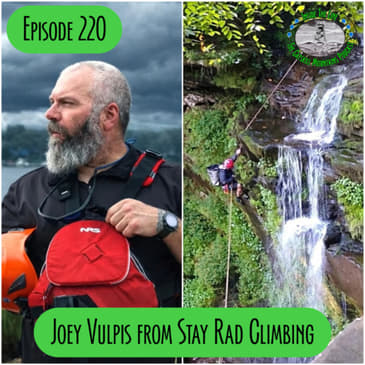
Welcome to Episode 220 of Inside The Line: The Catskill Mountains Podcast! This week, we sit down with Joey Vulpis from Stay Rad Climbing to talk about all things climbing—how he got into it, what keeps him hooked, and his extensive training program that he does around the globe for rock climbing. We also shift gears into the topic of New York State’s solar project and finally, Stash is gearing up for a trip out to California. Make sure to subscribe on your favorite platform, share the show, donate if you feel like it… or just keep tuning in. I'm just grateful you're here. And as always... VOLUNTEER!!!!
Links for the Podcast: https://linktr.ee/ISLCatskillsPodcast, Donate a coffee to support the show! https://www.buymeacoffee.com/ITLCatskills, Like to be a sponsor or monthly supporter of the show? Go here! - https://www.buymeacoffee.com/ITLCatskills/membership
Thanks to the sponsors of the show: Outdoor chronicles photography - https://www.outdoorchroniclesphotography.com/, Trailbound Project - https://www.trailboundproject.com/, Camp Catskill - https://campcatskill.co/, Another Summit - https://www.guardianrevival.org/programs/another-summit
Links: Vote in the Chronomgrammies, Stay Rad Climbing, NRRI, American Hiking Guides Association, Garden State Climbing, NRRI Instagram,
Volunteer Opportunities: Trailhead stewards for 3500 Club -https://www.catskill3500club.org/trailhead-stewardship, Catskills Trail Crew - https://www.nynjtc.org/trailcrew/catskills-trail-crew, NYNJTC Volunteering - https://www.nynjtc.org/catskills, Catskill Center - https://catskillcenter.org/, Catskill Mountain Club - https://catskillmountainclub.org/about-us/, Catskill Mountainkeeper - https://www.catskillmountainkeeper.org/
Post Hike Brews and Bites - Bread Alone, In The Sticks
#rockclimbing #stayrad #climbing #catskillmountains #hudsonvalley #hudsonvalleyhiking #NYC #history #husdonvalley #hikingNY #kaaterskill #bluehole #catskillhiking #visitcatskills #catskillstrails #catskillmountains #3500 #catskills #catskillpark #catskillshiker #catskillmountainsnewyork #hiking #catskill3500club #catskill3500 #hikethecatskills #hikehudson
[00:00:29] The bushwhacks were some of the worst days I've ever had in the mountains, or life really. Whereas Pantsy Mountain is totally opposite, it's a mountain on top of a crater. I think the weather challenges on this incident were particularly difficult. It is really the development of New York State. Catskills will respond to it.
[00:00:52] Passing into Inside The Line, the Catskill Mountains Podcast. Alright, so Episode 220. So Joey from Stay Rad Climbing. Joe, how do you say your last name, buddy? Vulpis, V-U-L-P-I-N.
[00:01:18] Okay, so Joey Vulpis joins us from Stay Rad Climbing down in New Jersey and he's going to be talking about, you know, straight up rock climbing, canyoneering, stuff like that in the Catskills, New Jersey area. And we're going to be going deep into the climbing aspect, not just the hiking aspect. So welcome to the show, Joey. Glad to be here. Joey, Joseph, Joe, what do you want? I'm Italian from Jersey, so Joey's good. All right, Joey, hey.
[00:01:48] Is there more of a name that goes with that? Joey? Joey the Hammer? Joey? Joey the Hammer. No, you know, oddly enough, I used to be little Joey when there was only two Josephs in the family named there to my grandfather. But now there's like 30 of us because Italians breed like cockroaches. So I'm no longer little Joey. Italians breed like cockroaches. Good Lord. Little Joey, eh? Yeah. We just lost all of our Italian listeners. True. True. All right.
[00:02:17] So first things first, Tad, I'm gearing up for Cali. Next week is Cali. It's insane that it's so close. What day are you leaving? Thursday. And you're flying out of? Albany into San Diego. Okay, cool. So just trying to, we're not doing any crazy hikes, which is disappointing.
[00:02:39] I did have a 13,000 foot mountain on the agenda, but since we're not spending that much time in Yosemite, I'm just gonna bag that some other time. Gotcha. You need a permit to get into Yosemite? Not yet. It doesn't say Yosemite. Yellowstone, I think you do. I've heard of recent craziness in Yosemite, like parking lots full by frickin' 1130. Yeah. Which is not bad. I mean, that's not bad.
[00:03:08] Parking lots are full by 930 here in the Catskills. Oh yeah, that's true. I forget about our area. New Jersey is the same way. Yeah. The Ramapo area has got a huge parking area, but that's full when it's nice. Oh, it's crazy down there. The Catskills, I know when I was working up there, it was maybe two or three. Maybe two, three years ago, it was post-COVID. They were towing cars off the side of the road. They must've towed 40 cars, no joke, in like a couple hours. Yeah. They had flatbeds coming like there was a truck festival.
[00:03:38] Yeah. The Platte Cove area? Yeah. Yeah. Oh yeah. Yeah. That's sad. How did you know, Tad? Is it because he's climbing? Well, yeah. Number one, because he's climbing and number two, I see towing activity over there all the time when I'm there in the summer. Yeah. The Hunter PD doesn't like people parking on the road over there. Yeah. It's, you know, just imagine what it was like, you know, with, with Catterskill falls and stuff like that, the clover area.
[00:04:05] That's like those, like that was the time you were 2019, 2020. And you had like 2019, you had a, a towing company and you're like, man, business sucks. 2020 hits. And then you're like, holy shit. We've seen a 2,000% increase in our toes. But let's, let's just go through the logistics of, of that. So you're, you're out for a hike Catterskill high peak or doing the devil's path or something, whatever.
[00:04:33] You come back, your car is gone. You're really, you're really, really fucking tired because you just finished a long hike and your car is nowhere to be found. What do you do? And what's the cell service out there? It's not very good. Yeah. So what do you do? What do you do? How do you get your car? Does somebody tell, is there like a sign or they put something up that lets you know where to go get your car?
[00:04:59] Or is it like, do you call the police and say, I think, I think my car and 25 others were stolen today. Just what are those logistics and do they, so when you go to get your car, do they assume that you have a credit card with you to pay, to get it back? True. Cash. How do you, what do you have to prove ownership? How do you prove ownership of your car? I mean, I was there a couple of times when people came out of the woods, like off, um,
[00:05:27] you know, right by the little Catskill center there, the art house. Yep. And, uh, people came out of the woods and their vehicles were missing. Yeah. And you know, the typical reaction you would expect from that is what happened, but there was no signage. I know now there's a sign with a phone number on it. Okay. But you got to drive up the road to see that it's not exactly where you would be barking. Wow. Yeah. Yeah. It's just a crazy time that we've been experiencing, but yeah. But yeah.
[00:05:54] So gearing up for Callie, uh, winding down and you know, can't wait going up the Sequoia and Kings Canyon. Going to check out those, the top seven biggest trees, oldest trees in the world. So nice. So what are you going to do when you come up to these trees? What, what are you just going to stand there and look at them? Are you going to hug them? You're going to break off a piece of bark and bring it home. I'm probably going to pass out because of how like amazing and that's rising. Hopefully.
[00:06:21] I mean, I highly doubt there's going to be, we're going to be alone, but just one of the trees we plan on going to is actually pretty off, far off course. It's called the boil tree. So we plan on doing that just to get away from people, but you know, it's like the Sherman general sermon, uh, you know, all those presidential stuff like that. Wow. So if you were alone, what would you have? Like some spray paint to tag a couple of trees inside the lawn, cut this one down,
[00:06:50] put some stickers on it, man. Stop. Ted, you want to like make us sound bad. Oh God. That was horrible. That was just a joke. Listeners don't do that. It's not, it's not cool. You know what else? Ted, you know, I wanted to bring this up real, I can't say really quickly, but that new solar farm project, man, it is, I, you don't have Facebook, but God damn, it is hitting the fan.
[00:07:16] Again, the DEC is getting pulverized by any influencer that kind of lives in the New York area by this whole thing. And I don't know if some of these people have it wrong and some of these people don't. So I had to like dig deep on the project, the S 4408A. And once again, like it's not, nothing's happening inside our blue lines inside the
[00:07:44] Catskills or inside the Adirondacks. That's forever wild. You can't do shit on that. But outside they, I was looking up stuff and I was just like, you know, can they, can they cut on these like reforested areas? And apparently no, you can't cut on the, the reforested areas, but they can cut for transmission lines. So let's say there's an open field right next to this forest area.
[00:08:12] They can cut for a transmission line through it. So, I mean, that's, that kind of sucks as well. Like this could happen outside of the blue line that we're talking to. Like you said over what we said over in the, the Capitan reservoir, the round out stuff like that, where it's just, it's just one of those like things that's going on. And then up these areas, Finger Lakes up in Albany, I've heard that, you know, this could
[00:08:40] be a problem for like rare habitat birds and stuff like that, that have been nesting here in the pines. So, you know, they have the reforested area are kind of more of like the, the pines, the trees that can grow fast. They wanted this to grow up really quickly instead of, you know, take hundreds, hundreds of years. So they planted these. So now these, these solar projects are happening right beside these forested areas that habitat these birds.
[00:09:08] So now once again, everybody's like some social media influencers are going ape shit and I'm just hearing everything. And we talked about this before, you know, we talked about how this, this could happen, but it usually doesn't happen. And it's really, it's really odd to look over somewhat the facts and to see, you know, what is in the, the project and what isn't, you know, like where can they build? Where can they do it?
[00:09:37] Who's the power going to the transmission lines? Like, it's just, it's a whole bunch of shit that people needs to like break down before they start going ape shit. Like me, you know, I've done that before. I will admit guilty. But we, we got to break this down and see what's going to happen. And as we talked about this before Ted, it's probably not going to happen. We have our New York state. They've, they've done this several times before and it's just been hammered down and said, no.
[00:10:06] So Joey, we're you are in Jersey. You ever hear that expression? I call bullshit. I call bullshit. Oh yeah. Yeah. Yeah. Right. I mean, it's almost universal. Okay. So Joey, I'm calling bullshit here right now because this appears to be this whole Senate bill 4408 a and allowing transmission lines on reforested lands, which is a
[00:10:35] seems to have this progression that what spans over the last four or five, six months. Josh, is that about correct? I, I, it feels like it's, it's even smaller than that. Even smaller than that. Now let's compare that less than six month progression of this bill with the presumptive environmental impact that they would have to do with how long, just remind me again,
[00:11:03] Stosh, how many months did it take them to do this study of the trails? The unmarked trails. Don't laugh yet. The unmarked trails on the upper mountain summits that have no trails that are marked. How, how many months did that take? Three or four months? Three or four. It's like 12, 24, 48 months. Or longer or longer. Or longer. It was like six. They started before 2020.
[00:11:34] So yeah. Yeah. Right. Oh, okay. Okay. So this is Joey. This is why I call bullshit. Yeah. That's a long time. Yeah. Cause when it, when it comes to studying the impact on the trail of summits that have these unmarked trails versus cutting, cutting, you know, the, the width, what do you need for a transmission line? 50 feet wide. Yeah. Pretty, pretty good. Yeah. And then you're going to have to put up these tall towers to carry the poles or just telephone
[00:12:03] pulse, whatever it's going to be, but it's going to be something significant and it's a matter of months. Right. But when it comes to studying the, uh, unmarked trails on these trail as summits or Catterskill falls, it takes almost a decade. So I call bullshit Joey. That's yeah. Yeah. I'm saying that's a little crazy. It is. All right. It ain't going to be passed, you know, that's it's happened before and the public pushback
[00:12:33] is going to be insane. You know, we've had these small towns, you know, that have a thousand people have gathered like 500 in these small areas standing outside. And it's been, it's been pretty crazy. So it's, it's good to see people once again, pushing back these weird, odd things that could kind of just happen. Like, like I've said, I mean, Tad, you've, you've got good points to put these like over
[00:12:58] like parking areas, rooftops and stuff, but you're going to need like permission from the people that own those areas and stuff like that, that it's just the law. Yeah. When you pay to rent that space, they're going to give you permission. I mean, farmers get $2,500 or more a month to lease a field out to a solar facility. Wow. That's a good amount of money. Yeah. Yeah.
[00:13:26] And, and so they don't have to hop on the tractor and plow. They don't have to get out there until they don't have to spend money on seed. They don't have to go out and harvest in the fall, right? They just lease their land out to the renewable company and the renewable, renewable company goes out, gets all the approvals, does the installation, all that work. The farmer collects the check.
[00:13:50] And sadly, what we, we see at least here in Orange County, um, where I near where I live, but all the dairy farms over the last 25 years, all, but a handful. When I say a handful, maybe five operating dairy farms in the county, the rest of either sold their land to developers and you can never reclaim that land after houses are built on it. But if you put a solar farm out there on that land at the end of 25, 50 years, if you
[00:14:19] want to do something else with the land, presumably you'll want to because the solar technology will be outdated by then. Do you release it to another solar provider or you do something else with it? It's not a permanent use of the land, but there's plenty of land down here. It seems to put these farms in and this is really closer to where the energy is being used than in the Catskills. Yeah. You bring up a good point. You know, we see these, these, uh, like these land pastures, stuff like that, that haven't
[00:14:47] been used in 10, 15 years and people are pissed off that these farmers sold it. But then these farmers aren't getting absolutely no money from doing nothing. Yeah. They pay taxes. Yeah. And so I, we have a solar farm up in Stanford, like right off of the road and people are always pitching and complaining about it. I'm like, that was that farmer's land. Like he chose to sell it to that, to stay living instead of being like, well, what the hell am I going to do?
[00:15:17] You know, 400 bales of hay and get like $25. Yeah. Like what the fuck? Like, I don't, I don't blame them, especially the times we're living in. You gotta, you gotta do what you can to survive. Yeah. Yeah. Well, so solar energy, we'd all agree is generally a good thing and we should promote it, but it just seems that the Catskills and the, the areas surrounding the protected lands are not the best place for it. And that there's other lands that this can be done.
[00:15:47] And presumably if you're a farmer who's not farming the land anymore, you would rather be collecting money for renting out your fields for solar energy than those solar energy installations going upstate and nobody wants to rent your land. Yeah. Sounds good. We have any farmers listening to this. I only know one guy who's a farmer that hikes. And, and that's because the farm, the family farm has been sold over off over the years.
[00:16:17] And all he has basically left is the house in the barn and very little tillable land around it. Cause they don't, they don't have dairy cattle anymore. Yeah. Dairy cows. I should say. It's a shame. Sorry to had this, this podcast I've been told by millions has been, is then just depressing lately. Millions, millions have told you that. Well, that's what I find that encouraging. Millions. Awesome. We got, we got Joey on here. Little Joey. Joe Rogan. Joe Rogan from Jersey.
[00:16:47] And he's going to be, he's going to be bringing some, some awesome stuff up. So, especially, you know, we have the 3,500 club annual dinner meeting, which is June 13th, Glenbrook park, uh, in Shan Dakin. Take a price $30. Uh, plus the, the event fee. When you buy it online children under 12 are free. So it looks to be a good time. I've been to several 3,500 club meetings or dinners.
[00:17:17] Never been to one. Oh, tab. We'll have to go sometime. Okay. Yeah. Uh, yeah. So, uh, thanks Joe for shooting the shit. I know like that. Once again, this isn't New Jersey based, but you know, you know, you know what that is. They have a lot of like solar farms down there in New Jersey. I mean, yeah, I mean, where I am about a land mile from the ocean and then maybe a half
[00:17:45] a mile of the farm start from where I am in central New Jersey. There's a couple of solar farms. The biggest thing out here is corn, blueberries, eggplant. Oddly enough, that's wow. And then if you go to South Jersey, it's all cranberry fields and bogs. Yeah. Been there, done that. You know, we'll do. You guys have, uh, as you know, it's New Jersey search and rescue. Have some of those crazy rescues in the bogs.
[00:18:12] That is treacherous shit that I do not want to ever do again in my life. Oh man. That's a brutal. Yeah. Marshlands bad enough, but a bog. Yeah. Use airboats. Cause it damages the environment too much down there. So you can't even get an airboat. Yeah. We've been the dad. We've been through bogs. I mean, you've been through bogs with Michael Kudish and stuff. This is beyond like horrible when you're looking at the beach. You're looking for something that basically is three feet below you.
[00:18:43] Yeah. Horrible. So, but, oh, thank you guys once again for shooting the shit. Let's give a big thanks out to the monthly supporters. Bob, Clint, Chris Caribbean, Eric Rosario, Jeff Jotz, Vicki Ferrer, Mikey S, Henry Burmeister, John Comiskey, Desert City Radio, Betsy A, Denise W, Vanessa, and Jim C. Thank you guys so much for supporting the show. Really appreciate it. Once again, your support just doesn't go back in the show. It goes back into the Catskills. Also, check out Outdoor Chronicles Photography.
[00:19:12] Molly from Outdoor Chronicles Photography specializes in adventure, elopement, and adventure couple photography in the Catskills, Adirondacks, and White Mountains. She's an officiant for getting married, a licensed guide, but most importantly, she's a story maker. Molly won't just give you photos. She'll give you memories that will last forever. Don't hesitate to get a hold of Molly on every single platform.
[00:19:36] Also, if you ever wanted to learn more about hiking and backpacking or even just brush up on your swimming world skills in the backcountry, you need to check out Trailbound Project, a hiking and backpacking school located in New Jersey. Scott and Joe from the New Jersey Search and Rescue team have amazing backgrounds in Wilderness First Aid, Wilderness First Recovery, and the Mountain Rescue Association. And they are here for you to learn old and new skills of hiking and backpacking.
[00:20:02] They teach anything from first aid, math, and compass, and many other skills that could help you and others while on the trail. Check them on their website and social media platforms. So, Tad, lots of really outdoors. So, Joe, if you're not familiar with the show, this is where people tag us online and we get to see what they've been doing. So, it's very nice of them to tag us and we get to chat.
[00:20:30] So, a lot of people are out over this weekend as it was a stunning weekend. So, Oskana, Catskills Ever After, when up Bengal Hill. I think that's definitely a steeper hike and it looks like she climbed Overlooked and Bramley as well. Sorry. Jesus. Yeah. So, yeah. Definitely, Bengal Hill is one of those areas that you do not think that it's not steep as in like crazy vert.
[00:20:58] It just keeps going up and up and up and it's a small steep. It's a constant steady pitch over a pretty wide road going up. But what I think is really impressive about that hike is right at the bottom, before you start the climb, there's like that massive boulder. Yeah. It's like two stories high. It's bigger. It's like the size of a house. Yeah. It's enormous. Yeah.
[00:21:25] I think it's one of the largest freestanding boulders you see around the Catskills. Ooh. Well, I have to look. Interestingly enough, it reminds me, there's one also to the east of South Double Top that's maybe two thirds the size of that. I know that one. Yeah. But there's like a pillar, right? Yeah. Right. Yeah. The, the, I forgot what they call it, but the hunters over there have a name for it. Oh, cool. Cool. So she was up over there.
[00:21:53] Uh, Nicholas golden money cat was on Wyndham high peak for somewhat not a sunrise. He didn't catch a sunrise. So, but he said he got some great photos. Uh, Lisa chaotic. Cause I think is halfway on our grid to win sugar, loaf and pat toe. And then the panther and Wyndham high peak. And then the balls and clap Rocky loan and finished the day on Friday. Yeah. What a hiking machine. Kudos to her. Fucking. I I'm pretty sure she's robotic. Yeah. It's just insane of what she's doing.
[00:22:22] Uh, Joe, Jake plow was knocking off more of his New York town state 28 or list. So I suggest you check out Joe's, uh, Instagram feed because, uh, the New York style downstate 28 or less is pretty neat. So I'll have to, we'll have to tag that in the show notes. Rachel Jean, the gypsy queen did a day one to cover in 19 miles on the problematic trip path over in long Island.
[00:22:47] And she also did another one that was covering, uh, the same path that crosses long Island as well with, uh, with, uh, good old long Island hiker. Yeah. Looks interesting. I never knew there was such a hiking trail on the island. Right. I thought there was roads and rich people. Yeah. And mob, and mob people. Yeah. Right. Like a bunch of little Joey's running around. Yeah. Start popping it with a salt gun. Yeah. Watch out.
[00:23:16] They're going to be Rachel. I better watch out back there. Also Vicki hiker goddess adventures was up for us with the 3,500 clue and then finished a Harriman trail challenge. I'm Parker cabin hollow. And then also did an AMC hike to find stock on in stock state forest. I didn't stock the sense German. So trying to say that correctly. Uh,
[00:23:41] also big congratulations to Steve for an environment mentality for finishes 3,500 on peak. Oh, yeah. He's an accomplishment. Uh, it looks like he's way on his way to doing the grid. Like as easy, he's not going to stop, especially with Scott, Danny, Joanne and all them. They don't stop hiking. So that's cool.
[00:24:04] And that he was also joined by off in the woods, Sean, Joanne beyond blazes, Danny, uh, as Ted said, AKA I'm too shy to ask 10 questions. The file mischievous. I wonder what the question he has that I, I, he didn't, he's going to have to do that. I think his question is why haven't we invited him back on the podcast? Oh, that's what I think Danny's question is. Oh, okay. Yeah.
[00:24:34] So he's too, but like I said, he's too shy to ask it. So maybe he'll ask, maybe he'll ask us through Joanne. Yeah. So Danny answer that question, which by the way, Joanne is 18 summits away from finishing her grid. And she didn't tag us. Oh, she did. She did the six with Steve. Oh, sorry. Yeah. And in her post, she indicated she's at number four Oh two four 20.
[00:25:02] So she has done a lot of hiking in the last couple of years. Wow. Awesome. Awesome. Thank you, Joanne. Just ripping it up. Uh, Todd T-boiled outdoors without canoeing in the air on Rex Adirondacks battling all sorts of weather. I remember him saying that he had snow and rain and stuff. He did. He told me, he told me today of how much he paddled and, uh, hiked and stuff with the canoe. So it, uh, I can't remember statistics, but it was, it was pretty cool to hear. So, yeah.
[00:25:31] And he's doing all that portaging by himself. There's no one else with him. No one else. That's what I said. I was just like, that's fricking crazy. And he, he said when he was hauling the canoe, he didn't have wheels. So he was like, kind of just hoisting it up on himself. Yeah. With his gear. Beer, some beast mode. I was just like, are you kidding me? Yeah. We want, we want a blood sample test for some blood doping. Exactly. Yeah. Uh, Ken, the long brown path and barefoot.
[00:26:00] Ken was only one left is only one left on the Harrison 67, seven after completing pie meadow and horse stable mountain. Uh, Jeff shots was on Lincoln steam rock with Orla. Uh, Joe was back on Bramley mountain and see out that I said that before. Sorry. Uh, Katie Henderson hikes did the black Tone Valley hike starting at Barnum road and ending at Wyndham high peak. I have yet to do that. Tad. It sounds good.
[00:26:27] It's only like, she said it was only like 14 miles. There's, but there's a fair amount of up and down with that. It's, you know, it's for the, a Catskill hike. It's a big day. I've done it on trail start to finish a couple of times, but generally when I do the four mountains that are part of that, I bushwhack to the first mountain and bushwhack off the last one.
[00:26:54] Cause it, it makes it, I think even less than a 10 mile hike. If you do it. Oh yeah. So you go Peck road up to like, yeah, I don't even do Peck road. There's a DEP parking lot along big hollow road that you can whack right up to a Wyndham heart high peak from that. And then you do the loop around. And after you do Thomas Cole, you whack back down. Correct. I know what you're talking about. I thought you, did you ever like park at Peck and then bike back to your car?
[00:27:23] Or at Barnum Hollow vice versa? Uh, I would park at Barnum road and bike down to Peck because if you do it the other way, that's a killer uphill. Yeah. Yeah. So you're, you'd be pretty tired for doing that. So yeah. Park at Barnum road, cycle down to Peck and you can, you know, hike back up. And she's getting back out. Yeah. Yeah. That's a long hike for her. You know, it's also a lot of irregular terrain.
[00:27:53] So kudos to her for legging that out. It's good to see. It's almost a year ago that she had her trimal fracture. Correct. On the Huckleberry loop. Correct. Where it took them what? Seven hours to go from her call in to loading her in the ambulance. Yeah. It's crazy. Uh, Mike red handed red hand adventure guides met up with fellow fire tower.
[00:28:18] Stewards on balsam Lake mountain had kind of like a, uh, recap or redo of, uh, their trainings and stuff like that on the fire tower. So congratulations. And thank you stewards for doing your, your shit. Uh, Richie nature escapes today. Bushcraft style camping trip and said it was minimal gear, but maximum fun. That was pretty cool to see. Like he brought. Yeah. That looked pretty interesting.
[00:28:41] How we had his, uh, everything set up and I did call out that I saw a couple industrial arts. IPA's at the campsite. So he might call it. What was that? Uh, bushcraft style camping with minimal gear. Maybe it's just IPA style camping. It's going to say, at least it wasn't bush light style. Yeah. Right. Right.
[00:29:08] I mean, you know, I just like, we were talking about it today when I was like, and just the guys, you know, when they brought a sip six pack up to fricking Mount Marcy after a day hike in their jeans. Oh my God. And car hearts or like, you know, Ralph Reindeck was talking about doing like the never sink. He's like, Oh yeah, I did it in like two days. And you know, I brought my rifle and a six pack and my car heart stuff and camped over on the Friday summit. Like what the shame?
[00:29:37] Like everybody would be shaming him nowadays, but that asses. So, uh, also hiker Joey and why was that eternal flames up in the, uh, finger lakes area. So that's a cool place to check out. Uh, I suggest everybody go there and check it out. I haven't been there. I'm looking forward to going there. Rob, AKA the sloth tramps to the Elmridge trail to Wyndham high peak. Cool video. Check out his stuff. Really appreciate it.
[00:30:04] And last but not least, Danny tagged us today. Mild mischievous was at the peak moose blue hole recently. I don't know if this was a part of his six. I have a feeling it was. Yeah, that would make sense. Yes. So cool. Thank you. Everybody that tagged us, uh, Ted, did you get a number on that one? Two, three, four. No, I didn't count. Hold on. 13. It's it's it's it's a good, good amount.
[00:30:33] Amazing amount as you know, three is good enough for me, but this is amazing. So yeah, Jesus. Sorry, Joey. So who is drinking anything? Is it just me? I think it's just you. It's a first Tuesday of the month. No brew Tuesday for me. Once again, thank you, Ted. Uh, that's a, that's tough to do. I gotta admit. How about you, Joey? Yeah, just the green tea. Getting old. Doctor told me to start drinking these every day.
[00:31:03] Oh, nice. Is it working? Or is that just bad medicine? I'm not really sure what it's supposed to do, but I haven't had a blood test done yet. So we'll see you next time. I'll let you know. All right. I'll take you in the results. We'll see. All right. So here we go. All right. So this is a new one. This is, this is new from Hudson North called guava cider. So this is my first time tasting it.
[00:31:30] I was going to have, uh, Todd, Todd, uh, from our hike today gave me some, some creamsicle 1911, but I'm going to do that next week. So this is guava cider. So interesting. Interesting. That's a weird one. Hmm. It is very weird. It's good, but it's weird. I need some Tostitos with this. Yeah. Yeah. The real question is, will you drink it again?
[00:31:59] Will you buy more after this? Highly doubtful. I got to drink these three. Okay. I'm going to doubt them tonight. It's a one and done. Yeah. I would think so. This is, this is definitely different. Is this some sort of New York city thing of where we're trying to go healthy? Like, I don't know. Yeah. Maybe, you know, apples are apples are out of season right now. So maybe guava is the way to go. Maybe you can get a truckload of guava juice really cheap. Yeah. True.
[00:32:28] You've got to, you've got to wonder what the tariff is on guava these days. Oh God, Jesus. Stop. Stop. Now we're not talking about that stuff. So how about previous hikes? Joey? I know you told me that you were up in Colorado. Did you do anything awesome up there? Um, I mean, we went through garden of the gods a bit when we were out there and then a pikes peak. Nothing, nothing too crazy.
[00:32:54] I mean, the elevation is a lot different out there than here, but I'm at sea level in New Jersey. You can't just say that. Like what was garden of the gods like, like that? I mean, that's, that's a publicly acclaimed area. Yeah. That was an interesting, I mean, it was really crowded. Um, I do like the way that they cut a section off people from destroying the environment because it's such an impactable area being, you know, desert based or arid. But, uh, you know, you could appreciate that to some point, but it was like being at like
[00:33:23] great adventure or six flags, you know? Oh, wow. That many people. Oh, there was a lot of people. I mean, they're in the park. What I saw there, there was well over a thousand people. Oh, we're a thousand people in the park and cars were probably a third or a quarter of that. Wow. Unbelievable. So I ain't going there. No, I would definitely pick a different time. I wish I went earlier in the day. It would have probably been a little more enjoyable, but at least I got to see it. It was interesting.
[00:33:53] It's the garden of the gods is like, you know, they, these red stones that are like pillars and stuff like that, uh, all around. Correct. There. I forget the geological term for them. They're not like pillars or spires. They look like a shark fin and there's these white ones. There's two white ones. Then there's like a whole bunch of these red stone ones. Like you just mentioned, and they come up out of the ground. They look like shark fins. Oh, wow. I forget the geological term for that. If there is even one, but that's the only thing I can equate it to.
[00:34:23] It sounds like tectonic activity. Sure. Yeah. Were you there climbing? No, I was there doing a. Swift water operations course that a swift water rescue technician course. And then, um, we did some night tracking with a 10 special forces group out there. Oh, sounds pretty casual then. Yeah. Yeah. Casual for us. Oh yeah. I went to garden of the gods and I hiked around and went to pike peaks and that it, but we did some shit with special forces. Yeah. Tactical shit.
[00:34:53] That's tactical. Night tracking. Yeah. Swift water rescue stuff. That's okay. That's like top of the line shit that you. I'm not impressed. Are you impressed? Josh? This doesn't impress me. Come on. We track mountain lions. Okay. That's what we do. Joey. Right. And we have a simple area of doing it in between Graham and double top. So now that's awesome. What did you think of. Pike speak to you? I'm a, did you drive up of course? Part of it?
[00:35:23] Yeah. Then the rest of it was, uh, where you had a hike was all closed off because of the snow. There was about. I'd say maybe two feet of powder that came down the night before. Cause they had some really weird snow that came in off the West aspect and just hammered the, the East aspect of the mountain. And then they had a wind come in from the North and it just created this like perfect store right over the peak. Hmm. So how many miles? I can, when did you have to do? Oh, nothing to talk about. Yeah. Okay. But it's still, uh, what is Pike's peaks? Like four over 14,000, right?
[00:35:54] Yeah. I think it was, we got up to 11,000. And I think the peak though to the top, if you could fully accent is like 14, one, something like that. Nice. And they're like, did you, with the being in, I'm guessing you were down in Denver. Did you have any like altitude kind of like, uh, train, not training, but like, um, uh, exposure that you had to do. Yeah. So we flew into Denver, which is 6,000 feet or so.
[00:36:22] We drove down to Pueblo where there are two of the classes or three of the classes were. Pueblo. I think don't quote me on this, but I think it's like 4,000 feet elevation. Um, and then we were there for like five days and then we moved up to Colorado Springs for two days. Um, and that was like 6,500 feet. Um, and the garden of the gods is a little over 8,000. So there was definitely, I have a sinus infection right now, and I'm pretty sure it's from all
[00:36:49] of the environmental, uh, differences that we experience. Wow. Awesome. That sounds fun. Now. Yeah. Yeah. You gotta, do you have like a, an Instagram or something like that? You're kind of posting this stuff because you should, this is absolutely cool as heck. Yeah. So the, the, I was out there for my main business, the national rescue and response Institute. That's my full-time job that I own. Um, so it would be NRR.
[00:37:16] I think it's either underscore USA or dot USA. Let me check. Okay. That's, that's cool. Zach. You know, when you showed me that I was just like, what the hell is this guy? Like why is, why haven't I seen him on a fricking like, like podcast around the United States? This is insane, buddy. Yeah. I've been on a couple of them. I can recall teaching a lot of conferences, usually technical rescue conferences.
[00:37:41] I'm at like, I'll be at a risk any at the end of the month doing, um, a lecture on wilderness and mountain rescue. And then that same day I'm doing a rapid egress for law enforcement and mountain rescue personnel into a high angle environments. We're doing a class on the towers there. Wow. Yeah. I think this is the right guy to have on the show for the, for climbing, I guess. So cool. Yeah. Well, so we'll tag you that and, uh, in the, the Instagram posts and stuff like that.
[00:38:08] So I mean, you'll gain like maybe two or three followers. Not even. Yeah. I think we have, uh, 94,000 we have on there. It's pretty good. Oh, really? Yeah. We have a really good social media following. Tick tock and Instagram seem to be the biggest. Our Facebook's like 45 K. Tick tocks like 40,000. Wow. All right. All right. So we're going to end this episode now. Recording stopped.
[00:38:38] I'll take you guys out there. You're gonna, you're gonna already like have your own podcast now. I appreciate coming on here. It's really cool. You guys are kind of checked it out a little bit and stalked you guys a little bit, but it seems interesting. Yeah. You stalked us. We're just, and you still came on the show. Yeah. Right. I was very hesitant. It took me a bit to push the button to enter, but I did it anyway. Okay. I agree.
[00:39:02] I mean, we're a bunch of normal dudes just talking about the Catskills and hiking around the Catskills tri-state area. I mean, what more could you want? Like. It's a great area. People are, it's very underappreciated. I don't know if it's fortunately or unfortunately that so many people found it during COVID, but yeah, it's a great area and it's not going to be there, you know, in the next hundred, 200 years based on, you know, from a geological standpoint, it's all going to be, you know,
[00:39:30] those ravines and gorges are going to be pretty much gone. Yeah. I've thought of the same thing as well. So, Chad, let's move on to you. What were you up to this weekend? Yeah. So on this past Saturday, May 2nd, my hiking buddy, Danny Davis is, uh, as of last weekend, was two weekends away from departing the area and heading up to Alaska, the land of retirement
[00:40:00] for him. So Saturday was going to be our last scheduled hike together. He made the plans. We met up at Brett alone to discuss what we were going to do. His, his favorite two mountains in the Catskills are Cornell and Wittenberg. He refers to them as Whit corn. So we decided, uh, to hike up one of the drainages going to Cornell from the Woodland Valley area.
[00:40:26] Uh, I had prepared for super cold temperatures, at least seasonally super cold temperatures, given that it was the beginning of May. Um, however, overnight it looked like there was the possibility that you could have gotten some ice up at the higher elevations. So I did have some gear for colder weather. Nonetheless, we drove out to Woodland Valley, uh, parking area. There was a few cars out there. Ironically, we bumped into Marv Friedman, you know, Marv Friedman. Nice. Of course.
[00:40:56] Yeah. He was on the beginning of the search and rescue team with me. Yeah. So Marv is the fellow that five, six years ago connected Danny Davis and I together. Nice. Yeah. So it was interesting. Our last hike together, we bumped into Marv. So nonetheless, uh, we set out, uh, the way to hike up Woodland Valley that we've done many,
[00:41:18] many times before and quickly the conversation, uh, turned into the evident destruction of the forest in that area between the emerald, emerald ash borer, the hemlock will will woley adelgid, uh, the beach bark disease, as well as the beach leaf disease, oak wilt disease.
[00:41:46] I mean, the list goes on and on, but all of these trees are being killed off at different rates. I mean, frankly, the emerald ash borer, the only ash trees that are still standing or dead ash trees. Um, but all of this is creating a lot of dead wood on the forest floor. The canopy's thinning out. There's going to be a lot of understory growth, but all of that dead wood, um, Danny Davis pointed
[00:42:11] out is going to increase the fire risk in the Catskills, um, because there's just more fuel lying around. And so, you know, I did some research on this afterwards and the projection is, is that over the next 15 to 20 years, there's going to be a shift in the forestry and the Catskills to maple, birch, uh, striped maple or moosewood, which we see all over now.
[00:42:39] And, um, beach, which beach whips and hobble bush, these striped maple trees. If you've seen them out there, they're when they are fully grown, they will be about half the height of the trees they're replacing. So they're not very tall trees. And my projection is over the next five to 10 years bushwhacking in the summer, not going to be fun. Okay. So we headed out, uh, Woodland Valley up the, uh, Woodland Creek.
[00:43:09] Um, you know, we should go up at strange branch off to the left, to the right, et cetera. Finally, we get, uh, three and a half miles in and we start going up the drainage that we were hiking up. We had interestingly had been up that drainage before, but we took a different branch finally at the top where, when you finally exit this drainage last quarter mile, guess how many
[00:43:36] vertical feet you climb quarter mile. Quarter mile. Yeah. 500 feet. Try 1200. Wow. In a quarter mile. In a quarter mile. In a quarter mile. What are you going up again? Uh, at first Wittenberg or Cornell going up Cornell. Oh yeah. Yeah. That little, that little pitch of like three or four different ledges. Well, if it's, if it's 1200 feet in a quarter of a mile, it's not a little pitch. It's pretty serious. True. Yeah.
[00:44:03] Interestingly, the, the cliff band action really was, I'm going to say non-existent except for one or two, which I navigated around Danny, you know, wanted to take them head on, head on and, and climb up and over them. Uh, so nonetheless, we, uh, eventually made it to the, uh, the boroughs trail through there and, uh, hiked over to Cornell, hung out at the viewpoint for a while and made our way back to Wittenberg along the way.
[00:44:33] We interestingly ran, ran into these three guys who were in their late forties. I think they were all like 48 years old and it was their annual get together. They went to grade school together like 40 years ago. And so once a year they get together, they were up in the Catskills for a three day weekend, golfing, hiking, and hanging out. So it was pretty cool to see that. Nice. Yeah.
[00:45:01] Uh, after the hike, we headed over to Brios, uh, for a beer and a slice and got my wife a slice of cheesecake to bring home. So overall it was eight and a half miles, 2,700 vertical feet. Nice. Yeah. Four or seven hours, 40 minutes overall time. That's our five hours, 20 minutes hiking. So we did do a lot of hanging out and talking.
[00:45:30] Uh, Danny noted a lot of interesting geological things along the way. Some of which, um, he's never seen before in the Catskills. Some of which was a bar, which is a long mound of earth that had glacial clay on top and underneath was unsorted or unconsolidated glacial till.
[00:45:59] which means that the stuff on the bottom was probably from a prior glacier than the last one. And that what was laid over top was from glacial meltwater from the most recent glacier, or ice sheet, 11,000 years ago or so. As it melted and it didn't have a way exiting out of
[00:46:23] that area yet, the lake forms and the fines settled to the bottom, creating the clay bottom of the lake, which rested on top of that mound or bar of the unconsolidated glacial till from the prior ice age. And when it's unconsolidated, it means it hasn't been moved by regular stream or river flow activity, because then that would sort out the material and it would
[00:46:51] have like that sorting order that you see in an alluvial fan. So, there you go. It's the end of my Danny Davis education. I'm going to have to go back to reading Bob Titus articles to learn about the Catskills. The drive home was probably treacherous, I got to admit. Why is that? Because you're not with Danny Davis anymore. You're not with like this geological genius that is just, you know.
[00:47:16] I'm half tempted to post the, I did record him talking about that one feature I was just noting because- Do it. Yeah, because he does this deep dive into these things and it's very interesting and I've enjoyed it tremendously over the last five plus years as we've, you know, basically hiked all over off trail in the Catskills. My question is, now that he's retired, can he come on the podcast more often and talk about the Catskills?
[00:47:45] Oh, I don't know. He's taking a three plus month road trip cross country. He's got a couple planned stops. He's taking some pack rafting classes. If you know what pack rafting is, Joe, it's a raft of like a kayak that folds down and you can put it into a really large backpack. So, he's going out to Durango along his way, taking some classes out there because that's going to be one of his main
[00:48:14] means of exploring in Alaska when he finally gets up there sometime in the fall. And then maybe once he's up there, maybe we can entice him to come back and log into the show. He's going to, after this, he's going to get an Instagram and then he's going to get a Facebook and all of a sudden he's going to have these thousands and thousands of followers and be like, I'm up here in Alaska doing 15,000 feet on a canoe. That's not Davis's style.
[00:48:44] Trust me. He will. He's a pretty laid back fellow. That's where you should be. So, cool. Cool. So, what about you, Stosh? I have the impression that you were out in the Catskills today and ran into some people. And Sunday, Sunday I was out in the Catskills as well. I got to get out. I did Twin East. I did the viewpoint on Twin.
[00:49:09] So, going up from Predator Road, did Devils, got into the junction of Devil's Path and went up to the viewpoint. I met a cool guy named Het on the way up. He's never heard of the podcast, so I introduced him to the podcast. He seemed like a cool dude. I got to admit, man, Devil's Path is so much fun.
[00:49:35] Like, I seriously, like, that gain going from the junction on Jimmy Dolan notch up to the summit isn't too much, but it's enough to give you, like, that kind of, like, oh, we're going, oh, cool, a little climbing spot right here. This is pretty neat. Oh, we're going a little smooth. Oh, cool, another climbing spot. I mean, it's not like going down Twin West, going up Sugarloaf and stuff where it's just crazy vert.
[00:50:02] That spot is where I would like to introduce anybody into the Catskills because on the way up to the junction, you get roots, you get loose rock, you get some sort of mud, and then you get the vert going from the junction up to Devil's Path up to Twin East. And, like, it kind of like, holy shit, that was phenomenal. Well, that's basically your Catskills hike right there. Everything.
[00:50:31] At the top, I enjoyed the view for 40, 45 minutes. I just sat there. Wind was blowing nice. I had a little snowflakes. Beautiful view of the Burroughs Range. And then I realized, I was like, oh, it's 40 minutes. That guy that was, you know, right with me is not up here yet. I'm like, shit. I'm like, all right. So three other people come by and I say hi and they barely acknowledge me. So I'm like, all right, I'm off.
[00:51:02] I'm thinking total search and rescue thing. I'm just like, I got to fly down to find this guy. Like, he might be injured. I don't know. So he didn't, sorry to say this, but you didn't look prepared for a Catskill hike. Had, like, not crazy hiking shoes on, a little backpack. He said he's done it before. He's from Philly. He's done one other hike. So he will learn. So it was cool. How old was this fellow? Teenager? I ain't going to freaking guess that. That's horrible to guess. Really?
[00:51:32] Somebody's age. Well, you describe him as somebody who. He was young. Yeah. I ran into with Danny Davis of all people this winter on Wittenberg and he was from Philadelphia and he was a late, late team, maybe 18, 19 years old. Oh, this, he was a little bit older than that. Okay. So he was, he was a cool dude. He made it. So I got to talk with him and then jetted down. Beautiful hike.
[00:52:00] Barely had to change any clothes. There wasn't like, you know what I'm saying? It was cool enough to where you didn't sweat too much to where you got to the summit. You had to put a sweater on and you could enjoy it. Little snowflakes here and there. Awesome drive back. You know what? Tops as a place for a bathroom. Like I said, like I always say, I'm starting to mark these places that have bathrooms in
[00:52:27] Porter Johns because Porter Johns Predator Road has a Porter John now. So two, a wheelchair accessible and a regular one. But Tops also has a great selection of local ciders and beer. So check, check Tops out in Tannersville. Did they let you take one into the bathroom? Yeah, I would have, I should have.
[00:52:51] And then, you know, today, Todd Tebowled Outdoors contacted me. He's like, Hey, you doing anything Tuesday? I'm like, you know me. I have no plan. When I wake up, I'll have a plan. But I planned, I was just like, you know what? I haven't been up Sugarloaf in a while. Let's go Sugarloaf. Let's park one car at Roaring Kill, one car at Mink Hollow. So we don't have to do that treacherous two-mile hike back to the car at Roaring Kill.
[00:53:20] And he was all for it. And dude, this was the absolute perfect day. It was nice and somewhat warm, but with wind. So you're cooling off. The bugs on the east side were a little treacherous. The bugs are out. And they're going to bite. And they suck. Yeah, that's like I got welts here and there. Like we stopped at one place to have something to eat. We took a bite and we're like, this is disgusting. We have to go. We moved up.
[00:53:50] Like I said, going up that way, Roaring Kill, a lot of people don't like because it's muddy. But I find it intriguing because you have a nice climb. You have the Dibble's Quarry. Then you have the moat that's now a moat because the beaver dam broke. And then you have the climb up to the notch. And then you have the awesome Devil's Path. Like that part of Devil's Path, Sugarloaf, I forgot. I'm just like, man, this is nasty. Like it is so much fun.
[00:54:19] I call it, I'll call it nasty. I do call it nasty. But it's just, it's so much fun and interactive that I'm just like forgetting that there's freaking 1,700 feet of vertical climb from Roaring Kill up to Sugarloaf. You're at 2,000 feet going up to 3,700 feet. And it's so much fun. We met two people. I gave them the podcast card. So hopefully they'll start listening. It was good to meet you. I didn't get your names.
[00:54:47] Spent a great amount of time at the viewpoint just watching the clouds and the sun. The wind was hauling. Dude, the wind gusts were like, we would stand there and the wind gusts were like 40, 50 miles an hour just kind of like blowing everything over. And Todd set up his, like he had a tripod for his phone. And the wind was so much that it just knocked the phone over and the tripod. So kept the bugs at bay. Then we descended down Sugarloaf West on the Devil's Path.
[00:55:17] And once again, that path is so much fun. Like I get so much joy. And even though like, once again, Ted, you like the soft trail stuff. This path does not feel like a path that they created. They were just like, screw you. We're going straight up this fucking mountain. And that's what it is. It's just there's footwear. If you had the right footwear, the right attitude, you'll make it up. Yeah, exactly. And that's what it was. You know, there wasn't that much. We didn't get rain.
[00:55:46] I got rain up here in Oneonta, but we didn't get rain in the Catskills. So that was good because I slipped and fell once that I had to catch myself and I caught myself with my elbow and my arm. So I have a little bruise here and there. But other than that, it was one of those most enjoyable descents, ascents on the Devil's Path that I could remember that I'm just like, like, wow, this was absolutely perfect.
[00:56:13] And on the way down, we met, I think it's Sherry and Tom Martone. Tom Martone is the starter of Hikers Anonymous that does grid stuff and stuff like that. So it's really cool to run into them as I haven't run into Tom in a very long time. And we had a great little chat about just different things that are going on in the Catskills, stuff like that. Informal trails stuff.
[00:56:37] You know, once again, looking, you know, looking at stuff, you know, that I've talked about back then that I just, you know, question once again. And, you know, thank you, Tad, once again, for kind of giving me that educational purpose and stuff to kind of like enlighten me with these facts that we have here with the Informal trails.
[00:57:00] And that, you know, our critters are ones that know most about the Catskills informal trails. Yeah. And it was a great chat with him. Yeah. That's, I remember Tom was on the webinar that the DEC had, I think it was last year. And he had some really good, well-thought-out questions that were based on, you know, hard
[00:57:25] facts and data, statistics, questioning kind of the basic tenets or assumptions that the DEC had incorporated into its nearly decade-long study. Did I already mention how long it took him to do that earlier tonight? Yeah. So, yeah, I appreciate Tom gets around quite extensively. Absolutely. Yeah. It was good to run into him, so.
[00:57:53] And then we ascended down to the Short Mink Hollow Trail, and it was nice. It was one of those days that just you couldn't be, you saw the spring creeping up the mountains, but the weather was at the bay. You know what? If you don't have any wind the next couple days when you're going up in the Catskills, it's going to suck bad. Wear your sort of layers that you can. And you might have to bring a bug net with you because it's going to suck.
[00:58:22] Like, even with the wind at 20, like, miles per hour, the bugs were biting. And I, you know, slap them on my arm and there'd be blood. I'm like, fuck, not this. So, I'm glad to be going out to Cali next week. Yeah. Well, so when you come back, it'll be full-on bug season. I know, not this past weekend, but the week before coming down Westkill. No, not Westkill. Actually going up and down Hawkett at the lower elevation. Yeah.
[00:58:51] The bugs were out in abundance. And I'm glad I had spray with me. This week, I started packing my bug net because who knows when you'll need it. Although, we did not run into any bugs on our way up or down. Nice. It's wet corn. Yeah. It's, you know, it's good. So. Yeah. So, that's ahead. Joe, when you're canyoneering in these, like, areas where they're high, like, high water
[00:59:18] concentrations, moss, stuff like that, do you get a lot of these bugs instances of where it's just absolutely insane? Because, you know, sometimes the water is not flowing and there's just bugs everywhere. Yeah. It depends on where we are, especially in aspect of the sun. Because, you know, any kind of sun area. But it depends on the day. But we're moving pretty transient and fluid through the canyons to where, you know, we're negotiating the environment too quickly to where we're kind of stacked. Unless we have a large group.
[00:59:48] We've been in there with some large groups. Then they tend to be a problem. But all the air that's created, the updraft from those, you know, those riverine gradients like the waterfalls, they cause a lot of updraft, which keeps the bugs away. Sometimes we see them. Sometimes we don't. But mud season, I think they're unavoidable in most areas if you're outside of a canyon. Yeah. Correct. Correct. So, awesome. Glad everybody got out and got to do their stuff. So, hopefully this weekend will be just as good.
[01:00:18] So, once again, Catskill News. Volunteer, 3500 Club, Catskill Trail Crew, Catskill Mountain Club, Visitor Center, Jolly Rovers, Trail Crew, any Fire Tower volunteer at. Also, if you want free stickers, get a hold of me through social media and I will send you them for free or go to Camp Catskill and get your free stickers. They're free. Nice. Exactly. So, Joe, send me your address. Be like Joe. Send them their address.
[01:00:47] So, let's break on to the weather forecast. Here is your weekend weather forecast. This looks to be a genuine spring weekend with lows dipping down to 28 degrees and highs going into the mid to upper 40s. Rains looks like all weekend. On Friday, May 8th, expect some clouds in the morning to some clouds in the afternoon. A high of 36. A low of 28.
[01:01:17] And wind chills reaching down to 19 degrees. On Saturday, May 9th, expect light rain to moderate rain in the afternoon. A high of 45. A low of 37. And wind chills dipping down to 25 degrees. On Sunday, May 10th, expect temporary rain showers in the morning to light rain in the afternoon. A high of 46. A low of 36. And wind chills reaching down to 29 degrees in the evening.
[01:01:47] So, once again, it looks to be spring. So, be safe. Be prepared. And don't become tomorrow's rescue story. Have at it, boys. All right. So, let's get on to the last set of sponsors. And then we'll get on to Joe from Stay Rag Climbing. So, is it time for some new gear for hiking in the Catskills? Definitely say no more. Camp Catskill in Tannersville has all your hiking needs.
[01:02:12] Footwear, socks, moisture wicking shirts, freeze-dried meals, Catskill merchandise, and more. They have all the essentials for your hiking needs. They are located in Tannersville, and they have an online store. Check out Camp Catskill. So, definitely if you want free stickers, stop here after your hike. Also, check out another summit, a non-profit program that leads outdoor adventures and activities for veterans and first responders for free. Outdoor adventures like walking, hiking, paddling, and even backpacking.
[01:02:41] We welcome guardians of all A's and ability levels, including those with accessibility needs. Our adventures are located throughout New York and the Northeast, and we organize transit-accessible adventures through the Hudson Valley and New York City area. Apply today on another summit.org. All right, so let's get on to the guest of the night. So, tonight, Joey joins us from Stay Rad Climbing.
[01:03:07] Now, Stay Rag Climbing is an organization that he is based in New Jersey. And, Joe, you just talked to us about doing this for how many years? I've been doing this full-time since 2010, part-time since 2003. Wow. Wow. God damn. So, Joe has been in the business for a great full amount of time.
[01:03:30] And, you know, I'm guessing, Joe, that you are trained in the goddamn every aspect that we can think of with mountain rescue, with mountain climbing and stuff like that. Am I correct? Yeah, I got involved in mountain rescue while living out in Arizona in 2003. And that's where I actually got involved in mountain climbing. I used to do it on the weekends. And I was on two mountain rescue teams while living out there and, you know, brought it back to New Jersey. Wow. That's a hell of a difference.
[01:03:59] You can go from, I mean, Arizona. Where are we located now in Arizona? So, I lived in Arizona twice, from 2003 to 2004. I was in Chandler, which is just outside of Phoenix on the southeast side. And then I moved back out there in 2006 for another year. And I lived out there from 2006 to 2007. And then I came back to New Jersey, enlisted in the military, but it didn't go over very well. Almost got a divorce.
[01:04:25] So, I ended up starting my mountain guiding business in 2008. And I also registered myself as a government contractor as well back then. Holy shit. Wow. Now, in Chandler, where were you like with your mountain rescue, stuff like that, with your stuff, more in the superstition mountains? Or were you? So, when I was with the local team that was out there, they covered the entire central part of the state. So, mostly in the Phoenix area. And then I was with one of the local fire departments as well.
[01:04:55] So, the two of them, they have hasty teams where they kind of expedite terrain negotiations. So, it's a three-man team. A little less than your standard hasty team, which is six. But, you know, we would access the subject, stabilize them, either perform the extraction. And a helo would do that with a long line or a short haul. Or we would lower them down. You know, the terrain really dictated what method we performed. Ah, yeah. Hilo, freaking line, stuff like that.
[01:05:24] We're talking about some crazy stuff right now. Yeah, it was really cool. They, out west, search and rescue is a completely different animal than it is here in the northeast. You know, the environments are, they're a lot more remote than you deal with out here. You know, we still have the front and the back country in this region of the United States. But as far as remoteness goes, you know, when you get out to the Pacific Northwest, the Southwest, you could hike for two, three weeks and you wouldn't see a single soul. You know, there are some areas.
[01:05:53] We don't have that in this region. But probably for the better. Because some of these people that end up in the woods out here. Very, very true. Good Lord. So now, how did you get into like hiking and climbing? When I was a kid, my father, we used to go up to, used to go camping a lot, RVing. Ended up going to Delaware Water Gap. And then I started climbing.
[01:06:20] I wanted to go a little more extreme when I got to become a teenage boy. So I got into rock climbing, ice climbing, you know, higher terrain bait or terrain classified backpacking trips like up in the Adirondacks. And if I could talk my mother into buying me some gear back then, I was ready to go, man. Nice. It just, eventually it became my career. And it's been my full-time career since 2010. Cool. Wow. It's a great job. I wouldn't change it for the world.
[01:06:49] It's, things were a little different back then. You know, a lot of the standards that are in place now weren't around back then. So myself and many others created some standards for the trail discipline, some other ones. And then it just worked from there. Wow. That's incredible. So, Joe, let's talk about your being the co-founder of the NRRI.
[01:07:14] Which I understand is the National Rescue and Response Institute. What is it? How did it come about? What do you do for it? So I originally founded Northeast Mountain Guiding in 2008. 2008. And in 2000 and, I can't remember if it was 2011 or 12, Brian Edberg, I brought him on as my business partner. If you guys know who he is. He's, he was the chief of NJ SAR.
[01:07:43] He's the one who founded their mountain rescue unit. And so he's worked for the New Jersey State Police now as their SAR coordinator. I brought him on as my business partner back then. And we, the company was, we were revamping some things. We went from 15 employees to 80 in a few months. You know, the outdoor adventure and education industry was a lot different back then. People didn't go onto YouTube or, you know, pick a book up and do it themselves. They hired guides back then. And we created different divisions of the company.
[01:08:11] And one of them was the professional services division. And we started working with some military, some DOD based entities, the New Jersey State Police and some other state police. And Brian was the president of the MRA back then to the Mountain Rescue Association. So we did some work with them as well, with the Vermont State Police, NJ SAR, New York DEC. So we did a lot of mountain rescue training.
[01:08:33] And then I'm going to say in right around COVID, we decided to revamp the company when all this online learning started. So we revamped the business. And that division of Northeast Mountain Guiding is what's now the National Rescue Response Institute. And we kind of disbanded and dissolved Northeast Mountain Guiding. But I still wanted to do the guiding because that's where my heart was.
[01:08:56] So I started Stay Rad Climbing Guides in 2024 and brought on my business partner, Emmy, there in last year, 2025. It's a little weekend guiding business, but, you know, still keeps my feet wet in the industry. So what is the like the National Rescue and Response Institute involved? We're the second largest technical rescue training outfit government-based in the United States.
[01:09:27] So our board of directors is made up of a couple Green Berets, U.S. Special Forces, a bunch of task force leaders from FEMA, a couple U.S. Air Force pararescue men, a Navy EOD, a bunch of other individuals. And we run technical rescue training cross-disciplinary. So we run mountain rescue programs. We're the only one with a credential in the United States. We run rescue swimmer programs. We have the most advanced swift water rescue program in the country right now.
[01:09:56] We also do hazmat technician courses, confined space rescue. We have 268 instructors on hand. 60 to 80 are regulars, and the rest are kind of per diem. Around the United States. Yeah, it's a great – we run classes all over the country. We usually get hired for more advanced-based courses. Trying to think. For example, we're doing one up in Alaska for the Alaska State Police for their – they call them their village police.
[01:10:26] Sounds kind of odd, but they're their remote police officers that live in villages that are 200 miles or more. So we're doing some man tracking with them, snow vehicle dynamics, low-angle rescue. And then we're also doing some work with the city of Sacramento this year for their hydro dams. So we're doing – their security forces deal with a lot of individuals that like to breach the area where the dams are, like photographers and drone operators.
[01:10:52] So we're doing man tracking with them, low- and high-angle terrain negotiation, snowcat vehicle dynamics. And then we do all the aerial insertion and helicopter rescue training for Shell Oil for all the offshore platforms in the Gulf of Mexico. So we do that. Wow. Wow. Well, then. Yeah, great work. Yeah. So in a given year, how many folks does your organization train? Do you have any idea? Thousands?
[01:11:20] Yeah, I don't even really have a number on that. I mean, monthly, probably a few hundred. Wow. Yeah, I don't know what the annual is. I mean, I don't want to get into revenue, but we had really – last year was really good. It was a great year. These guys that I put together – so after Brian left my organization or the organization, I brought on Matt Novolino, who was a former U.S. Coast Guard helicopter rescue swimmer during Katrina. He had 140 rescues. Wow.
[01:11:48] And then after that, myself and him both worked as mountain guides together in the mid-2000s. And then he went off on a military pathway and became a U.S. Special Forces Green Beret with 19th Group 5th Battalion. And then I went on a pathway to work as a mountain guide. And then we kind of reconvened briefly with the American Hiking Guides Association, which is an organization that myself and a bunch of guides around the country founded in 2010.
[01:12:17] He was on the board there for a few months, but his job kind of conflicted. And then when he left the military in 2019, 2020, he became my business partner. He unfortunately passed away a couple years ago, but he really brought our company to the next level, you know, to work with the U.S. Secret Service, to work with U.S. SOCOM, with Special Forces, other special operations units as well. And, yeah, it's – I could talk about our company for hours.
[01:12:46] We do a lot of great – the people that are here that we put – myself and Matt put together before he passed away. Yeah, I can't even – it's – yeah, it's amazing, man. It sounds really impressive. Yeah, so with the Mountain Rescue Association, are you guys kind of like a step up from that? No, they do team accreditation. So if you want to work as a team either in technical rock or you want to work in the winter environments – I forget what they call their winter environments.
[01:13:16] Their skills cover non-permanent and permanent snow-covered environments. I don't think they get into glaciated, but they have those two different pathways. We offer credentials in the same way that all of your other technical rescue disciplines operate. So awareness, which is a general awareness of the environment and that rescue discipline. And then it goes into the operations level, which is either surface support for water-based rescues or it's augmenting like a mountain rescue team as a whole.
[01:13:45] Like kind of like what NJ SAR does with their mountain rescue unit. Their SAR team augments their mountain rescue team. They'll deal with patient packaging, low-angle patient extraction. And then we also offer a technician certification. And then up on the post that would be your remote operations specialist. So that's a program that we wrote that the DOD adopted a couple years ago. Wow.
[01:14:07] So now with this, your NRI, like you guys teach all different aspects of like mountain rescue, like high angle, low angle, stuff like that. Like low altitude, high altitude, everything? Yeah. We don't do a lot of high altitude work, but we do cover that.
[01:14:28] You know, we have some projects out in Southern California this year working with some accredited mountain rescue teams that want to improve their high angle or high altitude efficiency, not high angle. So we're working with some of them this year, some local sheriffs. But yeah, it covers all aspects of the environment. So low angle being less than 45 degrees, high angle being more. And it covers permanent and non-permanent snow covered environments, glaciated high altitude being, you know, post 10,000 feet or so.
[01:14:57] Depends on where you are was what people consider high altitude. I consider it something that would be an alpine environment. So yeah. Yeah. Yeah. Now, where of your like with with that organization, where is your most like area that you train in? Like, are you in the Northeast, like like over in the West, stuff like that? I'd say new. So New Jersey, Maryland, Washington, D.C., Virginia.
[01:15:23] I guess from Virginia to New York would be kind of our main area of responsibility. And then our area of operation is the is the United States. But we do have facilities in other countries. So we have an approved training facility in the Philippines, Kenya, Botswana, Bolivia. We just picked up.
[01:15:43] So we have companies that already run a training facility there that mirror our program, depending on the disciplines and what's kind of in their area of responsibility on what they need. Do you travel around and check out these places? I don't personally go out of the country anymore. I stay in the United States. Oh, wow. Wow. Come on. Yeah, we'll send an individual there. I like to stay close to home now. You know, every now and then I'll travel to like I was in Colorado last week or but I like I got two kids.
[01:16:13] So I want to be around a little bit more than I wasn't when I, you know, in my younger years. Well, that's understandable. So tell us about the other field you're in, the mountain guiding, the mountain hiking. Tell us about that arm of your endeavors. I started working in 2003 on the weekends for a guide service in Arizona. And it was already a hobby of mine. And I wanted to do it for a living. But there wasn't like a true pathway to follow.
[01:16:42] You had to go to school, college and get an outdoor recreation degree. Or you could pick your discipline like rock climbing, alpine climbing. And you could focus on what other credentials were available then. But there really wasn't a lot. But I started Northeast Mountain Guiding in 2008. And within a year or so, we started running a lot of backpacking trips. And I was having issues hiring guides.
[01:17:06] So myself, Dan Oberlitz from Alaska Adventure Guides, Ian Elfman from Yosemite Mountain Guides. There was probably like 10 of us that formed the American Hiking Guides Association in 2009 or 10. Rose Carter, she was there. She's a military background but very applicable to client management. But I was having a lot of trouble hiring hiking and backpacking guides. And we were doing a lot of trips back then. They had no client management skills.
[01:17:34] Their terrain negotiation skills were just kind of nonexistent. They were basically playing follow the leader in the woods. And we wanted more of like an interpretive type guide. You know, you're an interpreter for the environment as a guide. So we wanted to that. So we founded the American Hiking Guides Association in 2010. And that was like a credential pathway. And then in 2013 or 14, after petitioning the U.S. Department of Labor, we created the outdoor adventure and education industry.
[01:18:02] And then actually next Monday on the 12th, Monday or Tuesday, we have our final meeting with the National Park Service. So that credential will be mandatory for any trail discipline operations on federal property in the United States. It took a long time to get that. But that organization is also internationally recognized by the UIMLA, which is the Union of International Mountain Leaders, which is what they call hiking and backpacking guides internationally. So we're an aspirate member country for them.
[01:18:32] We're in the process of that. Our curriculum has all been accepted. Other organizations in the U.S. have tried that pathway. Knowles was one of them, the Appalachian Mountain Club. But they didn't have the right kind of nuts and bolts to their programming. So we kind of surpassed them with that. And our program was accepted internationally. And we just have a couple visits where they come and watch our assessments for our backpacking guide assessments for our students for both summer and winter.
[01:19:02] Once we get that done, that'll be a really great step for these guys. They'll be able to operate internationally in 29 countries legally. Wow. Which is really cool. Holy shit. The New York State was a bit of a problem. Of course. Tell us about it. We tried to figure out a reciprocity with them, but our credential would be something equivalent to theirs.
[01:19:27] Because there's only three states in the U.S. that have a guide-based licensing program. There's New York, Maine, Utah. Oddly enough, you wouldn't think some of these more remote states would have it, but they don't. At New York State, I approached them to create a canyon discipline in their license guide program because a lot of the guides operate in those high-angle riverine environments. And they said it's like a seven-year process.
[01:19:53] So during that time that I was talking with them about that, Colleen, whatever her name was, retired from Albany with the license guide program. We tried to say, hey, well, what about our credential? It's a little more advanced than what you guys are offering. The prerequisites are more in-depth. They're audited on a very strict level. We audit the agency that issues the credential and also the instructors. And they didn't want to do that either. So New York's been a bit of a hassle. Wow. Seven years. That's typical. Seven years.
[01:20:24] Yeah, it's very strange. And we've done a lot of work in New York. We did all the mountain rescue training for the DEC years ago. Yeah, state police is a big customer of ours. Wow. But they still have their process. I do appreciate that they have a process. With BS. Like that's. So, Joey, you. I just wish it was more in-depth. You're involved in the rescue and response training nationwide.
[01:20:53] Maybe even we should say a global level. Yeah. You're involved in the training and certification and auditing of hiking and mountain guides. But do you still take hikers and backpackers out into the woods? I don't do that much anymore on a recreational or a professional level. It's more so on a training level. So, I teach hiking courses. You know, I'm still one of the approved providers there.
[01:21:22] So, I'll teach hiking and backpacking courses. And then I do the winter mountain leader courses as well, which are neat. But no, I don't really go out hiking much on a recreational level, unfortunately, anymore. What about with your kids? Don't you? You have kids? They go out hiking, backpacking with dad? Yeah, they did for a bit. My son's 20 now. He's off, you know, starting his first career. Hopefully his last career. My daughter's a teenage girl.
[01:21:49] Her high school drama is probably more important than going out with dad for the weekend. But we go camping, you know, when we can. Nice. Nice. Nice. Now, like, so Stay Rad Climbing. How did that come about? Like, what, you know, one big question is I have is the name Stay Rad. Like, I'm a big fan of the movie Rad. I don't know if you know that. It's BMX biking. Yeah, it's a good movie. Okay, okay.
[01:22:19] Like, Tad's just like, yeah, I don't know that. I mean, it started as a little bit of a joke, I think. And then the whole 80s theme. And, yeah, then Emmy came on in 2025. And she kind of got rid of the whole 80s theme and made it a little more professional looking. But, yeah, we still keep the name Stay Rad Climbing Guide. I think it's kind of cute, man. I like it. I think it's attractive. You know, it's not just like mountain climbing guide. You know, it's not normal.
[01:22:48] So, I mean, it's laid back. It sounds like it's fun. And it's just one of those kind of things that you would, yeah, join this. So, why don't you tell us about your different types of, like, rock climbing that you do in Stay Rad Climbing? So, we do, you know, your beginner, intermediate, advanced levels. Beginner being like an intro to rock where it covers, you know, climbing movement, balance, footwork. Then we talk about belaying and, you know, some of your basic knots and hitches that you would use in that discipline.
[01:23:19] But then we have intermediate level, which is more geared towards the client's experience and what they want to learn. So, if they want to just come out and climb for the day, we'll bring them out. Or if they want to learn top rope anchor skills, lead anchor skills in a pitched environment, rappelling. And then your advanced would be, you know, your multi-pitch climbing. But then we also do ice climbing in the winter. What else? We do wilderness survival courses, kind of on a basic level, navigation, some of those.
[01:23:49] We don't really have a big activity, a broad activity like the other company I had, Northeast Mountain Guiding. I feel like it was a little too much, you know, for one company. So, we kind of kept it simple to less than a handful of skill sets. And we have some great guides here too, some really great staff that we kept from the other company. We kind of picked through them and picked about maybe six or seven, eight people out of there. Nice. Yeah, a lot of fun.
[01:24:16] So, Joey, I've got a daughter that's involved in rock climbing. And before she got involved in rock climbing, I thought all rock climbing was the same. And I've come to learn that there's different types of rock climbing. And you've mentioned multi-pitch. You've mentioned top rope. You haven't mentioned bouldering, sport, or trad climbing.
[01:24:46] Can you tell us the difference in terms of the different types or forms of climbing that's out there now? So, I'll start with the oldest. So, traditional climbing would be the oldest. That's where – that would be your mostly class 5 terrain. So, 5.0 to 5.15 C. The original Yosemite decimal system, which didn't incorporate the class 1 to 4 and class 6. So, it was just class 5 when it first came out. So, it's negotiating that environment.
[01:25:13] So, that's traditional climbing where you're placing equipment into the rock and you're using micro features on the stone to gain progress ascending, descending, or traversing. Then there's bouldering where it's usually fairly low. It's more power and strength and footwork that's involved in bouldering. Traditional climbing is more endurance and equipment-based. But still the same negotiating of the stone.
[01:25:39] So, you're still using micro features on the rock to get up, but it's usually like 10 to 15 feet above the ground. You're putting pads on the ground. You know, there's a bunch of different pad companies. So, you got traditional bouldering. Then you have your sport climbing, which is where there's intermittent bolts in the rock, like mechanical bolts. Some of them are glue-in styled. It depends on the rock group. So, you have, you know, your sedimentary, metamorphic, and igneous. So, depending on which rock group you're in determines on what type of bolt you put in there.
[01:26:07] So, there's glue-ins for your sedimentary and you're encroaching into your metamorphic. And then there's nail-ins and mechanical base bolts for your metamorphic and your igneous rocks. But you're clipping bolts along the way. So, that would be sport climbing. Pitched climbing, I don't know if you mentioned that. That's either, that could be sport or traditional. It depends on what you're going through in the middle there. Top roping is usually where there's an anchor up top on a short span.
[01:26:36] Usually less than 100 feet. And it could be base-managed like you see in a rock climbing gym, you know, where your belay are standing next to you. Or it could be top-managed where they're belaying you from on the top of the cliff. So, you have base or top-managed top roping. Like a tree or something like that? Yeah. You know, if you'd use a tree as an anchor, a boulder, some artificial anchors in the rock, you know, like your artificial climbing anchors. We use different things. It looks like your high school janitor's set of keys.
[01:27:03] We have a bunch of different devices on there that fit in constrictions of the rock. That's very comforting. We have kids that are active. Right? Yes. Climbing's a great sport. It's really rewarding. As long as you don't... You know, the climbing industry has changed since the incorporation of indoor climbing. So, the industry is a little different now. There's a lot more accidents now in the wilderness, you know, in rock climbing areas. But it's still...
[01:27:30] You have your older, you know, bunch of climbers that are still out there, you know, performing stewardship. But it's definitely a really rewarding sport. I mean, you know, if you're not focusing on numbers, like, hey, I can climb a 510 or I'm pushing a 512. You know, if you're there to enjoy the sport for what it is, you're going to keep it for the rest of your life. If you're there looking at numbers, you're going to, you know, dip out in your 30s or 40s. You know, the guys that stay stronger after that are the ones that are there to... Just like hiking and backpacking. You know, your...
[01:28:00] Backpacking is a step up from hiking. So, you're appreciating the environment more. You want to stay out there more. You know, the more you learn, the more you can pass that down into your children, your friends, your family. But climbing's a great sport. Really rewarding and challenging. Which type of climbing do you prefer? Yeah. I used to like traditional climbing more. Yeah. You know, class 5 climbing.
[01:28:23] Yeah, up in the Adirondacks, the Delaware Water Gap in New Jersey, and some other areas, you know, throughout my time in the industry and career. Not in the Catskills, it seems like. He didn't mention the Catskills at all. God damn. I mean, climbing in the Catskills because of the rock type is a little difficult. It's great in the wintertime with all the watershed and the ice runoff or the water runoff forming ice.
[01:28:47] But as far as like traditional rock climbing goes, it's not really a place where you could take a fall on some anchors. There's rock in the Catskills, I'm sure. There's people that know it well, you know, a little more than I do. Like some of the Gunk Space guides, they probably know more on that. But the rock that I see up there really is a rock that you want to be climbing on a pitched level. It's a little, you know, if you fall on your anchor, it's going to blow out of the rock no matter what you do. Oh, wow. And you're talking about a traditional anchor blowing out?
[01:29:18] Yeah, so we have two different types of anchors that we use as far as artificial goes. Well, three, if you include both. So we have active protection, which there's some type of load transfer happening. So when you fall on it, there's a transfer of force to something mechanical. So it puts pressure on the rock that it's in. And then there's your passive protection where it's just we wedge like a chalkstone in.
[01:29:40] And either one of those, when, you know, a 200-pound person falls on those, depending on a few factors, you're putting like 800 to 1,000 pounds of force on that anchor. So sedimentary rock, it's going to fall apart, you know, if you put that kind of pressure on. It's not really, can't take that. And there's some, I'm aware of some spots in the Catskills where they've done bolting and there's sport climbing, but they're few and far between. Yeah. Oh. As far as I know, it's not really, really popular.
[01:30:11] Indian head. Do it up there? Indian head? Yeah, over on the escarpment area. I know there's some traditional bolts and stuff in there. Okay. Oh. Some of those used to be put in by the DEC to perform rescues. I know that. They put a lot of them in. I've trained over there. I trained over with MJ Saar over there. And I know that it's been over there and I don't know how long. And I know some of them are very sketchy. The bolts?
[01:30:41] Yeah, yeah. That's very sketchy. You'll have to ask one of my friends. I don't know if he still listens to the show, but his name's David Perez. I'll reach out to him and see. But, you know, that's one of the areas. I know over in Hockett, over in Deep Notch, there's some good climbing, but usually it's wintertime. Yeah, the ice climbing. Yeah. Winter is amazing in the Catskills.
[01:31:08] I mean, climbing, snowshoeing, backcountry skiing, peak bagging, if you're into that. Yeah. Yeah. Well, I think some of us are peak baggers. I mean, yeah. Joey, you mentioned the different classes, one, two, three, four, five, and six. Did I hear that right? Yeah, one to six is your historic or archaic-based terrain classification system.
[01:31:32] So why don't you tell us, like, for the hiker that's out hiking the Devil's Path, Plateau, Sugarloaf Twin, Indian Head, what type of classification are those trails? I'd say two, three, and four. So class, it goes by the angles. A lot of people think it goes by substrate, exposure, you know, skills needed to negotiate, but it's strictly angles. So we go, class one would be zero to 15 degrees.
[01:32:01] Class two is 15 to 35. Class three is 35 to 45. That's where you start to use your hands for, you know, scrambling purposes if you don't have a good core or, you know, sometimes we incorporate – as guides, we incorporate ropes into class three terrain. We call it confidence roping. You know, it's for people that aren't familiar with that environment. And then your class four is 45 to 60 degrees. That's heavy scrambling. So that would be a lot of what you're talking about.
[01:32:29] Class four terrain, the inexperienced person. As a guide, we always incorporate ropes for terrain negotiation. So we do confidence roping, short pitching. That's where we establish an anchor and belay somebody up. Or short roping, which is where we have a leash in between our client to negotiate that terrain. So we try and limit their exposure to any hazards while they're still enjoying the path. Then you have class five terrain, which is micro down. That's 5.0, like I mentioned earlier.
[01:32:58] I think the highest now is like 5.15C. Class five is where you're using micro features to gain progress. And then class six climbing really isn't terminology that we hear much anymore. That's like big wall or aid climbing. That's where you're using your equipment to gain progress, ascending, descending, or traversing. So we'll put an anchor in the rock, clip a small ladder to it, like a webbing ladder called an atriere, and we'll climb up as high as we can and put another one in. So we're not actually climbing the rock itself. We're climbing the equipment.
[01:33:28] That's where you see people sleeping on ledges usually. Well, historically, not anymore. Now these kids are sleeping in these ledges and they're doing like these ridiculous climbs. But so that's your terrain classification. It's strictly angle-based until you get to class six. Yeah. So nothing in here above like class like four in the Catskills? No, there's class five in the Catskills.
[01:33:53] Most of the cloves being a riverine-based environment. So actually all of them that I can think of have class five sections in them somewhere. Platclove, you have class five sections up on the, by Platkill Falls, right below Bridal Vale. So that would be class five on the shorelines there, the repairing environment.
[01:34:18] And you guys, I remember taking, like you taking pictures, your offering of that. You guys do like a little thing on there, stay rag climbing, correct? Yeah, that's really, so we started going up into the, we used to do waterfall repelling in the Delaware water gap in Pennsylvania. We had a little outdoor shop down there for a couple of years. And there were some kids messing around by some of the waterfalls there. And one of them got injured. One of them broke his back.
[01:34:48] I think one of them passed away, unfortunately. And the National Park Service ceased all waterfall operations. So you weren't allowed to swim in the holes anymore or anything. But they, myself and Brian Enberg, he was my business partner back then. We had a meeting with the National Park Service in the Delaware water gap national recreation area. And they let us finish our season out. So, which was a few months after that accident.
[01:35:12] And then in 2017 or 18, we started going up to the Catskills and running waterfall repelling and canyoning trips there. And that environment up there is, there's places that people can't see unless you rappel down into them. And we started running, you know, your basic level guide trips there with like a few people. We did some institutional-based guiding where we brought some summer camps in.
[01:35:36] But the Platte Clove area is probably one of the most technical canyons in the Northeast if you run the whole thing, you know, from the private property all the way down. And then we got so well-known in the area that we did that Gutsy Women episode with Hillary and Chelsea Clinton where they did these different activities with people. So, we got a permit for the Catskill Center and another one through the DEC because we were on both the properties.
[01:36:02] So, in 2021, if you look it up on Apple TV+, the Gutsy Women show, we took Hillary and Chelsea waterfall repelling up there. No way. It was a great project. We're going to have to locate that link and put it in the show notes. Yeah, definitely. That is in there. It's a great, he's on the top of Bridal Veil Falls clip in Chelsea. And before they sent her, the TV show host, Sylvia, I can't remember her name.
[01:36:31] She was one of the first LGBTQ women to climb all 14 peaks. She was the host of the show. Are you, so, I just looked this up. I'm sorry. Are you located in Stayin' Hope? That's where we use our main office address as. I'm actually in central New Jersey. But a bulk of our operations happen there. I went to a metal show down there in the middle of nowhere, and I was just like, I'm in the wrong place. This doesn't seem right. Oh, probably Waterloo Village?
[01:37:01] Yes. It was insane. Yeah, that's about 30 feet from where we do the rock climbing. Crazy. So, this was, once again, wow, I'm losing my voice. Gutsy Women, right? Apple TV Plus. It was, I think it aired in 2022, but we did the film shoot in the late September of 2021. Wow, that's crazy. I mean, it was hilarious. I've been up and down Black Clove numerous amounts of times.
[01:37:31] And I gotta say, it's definitely an area that doesn't feel Catskills. It feels tropical. Yeah, when you get down to the holes there, it's really cool, man. Yeah. We've, I've done it through crazy rains. I've done it through amazing weather. And we hiked up it with just water shoes because I jumped off of all those cliffs. I hate to say. But awesome place.
[01:38:00] Number one, like you said, Bridevale Falls to learn rappelling down a waterfall. That's just cool as heck. And then you go down even further with, it's got a couple different names, like Ghost Falls. And we do Bridevale. We do the little short water chute that where the river turns, just where the walls start, just south of Catskill Falls or Plack Hill Falls. So, we do the little 12-foot chute there. That puts you on the top of Bridevale, which is a hundred footer.
[01:38:30] Yeah. We rappel that Bridevale. There's some, like, class three scrambling at the bottom. And then we end up on the top of, I think it's Rainbow Falls. Yeah. Right where, conjunctions with Devil's Kitchen. Yeah. That Devil's Kitchen chute that comes up that kind of talus field. I think it's like a medial rope, moraine of an area up there, some glacial history. And then you can go down further. We usually egress out at that point, but you can do the next falls down.
[01:38:59] There's Japanese Falls. I think there's, like, 17 waterfalls on that trip. At least. But we don't do the whole thing. We do, like, a three- to four-hour trek because it whoops people out, man. They're toasted when they're done. Nice. Especially by the time you get out of the goat path and get out of the canyon. I mean, that makes the Stairmaster and the Gunks look like a walk in the park, man. Yeah. Right. Yeah. So, your firm still does that guiding in the cove? Yeah. Yeah, we still do that.
[01:39:28] I don't do a lot of the canyoning trips. Emmy does some of them. But, yeah, we still go up there every now and then. We're up there next weekend. Yeah. What's the price? What does one of our listeners have to pay to go and do this with you guys? If I remember right, don't quote me on our website. I think it's 125 per person. But all the guides are certified guides. They have swift water awareness operations or technician, depending on who you get. But they all have swift water experience because that's a prerequisite that we require to operate in the canyon.
[01:39:57] Not just being, you know, your American Mountain Guide Association or your Professional Clobbing Guys Institute credentials are great for Class 5 rock climbing. But there's a lot more involved when you get into a canyon. So, we cover a little bit more as far as that goes. That's very considerable. Yeah. Well, Tad looks like we're going to do some canyoneering. Yeah. Come on out, man. We'll give you guys a free ride down. I mean, I'm up for going down the canyon.
[01:40:27] Yeah. Usually. Yeah. Usually. Oh, God. Wow. I'm sorry about my… Usually we're going up. I mean, Tad, you talked about your daughter doing kind of like bouldering stuff. I've seen her Instagram post. Yeah. And it's been wild stuff. Yeah. She's more into… She started off bouldering than trad climbing because the gunks in our backyard. She did that for about a year.
[01:40:53] And then for the last two years, she's been off sport climbing right now in Spain. Wow. How old is she? She is 26. So, she is… Living the life. Yeah. She's on her third plus year of, I guess the phrase is dirtbag climber. Is that right? Yeah. That's what it is. Yeah.
[01:41:17] She lives mainly out of her car and occasionally they'll rent a house or right where she is now. She… Her and her climbing partner are renting a room in a farmhouse that's about a half an hour walk from where they're climbing. If I say it right, it's Oleana in Spain. Oh, I'm not familiar with that area in Europe. Europe is heavily regulated with the… That's where the mountain guiding industry started was in Europe. Yeah.
[01:41:47] Spain specifically and Italy. Yeah. But yeah, it's heavily regulated and very difficult to get lost or jacked up on a route out there. So, she's in… If she hires a guide, it's even better. Yeah. I don't think they have a hired guide. I think this is like her fourth trip to this area. Oh, nice. Wow. Yeah. This time she went over for a month. I think she's staying for three. Wow. Do we have… Joseph… Oh, my God.
[01:42:15] Do we have any like bouldering stuff here in the Catskills? Yeah. There's a lot of glacial erratics in the Catskills. You guys were talking about them earlier. I mean, the first glacier stopped down in New Jersey. Second one stopped down in Maryland. It came through. But there's a ton of large boulders that are misplaced or sitting in weird areas there. And then there's some small cliffs. I'm assuming… Any little cliff that you could climb and do a few moves, I mean, that's considered bouldering.
[01:42:45] It's a very… It's more of a power-based sport. Like, it's brute strength and some technique. It has nothing to do with endurance. Yeah. That's why a lot of boulders, their upper bodies are oddly looking compared to their lower body. When your traditional climbers were usually blanky and fairly… Not very V-shaped like your boulders are. I mean, like, yeah, I see that, you know, with Tad and such.
[01:43:13] Like, they're just like, wow, those… They have upper body strength that they can pull their stuff up. Like, little finger climbs and stuff. The one thing I want to know about is… I mean, it's kind of… It's gotten a little bit popular here in the Catskills is ice climbing. Like, you talk about Platt Clove and then I talked about the Hawket area, Deep Notch. And then we have Tad. I'm drawing a blank here. What's in between Hunter and… Stony Cove. Stony Cove.
[01:43:43] That's a good one. So, now you want to chat. Do you guys do ice climbing and such? We do ice climbing, yeah. Yeah, my background's more recreational-based, very minimal formal training in that discipline. But Emmy went up and took a class from a guide. I think her name's Lori Watts up in New Hampshire. So, she took a class with her this year that talked about, you know, that environment. Because that's one of the most hazardous environments.
[01:44:08] Very difficult to get insured for ice climbing in the United States through recreational-based insurance. But the ice climbing up there, luckily, it's on a more advanced level. So, you don't get the intrusion of your indoor rock climbers from the gyms. You don't get a lot of boulders. Don't do that. So, it's a very small-nitch group. But they semi-respect the environment. There's a good amount of guides up there running it.
[01:44:33] But all those waterfalls in the clothes, doesn't matter which aspect of the environment they're on, they all freeze up, as you guys have seen. They're a little difficult to get to, some of them. A lot of them are repellents. And you can just ice climb up. So, you're using two picks in your hands that are, you know, some of them are straight, the older style. Some of them are more ergonomic and curved.
[01:44:56] And then you have crampons on your feet, which are a little more advanced than your micro spikes or, you know, your cleats. So, for ice negotiation, you have your minimal being cleats, which are just on the bottom. They're like little spikes. Then you have your micro spikes, which are chained together spikes, which are good for, like, class 2, 3, and 4 terrain. And then you have crampons, which are more so for the class 5 terrain, 4 and 5.
[01:45:21] They have front points on them that are at a 15-degree angle for mountaineering and probably a little more of an aggressive angle, like a 10-degree angle in the front for front pointing into the ice. And you just pick in and you climb up to the top. Really cool sport, man. That's simple. I scared shitless when I see this stuff. It's really – you should definitely try it. There's some really good guides. I mean, we have a great guide service up there, but you have Alpine Endeavors, High Exposure.
[01:45:49] They have amazing ice climbing programs, not to steer business away from us, but they have some, you know, well-seasoned guides in the winter disciplines. And, you know, we all work together up there. It's a great environment. How popular is ice climbing in the Catskills in a good winter when, you know, it's cold, the ice is – You know, I first went up there with a buddy of mine. I don't know if I was in my late teens or early 20s. I can't recall. But we ran into a couple people.
[01:46:17] Now when we go up there, no matter what it's for, even to just do some recon or checking the area out and the conditions, there's probably a couple dozen people in the canyons. Stony Clove is a little different. I've only been up there a couple of times, and that area, because of the approach from the parking lot and the availability of more parking, gets a lot more people. It's very easy to set up routes on that cliff because you can just hike to the top.
[01:46:43] You know, it's like a Class III trail to the top, and you can tie a rope around a tree versus some of the stuff down in the other clothes where we have to use webbing and bolts and ice screws, snow pickets, other anchoring materials. So Stony Clove gets pretty crowded. It looks like there's like a little festival going on there every weekend. But, you know, it's very difficult to impact the environment through ice.
[01:47:08] So, you know, it's not like the summertime where 30 people are going to destroy it in an hour versus the winter where it's very difficult to destroy. So, gotcha. So, what about Caterstall Falls? Like, what do we, like, do you set up like anchors or stuff? Is that, like, when it's totally frozen, do you go up, like, ice screw, ice screw and stuff like that? We've seen a couple people doing that. You could go up from the bottom up if you want with ice screws.
[01:47:36] The two falls need to connect in order to climb that properly. So, the upper one, then you have that mid-ledge, and then the bottom one. Once they connect, I mean, people have done it where they didn't connect yet. It's earlier in the season, in December or so. But once they connect, you can go bottom up with ice screws, or you can set up a long top rope from the top, which really isn't recommended. That's more of a, you know, you do want to access that waterfall from the top, from the bottom up.
[01:48:04] But you can do it any way you want, you know, as long as you have the right equipment, the right knowledge and training, and the right spirit. That sounds like Stay Rag Climbing has that, right? Yeah, we definitely do. That's why you want to go with that. So, are you willing to share kind of like a ridiculous fail that you've had with Stay Rag Climbing, or just yourself in general? You know, with Northeast, I mean, every business owner makes mistakes.
[01:48:33] You know, you try things, and you don't try things. I've never not tried something as a business owner. And, you know, these little – like, for example, I got asked to be on the board of advisors at Seton Hall for their school of business. It's their customer experience program. That was really great for me because my last couple years in business, customer experience was very difficult. We used to do a lot of stuff with Groupon. We were their merchant of the year for three years in a row.
[01:49:01] So, we used to do rock climbing on there, ice climbing, waterfall repelling. And it brought a different demographic of clients into our organization, and we tried to steer away from them. You know, it's a customer – you know, we're in the hospitality industry. Yes, we're in the outdoor adventure and education industry, but we're in the hospitality and tourism industry. You know, we're there to provide a rewarding and a challenging experience for our clients. So, I've made mistakes as a business owner.
[01:49:29] I've given some other businesses chances to run different things in my company, and some of them failed. Some of them were great. It's – you know, I don't want to have any regrets when I'm older with business, man. So, I just go in all out. If our bank account's at zero or negative, I don't really care. We'll get more money back into it at some point. I feel like if you're sitting there microfinancing and trying to figure out all those inner business components, you're going to fail. You know, you've got to take chances with this stuff.
[01:49:56] I mean, we've had some bad reviews over the years with Northeast Mountain Guiding. My biggest failure there was running institutional trips. It was – you know, we would run trips with 60 to 200-plus people a day. We'd bring out these summer camps, religious-based summer camps from the Jewish communities. You know, they'd show up with like four busloads of campers, and they wanted to go one or four rappelling. And I'm not proud of myself for doing those institutional base trips.
[01:50:22] You know, they – but we took a chance at them for a few years, and now we push them away. We do not run institutional guiding anymore. It's too much of an impact to the environment. You know, if you get 30 people stepping on a rock every day in an eight-hour time period, that rock might shift. But it's going to – maybe it will get misplaced, but most likely it's going to stay where it is. You get 200 people in 45 minutes stepping on that same rock, you're talking about complete substrate impact.
[01:50:50] You know, you're destroying the environment to where the trail feels like a cement road. Yeah, wow. And I want to stay away from it. So I guess that would be my biggest failure would be taking on too much large group trips. And we don't do that anymore. So after 18 years as a guide service owner, we do not do that. Do you do any pre-screening of clients or customers? Only for the backpacking and ice climbing because of the backpacking you're out there for the night.
[01:51:20] You know, we try and keep our backpacking trips in the woodland environment, like the front country, less than four miles in the backcountry or into the wilderness. We do go into the backcountry, which is more than four miles into the wilderness. But, you know, whether it's front or backcountry, we still do a pre-screening trip as far as physical fitness goes, mental health preparation. We provide most of the meals so we fuel our clients properly. So, for example, if we're going up, you know, I don't know, Breakneck Ridge on one day on, say, Saturday.
[01:51:50] That night I want to incorporate a lot of protein into the meal so I know that I'm going to properly, you know, cure their muscles and heal them up. And then for the next day, you know, if we're doing, you know, a low-angle trip, maybe I'll incorporate some carbs for breakfast. So we do pre-screening as far as dietary restrictions go. And we – it's really based on the trip. And then ice climbing, that's a hazardous environment. So we're very picky on who we bring out into the winter environment when it comes to ice.
[01:52:19] So did I hear you mention that you screen for mental health issues? Yeah, I can't really go too in-depth on that. But we have a mental health questionnaire that's about four pages that one of our former staff members put together many years ago. She's in clinical health and social services now as her career path. She has her master's. But she put together our mental health questionnaire. Actually, on that Clinton shoot, we had an issue with one of the people that were running the show.
[01:52:48] They had a TBI, a traumatic brain injury. And it caused a lot of problems on the trip. And we had the Secret Service there. We had, you know, the Clinton family, the administration. So it was really like a smack into the business. Like, hey, we need to get some – so, you know, after 2021, 22, we put together a very strict mental health questionnaire. And how do you know these people are filling it out, honestly? You know, we don't.
[01:53:16] But usually when you get into person with them, we go over some behavioral analysis cues, so nonverbal cues. As a guide, those are part of our soft skills. Yeah. I learned my behavioral analysis skills from my work as a government contractor with the U.S. Marshals, a little side gig. And then some of our other staff members. So we use nonverbal cues on their demeanor, their background, and we just kind of go from there. But it's very easy to tell, you know, what's wrong with the subject when they're out in the woods with you and ready to go.
[01:53:45] You can tell by their mannerisms, their demeanor, what they're doing, how they're preparing, you know, that we can figure out whether or not they're going to be able to go through the trip. And we might change the trip around or alter it slightly to kind of fit their needs. You ever send anybody home? What'd you say? Send somebody home. You ever get out there and realize that this person is in over their head mentally or physically? Oh, yeah. I mean, not all the time. It used to be more so when we were a bigger company.
[01:54:13] But, yeah, we've had to turn people around. Usually it was for unpreparedness with their footwear, their clothing, and attire. But, you know, there are problems when you get out there where you're like, oh, this person. Like we had a woman show up for rock clubbing that was clearly sipping on a bottle of vodka for breakfast. You know, so some of those things happen. I mean, I would be sipping on cider for breakfast. Like, come on. What about, like, blue jeans? Do you promote that? Like, come on.
[01:54:39] We used to haul a hike in blue jeans and khakis like 20 years ago. Like, it's still popular. I was hiking in jeans 10 years ago. I know that. Hell yeah. Hell yeah. I was khakis 10 years ago. I think they should have National Hike in Jeans Day. Like, dude, not. I mean, that's a good idea. I like that, man. It's a great idea. You'd get some interesting jeans. I think all the Daisy Dukes from the 70s would come out on the bed. And you have to bring a canteen. You have to bring a canteen. No water bottle.
[01:55:09] No hydration pack. Leather boots. Yeah. The old metal canteen with the strap over your shoulder. You know what I'm talking about, Joey? The old canteen. Yes. Yeah. The aluminum can. That was, people would think it's toxic now, but it had some really tasty water in it. Yeah. Yeah. It's because you never knew it when it was clean inside, right? Correct. You couldn't see inside it, but that was, for some reason, that was the best we could do. All right. Joey, I'm going off script. Oh.
[01:55:38] And with all of this training and certification, the emphasis on safety and being out in the wilderness. And there's talk of reintroducing mountain lions in New York state. Just talk. Is there? Yeah. Yeah. It was, what was it, last episode? Two episodes ago. Two episodes. Yeah.
[01:56:06] We had a person on who's with an organization pitching to the DEC, pitching to Vermont, pitching to New Hampshire. Yeah. Joey's leaning forward now. He's getting into this conversation. He's like, okay, yeah. He's seeing a business opportunity here. Mountain lion spotting. Mountain lion tracking? Well, no. I mean, you know, being prepared for mountain lion encounters and responding to an alleged mountain lion attack.
[01:56:33] So what I would like to know is if mountain lions are reintroduced to the Northeast, how much of a threat or risk, if at all, do they pose to hikers? Um, so at the AHGA, the American hiking guides association, there's a couple people that we were originally going to work on a bear awareness program, but we decided to just make it a wildlife awareness program.
[01:57:02] And one of the focal points was mountain lions. We were speaking about, I don't think they would be considered a threat unless you're out there with toddlers or school aged children, you know, the smaller people where they could like a lot of those missing person stories you hear in Colorado, Wyoming, all those are usually mountain lion based because they always find the subject uphill from where they were. And usually it's tattered up clothing or something, but is, I feel like that would be the only demographic that would be impacted.
[01:57:31] And unfortunately, a lot of people with very minimal hiking experience, they're so in tune with watching their feet and where they're going, especially when you get into higher terrain classification, you know, they don't have that terrain recognition or assessment skills like we do as hikers or backpackers or climbers. So they're staring at their feet the whole time and they lose focus of their children. And I think that might be something that can be a problem out there, but I don't see them being a huge threat.
[01:58:00] You know, people are so scared of mountain lions. They see us way before we see them and they usually leave the area. You know, they're not pouncing on humans all over the country. You know, usually we just see their tracks. Yeah. Not in the Northeast though. I mean, everybody claims they see freaking mountain lion tracks in the Northeast or see them running across the road, but there's no physical evidence. God. There was one in North Jersey.
[01:58:24] They saw one a couple of months ago and they have a photo of it in North Central New Jersey, but I mean, they're in almost every state as far as I know. Yeah. Interesting. So the professional opinion from tonight's guest who is involved, not just on a East Coast level, not just on a national level, but a worldwide level training and certifying thousands of people.
[01:58:51] And all things outdoors is mountain lions possess a low level risk to your average full grown hiker. Is that a fair assessment, Joey? Yeah. Yeah. I feel like it's low frequency, low risk. Okay. I don't see them being a big problem to us. Just like grizzly bears or brown bears. How often do you hear about an accident? It's usually when we intrude on their environment. You know, we get too close.
[01:59:18] We get into the back country and we're not familiar with it because we are an avid front country hiker. So we think we're all confident. We get out there and our bear awareness skills aren't there. So I think the same thing goes for any what you would consider dangerous wildlife. I don't consider a mountain lion dangerous unless I start intruding on their environment or their food or their, you know, their offspring. Well, it looks like we got, I mean, no climbing Graham and Double Top Mountain because we're intruding on the area that they're breeding.
[01:59:48] So. Yeah. We understand that's the designated re-entry point for mountain lions and the Catskills because they've been marked off limits for a few years now by the family, the private family that owns those mountains.
[02:00:01] So the millionaires, I mean, be loud out there, just like with your bear awareness, you know, we don't want to be a big auditory compromise to other people recreating out there, but we want to be loud and auditory enough to where if there's dangerous wildlife in front of us or on our pathway, maybe they'll leave the area if they hear us coming. So bells on your backpacks, talking, singing a song, your basic bear safety awareness. Yeah. Yeah. Correct.
[02:00:28] The most frequent point of view I have of a bear is of its ass running away from me. Correct. Yeah. That's usually what you see, especially a black bear. Yeah. They don't care. Yeah. I rarely see the front side of them, you know, unless, unless they're upwind from me and I'm approaching them from downwind and then they don't smell me. But most often it's the other way around and they maybe will double check to make sure what it is approaching them.
[02:00:56] And then they just, they hit the, the after burners and they're gone. Yeah. You can usually smell them when they're around, but you know, if it's too cold out, you're not going to smell them. So I guess it depends. Smell bears. I didn't realize that. I've never smelled a bear. I smelled bear shit. Bear shit is really nasty. Oh, dude. Like up on Cornell mountain. Once there was like four or five, like some, some bear had something bad to eat.
[02:01:23] So Joe with stay rag climbing, what programs do you run? You do. I know. I remember reading like ice climbing, like rock climbing. What else? Like, what else do you run that, you know, people could participate in? So we do ice climbing, rock climbing. We, we call it canyoning. Um, canyoneering is a, a term usually used in the Southwest U S but some people still call it that. So canyoning, uh, we do women's events.
[02:01:52] So Emmy runs like women's, uh, women's Wednesdays where every evening we get together in a park in, in, uh, Northeast Pennsylvania. They do like some rock climbing. We do kids events in the summertime where we're just bring you, a parent can bring their kids out either in an easy canyon or they can bring them out rock climbing or something. And then we do wilderness survival where we, uh, we do backyard survival programs where you come to your house and run a program.
[02:02:18] Or we'll do wilderness survival courses in the field at a park where we have a permit in. So we have permits in, uh, the Delaware water gap, national recreation area, Ralph, a bunch of parks in Pennsylvania and some other ones. And then I think those are, and then your, your winter classes. So I mentioned ice climb. We also do snowshoeing and mountaineering. Nice. Nice. So you're all over the place. Yeah. It's just, you know, it's all still in the outside of the wilderness survival.
[02:02:47] It's all underneath that rock or Alpine discipline. So, so how would we go about to like contact you online? Uh, stuff like that. I'll have your organization, of course, tagged in the show notes, but you can check out stay rad climbing.com or NJ rock climbing.com or catskill, candy.com. Those three websites all go to our website. All right. So, so once again, uh, NJ rock climbing.
[02:03:15] Yeah, that's our, our main website. And catskill again, catskill. All right. I will put that in the show notes and definitely connect with you. Now, are you going to start be doing like a, like we've mentioned before, like old eighties, seventies stuff?
[02:03:38] Are we going to do like a jeans, like canyoneering and stuff like that? You know, I don't know. We were, I liked the idea of the jeans event that a tad said, but yeah, we were tossing it around on doing some events where the attire was based on that, but we'll see how it goes. I'm sure it'll pop up. We'll see how it goes. You know, and we plan on doing that sometime. So maybe we'll jump in with you as sometime, kind of like a fundraiser.
[02:04:06] You know, I thought, I thought of doing the 3,500, uh, in kind of like some like seventies, uh, aerobics apparel of just shorts and like a V-neck or something. So maybe we can do like a big fun or a fundraiser of stuff like that. Well, we're doing that. Well, that is first aid class for them. Uh, the 3,500 club at the end of May, you guys should come check that out. Okay. Oh, where's that at?
[02:04:35] That they're hosting the course, the Catskill 3,500 club. It's, um, you know, I'm going to be at a riskity on Friday and Saturday. And then the class, I have other instructors there Saturday and Sunday, but I can't remember where it exactly is, but it's a, it's an hour east of a riskity. Cause I'm going to hit it all the way back to Jersey. All right. If you give me a second, I could tell you that the town David sent me the email for that. Good old David Oliver. He's a beast. Tattletail. Great. Oh yeah. Great guy.
[02:05:05] Uh, he is something else. That guy, like I told Joe, Joey earlier, that guy's goes nothing but 120% of everything. Ask him a question. Was that some, some forestry? Oh, I can't remember. Catskill forestry association. Oh yes. Yes. Down in Arkville. Yeah. Yes. Yes. Down in Arkville. Castery. Uh, it's, it's right down in the middle of Arkville. So I will have that tagged.
[02:05:34] I will get a confirmation from, from David Oliver. Yeah. 4, 2, 7, 1, 0 state highway 28 Arkville. Okay. Cool. Cool. Well, I think he has like 35 people signed up for. We're capping it out at 40 something. We have a, a few instructors that are teaching that myself and three others. Sweet. Sweet. That's fantastic. Um, so Joe, once again, thank you for joining us tonight. Uh, one last question.
[02:06:03] When you're out in the Catskills, you're doing your climbing and stuff like that. Where do you go to eat after? We usually hightail it for Jersey to beat the traffic from all the recreators. Of course. Of course. So I don't actually have an answer to that question. We do, you know, we stop at the gunks every now and then and eat some food there. There's some great places in, uh, New Paltz. What do you suggest? I actually can't think off the top of my head. That's okay. I feel like any mom and pop restaurant down there is, is a good staple in the area.
[02:06:33] It depends on what you want. If you want a burger or you want a taco. True. True. True. There is a place that a lot of our clients go to. It's called, um, I think it's called in the sticks. It's on Platt Clove road, right before the gate where they isolated off for the winter. Oh, but right next to it is a taxidermy shop in the same building. So I was a little hesitant on eating it there. Okay. I will look that up and tag that because that sounds interesting. Yeah.
[02:07:03] Definitely look into it. It looks like somebody's house, but apparently it's got, you know, four stars on the internet. Yeah. That sounds like Catskills, Sniders, stuff like that. So, uh, Joe, I thank you for joining us tonight. Um, once again, it was great to hear about all your, your stuff with stay rag climbing the, uh, the national, uh, my God, what is that again? National rescue. Yeah. Yeah.
[02:07:31] It's just, your background is absolutely insane. And just, uh, we're great to have you here and I'm great that we can connect and hook up and yeah, appreciate it. Hope to see you guys out on a waterfall trip soon, man. Let me know where you want to go. Yeah. Yeah. I was, I was checking that out. Uh, yeah, I'd be down for it. Shoot me an email. When do you guys want to go? We'll get you set up on it. We'll send you out. It'll be fun. I will definitely join. I know what would impress my daughter to have me out there doing that. Yeah. Right.
[02:08:01] She'd take some pictures of you doing some Canyon, like canyoneering and some rope stuff. She'd be like rookie. Yeah. You know, we get a lot of people that take selfies of themselves over waterfalls, but the last trip I was on a couple of months ago, there, there was somebody that was FaceTiming a buddy of theirs in the middle of the waterfall. He stopped and FaceTimed his buddy. Cause he was so, he's like, Oh, this is great, man. So you could do that with your daughter on the waterfall, man. Face timer. There you go. Oh, wow. Oh, wow.
[02:08:31] So once again, Joe, thank you for joining us tonight. Uh, let's kill hook up in the future. And anybody who wants to do some climbing and stuff like that, looking to stay red climbing because it is fucking red. Thanks guys. All right. Have a good night, buddy. You too. Bye. Bye everyone. I just want to thank you for listening to the show.
[02:08:57] If you enjoyed the show, subscribe and throw down a smooth review on Spotify, Apple Podcasts, or any podcast platform that you use. You can also check daily updates of the podcast, hikes, hiking news, and local news on Facebook, Instagram, Twitter, and the official website of the show. Remember this. You got to just keep on living in the Catskills, man.
[02:09:27] L-I-V-I-N Wicked. Wicked. Wicked. Wicked. Wicked. Wicked. Wicked. Wicked. Wicked. I'll see you next time.