
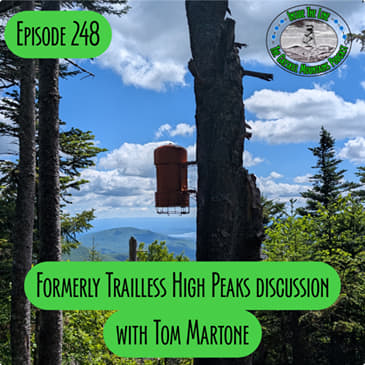
Welcome to episode 248! This week, Tom Martone from Hiker’s Anonymous joins us for a deep dive into the newly released Formerly Trailless Peaks Unit Management Plan. We break down what the plan is all about, what the DEC intends to do on the peaks, and, of course, what we think they should be doing. We also get to the bottom of the supposed mountain lion sighting in Windsor, NY, which turned out to be a little more fiction than feline. And Tom gives us the inside scoop on Hiker’s Anonymous, his hiking group bringing people together one trail at a time. Make sure to subscribe on your favorite platform, share the show, donate if you feel like it… or just keep tuning in. I'm just grateful you're here. And as always... VOLUNTEER!!!!
Links for the Podcast: https://linktr.ee/ISLCatskillsPodcast, Donate a coffee to support the show! https://www.buymeacoffee.com/ITLCatskills, Like to be a sponsor or monthly supporter of the show? Go here! - https://www.buymeacoffee.com/ITLCatskills/membership
Thanks to the sponsors of the show: Outdoor chronicles photography - https://www.outdoorchroniclesphotography.com/, Trailbound Project - https://www.trailboundproject.com/, Camp Catskill - https://campcatskill.co/, Another Summit - https://www.guardianrevival.org/programs/another-summit
Links: Hiker’s Anonymous, Remove Peekmoose Barrier, 3500 Club Digital Tally, 3500 Club Service Patch, Roadless Rule Alliance, American HIking Society Petition, All Trails article on Roadless Rule shit,
Volunteer Opportunities: Trailhead stewards for 3500 Club -https://www.catskill3500club.org/trailhead-stewardship, Catskills Trail Crew - https://www.nynjtc.org/trailcrew/catskills-trail-crew, NYNJTC Volunteering - https://www.nynjtc.org/catskills, Catskill Center - https://catskillcenter.org/, Catskill Mountain Club - https://catskillmountainclub.org/about-us/, Catskill Mountainkeeper - https://www.catskillmountainkeeper.org/
Post Hike Brews and Bites - Devils Path IPA, Nine Pine, Catskills Taco Shack
[00:00:29] The bushwhacks were some of the worst days I've ever had in the mountains, or life really. Whereas Pantsy Mountain is totally opposite, it's a mountain on top of a crater. I think the weather challenges on this incident were particularly difficult. It improved the development of New York State. Catskills will respond to it.
[00:00:52] Passing into Inside The Line: The Catskill Mountains Podcast. Episode 248, I got that right. Yes, episode 248. So we're going to talk tonight about the formerly Trailless High Peaks Unit Management Plan.
[00:01:20] Big thing that just came out a couple weeks ago, talking about what they're doing to the Trailless Peaks, what they have in store, and there's 245, 85 pages? 295. 295 of stuff that we're going to run down in probably under two hours. So we'll get you all the information. That's the first false information of the night. Well, that part, that part.
[00:01:51] Okay. We do have a special guest. I don't know how he jumped on, but apparently he's been sleeping for like 30 years, and then he wakes up. He's the new Rip Van Winkle. Tom Martone joins us tonight from Hikers Anonymous, and he's just once again, legendary Rip Van Winkle of the Catskills. Probably been more places than any of us that has listened to the show combined. So welcome to the show, Tom. Oh, thanks for having me. Glad to join you guys. Hell yeah, man.
[00:02:20] Get low down of, you know, your, once again, your knowledge and stuff on the formerly Trailless High Peaks unit management plan, and just get your knowledge in general of the Catskills. Because like Tad said, you're like the Rip Van Winkle now of the Catskills. It's just, you don't have that little crazy wizard beard. Well, we don't know for sure because Tom is in the ultimate incognito mode tonight. He's probably up on loan.
[00:02:50] Yeah, he's the true hiker anonymous. So no one will ever recognize him on trail other than my sense is that when Tom hikes, he kind of just like levitates over the trails and truly doesn't leave any trace. So is that right, Tom? Well, sometimes it's more than my feet that hits the trails.
[00:03:11] You know, I was with my primary care doctor and the nurse asked me before, it's like, do you have issues with falling? And I said, oh yeah, I fell three times yesterday. You know, but I did it on purpose. I'm a hiker. Yeah. Yeah. So other parts of my body may have left a trace that day. Well, so long as you don't blow out your rotator cuff when you fall, all things are okay. I'm just saying that could be a thing when you hit the ground.
[00:03:41] Not that I know, but I do. I'm going to keep a tally and see if you've mentioned your rotator cuff on every episode. I don't think I did last week. I don't think I did last week. But you're keeping a tally because you know I'm keeping a tally of the F-bombs. Yes. Right. That's a big hit by the way. Okay. Is it? All right. So I'm putting it down. I got a T-O-M for Tom or I'm just going to put rip. Yeah. Rip. Stosh and Tad. Okay. Okay.
[00:04:11] Well, that'll be probably later. The official tally. I hear the results. Is there a cost per F-bombs? No. It's like a bucket. Yeah. It's like life. They're free, but we just keep a tally because we do stupid and ridiculous things on the podcast. And this just happens to be one of them. Okay.
[00:04:32] So out, I heard something that's out and available now is when you're doing, if you're new to do in the 3500 or if you're going to be doing stuff with the Catskill 3500 Club, they have new digital tally sheets that you can go on their online club, on their club online to check out. And you can sign in, create account, and then you can tally yourself to doing that. And which is pretty neat. That's a new thing that they started. So they're starting to get with the times. It's about time.
[00:05:02] I know Tom, we talked about this. You, do you have that as well for, for hikers anonymous? Yeah. I think we've been doing that since the beginning. Mm. Fantastic. Yeah. It's live. It kind of reflects on the website within an hour of people posting. Oh, wow. People really enjoy it. Kind of like one of our signature things. Nice. And Tad, I've noticed your tally sheet usually is like different colors of highlights and stuff and you'll.
[00:05:32] Yeah. Well, so that's cause I'm working on grid 2.0 here. And at some point I am planning on taking advantage of the service provided by hikers anonymous because. It really takes a lot of the administrative effort out of tracking your summits when you're, when you're doing something like the grid or one of the other challenges that appears on the hikers anonymous site and kudos.
[00:06:00] And I'm going to thank you for putting that together and maintaining it all those years. But I do want to say somewhat in the context of tonight's discussion that I was working on the grid long before I even knew hikers anonymous existed. Just want to throw that out there. Mike. So Tom, when did hikers anonymous start? Well, you know, I'm not quite sure. Let's see.
[00:06:24] You could look at the time that we registered domain that might be the beginning or the time that we first had the single season winter patch. So I think that was 2019 and maybe the website was a little earlier than that. Wow. Maybe better. Yeah. So we're coming up on like a 10th year anniversary thing. Hmm. Oh, yeah. Any plans? Like any? I don't know, you know, maybe toast some marshmallows on top of the peaks or I really don't know.
[00:06:53] We haven't figured that out yet. We have time, you know, hasn't been 10 years yet. So. Congratulations. That's fantastic. That's awesome. So once again, if you were planning on doing like the grid or like single season stuff like that, and I'll have the hikers anonymous. Link in the show notes. So check that out. So thanks Tom for that. And yeah. Oh, thank you. Maybe I'll, I'll start tracking my stuff. No, that's I'm never doing it. I just hike. I don't, I don't think Tom goes that low in terms of the count.
[00:07:23] Nice. No, no. Shots are fired. Nice. Yeah. Now, now Tom's like, what the hell did I get myself into? What the hell? He's sweating and everything. So that's why Tom wants to be anonymous. Yeah. Right. So, so, so also. So the other day I'm scrolling on good old Facebook and stuff like that. And then I do get a notification about certain things.
[00:07:48] And I get tagged in this by Todd bold about a mountain lion spotted in Windsor, New York. And the, the only identification was like an upfront picture of the mountain lion and a trail camera back in white at night. And it's looking away. And I'm just like, I need more evidence. Like I, there's no way I need more evidence of this mountain line being there. So I went and I, I did like this. Scott, you, if I I'll, I'll tag, I'll tag where they posted it. Cause it's hilarious.
[00:08:18] Everybody in their uncles. Just like, I saw a mountain line. I've seen several times there in my backyard, stuff like that. Like this guy even said, Oh, we don't care about them anymore. We see them so often that we just, we just, we know they're there and they exist and they're in our backyards. And I'm just like, okay, like how, why is it then when they're like out west and stuff like that? People go crazy when they see them. They think it's like seeing like, like an extraterrestrial bean and they'll videotape it and they'll be like, Oh my God. Oh my God.
[00:08:47] But here it's just like, yeah, yeah, yeah. We, we've seen them for the past hundred years. My family is, you know, fed them and we bred them and, you know, we call them Tom and Jerry and stuff. But like, it's just, the discussion was hilarious. Everybody's seen them all over the place, but the evidence is never there. And then this other organization shared it called Northeast Explorer. And that got a lot of attention. They do stuff on search and rescue stuff and different stuff in the Northeast.
[00:09:15] And then all of a sudden, like somebody comes up and just like, must've done some good research, better research than that. And just like, this is fake. Um, this was taken in Alberta, Canada. Uh, someone cropped the photo into one picture. That was three pictures of the, the felines sitting out there and that it's, it's all fake. And then all of a sudden, all these different organizations do what they call a dirty delete. They, they, they post it. Then they don't like say, whoops, we were wrong. They just delete the whole thing. And then it's gone.
[00:09:45] So, uh, I was, I was laughing so hard cause I'm just like, no way, no way. This is like this. There's no, once again, there's no evidence of mountain lions and people are like saying like, oh, this, I saw a mountain lion leave a carcass up in the tree one time. And I'm like, okay. Like, it's just, I, did I send you the, I should send you the whole thing. You did. But I mean, what you're saying just doesn't make sense.
[00:10:10] And you know, it goes back to the old saying, if a tree falls in the woods and there's nobody there to hear it, does it make a sound? I mean, if there's a mountain lion in the woods and there's nobody there to see it, does that mean there's not a mountain lion? And Tom, do you, do you agree with me on that, Tom? Well, I, I have a neighbor.
[00:10:30] When I first moved here, he had, uh, he's a nature photographer and he had this really, uh, large, you know, framed picture of some sort of cat. And this is more, a little more than 20 years ago. So I had remembered the way it was described to me as being a mountain lion, but I met him in the driveway because he's, he's kind of like me. He keeps a low profile. So we meet in the driveway because we share the bottom section of the driveway.
[00:10:59] And I asked him about it and he says, I don't know, Tom, I think that might've been a bobcat, but he's looking for the picture. So until I see that picture, I kind of remember him having a mountain lion picture, but you know, maybe it was a bobcat. So, um, yeah, I wish I had that for you. You know, I might've had the proof we're looking for. Yeah.
[00:11:24] I mean, it's just the, the, once again, to me, the lack of, of evidence of trail cameras being everywhere and they catch a picture. The only picture they capture is a blur of the thing running. And I'm just like, come on, there's pictures of like massive black bears standing up in your, in your thing. And you're just like, ha ha, look who's in my backyard.
[00:11:47] But you know, the mountain lion can't be captured ever anywhere on a, on a single frame picture that goes 1000 frames per second ever. So I'm just, just saying it'll be in the, it'll be in the show notes, this post, it's still up. And it was posted by like the New York state wildlife management, uh, association or something. So I, I don't know. The, the funny thing is I was just like, this is way too professional for them to be sharing it.
[00:12:16] And I don't know. It's, it's shared. So. But, but again, now you're, you know, it's too professional for them to share it, but then you're saying nobody shares these things. So they don't exist. Maybe, maybe there are out there, but nobody shares them because they just don't want to like make people worry and, you know, fear running into a mountain lion. I would love to. Like it'd be so much fun. Sure you would. Yeah.
[00:12:46] Come here. So why don't you, next time you go bushwhacking in the trail, the true trail-less areas of the Catskills, why don't you just put like some, you know, raw dead rabbit. Yeah. On your backpack and walk around and see what happens. Okay. Tom, you think that'd be a good experiment? I think so. I think we should make Stosh go out there and try to attract a few mountain lions, if you will. Yeah.
[00:13:12] I think that's, you know, that's his area, the true trail-less places and, you know, it'd be good attached to his thighs. Yeah. You know, he won't move that fast, you know, have good photography and we'll get the evidence. Excellent. Excellent. So once again, like I'm, I'm still, I'm still not convinced. I need a beautiful paw print in the winter of a mountain lion. It's steps, not just one single one.
[00:13:39] And then maybe I can be convinced because they, they love the winter. They're out there. They're hunting and stuff like that. So, ah, whatever. God. And then Tad's like, like now it's like, like saying like, ah, there might, they're not. I don't know, Tad. I can't, I can't say that they're out there. There's more, but the flock camera should have caught them by now. Yeah. You're also the same guy. That's going to tell us later on that you went out to look for a plaque in broad daylight and couldn't find it.
[00:14:09] So I'm not going to believe you and, and is the sole authority on whether there's mountain lions or not in the Catskills. Right. For sure. You're the same guy that probably tells, you know, six year old Bobby that there's no such thing as Santa Claus. That's correct. That is 100% correct. Yeah. Bah humbug. That is correct. Let's, let's talk about our, our monthly supporters. You're, you're, we will such a buzzkill. Oh, come on.
[00:14:39] Uh, so a big thank you to the monthly supporters, Chris Gereby and Eric Rosario, Oksana Nichols, John Comiskey, Mikey S, Desert City Radio, Henry Burmeister, Vicky Ferrer, Jeff Jotz, David Oliver, John Dunn, Betsy A, Vanessa, and Jim C. Thank you guys so much for supporting the show. It's greatly, greatly appreciated. Also, you should check out our amazing sponsors of the show, like Outdoor Chronicles Photography.
[00:15:05] Molly from Outdoor Chronicles Photography specializes in adventure couple photography and she'll immortalize your moments amidst the stunning landscapes of the Catskills, Adirondack, and White Mountains. She'll capture timeless images that reflect unique bond in nature's grandeur and embark on an unforgettable photographic journey with Outdoor Chronicles Photography. Don't hesitate to get a hold of Molly on all platforms. Also, discover the Wilderness with Trailbound Project.
[00:15:31] Our expert-led hiking and backpacking education programs offer unparalleled outdoor experiences. Whether you're a beginner or seasoned adventurer, join us to learn essential skills, explore stunning trails, and connect with nature. Start your journey today with Trailbound Project and unlock the wonders of the great outdoors. All right. So, I have it messed up. I have it messed up again. What's it called? So, are we going to go into the drinking anything? Is anybody having anything to drink tonight? Yeah.
[00:16:01] Why don't we start off with Tom? Tom, are you having anything to drink, buddy? Boy, I'm going to really disappoint you guys. I'm drinking water out of a coffee mug. But I could step it up a bit. Why don't you guys talk about your beverage and I'll go over to the fridge. Nice. Okay. Yeah, go ahead and do that. All right. Game on. You going? Me going? You? There you go. You didn't change the settings. It didn't go off crazy.
[00:16:34] Yeah. All right. I'm going to do, look, I have a backup. I'm going to go to a backup here. Okay. This is the backup. This is in the military. You always have two rounds. Okay. How was that? That was phenomenal. Beautiful. Beautiful. And I will go as well. Ooh, that smells good. I'm having the nine pin that somebody left on the car. Oh, really? Yeah.
[00:17:04] I'm Imperial cider nine pin, uh, from, uh, let me see from somewhere. I'll go check it out, but they, they left it. Uh, they left me a four pack. No way. At Indian head. Was it you? It had to be you. Yes. How, how would I have gotten up there? I was on the other side of 28. I told you that. I know, but the closest I came to, to, um, Predator road, which is where I understood
[00:17:30] you was, I stopped at the beer cave in Phoenicia and I picked up a four pack when I was there. The beer. That's a beer. Yeah. You know, you hang out in there a little while. You can like the pre buzz. I'm surprised they don't charge like admission to go in there. I can bring a sponge, bring a sponge and get some of the stuff that was spilled on the floor. And then. Yeah. Oh, bring it out.
[00:17:57] And you're my, Hey, ready to go hiking now for different brews at one time. All right. Yeah. So tell us about that, uh, nine pin. What, what flavor is it again? Imperial cider, 8.3. Oh my God. And so you're telling us that somebody left you a four pack of those by your car. Correct. And they left Danny, a cliff bar, a peanut butter. And then, um, uh, Joanne got a banana.
[00:18:26] So I was a banana. Yeah. I'm sitting there. I thought it was robbery. I'm just like, you guys want one of these? Like this, this doesn't feel balanced, but so very curious who it was. So if you, if you reach out to me, were you guys part, I've already been getting people have been like mentioning this to me. Were you parked together? Yeah. Mm hmm. Yeah. Okay. So we were all together. I mean, it was, yeah, me, her.
[00:18:54] So why is it that Danny got the Clif Bar? I don't know. Hmm. Does he like cliff bars? Uh, does he, does he, did he mention that he liked cliff bars? I don't know. He, they, we were all surprised. We were all, we all thought it was, uh, John and Jen that we saw on the trail. Uh, relish, not stupid and out of breath and flower. Yeah. I'm going to be a little bit more from Instagram. We saw them on the trail. So we thought it was them. Cause I thought they were doing Indian head and a twin. Yeah. So how's, how's the free cider?
[00:19:25] It's very delicious. It's very good. Yeah. I'm only, it's really weird because I'm only going to have that one tonight because my stomach just doesn't feel right. So, okay. So do we have Tom back with us? Yeah, I'm back. All right. All right, Tom, you're ready to lock and load and let it rip. Yeah. I'm right next to the microphone. Here we go. All right. Now this is a zero calorie, uh, very cold black cherry, polar seltzer.
[00:19:54] Oh, but, but right next to it, I have, uh, antioxidant solutions, 100% tart cherry juice, which is very good for, um, sort of dealing with the sore muscles after hiking. Really? Or so they say. Yeah. Yeah. I haven't really seen the effect. It's still quite sore the next day sometimes. Oh, really? You, after all these years of hiking, you still have a little hiker hangover?
[00:20:22] Well, you know, I think I'm kind of like in the senior class with you, Tad, you know, we only have a Stosh in the junior class. So I mean, the older you get, the sore, more sore you are. Yeah. The day after hiking, I think. Yeah. So it's catching up to me. Yeah. So how many days do you get out and hike a week on average? Well, I kind of go with the flow. I kind of look at the weather.
[00:20:47] I've turned into a bit of a fair weather hiker if I can, you know, but like when I hang out with my weekend pals that are stuck with the weekends, you know, sometimes they got to compromise and, you know, put on the rain gear and, you know, get a little wet. So like sometimes if there's really good sequence of weather, I'll just, you know, hike three days in a row, you know. Yeah. But I'm coming back from a foot injury.
[00:21:13] So I'm trying to work in the rest days and, you know, keep the mileage down. Yeah. Yeah. Yeah. Nice. Being on the men sucks. That's all I got to say about that. I can hear you. I was in a deep depression. I had a foot, you know, you had the, you know, the, the, the, the, the, the, the, the cuff. Yeah. So how long were you on the sidelines with the foot injury? Seven or eight months. It lost. Oh yeah.
[00:21:44] Okay. Wow. That was brutal. Damn. Yeah. Wow. I had to change my diet. Otherwise I'd be like 40 or 50 pounds heavier than I am. Well, I hear you. That was like one of my battles, man, during my time off was, you know, fighting weight gain because you, you're not used to a sedentary lifestyle, but you're used to consuming a fair amount of calories and you want to continue doing that.
[00:22:10] So, uh, oh, well, but I'm getting back down to my, my fighting weight to take on those mountain lions that are out there. So at any rate, before we move on, I'm, I'm drinking a devil's path IPA, uh, which is I think one of the best IPAs out there comes out of a Livingston manor, New York. Great brew. Yeah. Did you get that at the, the, the beer cave? Uh, actually no, this is a leftover from when Danny Davis and I got together to have
[00:22:38] a few beers a couple of weeks ago when he was in town. Um, and so we each showed up with a four pack and drank two out of the four packs. And then we, we split what was leftover and went our separate ways for the next three to six months before we see each other again. So, but with Tom in the house tonight, I thought I should have something from the Catskills that would only be appropriate. So devil's path IPA. Nice.
[00:23:05] There's no antioxidant properties that I know of, but the, the wicked face on the can probably keeps something away. I'm not quite sure what it is. Yeah. Right. It's the best. One of the best. So we have to get down. So before we move on, we have to get down to the bottom of who left the four cans of nine pin cider, um, on Stasha's car at Predator road. This was what on Sunday? Sunday. Yep. Yeah.
[00:23:35] So if anybody saw that happening, come forward and let us know. I didn't have my, uh, my century mode on for the, the car. I could have recorded it. So. Oh, really? Yeah. It's good to know. Why is that, Tad? Do you, do you have cliff cars? Is that your favorite? Like what it was? Yeah. Do you like them? I've never heard of them before. Where do you get those at Walmart? I have no idea what a cliff bar is.
[00:24:04] Oh, okay. Um, all right. So yeah, let us, let us know if you did it. Uh, and I'll give you a high five. But, uh, before that I would like to also, uh, once again, if we, if you think we're doing a good job and you want to support the show, there's a certain place on the internet called buy me a coffee. You can buy us a coffee online and you think we're doing a good job. Uh, recently Chris lover said, you guys rock another great episode.
[00:24:31] Mike Suidy is the man keep on keeping on you guys need to get on blue sky, Facebook and Instagram or you need, you need to get on blue sky. I got to look up what that is. Facebook and Instagram are evil. So interesting. I've heard about blue sky. I want to get off. I want to get off Instagram in the worst way.
[00:24:52] It's like, you feel like you're trudging through nine posts that are ads for every follower. Yep. Post that you see. So yeah. Good call. All right. Yeah. I know what he's talking about now. I totally forgot about blue sky. I must've logged on once and then it's like the alternative of Twitter and Instagram or something like, okay, cool. All right. Well, thanks Chris. Appreciate it. I'm having it tonight and I'm having a nine pin that left over. So thank you.
[00:25:22] Next time I'll have more than one. Sorry. My tummy hurts. Oh, poor guy. All right. So next, who was really outdoors? Once again, mention the podcast or mentioned. Yeah. Mention the podcast on one of your hikes through social media and we will chat about it on the show. Tag us by typing at itl catskill MTM podcast on your post. So first and foremost, Delta triangle was out with catskill fungi and bear pen to in her second 3,500 peak.
[00:25:53] Congratulations, Delta. Uh, sounds like a good time. We got to get him on the show. I heard he's a really fun and interesting guy. So, uh, Vicki at hiker goddesses adventures was down in Harriman with Dylan doing almost seven miles run strong with Antonia was up on big Indian and first scouting for something. She's up to 18 of 33 peaks. I think, uh, Antonia is doing a consideration of a full on through hike like a Direttissima. So really?
[00:26:23] I think so. I think that's what she's, she's scouting for. So pretty cool. So, uh, Joanne Beyond Blazes was up doing the Blackhead Range. That was previously. And then she also tagged, uh, the show for when she was up with me and Danny up on good old Indian head. Uh, Tracy pink pody 18 was in the techniques with Liz, Jeff Johnson, Oila, orla enjoyed 7.5 miles in a Shawangunk State Park, enjoying views in all directions.
[00:26:53] Once again, man, I'm getting these pictures of people seeing the New York city skyline and man, that, that is just amazing. I can't, it's just gotta be unbelievable. So seen at once. And that was at night too. That was at night. That was fun. Um, let's see. James, John O'Boyle did Mount Frissell brace and bear mountain loop in the Taconics.
[00:27:19] Samantha, AKA the broke trail hiker did wolf jaw and upper wolf jaw and also made someone another on another peak drop their jaw. Uh, she did a little flash into somebody else. So I guarantee somebody on the other, under places were probably like, Oh, all right. Um, Katie Henderson hikes was up in the Adirondacks doing wolf jaw as well.
[00:27:43] Apparently, uh, Samantha, Katie and Teeble and Todd Teeble, uh, was out there with Katie doing upper and lower wolf jaw. Apparently they came from different directions so they didn't get to see each other. Oh, so they, they were out there the same exact day, but they came from different directions. It didn't see each other. Like I asked that question. She's like, Oh my God, we didn't see. Yeah. That would have been fricking cool. Well, or was it, they were the ones that were getting their jaw dropped. Hmm.
[00:28:13] True. Yeah. Don't know. Don't know. Um, Serena Marie, 46, or did Phelps and tabletop with Amber re and Eric, the unconventional way. So I'm guessing she didn't do it the, the easy way. Uh, Oksana did table and Peekamoose. So that was awesome. Good to see every, a lot of people got out this weekend, uh, was good because it's a nice weekend and get out. It's crazy. We'll talk about the weather.
[00:28:38] So, uh, Rob, the sloth trance to Dial and Nippletop with plenty of ice. So once again, the Catskills are way different. The Adirondacks, they have ice and some probably snow right now because we got a little bit of snow here in only onto today. So, um, Nicholas golden money cat was at a special place in the gunks that his dad used to call lost lake of the Shawangunks. So that's cool. Ted, do you think you've been here? Did you see his post?
[00:29:05] Uh, I didn't see the post, but there's two places that come to mind. One, I would not necessarily consider, uh, the lost lake, the gunks, which is, uh, kind of south along the ridge, closer to Sam's point. And then, uh, Northwest of Mohonk mountain house, there is a small lake, large pond.
[00:29:35] Interesting. Yeah. Which is not easy to get to. And this could be the place he's referring to. Cool. We'll, we'll keep it. We'll keep it under wraps. He will. He will actually. So, uh, Chrissy G was also in the gunks with Jamie looked like awesome stuff. Uh, and finally, last but not least Rob at Rob rock photo finished his 3500 by doing the Burroughs range with Maho. So congratulations, Rob. Yeah. It's definitely awesome. What an epic way to finish too.
[00:30:04] So slide Wittenberg or Cornell then Wittenberg. Cause that was your last finished, right? Tad, you finished your 35 on wit? Yeah, I finished it on wit. Nice. Nice. Yeah. So that makes how many? 16. Nice. Nice. Still good. Still good. I like that. You know, it used to be like two or three and that got me excited. Yeah. That's back when your mom was still hiking. That's correct. Correct. Am I that old? That's. Yeah. Yeah. That's true. She would actually.
[00:30:35] Um, so also rate the show that one star because we throw too many F bombs, uh, needs to be, uh, kind of balanced out, I guess. So if you could rate us five stars for how many F bombs we throw down, which has been zero so far. So we're doing good. And so I think I'm just trying to maintain it for the later part to where we get into the unit management plan. So you're, you're saving your allotment for part two. Yeah, definitely.
[00:31:04] So, uh, one of the big question was our previous hikes. So Tom, what was, uh, you know, last week and stuff like that. I know you got probably got out like six times, but, uh, what have you been up to? What was, uh, what was your recent hike? Well, on Sunday I was over at Bear Pan and Vlai. It wasn't early. I wouldn't go there this time of year, but you know, I'm very friendly with the hunters. So we drove up in my electric hiking car. I call it the electric limo.
[00:31:32] So people like to hike with me when I go to Bearpen and Vly. And, you know, we checked in with the hunters and they said, oh yeah, fine. You know? And then they were telling us, you know, where to get started on Bear Pan, on Vly. And I said, well, no, that we know. We just don't want to, you know, get hit with any bullets or, you know, scare, scare the prey away, you know? And the day before I was in the blackheads, but I started off in Balsam Lake because I had to put in a big day.
[00:32:02] We have this thing called, uh, the ultra 35. So you hike in 35 and a certain amount of hiking days, seven or less. So I'm working on a recipe. There's a few of us like, uh, mountain brews working on one also. So, so I got to keep up with, you know, the young fellows. And that was on Saturday. And, uh, I don't know, before that I was on Westkill.
[00:32:29] Westkill was nice because we had another guy that's, you know, hikers anonymous guy. And we kind of like share our plans. And I saw that he was going to be doing the spruce and straight shot. So I was like, hey, you know, I, I, I just want to do a short hike and I'm heading down towards New York city. Um, so I hooked up with him and help him spot his car. And then we hiked up to Westkill together. He went on towards Shaft Road. I turned around, went back and, you know, that was nice day.
[00:32:58] Um, you know, so I had a little bit of rest in between. All over the place. Well, yeah, you know, you know, that's what, that's what I do. I love it so much. Um, you know, so, uh, the, the one thing you're talking about in seven days, that called the ultra. Yeah. Yeah. We came up with that. I think that was in 2022.
[00:33:24] And, you know, we was, I got involved with some people, uh, kind of accidentally that were doing the Northeast ultra eight, which, you know, when I heard about it, I'm like, that's not for me, you know, you've got to hike the cranberry lake 50 miles in one day. Right. So, but I hooked up with them for the presidential range and the whites. And then, you know, I met all these new people and I got sucked into it.
[00:33:50] And in order for me to actually try to do cranberry lake, uh, uh, 50 or the Mahoosuc Traverse, I, I kind of had to get used to this, you know, hiking in a 24 hour period, you know, faster than I ordinarily would, you know, so my, my strategy was, you know, started two 30 in the morning. Right. Cause I need the headstart.
[00:34:17] But while I was getting ready for that, we were like, we're hiking in the Catskill. So let's put this thing together. And as we're hiking with some of my friends, we're like, what would the cutoff be? And we chose seven hiking days. Um, you know, that's like, this goes back to when, uh, Joe Frederick and Sarah Zhang and, uh, Rob Sands, uh, George Bailey, you know, we were doing those hikes and I would discuss it with them.
[00:34:46] And we came up with seven as the cutoff and, uh, you know, you could do it in six, five, four, Joe Frederick did in four. And we were like amazed. Of course I had to match him, you know, but the good thing about it is putting together the strategy and what we call the recipe of how to do the round, you know, so you have each hiking day is an ingredient that adds up, you know, to a full round of the peaks.
[00:35:15] Um, and if you complete it and you've done it with a unique recipe, the hiker gets to name the recipe. And I never thought that it would work out this way, but we've had about 75 people or 75 completions of an ultra round and there's like 55 or so unique recipes. Wow. You know what I mean? So it's really, it ends up, you come up with these really creative hiking days.
[00:35:45] Um, yeah. So yeah, that's what the ultra 35 is. And is that seven, seven days in a row? Oh, no, no, no, that's the thing. It's not like that, you know, because, because we're not athletes, you know, you know, you use the word ultra in that, you know, kind of ultra marathon and that sort of thing. No, but it's not like that. It's, it's, you, you do a very epic hiking day.
[00:36:12] Like you, you might hike the nine, the nine is probably the most common ingredient and you can rest for a week and then you go out and you hike the biscuits and gravy and, or, you know, something like that. And, um, it's all day hiking. You know, it's, it's not like, uh, the Direttissima or anything like that where it's, you know, no gaps and doing road walks. It's just day hiking, uh, where your seven hiking days as a adds up to 35 peaks.
[00:36:42] That's pretty crazy. Cool. Cool. Well, good. Glad you're getting out. Ted, what about you? What were you up to? Um, so what did I do? Oh, I went hiking on so long ago. I, I went out and it was, you know, kind of ambivalent, um, in terms of what I wanted to do. Well, I knew what I wanted to do and that's, I had a plan to push, whack up slide mountain.
[00:37:08] And so I got out there and on my way to my, uh, where I was going to start the whack up slide. I was on the trail, the main trail, um, from the slide mountain parking lot. And I thought I'd give myself a little test because I really haven't done genuine bushwhacking since May. So I, I turned off trail and I made it about 50 to a hundred feet before I firmly was convinced
[00:37:37] that my shoulder just was not going to tolerate the constant poking and jabbing and whatever, whatever, uh, tree branches in it to do a genuine bushwhack. So I decided the best course of action was just to, you know, head up the Curtis Ormsby trail, which was as delightful as it always was. There's really was no snow on the ground all the way up. Once you finally hit the main thoroughfare up the slide mountain, there was an occasional
[00:38:06] ice patch, but it was nothing requiring spikes. Uh, Stosh, you were out that day. You'll remember how low and thick the cloud cover was. So it made for a really nice, um, you know, view or scenery once you finally made the summit. So I got up to the summit, hung out for 2.5 minutes, turned around, hiked down the trail, hopped in my, uh, Audi. It's one of the rare times I drove my Audi.
[00:38:34] I don't think I've driven my Jeep up to the Catskill since I busted up my shoulder. It's standard, right? That's. Well, it's standard. It's a hard ride and you know, it's, it's, it gets about half the gas mileage as the Audi. So I thought I'd just be conservative, drive the Audi around. And then, like I said, I did head over to the beer cave in Phoenicia. Tom, do you know where that is?
[00:38:59] Uh, well, I remember the one that was up by Bel Air, uh, you know, that, that one that they're rebuilding, but no, the beer cave. No. Yeah. It's the general store in Phoenicia. They got quite, quite an impressive selection of beer cider and this might interest you potato chips. Oh boy. Yeah. Yeah. If you haven't been in there. Yeah.
[00:39:25] If you haven't been in there, they've got like this pretty good, uh, selection of chips, maybe as good as local goods. I don't know if you've been in there, but they also have quite the selection of chips. So check that out. But I will say the highlight of my morning was when I arrived at that parking lot and you know, spent a few minutes, get my gear on signed into the trail register, but I could
[00:39:53] hear the, uh, West branch roaring. I mean, just almost to white water level. I was almost expecting to look upstream and see some white water rafters coming down as they're known to do. Cause that gets so ferocious after a big snow melt like it was. And now it's been quite a while since I did something like that. And I was looking for like maybe a, uh, a high water rescue rope that somebody had strung across from one tree to the other to help me get over it.
[00:40:23] But I was able to, you know, I got my, my trekking poles out. I lengthened them and I was able to go from rock to rock without getting my feet wet. And that, that was genuinely the highlight of the morning traversing the West branch at almost flood stage. I did have a life jacket on though, in case I fell down. I was going to say like either every, every person who needs to cross the, the never sink
[00:40:48] West branch needs to have a life jacket or at least some sort of like rope to catch onto another tree, kind of like Indiana Jones and such, because that place. And there's, there's probably five listeners right now in their car saying that the real solution is a zip line. You need a zip line one, one way and the other way. What do you think Tom? You think they need zip lines or a bridge over the West branch of the never sink? Now you're talking about over at slide parking lot, right? Yes.
[00:41:17] Yes. Um, they need something because, you know, I don't know, you guys must know that there's a plaque there. You know, there was a fatality there. I think it was a young, oh yeah. It's like right by where the kiosk is, uh, behind there. There's a bench and there's a plaque in there. I, I don't really know the details of the story, but I think it was a young Boy Scout.
[00:41:41] You know, again, someone else with a little more, um, knowledge of the history could probably flesh that out. But, uh, sometimes it's dry. There's not even any water in that stream. And sometimes it's really tough to get across. Mm hmm. For sure. Yeah. I mean, it's such a popular entry point.
[00:42:06] You would think that there would be a bridge, but I, you know, I could see that it's a very wide crossing. It might be expensive to put a bridge in there. Mm hmm. Did you feel you needed a bridge that day? Would you have liked the bridge? No, I, you know. Okay. I don't think I needed a bridge. I like to think I needed a bridge. That'd be a great way to start and then to hike, you know, going over some magnificent bridge. I mean, it could be the second set suspension bridge and the Catskills they put there and
[00:42:34] be really like, you know, a game changer for that hiking experience. Maybe the, the fellow that built those Adirondack chairs that he hauled up to the summit of slide a few years ago, if he had reached out to Stosh and I, we would have told him, eh, that's not really a great idea. A great idea would be building a suspension bridge over the West branch of the never sink. Done. Yeah. So if there's any Boy Scout out there working on their Eagle project, I'm just throwing that
[00:43:03] out there as an idea. Mm hmm. And I, I like that idea as a zip line. That's actually just got to put a little platform there, put it up in the air, hook something on, get over there. You're done. So. Universal fit, uh, harness. Yeah. I think it would work. You can like, you know, send your pack over, send your dog over, and then you zip over and reunite with your stuff and set on to your hike. So, all right. Enough of the silliness. What'd you do Stosh?
[00:43:32] Uh, I hooked up with Danny Davis or Danny Davis, uh, mildly mischievous Danny and Joanne beyond blazes, uh, to do Indian head. I had a lot of points that I want to check out on Indian head, uh, more towards the south side for viewpoints for new viewpoints. Uh, they all hang right upon the conifer forest edge line, uh, to where it goes from the conifer to deciduous forest.
[00:44:01] And, um, there's like four of them now. It's just like, Oh, let's check this out. And then Joanne also had something on her mind. I'm not going to give out what it was, even though you already said it, I might have to black that out, Tad. So, oh, all right. Yeah, we'll do that. Um, but Joanne needed to look for an old birch tree up on Indian head. Uh, it was, uh, it's like a, it's, I'll get, I'll say something. It's a riddle that you have to solve and you find something. It's like a treasure. It's so cool.
[00:44:29] But we had out, um, we were in the parking lot, beautiful day to start off with. It's like, I think it was like 45 degrees to start off with. And, uh, at the time when I was driving in the Indian, the whole, uh, Devil's Path Indian Ridge was engulfed in flat clouds. And then when I made my way down to the Platte Clove area, it was starting to clear up. So I'm like, Oh, awesome. We'll get views. This will be fun. This will be fantastic. On our way up. Uh, there's no wind on that side.
[00:44:58] There was no wind on this, the Northern side of the Devil's Path. It was just so, we were all so sweaty from pushing up the mountain. We get up to the junction. We chill. Whoa, whoa, whoa, whoa. Stop. Joe animal sweats. Yeah. What you're saying? I think so. I think Tom, do you believe that? That Joanne beyond blazes actually breaks a sweat? No, she, she's very quick and you know, very dignified. No, I don't believe it. Okay. There you go. Maybe they didn't.
[00:45:27] I was sweating. I was sweating like crazy. I always do. Um, from there, I have my, my entry points and stuff like that. But once again, we were also looking for this treasure. So we also had that on the side. So when we get up to a certain elevation, it started getting foggy and I'm just like, come on, really? And so it was cool because I looked at Tim Luby's hiking app. And when we were at the, uh, the trailhead, it said cloud base was 16,000 feet. And it was, you can see up, you can see everything.
[00:45:57] I could see twin and everything. But when we got up there and we were at around, I think it was around 3,200 feet. It said cloud base 3,100 feet. And it was, it seriously was like right there. I was like, holy shit. Like this is very accurate. And it's like, once again, on time, like with everything, like with mountain weather forecast. Like, yeah, I think you can see it by Joanne said by like three hours, every three hours or something.
[00:46:22] Uh, so like maybe you're, you're looking at that, but I was just checking this in and out just to see if it was accurate. And it was so. Hmm. Check out Hiker Weather. Once again, um, it's pretty cool. Uh, I paid for it. I paid $15 for the year to check it out and stuff. So that's, that's a bargain. We got up and once again, we were searching for this treasure and it, and it takes a lot of thought. Um, you, if you want to do it with one person, good luck.
[00:46:50] Cause that's just a disaster. But, um, we started there. So we got to the summit. Uh, we had a little snack at the viewpoint and this, this treasure look for this treasure again. I'm like, okay, well that's, that's cool. But there's right down from here, there's a nice viewpoint that I want to check out and it's not far away, not far away at all from the, the, the summit. So we go down there and you see, and you're just like, oh, that's not that steep.
[00:47:19] Then there's a place where it fricking just drops. And so we found a way around and then we found these areas that were separated from the ledge. Like, you know, there's just the ledges are separated, but it's all smooth. So like there's water flow there, a lot of water flow. And we're just like the crevasses water flow or ice fracturing. Uh, well they, the ice must've fractured the, the, from the separated from the ledge, but the, the, the whole sides of like the crevasses were smooth.
[00:47:49] So I don't know if that's when the great glacial lake was there or something that it was like flowing really fast. And it just made these edges smooth and stuff. Um, but super like 12, like 20 foot tall crevasses, like just separated from the mountains side. It was pretty, pretty neat. And there was also like, when I went down in the area, there's a big hole. I showed the picture of Danny going into that one hole. There was rope down there, like old, like thick, thick rope.
[00:48:17] Like this isn't like rope that you would be climbing rope. This is massive. Like. I don't even know how to say it. Hemp made out of hemp. It's made out of hemp or a natural fiber. Yeah. It's not, yeah. It's not, it's not something that it's gonna take a static load. Like a climbers rope. Yeah. Wasn't there also some anchors in the rock? I didn't see those. We didn't see those anchors. So I can show you where I was and you can compare, but, uh, but it was pretty cool. Like, I mean, once again, we were just checking out stuff.
[00:48:47] We found the viewpoint, which would be, it was an old, I don't know if it's an old or a new slide. It looks like kind of be within the past, I would say five years of a slide where it'll be just, you could see the separation from the rock and then all the, uh, what is it called? Like just debris and stuff like that. So it would have been a great view. So I'm guessing you'd be, have you been there? Well, nothing had been growing up in that slide. Nope. Yeah.
[00:49:11] So it had, it had to be fairly fresh because typically, you know, five, between five and 10 years, you're going to start getting some, something growing in there and covering up that area. No. So maybe it's, it's fresher than that. It didn't, it didn't feel like, like the Panther one, but it felt pretty cool. Um, like once again, it's great viewpoint. Well, we'll have to check it out again when the views there, cause that probably has a stunning view of the burrows range. So are you going to post those coordinates on AllTrails and Strava and open?
[00:49:42] Yeah. Yeah. And so, yeah. So a herd path. Yeah. And in the show notes and on, you know, all app apps out there. So a herd path can form out to that. And from multiple directions, people can be able to access that. Well, what is, what is the saying that I say when one view viewpoint closes, another one opens instead of one, one door opens another viewpoint opens. Yes.
[00:50:06] Uh, but then just once again, uh, and then, uh, we continued on our way, uh, continued looking for that beautiful treasure. Didn't find it, but we found other treasures that, uh, fricking pee bags. What? Pee bags. What's a pee bag. It's a urine bag that like, seriously, it's a blue urine bag. I, I, I, did I take a picture? I thought they have poop bags for dogs, but pee bags now, is that a thing? I guess that's a thing.
[00:50:34] Two of them, two at one, two at different, one at different places. Tom, have you ever heard of such a thing? Uh, well, you know, I thought pee was an abbreviation for something, but no, it's, it's actually a pee bag. We're finding out, but I, I wonder that it was Stosh was the lucky one that got to carry those out. I, to be honest, I will be 100% honest. I did not care to touch that. I would not touch that. I know you get it. Yeah. You gotta be prepared for something like that. Oh yeah.
[00:51:04] It's like a bio. Yeah. If I had maybe one of my, my massive, like 50 gallon bags, maybe. Cause then it could be like a glove and then you could pick it up and then just pull it out. But there was two of them. And once again, I'm just like, why the hell don't you just pee in the woods? Like, like, is it like. You're looking like the same person when you're peeing into a bag and peeing in the woods. Like, I don't. What was, was this like from a catheter? Was somebody like, you know, had a catheter? No, they bought them online, like Amazon.
[00:51:34] Like if you can, I'll show you what they look like. And there's the only place you can get them is Amazon. I'm totally perplexed. And so somebody buys a pee bag, so they don't have to pee on the ground. Is that what this is for? I, and then they throw it on the ground. Yes. Yeah. So my, my pee is too good to hit the ground on its own. I have to put it in a bag and then throw it on the ground. Yeah. That's what this is. Okay. That's very, I thought I was, I was really taken back and perplexed by the angry bird on Wittenberg.
[00:52:04] This, I find more puzzling. Oh, I, that's, that's what I said. I'm like, the big thing is why are you afraid that you with like a massive amount of sunshine, you're going to bleach the, the moss? Yeah. Like, like what? Uh, I just, I was, we were all flabbergasted. Like, why would you do this when you like, maybe that you do that down in Times Square on
[00:52:30] fricking New Year's Eve and New Year's stuff like that when you have no place to go, but up in the mountains, when you do have a place to go, like, come on. But then that, that wasn't even the end of it. So these, these are for, they're advertised for traffic jams. Yeah. So apparently there was some trail congestion. The, the person could, I'm putting this together. Now the person couldn't get off trail to relieve themselves.
[00:52:55] So they whipped out a pee bag and urinated in the P I see. One of the ads has the pee bag next to a couple bottles. It was two bottles of water equals one pee bag. Apparently that's the official ratio. And if you like, you can get 12 blue. He bags for $12 and 43 cents delivered to your house. It's unbelievable. Yeah. Wow. It's the, it's the 11th, the 11th essential. Yeah.
[00:53:25] And that's not even like the, the, the big thing. Like we, so when I was back, um, getting back from one of the viewpoints, Joanne and Danny's just like, you gotta go look, look up what's ahead. And I'm just like, did you guys find it? Did you guys find the treasure? And they're like, ah, and I look around and there's this big white thing on the top of a tree. And I'm like, I go, what the hell is this? I'm like, oh, cool. And I was just like, you know, you found it. No, it's a sign that says joy.
[00:53:55] Bangal, bangal or bangla, bangla, joy, bangla, like a plastic sign. You know, those signs that they stick on the sides of the roads for fricking voting and stuff. Hmm. That's what it was. And it was pushed into two tree branches, just sitting in the middle of trail. And wow. To be honest, there have been people before us that had come up that way. So nobody to pick it up and just leave it up there. That kind of disappoints me that nobody else want to pick up. And I just, what I just, it weighs nothing.
[00:54:23] So I just folded it up, put it in my backpack, but it said Joy Bangla, which translates to something. And, uh, hold on. I looked it up something joy bangla, uh, the slogan and war cry of the Mukti Bahini that fought for the independence of Bangladesh on the fucking summit of a Catskill peak. There we go. All right. Well, that sounds like an episode folks. Okay. We're done. I'm sorry.
[00:54:47] We didn't get to the management plan, but when, when Stosh brings up the Joy Bangla or whatever it is, that's a show. Okay. Yeah. All right, folks. All right. I'm going to say it. There's going to be tally number two. Fuck that shit. Um, sorry. Two. Okay. That, that just killed me. And then we're coming down, you know, you enjoy Sherman's lookout. It was awesome in the distance. I'm like, what the hell is that? And I like stopped them. And they're like, what? Unless like, I like point. And there's a big on a tree. There's a massive, it looks like, like a black bear.
[00:55:17] I'm like, oh, it's a black bear. And we're like, but it was a mountain lion. It was a blazer. It was a cool, the panther. It would be a black Panther. Uh, it was, it's clinging on the tree, bringing up some deer and stuff for later on. But I thought it was a black bear. And then we look closer and there's two sweaters tied to the side of the tree. Like, so like we walk up and I'm like, what the actual bleep.
[00:55:41] And we're just like, okay, like maybe these like are hunters like that, you know, decided to layer down and leave this for kind of like a trail marker. But then I'm like, no, this is a North face jacket. And it was like a camouflage, weird sweater. So I took the, I got the, I got the better end of the bargain. I took the North face and that fits me very well. So thank you. Um, and then Danny took the camouflage one. So I don't know if Danny's going to wear that one. I'll have to reach out to him, but yeah. Yeah. Mo Danny.
[00:56:12] Yeah. Yeah. I didn't mention. Yeah. But I, I had quite the hole on my hike to on, on slide. I picked up a hat, a glove, a bandana and you know, maybe a half dozen tissues or so. Yeah. I, I did my part, but yeah. All right. So continue on. I want to get to the point where like you, you, you arrive in the, cause I, I figured out who it is and how it happened. So, oh yeah. So continue on. All right. So I've solved one mystery. Yeah.
[00:56:40] The only, the only thing is, is that that two mile walk back to a predator road, but it's just a sloth. I don't know why we didn't. Oh, excuse me. Park at one park, one car, a plaque clove and walk out, but it's just a sloth, but it was still is still beautiful. Great day ended up like at the end of the day, it was like 55 degrees. So like just for once again, November 12 or November, what was it? Uh, November 21st was to say that was 55 degrees. Like it's, it's, it's nice.
[00:57:10] It was fantastic day. It was the type of day that if you set out in the morning dressed for temperatures in the thirties and low forties, you regretted it by noontime. Mm. Cause it got that warm. All right. So what I want to know is you're on your way back. You're a, you're maybe a quarter of a mile or so from the parking area. Uh, where's Joanne. Joanne was behind us. I think I was in the, in the lead.
[00:57:38] She was behind you. Huh? So you don't know if she left the trail, ran to the parking lot and put the ciders on your vehicle. And as decoys through a Clif Bar on Danny's car and a banana on hers. Cause as far as I know, and Tom can correct me if I'm wrong, she does carry bananas with her when she hikes. Is that true, Tom? You know, I'm not sure about that, but I I'll tell you my position on bananas.
[00:58:07] I think they should be consumed in the car. They don't really travel well in a backpack to get squished, you know? So I like to have two bananas on the way to the hike and then it's, you know, other more, uh, suitable fruits that don't get bruised like apricots, stuff like that. So Joanne plays it differently. I know other people hike with bananas, um, but yeah.
[00:58:32] Yeah. Well hiking with a banana, you gotta do something with the peel and that something is not putting in a pee bag and throwing it on the side of the trail. So she, I'm assuming she had a banana or two in her car, a cliff bar or two and a four pack of ciders. She blitzed back to the parking lot without you seeing it. Cause she is that fast. Put the ciders by your car and then blitz back to the back of the line. So what happens? You guys, you get to the parking lot. When is it that you realize that you guys had been flocked?
[00:59:03] Uh, like right when we were walking up to our cars, they were red on our windshield. So it was, it was definitely, it was definitely interesting. Yeah. It's exciting. Yeah, it was pretty cool. I was just like, Oh, nine pin. I'm like, so somebody knows me. And then I was just like, well, Samantha, the broke trail hiker had recently had nine pin up on her. And then I was just like, but she was in the Adirondacks. So I'm just like, Hmm. Interesting. I'm just like, it had to be, I thought it was, uh, Jen and, and, um, John, because they were on the peak already.
[00:59:33] But then I was just like, it had to be Tad. I'm just like, it had to be him. But then you need the opposite. Like once again. So yeah. And I, I just don't like you that much. So that's me out. And that's okay. All right. Well, it sounds like you had a good time. Yeah. Yeah, definitely. Definitely. I think whoever gave us those, those goodies is very nice. And thanks to Joanne and Danny for hauling out that garbage that we, we had on the trail. So, ah, all right. So let's break it down to the weather forecast.
[01:00:05] Here is your Thanksgiving weekend weather forecast. Hope you guys all had a great Thanksgiving, your family and your loved ones. It was definitely a weird day out here with the rain and stuff. Anyway, it looks to be a damp weekend, but Sunday is shaping up to be the best day to get outside. On Friday, November 28th, it will be cloudy, breezy and mild temperatures with showers possible throughout the day. Valleys will start out in the mid thirties and reach upper forties by afternoons. And the summit will be much cooler.
[01:00:35] General low to mid thirties reaching to the twenties later on. Definitely keep the rain jacket handy as showers are possible throughout the day. On Saturday, November 29th, it stays cloudy and chilly with showers or drizzle likely, especially through the afternoon. Valley temperatures will hover in the mid to upper thirties with highs near 40 degrees. And the summit should remain around the mid twenties to mid thirties, depending on elevation. Higher up will of course be cooler.
[01:01:04] Winds will definitely make it cooler higher up. So dress in layers and once again, bring your rain jacket just in case of rain. On Sunday, November 30th, it looks to be the best day of the weekend to hike. Expect some morning sunshine before the clouds build later and the valley should start out in the mid thirties and climb to the upper forties once again. Summits will be cooler starting around the upper twenties to low thirties and reaching the upper thirties in the afternoon.
[01:01:29] Rain chances are very low throughout the day, but also keep the layers out just in case of those cold temperatures on the summits. Once again, happy Thanksgiving and be safe, be prepared and don't become tomorrow's rescue story. Back to you fellas. Thank you for that weird weather forecast. It's probably not going to be accurate. So let's get onto the last set of sponsors and then we'll get into the unit management plan talk with Tom.
[01:01:57] So discover your camp catskill in Tannersville, your ultimate hiking store, find top quality gear, apparel and accessories for all your outdoor adventures. Our expert staff is here to help every hiker from beginners to seasoned pros. We also carry a variety of unique catskill souvenirs and gifts. Please visit us online at camp Catskill or in the store to gear up for your next Jersey. Adventure starts at camp catskill. Also embark on a transformative journey with another summit.
[01:02:26] Another summit is dedicated to serving veterans and first responders with free outdoor activities, activities like walks in nature, paddling, hiking, and even backpacking. Join our supportive community to rejuvenate in nature's embrace experience, camaraderie adventure and healing at no cost. Taste your next step with another summit and ascend to new heights of resilience and joy. Apply today on another summit.org.
[01:02:56] So let's get onto the topic and guest of the night. Once again, the topic of tonight 2.48 is formerly trail is cat's go high peaks visitor unit management plan. And tonight, Tom Martone from Hikers Anonymous, the new Rip Van Winkle of the Catskills will be joining us to talk about this because I couldn't even imagine. Do you have a tally of how much miles you have in the Catskills? Well, our metric is peaks.
[01:03:26] And I do have a tally, but I keep that. I don't like to say that because it sort of disincentivizes other hikers. We just try and bring them along. That big overall tally number, you know, I don't like to talk about. Maybe in a year or so I'll have something to say. Okay. Cool, cool. Well, Tom, welcome to the show. Glad you could join us for the first part and stuff.
[01:03:52] So, we'll talk, you know, Tom, people know us on the show. Hopefully they know us by now. If they don't, then we'll talk about it sometime. But Tom, how about a little background about yourself? Okay. Well, you know, I've lived in the Catskills for over 20 years. And unfortunately, you know, in retrospect, I didn't hike until about 10 years in. I just was driving up Route 28, not knowing, you know, all this mountain stuff was going on.
[01:04:21] But in 2014, I went on my first hike, which was actually a trail maintenance hike with the CMC. And we did a traverse from Rider Hollow to Seager. So, I was up on Eagle Mountain. So, I got into the trail maintenance right at the very beginning. I did trail maintenance with the CMC, with the Rip Van Winkles. And I even got dragged out to Minnewaska by this guy, Jim. Yeah.
[01:04:49] And I was involved with the 3500 Club, the Rip Van Winkles, CMC, led hikes for all three. But, you know, for whatever reason, I just couldn't express myself in any of those clubs. And now we have our own thing, Hikers Anonymous. And we kind of do things a little different. We're kind of like the UnCola, like 7up, you know, the Unclub. We don't have members. We don't have dues.
[01:05:18] We're just a bunch of people that hike together. We try and don't have other side agendas. You know, it's all about the hiking. You know, and some of your, you know, people that interact with your podcast, you know, I don't know if I should divulge this, but they're hikers and honest people too, right? Yeah. So we just, we love the Catskills and we hike in the Catskills and we interact.
[01:05:45] We get that social benefit of having friendships over the years. We support each other, give each other positive reinforcement, look out for one another. And, you know, the Catskills is the thing that pulls us all together. Yeah. Wow. And as you stated before in the episode, you've been around, the Hikers Anonymous has been around, well, here around 10 years, like, right? Almost.
[01:06:13] Yeah, we're coming up on 10 years. You know, it's a little ambiguous of what our start date would be. But, you know, as we get closer, I'm going to think about that. We got to have some sort of a big bash and you guys got to be there. Maybe we can have like a live broadcast from the mountain, you know? Yeah. You know? Interesting. That'll be fun. We'll do it during the breeding season, if you will. Yeah.
[01:06:39] We'll, well, yeah, and we can't bring dogs or, you know, I don't know, whatever. We'll figure it out. We'll do it. We'll seasonally appropriate. Yeah. Our people, our people contact your people. They'll make the arrangements. It'll happen. It'll be a, it'll be, it'll be like Woodstock was in 69. Hell yeah. Hell yeah.
[01:07:01] Now also, Tommy, we need to chat about this in the previous episode about you had something going on with like a petition to the Peekamoose area parking for us hikers in the winter. Do you want to explain that? I remember us talking about it, chatting about it on the previous two episodes, I believe. So you want to get more detail about that? Yeah, sure. I mean, we all know about the blue hole, right?
[01:07:26] You know, there's been strategies to deal with the swimmers and the crowd there. But that's a summer thing, right? But we hike all year round. So what they did is they, and it's just been the last two years because in 2024, the parking lot was open. But the, the actual trailhead parking lot that's always served us as hikers, that's right at the end of the trail, has been closed off with Jersey barriers.
[01:07:57] And leading up to that, they had put boulders in to take part of the parking away. You used to be able to get two cars in back to back. What we want is, you know, after the summer season, after the permits are over, take the Jersey barriers, put them somewhere else and let us use the parking lot. Because, yeah, of course, we don't want to walk an extra half a mile.
[01:08:21] But really, what it is, is if you think about what goes on in the winter, they're plowing that road, you get ice berms on both sides, the little road crossings that they have on that pedestrian path, they don't shovel or break down the berm. And you end up with people hiking down an icy road in the dark. And it's going to be, it's an accident waiting to happen, right?
[01:08:46] All you need is somebody coming down, slipping in and taking out a hiker. And, you know, it could be a fatality. So we just want the Jersey barriers removed for the cold weather season. It could be done in an afternoon. Yeah, easily. Yeah. Yeah. So we've, you know, we've sent emails to what we think are the relevant authorities.
[01:09:12] I think the DEC is the relevant authority because the county executive office of Ulster County routed our letter to the DEC. They responded to us, you know, the day we sent the email. And the Catskill Center, Jeff Senterman, got back to us and he sent it to Jeff Ryder. You know, because it's actually hard to get emails of actual people at the DEC.
[01:09:38] You know, they have all these generic email addresses. And, you know, it's almost a full week later and we haven't heard back at all. And so we think we have to raise the pressure. Okay. And we're going to follow up tomorrow night. Well, actually, you know, that will have already happened when this airs. But we're looking for people to sign on to our letter.
[01:10:04] We have a place on the Hikers Anonymous hiking calendar page where we're devoted to this issue. Okay. Unlike the unit management plan that we're going to talk about, which is a big thing that's going to go on for years, this we just want solved. Bing, bang, boom. Move the Jersey barriers. Let us have our parking lot back. Pretty easy. Pretty easy. So once again, I will post the link in the show notes about that.
[01:10:34] And then I'll post it up on Instagram and Facebook about that Peekamoose and Trailhead and stuff like that. So cool, cool. Thanks, Tom. That's a great idea. Well, thank you very much for getting the word out. Yeah. Well, we're here. We're community, man. So let's see if we can break it down into the unit management plan. So Tom, once again, is here to join us about this.
[01:10:56] And a lot of questions are coming about, you know, if people have been with us the whole time, they know that, you know, Ted and I and the people that know Tom are frequent travelers to these. These trail is piece. There's formerly trail is peaks that once again, back in God, like I would say less than 10 years ago that the only herd path you saw on these trail is peaks was very close to the summit.
[01:11:23] You get up near the summit where you get more in the conifer forest and there would be a little bit more dominant herd path. But it wasn't crazy. Now that COVID hit and we got more popularity with the hiking and 3500 club and, you know, everything else they have recreated trailists or these trailists peaks are now basically herd paths from point A to point B firm.
[01:11:48] Like, I didn't know when I first started that you could go from table over to loan. I just knew you go from up from the never sink wherever you wanted to go. Now there's an established spot where you can just take that bang over to Lone Mountain from table. So it's very, you can see it. So, uh, going back talking about this apparently in 2018 is when they started looking into this. They started, uh, identifying them and started basically going into this.
[01:12:17] They, uh, 2019, they collected data about this, about herd paths, environmental damage as well. And released the first study, uh, COVID hit. And then all of a sudden everybody started hiking. Everybody wanted to get out. Everybody wanted to just get out in these, the high peaks. Everybody wanted to get out everywhere really. And they gathered a little bit more data and published an addendum about it. Um, just going over time. I'm real quick. Oh, sorry. 2022 public comment and field research began. DEC held a webinar and surveyed hikers.
[01:12:46] Uh, 2023 DEC began developing the former, former visit a unit management plan for the trailists high peaks. Uh, following recommendations from the Catskill strategic planning advisory, uh, CPAC or something. Uh, 2025 DEC released draft plan for public review and accepted comments. And in 2026, we see this report. Now summarizing this report, uh, it's 295 pages.
[01:13:15] So they did this because once again, there was 79 miles of informal trails across 16 of the trailless peaks. They called them trailists. Some of them, of course we know kind of like bear pen, uh, are not trailists, uh, eagles, stuff like that. After all that stuff, uh, they are saying that this is going to reduce from 78 miles down to 44.28 miles and a reduction of approximately 43%. They're going to monitor it.
[01:13:43] Uh, what they're going to do is going to create, like clear out these trailless peaks. So, um, cut dead, well, supposedly cut deadwood, stuff like that. Make it this informal trail, a more formal trail. And what I, what I heard is they're going to mark it, which is, I, I don't agree with, but, um, that is somewhat the lowdown about that.
[01:14:09] So, um, it's just, once again, these, these herd paths that we see now are completely nothing like what they used to be. Uh, once again, more of the top of the trails, top of the canisters. And now they are becoming basically paths. And the DEC has taken action to make these trailists peaks into trails of somewhat.
[01:14:31] And there's, there's, uh, reading the, uh, the 295 pages, not really reading it, but really reading the, the places of what they're going to do trails. It doesn't really look like they're going to do much. Like they're going to cut down trees and they're going to so far, all I've heard is that they're going to keep going with the informal trails and not build strategic trails yet. So, uh, what did I miss guys? Did I, was that okay? Tad is falling asleep right now.
[01:15:02] So, well, no, I'm, I'm not, but why don't we hear from Tom? Tom, because Tom, his hiking pedigree and the Catskills, uh, predates both Stosh and I. So Tom arguably takes us back to a, uh, time and place in the Catskills before social media, before the widespread use of GPS navigation and before the proliferation of these informal trails.
[01:15:33] So why don't you, if you could Tom, you know, uh, give us your perspective on the wind up to 2018. Yeah. Okay. So my first hike was in 2014 and I hike very infrequently, you know, um, it's not like the people that come in now and, you know, they just hit the ground running in there.
[01:15:58] So, well, you know, but anyway, I got into hike leading pretty early, but I would only lead hikes on trails because I had not developed the skill to navigate off trail. As a matter of fact, it kind of scared me, but, you know, eventually I got into it because there's not enough organized group hikes to be able to, you know, meet your hiking goals. Um, so you got to learn to navigate.
[01:16:27] And, uh, so I remember what I was looking at, what I was using as a navigation device. Um, and I would say, you know, starting in 2015, going into 2016 and on. Right. Um, and there were herd paths. I mean, they weren't like they are now, but there were signs of human travel.
[01:16:53] Um, that was one of the things that I used to figure out where to go. So I'd also use my compass like device. Um, but you would look for, you know, moss, you know, pushed off rocks. You'd look for broken branches in the rocky area, right? You have all those spruce and balsam trees and, you know, there's a path through there.
[01:17:18] Um, but the other thing that I'll say is the paths that we took back then are not the paths that we take now. Um, you know, they develop, they move over the years. Um, and it's interesting because I have, uh, been keeping a track of every time I go out, I have them all. You know, once I found software that actually works like the Gaia GPS, you can, you can have thousands of hikes in there.
[01:17:47] And the database doesn't crash. So I could go back and I could see what was I doing, you know, from, let's say, 2016 to 2020. Um, and compare it to what I'm doing now. The herd paths are in a different place. It's different strategies. And what I think happens is you have the collective wisdom of hikers that are basically constantly improving the route.
[01:18:17] You know, yeah. You know, there's some sort of language that's kind of triggering in a document about the shortest distance between point A and point B and going straight up the fall line. But, you know, the actual mock trails in the Catskills do that too. But there's a strategy to hiking in the Catskills. You follow ridges, uh, you get down to the call. You know, there's places in the Catskills where that strategy doesn't work.
[01:18:44] Like going up Friday, uh, for Moonhaw is a perfect example of that. But, so, there's this sort of myth that the herd path suddenly appeared with the pandemic. And that's just not true. Uh, certainly it was a big spike in usage. Um, but it has subsided.
[01:19:09] Um, I don't really think that there's, you know, a lot of people hiking compared to the way it was, you know, just before COVID. Um, it's sort of leveled off. It's, it's back to the way it was. Um, so there's some sort of, I think misinformation out there about this sudden appearance of herd paths. And there's documentary evidence of that.
[01:19:33] Like, all you would have to do is look back at what the Catskill 3500 Club documentation was producing. Like, um, I think it would be their, uh, conservation committee. They produced documents and they're talking about the development of herd paths back in 2017, right? So, the funny thing is, they'll put out a report and they'll have these sort of, uh, provocative statements.
[01:20:03] And then the press, right, the hiking press, really just echoes it. They, they don't really analyze it. They don't think it through. They don't ask for another opinion. They just send it out there and it becomes the truth. You know, herd paths appeared with the pandemic overnight. Uh, it's just not what I've seen. Yeah. So. Yeah. Tad, what about you, sir?
[01:20:31] Uh, well, I'm, I'm not going to repeat what Tom said, but yeah, I have seen, uh, in my experience, you know, I started in September, 2016. And eventually that winter made my way into, uh, quote unquote bushwhacking. But because it was in the winter, you, you had no evidence of a beaten path through the woods.
[01:20:59] At least my eyes weren't astute enough at that time to pick up like on broken branches as you go up the hill or down the hill. I'd be more trying to figure out if, if there was a path, what was on the ground. And most obviously in the winter, you know, there was somebody's footprints or snowshoe tracks in the snow. That's what you would follow.
[01:21:21] And I would notice over the years that you would go from, uh, big Indian to fur or vice versa. And the path that you took in the winter, the last time was different than the one that you were taking, you know, a few weeks later in the next month, uh, for whatever reason. But in the winter, you're going to follow that beaten track through the snow, the trench, if you will. Um, because that's the easier route.
[01:21:46] You're not going to go and bushwhack 10 feet, you know, to the left, to the right, or 20 yards to the left, to the right, unless you're, you know, hunting down something in particular. And then the interesting thing happens. And I think Tom will agree with me is come springtime. When the snow melts, the last snow to melt is that snow or ice mono rail that goes from point A to point B because it's all packed down. And so it melts last and that's what you're going to follow into the spring.
[01:22:14] And so hikers are walking over that area, which would otherwise be soon to, you know, have spring flowers or whatever it is grow up. And I think that's how these herd paths kind of form, generally speaking. But what happens is over the course of the, this late spring, summer, you know, whatever traffic goes through that area just starts to disperse again. And then the fall comes, the leaves hold down and it's hard to see.
[01:22:42] So I don't, I'm not so sure that hiking traffic in and of itself was the main contributing factor to the formation of these herd paths. In my view, the main contributing factor was the proliferation of use of GPS type navigation and people being able to acquire tracks, GPX tracks online.
[01:23:12] And they would get out there and we've seen them. I've seen people out there that are navigating by looking at their phone for somebody else's tracks and trying to position themselves on that track and decide where to go from there. And what I've always found to be somewhat humorous is when you would see those people like trying to go up the devil's path side of North dome.
[01:23:38] And they're looking at all those ledges and the best their GPS unit can do is get them within 20 feet of that track. It's not like a surveyor's GPS. That's going to put them spot on. Right. So they, they just can't necessarily figure out, out the route up the ledges.
[01:23:57] But I think Tom will also agree that over time, what used to be a fairly interesting and challenging approach to North dome going up the side from St. Anne's and the devil's path. Now there is a beaten path going up there that snakes its way, you know, around and through those ledges and has made getting up there a lot easier and less challenging than it used to be. So there's been a lot of migration over time.
[01:24:27] I'm not so sure it's been necessarily or solely attributed to hiking traffic alone. I think it's really more so with GPS units. And I'm just going to throw this one last afterthought that I have on the pile is when I first started doing this, I was very into looking at Cal Topo, figuring out which ridges were, were more hikeable than other ridges to hike.
[01:24:55] And when I was doing this and I got a, like a big filing cabinet full of these maps, I didn't have access to other people's tracks. So I couldn't figure out what other people were doing. I had to figure it out on my own. And that kept me from not going where other people had gone, not following in their footsteps.
[01:25:16] And then you find out today that all these people do is they kind of scroll through Gaia or AllTrails or something else like that, where they even, it pulls, I know, with Strava from cycling. I don't use it for hiking, but Strava generates that heat map that kind of makes everyone's tracks look like it's a marked trail or path because it's all congregated. So that's my brief take, an unscientific take on what has happened.
[01:25:47] That's a great, that's a great theory. Like, you know, the monorail, once again, if it is being followed and the plants aren't growing, then the plants are going around it. And then once again, you have that, that kind of like her path when it melts already there. So people are already following it once again, a lot, a lot has to do with, you know, once again, I would say the hiking challenges, you know, to get up there, to tag that peak and such.
[01:26:16] But preferably a lot of people want to do point A to point B as quick as they can and as fast as they can. Hence why we have these weird routes going up, hawk it and rust it just go straight up the quickest way possible when there's actually very awesome, fun ways to get up rust. And hawk it too, as well. Like even from the same parking area that you start at, there are preferably many ways to get up both of those mountains that make it more enjoyable.
[01:26:44] And it make it more, I would say more like picturesque really. Well, so what, what you're hitting on Stosh is it's more about the journey than the destination. You get these people that are true peak baggers that go out and they do what I call a production hike where they just want to bag five peaks and they're going to do it a more direct way in a quicker way.
[01:27:11] And then there's people who, you know, they want to make it to the summit, but they want to go to the left, go to the right, look for this, look for that and do some, some forest exploration. And I do a lot of that, Danny Davis and I did a ton of it where, you know, sometimes we, you know, a four mile hike would take us more than four hours to do. And somebody would think that, wow, you guys are pretty slow.
[01:27:37] No, we're just stopping and checking out and looking at a lot of stuff and trying to decode the terrain. Whereas, and I hate to say this, but I am saying it, you get a lot of these folks that go out there and they just bury their head in their phone to navigate. And they're, they're really not picking up on those cues that Tom sees, the cues that I see that Stosh sees and other hikers see.
[01:28:03] I mean, we all know that we're, we're going to go up like a rock face in the Catskills. One of the first things you're going to look for is everyone's spikes scraping on the stones. Cause then you're like, okay, this leads someplace. Chances are it's going to get me up and over this. And that's how I'm going to get up, you know? And then over time that just becomes kind of the beaten path.
[01:28:25] And one of the problems is at least I've experienced that sometimes if, if a rock face has been used too much, all the good stuff to grab onto is gone, you know? So yeah. And we see that, we see that ironically, Tom, you know where we see this? We see this heading up slide mountain from Cornell. Well, those ledges have been beaten. Oh yeah.
[01:28:51] Shit with people grabbing on this, grabbing on that. Now they've gotten to the point where they're trying to work around to the left, work around to the right. And so here on one of the DEC's marked trails, in fact, the hallmark trail that they used to study that braiding or patchwork analysis was the Burroughs Traverse.
[01:29:15] And when people get to those rock ledges, they are causing tremendous erosion and tree fall because they just can't go straight up. They're looking for handholds or footholds to get their way up. You agree with me on that, Tom? So you're talking about what we sometimes call the slide crack. We go horizontal across that little crack in the rock. Yes.
[01:29:41] And then there's the, uh, the work around that's if you're facing slide, it's off to the left and it's tearing all the moss off. Yeah. And there's one to the right. There's one to the right. Okay. Okay. Yeah. Left and right. So people are going to the left and the right because they get there. They see a rock wall ahead of them and there's like no tree roots. There's no this, there's no that.
[01:30:04] And they're not figuring out how to go straight up and over it or up to that crack and then crossing to the, to the right. And then going back up and over. So they're just looking, we see that, you know, with the Cornell crack as well. You know, there's a huge work around the right of that now. In fact, for years there was a rope there for, you know, people to use. Um, and this is where, I mean, you really want to talk what the DEC needs to do.
[01:30:31] There's a couple instances right there where they ought to put, you know, ladders in for people to get up and over to kind of minimize, if not prevent further erosion of those areas. And, and that. And, and I was just going to jump in. Like that spot sometimes, right? We're talking about a mock trail, right? And you're talking about one of the most popular mock trails in the Catskills Burroughs Rock Trail, right? Yeah.
[01:30:57] Um, there are spots like that and it, you know, I haven't really looked because you and I don't need to see trail markers, but there's not even a trail marker there. So the first time visitor, uh, comes to that rock ledge and says, well, you know, that workaround looks like a safer, better way to go because there's nothing to indicate that you go up the thing and you go horizontal and up around the tree at the other end, right? Like we know, right?
[01:31:23] Um, I've seen you bump into people there, right? Cause that's a popular area and sometimes they're backpackers, right? So all they want to do is get from the parking lot to their camping area, set up and, you know, have dinner. And they're trying to figure out how to navigate that area. And it's not obvious. And, you know, if, if you happen to be there, you say, yeah, you know, you can't go down to that tree and, and you make a 180 and you go horizontally across a crack in a rock.
[01:31:53] It's not obvious. And yeah, I think you're right. Like you take the situation that they had at, at over in twin, right? Right. Where you would go up this kind of cool little scramble, but the only way that you could do it safely, you know, is there was a tree root there, right? And you'd hold on the tree root and you'd go up this thing. But then eventually that tree, you know, is deteriorating, right? Yep.
[01:32:22] And then the root's not there. And then, you know, the whole story with that one. You're not admitting to anything, Tom, are you? You know, I, I'm kind of disappointed because I wish that I had seen it before it had gotten cut out, you know, and got to, got to scale it once. Yeah. Right. But, but, you know, that happened so fast and it was actually a Facebook post that brought attention to it. Wow.
[01:32:51] And somebody that would go up and do that, it's probably not somebody that's out there hiking several days a week. It's probably somebody that's sitting on a couch looking at Facebook and then gets triggered somehow because the Facebook post was, oh, this is atrocious. Why is, why is there a rebar? Oh, yeah. Yeah. So for what people, what Tom is saying, that there was, once again, a place that you could go up twin that you would scale it with the roots.
[01:33:16] But it's the roots fell, you had kind of like, it was seriously a sheer rock face and they installed metal prongs to climb up it. And eventually it's somehow, some way somebody came in and cut those down, the metal prongs. There was like eight of them, right? Eight, eight to nine. I'm like, I'm like Tom. I never saw it. I heard about it. Oh, yeah. And then next thing I know they were cut out. I, well, that's, that's, I, I never saw it in person, but I remember scaling up there with the tree.
[01:33:44] But then the whole, the whole thing came on Facebook and I'm just like, oh, wow, this is different. I forgot three days later, they're gone and nothing's ever come out. But then what happens after that is people keep working further to the left and further to the right.
[01:34:00] And when they're trying, when they're grabbing on this and grabbing on that and putting their foot on this and pushing down on that, they're ripping and tearing apart and otherwise just generally disrupting any vegetation that's growing there. And over time, it gets destroyed, right?
[01:34:19] And so that whole surface becomes what, ironically, the DEC wants to avoid in this new visitor use management plan on the formerly trailless peaks. But ironically, they seem to have not been able to prevent it from happening on the marked trails. I think that's the message here. Do you agree with me, Tom? Absolutely. I agree with that.
[01:34:50] You know, one of the things that kind of got me into a special situation with some of my friends at the DEC is actually being a trail maintainer. Because I was the assistant trail chair for the 3500 Club on the Table-Peekamoose Trail for three years. David Bundy was the trail chair. I was his assistant, right? So in the fall, I'd go up from Peekamoose. He'd go up from Denning's side. We'd meet at the top. We each have half the volunteers.
[01:35:21] Then in the fall, we'd switch sides. So I was on that trail all the time. And I got into that pretty early. I mean, I was the assistant trail chair before I wasn't a member. I was still an aspirant. But I was like, well, what can I do to kind of, you know, excel at trail maintenance?
[01:35:41] So one of the things that I was looking at was the absence of trail markers and the faded trail markers so that they didn't have the reflective things on the plastic. And there's three specific eroded areas that still exist today on the Table-Peekamoose Trail on the Peekamoose side that every time I would do the trail report, I'd take pictures.
[01:36:10] I'd put the coordinates. And those are areas, I mean, I'd love to, you know, take you up there. And, Tad, you probably know the spots I'm talking about. And just show you that this is a trail that's structurally falling apart. There's nothing that the maintainer can do other than to report it up the chain of command. Right? I'm talking about I was doing this 10 years ago. And nothing's been done.
[01:36:37] If you got the Tawawas Trail Crew out there and said, look, we have these three finite locations that the trail maintainer has identified, that would be a tiny job for them to do. It's not like the stuff that they did in the Jimmy Dome Notch area. And those things could be fixed.
[01:36:57] But the actual tree that has the 3,500-foot sign, just as you're getting up to Peekamoose, just before you kind of make a right turn and you get to that little viewpoint, look at both sides. There's a ditch eroded on both sides of that tree. All the roots are exposed. It's probably two feet deep. I took pictures of that 10 years ago. Coordinates.
[01:37:26] It goes to the trail conference. It goes to the DEC. It's a mock trail. Nobody does anything about it. There are things on the herd paths, right, where there are trouble spots. And you can see that they're developing. And if you just had, you know, the real trail construction people, right, the trail builders, just go out there and proactively harden those spots up.
[01:37:55] You essentially have the herd paths are a better quality trail than the actual mock trails in many instances. There are some that are a disaster. I would say Hawk and Rusk. You know, it's a disaster. Where it's going, how steep it is, and how eroded it is already. You know, maybe that deserves a reroute. But you have, like, you go from Shaft Road to North Dome.
[01:38:25] That's a trail. And whether they're going to extend the Devil's Path and put markers on it or they say we're not going to extend the Devil's Path at this time, you know, that's the other end of the Devil's Path. Mm-hmm. And, you know, I kind of have a theory on why that one developed so much quicker than some of the others because it used to be tough to navigate in that area. But you start off at Shaft Road and you're essentially going up that woods road that goes through the hemlocks. Mm-hmm.
[01:38:55] That is a very lovely walk, right? It's like a constructed trail. It's not like one of these ugly, eroded, rocky woods roads, but it's a nice, soft-footing woods road. And you go in a certain distance. And right now, everybody is taking that right turn and starting to go up towards Sherrill at the same exact spot. And here's my theory. And, Tad, you're right.
[01:39:23] Like, people sharing tracks is one way that people take the same route. But there's a tree that's across that path right at the location where people start up. So the people that aren't looking at tracks come to the tree and they're like, do I want to climb over the tree and continue up that path, which is eventually going to dissipate, or go right here where you could see that people are walking, right?
[01:39:53] So it's kind of like both styles of hiking are, like, taken off from that path at the same spot. And then it's a herd path going up to the ridge. Then it's a left turn straight up to Sherrill. There might be one or two little trouble spots. There's, like, a little ledge where water runs across and there's a big, gigantic blowdown that just recently fell.
[01:40:21] But other than that, it's one of the most pleasant trails to a peak that we have in the Catskills. Yeah. Yeah. But you can't cut that blowdown out, right? Yeah. And it causes, oh, we got to kind of reroute the herd path, right? Make more damage. So we're hearing, Stosh, we're hearing two things here. Yeah.
[01:40:42] One, we're hearing Tom, just off the top of his head, give this almost visual narration, the trail conditions on the trail-less approaches to these mountains. So Tom is, like, the greatest resource for the DEC if they really want to figure out what's going out there. Because Tom is out there all the time and he knows what's going on. And they ought to tap into the hiking community because there's a lot of great resources here, number one.
[01:41:11] But the other thing we're hearing is that there's all these existing problems, historic problems, going way back when to the time that Tom and his uncle Rip Van Winkle were trail maintainers on Peekamoose. And the DEC in 10 years hasn't gotten out there to fix these things.
[01:41:30] But one thing that in the research I did on this visitor use management plan is I looked into this thing called the Wilderness Fund, which is apparently this special fund. I didn't know there was a special fund just for trail maintenance in the Adirondacks and Catskills. Did you know that there was a special fund for that, Stash? No. Yeah. So there is.
[01:41:59] And I figured it out. And it's the Forest Preservation Stewardship Fund. And this money can be spent only on trail maintenance or they can spend it on other things, but they're not supposed to spend it on building structures, building basketball hoops. It's just for wilderness preservation. And trail maintenance is critical to that because we're going to talk about all this erosion stuff.
[01:42:27] But when you combine the miles and the Catskills and the miles and marked trails in the Adirondacks, that fund works out to how many dollars per mile of trail? Tom or Stash, do you know? No. How many dollars per mile of trail? Well, the Catskills. Forest Preservation Stewardship Fund. Well, the Catskills have over, what, 400 miles of trail? Yeah. We're just looking for dollars. How many dollars? About 350. How much, Tom?
[01:42:58] No, the amount of trail miles. Yeah, it's like 350. So how many dollars per mile does the DEC have per year to pull out of this fund for trail maintenance? I'm guessing that you're going to tell us a very low number, but I wouldn't even hazard a guess. So would you consider a very low number per mile to be $500? Wow. I would. I think I would. Yeah.
[01:43:26] So you're thinking it's around 500 bucks a mile? Because I'm going to tell you're way wrong. $500 a mile? Is that what I'm hearing, Tom? No, if it was $500 a mile, I'd think that that was low. Yeah. Would it surprise you that the DEC has, based upon this Forest Preservation Stewardship Fund, on average, $4500 per mile of trail? Per a mile. Per mile.
[01:43:54] $4,500 per mile. I want you all to think about that. The next time you're up to your shins in mud on one of these marked trails in the Catskills. And I know they have it in the Adirondacks. But $4,500 per mile that the DEC has to spend on trail maintenance and preservation. I really would like to know where that money's going because it doesn't seem like it's getting spent in the Catskills.
[01:44:22] To me, I don't know what it costs to rebuild the trail and stuff like that. Like Tawhas did up Black Dome or Black Head and then, you know, like Plateau and stuff like that. But, you know, once again, like Tad and I, when you were, me and you and me are hiking up Hunter on the beautiful southern side of Hunter, southern, southeastern side. Like, all you got to do is bring some massive rocks in there from the outside. And then you're golden.
[01:44:51] I don't think that would cost $4,000 something per mile. Well, last time I checked it out, generally speaking, and Tom, you can disagree with me if I'm wrong on this one. But last time I walked on a marked trail in the Catskills, I saw rocks to the left and rocks to the right. You don't have to fly these things in, right? You just need like, you know, some come along equipment, you know, those hitches and ratchet mechanisms.
[01:45:17] I'm sure that they have, you know, and that they can pull these things into the center of the trails and whatnot. All right. So let's go back to the unit management plan. Sash, take us to the next topic. All right. So the next topic basically is where and what they're doing. So 16 mountains and kind of what is proposed on each. Now, to me, it goes for every mountain. So we don't really have to explain all the mountains.
[01:45:43] So fly, bear pen, eagle, and southwest hunter are neglected. They're the problem child. No, they're not the problem child. They're neglected. They already have kind of well-established trails. Southwest Hunter, eh, I would say the last push up there doesn't have a well-established trail. It's kind of gully. Bear pen, yeah, that's nothing. Eagle, yeah, that's nothing. And what was the other? Fly. Fly, it's kind of shitty, but it's like a gully.
[01:46:12] But on the other ones, I really don't have to go through every one of these things. Everything that it says on basically every one of these 14 or 12 unmarked trails is establish a trail to the summit. Install kiosk at certain places, which is like Biscuit Brook, Moonhaw. I forgot the other two. And then that's basically about it. Like maintain the trails and build it.
[01:46:42] Maintrain what is the informal trail right now and then put it up to the top. There's nothing really else. It doesn't say like, ooh, you know, this problematic area, this problem area we have on Friday, the steep part of the last stop. We're going to reroute this over to there. Or thinking of maybe doing your plan, Tad, of building the tee from Balsam Cap up to Friday. It doesn't say that. It just says build an established trail to the summit. Like doesn't really break down much. It shows. They haven't gotten there yet.
[01:47:12] Yeah, they haven't gotten there. But like I don't have to go through all these different like Fridays, stuff like that. Balsam Cap. Balsam Cap, they said, is great. But they do show statistics on what it would do if they built an established trail. It would take down. It goes by zones of established trails. Zone 1 to Zone 5. Zone 1 is an informal trail that you can't really tell is there. Zone 5 is deeply eroded. Roots are showing. Rocks are exposed.
[01:47:41] Everything's gone to shit. So it shows the reduction on these pages. And basically it's all from what? Like page 80 to 118. But I don't know if Tad and then Tommy will agree with me. But it doesn't really give some strategic detail of what they're going to be doing. Besides, you know, maintaining these unmarked trails. And then maybe later on throwing some tags on it. Some trail markers on it.
[01:48:11] But it just, it does show statistics of that. And that's basically what I have to say. I don't, I don't, I didn't, I found that very. Yeah. Yeah. So my, yeah, my senses of the management plan is they're going to channelize hiker traffic, um, in areas and on mountains where they want to channelize, uh, hiker traffic.
[01:48:37] And to the extent they feel necessary to mark, but not necessarily map these trails. That's what they're going to do. And they're going to go out in the field and do it. So this is where I'm going to, I'm going to go back to Tom, um, because I know Tom's kind of bummed about, uh, what the DEC is proposing. But if the DEC called you up, Tom, and they said, Hey, Tom Martone, uh, we need to go out and mark some trails in the Catskills.
[01:49:07] We want to start off with, uh, Moonhaw Road up Friday and over to Balsam cap. Would you help them out? Well, it's a kind of a funny question because you know, that's not going to happen, but we've been, we've been communicating to, we've been communicating to them that we want to help them out through the limited public, uh, participation that has gone on for 10 years on this project. Yeah.
[01:49:35] Um, I, right prior to coming on here, I, I read through the letters, uh, that we've, that each individual wrote, because what we did was we, you know, the, the 2025 draft came out. Okay. And it just plopped out, right. It wasn't like, Hey, it's coming, get ready because we want to engage you, right. It came out.
[01:50:01] And the way I found out about it is I was alerted to, uh, the stuff about gamification of hiking and the vilification of hiking challenges, the specific inclusion of our graphics and just all of this really nasty scapegoating language. Right. Um, that that's, I, I come on after, after hiking, right. And it's in our little chat group. And I said, okay, hold on a second.
[01:50:31] Um, let's not even discuss this. Let's just take a pause and read the thing. And then we'll reconvene and we'll see what we're going to do about this. So that turned into, uh, something where, you know, we created a, a chat group off to the side because like, we didn't want to pollute our hiking chat group with all of this stuff that maybe some people are not interested in.
[01:50:57] So we had about, I would say 20 or 30 people going through the plan, talking about it. And we ended up writing a group letter, uh, that, you know, we, we, we had common points. And then, uh, we had 22 people write individual letters.
[01:51:22] And before we came on the air, I read through those because I hadn't read them in a year and a half. And so many of them are specifically saying that it's like, we know the mountains we're here to help. Um, we, we are not trying to destroy the environment. And, and, you know, that document is painting us out as if we're some kind of menace to mother earth, um, because we're day hiking. Um, and so we offered the help.
[01:51:51] We, you know, I don't want to make this all about me, okay? But I could read to you the email that I sent in July of 2022, basically sending them my resume to say, I'd like to participate in, in the field studies. I sent it to the New York heritage program and I sent it to that Catskill, uh, mailbox.
[01:52:20] Um, I got a reply that day from the heritage program saying, oh, you really have to talk to that Catskill group. And they forwarded over to the Catskill group. That's the DEC mailbox. I got my reply in November of that year, right? Obviously all of the field data had already been, uh, been, you know, done.
[01:52:47] And, and the reply, I mean, if I read it and it was directed to you, you'd be insulted because it's like, yeah, we got your contact information. Um, uh, we'll be reaching out to volunteers at a later time as appropriate from Sarah Hart, natural resource planner, division of lands and forests. So it's actually, I don't know what more I could have done.
[01:53:16] I, I told them that I was a contributor to the New York, New Jersey trail conference maps since 2020, uh, 2016, uh, that I was a trail maintainer. Uh, I actually have a degree, um, you know, an associate's degree from Delhi and plant sciences, right? Um, that's not my, you know, what my career was based on, but I, I went back and I, I had a degree.
[01:53:41] So it was like, I submitted my resume and then I said, I'm hiking all the time. I'm available. I live in the area. They never contacted me and that ship has sailed, right? Because, um, that's when they were studying. That's when you could have, you know, actually had some input into what the plan turned out to be. You know, eventually they're going to do the, the typical begging for bodies, right?
[01:54:09] They got the plan, they got it all figured out and then they got to have, you know, bodies to come out and, and, and, you know, do whatever grunt work that they want you to do. Um, so could that change now? I don't know. It's a final plan, right? So, you know, what, what kind of input could you have? Yeah.
[01:54:31] Well, I think what the DEC needs to do next is put boots on the ground and figure out of the, uh, existing herd paths that are still evident on the ground. Cause I think some of them over the last four or five years have just kind of grown in from disuse and there's a lot of consolidation occurring and they, they use the Strava data
[01:54:58] and the Strava data and the all trails data doesn't show the consolidation that's occurred over the past few years because, you know, every growing season there's vegetation growing. And in fact, I know Tom is going to agree with me on this one is a lot of those hemlock groves that we would hike through 10 years ago. That would just be majestic.
[01:55:24] And you would love bushwhacking a route that got you to a hemlock grove because it would generally be easy going what you got to that hemlock grove because there was no undergrowth under those hemlock trees because the canopy above was so tight and dark that nothing would grow underneath them. Now, when you get into these hemlock groves, the, the canopy has been blown out by the, a woolly adelgid. You have all this fresh juvenile growth growing up there.
[01:55:54] And so you're not going through those areas anymore because it's, it's burdensome. We're seeing, I see that on hawket, the, the common way up hawket. Now that one hemlock grove is just becoming inundated with juvenile trees growing there. Um, but so the DEC needs to go out and figure out where it, it's going to put its trail markers, because this only works if you put trail markers up, because if there are no trail markers up,
[01:56:22] uh, after a foot of snow, no one's going to know where the herd path is because it's covered with snow. And in the fall, unless you have a really keen eye, the fresh leaves are going to fallen on, you know, the traces of, uh, the herd path, at least one that's not heavily eroded. So you're going to need some level of trail marking. So they need to get out there and do that. But just think of how time consuming that's going to be for the DEC.
[01:56:49] When they go out there scouting around for the best way to go from the moon hall up Friday, when they don't have somebody like Tom Martone with them, who Tom has done that. How many times, five or 10 times, Tom? And yeah, a couple of times. Yeah. A couple of zeros on the end of that one. And so, so I like last show or the one before I threw out this idea that really the best
[01:57:14] way, if you're going to put a trail up Friday, that's maintainable, right? Not a trail that's marked and is going to become more eroded than the beaten path is now. So my suggestion is, is you, you get on the rim trail, you stay on the rim trail until you can jump into the call between Friday and balsam crap cap. And then you have like a T intersection where you can either head over to balsam cap or double
[01:57:43] back to Friday. Cause I know you, when you do the nine or the six, you don't drop down to the rim trail between the two, you stay up in the calls. Isn't that fair to say? Yeah. And if you want me to go into detail of how that evolved over the years, I'll do so. Yeah. Yeah. I know, I know, I know the first time I did that, I lost, I almost lost both of my eyes cause it was so thick in there back in the day.
[01:58:11] And now, you know, and now there's several paths that go through there. I'll concede that. But for the DEC to figure out what's the best way to do that, how long are they going to have to study that? Just for looking at some Strava data and paying for some studies, it took them the, what, the better part of eight years to come up with the final plan. And those were, and those were people like, like that just are professionals. They're not like hikers that have been up there continuously and looking at the forest,
[01:58:40] how it changes throughout the different seasons to be like, oh, whoa. Yeah. Yeah. Well, this tree fell over here. This looks problematic. So, you know, we went up here or, you know, they're, they're professionals. They're like, oh yeah, this is my first time in the Catskills. What's this place called? Shokan? Shukan? No, it's Shoken. And that's Snyder's. So you say that Stosh. So I, I'm famous for doing word searches and I think they misspelled Wittenberg in the unit
[01:59:08] management plan four times. Oh, nice. Well, you know what else, you know what else, like, like I'm a numbers guy, right? They have the old elevations for the peaks. They have a little table with the, with the, the elevations as a peak. So Rocky is over 3,500 again. Oh wow. Oh wow. I mean, that's how great it is. Well, so, so Tom, on that note, their, their, their methodology was for mountains over 3,500 feet.
[01:59:37] They have no more than a patch, if you will, an area of untrampled on growth to the left of the trail and a patch to the right of the trail. Um, so there would only be basically two patches, maybe four patches on the top of any mountain over 3,500 feet, uh, 3,500 feet. And they have Rocky on that list of mountains over 3,500 feet. Cause otherwise it doesn't make the list.
[02:00:05] It's not 3,500 feet and it wouldn't qualify under the unit management plan. Okay. So I found that to be somewhat interesting. So let me just some of our questions here, Tom, did you attend any public meetings?
[02:00:23] Well, you know, I actually thought it was like a meeting that you would attend in real life and you'd see the people and maybe you'd have a cup of coffee and rub an elbow, but no, it was a zoom call. And I think it was zoom software, right? But it was, it was a call in. It was one way discussion. You had five minutes. They had a countdown timer.
[02:00:48] You got to say five minutes worth of commentary and they went on to the next person. And just let me say that I was lucky. Okay. That two of, uh, my affiliated hikers that, um, spoke before me and they addressed all of the disparaging stuff and how we had sent letters to the DEC and hadn't even heard back yet. And we were ignored.
[02:01:15] So at least I could use my five minutes to actually comment on the plan. But those two people were cheated out of their five minutes because they had a lot of interesting things to say. I mean, it's not just me. We have, you know, a bunch of very experienced, uh, people that hike in the Catskills. Right.
[02:01:35] So some of what I said during my commentary were questions like, okay, you're going to do this, whatever mileage you've calculated of turning herd paths in, into a trail like thing. And do you have any sort of idea of, you know, how much this costs per mile? Well, because if, you know, the course per mile is astronomical, well, then you want to minimize the mileage.
[02:02:02] But if it doesn't cost a lot, well, then, you know, maybe we put in a few alternate routes, you know? But when you can't have feedback during the meeting, you can't kind of like, okay, that's what it is. Now I can comment on, you know, with that knowledge. And, uh, so I found the whole thing to be. A charade. A waste of time. Disappointing. How about that? Because I don't want to, I don't want to get another tally mark on that.
[02:02:31] Well, I'm going to give you one anyway, Tom. All right. Okay. You're up to, according to my count, you're up to 20 already. You could sense it. Okay. All right. I'll give you that one. Yeah. Even though, even though we can't see you, I can feel in your voice the tension. So you, so you read all the letters. Did you see that the DEC responded to these written comments in a meaningful way? Absolutely not.
[02:03:00] And what they did was they, uh, edited them down, um, omitted some completely. Okay. Let, let, you know, let's talk about something very concrete, right? Which is what we're talking about, like up in the Friday area. Right. I have a comment here, right? Um, where I specifically said that in terms of the, the, uh, preferred paths that they
[02:03:29] were identifying in that area, that I thought they were missing one in that area and, and another one in, in a separate area over in the Spruxton area. And that the one up to loan was, uh, don't even bother doing it because, uh, I can tell you that the, the hiker traffic just doesn't go there anymore. You'd be right. So if it costs a lot of money to do a mile of, of convert a path into a trail, you're
[02:03:58] wasting your money going from the fisherman's path up to Lone, uh, because people don't hike that way anymore. And the Strava data shows it, right? But somehow they're fixated on there must be a path from the fisherman's path up to Lone. And the one that they're missing is, you know, you mentioned in, I think it was last week's episode is from Friday mountain to the Burroughs range trail, right? Across the Dink.
[02:04:25] But apparently that's some kind of a taboo area, right? But think about it. The terrain there has no steep terrain unless you go out and try and find a steep thing to climb up. It's, it's, it's as sustainable as a Catskill trail can be. And it would connect Friday to their model trail, right? The Slide-Cornell-Wittenberg Trail. Um, but they're not going to, they're not going to have a preferred path there.
[02:04:54] Do they actually think that because they don't have a preferred path there that people are not going to hike across there? Because they're going to put the sticks there and that's going to detail. Oh, oh, oh, can't go across these sticks to Wittenberg. I got to go down. I meant it. So, so that, that was an emailed comment. You know, I didn't, I couldn't fit that into my five minutes, right? And, uh, you know, I can't read the whole thing, but it's so deep.
[02:05:22] It's, it's not even in the list of comments in their document, which is supposedly, here's the comments we got from the public. You know, I have another one, um, that I submitted that way. Um, it's not there in the, in the final draft. So they just went through and it's like, yeah. Pickpocketed ones. Chose what they want. This one down. Yeah. And they left in some like. They call it cherry picking. There you go. Yeah. Yeah. That's what they did.
[02:05:50] So I, I found when I read through this, I didn't read through the whole thing. Um, but I read through select sections, key sections. And one of the things I found interesting is their premise. Now I'm going to say their entire premise that they were going to try to achieve on the mountains where they have the zone one above 3,500, uh, feet.
[02:06:17] These, uh, two patches, if you will, which is what they call an acceptable level of fragmentation, which I'm reading right from the report now. So they, they came up with this idea that they could have, it was sustainable to have a trail going to a summit and over the summit and to the next mountain with, you know, untrampled on growth to the left and untrampled upon growth to the right.
[02:06:45] And that's an acceptable level of fragmentation on a formal trail because they looked at what occurs on what they call the Slide-Cornell-Wittenberg Trail. And they felt that because people can travel that trail and not go to the left and not go to the right and not trample those areas to the left and the right, that they could achieve
[02:07:09] that on all other mountains in the Catskills, particularly these 16 of the trail of summits. And now what's wrong with that analysis? That when you're going from Wittenberg to slide, you're basically walking along the Catskill equivalent of a knife edge and you really can't go to the left and right. Can you? Okay. There's your, yeah, you're not on Witten, on Wittenberg.
[02:07:39] There's only so much room on the top to go to the left and the right on the trail. So Burroughs Causeway. Yes. Yes. Now, but we know that and that makes sense because the topography that there's not a lot of room to the left and the right, but we all know that that aerial leaving Wittenberg and heading to the Cornell to your left, there's all sorts of foot traffic that goes down there. Right?
[02:08:07] Everybody goes over there to try to get a view down into the Moon Hall. Right? We see that. There's like a big, like not a big carom, but like big rocks in there now. Yeah. Yeah. And at least absolutely nothing. So you can't, you can't tell me that there's not fragmentation in that area. It's beyond fragmentation because it's just been trampled into nothing in certain spots. I mean, we went over the ledges that people have to go over.
[02:08:33] We can talk about the top of slide and that spruce grove behind the, the burrows rock that is basically, they even have a think of like a no camping sign in there. Now, what does that mean? People go in there and camp all the time. So it's just, it's just another flaw in their analysis that they think it's maintainable to only have two fragments on the top of any one of these mountains.
[02:09:03] And I think we see that that's just, it doesn't exist. What do you think, Tom? You think that's going to happen? You think people are going to stay on the marked trails? Well, people are going to do what they do, right? Whether they mark a trail or not. Okay. It's going to have an effect, right? If there's a marked trail, there's a certain kind of hiker that will hike that trail and stay on that trail because they're uncomfortable being off a trail, right? And they'll feel more comfortable. They'll feel safer.
[02:09:32] They'll feel that it's easier. But you take, for example, I hate to jump from Friday, but where the herd paths or the bushwhacking intersects the Table-Peekamoose Trail. Okay.
[02:09:50] And this is interesting because, you know, one of your listeners, Scott and I, we hiked the nine, but we came in from two different directions and we met at a predefined coordinate, right? And Starshall, remember, we did something similar with Joe Ferry, right? So he was coming from the slide side. Hold on, Tom. I got to tell people that this was the craziest thing that I have ever been involved with in hiking when you came from the slide area.
[02:10:19] I have never, I was just like, Tom's dead. He's dead. Just, okay. So sorry. You met at a pre, that was, that was crazy. I'm like, this guy's coming from this way? No way. He's going to die. Like, no way. And he did. He found us eventually. But go ahead. Sorry.
[02:10:49] You have to go to Peekamoose and then you come back and you want to jump off the trail and head off to Lone. If you're coming from the other direction, you get to Table and now you're coming back and you want to jump off, right? The place where you're going to jump off, if you're, you know, kind of like a guy like Tad who knows his way around, wants to, you know, be efficient, knows the terrain. It's two different places.
[02:11:17] So they meet at a trail junction, okay? Whether the DEC understands that there's a trail junction there, there's a trail junction there. And I hike that all the time in both directions. I don't look at a spaghetti of Strava data. I have my own encyclopedia of Tom Martone's hiking history, okay?
[02:11:41] And what I look at on my navigating device is a trail system, right? So there's a specific spot where coming from Peekamoose meets coming from Lone, coming from Table towards Lone. So I drop a pin there and I tell Scott, this is the coordinates we're going to meet at. And he was sort of, right? He hasn't been hiking as long as we have. You know, we're all gray and grizzled, right?
[02:12:10] And he's like, oh, that's a great idea. I mean, the idea of jumping off in two different places because you're coming from a different direction hadn't even occurred to him. And he's like, yeah, that's really cool, right? And, you know, I know that Scott is like an expert hiker. And I'm like, I have absolutely no fear that we're not going to meet, right? It's not kind of like what I did with Stosh that day. You know, we weren't meeting at the junction of two herd paths, right?
[02:12:37] So, you know, I'm hiking with my friend Maria and we just happened to get a jump start. So we were at the spot before he was there and we were just, you know, delayering or, you know, having a snack. And then here he comes, you know, and it's like we met at a trail junction. The DEC is not going to build both of those, okay? But they really have to because that's what the hikers are going to do, right? So if they mark one, okay, yeah.
[02:13:07] If you had to pick one, you'd mark the one that's coming from the top of table because that's the more popular one. That's the six route one. The people that are hiking the nine counterclockwise, which, you know, amongst my pals, you know, that's our favorite route. We go counterclockwise when we do the nine. That one doesn't get the same level of traffic. The herd path is not as developed. But each one of them has a purpose.
[02:13:36] And it's only an extra tiny little bit of trail. Mark them both. Put a trail junction there, right? Would be what I would suggest. And I doubt heavily that they would follow that suggestion. But whether they follow the suggestion or not, that's what hikers are going to do. I mean, you know what I mean? What are they going to do? Come out and put a ball and chain around your leg while you're hiking? You know.
[02:14:05] Well, I mean, Tom, I mean, you know, isn't that the logical progression of this whole visitor use management plan?
[02:14:13] It's the first step in a series of steps, maybe pun intended, where the DEC is starting to, you know, put a collar around the neck of hikers and a long leash that over time they'll start to reel in because they're talking about limiting the number of people that can go to Kaaterskill Falls.
[02:14:38] I just lived downhill from Sam's Point in the old days when I had a few free hours on a weekend and I wanted to get outdoors. I could just drive down the road five minutes and hit Sam's Point. Now I need a permit to go to Sam's Point.
[02:14:53] So whether it's in 10 years, 15, 20, 25 years, permits, are they going to say that only 25 people a day are permitted to go hit loan Rocky Balsam Cap Friday? You got to get a permit to hit those summits?
[02:15:17] I don't see how they could feasibly do that because there's not a singular entry point to those places. They use trail cams. They use trail cams. Okay. They get the DEC version of ICE up there. Jesus. That was pretty rough, but I did say it. Okay.
[02:15:42] But I mean, they enforce like guys with hunting licenses that don't have hunting licenses. They have enforcement for that. They could have some level of random enforcement, you know, maybe parking lots. I mean, you know, there could be a whole number of different things. I mean, they shut, we started off talking about the shutdown of the Peek-A-Moos parking lot. Maybe they just decide that they're going to have some type of kiosk and whatnot at these parking lots.
[02:16:06] And if the Bicknell's Thrush are so important and their habitat needs to be maintained and hiking traffic is a critical component to maintaining that habitat. And they need to stop hiking through there in the breeding seasons. What's to stop them?
[02:16:27] Pushback from a hiking organization that actually looks out for the interests of hiking, which unfortunately we don't have in the Catskills because you just look at the Peekamoose situation, right? It evolved, right? The first thing that they did was they had these performative cleanups, okay? Then they had the free permit system, and then they progressed to the paid permit system.
[02:16:52] And what they're trying to do is solve a summer problem that's basically a group of users of the forest preserve that are swimming in a blue hole. And the public policy that they put in place adversely affected the hikers, which were not causing the problem, right?
[02:17:15] So, at the time that they started with their various approaches, the free permit, right? The hiking organization, you know, and there is a hiking organization that thinks they are the hiking organization. They're a nonprofit. They're the stewards of the Catskills.
[02:17:34] They should have been representing hikers and say, no, I mean, you cannot force permits on us to solve a problem that has nothing to do with us. And as a matter of fact, just the normal behavior of a hiker is they get up really, really early, and they spot their car in that parking lot.
[02:17:57] And that activity was actually taking a parking spot away from the swimmers, right? So, it was actually doing what putting the jersey barriers up, but without impacting, you know, a group of users that weren't causing the problem. But, you know, I don't think they asked for your opinion on whether you thought that that was a good public policy. Did they ask you, Ted? Did they ask you, Stash? They didn't ask me.
[02:18:26] Well, according to my wife, I don't have good opinions, so that explains why they never reached out to me. Yeah, they haven't gotten that. I'm just joking, Tom. I'm just joking. But, yeah, no, I get your point. It's a good point that the hikers were, by arriving early, you know, taking up those parking spaces, which later in the day were parking spaces.
[02:18:46] This is used by the folks that were heading over to the blue hole and basically treating the blue hole not as a wilderness area, but the equivalent of your local town or village park, you know, and almost expecting, like, trash pickup at the end of the day. Which brings me to the next topic. Maybe not the next topic, but another topic.
[02:19:09] Tom, what's your thoughts on the DEC and hiking organizations, whether Hikers Anonymous, Catskill 3500 Club, Catskill Mountain Club, and all others, being more proactive with Leave No Trace? Because I know I got my Catskill 3500, you know, first patch.
[02:19:39] There was no requirement that I take a test or watch 15 minutes or a half an hour of Leave No Trace. It's something which I naturally thought of, and then as I got more involved in searching for hiking materials, then I, you know, came across Leave No Trace websites and read up more about it and got some more, you know, I'm not going to say formal, but more insight on Leave No Trace. But do you think that's something that the DEC needs to do more of?
[02:20:08] And according to the Visitor Use Management Plan, they're just going to put, like, flyers or bulletins on these kiosks that I don't think anybody reads. Stosh, you ever read anything that's in a kiosk? No, it's like, it says bear stuff, tech stuff, you know. And some of the even times the map is just plastered on there. It's not really even showing you the trail going up to your destination. So, Tom, what are your thoughts on that? Well, I'm going to leave the Leave No Trace thing away, right?
[02:20:38] Because what I would say, well, I guess I'm not going to leave it. I learned that in the Boy Scouts, right? It's like just wilderness ethics. A lot of it's common sense and, you know, good citizenship and, you know, sharing a shared resource and respecting it. Yeah, every bit of education you can do towards that is great. But I'd rather talk about the kiosks, okay?
[02:21:06] And I'll give you a specific example and you'll know this because, you know, you get out a lot too, right? You go to the Hunter Rusk parking lot, the one that has the horse ramp, okay? And there's a kiosk there. And just, I got to stop you, Tom, before you continue on, I just want to say the last time I parked there, somebody left a banana on the windshield of my car. Interesting. Interesting.
[02:21:35] Because that happened really- And you'd rather have the Clif Bar? Is that- Or the cider. Okay. It's a long drive home, I'm just saying. Okay. Continue on. The kiosk at the horse ramp parking area on Spruceton Road. Yeah, so if you look in that kiosk, one third of it has some stuff, right? And, you know, it's the kind of stuff that Stosh is like, yeah, they got tick stuff and this, that, so, right? The two thirds of it is there's nothing there at all.
[02:22:04] And then there's one of these, like the red and black and white emergency dispatch signs, right? Nailed to a tree, like over towards when you're heading to the trail register. I think it's about 15 feet off the ground. Nailed to a tree. And those signs need to have somebody with a Sharpie actually write in the fill in the blanks information.
[02:22:32] You know, hey, newsflash, it's outdoors. The Sharpie ink has completely worn off, but it's 15 feet off the ground and it's small print. It could be in the kiosk. Okay? But when you actually talk about what's in the kiosk, and this is the thing I could never understand, is they have a DEC map, right? Why don't they have the trail conference map?
[02:22:59] Because the trail conference map is of a quality that is different than a DEC map. The DEC maps are, I don't know, I'm going to get hit on the tally with this. They're crap, right? And here it is. That parking lot, you know, there's hikers like us going there. But that's a place where people are going to visit a fire tower. First-time visitors.
[02:23:27] People that are infrequent visitors that actually need information. You look at that kiosk and you're like, I came here to go up to the Hunter Mountain Fire Tower. And your information is not there. So, they can put in a kiosk at Moon Hall, but what are they going to put inside it? You see what I'm saying? And then another thing is, what is the horse ramp doing there, right? Because you take the horse ramp out, we got like 15 more parking spots.
[02:23:58] Because I haven't seen a horse. Have you seen a horse? I've actually seen, I don't know what it's called, horse droppings. I mean, you know, Tracy Rakin is going to correct me on this. But I've seen them on the trail. I've never actually seen on a weekend. And maybe the folks with trucks and horse trailers know better than to hit that on a weekend because of the scarcity of parking. Which is a shame for them not to be able to use that.
[02:24:25] But yeah, you know, there is a need for more parking. But it also gets back to what level of resources is the DEC going to put into improving parking areas? Like the one on the hairpin to go and hike a giant ledge and panther. You know, so that's, you know, look, you know, there's just, they want to mark all these trails.
[02:24:52] And one of the pretenses for marking the trails is to minimize or eliminate erosion. But we already know on the marked trails that we hike, there's a ton of erosion out there. And they have, and some of those things have been there since the 1930s. Some of those trails have been built since I read, I think I read, I looked up the Devil's Path. Has that been there since like 1919? I think. Yeah. Well, I, you know, I hiked up a slide mountain.
[02:25:21] I came down what I call the Jeep trail. Yeah. And even though it was a Jeep trail when it originally put in or something of that order, it wasn't like a dried up riverbed like it is now. And you can see they have all those drainage bars, uh, cut across it, but a lot of them are non-functional because they haven't been maintained. Some of the rocks are tilted over. You can see where the water's getting through, where people walk around the downhill side of that.
[02:25:49] So then it levels it out and then the water just snakes right around and goes back down the trail. Um, and this goes back to the, the DEC, whatever, you know, it's got this $10 million, whatever it's doing with it. There's a lot of trail maintenance that needs to be done on mark trails in the Catskills. That's not getting done. And they're going to mark the herd paths where they want them to be, which is then going to
[02:26:18] be an invitation to hikers that otherwise would not hike there. And I know one of the things that Tom has mentioned, how hikers anonymous has taken heat because the perception that they generated more hiking traffic that otherwise would have been there. But the DEC is just going to do this by putting these trailblazes out there is an invitation to somebody who otherwise wouldn't venture that way to hike those mountains. It's like, Oh, look, there's, you know, trailblazes. Let's go do this.
[02:26:47] So you're going to get a percentage more traffic increasing the, the, the damage, the erosion, the trampling, all these things that they're complaining about now. So this is where I'm going to hand the ball back to Stosh. Cause I'm about ready to throw down an F bomb. So far, so far tonight. I'm zilch. I'm like, well, you're keeping the score. Yeah. And it's rigged. You know, what's rigged. I'm a Democrat. It's a rig scorecard. Yeah.
[02:27:16] I mean, my, you know, my, my biggest concern is, you know, that they're doing this once again, like, what about like all the other trails that have been there and stuff like that? The problems on those other trails that could easily be addressed, uh, by not $4,000 per mile at once again, like what, what, what, what goes on with those other trails that sees more traffic, just like Hunter and like, you know, the Indian head, like there's some parts
[02:27:43] of Indian head mountain that it's just, it's, it's going to suck. You know, it will, it does suck. And you just engulf your boot into, into this area. But now we, we come up on, you know, marking these informal trails. We all know the trail going from Cheryl to North Dome has some sort of boggy swamp in it. And that is just in the spring. And when there's some, some heavy rains, man, it sucks. So what, what's going to happen with that?
[02:28:11] Is that going to become an even deeper, heavy swamp full of mud? And we're going to see some Adirondack style mud pits up in there. So, all right. But, but Tom, do you agree with that? The, the route between Cheryl and North Dome, when it goes through the call that it's a mud bog, a little bit. Here, here's what I would say on that. It sounds like I'm changing the subject, but I don't think that I am.
[02:28:39] Geiger Point, right? Geiger Point was a mud bog. Yeah. Okay. And that used to be my example that I would, would say is like, you know, you go through Geiger Point. It's like, not that that happened overnight. It's a structural issue on the trail. It's been there since the trail started and there's nothing, there's nothing you could do to have a hiker go through there and expect that they're going to, you know, keep a trail corridor of the appropriate size, right?
[02:29:09] It's, it's wider and wider and wider. And then finally, they just put out an RFP and Tawawas Trail comes in and now everybody just walks on the rocks that were put there. Yeah. That's exactly what needs to happen in that tiny little spot between North Dome and Cheryl. It's, when I was saying there's two little trouble spots, that's one of the trouble spots, but that is not a difficult thing.
[02:29:34] That's, you just give it the Geiger Point treatment, but they're never, they're not even considering that they're ever going to get to that because they're talking about this thing that's not a trail. It's a preferred path, right? Yeah. Um, they're not going to, they're not going to devote the professional trail builders to actually proactively dealing with that situation before it really gets out of hand. And, and I mean, I could take them and I can show them the trouble spots.
[02:30:04] Like you go between fur, fur and big Indian. Okay. Uh, and you're going towards big Indian. There's two spots where there's sort of like a little switchback thing, but it's all eroded and muddy trees are dying, you know, and falling over. People are hanging on to saplings, right? You either have to reroute that around that steep area or harden it up. You know, you put, put a few stone steps or whatever, whatever you do.
[02:30:33] And, and like, I'm not a trail builder. I can point out the problem, but all you got to do is get those Tawawas Trail crew in there. I mean, those people, everything that they've worked on in the Catskills is like excellent quality, right? Resteemed shit. Yeah. So, you know, uh, it's just a matter of taking the money and giving the money to the people that can do the work and then putting them in the spot where the work needs to be done.
[02:31:03] Um, the plan is not doing that. It's not even considering doing that over the next decade. It's like, they want to have this thing. That's kind of like a trail. They're not going to do any professional work on that thing. Yeah. They want, they want something that's kind of like a trail, but they don't have anything that's kind of like a budget, if you will. Okay. There's no mention in here in terms of how much money has been allocated to this, uh, implementing
[02:31:32] trail marking and how much money has been allocated towards trail maintenance. And if you look at at least my history in the Catskills is that on Mark trails, more problems seem to have popped up over the last 10 years than problems solved. Okay. Um, so they're falling behind with the trails that they have marked already. So you go out and mark more trails.
[02:31:59] You're, you don't have the, the resources and maybe even the mindset to go out there and maintain them. Yeah. Yeah. It's, and then once again, you do this and we're, we're, we're going to call for more volunteers when we're already shortage of volunteers and the Catskills, especially on the areas where like, once again, that's not favorable, you know, and this, you know, who knows, we might get some
[02:32:26] good volunteers, uh, up on these areas because once again, like who doesn't love hiking Friday and, and lone and Rocky and stuff like that. And once again, then, then you're just like, well, if you guys can take their, these trails that are 11 miles away, well, then there's some other trails that need volunteering. Like the Huckleberry loop. Like we just had, um, the Catskills trail crew go for a crazy cleanup of over there. Like, and that took the whole summer.
[02:32:56] Like that's, that's some tough work. So once again, it's just, and you said, Ted, uh, you are Tom brought, Tad or Tom brought up money. I was reading through the comments the other day and I saw about money and it stated one person asked of how much one money went into one of the addendums. They said it is variable based on this, but they stated that they paid the New York, New Jersey trail conference, like $49,000 to do the survey. Can I jump in? Can I jump in on that one?
[02:33:25] Because, okay. I submitted a FOIL request. Okay. Basically my question was in a nutshell, how much have you spent on this 10 year long, uh, study? Right. And I know I'm exaggerating by a year or two when I say 10, but you know, I'm picking up on Tad said that on one of the prior episodes. It's a decade of study, right? Right.
[02:33:49] The answer to the, to my FOIL request was exactly the dollar amount that Stas just mentioned, which was already previously announced that they paid the trail conference about $50,000 to do that, that survey. But what I was asking is how much have you spent over the last 10 years? And the answer was $50,000 as if, you know, all of the employees that have been writing
[02:34:19] these 295 pages, they work for free apparently. You know, I think it might actually be that they have no internal budgeting process where they can assign salaries to projects. Um, but that was a FOIL request, $50,000. Right. So that's about $5,000 a year. So boy, they're efficient.
[02:34:42] So, so I, one of the things I found out is that the, uh, associate professor of biology, Kara Belinsky at SUNY New Paltz, uh, has been paid or is going to get paid $80,000 from the DEC and a contract that was issued in June to continue with her study that hiking in the
[02:35:09] Catskills has on the Bicknell's Thrush $80,000 to study. Wow. The bird, the bird habitat and hiker impact on those birds. And the recommendation in the user management plan, this goes back to my question, uh, about restricting hikers from hiking in the Catskills per requiring permits and yada, yada, yada.
[02:35:38] And this is a first step in that direction. They do discuss in the, the use management plan, encouraging hikers not to hike in these mountains, those with the boreal forests in May and June and July because of the potential impact on the birds. What do you think about that, Tom?
[02:36:04] Well, first of all, the science that they conducted, I think that, that I think it was three students who spent their summer engaging in that science, um, were cheated out of an education that summer because this whole thing is let's use the birds as a reason to dispel the hikers, right?
[02:36:30] If you actually go and, and, and, you know, some of us have, I just read the letters and you look at the, the, the, uh, the bird concerned people in Vermont, right? I, I, I don't know the name of the group. It's, it's in the report and you read their literature. Never once are they talking about hiking as being a threat to the birds.
[02:36:55] The main threats, you know, I, I might be missing it, but the main threat is climate change and their habitat being destroyed by, you know, lumbering the forests or, um, developing the lands, right? So here in the Catskills, we have a constitutionally protected lands, right? So, so the, the environment is protected.
[02:37:23] I mean, that's, that's the main threat, right? Down at their Southern region, right? They're basically, you know, tearing up the forests, right? They live down there half the year, right? But what's going to happen, I think Tad has said this before, but I'm going to say it again, is the Catskills is the Southern most and the lowest elevation place where these birds
[02:37:50] can carry out their Northern Hemisphere activity. As climate change progresses, it's going to be the first, uh, part of their environment that they're no longer going to be able to, uh, carry out their functions in. They're going to have to go North to higher elevations. I mean, they're in the Adirondacks. They're in, I think, Greylock, you know, um, you know, they could go up to Canada, right? Mm-hmm.
[02:38:19] Um, it's got nothing to do with hikers. Yeah. And here it is, you, you have these three SUNY students and their professor that's getting $80,000. They're studying this thing that is a corruption of science, right? If somebody had a predefined agenda, right? Is I don't like hikers. I don't like hikers in the mountains.
[02:38:43] Um, let's use the birds as a justification to come up with this sort of thing that, uh, is what we have. Yeah. It's unfortunate, I think. Yeah. So this, this professor, Kara Belinsky, um, who is awarded this contract to get paid $80,000 to study the, uh, the habitat of the Bicknell's Thrush in the Catskills.
[02:39:10] She was, uh, interviewed on Radio Catskill this summer. And this is what she said after, after, after she signed the contract for $80,000 to study the birds, she says the following. Hiking is not the main cause. The thing is that hiking is something that we can regulate here in New York state. And it's something that we as hikers can do something about.
[02:39:40] Then she continues by alluding to the main cause where she says that, uh, we haven't been able to regulate broader factors like the wintering habitat loss, uh, window strikes and outdoor cats are the main reasons. Montane bird populations are dropping across the Northeast.
[02:40:06] However, because the Catskills serve as critical breeding grounds, they can protect the birds by staying on formal trails and leashing pets, especially during the breeding seasons. Okay. So in her view, it's not the hikers that are the main factor. It's other things, other things that generally can't be controlled or, or out of control.
[02:40:34] And the time to control them is largely passed, but for whatever it's worth, I guess we're going to regulate hiking as an activity. Now I have nothing against the birds. I actually like listening to them whenever you can hear them, uh, singing their, their song up there in the Catskills, uh, on the one hand, but on the other hand, nobody's demonstrated
[02:40:58] that there's really any appreciable loss of the bird population that can be traced back to hiking. Obviously we ought to be conscious of it when we do hike on the one hand, but on the other hand, don't point the finger at the hiker and say, we're bad people because we're killing the birds.
[02:41:20] That's basically, yeah, the DEC experts said we're not the main cause, but we're what can be regulated. Okay. Back to start. It's, it's, I, I'm, I hate to, to say this, but I hate to sound negative. Like this, this, this whole thing is been somewhat on the negative side, but we have, once again, we're the hiking community at the Catskills.
[02:41:45] And I feel like we should have been the people out there with them, helping them out and telling them, like, you know, given our information and stuff like that. And it feels like we've just been neglected and like, just like, Hey, yeah, yeah, yeah. You guys hike here. You guys probably have the most knowledge and information of these informal trails. And you have the most, you know, like time on the trails, but you know, let's just give you a couple of comments and we'll respond. Let AI respond probably. And, uh, you know, and just get it out.
[02:42:15] So sorry, everyone, if this is feeling kind of like a negative podcast, we'll come back with a better one next week. But, but still once, once again, we just feel, I just feel at that time that where was the outreach to the community more, more, there should have been a more of an outreach. Well, incredible outreach to us as in hikers, uh, for what we thought and, you know, our like, uh, thoughts and plans and maybe put more into more strategic planning from us of
[02:42:44] what all of our information, uh, could have done or could have, could have said like somebody like smart, like Tom and Ted, you know, like once again, off trail explorers, like, yeah, like, come on. So I'm sorry. Yeah. I'm, I'm going to bring this back to Tom. First of all, I apologize to Tom on having him on such a somewhat negative episode.
[02:43:08] Cause Tom is, yeah, Tom is frankly a legendary, uh, presence in the Catskills and has done a lot, uh, positive for the hiking community in the Catskills. Um, but I'm going to bring it back to, uh, regulating hikers, uh, and regulation in general, which is what a government bureaucracy does is they're in the business of regulating things.
[02:43:34] And so they talk about restricting hikers and channelizing their activities and yada, yada, yada, yada. But Tom, let me ask you this, cause you have been around this scene for a long time. Um, what if in 2018, instead of spending all this money that the DEC doesn't want to tell us that they spent on these studies, um, what if the DEC just said in 2018 to AllTrails,
[02:44:03] to Gaia, to Strava, stop posting all these tracks so people can see them and share them because it's damaging the environment. What do you think about that? Should the DEC have done that? And you think that would have minimized this damage that the DEC is talking about?
[02:44:28] Yeah, it's, it's, it's, uh, you know, there's a lot of factors there, right? So, um, I don't think that the DEC should be meddling in that at all. I think they have no business in there. And let me just tell you, um, this is a real, real experience, right? So you kind of know that like a few years ago, I was hiking regularly with Sarah Zhang, right?
[02:44:55] So we were hiking, we'd hike the nine, you know, once a month, right? It was our favorite hike. So she uses all trails. I don't, right? Um, so she gets to the, to the parking lot and gets ready to hike. And she does a thing on her phone, which essentially calls up the nine as it's defined as a hike in AllTrails.
[02:45:25] And then her activity gets attached to that thing. That thing is searchable. So somebody can come and use that application and say, I want to find the nine. And then they would find the nine. And then they would see Sarah Zhang, Sarah Zhang, Sarah Zhang, Sarah Zhang. Okay. Okay. With a detailed report, whether the springs were running with pictures. Okay. Um, and other people, right? Because it is a hike, whether the DC thinks it is or not.
[02:45:54] And it's been a historical hike long before Sarah and I were hiking it regularly on a 30 day rotating basis. Right. Fastest known times are based upon it. Right. It's the never sink nine. It's the Catskill nine. It's been around long before you and I. So one day she's going through her motions and she's like, it's not here. What's, what's going wrong. Right. And when, you know, she just did whatever she did to kind of compensate for that.
[02:46:24] Uh, didn't really matter because, you know, I'm, I'm kind of like in the front and I'm using a different piece of software that wasn't affected. Right. The second time it happened, she's like, you know, there's something wrong here. So she put in a tech support call to AllTrails, which she's paying a subscription for. Okay. And they answer the question and, and basically says that, you know, the DC took it out. Right. They have this program. DC never announced it.
[02:46:54] Never communicated to the AllTrails user community. Right. So then I actually helped it with the response because I wanted to ask some very specific questions like who at the DC can we contact? And where are these sensitive areas that we're talking about? Because we don't want to trample on a sensitive area. And the response basically was, oh, we can't tell you to contact. Right. And we can't tell you where these areas are. Right. It's just the trail's been removed.
[02:47:24] Sorry, Charlie. Right. But she's paying to use that app. And that was a function of the app. And the way that app works is it's, yeah, it's kind of like a crappy navigation app. Right. But it's got the social aspect built into it.
[02:47:44] So she's essentially creating these trail reports that are chock full of actually up to date, useful information that the next AllTrails user is using. Right. Right. So all of a sudden the DC pops in there. It's like vandalism. I look at it. Right. She's paying for something. It's been taken away. It's also been taken away from the people that are following her.
[02:48:12] And they don't even try and do any educational outreach to tell her, oh, don't hike here. Don't do this because of this. Nothing. Right. Yeah. And they can't even tell us the contact at the DC so we could sit down and why are you doing this? That happened, I think it goes back probably two or three years, long before it's become public. Right.
[02:48:38] So we were, you know, kind of had to discover it through a tech support call. Right. Or tech support email. And then, you know, the Strava heat maps a little different because they didn't like infiltrate the app and ruin the user experience. They're just using the heat map data and misinterpreting it. Right. So I don't think they have any business with that.
[02:49:01] And then they go on to say now they're going to get into the open street map stuff, which, you know, that's a worldwide crowdsourced sense set of information like Wikipedia. Right. To DC, if they want to get involved with that, they should have some experts putting information into it.
[02:49:22] Like they should have actual accurate lines where the actual trails are, like the New York-New Jersey Trail Conference map has. Right. Jeremy Apgar at the trail conference, the cartographer, he has all of the information that all of us field data providers have supplied to him. He takes it all. He averages it out. He uses his expertise and he puts out these excellent maps. Right.
[02:49:49] That should be an open street map so that it comes through on all the other apps that get their data that way. But the trail conference won't put it there because it kind of competes with their own revenue stream, you know. But volunteers are the ones that are giving him the data and volunteers are the ones that would benefit from it if it was an open street map. Right.
[02:50:18] And now they're basically saying is don't contribute to open street map. And I think that that's counterproductive because they're trying to get people to walk in a singular corridor. But they won't allow the electronic representation of that singular corridor to exist in the apps that people are using. Yeah.
[02:50:45] So I know it's got a different perspective on it than Tad does. But I'm kind of looking at the reality because the other thing I'll say is I've never posted a track anywhere. Okay. Because I started earlier. Okay. When it was kind of taboo to do so. Yeah. Same. You go to Ralph Brezza's website and he has a thing.
[02:51:08] He says, you know, while I don't agree with not posting tracks, I'm sort of going to abide by this tradition of not doing it. Right. I actually think that we, you know, there's no harm in it, especially if they're going to be creating preferred paths.
[02:51:28] The publication of a digital representation of where that path is, is helpful in keeping people in the corridor that they want people to hike in. You know, like when it's winter, right? You can't see the ground. It's covered up. Right. The first person that goes out there and breaks the trail, if they don't know where the path should be, you know, you're going to have another path come springtime. Just a little bit of what Tad was saying earlier.
[02:51:59] Agreed. Agreed. Yeah. Yeah. It's complicated because of all, like a lot of people, once again, use, I use a different app that's probably nobody's ever heard of. Only because I've been using it ever since I started hiking. So, and I guarantee it's called Wikiloc. It's not the greatest.
[02:52:24] It's not the most accurate, but nobody's really ever heard of it just because I started that a while back with waterfall. Yeah. They have an interesting slogan for their promos. It's, yeah, it's for hikers who want to get lost. Yeah. Well, luckily I use it to track and not to navigate. Like that's, I, I mean, I use Gaia, Avenza. I use, uh, and that might, might watch and that that's about it.
[02:52:53] And that's just tracking navigating. Uh, I just like to have fun. Let's just say that. Uh, well, that's a while. I will check myself on the, uh, on the app or what I usually use is Google maps terrain. I'm just like, oh, cool. This looks like a good rim to go up. Cool. But I mean. All right. So are we getting to the wrap up? Yeah. We're going to, we've been on this. Yeah. So I, I have one last question.
[02:53:22] Well, I have arguably two questions for Tom. I'll start off with the, maybe the harder one. So what do you think, uh, about canisters, Tom? Do you think they're going to be a thing of the past in the next few years? All right. You know, that's a loaded question. That's why I asked it. Well, that's okay. And I'm going to tell you, I know that my position on this is unpopular, but here's,
[02:53:47] here's what I would preface it with is you look at the, the, uh, significant mountains in the Northeast, right? The 4,000 footers, the one 111, right? There's not a single canister except there's one on Mount Redington, right? Uh, they're not in the Adirondacks anymore. It's like, what do we need canisters here for? Because there is a 100% correlation between that silly little orange cylinder attached to
[02:54:15] a tree and the most trampled area on any mountaintop in the Catskills. Now, does that mean you take it away and replace it with nothing? No, I think you should have a sign there like you have in the Adirondacks. People go to the peak. They know where it is. They could be on a trail or a preferred path or, or, or knowing, you know, where it is based upon electronic data. They take their selfie and then they go home.
[02:54:44] The minimal amount of footsteps for the person to satisfy, you know, their hiking quest, hanging around, signing into a little memo pad with a pencil, right? Um, I just think it's, it's time has passed. It serves no purpose. And, and why do I say that? Because where does the data go? Okay. The data doesn't go onto the New York state open data site for everybody to see.
[02:55:14] I foiled it and I couldn't get it. Did they give you some sort of an answer, um, that it's, uh, private information or like, uh, privacy related reason why they can't give me a matrix of integers. I sat down with the president of 3500 club and asked for it and couldn't get it. Right. So if the public can't get that data, why should the public contribute to that data?
[02:55:44] Or why should we even be collecting that data? Right. And if the data of how many people have reached this peak is so important, why isn't there a canister on Slide, Cornell, and Wittenberg? Because they have no data there, you know, but they make all sorts of assumptions about what that data might be. Right. Um, so I would just look at the other mountains, right?
[02:56:10] And there's no need for, for that kind of a tradition anywhere else in the Northeast. Why do we have it here? And what they come back with is, oh, it's this data, right? When that, I'm not sure which one it was, but one of the earliest studies, the one that was right after COVID, where they had all of these graphs about the exponential growth and 552% growth year over year.
[02:56:38] And, and it's going to, uh, continue well into the future. Right. You use the term earlier, Ted, cherry picking. Okay. That was like the most ridiculous, um, misrepresentation of numbers that I've ever seen. And it gets echoed across, you know, all the websites that reiterate the main points, you know, 552% more hikers and there's no end in sight.
[02:57:06] No, it was a worldwide pandemic. It was a one-time event, let's hope. And it was presented as if it's the beginning of an exponential trend. They use the word exponential. That has a mathematical meaning and it had no, uh, no bearing on what was actually happening. So there I am. I know I'm in the minority on this. I know Stosh really loves the canisters. I love the canisters too, you know, but I, I've, you know.
[02:57:36] Is that, so is that why it's hikers anonymous? No, absolutely not. I mean, I, I loved signing into the canisters and I used to, you know, I, you don't want to be like an asshole. Right. And, and self promote. Okay. But what I used to do is I used to draw a triangle and if it was summer, I'd put a little sun. Right. You know, cause I'm not an artist. Right.
[02:58:04] But I can draw a triangle and a circle and some rays of light. And then I would put, uh, you know, summer or something like that in there. Um, and then I would put, you know, something like, uh, 27 slash 35 to the second power. And what that would mean is that's a 27th peak on my second round for the summer season. Right.
[02:58:28] And I didn't explicitly say come to hikers anonymous and, you know, join the fun or anything, but somebody would look at that and say, what the heck is this triangle? And what do these numbers mean? Um, I don't do that anymore. And, and, and I feel cheated that I can't do it anymore. You know, Sarah, you know, Sarah Zhang. Yes. She used to draw these cartoons. I remember them. Or comics.
[02:58:58] Right. Yep. She had a character and, uh, she would make them. Everyone was unique. And I was the guy that was carrying the colored pencils. Right. Cause she would forget the pencils. Right. And that was like our tradition. We, we'd get to the Friday canister hiking the nine clockwise and she'd write a little thing about, I love the dink. Right. And, you know, a little heart and everything, you know, you don't see that anymore.
[02:59:26] It's because the, the canisters have become a thing of vilification and, and bullying and scapegoating. And, you know, if it's a useful data source, why isn't it on open data in New York? Right. Cause it's, it's New York state government collecting that stuff. And why can't it be posted up on the website? So we could all see the raw data rather than the cherry picked presentation of the data.
[02:59:53] Um, so, you know, there's a lot of reasons why that whole canister thing is, uh, not looked at favorably by some people, you know, and it's not universal. It's not like, Oh, you know, we have a policy. Okay. No, I don't tell anybody else what to do. And I was one of the, you know, I, I didn't want to not sign in, but it's like, once I couldn't get the data by talking to the president of the club.
[03:00:23] Okay. Or submitting a foil request to the state government. I'm like, you know, I'm out of here, you know, because all I wanted to have was the raw data so that I can match it up against data that I have to see whether the data made any sense to learn from it. And just think about it. You have somebody signing in with their name and a date, right? The date corresponds to a day of the week, right?
[03:00:53] So they take that data and they don't even analyze it to see that Saturday is the most popular hiking day, right? There's a big difference. I don't know if you guys know this. How would you know it? Because nobody's looking at it. It's a big difference between Saturday and Sunday. I found that surprising. I mean, when I was leading hikes, right? It was basically a weekend only thing. I would lead a hike on Sunday just as often as I would on a Saturday.
[03:01:20] But there's a clear thing where Saturday is a more popular day than a Sunday. And I bet you the DEC doesn't know that. And I bet you the 3500 club doesn't know that. But they're actually collecting the data that could show them that. But they don't analyze it. If they put it on open day to New York, people that can manipulate numbers would be able to do that analysis. Interesting. Tom, do you know why there's more people out on Saturday than Sunday? Because I do.
[03:01:49] You can tell me, please. Because everyone knows I hike on Saturdays. True. You want to run into me, you got to go out on a Saturday. I'm just saying. It's true. They also know that you like solitude. So they must be doing it to piss you off. Yeah. I'm like a Bicknell's Thrush out in the forest. Stay the fuck away. Yeah. Don't kill. Don't step on me. Boom. Boom. I dropped it. All right. So that's going to wrap it up.
[03:02:17] Hopefully there was some good information spread around. And once again, Tom, thanks for joining us on this. Thank you very much for having me. And if you're okay, we'd like to have you back on to talk about Hikers Anonymous sometime. Sure. Yeah, whatever. I mean, I like talking about all the esoteric things out in the woods, like what Tad does and what you do and what I do. But anything. Yeah. It's great talking to you guys. Yeah, I'm sure.
[03:02:45] Whenever you come on, we'll find something entertaining to talk about and it'll be a good time. Oh, hell yeah. Yeah. Don't be a stranger. Hope to run into you on the trail soon with a spring in your step that you get over that recent injury. Yeah. Yeah. You too. But last question. You've been all over in the Catskills. You've been there for a while. What's your favorite place to go for post-hike brew and bite? Okay. There's a new one. Okay. It's in Fleischmanns.
[03:03:15] It's in Fleischmann's, right? You're like, what's in Fleischmanns, right? But it's actually, there's a big parking lot where La Cabana is, like the town parking lot. You go towards the west on the same side of the street. There's the Catskill Taco Shack. I've heard of that. Nice. It's like excellent. You know, I'd like them to have more steady hours and, you know, be open later because
[03:03:42] sometimes, you know, we hike later into the day. But I sometimes do Bear Pen and Fly. I stop off there. Then I go to Balsam Lake, something like that. Tacos in the middle of a hiking day. You can't do much better than that. Wow. Yeah. And I see their hours are, this is the taco shack that opens at 8 a.m. Oh, wow. 8 a.m. to 3 p.m. What? Wow. I just saw that.
[03:04:11] They just expanded their menu to include sort of like a breakfast cafe type thing. I haven't had that. I haven't. Interesting. But I want to try it out. Yeah. Yeah. All right. Catskill Taco Shack in Fleischmann's. Check it out. Right on the main drag. All right. Well, we'd like to thank you, Tom, for joining us. I really appreciate you taking your time. Once again, that was like three hours, man. God damn. No, no, no. I think, Tom, you're going to be marked as our longest.
[03:04:41] So thank you for joining us. And a big, once again, thank you to everybody who is listening to the show, the monthly supporters and the sponsors. You guys are great. The Catskill community that we have here is super tight. I love it. And thank you to everybody. Once again, I said this a little bit before, but who's still listening. 248 episodes in. It's crazy. Freaking crazy. So have a good night, Tom. Thank you for joining us. And we'll catch you in the future.
[03:05:12] Bye, man. Thank you. Hi, everyone. I just want to thank you for listening to the show. If you enjoyed the show, subscribe and throw down a smooth review on Spotify, Apple Podcasts, or any podcast platform that you use. You can also check daily updates of the podcast, hikes, hiking news, and local news on Facebook, Instagram, Twitter,
[03:05:42] and the official website of the show. Remember this. You gotta just keep on living in the Catskills, man. L-I-V-I-N' Wicked. Wicked. Wicked. Wicked. Wicked. Wicked. Wicked.