
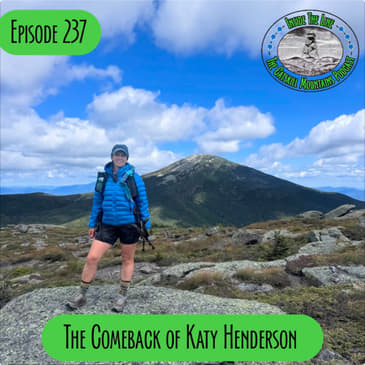
Welcome to episode 237! This week, Katy Henderson, aka @hendersonhikes, is back on the show! We catch up with Katy as she celebrates the one-year anniversary of her crazy injury on Millbrook Ridge. After suffering a trimalleolar fracture of her ankle, Katy has fought her way back and is once again out there hiking, chasing peaks, and generally kicking ass. We also get into some pretty wild topics, including mountain lion heads for sale, the ongoing search for a 73-year-old hiker missing in the Adirondacks, and what happens when novice hikers rely on AI to plan a route up Mount Shasta. Make sure to subscribe on your favorite platform, share the show, donate if you feel like it… or just keep tuning in. I'm just grateful you're here. And as always... VOLUNTEER!!!!
Links for the Podcast: https://linktr.ee/ISLCatskillsPodcast, Donate a coffee to support the show! https://www.buymeacoffee.com/ITLCatskills, Like to be a sponsor or monthly supporter of the show? Go here! - https://www.buymeacoffee.com/ITLCatskills/membership
Thanks to the sponsors of the show: Outdoor chronicles photography - https://www.outdoorchroniclesphotography.com/, Trailbound Project - https://www.trailboundproject.com/, Camp Catskill - https://campcatskill.co/, Another Summit - https://www.guardianrevival.org/programs/another-summit
Links:
Volunteer Opportunities: Trailhead stewards for 3500 Club -https://www.catskill3500club.org/trailhead-stewardship, Catskills Trail Crew - https://www.nynjtc.org/trailcrew/catskills-trail-crew, NYNJTC Volunteering - https://www.nynjtc.org/catskills, Catskill Center - https://catskillcenter.org/, Catskill Mountain Club - https://catskillmountainclub.org/about-us/, Catskill Mountainkeeper - https://www.catskillmountainkeeper.org/
Post Hike Brews and Bites - Cate May IPA, 1911,
#ladiesinhiking #womeninhiking #hudsonvalley #hudsonvalleyhiking #NYC #history #husdonvalley #hikingNY #kaaterskill #bluehole #catskillhiking #visitcatskills #catskillstrails #catskillmountains #3500 #catskills #catskillpark #catskillshiker #catskillmountainsnewyork #hiking #catskill3500club #catskill3500 #hikethecatskills #hikehudson
[00:00:29] The Bushwhacks were some of the worst days I've ever had in the mountains, or life really. Whereas Pantsy Mountain is totally opposite, it's a mountain on top of a crater. I think the weather challenges on this incident were particularly difficult. It improves the development of New York State. Catskills will respond to it.
[00:00:52] Pantsy Hunter, Inside The Line, The Catskill Mountains Podcast. Episode 237, tonight Katie Henderson, aka Henderson Hikes, joins us back after the last time she was on here.
[00:01:19] It was about her devastating injury up on Millbrook Ridge where she, was it a fractured your ankle? Yeah, it's a trimalleolar fracture with dislocations. Well, I got part of it, right? Trimalleolar fracture, whatever the hell that means. Because I broke everything. Yeah, right, yeah. On the smallest part of the trail possible, so it's not like she fell off a ledge or anything. If you want, go back to that episode and listen to it because it's a fantastic episode. So, Kate, welcome back.
[00:01:49] Thank you, I'm happy to be back. We're happy to have you here. Awesome. Ted, welcome back. Yeah, I guess, yeah. Welcome back for me as well. It's exciting to be here, especially with Katie and her stories that she's got to tell of her remarkable recovery and journey forward. Yeah, we can trade physical therapy stories. Oh, I don't know. I haven't hit the silver lining yet, so. Okay. You'll get there. You'll get there. Come on. All right.
[00:02:18] So, I mean, we'll talk about silver lining. So, I saw this today and I had to throw it in the show notes. I don't know. I seriously saw it and I laughed so hard at work. So, on July 29th, we're talking about the DEP, Department of Environmental Protection and the DEC police. And Sullivan County responded to an antique store in the town of Mamakating. Mamakating. Mamakating. Really? Yeah. Really?
[00:02:44] The one thing that you're not supposed to pronounce, it's just like it. Jesus. All right. Mamakating. After receiving a tip from a frequent shopper about a mounted mountain lion head being offered for sale there, an undercover police officer located the mounted head in the back of the store and made a deal to purchase just as a uniformed officer to respond to the location.
[00:03:08] Despite claims from the store and the owner and the employee, they did not know it was illegal to sell mountain lion head. The Ecos charged the owner with illegal commercialization of prohibited species returnable to the town of Mamakating, sorry, court and confiscated the mountain lion head as evidence. Forensic evidence demonstrated the mountain lion was recently killed in the vicinity of Double Top Mountain. Boom. Wow. Wow. That's a fact.
[00:03:37] If we report it here on Inside the Line, you know that's a fact. What about you, Katie? You believe that story? Recent kill on Double Top Mountain in the Catskills? Oh, totally plausible. I mean, it's probably aligned with all the sightings that we've heard over the past month or so. So I'm glad they caught it and it's now wall decor. Yeah. They escaped the Gould's property and it was all free roam right there. It's apparently mountain lion hunting season. Yeah.
[00:04:05] Well, I think the problem is, is next time they kill and mount the head of a mountain lion, they ought to take off the tracking tag if they don't want to get caught. I'm just, I'm just throwing that out there. If anybody's planning to do that. I didn't post or I didn't give you guys the link to what it looked like. I should have, it was in the DEC police, uh, conservation police on patrol.
[00:04:34] Like the look of this mountain lion was basically, uh, I'm going to share the screen right now. Let's see if I can get this to work because we need to brace ourselves. Is this going to be like shocking? Yeah. Don't consume any fluids. Um, that's not, that's not bad. Well, it's like, that's it. Ooh. Are they sure that's a mountain lion? Come on. It's like the teeth are like, a little like this is, and then like, look at the nose.
[00:05:03] Oh, come on. It looks medicated. What's wrong with his eyelids? Yeah. Damn. They did make it look like, like the, once again, like it's not, the eyelids are definitely messed up. You're right. Like it's. All right. I'm calling, I'm calling AI. Yeah. This is not, this is not a jet. And I've seen plenty of mountain lions. I would know the difference. That's not a real mountain lion. Okay. So it doesn't even look like a bobcat.
[00:05:30] So are you admitting that you've been out on double top and then Graham mountain doing this? This is like a chart. I'm a charter member of cats, the adoption and training steward program that we've got, you know, going on, on the gold property. We're in contract with them. Um, we're going to allow lamping out there and it's going to be a fun. It's going to be a fun place. So I agree. I agree. I had to share that with everybody.
[00:05:57] Cause I was just like, that is a, it's a, it's definitely something else. Some guy like, I don't know if like, once again, somebody read this guy out. Like, it was just like, Oh, I see a mountain lion, uh, head in here. I got to tell the DEC or something like that. Like what the hell is it? It's like the squirrel situation. What the hell is that? Right. Uh, what was it? Peanut the squirrel. Um, you know, I just wonder what the provenance of that mounted head was, how old it was. And as Katie points out, it looks kind of funky.
[00:06:26] Like it might've been a hundred years old or something. And where did it come from? And is it really illegal to sell an artifact mounted mountain lion head? You know, maybe it was legal at the time to shoot it when that thing was mounted. I don't know enough about these things, but. Okay. We all don't because that's a little messed up. All I'm going to say is if you want to just stop the recording, I need to go down into my trophy room and take some things off the walls. Yeah. Hide those.
[00:06:55] Hide those. Hide those. Hide those. Right? I mean, uh, and then, you know, I I'm going to reach out to this guy find out how much he was charged because that's a, that's, that's pretty crazy. But. Ah, I had to get that out there. Of course I can go along with the goddamn thing with the, with the podcast. So, um, unfortunately though, uh, there's a search that's going on in, uh, upstate New York in the Adirondacks that a guy that's still missing since August 2nd. So we're going on over a month.
[00:07:22] Uh, Craig Streeter, 73 year old from my hope, right? Mayo pack. Mayo pack. You know, God damn it. I looked this up. I'm two for two tonight. I should go down and play for the Yankees. I've looked this up too. We're the Phillies, depending where you live. Yeah. So Mayo pack, uh, Sunday, August 20. He was last seen Sunday, August 22nd at Stewart shop in Indian Lake. Uh, he frequently travels in camps and remote areas without cell service. So this is considered normal somewhat.
[00:07:51] Uh, so far there has been no sign of foul play state police has noted that there are currently no indications of foul play regarding his disappearance. They discovered his unattended RV at a campsite in inlet. Since then cruises search over 728 linear miles with, uh, around 2,514 acres. Anyone with any information on this missing man, Craig Streeter, uh, please contact New York
[00:08:20] state, DC, New York state police, any, uh, your local authorities to get the word out. Um, it's just, uh, unfortunate incident going on. And it's pretty crazy. Once again, happening at this time of year, because usually we, we hear about this stuff happening in the winter when people are going out into the winter, you know, going like, I wouldn't say can I, uh, kayaking, but out fishing stuff like that. They get caught in the water. They get caught with hypothermia and unfortunately something goes wrong or, you know, they're going up above tree line.
[00:08:48] So, uh, 73 years old, let's hope this guy is living his life and escaping, uh, the realms of, uh, of fricking the United States and just living his life out in the middle of the West out West doing his thing. And with a different RV, you know, you're, you're just totally in fantasy land with that stosh because Katie, what anchors this story to the Northeast?
[00:09:12] Why is this guy, uh, Streeter not living, leaving the state of New York? Is this a quiz? Um, sure. It's a pop. It's what we call a pop quiz. You might know something about those. Um, I don't, I'm not seeing any clues, uh, to his whereabouts or what's keeping him in the Northeast. So Tad, tell me. Last scene in a Stewart shop. We know he's not going out West, right? He's going to stay around Stewart's.
[00:09:42] That's where they're not going to, yeah. You're not going to find them out in the wilderness. He's like, you know, yeah. He's like at the make your own Sunday stand at Stewart's, you know, getting all, you know, I don't know. They, they got Buc-ee's out West. Maybe, maybe that was the draw. Yeah. Buc-ee's. I've never been to a Buc-ee's. Scary. Better than Stewart's. Better than Stewart's. Uh, if you ask the, uh, Buc-ee's aficionados, they'd say yes. Yes, they would.
[00:10:10] But it is, I've been there, uh, down South and I got to admit it's an absolute, the most insane place I've ever been. And I've been, uh, at Walmarts in Black Fridays in the two thousands and stuff like that. And it was, this is the most craziest and like 200 gas pumps over 50 fricking EV chargers. And then inside there's like 200 bathrooms, like different stalls.
[00:10:36] I'm like, what the, like, there was a person show for like telling us where to go. You for now you ate. And I'm just like, what the, like, this is this prison? Like what to put my hands up? Like, I'm going to ask my, I'm going to ask my daughter who is very well traveled. Um, uh, if she's been to a Buc-ee's, which she's texting me now, she's on her way from Wyoming to Kentucky. Interesting.
[00:11:06] For the climbing season. Yeah. Oh, nice. Nice. Cool. Cool. So once again, if you have any misinformation about Craig Streeter, 73 year old, uh, please contact, uh, any local authority, uh, as soon as possible. Let's hope they find him and he's alive and well, um, after a month. That's a little crazy, but I mean, we've heard crazier stories, you know, that one guy that was missing up on a white face that ended up in Sacramento that was skiing up on white face and ended up in Sacramento.
[00:11:34] Uh, that was a little, one of the craziest I've ever heard. So, but who knows, who knows? Uh, and then we get on to, we talk about AI before. So three novice climbers were stranded after relying entirely on AI intelligence, intelligence to plan their trek up Mount Shasta. So Mount Shasta, 14,179 foot volcano, uh, three climbers from California became
[00:12:03] trapped near the summit of the volcano. Uh, they used Google's Gemini AI to calculate the route timing and supplies following the AI's critical missteps. The men anticipated a brief eight hour hike and brought drastically inaccurate food and water. Instead, the climb developed into a grueling multi-day ordeal. Mount Shasta is no joke. The group reached a summit at 7 PM, seven hours past the mountain safe turnaround time. So 12 o'clock is the main safe turnaround time.
[00:12:33] Disoriented in the dark and completely out of provisions. The men called emergency dispatch to ask for driving style directions off the peak. Yeah. Let's take a left here at the fork of the rock that you see in front of you. Take exit 14. Yeah. Exit 14. You're on a 14,000 footer. You're just, yeah, I'm going to get off at 14. I'm going to take, take the turnpike. If you're out of Buc-ee's you're too far. Buc-ee's yeah. You're going to get to the Buc-ee's on the South fork of the mountain.
[00:13:04] And the U S force, uh, service climbing rangers ultimately located the hikers and guided them to safety. Authorities are using the bizarre incident to warn public that AI platforms are highly unreliable for wilderness planning, urging adventurers to consult human local experts and ranger stations instead. I mean, I mean, completely inaccurate is, is almost all trails. I mean, I wouldn't say completely, let's just say inaccurate, like hard, difficult stuff
[00:13:32] like that, but using AI to go up a 14,000 foot peak in, you know, upper, the upper Washington, the Cascades, Mount Shasta with glaciers, massive amounts of snow, massive amounts of ice, like with the amount of re like information we have available. Like right now I could look up Mount Shasta hike and get all the information I leak, but
[00:13:59] I'm going to go with AI and see if this helps me out going up a 14,000 foot peak. Let's do it. Ha the fuck. Yeah. So Katie, what do you think? Would you, would you ever use a chat GPT or Google Gemini to plan a hike? I'm an English teacher. So AI is the bane of my existence in my professional life. So it sure as hell is not going to creep into the fit, my favorite thing to do in my personal life. Yeah.
[00:14:28] I feel really bad for first responders that now they've been reduced to please talk to a human. Like that's where we are. It's pretty disheartening. Yeah. I, you know, so I read this story and what occurs to me is what does it really make a difference that they relied on AI or what if they just read like a blog post about somebody's trip up Mount Shasta?
[00:14:53] Cause it doesn't seem to me that these novice hikers or climbers, wherever they were sourcing their data had the sophistication and common sense to really connect the dots. Okay. And the fact that they got to the summit at 7 PM, seven hours after the turnaround time,
[00:15:18] that means that at 6 PM, they should have known like, Jesus, it's going to get really effing dark and cold out here. What are we going to do? Cause we've been hiking for over a day or like five hours, you know, at five o'clock or four, I mean, they all afternoon or should have been aware that they're just going out too high, too far and not turning around.
[00:15:45] So I don't think it would have mattered if they got this from chat GPT or Bob's how to climb Mount Shasta webpage. Like, I mean, I look at my watch right now and it shows me the sunset time. 734. Like your, your, your phone tells you the sunset time and you should look at the sky and be like, wow, we're getting close.
[00:16:12] I mean, you're, you're, you know, I don't know what age these guys are, but let's just assume they're in their early twenties. They know the sun is setting. It's not like a novice thing. Oh shit. We forgot on like September 1st, the sun does set. It's not like in a light out, like in Northern Alaska, you know, all, you know, winter long or something. I just, I just find this crazy. I can't blame it on Google Gemini.
[00:16:37] I blame it on the user and you know, I don't know. That's, that's where I'm going to end it with this. I'll just get into more trouble. No, don't. How are you going to get in trouble? I'm going to quit. I'm going to quit while I'm behind. Am I going to like yell at you, Ted? Who's going to like? Oh, I don't know. There's somebody driving their car up to the Catskills right now. That's like, what do you mean? It's wrong to listen to Chachi BT. I listened to you two fucking bozos on this podcast for my hiking directions.
[00:17:06] You're no, you're no better. Katie's being very diplomatic and trying to hold. She's just like, this is. I'm on team human all the way. Yeah. So I wanted to start out with saying that Mount Shasta hike starts out at an elevation of 6,920 feet. So you have to gain, what is that? Almost 7,000 feet? Yeah. Yeah. So like, you wouldn't like think that 7,000 is a big number?
[00:17:37] Yeah. Well, there's some significant hazards going up that my, my daughter had spent a considerable amount of time in that area. And then on Mount Shasta, I don't know if she ever summited it, but it's, it's a pretty hardy area as most mountains are over 14,000 feet. Yeah. I mean, yeah. But once again, like I, I looked up like stuff when I was out in California, I was going to climb a 13,000 foot peak. It was called Mount Dana.
[00:18:07] Easy hike, straightforward. You go up, but you just go up. It starts at 9,000 ends at 14,000 or 13,000 feet. So I was like, hell yeah, I can, I can definitely do that. Everybody says, you know, once again, there's no crazy like elevation gauge. It's just uppity up the whole way. No like vertical climbing, no scrambling or stuff like that. But, and then I think of Mount Shasta, all I know that there's glaciers on there.
[00:18:34] There's ice, there's snow, Northern Cascades. So we're talking like unpredictable weather more than the Northeast we have here. So I just don't know how anybody's just like, even living out there, you're looking up at it when you're driving and be like, yeah, we can do this. This is easy. We're novice. This is our first hike. Let's do Mount Shasta. I don't, unbelievable. So once again, I've been, I've been called out before for judging someone for climbing a mountain and stuff like that.
[00:19:01] But that's just, that's a little bit too far. Come on. I mean. Do you know what Mount Shasta, the region around it is famous for? Like coal mining or something? Hmm? UFOs? Well, yeah. Nice. UFOs and pot growing. It's like the pot growing capital of America. All right. But maybe that's why they see so many UFOs. I'm just saying.
[00:19:31] And maybe that's why they need chat GPT to motivate them to go out hiking. Yeah. Yeah. It's easy. You guys, you'll make it. Yeah. They got the stoner chat GPT version. Just don't forget. Just don't forget the bag of Doritos. Yeah. You guys can make it off of Doritos and a bunch of like iced teas, man. Don't worry, man. Yeah. Keep on living, man. Just like. Okay. I got to remember, we can't talk about illicit substances because we do have a teacher on board tonight. True. True. True.
[00:20:01] Sorry about that. Sorry about that. I am off the clock. Okay. Okay. Okay. So that's good. That's good. All right. So shooting the shit has hit the fan. Let's just say that. That's pretty weird. But thank you, Katie, for joining us with shooting the shit. I wish we kind of have more to talk about. That was actually really quick for us to add. Like usually it lasts a little bit longer, but I mean, I want to give a big shout out
[00:20:26] to the amazing monthly supporters like Chris Caribbean, Eric Osario, Skana Nichols, John Comiskey, Mikey S, Desert City Radio, Henry Burmeister, Vicky Ferreira, Jeff Jotz, David Oliver, Betsy A, Vanessa, and Jim C. Thank you guys so much for supporting the show. Really appreciate it. Also, our amazing sponsors of the show like Outdoor Chronicles Photography. Molly from Outdoor Chronicles Photography specializes in adventure, alonement, and adventure
[00:20:53] couple photography in the Catskills, Adirondacks, and the White Mountains. She's an officiant for getting married, a licensed guide, but most important, she's a story maker. Molly will just give you photos. She'll give you memories that will last forever. Don't hesitate to get a hold of Molly on all platforms. Also, if you've ever wanted to learn more about hiking and backpacking, go even deeper into stuff and then brush up on your old skills in the backcountry, you need to check out Trailbound
[00:21:21] Project, a hiking and backpacking school. Scott and Joe from the New Jersey Search and Rescue team have amazing backgrounds in Wilderness First Aid, Wilderness First Responder, and the Mountain Rescue Association, and they are there to teach you old and new skills of hiking and backpacking. They teach anything from first aid, map and compass, and many other survival skills that could help you and others while at Montreal. Check them out on their website and all social media platforms. All right.
[00:21:51] Who's having something to drink? Oh, is it just me? Damn it. Well, fine, my good one. I've had silent. Katie's silent. Yeah, well, Katie, just, you know, put up your splash card. Is that a poppy? Yeah. This is a Kate May IPA. Oh. All right. Crack it open right by the mic. Go right up to the mic. Okay. If you want to make- I didn't know last time. I want a really good crack this time. Let's see. Kate, let's, hold on, hold on.
[00:22:21] If you want to do it really awesome, you got to go change your settings in the Zoom app. Oh, geez. Yeah. So where it says, where it says audio, click a little up, carrot, click it, audio settings, scroll down. And it says microphone modes. Do you see that? Noise removal? I have it set to noise removal. Okay. Go to low. Yeah. And then below it says background noise suppression.
[00:22:50] Click it and click low. Oh my goodness. No, it's, it's. Okay. Got it. Hang on. Noise removal default. Auto. And then go to low. Yeah. There's a little drop. Faint background noises. Got it. There you go. And then you open it up. Okay. It's getting really technical. I hope I don't let you down. All right. Here we go. Yeah. Hell yeah.
[00:23:19] That was pro level. That was pro level. That was a podcast. Catskill podcast level. So now you just go back to auto. Okie dokie. All right. And then she, you can hear the gulp of that. Nice. I'm going to go now. That was good. Like, she's like, Oh God. And then I do the. I always do that. Nice. Ted, how about you, sir? Oh, you know, so I hate to be the bummer, but I am. Cause I wasn't here last week.
[00:23:48] And usually I don't drink the first. Recording of the month to support those folks who are in recovery. So tonight I am just doing a little cranberry juice and water on ice. I guess they call it on the rocks, cranberry juice and water on the rocks. Hanging with those folks who are in recovery. Thank you, Ted. Powerful. Powerful. Yeah. I'm having a 1911 sweep apple.
[00:24:17] And then I got a bunch of others over here that I might do later. So I got it. So Katie, how's that IPA? Yeah. Yeah. Oh, it's solid. That's a favorite of mine. Yeah. From Cape May, New Jersey. So what type of bite does it have? Does it have like a smooth finish, a piney finish, a citrus? What's going on at the end? For what hops are in it. It says it's floral and citrus. So it was like... Or one citrus?
[00:24:46] Katie IPA, right? No, it's not my namesake. That would be awesome. This is the Cape May IPA from Cape May. Well, seaside town. I like that name though. Cape May IPA. Nice. All right. Excellent. Well, thank you for cracking that open. That's funny. See, I love when that... That's good. That's good. See the smiles on everybody's faces. I think that's replay material. That is definitely a replay.
[00:25:14] So once again, I got to write down when that happened and then I get to get the snippet of it and then we'll post that. So that's fun. So let's move on. So are you really outdoors? Mention the podcast, one of your hikes through social media, and we'll chat about in the show. Tag us by typing at ITL Catskill MTM podcast on Instagram. I think on Facebook, you have to put at inside the line. So it's complicated on Facebook.
[00:25:45] So Brad Labradante did the Dix range from Elk Lake in the Adirondacks. Had some beautiful pictures of the night sky out there. Did a backpack over there as well. Shayna, aka Shay315X, did Macom. Right? Is that Macomb? It's Macomb. And I don't want to undersell Shayna's adventure because I was with her. So she did Macomb, South Dix, Huff, and Dix.
[00:26:12] So we did all the Dix range except Grace. Oh, God. Wow. And that was the same hike or was that over several days? Same hike. Oh, awesome. How many miles? I mean, you'll talk about that later, but. Sure. Okay. Yeah. Amazing. Amazing. John, thank you, Shayna. Once again, she's doing her Adirondack journey up there for a second time. So that's pretty freaking cool. John, aka FoolishNotStupid, had a big day for him and Freddie.
[00:26:41] Started the day on Westkill, passed Scott and Zorro, then zoomed over to Vly and Bear Pen, and finally convinced Jen, his wife, to join us on a night hike up on Balsam Lake. Only two remain for Freddie and a single season for the single season challenge. Now, a little bit further down, I remember writing it down that he completed his single season challenge. So congrats to John, FoolishNotStupid, on North Dome and Cheryl. Remembered it.
[00:27:09] Yes, he finished his single season on North Dome and Cheryl. Congratulations, John. And Freddie did as well. And then Scott did as well for another single season. So they're all out kicking ass. I mean, Scott, Catskill Mountain Brew. Drew, Katie, you've been hiking with him a bunch of times in the Adirondacks. He did Westkill and then did Southwest Hunter, Hunter and Rust to close out on his single season. Then he also went Blackhead and then had one more of his single.
[00:27:37] Like, I have the timeline all messed up. So then Scott joined FoolishNotStupid for his completion of the single season summer. And Scott did his single season summer as well. Or John did his single season summer as well. So congratulations to everybody with all these single seasons. I couldn't even imagine. I'm kind of jealous that people have the weekend off now. It sucks not having the weekend off somewhat. But, oh well. You got to wait.
[00:28:05] So before you continue, Stash, if you really want to do a single season, the rewind, if you want to get the greatest advice on how to finish a single season in the Catskills on your days off, just have your entire hike planned by ChatGPT. There you go. All right. There you go. All right. You know what? I don't want to use the data center. Like, I don't.
[00:28:34] So, like, I want to ask that. Be like, I want to complete a single season weekend winter or single season with only Tuesdays and Sundays available. But I only have two Tuesdays available and one Sunday. How do I complete it? They're just like, wow, you're pretty screwed, buddy. Don't even think about it. No, they'll say start at Mount Chasta. Nice. Nice. I would recommend having Scott make you a spreadsheet plan. Yeah. And he does not stop.
[00:29:05] He's just like, well, I feel crappy today. Let me go do two peaks instead of three. I can't. You guys are crazy. Like, I mean, this next woman is crazy. Henderson Hikes tagged us. Oh, wait a minute. That's Katie. Oh, OK. We'll talk about that later. You'll go. Katie, a mountain goat. That's what it should say. Yeah. One of several mountain goats from the Catskills going all over the place. It's crazy.
[00:29:33] We'll talk about that later. So, uh, a Andy Brownski was out paddling some rough waters on the Hudson and did high tour mountain stating that he's not doing the downstate 28, which I highly doubt that he's going to like do like four more and then be like, well, I might as well do it all. Andy, we know what you're doing. You're going to do it. Don't lie. Uh, Jeff Jotz. Uh, our man was out below the escarpment on the beautiful Sunday looking up.
[00:29:59] I remember Catterscill High Peak and part of the escarpment South mountain. Um, Todd Teebould's outdoors was with Joe Jacob plow doing the sum of the tonic to tonic 12. And Todd also received his official 46er certification today. So that was great to see. Yeah. And he did, he, he did post a picture of a coffee mug that his mother got him. Nice. Cool. Yeah. Nice. Crazy. So good. That's good. That's good.
[00:30:28] So Todd, once again, congratulations. Uh, we look forward to probably you joining Kate on her 46er finish as well. So like, I would love that. That would be awesome. I'm going to Kate, give me like a six month ahead of time notice and I will do it. Yes. Fabulous. We'll do. I will. All right. So, uh, Rob, a.k. Rob and Matt, a.k.a. The sloth trans had a beautiful morning in Harriman did the red cross trail from Slake
[00:30:57] Scandinati, uh, Hass and clever road beach trail and then long path. And they said the fungus game was spot on Ted. Did I say that quite right? Yeah. You know, you're, you're close enough. What was it? What is it? I don't know. I've never seen that before. So I think that's the, how you pronounce it. Like, like when you fell on the water, unexpected, unexpected. They're okay. Get out. They're a little cold. Well, it's like this, the skinny Atlas that people have up here.
[00:31:24] You've seen that, that pronunciation was like skinny, skinny, skinny Atlas. So I have to say that's, that's a better name than some places you go. You'll see, they have like Lake one, Lake two, Lake three, like three. No, I mean, that's up in the Adirondacks. You have it actually, uh, in the Northern part of the gunks in the Williams Lake area, there's like one, two, and three there. You know, um, it's like, wow. I went to Lake one. Yeah.
[00:31:52] But then, then there's certain people that just think they can go around and naming lakes and golfs, whatever they want to. So that sounds like a trigger to me. Yeah. One, two, and three, man. I'd be that bad after all. Oh, well, just saying. Jesus Christ. Okay. Uh, back, back to the list. Tracy pink pony, 18 went up Wyndham, the Elm Ridge way and stopped at a place called Hey market in Hennesville, Hensonville. Jesus Hensonville. Uh, that's pretty cool. I got to stop there.
[00:32:22] I go there through there all the time through, uh, to go into the block edge. So I have to stop. Hey market. Sounds legit. Definitely. Yeah. For Hensonville. Uh, Richie, Richie, uh, AKA Richie nature escapes when out camping. Uh, I think, and he didn't state where, but it looked like the genre of lean to, he was at so beautiful spot. I probably growing in already. So God, that's a triggered again. Gosh, God, calm down with us. This viewpoint crap.
[00:32:49] Uh, Danielle, uh, Danielle, which in the wilderness stopped at mini Waska before she did a quick hike to Dom and notch falls and then went to like West kill and the Sprucedon and and stuff. She had a whole day of where she just went around the Catskills and supported our local Catskills that we love. Uh, Samantha D broke trail hiker, did the trap dyke and somebody did cold in for 30 of 46.
[00:33:13] Cool to see stuff on the trap dyke because that is one of like, I, I, I wouldn't say like a dream of mine, but the bucket list to do the trap dyke. Katie's like, Oh yeah, definitely. No, I don't know. No, I think that scares me too much. Okay. Okay. The trap dyke looks fun. I would like to, I've seen everybody's videos now of the new path going through avalanche lake, uh, of that.
[00:33:39] And that's just one of those phenomenal geological times where you want to get out there and look at that, like just the whole devastation of the slide coming through. And then they built platforms over top of the slide. It's beautiful. It's something cool. Tad, have you seen that lately up in the Adirondacks? Uh, I don't recall offhand, but I used to hike through there in the late seventies and eighties. Whoa. Crazy.
[00:34:08] Ted's got many years ago. Well, it's fun. Frickin you tell these stories, Ted, we got to get you on for late seventies, eighties hike adventure with, yeah. With, with external frame packs and leather hiking shoes and, uh, red tab Levi jeans. Correct. Yep. And, and a six pack and cigarettes. Well, I was, I didn't, I don't, I didn't really have up in the Adirondacks, uh, six packs.
[00:34:34] They were too weighty, but, um, we won't go into the rest of the stories up there, but I got some fond memories of my ADK hiking times before, you know, when people used to complain back then in the seventies and eighties, how like overpopulated or trafficked the area was and the degradation back then, I can't imagine what it's like now. Yeah. Right. You know, back then, back then you never, ever had a problem finding a place to park and
[00:35:02] you didn't have to show up at like 3 AM. Okay. So. Or sleep overnight. Yeah. Well, no, we know I used to do a lot of multi-day, you know, trips up there. That was kind of like the thing. We, I, none of them were really day hikes. They were all multi-day excursions. That's awesome. That's all. We'll have to hear that. We'll have to have a tad episode. Hiking. I mean, we're talking a lot about the Adirondacks. Everybody's up there right now. So, but we're going to bring it back down to the Catskills.
[00:35:30] So Cammie, Cam Can 5 did what I call the Moonhaw Massacre. Does Tad, do you, can you guess what the Moonhaw, I've, I've, I've named this the Moonhaw Massacre. Can you guess what this is? No. Okay. So I named it the Moonhaw Massacre a while back. I heard it might be, might be as well as you go up the Van Banshaw Trail up on Wittenberg.
[00:35:57] You go up Cornell and then you bushwhack over the Friday to Balsam Captain back down. I call it the Moonhaw Massacre because 10 years ago it was, there was no herd paths. It was shitty going from the Dink to Cornell or Cornell to the Dink to Friday sucked really bad. So what are you doing? You're doing it. How, what's your route again on that? The Moonhaw Massacre. It's like the loop.
[00:36:22] So you start at the Moonhaw, like down at base of Friday, you go up Van Banshawton, Summit Wittenberg, Cornell, go over to the Dink Friday, Balsam Captain and then down. Down the Friday. And then you finish right back at the car. Yeah. You've done that several times. Yeah. Well, you know, I've done the Van Banshawton several times and the, it's not a trail Banshawton or whatever you want to call it.
[00:36:52] There's a lot of good places to just explore over there. Yeah. A lot of slide activity, a lot of ledge activity, a lot of, you know, mountain laurel are kind of atrocious over there. Awful. Yeah. Mountain laurel, that's fun. So Cammie, awesome job. Good for her. Yeah. Yeah. Sam Cruz outside did around 26 miles and 8,000 feet of gain on a three-day weekend with five peaks and some trail maintenance in the Catskill.
[00:37:22] So thank you, Sam, for doing your trail maintenance. As well as 26 miles and 8,000 feet of gain. Good for her. That's a big weekend. And she did some good when she was out there. Absolutely. We encourage volunteering. Tony TGI 72 without doing some stuff in the Finger Lakes Trail. And also checking out the Delaware area, the Delaware River area. So cool to see. Tony has amazing pictures. Always does.
[00:37:49] And a big sorry to Mike at Red Hand Adventure Guides. I missed his tag when he was out exploring beautiful Montana. So, Mike, so sorry. Please do not ditch us. We want to keep you on here. So thank you. Tad, you got a total? Oh, yeah. Yeah. So I counted 18. Some people tagged us several times because they had several hikes in there. But that's a respectful number. We also left. Yeah, that's amazing.
[00:38:19] I find that amazing. And then we left out somebody else. There was somebody we left out that could be included in the previous hikes. And she's going to start it off. Yeah. We're going to go to the spotlight tonight. Listener spotlight tonight. Yeah. So, Kate, what was your previous hikes? It was my birthday on Friday. It's my 45th birthday. Congratulations. Thank you. So, yeah.
[00:38:44] Shana, Sean, Total Catskills, and I did the Dick's Range minus Grace. We backpacked in, snagged a lean-to, dropped our stuff, got four peaks. It was a great day. We had cupcakes on the summit. Really fun time. Yeah. So did you spend two nights up there? No, just the one night, actually. We hiked in really early, like 5 a.m.
[00:39:11] Still got spots in the upper lot there near Elk Lake. So just spent the one night and then hiked out a couple miles in the morning. Is that it? That's it. Kate, you don't want to share any stories of the crazy mud, scrambling, stuff like that. Like, what did you encounter while up there? Is it gruesome? Is it fun? Is it, like, once again, Adirondacks, I've heard are so much fun.
[00:39:37] But then they could be not deadly, but just like, god damn, now we've got to turn around and do nine miles of this again. Yeah. Yeah. I mean, you know, I haven't finished my 46 yet, but I'm getting fairly close over the halfway mark. You know my first love is the White Mountains in New Hampshire. In terms of the way in which the Adirondacks kicks your ass, yeah, I always feel more beat up coming out of the Adirondacks than the Whites.
[00:40:06] Even if I did more elevation gain in the Whites, even though the Whites are, you know, very bouldery and you're spending more time above treeline, boy, the Adirondacks beat you up. So, yeah, the mud is a badge of honor. But, like, people have spoken so breathlessly of the Dix range. And I was kind of like, okay, yeah, I've done Haystack. I've done the McIntyre range. I've done some beautiful Adirondacks hikes. I'm sure Dix is on par with those. Dude, there's something about that range.
[00:40:36] It was like a mystical experience. It was jaw-dropping, eye-popping. I didn't want to leave the ridge. There's some fun scrambling, especially around the Beckhorn. That's a really hyped-up area. And I was a little bit nervous because of the ankle. But it was actually a really good time. So, yeah, that was a 10 out of 10 hike. Would do it again in a heartbeat. Highly recommend.
[00:41:03] I think it's probably only about – the big day was only about 10 miles, I think. So, like, 12 miles, all told, hiking out the next day. But you felt it. We were pretty ragged by the end, getting back to the lean-to. So, when you talk about you're, like, a little cautious on the ankle and stuff like that, are you talking about, like, coming down when you have to put pressure on it, going up, when you have to push on it? Like, both? Like? Both.
[00:41:31] I think descents still make me a little bit more nervous in general. I generally feel pretty confident on the ascents. But there's this one kind of – I'm calling it the ass crack of doom, this rock configuration going up, where it felt difficult to get a base at first. So, yeah, I mean, any time that leg slips out from under me, you know, my heart skips a beat. But – and for the most part, it felt pretty good. That's great. That's – What was the weather like? Gorgeous.
[00:42:01] It was a little cloudy, and I was worried. You know, I was watching the cloud cover. I was afraid we might get socked in by the time we hit dicks. But the cloud ceiling stayed high enough with some sun rays dappling through. It was really, really nice. Good temp. Dappling through. It sounds like the English teachers coming through. What was the overnight temp when you were camping out? Yeah, right. Oh, it was warm. I think it stayed in the 40s. Okay. Nice. That's good temperature.
[00:42:29] Yeah, because you can go in and out of your quilt or whatever you have your bag and feel comfortable instead of just having to stay in it all the time and then sweating and then be like, well, I can get out. And then I freaking freeze to death. And then that's good. So, when you're talking about the dicks range, you never want to leave the ridge. Would you compare this to, like, the whites when you have Franconia Ridge where you're up above tree line and stuff?
[00:42:57] Like, is it comparable or better? Like, what do you say? It's a tough one. Yeah. It's its own thing. Like, the Adirondacks feel totally different, you know? Like, in some ways, like, the views are more dramatic because you've got all the rock slides that are visible through, you know, the thick boreal cover. But I do love that above tree line time in the whites.
[00:43:21] So, I think for me, the northern part of the presidential range in the whites still reigns supreme in my memory and in my heart. But dicks is top tier, man. It's up there. Cool. Cool. That's great to hear. And you said you're halfway through your 46. So, we look forward to hearing more about your 46 quest and stuff. And we're looking forward to hear you coming back down to the Catskills as well. You've forgotten about us, Kate. Come on.
[00:43:51] Never. I haven't forgotten. Yeah. Nobody forgets. You know, the funny thing is, you talk about your 46-er. I looked at Todd's completion. He is number 17,000 of a 46-er. Take a guess at how many have completed 35. Oh, we just had this conversation a while ago. It's like a fraction of that. Let's see. I'm number 39, like 3,900-something, I think.
[00:44:21] And that was a year ago. So, I bet Catskills is still under 5,000 finishers, right? Correct. Correct. I think we haven't even hit 4,500. Oh, I think we're over that. You think it? Okay. Yeah, I'm going to ask ChatGPT right now. Don't do it. ChatGPT, how many finishers of the Catskill 3,500? Yeah, he's going to look it up while- Three. There's been three finishers. Of course. They're all dogs.
[00:44:51] That's fine. So, Ted, are you looking that up right now? You want me to give you a break? Yeah, I'm looking it up, and it's giving me like every fucking thing I don't want to know about the 3,500. There's now 33 active mountains. There used to be 35. It's like, I don't want to know. I just want to tell me how many people have finished. Okay. Okay. So, moving on. You want to hear about my hike or your hike? Absolutely. Let me hear about your hike. I mean, don't you have hikes and that- Well, yeah.
[00:45:17] I mean, but this is where both of you have like an advantage over me because I'm in the pseudo hiking. It's more of a walk than a hike phase. But I am proud to say I made the best of a three-day weekend, and over the course of three days, I banged out 30 plus miles. I think like 30- Listen to this guy. Oh, oh, oh, oh, oh, one miles.
[00:45:46] And maybe, maybe just under 3,000 feet of vert. But it was good because I got out long days. The limiting factor on how far I can go is water because I carry like a three-quarters of a liter. You're limited on your backpack because of your backpack.
[00:46:33] You're limited on your backpack because of your shoulder, right? Yeah. You know, it's just a lot of beautiful sights. There's a lot of history there. You get a very different breed of outdoors person. Maybe some of them you can't call outdoors person. I mean, there's some places you go, you almost feel like I hate to say it, but I'm going to say it. But it almost feels like you're going to the Jersey Shore in some parts because there's people with Bluetooth speakers and beach gear.
[00:47:03] And, you know, that's fine because at least they're getting out of doors. And when you do go through those areas, one thing I have noticed, it's not like they're all trashy. You know, there's not a lot of garbage. When I say not a lot of garbage, there really isn't any trail trash in those areas. I did hike around Lake Awassing on Sunday. It was a fabulous day to go up there.
[00:47:26] Officially, the loop around the lake is still closed because they rebuilt it over the course of the last three, four months, or they're still in the process of rebuilding it. And when they rebuild a trail there, they have like dump trucks, road graders, truck loaders. I mean, yeah, the equipment that they bring in is frankly obscene because I could take my Audi. I don't even need my Jeep.
[00:47:49] I could drive my Audi around Lake Awassing now because it's so smooth, so fortified, so wide, and it must have been so ungodly expensive what they did. But, you know, they expect a lot of traffic going around there, so now they're building the trails accordingly. And, you know, you can fight on either side of that debate, you know, the pros and cons.
[00:48:15] But I'm just thankful that I have that place to go out and do my walks in my backyard. And in terms of therapy, it's great mental therapy to get out there and spend, you know, the three plus hours it takes to bang out 10 miles or so. 30 miles. That's a lot, man. 30 miles. That's great. 30 miles, three days. Wow. But my thing, all summer, since this happened to me, I generally go walking every day. I did three miles this morning.
[00:48:43] But like 3,000 feet again, that's 1,000 feet every time. That's great. Yeah. Like, that's fantastic. You know, it's great, but it's not impressive, you know? It's not really that much vertical. What, do you want to climb up Mount Shasta in the Catskills or something like that? Jesus. Yeah, according to ChetGPT, you don't need any shoulders to climb Mount Shasta. Just a beer. True. That'll get you to the summit. I think you need like a Cape.
[00:49:08] No, you need a Cape May IPA to get to the summit of Mount Shasta and you're good to go. And then you need to have a cell phone to call for directions to get down. Correct. Correct. So like you're getting out, 30 miles, 3,000 feet again. Do not say that. Like, that's awesome. And your pictures are phenomenal. Yeah. I don't want to sound inconsiderate, but at least with my injury, I can get out and walk a lot.
[00:49:35] Whereas other people, particularly those people with trimal fractures, they just get to sit in a recliner and either read a good book or doom scroll. Or listen to horrible podcasts. Yeah, could be. So Stash, what'd you do? Did you go out to the fire tower lighting? Did you get any hiking in? Absolutely. So what'd you do? Or did you just go to Stewart's? I just went to Bramley constantly, every day. Okay.
[00:50:02] No, so for the fire tower lighting event, which was Saturday, I went up Bramley. We had me, Jessica and Darren. I forced Jessica to go up. I like, I like told her she needs to go up. I'm like, there's no way. I'm not getting you food or anything like that. You were forced to go up. No, but she, she wanted to, she was excited. And we got up just at the golden hour time. So like the sun was just going below the clouds and creating some amazing colors.
[00:50:34] At that time, I look over to the south of me, the southeast. And that's where you can see Slide and Balsam Lake and Panther. And they looked like they were getting socked in by rain. But this rain, like Ann was on there, Ann Roberti was saying, look, there's purple rain over there. And I'm just like, Prince. And I was just like, I wanted to play that. I was like, hell yeah. But like, I don't know how, and nobody looked at me. I was just like, God, you guys are losers.
[00:51:04] But, but like the sunset was beautiful. I was starting to set up like I was eating. And then I was just like, wow, this sunset's nice. I'm going to go up in the fire tower. Nobody's up there. I sat up there for 30 minutes, like alone, just watching different directions of weather happening. No, stop, stop. Do you really think that the people would come up and hang with you after you did like your imitation of Prince Purple Rain? Oh, I'm going to go up there with that guy. Okay. True. Kids, kids stay away from him.
[00:51:34] Well, it's also a 90 foot tower. So it's, it's got to climb a bunch of steps. So, um, sat up there, watched, took beautiful pictures of the sunset, came down. It was like 7 50 when I, when I came down. So we had like, they light up the fire towers at 8 30. So I started setting up my professional photography stuff, my Nikon 5200 and all my lens and stuff. I've done astral photography before. And then I like start testing it.
[00:52:04] And of course, like you haven't, I haven't done this for a year. So like, I'm like hitting the clicker. It's not working. I'm doing the settings. It's not working. I'm just getting so frustrated. And all of a sudden, like everything like clicks into gear. I'm just like, Oh shit. Now it's working. So, um, when, um, before, before that, actually, sorry, backtrack. When I was up watching the sunset, we see off to the Southeast, Southwest, like fireworks. Like this is way in the distance.
[00:52:34] Like I'm talking miles upon miles. I haven't even posted video yet, but like these were over the top of the mountains and stuff. So I'm like, where the hell could this be coming from? Like, this is so weird. Like, and the guy's just like, we're listening. We can't hear anything. So it's that far away that you can't even hear the pops of the fireworks. And like, they are good fireworks. Like this lasted for like at least eight to 10 minutes. Like, and these are like massive, huge ones, sporadic ones.
[00:53:04] And then at the end, like it did like a couple of those crazy ones where they're actually like figures. One of them was a smiley face. One of them was like a pirates or I would say a skull. Like, and I was just like, wow, this is crazy. And the guy, the guy that I was up there with was just kept talking to me. And I'm like, I have to say that's like from Scranton, like PA or something like Scranton Downsville area. Like, like, it's just, it's so far away. We couldn't tell. And nobody had a clue. Nobody found out anything.
[00:53:33] So that, that was really deep. But, uh, they lit up the fire towers. We could see, we went up, I went up, we could see Mount. You, uh, Balsam Lake, uh, Kelsey was over there. Uh, and she said she could not see us, but there was one time when she like, somebody must have shined something on there because it looked like there are, uh, there was like, like a laser being shot at us. I'm just like, oh, there, there it is. There is. And then it's gone.
[00:54:02] And I was just like, what the, what the hell? Like, how can't we see that? Balsam Lake is not that far away. Like, like maybe like 20 miles as a crow flies. But like Mount U isn't that, it really is that far away. We couldn't see anybody else because the mountains were blocking overlook and the mountains were blocking Hunter. Um, rock rift is below the mountains. So they're kind of like a little bit below so we can only see Balsam Lake at times with binoculars.
[00:54:32] And as I zoomed into my camera, so that, that was a phenomenal time. We had like 12 people up there. Um, influence a bunch of people and maybe listen to the podcast. There was this one lady that came up that had no idea this was happening. And she came up at like 7 30. So it was beyond sunset. And we were like, Oh, do you have anything to go down? She's like, no, I got my cell phone. And we're like, Ooh, all right. So stay up here with us.
[00:55:01] We're going to stay up here a while. And, uh, we'll, we'll teach you some things. So she started to like, like she was from Georgia. She was at the college over at Delhi. So she was like asking all these questions about mountains and stuff like that. It was really cool. She was learning about fire towers. Um, and then like all of a sudden you see her start like getting really cold, like, like starting to shivering. And, uh, my good buddy, Darren white, who listens to the show up and following the show
[00:55:28] since the beginning, he, uh, opted and, and, and helped out to bring her down. She gave her a coat, his coat. And then he went down with her with a headlamp as well. So she didn't have to go down with just her cell phone and such. Uh, he didn't pass out. Did he? No, he didn't. Okay. Okay. Okay. You're, you're stretching. That's fine. I was just like, Oh, and he's gone. But, um, other than that, it was like, I got some amazing
[00:55:58] astrophotography pictures. So I shooting stars, some meteors shooting stars, stuff like that all over the place. It was just absolutely phenomenal night. Our friends from right across the street, I offered for our friends to come out, uh, to be like, Hey, you know, we're climbing this mountain, uh, for the lighting of the fire towers, meet us here at this time or show up whenever you want. They light them at eight 30. Uh, we're up in the fire tower. Everybody's like cheer chatting. And then all of a sudden they come out and they were like, Hey, fricking run down.
[00:56:26] Um, she's just like, this is the first and last for me. She's just like, never am I doing this shit again. You said this was a hill. And I was like, no, I said it was Bramley mountain. Like it's, it's 800 feet of gain, eight, 900 feet of gain. So, but all, all she, they had a great time, you know, they're trying to get out and, and like rekindled all the love of nature and stuff like that. Uh, but on the way down, it started raining.
[00:56:52] So we got like, you have a little bit of trees and then you have like an open ridge for a while for like, and it just poured rain right there. And I like look back and I'm like, I'm so sorry, this is happening to you. And they're just like, it's okay. And they were very shitty chatting. They were had our good time. So that was phenomenal. And then Tuesday, Jessica and I, it was our fourth, 14th wedding anniversary.
[00:57:16] So we wanted to do something like she, she loves waterfalls and so do I, and I love viewpoints. Uh, and she doesn't mind them, but she doesn't want to do some crazy stuff. Like, so I was just like, well, why don't we go over to like the North South Lake area and do, I call it the Ashley falls sunset artist rock loop. So you just do it's four miles. You hit Ashley falls.
[00:57:42] You take a right at ledge falls and then go on the, uh, I think it's a yellow trail to the blue trail to the escarpment and you follow escarpment down. You just do a road walk back and phenomenal views, beautiful views of, you know, Hudson Valley area. I got to see Albany, got to see North South Lake, Catterskill High Peak Round Top, Hunter Plateau. Um, had a great time. She said she loved that hike.
[00:58:08] You know, it wasn't too grueling, but it was fun because you have a little bit of scrambles here and there. There's a lot of different geology in the area. So a lot of like a glacial erratics and then you have conglomerate rock and then bedrock and stuff. You know, it's just, it's super, super fun loop that, you know, if you're in the mood to just do something easy, that's super great. And then we got food, uh, before, for we got, we got food at the, uh, village market deli,
[00:58:37] the boarheads place down in Tannersville. Absolutely stunning. They stuffed it full of meat. So it was fantastic. Had that at sunset rock. And the one thing that sucked though, is when we were at sunset rock, Jessica like jumps out of the blue because there's this bug flying on her. And I'm just like, like, what the hell? And I look and when it flies up, you see the red in it. And I'm like, fuck, that's a spotted lantern fly. And I'm just like, God damn it. She's like, what, what is that? I'm like, it's invasive.
[00:59:06] It's fricking killing our trees and shit like that. And plants like I go over and I'm like, try to stomp on it. I try to find it. You need a fucking fly swatter out in the middle of the open areas for these things. And I killed like two or three of them, but there was a lot. And it's kind of depressing to hear. But on the way back though, I stopped at the Twilight General Store. And to be honest, because of how crazy that place is during the weekends and stuff, I've never stopped there. And this is my first time. It's actually pretty cool. Oh, yeah.
[00:59:36] What'd you get? Did you get anything? No, no. They have a lot of North South Lake apparel. And then like magnets and stuff, because that's everybody's first time of visiting there. So I understand. So you told us about these boar's head sandwiches stuffed full of meat. I think that's how you describe them. What did you guys have with them? Do you have like sparkling cider? I mean, this is your anniversary.
[01:00:02] You're out in this area you described as a short four mile easy hike that you learned about on chat GPT with a bunch of geological features. You got these deli subs that you got at Burpee's. What was the place called again? B-Bee's. It was called the Buc-ee's. Buc-ee's. Oh, okay. It's Stewart's. That's right. And so what were you guys doing? Do you have like a little bottle of champagne, sparkling cider, or milk? Arizona iced teas. Oh, okay.
[01:00:32] It's delicious. That kind of fits. Yeah, it does. It's just Jessica and I. So we both enjoyed it. Beautiful views, beautiful days, like light and brisk, like, not brisk, but like light wind here and there, mid, low 70s. And it's just, you can't beat the forest of North South Lake of where, you know, it's just, you're going through different areas.
[01:00:55] And on the world walk back, there's so many milkweed and just native plants that you're over there looking at some butterflies, some monarch butterflies, and then we're looking at the caterpillars and stuff like that. It's just like we were, you know, it smelled the goldenrod was dominant. The smell of the goldenrods was just dominant. It was just one of those days that was just beautiful perfection, perfection. And then we celebrated with some Mexican food afterwards.
[01:01:24] So it was a long day, long day. Happy anniversary. Thank you. Thank you. Appreciate it. Yeah. Yeah. This is good. So yeah, that was my day. It was good. Good times. Good to get out. No, you're supposed to say it was our day. It was our day. Yes. Yes. Okay. Good. It was. She, she had a good time. Usually I take her on those gruesome hikes where I'm like, Hey, Becker hollow is only two miles up. Word into chat. She'd BT. Yeah. They don't tell you the elevation gain.
[01:01:53] So she's just like, Oh, it's a fire tower. Let's do it. Yeah. Gotcha. But, but anyway, so cool. Cool. Glad everybody's getting out. Have fun. Once again, enjoy the summer while you can. We're, we're starting to see some color change. So get out there. Not much, but also volunteer 3500 club Catskill trail crew Catskill mountains club visitor center, Jolly rovers trail crew, Bradley mountain fire tower, any fire tower, any place you can volunteer do it.
[01:02:22] Also, if you want free stickers, get ahold of me, send me a message through any social media platform or through my website, and I will send them to you or go to camp Catskill. You can get her, get them there. So let's break it into the insanely inaccurate weather forecast. Here is your weekend weather forecast on Friday, September 11th. Expect beautiful hiking day in the Catskills with chilly valley temperatures in the upper
[01:02:52] 40s to low 50s. Summer temperatures will be in the low 40s as well in the morning. Expect mostly sunny skies, low humidity and northwest winds with little to no chance of rain. By afternoon valleys will get in the upper 60s and 70s while the summits stay in the 50s to low 60s. Looks like a fantastic day to be out. Also, on Saturday, September 12th, looks pretty good too. Morning temperatures will be around the upper 50s and the mid 40s to low 50s on the summits,
[01:03:22] and we'll see mostly sunny skies early with clouds increasing later in the day. Valley temperatures will reach the mid 70s throughout the day while the summits should stay in the low to mid 60s. Winds will be late to moderate with a chance of shower developing very late in the day. On Sunday, September 13th, expect cloudy skies with temperatures in the mid 50s in the valleys and the upper 40s to low 50s on the summit in the morning. Showers and a possible thunderstorm are in the forecast, especially during the morning
[01:03:51] and early afternoon. Valley temperatures can climb to the upper 70s while the summits remain in the 60s with a chance of rain possible. Winds should be lighter, but definitely pack rain gear if you're heading to the mountains. So once again, you're out going to the mountains. Have fun and be safe, be prepared, and don't become tomorrow's rescue story. Here's back to you guys. Thank you for that inaccurate weather forecast. We look forward to it.
[01:04:19] We look forward to not preparing for the time that we have in the Catskills. So last set of sponsors and then we'll get on to Katie. So is it time for some new gear hiking in the Catskills? Say no more. Camp Catskill in Tannersville has all your hiking needs. Footwear socks, moisture wicking shirts, freeze-dried meals, Catskill merchandise, and more. They have all the essentials for your hiking needs. Located in Tannersville and online, check out Camp Catskill. If you want free stickers, stop there.
[01:04:47] Also, check out Another Summit, a non-profit program that offers adventure activities for veterans and first responders for free. Outdoor adventures like walking, hiking, paddling, and even backpacking. We welcome guardians of all ages and ability levels, including those with accessibility needs. Our adventures are located throughout New York and the Northeast, and we organize transit-accessible adventures throughout the Hudson Valley and the New York City area. Apply today on anothersummit.org. All right.
[01:05:17] So let's get on to the guest of the night. Let's go. So tonight, Katie Henderson joins us, a.k.a. Henderson Hikes, to talk about she has been a year from her injury up on Millbrook Ridge, where she got escorted down the mountain. I like to say she got escorted down the mountain with a trail. How do you say it again? Trimaleolar fracture?
[01:05:46] Trimaleolar fracture. I had all the words, like, all lost. So once again, if you haven't listened to the episode, I would go back and listen to it, because it's a great episode of just, like, kind of, like, camaraderie and stuff like that, of where Kate, unfortunately, had a small accident where she slipped off the side of kind of, like, not even a ledge and fractured her ankle. And her friends that were there with her, like, helped her throughout the way,
[01:06:15] and the Forest Rangers came in, just an awesome, awesome time. So welcome back, Kate. Good to have you back. Good to hear that you're kicking ass. Oh, thank you. Yeah, it's, I mean, we, I look forward to it every week. I don't know where you're going to be, whether it's the Adirondacks, the Catskills. So it's always good to hear, and it's always good to hear that you're kicking ass. So how about, you've been on the show before, but give a little background about yourself,
[01:06:41] maybe how you got into hiking, and then what got you into hiking in the Catskills? Okay. Yeah. So I was born and raised in West Virginia. So if you hear a little bit of Appalachian twang in my voice, that's where that came from. So, you know, born in the mountain state and loved it, but didn't really get into the mountains until around 2016. I believe that was my first Catskills hike.
[01:07:10] I was just starting to fall in love with the woods and threw out there to a hiking friend that I want to hike Mount Washington. And she's like, you need an education and some mountain fitness first. Let me take you to the Catskills. And that became, you know, an instant love. And yeah, just, you know, early hikes when I learned what peak bagging was and that there were these challenges, these lists. I said, oh, I'll never do that. And that didn't stick.
[01:07:37] And yeah, so I finished my New Hampshire 48. I had finished my Catskills 35. I am working on the Adirondack 46, the Catskills Winters, and the Terrifying 25. Also up in the whites. What about 52 with the view? You know, I'm sure that'll come next. I'm looking forward to that one. Enough on the back burner right now. I got to coax Jessica doing that one because she's always a viewfinder.
[01:08:06] So back to you. You said you have a little Appalachian twang. What does that mean? I don't know what that means. Like a little Southern stuff. People from West Virginia. It's not quite Southern, right? People like mistake it for a Southern accent, but it's a little harder. I think every now and then my vowels flatten out and everything becomes an eh. And I tend to drop the Gs off of verbs. So that's my tell. Okay. Okay. So it's not y'all or love. Thanks, love.
[01:08:36] No, it's not. It's not bless your heart. You know, it's more like you got some muck on your boots. Okay. Okay. I'll allow it. So now a year ago, you had an injury up on Millbrook Ridge and you want to take us back to that and chat about what happened. And then like maybe, I mean, you don't have to go full in depth. I will make people listen to that episode to go in full in depth, but you can, you can tell as much as you want with your experience of having.
[01:09:07] Just to put it in context. Yeah, sure. I've had to explain myself to so many people over the past year that I think I've got the CliffsNotes version down. Yeah. So we were, there was a group of us, just stellar hiking friends. So myself, Joanne, Beyond Blazes, Danny, mildly mischievous, I think it's his handle now. And Sean, Total Catskills. We were doing the Huckleberry Loop, which is, you know, 13 miles, scenic, but not super
[01:09:36] challenging hike in the Western Catskills. Just beautiful. Vintage Catskills. Done it before. We're about the halfway point, about seven miles in on really the only series of viewpoints. Those ledges that are just off trail, off a little herd path. The ledges are flat. They're safe. I don't want to scare anybody off from going out and taking a look. We turned to head back to the main trail.
[01:10:01] I stepped on some moss, again, on purpose, because I thought it would give me traction in the moment. So my relationship to moss has changed and slipped off the ledge, dropped five feet at most, somewhere between four and five feet. Not a traumatic-looking fall. But I caught a toe on the ledge, which broke the first bone before I hit the ground. So the leg was askew when I finally hit the ground.
[01:10:30] And the rest of the bones just said, see you later. And came unglued, basically. It was not a compound fracture. Like, the bone stayed under the skin, but like, maybe by a millimeter. Like, if you look at the x-ray, you can see the bones poking into the epidermis. So the skin just barely held. Super mangled. My friends immediately called for a rescue. It took about three hours for the first responder to get there.
[01:10:59] Another hour for the ranger team to get up, because they had to carry a stokes litter. They had to get, like, lumber crews out, like volunteer firefighters to cut down branches and trees. So four hours for the whole team to get to me. Another hour of stabilizing me. Splinting the leg, which was a nightmare. They tried to be gentle and compassionate, but it was awful. And I'm sure they heard me screaming down in Margaretville.
[01:11:27] Then they kind of wrapped a bunch of webbing around me to hoist me up, back up the ledge. And then it was a stokes litter carry, partly on trail, but a lot of bushwhacking. It was really hard labor for these folks. From there, got onto a UTV for a bit. It almost toppled into a bug. Uh, and then when they finally got me out to the trailhead. So I fell at 2 p.m. Around 2, 2.30.
[01:11:54] Uh, they got me back to where the ambulance was stationed at the trailhead at 11 p.m. From there, there was an ambulance ride to a helicopter. The helicopter took me to Albany Medical Center because they have, you know, pretty decorated trauma unit. Next morning, I was in surgery. Uh, and yeah, I've got, uh, two large plates with aggressive screws, about 11 screws, uh, that are now just permanently a part of me.
[01:12:23] Um, and. Yay, little heart. They should have engraved CATSkill injury on it or something like that. Yeah. So I need to be microchipped. Well, in a certain way, I guess you kind of are, but you know, so before I pick up with the next question, just to also put it in perspective, you talk about you fell four or five feet off a ledge. It wasn't like a sketchy area.
[01:12:50] It wasn't like you, when you looked at this, you said to myself, oh my God, this is such a challenging area. This was just like normal CATSkill hiking terrain. Yeah. Yeah. It didn't feel risky. Um, I wasn't doing anything stupid. I wasn't like posing for the gram. Um, it was just a one bad step. And so I, my, to me, my takeaway from this is you were just doing ordinary typical hiking activity.
[01:13:17] There was, and I remember you described it as that your fall was, what was it? Unremarkable. It was just like an unremarkable fall, but you pun intended walked away with like one hell of an injury that your articular surface where your tibia fibula and your ankle bones intersect. And they were just all basically mangled in a fraction of a second. And so you go to Albany, you have the surgery.
[01:13:45] Uh, I remember before you got to Albany, the Rangers asked you about biting down on a rag when they splinted you. And that was kind of like memorable from your storytelling last year when you told us this, but so you, you go to Albany, you have the surgery, you get discharged. And when you were on the show last year is I remember you were right at the point where you were ready to drive a car a couple months later. Right.
[01:14:15] Yeah. You couldn't drive for a few months, right? Oh yeah. Um, I think I was a few weeks away from driving when we had the last podcast. Cause I remember I was able to drive just in time to return to teaching in the fall. I was given clearance to drive, but I was having such bad circulation issues. I could not tolerate having my leg hang down, you know, for more than 10 minutes at a time. And I had like a 20 minute commute. So it was still some weeks away from driving, just, just a personal comfort thing.
[01:14:45] So when you're, when you're at that point where you're on the verge of being able to drive again, you're, I assume you're like weight bearing on your ankle. Cause as soon as you can get weight bearing, they like you to get weight bearing, but you're presumably at some level of immobilization throughout the summer. And then they, they take off, whether it was a splint, a cast, ace bandages.
[01:15:12] I want to know how stiff and frozen your ankle was. Cause that's what I'm dealing with. I've dealt with that before with other injuries. It's what I'm dealing with now. And it's like a big complication. Everybody looks at, you have the surgery, you have the immobilizer and they're like, Oh, look, Katie got her cast off. Everything's okay now. And it usually it isn't. It's like now you're to the real hard work of the recovery. So tell us about that. Yeah.
[01:15:37] And I didn't realize that like in my mind, I was on a hard cast for a little over seven weeks, right. Which is above average. And I kept begging them to cut it off, cut it off. And they're like, no, it's not ready yet. Um, so I think, yeah, last time I saw you guys, um, I'd been out of the cast for like two days, you know, in the air cast on crutches. And I thought it was going to be, they cut me out and I'd been, I'd been trying to do workouts as best I could in a hard cast.
[01:16:06] Like I was doing like one legged, like wall pushups with my casted leg behind me. I was, you know, I'm going to be the best patient ever. And I'm going to be strong enough to just walk out of that office. And they cut off that cast. And when that atrophied, bruised, limp, useless, dead fish of a leg, I cried. Oh, I cried.
[01:16:31] Um, cause yeah, my, my, my fantasy was dashed and yeah, so that, that was a really hard transition. And like you say, Ted, right. The work had truly just begun when you get out of the immobilization and now the physical therapy starts. Um, so yeah, it was a very slow progression with a lot of pain for about a month or six weeks after that. Wow. So, so during that month to six weeks, are you going to therapy once a week, twice a week or something else?
[01:17:00] Three times a week. Wow. I would say, oh yeah. And in those early stages, I would say I dedicated about three hours a day to physical therapy all told, you know, doing the at-home exercises and going into the office. Yeah. It was, it was all consuming. Cause I was, I really, I was determined to get back. Uh, it also was the highlight of my day, like going into the physical therapy office because
[01:17:25] it, you know, sure beat laying in bed in a cast with my leg propped up eating dried fruit and nuts. Cause that's all I wanted for like months. Cause I'm so sad. So I was always excited to go into physical therapy and see people and, and feel like progress is happening. Yeah. So what was it like the first week or so in PT? Were you able to, you know, move your ankle back and forth, get a lot of movement out of
[01:17:50] it, or was it stiff and frozen and they had a forcefully manipulated to break up the adhesions and how painful was that? They never described it as frozen. Um, but yeah, the, the movement was so minimal. I remember it being about two weeks into physical therapy that I could without forcing it, like actually, you know, do it myself, not passive range of motion, lift my toes off the ground,
[01:18:19] like three inches. Like I was so excited. I put it on an Instagram story. I was like, look at my Sunday. I lifted my toes. Um, it was a lot of passive range of motion stuff in the beginning. Um, it was so weak and stiff. Yeah. And like two things that the physical therapist told me that really stuck with me was hurt does not equal harm. Right. Cause they were like, you know, you need to break up the scar tissue. It's going to hurt all the time. This is the only way you get movement back.
[01:18:48] And then also, especially in the early days was lengthen to strengthen that, you know, a tight muscle is a weak muscle. And so before they can even really work on strength and mobility, they were just stretching just to get the ankle back to like neutral dorsiflexion where my heel could hit the ground. So when you, you say you were looking forward to your PT sessions three a week, uh, I'm assuming
[01:19:16] that the PT itself was painful, at least during the first few weeks when they're breaking up these adhesions. Did you take any medicine before you went in? Ibuprofen. Yeah. That's a good thing like that. Good question. I was still on the heavy hitters back then. I was, I was still on the Oxy. Wow. Yeah. Wow. Okay. It's, it's, it's, and that's a, that's a great question, Ted, you know, because, you know, some people like, I want to not do this without, you know, like medicine and stuff like that, I want to feel the pain and then endure the pain so I can withstand
[01:19:46] the pain somewhat. But like, I mean, that's a, once again, that's a great question. So, and then you're, you're doing the home exercise routines. Is it discouraging the first week or so? Yeah. I cried a lot. Oh. But, uh, I, it, I don't know. It was discouraging in that I realized how far away I was from doing what I wanted to do.
[01:20:12] It was encouraging in that I was doing something. I was able to take action, right? It was progress. Every week I had measurable progress, you know, and, and the physical therapist would indicate like, oh, you're up to two degrees dorsiflexion, whatever it is. So compared to being helpless and just laying there, which was my summer, that felt better even when I didn't have any real mobility or independence yet. Yes.
[01:20:41] So I have to assume that when you first went into PT, you asked them, how soon can I start walking on trails? Yeah. And what did they tell you? That was the first question probably. Oh yeah. That was, yeah. First exam. I was like, how long, what did they say? Well, I remember is crying at the response. Uh, I think, I think it was going to be months. It was, they said probably about six months until you're- That's a long time. Walking.
[01:21:11] So this is, and this is in August of 2025? Mm-hmm. Wow. Yeah. And then- Because I, I remember, because I saw you, I met you for the first time in the slide parking lot and that was in January. Yeah. Okay. That was my first high peak back was, uh, for, for Tom, who's his, uh, winter finish on Cornell and I accompanied him as far as slide. Yeah. That was, uh, an epic finish for Tom. It goes down in Catskill history is a game changer. I think they call it. Yes. Okay. It does.
[01:21:41] Definitely a game changer. Um, so now Kate, you're starting to do the physical therapy. You're gaining and gaining and gaining. When do you start actually, not let's say go on the trails, but get out walking outside to where you're comfortable? Like, and then like the distance, like how long can you walk? Do you endure pain to a certain amount of extent? And then you're like, okay, now I got to walk back and stuff.
[01:22:07] Like, yeah, I'm going to take the comfort out of it for now because it was, I don't know, February, March until I actually felt comfortable. Um, when did I start walking? Um, I live, um, not in a mountainous area, but a beautiful area, um, with tow paths along the Delaware, like the Delaware canal. So it's nice, flat, soft gravel. Um, so I was walking on the tow path by early October at, it was more of a hobble.
[01:22:38] I mean, I, I pushed the limit as soon as I could. Uh, I think I drove my physical therapist crazy. Um, like they, they would wait for me to walk in every Monday to see how hard I'm limping, how swollen my leg is because I kept pushing the envelope every weekend. I was quote unquote hiking like two miles in the Pine Barrens at the end of September. Unwise, not like not a good idea.
[01:23:07] That was my question along with that. What did they say about that? They were just like, don't do that. They just kept begging, like, please don't hurt yourself. Like we're, we're doing so much work on you. Can you not set yourself back? And I was just like, but I need to know where my new limit is. And my new limit would be, yeah. When I was limping and in so much pain that I'm like crawling back to the car and I'd be like, found my new limit. So on, on these hikes, would you use any ibuprofen or other anti-inflammatories or pain medicine? I would.
[01:23:37] Yeah. And in the horse world, we call it buting up. Phenobutazone is a horse pain reliever. It's like an old creaky horse. You'd give it to them before they start. So I was buting up on the Advil before I'd start. Acceptable. You know, it's like doing like going to bed at night. You want to prepare yourself for the pain so you can sleep and then. I'm guilty of that. So when you got back from your walks or hikes along the towpath or in the Pine Barrens,
[01:24:04] would you be putting ice on your ankle or doing some other type of home therapeutic for it? Yeah. A lot of ice and elevation for months. Yep. For months. I mean, this is what a lot of people don't get. And unfortunately, I've had to go through this several times in my lifetime. But once you're kind of released from that every other week orthopedic visit and set of x-rays
[01:24:29] and you're released to the therapist and you're going three times a week is impressive because very often it's just once or twice a week. But to have you go in three a week is heavy duty. But it's like you said, you're three hours a day on your own. And what did your home therapy consist of? Mine at present consists of I start off with heat, a moist heat pack. I do some loosening up exercises.
[01:24:55] Then I do the wall walk, a bunch of other stupid and painful things. And then when I'm done with it, I put the ice on my shoulder. And right now it's about half an hour to 45 minutes. What was your routine like? Um, not not the heat therapy and the ice therapy like I would ice down afterwards. But yeah, it was never putting on the heat packs in the beginning. Early on, it was a lot of passive range of motion, you know, using towels, using straps
[01:25:24] to kind of force the ankle into rolling resistance bands. Then I got a little bit stronger and it was lunges, you know, seating and like dragging a towel back, you know, with my foot to try to get some flexion that way. Um, and then it, you know, progressed into, um, using free weights, squats, lunges. Um, the unilateral stuff was really telling, you know, if I had to stand on one leg and weight
[01:25:54] that side, um, and feel the imbalance. What about a balance ball? Did you have like a balance ball or a balance board that you would stand on something? They had all kinds of different wobble boards with, uh, yeah, different torture implements on the bottom to break up that scar tissue. Yeah. So one thing I've heard with the, like the PT and stuff like that is pain is gain. Like, do you feel like you would lean yourself over towards a little bit more pain one day and then a little bit more, but then you would get better?
[01:26:25] Yeah. I mean, again, I really tried to push through and find my new limit every time I tried not to shy away from pain. Like I'd be in a full body sweat and just, you know, and I would complain to my physical therapist. I'd say, oh, you know, I tried to do this exercise. I tried to flex my toes and I hit a wall. And he said, that's going to be your life for like the next eight months is finding your wall and then pushing that wall back and pushing that wall back. Um, and that, that was the reality.
[01:26:54] So in, you're in February and you're starting to walk again. So we're in winter and like, you're starting to kind of like gain. When was your initial time of like, okay, like I've, how did you feel good enough to hike to where you're like, I can get back onto a little bit of elevation gain because I got to admit, like there's, there's initial like hikes and then there's crazy hikes.
[01:27:24] Yeah. So right. It's February or March where I could like walk without thinking about every step where it wasn't shooting pain. I was hiking, uh, by like November. So when I was still in a lot of pain, when I still had a lot of numbness, I remember my first hike back in the Catskills, um, was toward the end of November. And it was a group of us, including the people who were with me on the day of the rescue. Uh, and they were hiking, uh, Catterskill high peak.
[01:27:54] So I accompanied them as far as Huckleberry point. And it was like, it's pretty good. Yeah. It was again, I don't, I wouldn't recommend it. Like again, I could still, I was barely aware of where that foot was and it was numb and it was a lot of guesswork. Um, and you know, it was in winter. Uh, I tried wearing my micro spikes and it just that, you know, inch and a half off the ground was too wobbly.
[01:28:22] So I was bare booting it on snow. Oh God. Bye. You don't tell your therapist. So when you, you, what you're describing to me is one thing that I, I wondered is when you first start walking even just around the house, but as you progress to other surfaces, did you have a lack of perception of when your foot would be making contact with the ground?
[01:28:50] Yeah, it was just what used to be automatic became manual, you know? Um, and, and paying attention to the foot strike. Yeah. That's a very common thing is you learn, you lose that sense of perception, um, not only through the disuse, but also through the, the tendon and the ligament damage and that your, your lower leg, your foot is not responding as your brain associated it previously responding.
[01:29:18] So you're not hitting the ground with it when you expect to be, where you're not lifting it up as much as you would think that you're lifting it up. And that's very problematic. Um, and do you still have that today? Do you still have a, a diffuse or loss of perception of where your foot placement is relative to the rock, the crack, the scree, the moss, whatever you're walking on, or have you reacquired that sensation?
[01:29:48] I feel really good about my kinesthetic awareness at this point. Um, I am feeling the feedback from the ground. The two remaining challenges in that regard, uh, there are still some kind of numb dead spots along the ankle itself that may just be there forever, but I feel like the sensation by foot contact feels pretty good. Um, the other challenge is the deltoid ligament sprained really badly when, uh, the tibia dislocated. Yeah.
[01:30:17] So that's still like a little overstretched. I'm still trying to tighten it back up. Um, so that ankle does flop in a little bit more compared to the other one and it will get fatigued. Um, so that's where the residual soreness is actually in the ligaments. Um, not the bone. Those first few weeks, first few months, whether you're out on a towpath trail, the pine barrens or someplace else kind of far from your car.
[01:30:44] Did you ever find that you pushed it too far and you're like, shit, how am I going to get back? I like, I should have turned around 15, 20 minutes ago. Cause I'm getting really either fatigued or painful. Do you ever have a moment like that? But every time. Wow. Damn. Sounds like Katie. Sounds like Katie. Am I in trouble? No. Yeah. I had it happen to me. I w I was planning to back when I broke my leg and I started walking again and I'm walking around the house for like the first few days and I'm saying to myself, wow, this
[01:31:14] is just really boring. I need to go someplace. So of all places I went to the walkway over the Hudson. Have you ever been there? Yeah. That's a cool plot. Yeah. So I'm just like, okay, you know, I'm not going to go all the way across, but you know, as you get like a quarter of the way, you're like, oh yeah, I could do this. I can make it all the way. And I didn't even get half the way. Thankfully they had those benches there. Cause I had to sit down for quite a while, you know, and just recover. Cause I was so weak. I hadn't walked that far.
[01:31:43] And, you know, literally a few months and it was humbling to sit there with older people kind of, kind of fit right in for the moment. So did you, did you like keep track? Did you have a regiment, you know, every week I'm going to push it a little bit further. Were you that organized with it or was it just kind of like carefree? I'll take it as it comes.
[01:32:08] How regimented was your rehab program that you came up with? I'd say the most regimented I've ever been. I feel like in the before times it was more vibes based, you know, like the general notion of fitness and progress. But yeah, every weekend I tried to bump it up half a mile and then I tried to incorporate elevation into it, you know, a hundred feet at a time.
[01:32:35] You know, in, in addition to the home physical therapy regimen, you know, which I didn't have to structure like, you know, the physical therapist structured it. Like I still have all my worksheets, but yeah, trying to get back into the woods. I, I was pretty systematic about it. Did you send any fastest known times with this trauma fracture? Did you like, when you went to cast and you were just like, I'm going to go up freaking in this area and set a fastest known time? Yeah. A one-legged FKT.
[01:33:04] I don't think I'm anywhere near that. Well, you probably should put that in there because you probably did. So that did with this, along like with the, with this injury, did you have to change any gear, like footwear, uh, like backpack stuff like that? Like, were you, what were you doing when you had this injury? And like, like to me, I, I had a, you know, I kept rolling my ankles and I realized I needed boots instead of just regular shoes. Did you, was that your like transition?
[01:33:33] You want to see if I stay loyal to the trail runners. True. Um, so, you know, the, the, I returned to hiking in winter, which actually, again, drove my physical therapist crazy. I was probably not leaving myself, you know, a lot of margin for error, but it meant that I was getting back into elevation without dealing with rocks, you know, like I'm like these,
[01:33:59] you know, these nice, uh, packed snow trenches and snowshoes with the heel risers. I think it actually really helped me transition back into it. So that meant that, yeah, I'm starting back in insulated boots. Um, my leg was so swollen, I kind of had to jam it in the one and then, you know, as per use warm weather hit to get back into trail runners. Um, and my leg's still a little swollen compared to the other one. So the trail runners, you know, I was able to loosen up the laces and it gave me that room.
[01:34:28] So I'd say footwear normal. And my early walks on flat surfaces, I did have like a neoprene brace, um, that I would put in. Nothing, nothing out of the usual. Interesting. So you, you, you get out in the woods again, it's winter time. It's cold. You're on snow. Uh, you mentioned earlier that you had issues with circulation in your lower left leg. What about cold and numbness in the winter?
[01:34:58] Did you have any trouble with like either being really sensitive to the cold or, um, an issue with your left foot getting colder, faster, or sooner than your right foot? Yeah. Yeah. People that have had these, uh, injuries warn me, right. Whether it was like a leg injury or hand injury that, oh yeah, you're really going to ache and feel the cold. And I've got one winter, you know, uh, under my belt with, uh, my new leg.
[01:35:23] Uh, and I didn't really feel like that, you know, the pain or the significantly colder, it just kind of feels like refrigerated. Like the plates are kind of close to the surface of the skin on the one side. And I can kind of feel the cold radiating out of that plate, but it hasn't translated into pain throughout the ankle or the foot. So I hope that continues to be the case. Interesting.
[01:35:49] Now, like as you start moving on with this and you start going on to transition on the trails, do you have any kind of like PTSD to where you're all of a sudden you don't like moss or you don't like, like little clippy edges? Like, oh, this edge is 50 feet. I'm fine with that. But three or four feet, that's a little, that's a little scary. Yeah. Yeah. You know, I, I said that the deltoid ligament has taken the longest to heal.
[01:36:19] Um, I need to amend that statement because the, the mind has taken the longest to heal and it wasn't even, you know, I was so desperate to get back to this. Like I, I didn't feel a general anxiety about hiking. I wanted to get hiking. I was hiking too early, really. But like, I would have like this sensory memory, you know, I like, especially if I, if I walked on a twig that snapped, um, it would conjure, but not always.
[01:36:47] And just sometimes just like out of the blue, unbidden, especially if I was descending, I would recall the feeling and the sound of the bones cracking. Oh, and not like, not cause I was ginning myself up thinking, Oh, I don't want to get hurt. Like I would just be cruising. And then the sensory memory would hit all of a sudden and kind of make my blood run cold. And yeah, like anytime, you know, I stepped on scree and that foot would go out, um, and I would lose the stability.
[01:37:14] Um, I feel like my soul was leaving my body there. There were a couple of times. So like this summer, what my first real challenging hike of the summer, um, I kicked off my summer, uh, hiking Killington, uh, which as you know, Stosh is, is kind of just like a march up a hill, right? So I was really happy to do a 4,000 footer, but it wasn't asking a lot of me from there. I went to the Adirondacks and I did saw teeth, gothics, Armstrong.
[01:37:44] And I first years, I burst into tears coming down saw teeth. And then I burst into tears, uh, going up gothics, um, cause they were scrambly enough. And like going down saw teeth, I had to jump down on a ledge that was canted. And that was way too much PTSD. Um, I made it, but I was shaking and crying. And then by yourself, I was by myself. Wow. Wow. Holy shit.
[01:38:12] So is that better for you being solo when that happened? Or would you have rather have had, you know, one of your standby hiking pals or a few of them with you? I'm glad I was alone cause I needed to work through it. You know? Yeah. I do. I do feel braver when I'm with my friends, but I also don't want, like, I don't want to have to rely on that. Like I need to dig deep and find my own. Yeah. You needed to face that moment. Right.
[01:38:40] I mean, it's inevitable that you're going to, you're going to come across that situation where you're going to be by yourself. You're going to look at the terrain ahead of you and you're like, yeah, this is sketchy. I've got this limitation. You know, I'm not a hundred, a hundred percent. I got what I got. Now what? Yeah. Yeah. Wow. It's just. And was it just that one hike in the Adirondacks where you had that moment or moments and it
[01:39:06] just, you, you burst through it and you got to the other side and left the anxiety behind. Or is that something that still creeps in and out of your head and you find yourself having those situations where you, you got to bite on that mental rag that you carry around, you know, grit down on it and like, damn it. Either I do this or I got to give up hiking. Yeah. First of all, I love that phrase bite down on the mental rag. Yeah.
[01:39:36] I wish it was just like a one and done. I wish that was just a watershed moment and I, I'm cured. It was a significant moment. And so I feel like I've been able to kind of build on that. I mean, after that hike, I was really disappointed in how scared I got. And I had that internal dialogue, right? Does this mean that I'm done here? Can I hike anymore? So I tried to like stop that doom loop that whenever, you know, the internal narrative would be, oh, I got so scared.
[01:40:05] I shouldn't have been so scared. I would stop and then ask myself, and then what happened? Because what happened next is I found a way up. I got to the top of the mountain. I got off the mountain. So I've been trying to do that, that when, when I get scared, it's like, and then what happened? And, you know, calling upon past experiences and, and just trying to assess the terrain. Like if I get kind of scrambly, I just take a moment to stop and like observe everything
[01:40:32] around me without drawing conclusions, without saying that's the way up. Or, you know, I've solved it. Just assess and assess and assess until clarity comes. Like what you should do. Yeah. And so let's just take a step back. Um, cause we've been focusing on hiking outdoor activities and you, you do have other aspects of your life. I mean, you, you're employed, you have a job, you're a, uh, uh, English teacher.
[01:41:02] Presumably that entails standing on your feet during the day. A lot of time on your feet. Um, maybe every now and then you, you know, do other social activities that require you like standing out and hanging out on your feet. Does that type of activity cause pain? Just standing like in the classroom, doing your thing in the classroom. Is that painful for you to be on your feet an hour at a time, three hours at a time? Not anymore, but you know, I've been back to work for a couple of weeks now, uh, since
[01:41:32] the summer. And I do notice that the ankle is swelling a lot more than it did all summer that like doing an 18 mile hike in the Adirondacks isn't causing my ankle to swell as much as the stand up, sit down, stand in place that teaching entails. But, but the, the hiking entails these moments of mental stress, mental anxiety, apprehension. Does that suck the pleasure out of the hiking for you?
[01:42:02] No. No. I mean, you're going to go out. You, you had like, you know, a pretty ambitious hike this past weekend. You, you know, did some, uh, a lot of sketch you called it. What was it that one thing you said it was something crack? The back horn. What was it? The back horn with the ass crack of doom. Yes. The ass crack of doom. And so, you know, the ass crack of, of, of doom is coming up. And doesn't that like say to yourself, wow, man, why, why am I still doing this? And why are you?
[01:42:30] Well, that's what we really want to know. You have, you went through a lot of hell. It wasn't easy, right? It took a lot of grit and determination. You knew three times a week, you got to go to therapy. You got to grind this out. And when you're done with therapy, you got to go home and do therapy. Like I did today. I had therapy earlier today. I came home and I did therapy before I cooked dinner on the grill. It was painful. You know, I started off this podcast in a lot of pain. I'm feeling better now, but you're doing this all the time.
[01:43:00] Now, why, why, why did you, why hiking? Why don't you go like, there's other things, pickleball, tennis, golf, bowling. You could be in a bowling league. Why'd you go back to hiking? If it's painful apprehension, what's the appeal? Have you ever been on a hike and like, I don't know. No, I don't hike. No, I'm sorry. I paused at a very bad time. Do you even hike, bro?
[01:43:30] That's what you should have went with. I walk. I'm a walker. So have you ever been on a hike where there's like a two mile stretch where you're just hating every step and you're like, do I even like this? You're in the type two zone, right? Yeah. Yeah. Okay. So this has just been that experience in macro, you know, they, yeah, I've had plenty of time to ask myself, do I even want this? Do I want to do this?
[01:43:57] And coming back, I've kind of been like a baseline euphoria on every hike, even when you're in those type two moments, even when I'm bitching about the last mile. I'm not really bitching because I'm so grateful to have that movement back, right? Like, you know, privilege is invisible. So you don't feel your able-bodied privilege until it's taken from you, even temporarily.
[01:44:22] And so to have it back when I didn't know if I was going to, when a friend told me after the fact, like, I was afraid you were going to be disfigured for life when I saw your ankle. Mm-hmm. Yeah. I'm doing it because I can, and I didn't think I could. And everything I missed, you know, all those months in my little home office, I had a little
[01:44:47] black and white photo that I'd taken on the presidential range, like in the Southern Prezi is looking up at Mount Washington and the Northern Prezi is beyond it. And I'm doing my shitty physical therapy exercises and I'm just staring holes into that photo for months because I wanted it that badly. And to get back to it and realize, oh, right, it is this good. Like, all that yearning was correct. I just, yeah, I feel so grateful to be back.
[01:45:17] I'm doing it because I can. And are those moments of apprehension and anxiety, are they starting to diminish now? They are in some ways. Yeah. I actually, I may join some friends on like a true bushwhack in the Catskills this weekend and that's got me nervous. Mm-hmm. You know, being off with more movement on the ankle and maybe punching into a hole. Yeah. That's got me feeling a little scared. We'll see if I do it.
[01:45:46] At the moment, I feel like because I'm feeling scared, it's probably the next thing I need to tackle. I probably need to get that kind of confidence back. Yeah. So I'm trying to be reasonable. I'm trying to find my limit without pushing myself over it and trying to have a contingency plan, having a way to bail if I need to. Yeah. So let me, if I, I know Stosh wants to ask something, but let me pick up when you talk about a contingency plan. Do you ever find yourself in a situation now? Because I, one of the things that's, there's a lot of things that are remarkable about your,
[01:46:16] your story in that day on the Huckleberry Loop. But I think one of the most remarkable of remarkable things is that fucking carry out and the ATV. Yeah. And it was like the carry, it was like the carry there. I thought there was a perfectly good trail that they could bring you down. And no, these guys, like they, they might've thought, oh, if we carry her out on the trail, how epic is that? Let's take her like through the, the carry out of hell. And so you find yourself now looking around saying, this would be a hell of a spot to
[01:46:45] get a carry out from. Like when I'm way down here, you know, I'm like, I'm doing, what was you call that? The, I can't remember. The butt crack open. The butt crack of hell or something, right? The abyss, right? You said, you're like, wow, this would be like a, you know, they would have to fly me out. Do you, you have that go through your head? Are you more aware of those situations now? It's definitely helped and changed my situational awareness. I think about that all the time. And I think it's also affected my friends that when we're out there, I was looking around
[01:47:14] going, can you imagine a rescue from here? Like that's now like a regular part of our dialogue. I think also, you know, like when I pack, like not that my pack has changed much, but you know, cause always when you pack a day pack, you pack so that you could spend the night out there if you have to. But when I'm packing, like the phrase in the event of rescue always goes through my head. And it just makes me a bit more informed and choosy in what I'm packing. Yeah.
[01:47:42] Do you pack any of your leftover pain meds? Oh yeah, they're in there. Prescription. Yeah. I think that's one of the, we've had a few people on it. I'm starting to ask that question because that's my new experience is, you know, Tylenol and ibuprofens in most situations just don't cut it. You know, you need something more heavy duty and your situation is an example of that. All right, Stosh, back to you, buddy.
[01:48:09] So Kate, are you, do you think you're a hundred percent? I feel like I've been stuck at 80% for a while. It might be my new normal. Okay. I mean, that's, that's fair. That's fair. Now with this 80%, do you think this is like slowed you down a little bit? Like, are you kind of like when you're, when you're hiking with your peers, you know, Sean, Scott and stuff, do you feel like you're slowing them down your disappointment or stuff?
[01:48:35] Are you just like, basically like, Hey, like, this is me, like hike your own hike. I'm hiking my own hike. You guys need to hike my hike actually. So there's no rescue. Um, I do my damnedest to keep up with Scott. I don't know. My ego kicks in and I'm like, he's floating and I'm just like, pumping and chasing after him. He seriously is like, and he doesn't talk. Like, it's just like, like where's Scott? Oh shit. He's still hiking.
[01:49:02] Like, um, I, I feel, I feel quite strong, honestly, um, on the uphills, um, just to backtrack for a second. Um, and I hope I'm not taking this totally off the rails, but you know, I, I'd done some light lifting and free weights before I got hurt. Obviously, uh, strength training became a part of my prescribed regimen. You know, I grew up with the, this may help women. This is why I'm detouring here.
[01:49:32] I grew up with all this bad body image messaging about like, don't get big, don't get bulky. And so that translated into don't lift. Um, so I used to run half marathons, you know, like I would do cardio, cardio, cardio, trying to get strong. Cause I was so afraid of lifting. I am now religious about my lifting. It's like, it's light. Like it could be soup cans. You know what I mean? But I don't miss. And I felt a huge difference on trail. Yeah.
[01:50:01] And so just sidebar women, please start lifting if you're not. This is what I left right here. I was like 12 ounce curls is a great place to start. So I've, I've been feeling strong on the uphills, downhills. I'm, I am slower. I am. Of course. And as should your, your, your peers, you know, like Scott and, you know, Sean and them, you know, Joanne and Todd, they know what happened.
[01:50:26] They, they know that, you know, there is once again, kind of like a little sidestep to this, that you, you need to, you need to hold on to that might, you know, something might happen, but some might not. Everybody should be like that. You know, should be aware of the situational awareness, you know, with, with search and rescue, you know, we have that all the time, you know, what, what's going on, you know, who is the fastest, who's the slowest, who can be the train and can boost, you know,
[01:50:55] with this and stuff like that, you know, like, and then, you know, as you get in with, with a group of friends, you know, their speed, you know, Scott's the fastest because he's got sorrow pulling him most of the time. But, you know, and then there's other people like me who just linger in the back and talk your face off, you know, and love hearing conversations and stuff, you know, so you, you kind of have that once again, it's your situational awareness with, you know, Kate
[01:51:24] might, because what happened, she's going to be a little bit slower on the scent. So let's go a little bit slower. Let's, let's do this and that. So those are good friends. That's what I find. Oh, they've been wonderful. Yeah. Like zero judgment. They're always looking out for me, even the speedy ones, right? Like Scott's still not going to totally leave me in the dust, especially on the downhills. Um, they, they've, I feel taken care of, but not patronized. Um, yeah, it's fabulous.
[01:51:54] Yeah. Yeah. And, and those downhills on the Adirondacks are not downhills. Those are steep. Yeah. Well, yeah. One thing unique to hiking that you don't see in other sports like tennis, golf, bowling, uh, hiking that we have the phrase that says, you know, hike your own hike. And that's, you know, everybody that goes, whether you're in a group or you're out solo, hike your own hike. I mean, do what makes you happy and what makes the hike fun for you and hike with people.
[01:52:22] If you're going to hike with people that appreciate how fast or how slow you are. I mean, I've hiked with people that can't go five feet without stopping to take a picture, right? They could be very fast hikers, but they just absorb what's around them differently. Danny Davis and I would take eight hours to do a hike that I could do solo in four. And it wasn't because we were slow. It was because, man, that guy could point out a ton of interesting stuff along the way,
[01:52:48] you know, explaining hundreds of millions of years of history. So do you have at the present time, like a hard limit that you look at that, like, you know that once you get over X miles, it's going to be really dicey for you? Or do you feel that like, if I have to go out and do 22 miles, it's, you know, it's doable
[01:53:12] or you've got to pump the brakes at 13, 14 miles because of where you are in your recovery. I think my approach of finding my new limit without punishing myself has been kind of a revelation this summer. Scott and Joanne took me on Alan. So that was a brutal 20 mile day. And then the next day, Scott and I turned around and did nipple top and dial, which I
[01:53:42] don't think I would have asked that of myself even before the injury. But that curiosity of like finding my limit and knowing that I can turn around without judgment and ruining someone's day has allowed me to really kind of stretch and grow. You guys are fucking crazy. Listen, I want to do one of these scrambles like, and then like enjoy my life. And then the next day be like, ah, like I feel good.
[01:54:10] And not be like, fuck, I got to do another 13 miles today. But with the beautiful views, but still like, like seeing your, your, your, your Instagram feed and such, it's just like the accomplishments you've gained in the past six months have been absolutely insane. Oh, thank you. It's, it's been exhilarating. Honestly. My sense is you're making up for a lost time, right? Yeah. Right.
[01:54:35] You were, you were sidelined last summer and you're, you know, you just kind of put the turbo boost on and covered a lot of mileage and a lot of, of mountains. And, and I know from my history, my injuries that physically, while you can do that mentally, it can be taxing, worrying about re-injury. I have to worry because, you know, I have a bad hip and a bad knee and now apparently a bad shoulder. But prior to the shoulder, I'd have to worry about, there would be points on hikes where
[01:55:04] my body would just reach a point where there was too much pain to go on. And so I do, I do have hard lines that I won't do a hike longer than X miles because I know it's just going to reach the point of being unbearable. Um, and it's remarkable how much ground you've covered in the last, the last year. I mean, it's very impressive. Um, and so tell us what we don't see from your Instagram feed and, and what we don't
[01:55:33] get overtly from what we've asked you so far, but you know, here you are mid forties. Um, presumably you've spent a lot of time thinking about a lot of different things. And then all of a sudden last year you have this event happen and then you spend the past since then from that low point building back and in many respects getting above and beyond
[01:55:57] where you were before this happened, yet still dealing with a host of things. But what has this taught you about yourself or what have you seen in yourself that makes this possible to happen? What have you learned from this? Boy, that's a very good question. Very well put. And I don't, I don't know if I have an answer.
[01:56:25] Like I know Instagram is inherently performative, but I feel like I've been trying to share my journey, you know, as accurately as I've been experiencing it. I feel like I'm feeling things that are amazing. And then I scare myself because it, I feel like a very different person than I did before
[01:56:51] the break in some ways, or maybe I'm just finding out who I always was like, oh, is this getting obsessive? And then I'm like, but it feels awesome. So who cares? Am I not respecting the fact that I'm a middle-aged person with, you know, a reconstructed limb? Maybe, but I might as well use it while it serves me. You know, is this immature, right? Like, is this what people my age should be doing?
[01:57:22] But it's what I love. Yeah. Exactly. Exactly. And that's the way it should be. And you, once again, like you've tested your limits. You've kind of gone to that. I mean, you've done Killington, you've done a bunch of stuff in the Adirondacks. So it seems like the Catskills should be easy, breezy for you, except for maybe the bushwhacks and stuff.
[01:57:46] But it's just great to hear, once again, after a year, you are kicking ass and taking names and taking peaks. Let's just say that. Ooh, that's a good one. Kicking ass and taking peaks. Like it. You got to change your name from Henderson Hikes to kicking ass and taking peaks. Or sell t-shirts with that on it. Yeah, right? Oh, we need merch. Yeah. So what is your advice to somebody else who, you know, obviously is not in your exact situation
[01:58:15] because all situations are different and everybody brings something different to the table. But looking over the past 15 months, what you've been through, what would be your words of wisdom to share with somebody else? I have to say it, even though when people said it to me, I wanted to kick them in the throat. You do have to celebrate the little wins. And I remember reaching out to friends saying, I need some encouragement. And they'd say that.
[01:58:46] And I'm like, don't say that. But like, it really is that, you know, I'd have to tell myself, I walked myself out to my patio and I'm enjoying an iced coffee. And two weeks ago, I couldn't do that. Like, because sometimes that is all you have to hang on to. And, you know, again, this sounds so cliched, but journaling or keeping a record, like I didn't keep like a narrative journal, but I just kept in my calendar so that I could look back,
[01:59:15] you know, every two weeks and say, oh, I am progressing. It doesn't feel like it in the moment. So celebrate the little wins, record the little wins. I think the other thing is I should have asked for help more. Especially at work. Because as you were saying, like there is a physicality to teaching. And I was just, I'd felt so helpless all summer that I wanted to do, I was like a toddler again. I wanted to do things by myself. I can do it by myself.
[01:59:41] And I put myself through unnecessary pain when I had colleagues and students who wanted to help me. So that would be the other thing. Don't be afraid to ask for help. Those all resonate with me. Yeah. So like when you're on their hikes, as you kind of accomplish more and more, you said you had those times when you were solo and you kind of were like crying and stuff like that, you know, on these.
[02:00:09] Did you have any of these times when you were like, I could do this in front of my colleagues and like, or do you hold that back and be like, I'm strong enough. That made you kind of stronger. Are you asking, did I cry in front of my hiking buddies? Correct. Cause like it's, I had to some of these hikes that you describe and Scott subscribe and stuff like, seriously, too. Like I did, did Marcy, the two mile March back is a fucking.
[02:00:36] Dead zone of just like me slogging back. Like I was like on the flat path to Mordor and I'm just like, God damn, I got a long good ways to go. I didn't cry out of pain, fear, disappointment in front of my peers. I did cry from joy and just emotional overwhelm. Like what that, you know, first early hike up to the viewpoint on Huckleberry Point when there's like snow, like in the clove was just the mountains barely.
[02:01:05] I came to pieces for everybody. Cause I was just so happy to be back and see something beautiful. So I think that happened a few times. I'd be on a summit or a good viewpoint and I get all choked up and teary eyed. Like, do you feel like this before, before you had this, this injury? Do you ever feel less emotional? No. So it's kind of making you just a little bit stronger than, than what you were. Yeah. Nice. Yeah. Great question.
[02:01:35] Obviously we all love summits, right? We all feel like we did, you know, we accomplished a hard thing, but yeah, I've been a lot more moved. Ever since. Sounds like you love viewpoints. Did you sign the petition by the way? No. Oh God. She doesn't like. Yeah. Let's, let's, let's, we're cutting it off. Done. Oh boy. No. This was shaping up to be a great episode. I'm sorry. I'm kicked out of the club. I'm so sorry. No, no, not at all. Not at all.
[02:02:04] So like Kate, once again, you've, you've bounced back from this, this injury we had a year ago, you chatted about it. And, uh, you know, it's, it's great to hear you have just crushed it. It's great to see on Instagram that you crushed it. Is there anything you would change within these past 15 months, uh, with your recovery, with like hiking and stuff that, that you would be like, God damn, I should have done that.
[02:02:32] Or I shouldn't have done that. You feel good about yourself. I'm torn. Um, I, I know, I know that I was taking unnecessary risk in those early hikes. I was not stable on that leg and I was doing stuff anyway, when I should have just been content walking around a local park at the same time. It brought some joy back into my life. Um, and I think it, you know, helps me get fitter faster.
[02:03:00] So I can't really say, I guess I'd say. Don't do it the way I did it. Um, stick to your guns, ask for help, lift weights and, and you'll get there. I mean, I don't, I don't know if this podcast is going to be inspirational. Basically everybody's going to go balls to the wall now because Katie did. They're going to be like, yeah, yeah, yeah. I can, I can, I can hike slide after a couple of months. Let me do this.
[02:03:29] Well, you, I mean, you say that in jest, but I do remember those posts that you were putting up, uh, last fall. When you were out there doing those, uh, melancholy walks along the, uh, the towpath and other places. And from, from my experience and what I've been through in life, it, you know, it resonated with me.
[02:03:54] And I saw that you were making those small wins and how much joy it was bringing to you, but you still had a lot further to go. And maybe you still have, you know, further to go. And in certain respects, we're all in recovery, you know, throughout life. And, and life is a series of, you know, endless moments. And some moments turn out to be a lot bigger than other moments. And it's how we bounce back from them. And in what direction we go that like, you know, is the character of our life.
[02:04:24] And I, I see through you and I hope everyone else does that, you know, grit and determination, um, putting your mind to it, making smart decisions. Maybe you did push it a little bit too much early on. Uh, but it wasn't like you were going out to try to do a 20 miler that first time, you know, relatively speaking, they might've been giant steps for a baby, but not giant steps for where you were a year before.
[02:04:51] So I think you did everything in pretty good measure and I wish you more success going forward. Absolutely. And I wish you, uh, keep a good pace with your recovery. Um, I also love walking the carriage roads to, to get back into it. Yeah. My, my gig these days, this guy's got beautiful goddamn views all around his fricking area. So he shouldn't. Yeah. I'm, I, I'm blessed in that respect, man.
[02:05:19] I, I can get over to the gunks in under 10 minutes for my, it's so close. I don't go there until I'm hurt. And then I have to go there. And that's what I was going to say until he has to go there. Yeah. He's forced to walk these trails with these human beings. Yeah. You talk about winning moments, Ben. I remember when my doc, it was, you know, weeks ago that my doctor said I was okay to drive, which then meant that I can hop in my car now and drive over the gunks and go for a walk. Yeah.
[02:05:47] Up until then I'd walk from the house to the town park and go around and around the soccer field on that loop that goes around it. And it, it was so boring. And at first it wasn't, you know, at first I'd listen to the birds and I'd be all excited to be outside. And then eventually after you do it hours and hours and hours on end going around and around and literally you get known as people refer to you as the, the lame arm guy.
[02:06:15] Cause I was wearing this sling, you know? So, and so I started listening, I put the, the ear pods in or ear phones in and started listening to podcasts and music and, you know, just to kind of break it up. And then the ortho told me on a Monday that, yeah, you can start driving now. Okay. Next morning, man, fired up the car, took off. And that first walk was, yeah, it was just a couple of miles.
[02:06:40] I mean, I wasn't like you, I didn't, I didn't lose the use of my legs and they weren't immobilized for a while, but yeah, that I was still in enough pain to, to only be able to do a couple miles and then turn around. But it seemed like a big accomplishment at the time. Oh yeah. And plant, planting your flag in the, in those moments so that you remember them, you know, when you feel encouraged. Yeah. Now I, now I just blow by that turnaround point, you know, is kind of like, yeah, I've come a ways, got a long ways to go.
[02:07:08] But, and we see, when you hear Kate about talking about like hiking the Adirondacks and stuff like that, it's just, you guys are both on your way to success. So that's good. That's good. So last question, Kate, we always ask this post-hike bruising bites. What do you, what do you got to mention? It doesn't matter. Catskill Adirondacks seems like a lot of people are going to Adirondacks. Do you have any thing in the Adirondacks you want to talk about? You know, I think I'm going to bring it back to our shooting the shit.
[02:07:36] And I am going to sing the praises of Stewart's. Oh, nice. Everything else is closed. And you could chew your own arm off. And there is a questionable gray meat burger and a tall boy of Paradox Pilsner. It's there for you. Wow. That's wow. A gray meat burger. You don't even define it like as a hamburger, a beef burger.
[02:08:04] Are you like in the realm of it's just like unknown generic meat? Yeah, it's hot. It's ballast. It's 9 p.m. And does it even matter? And that's why you went back to hiking. So you'd have an excuse to go to Stewart's after a long day outside and grab the gray meat burger and a Paradox Pilsner. That's the perk. I was going to say, it's also like you tell your therapist, it's like, what'd you have for you? Were you on a healthy diet?
[02:08:33] Yeah, I had Stewart's. Like I ate Stewart's meatballs and then I had a wrap. Sorry. And then some ice cream. My only advice for you, Katie, is that when you're holding on to that gray meat burger after a long hike, don't drop it on your left foot. You don't want to re-injure your ankle. Break it all over again. Yeah, that's true. That's true. Hard time explaining that to your ortho. Right. Right. So, Kate, thank you so much for joining us tonight.
[02:09:03] Take your time out to talk about, once again, your rehabilitation with your injury, how you got back into hiking and how you've kicked ass at it. And kind of like, it's inspirational to not give up and to, once again, you're halfway through your 46ers, which isn't easy. You have some more hikes left, but we're looking forward to hearing about it. And once again, follow her on Instagram at Henderson Hikes and just hear about her amazing stories.
[02:09:32] And we're so grateful to have you on once again. Oh, thank you both. I really appreciated all the encouragement you've given me through this whole ordeal. Yeah. I mean, thank you for tagging us in the show. Like, that's what it's all about. It's a community. The community here. Oh, I, once again, like seeing you with Todd and Scott and stuff like that and Joanne up in the Andoronics. Like, I'm fucking like overwhelmed. Like, I'll tell Jessica about it. I'm like, oh my God, they were hiking together. I'm like, holy shit.
[02:09:59] The only thing I wanted to know, which I didn't ask. So it was your birthday this past weekend, but where was Joanne and Danny? They don't hike with you anymore? Oh, I'm hoping to hike with Joanne and Danny on a very special hike coming up. So they're just hard to keep up with. Yeah, that's true. They just, yeah, they're beast. I got to have been. So, well, once again, thank you for joining us.
[02:10:28] And I'd like to give a big shout out to the monthly supporters and the monthly sponsors. Once again, thank you for supporting the show and contributing to the show. And thank you to people like Kate and such just listening to the show, to tagging the show, and to preaching and teaching about the show. You guys are what makes us kind of keep going on. I got to admit, to hearing your stories and to get you on the show, to hear about your stories. It's just, I love it. I love doing this.
[02:10:57] So it's fantastic. Thank you so much, Kate. All right. Thank you, guys. All right. Have a great night. And hopefully we'll see you on the trail again. Hopefully you'll get me for my winter 3500 finish. Yes, that would be awesome. If it ever happens. If it ever happens. If it ever happens. We've been doing this for I don't know how many years in a row now. It's been like three or four years. Yeah. Mountains aren't going anywhere. They aren't exactly. So have a good night, Kate. All right, Kate. Thank you. All the best. Thank you.
[02:11:27] Thank you. Bye, everyone. I just want to thank you for listening to the show. If you enjoyed the show, subscribe and throw down a smooth review on Spotify, Apple Podcasts, or any podcast platform that you use. You can also check daily updates of the podcast, hikes, hiking news, and local news on Facebook,
[02:11:55] Instagram, Twitter, and the official website of the show. Remember this. You got to just keep on living in the Catskills, man. L-I-V-I-N. Wicked. Wicked. Wicked. Wicked. Wicked.