
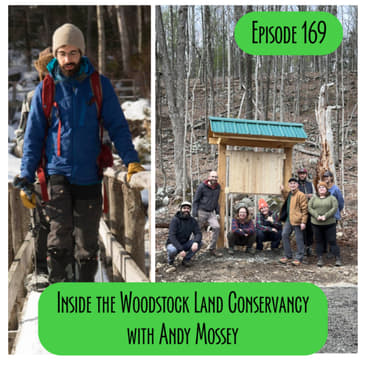
Welcome to episode 169! This week, Tad and I chat with Andy Mossey, the guy making sure nature stays open for business. As head of the Woodstock Land Conservancy, Andy’s all about saving forests, water, and scenic views—basically everything Instagram loves. Come for the conservation, stay for the good vibes. Need a sticker? Shoot me an email or stop by Camp Catskill and grab one! Make sure to subscribe on your favorite platform, share the show, donate if you feel like it… or just keep tuning in. I'm just grateful you're here. And as always... VOLUNTEER!!!!
Links for the Podcast: https://linktr.ee/ISLCatskillsPodcast, Donate a coffee to support the show! https://www.buymeacoffee.com/ITLCatskills, Like to be a sponsor or monthly supporter of the show? Go here! - https://www.buymeacoffee.com/ITLCatskills/membership
Thanks to the sponsors of the show!
Outdoor chronicles photography - https://www.outdoorchroniclesphotography.com/, Trailbound Project - https://www.trailboundproject.com/, Camp Catskill - https://campcatskill.co/, Another Summit - https://www.guardianrevival.org/programs/another-summit
Woodstock Land Conservancy, WLC chronogramies, Camp Catskill chronogramies, Podcast Chronogramies, WLC Volunteer, Stop Zena Development,
Volunteer Opportunities:
Trailhead stewards for 3500 Club -https://www.catskill3500club.org/trailhead-stewardship, Catskills Trail Crew - https://www.nynjtc.org/trailcrew/catskills-trail-crew, NYNJTC Volunteering - https://www.nynjtc.org/catskills, Catskill Center - https://catskillcenter.org/, Catskill Mountain Club - https://catskillmountainclub.org/about-us/, Catskill Mountainkeeper - https://www.catskillmountainkeeper.org/, Bramley Mountain Fire Tower - https://bramleymountainfiretower.org/
Post Hike Brews and Bites - Westkill, Hudson North Cider
#WLC #woodstock #woodstocklandconservancy #hikehudson #hikethehudson #hudsonvalleyhiking #NYC #history #husdonvalley #hikingNY #kaaterskill #bluehole #catskillhiking #visitcatskills #catskillstrails #catskillmountains #catskillspodcast #catskills #catskillpark #catskillshiker #catskillmountainsnewyork #hiking #catskill3500club #catskill3500 #hikethecatskills #catskillhistory
[00:00:29] The bushwhacks were some of the worst days I've ever had in the mountains, or life really Whereas Pantsy Mountain is totally opposite, it's a mountain on top of a crater I think the weather challenges on this incident were particularly difficult It is really the development of New York State, Catskills will respond to it
[00:00:52] You're listening to Inside The Line, the Catskill Mountains Podcast It really used to be easier, I used to be able to press a button on the thing, but now it's just, it's complicated So, welcome to Episode 169 of Inside The Line, the Catskill Mountains Podcast
[00:01:19] Tonight we have Andy Mossey from the Woodstock Land Conservancy joining us Talk about some new trails you can explore, and some old trails you can explore And what they do for the Catskills and for the Woodstock Outlining Catskills area So, welcome to the show Andy Thanks guys, happy to be here Yeah, and glad you're going to be joining us for the whole show We're putting this guy through the thick and thick I'm a fan of the show, so I'm just happy to be here
[00:01:45] Good, yeah, and you know Andy, I know we've met once or twice maybe And it was good to see you, and once again, I gotta say, I'm jealous of that beard Cheers man You know, I feel like I've had a beard, or at least a mustache since I was like eight So, now that I'm a little bit older in life, I'm glad it's still sticking around Even with the salt starting to peek through That is salt, nice Oh my god
[00:02:13] I was going to say, like, Tad's got salt all over the place I'm starting to creep up So, once again, don't forget to vote on the Chrono Grammys for us Tad and I post it daily GSBar1 and our podcast post it daily Andy, are you involved in the Chrono Grammys at all yet? Yeah, heck yeah, Woodstock Land Conservancy Check us out as your favorite environmental organization Okay, excellent Yeah, I'm on there voting every day
[00:02:43] So, we gotta get people out and make sure that people are looking at these things So you vote for us, we'll vote for you Stuff like that Alright, I'm gonna go on Sounds like a deal Actually, right now and do it I'll do that Also, June 14th, it has been confirmed Live show at the Mountaintop Historical Society at 2pm So, be there We're gonna talk about the Catskill Railroads We're gonna talk about the Matt's Catskill The Mountaintop Historical Society
[00:03:11] We're gonna be going all out for that certain area of the mountaintop Where we once had adjacent railroads joining everywhere and everywhere from the Ulster and Delaware From the Catskill Mountain House Robert Titus is gonna be there We're gonna have a bunch of different guests As we get closer to the show, the live show We're gonna just break it down a little bit better and stuff like that So it's pretty, gonna be pretty awesome time I'm in the live show Last time I did this, it was chaotic But it was absolutely awesome
[00:03:41] Because, you know, we had awesome people there We raised over $400 I don't know if we'll be doing that this time But I think I might get that ball rolling Of raising some money for the Catskills And we'll see where it goes It's just gonna be crazy I got my old 20-year-old PA system Working with the laptop and everything And I actually got it to record And I'm just like, holy crap This can actually work Technology has come a long way
[00:04:10] Where you can be adjacent to something that's 20 years old That I haven't used in, I would say 15 years And I got it to work I was surprised Tad was just like You even said that was old, Tad Yeah, and I'm used to old stuff Given my age I feel so bad And that hurt, that hurt when you said that I'm just like, oh god So Also, as this episode airs The great and wonderful Breakneck Ridge is closed
[00:04:39] Everybody went up there this past, what, seven days, right? Tad, I saw everybody's wars up there Yeah, it seems like Everybody was getting up there to get a final hike in And it was amazing With all the people posting on Instagram It didn't seem like there was a lot of people in the backdrop You know, other hikers around them So, maybe it wasn't as crowded as one would think For the last week of hiking
[00:05:06] Before the big do-over up there Tad, two years Yeah, that's crazy Tad, two years Wow, two years, that project, huh? Tad, yeah What is it that takes two years to do, number one? And number two, could you imagine The level of outrage that we would have If they told us, okay, we're going to build a connector trail From table to loan to rocky to balsam cap to Friday
[00:05:35] Down to the moon hall So, we're shutting down those mountains for two years That would kind of piss me off Yeah, that would be a cause for a riot But I mean, we are not Also, you know, we have plan B's somewhat A lot of these people coming up from the city To breakneck Ridge will stop like we said At that train station And then be like Oh crap, this is closed What are we going to do now? Yeah Maybe they'll have kiosks and stuff like that
[00:06:04] Or trailhead stewards to kind of guide them And stuff like that to the proper places But... Yeah, I think so New York, New Jersey Trail Conference Has a bunch of stewards over there And, you know, breakneck Ridge Epic trail But it's one of the only things like it In that immediate area Here in the Catskills, you know Hike up any dang hill and whatever you want Yeah And then you got breakneck Ridge Which is one of the I would say the most popular trail in the Hudson Valley
[00:06:31] The most visitive trail in the Hudson Valley And that's why they're doing this So it's... It's cool But, you know You know But... Stuff has to be done Especially with the flow of traffic Stuff like that We've seen that here Very seldomly in the Catskills You know, we're talking about the Blue Hole area Nothing's done with Panther and Slide And stuff like that yet Same thing with the Big Hollow area And, you know
[00:07:00] It's just... It's a slow progress That's probably been worked on for a while Been coming along Oh yeah I mean, from the land management perspective All these projects take years to make happen Because in a lot of cases Not only is it the plan that you're coming up with And talking to a lot of people to make sure it is a good plan But then you've got to get public involvement So it takes a long time to see something like this come to fruition And then, you know, we're lucky in New York to have some really good trail builders
[00:07:30] So I'm sure by the time Breakneck Ridge is done It's going to be a complete all-star trail Without a doubt Chad, you looking forward to it? You're a Hudson Valley guy Yeah, I want... Well, first of all I've never done Breakneck Ridge So I won't be able to do the compare and contrast But I wonder from what I hear If it will be as fun and challenging as it was before The view won't change But will the experience change? Hmm I mean, the... I'm guessing the...
[00:07:59] Of course, the parking capacity will change And then, you know, we have... Of course, the trail will change probably To make more switchback, less erosion Stuff like that, make it more formidable And like Andy said The hoops you've got to jump through You know, Andy You're dealing with this as well With the Land Conservancy Is just jumping through those hoops With New York State With, you know, maybe the DEC The other areas The town Stuff like that Just takes... It takes a while It takes a lot of effort
[00:08:28] I give you guys all to do that Like, it's just... It's got to be tough Yeah, indeed It is You know, it all just takes time And it's a labor of love And really, it's just to get people outside And get access to these public lands So, the more that we can think about these trails now In a way that is a little bit more sustainable Than how New York had the tradition of building trails in the past Which was, you know, just for anyone who isn't aware It's all fall line trail
[00:08:58] A lot of the historical trails, right? It's straight up the mountain That creates a lot of erosion And so, now we're starting to think about different ways That we can implement different trail building techniques And trail craft to create much better and more sustainable trails in the future But that process takes time It takes a lot of work It takes a lot of effort And you gotta get those folks out there to get it done Correct Yeah, and thank you to everyone who has participated in that And it's gonna be interesting Two years
[00:09:27] Like we said, two years You know, how long has the blue hole been in process and stuff? You know, I had a hike today where I was talking to somebody about the UMPs Going on for a good long time It'll come to mind of what we were talking about How it's been since Oh, the Tad, you probably know this And Andy, you probably know the area is the wagon wheel That UMP has been going on since 2019 So that's six years To open that up Yep
[00:09:56] OSI We're gonna talk to them about that That's gonna be fun Yeah Well, that's a fantastic area Yeah We'll see what happens So, also, you know, once again, happy Earth Day This is a good time to do this With Andy being on here talking about Earth Day on April 22nd And talking about land conservancy Land management and stuff like that And preserving our land So, happy Earth Day Tad just added that that last second That's why I did that after
[00:10:26] Breaking that courage Good job, Tad Good call Happy Earth Day, guys Yeah, awesome We'll drink to it later on I'm already doing it Sounds good So, now, this is once This is pretty cool So, on the way down with my hike today I got the The Forest Ranger report And there was Frickin' a lot of incidents in the Catskills This is fantastic And especially this one Was absolutely fantastic
[00:10:57] So, on April 17th So, five days ago On this recording, Raybrook dispatch contacted Force Ranger Peterson about a lost hiker on the Mink Hollow Trail of Sugarloaf Mountain Now, the dispatcher guided the hiker back to the trail but remained concerned Ranger Peterson called the 61-year-old from New York City who told the ranger he was in good health and planned to continue hiking When the ranger Peterson learned the subject did not have a map and was unfamiliar with the area, the ranger suggested the hiker turn around and back to his vehicle
[00:11:25] The hiker refused and said that he would call back if it got lost So, at 5.02 p.m. the hiker called back and reported that he was lost again At 6 p.m. the rangers, rangers Fox and Peterson located the subject and assisted him down to the trail of his vehicle So, twice Lost at 3.55 and then lost at 5.02 Congratulations This is the shame thing, right? This would be a shame I can't steal that from From slasher radio because I've already done that
[00:11:55] So Shame Wow 61-year-old person Mink Hollow Is probably one of the shortest trails going up to Plateau and Sugarloaf But it's brutal I gotta admit, it's brutal But still It's steep, but it's a trail, right? I mean Yeah You're pretty lost on the trail And at 5.02, that's We're hitting sunset So we're I don't know about that Well, actually, you're right Actually 7
[00:12:25] Jesus Christ, sorry 7 o'clock right now Yeah Whoops You got 7.46 the sunset tonight Good lord Okay, never mind So I mean, it's getting dark But still you should be able to see the blazes On there That, you know, that trail going down from the junction of Devil's Path down to Mink Hollow Very short But I do gotta admit the discs are a little bit far in between And then there's some Kind of little, like, cascading brooks flowing in through there and out
[00:12:54] So, but it still shouldn't be that difficult Twice So good jobs, Fox and Peterson Amazing job I just I wanna, where do you get the cell service from? You don't think there's cell service to Mink Hollow? That comes from Well, so first of all, Mink Hollow Trail actually runs, you know, through from Woodstock all the way through to the Roaring Kill Road Correct
[00:13:23] So where, you know, that's a pretty broad area for him to have been on And if he's in the notch itself That's where I kind of question cell service So it'd be, you know, be nice to know where he was How far he made it in his hour and like 12 minutes between phone calls And how far, how far did Ranger Peterson get away? Maybe he just like sat in his truck in the parking lot waiting for call number two That's right
[00:13:53] Yeah, hopefully they weren't too far I mean, definitely a major shout out to the Rangers for having the patience to go back out there Yeah, and to stick with the thing to Well, the dispatcher to say like, no, they're concerned that this person is not really equipped to handle this trail And to like tell the Rangers like, hey, you might want to keep an eye on this And then unfortunately they had to go back So, but you know that like, like you said, I think
[00:14:21] From either side, you're looking at cell service coming down from Boyceville and stuff From the Ashokan area, from Woodstock up in And then you're coming down from Hunter Hunter might be a little bit actually Because the ski area is blocked So, good point Yeah, well, but ski areas are usually a big target for cell usage So, there's probably a tower that's hitting Hunter Mountain proper At least where the ski area is
[00:14:48] But again, looking at my Gaya map here I just wonder where he was And if he got cell service And look, I got an interesting hike In my queue In that area And so maybe I'll be able to do like a cell service test And give us a full detailed single space report You know, by the end of spring Yeah, well It was 52 minutes that they required to get him up in the thing So, crazy
[00:15:16] Hopefully he didn't have to press up PLB or something Before taking off It didn't seem like that I mean, a lot of Once again, a lot of people Hopefully won't hit the The PLB, the SOS and the Catskills So, another thing that happened in Hunter So, on April 18th, a day later At 5.15pm Four forest rangers responded to a report of a hiker With an ankle injury and the Devil's Laker leaned to it At Hunter Mountain
[00:15:44] Rangers reached a 45-year-old in New Jersey at 8.30pm So, it took three hours to get up Uh, rangers and members of Lexington and Pratsville Fire Department Use a wheeled litter over the icy terrain To return the hiker to the trailhead Resources were cleared at 3.45am Damn! That's a long night So, that's the question Is 5.15pm, 8.30pm So, I'm guessing they just came up the Jeep Trail
[00:16:14] And then hauled them down the Jeep Trail But that's still a long time They located them at 8.30pm Probably wrapped them up Got them warm and stuff like that And then brought them down at 3.45pm So, that's That's like 7 hours later That's a long haul out That's, that's insane Yeah, well we all know that terrain And Stosh, you know what a wheeled litter is And how hard it is to maneuver it through there So, my
[00:16:43] So, I'm sorry I, I, I The location was, was wrong on me So, they probably went up, of course, Devil's Path Up to the Devil's Acre And then just went back down Devil's Path So, that's, uh, yeah, that's a little That's gonna be a B-I-T-C-H Yeah, you know, so what's interesting is Where they were They could've gotten them out By a chopper, chopper ride Right? Uh, yeah
[00:17:12] There's enough clearing around the, to lean to Yeah, I mean, night time is a, it's a whole different story though So, I mean, they could've just went up, hauled them up to Hunter Mountain and got enough clearing up there I mean, that's not that far away Yeah, it's interesting So, once again, good job to the Rangers And then again, uh, on April 19th So, we're talking about, is that three straight days Of rescues in the Catskills, which is very unheard of
[00:17:41] This is usually the Adirondacks taking up this whole story So, on April 19th at 5pm, Forest Rangers Comerford, Fox and Peterson again Responded to a call from a hiker Reporting that it was missed on the south side of Twin Mountain Raybrook dispatch provided coordinates And the Rangers reached a 23-year-old from Brooklyn And the system back to the trailhead Resources were cleared at 9.30 So, four and a half hours Going up on the south side of Twin Mountain
[00:18:09] So, is that Pryger Road area? I don't know I mean, it says the south side of Twin It doesn't say Oh, wait a minute, south is untrailed Yeah So, where was this fellow? Where was this man from Brooklyn? Interesting Indeed Wow Once again, that area is a little complex Going even down
[00:18:36] That leads to down to the area that I call Like Stonehenge I call it Catskill Henge Right across over there And then it leads down into Brook Or down into Brooklyn Geez, down into Woodstock And that's a long haul So, I hope this guy didn't like Come off the summit and get lost and stuff It doesn't seem like they're lost But four and a half hours That's a long time Yeah, I wonder if he just took a wrong turn At Peacoy Notch or something
[00:19:06] And then tripped his way down the valley That was suck Stosh, what we need to do is We need to get on the show The person who writes up these little ranger reports And give them a lesson on the meaningful stuff That we want We want a little more detail Than what they put in these little one paragraph Yeah, include some waypoints Yeah, you know On trail, off trail Was there alcohol or other intoxicants involved?
[00:19:35] I mean, it'd be nice to have some of these nitty-gritty details here Yeah, and you know They could add a little bit more I could reach out to Jeff Jeff Walker Or I could reach out to Jeff and see what he can give us On sort of spicy stuff Because he's hooked us up with the Rangers before So, Jeff is a cool dude All right So, the last little bit of news This is in the Adirondacks
[00:20:03] We're going out to the Adirondacks now So, 57-year-old missing hiker Up on Seward Mountain in the Adirondacks So, if anybody in the Adirondacks knows this area This is a brutal, crazy hike That goes up into one of the 46ers That you can complete So, on April 8th at 10.15pm 10.15pm at night Raybrook Dispatch received a call from a subject Concern about a 57-year-old friend
[00:20:32] Who was one day overdue from a hike on the Seward Range Six forest rangers started searching at 2.30am So, once again, that's four hours Past when they called And twelve more rangers later joined the search One crew located the subject's snowshoe tracks After brushing through four inches of fresh snow The rangers followed their tracks for 100 yards And continued in that direction At 12.36pm
[00:21:01] Geez, now reading this timeline Is absolutely insane So, 14 hours later The rangers located the subject at the Osuka Pass Leantwo Off the Northville Strassets Placid Trail The hiker was tired but otherwise in good health Rangers escorted the hiker back to the trailhead Where he was met by a family member And resources were clear at 4.52pm Wow! Just, uh, the timeline of events
[00:21:30] Shows you how brutal stuff can be And you know, looking at this The Adirondacks compared to Kind of like the Whites and stuff Sorry to say, the Whites have it pretty easy To where they can go up and then back down In a matter of four miles Whereas in the Adirondacks It's brutally long distance You gotta go for a while Search and stuff like that You know, I know the Adirondacks Don't have very good cell service
[00:21:59] So, once again, locating somebody Is very difficult So, as like you're seeing 10.15 call 2.30pm they started searching 12.30pm the next day They located him And then 4.52pm So, four hours after that Four, almost five hours They got him out So, that's... Wow! That's a long few days Wow! I don't envy that guy Good for him to survive that long By himself
[00:22:27] And to be in good health So, it's... It's crazy to think about that You know, like Once again, we talked about that one guy That is still missing Up on Allen Mountain Is... They're starting... I heard they're starting a search for him up in Allen Mountain And they might like close off that area But... So, Stash, you think they bring in dogs to search for that fellow? The one that's still up there? That's a good question
[00:22:57] I've heard that they... They could use dogs But I know... I know that the... The rangers aren't big on canine Yeah... Because, once again, canines are... I wouldn't say insufficient but they... Every canine has a different... I wouldn't say objective But like, you know... Yeah, they're trained... Some are trained for explosives Others are trained for drugs And some are trained for cadavers But I would think that... Across the state or, you know...
[00:23:26] Even broader... That they must have enough cadaver dogs To get together three, four, six of them Yeah... To bring up there and to do some level of search I mean... I just feel for the parents The family members that... You know, lost their son or brother up there Yeah... I mean... Yeah... Andy, you've ever been up to the Adirondack area? Like... Like 46 or stuff like that? Oh yeah, totally I... Went to school up at SUNY Plattsburgh
[00:23:55] And studied a program called Expeditionary Studies So the Adirondacks were my classroom For my undergraduate years What'd you say about this? That it's... It's common to find something that would last this long And be this sort of a strenuous effort? Well, I mean... I think you said it well... The Adirondacks are a wilderness area And there's huge, vast areas And if you get lost Regardless of how skilled you are If you are genuinely lost It can be pretty challenging Especially if you are injured That wasn't the case here
[00:24:25] But imagine, you know, with all your expertise All of a sudden you get injured on the side of a mountain You're bushwhacking up some wilderness area That's going to be pretty gnarly to get out of So... Kind of accept this risk when you have enough experience But, you know, it's all a lot of risk That needs to be mitigated Yeah... And you know, you're absolutely correct And my friend and I When we were hiking today Chatted about, you know, how And the Catskills We have it made Where you can get lost
[00:24:55] And you just gotta find yourself way down a drainage You'll get some water that'll, you know, supply you for two days Something like that And then eventually You can reach somebody's house Or a road Or stuff like that Where it could be a four-mile journey Where in the Adirondacks Good Lord, if you're out in the middle of like Marcy Or you're looking over towards more I mean, not even Phelps Looking towards... You know, I'm not 100% familiar What's beyond Marcy to the west?
[00:25:26] Ah... I forgot It's like Cold Inn Yeah You head to the west, yeah You head to the west of that You're in the middle of absolute nowhere And you're continuing to the absolute middle of nowhere, so... Well, and it's like super technical terrain, you know I mean, that's the thing One of the primary differences, in my opinion Between the Dax High Peaks region And the Catskills We have some stuff that's steep And, you know, I wouldn't necessarily want to be hanging off the side Of some of our bluestone ledges that are crumbling away
[00:25:54] But generally speaking, you can navigate a lot of that stuff As long as you know what you're doing But even if you have a ton of skills in the Adirondacks There's some terrain that can really mess you up Correct Yeah, that's scary And that's why, you know, once again I don't want to go to the Adirondacks I don't want to get lost and be one of these stories On a mediocre podcast Or even just a fancy podcast So I'm just shaming, once again I mean, you could be famous
[00:26:22] If I take that much time to get out Stosh will be known as Green Boots Oh Was that bad? Was that, like, insensitive on my part? Probably so No, he knew the risk when he went up to Everest, man He knew that risk We'd come up and get you, buddy We wouldn't let you spend too much time up there We'd haul you out Give you a proper burial Well, thank you Andy would know the area Yeah So I'd trust Andy Yeah We'd spread your ashes at the Blue Hole
[00:26:52] Oh, man And have a nice barbecue afterwards That's horrible I would not want to be spread there Spread me on the 80, new 80 area 80 parking lot area So I'm good I'm good, thanks I appreciate it Alright, so thanks for shooting the shiznet, guys I appreciate it So let's get on to the awesome monthly supporters of the show Chris Garby and Jeff Jotz Vicky Ferro, Mikey S, John Comiskey Summit Seekers, Desert City Radio
[00:27:22] Betsy A, Denise W Tom Hoos, Vanessa Jim C, and Eric Thank you guys so much for supporting the show Really appreciate it Once again These people that are supporting the show And the sponsors aren't putting in Just putting in the show They're putting back in the Catskills And it's going to be an awesome time When we put back in the Catskills So once again, let's thank the sponsors Outdoor Chronicles Photography So capture your love story against breathtaking backdrops With Outdoor Chronicles Photography
[00:27:50] Molly specializes in adventure couple photography And she'll immortalize your moments amidst the stunning landscapes Of the Catskills, Adirondack, and White Mountains She'll craft timeless images that reflect Unique bond in nature's grandeur Embark on an unforgettable photographic journey With Outdoor Chronicles Photography Don't hesitate to get a hold of Molly on our platforms She is starting her calendar It's absolutely stunning stuff Instagram, Facebook, she has everything
[00:28:20] Also, Trailbound Project Discover the Wilderness with Trailbound Project Our expert-led hiking and backpacking education programs Offer unparalleled outdoor experiences Whether you're a beginner or a seasoned adventurer Join us for essential skills Explore stunning trails And connect with nature Start your journey today with Trailbound Project And unlock the wonders of the great outdoors So, May 31st So, May 31st They have Wilderness First Aid And then June 31st They have Bushwhacking Intro Part 1 of 4
[00:28:49] So you can get taught Crazy different bushwhacking skills that I remember them talking to me about That you can go from anything From just bushwhacking off of an easy little peak To bushwhacking in some of the craziest stuff That I did today So, check out Trailbound Project Fantastic stuff So, who's outdoors? So, mention podcasts on one of your hikes through social media And we'll chat about it on our fantastic show Tag us by typing
[00:29:20] at ITL Catskill MTN Podcast On your post So, Kim Levinsky Our previous guest Was on the escarpment trail running around with a guy that I think was doing like The 100 highest in the record time Was that correct, Ted? Did I see that correct? My sense is he was running A hundred miles through the Catskills And I forget what the course was called
[00:29:48] Um, whether it was like, you know The Wall of Manitou Or the Manitou's Revenge But it was some 100 miler And, uh, she and some other folks Were helping this guy do it Crazy. And it looked brutal It just looked like, ouch It looked good Yeah, but good for them helping him And kudos to him for, you know Stepping up and doing that challenge I just cracked open Sorry Sorry Alright So yeah Shame
[00:30:17] No, not at all Kim, cracked open a beer for you Thank you once again Hopefully your, uh, your show Your little, uh, film It does great out there It looks fantastic So, uh, also Doggy Docty New Terry Uh, has Hiked Eagle Mountain twice In the 48 hours Once with 10 sketchy water costumes Second time with a bushwhack up Eagle and down Balsam Cold snow remnants And then 80 degrees in shorts And then she said She needs some Gatorade
[00:30:47] So Ted, you were involved with this, right? This whole, I think this whole thing Was involved with you Yeah, this is kind of like, you know My recent hike right here Uh, Donkey Docty Uh, who I had never met before But, uh, Doggy Docty A.K.A. Terry Very cool person Um, I guess she hikes a lot In the Harriman area And that Hudson Valley area Surrounding it And does a lot of backpacking
[00:31:16] But she was up, uh, twice Like she says In 48 hours To do, uh, Eagle and Balsam And, uh, Jeff Jotz Was also part of the gang He was with his dog Also And? And who else? Well, and, uh, Tom Hoos Of Hoos Outdoors fame As well as Hiker Joe NY And, uh, Val Goes Hiking So they were all part of that Six person crew
[00:31:44] I, um, kind of made a surprise visit And joined them It was a lot of fun They were all very, you know Competent and capable hikers So, I don't know if you want to hear My, my report on it But, uh, Wasn't Joanne there? Yes, and Joanne, I guess Beyond Blazes Yeah, she, Beyond Blazes Was there as well Yeah, we had a total of seven people That is the most people I have hiked with Since pre-COVID Wow
[00:32:14] Crazy Crazy And we'll, we'll talk about that later Now everybody's saying, you know They were up there with you And had a great time and stuff So, well, a bunch of, a bunch of other Jesus So, Jay Bach 223 Took a run starting at Catterskill Falls Checked out the North Trails At, uh, Ashley Falls Beautiful area Bunch of smaller falls up North Mountain Stopple Point, Arizona Mountain Didn't see a single person until they hit mile 13 Uh, unfortunately They'd never explored that section
[00:32:44] Which is a phenomenal section Going between Stopple Point And Blackhead Ugh, I love that area Returned along the escarpment at all the great North South Lake spot And he said that he was listening to saved episodes of The podcast while on the trails Is his new favorite thing So, it keeps the mountain lions away Which I agree It's so bad that you keep the mountain lions away And I think that's the purpose of that intro music Right?
[00:33:12] It's better than probably bear or mountain lion spray If you're being charged by a mother bear Or a raging mountain lion Just play the intro music for the podcast I guarantee Yeah, Andy, what are your thoughts about that intro The intro to the podcast? Yeah, I mean, it's more effective than bear spray So, I'm sure Is it too heavy? It's like, everybody says it's too heavy Not everybody, but I mean, I like it I think it sets the tone, you know It gets you right in
[00:33:42] Yeah, yeah, yeah We're not messing around here Not messing around here That's right No bear spray required Yeah, definitely So, once again Hitting that area The escarpment Stopple point across Arizona mountain Is absolutely beautiful One of the most stunning areas In the Catskills Actually, that's a brutal climb Going up from Or going down Stopple point And then up to Arizona Is a brutal climb That's like unexpected So, I love that area
[00:34:11] So, yeah, I mean The thing about the escarpment is Because you really don't have Any high peaks there on a list It doesn't get traffic in that section And that's part of the reason why It's just a divine area To go and hike and explore Yeah, I totally agree That's one of those Nice hidden gems Yeah, my dog is barking That's why I mute once in a while But I keep forgetting that area Dutchers Notch
[00:34:40] Going up from Dutchers Notch to Arizona Is brutal as heck It's so steep within that I would say not even It's like a mile Not even a mile But it's absolutely phenomenal Dutchers Notch Is an old log road But it's still fantastic And you hit the cross section Of Cogate Lake And Dutchers Notch And you go up Arizona It's just, ugh Brutal Awesome You mean hiking up From Dutchers Notch From the bottom Of the escarpment? Yeah
[00:35:10] That's just very unique terrain In my opinion It's different than What you find elsewhere In the Catskills Correct And that's why people Should explore it Go over there Also, Pink Pony 818 Once again, Tracy Went to a dead end road In Lakeville You said to find the Lakeville Reservoirs In the Yoakum Preserve Which, I gotta do my research I have no clue where this is Tad, do you have a clue where this is? Well, I'm gonna ask my research assistant You do that right now
[00:35:40] And I will continue This is a beautiful loop trail A little bushwhack to the summit of Mount Riga And you can bag a peak in 5.5 miles Pizza and quiet No peoples Beautiful Burton Brook And a gorgeous bridge So, good time for Pink Pony is out there Every frickin' day I'm jealous as heck Good lord I need to get an amazing retirement But that'll never happen to me I'll be working until I'm dead
[00:36:09] So, any luck? Yeah, so this is over in Connecticut And Nice! Yeah, looks like they've got some interesting stuff Water crossings, ridges, things like that Nice! Good for her Rip it up Oh yeah, I see that Yep, definitely Right over the border of the area Yeah, so Cool
[00:36:36] And as we see in many of these areas in the Northeast This hiking area is not that far away from a couple reservoirs Yeah That's probably back when is what was the prompting factor to preserve the area around it as a no-build area was it became a public water supply Yeah, we definitely learned that in previous episodes with people who spoke about the reservoirs
[00:37:07] Yeah, definitely So once again, thank you everybody for tagging us on the show That was a great time Everybody's getting out with the spring weather and such like that Once again, buy us a hard cider to support the show If you think we're doing a good job and you want to support us, go on and buy me a coffee I say it's buy me a cider because I changed it Because Tad drinks, doesn't drink coffee that much anymore, so he usually drinks somewhat, but he's not Coffee tonight
[00:37:34] Yeah, so rate the show also, go on any of your social platforms and stuff and rate the show Five stars is great, four stars is not cool So one star is horrible Who's having something to drink tonight? That's the thing So who's going to go first? Yeah Andy, Andy, go ahead What do you got? I got some Westkill, Brookie Oh, okay Yeah
[00:38:03] Good stuff? You like it? Yeah, absolutely I mean, Westkill is such a good brewery here in the Catskills too So, gotta represent local brews and honestly one of my favorite breweries in the state I got a great middle of frickin nowhere, one of the, those breweries that just absolute middle of nowhere
[00:38:24] I had my first Brookie on the summit of Cornell after a very challenging but fun bushwhack up to the summit Mmm Come for it Davis packed in a couple Brookies and nothing tastes better than a cold beer at the summit That sounds perfect Yeah, right? Davis was actually going heavyweight on that one, that's usually lightweight What's that?
[00:38:53] Like, like packing absolutely nothing and he brought some two Brookies? Oh no, he, you know, he, he packs some gear, he comes well equipped Yeah, I mean he comes well equipped with like a pretty broad assemblage of fluids and foods So, he's got his, he's got his hiking game down, he's been around, he knows what, what he's doing True, true, so I am having a Hudson North Big Pineapple
[00:39:21] Because the amazing people at Hudson North, Kyle and Say, sent me a whole package of Hudson North ciders because we're going to be having them on the show soon So, I mean, I can't get this stuff up here in Oneonta And they send me a great package of just a bunch of stuff And I was ecstatic when I got it I was suspecting a four pack and they send me, I think it was like four six packs
[00:39:48] Yeah, I heard it was like an 18 wheeler pulled up to deliver that thing I feel sorry for the UPS guy Yeah, it was like a big delivery Okay, so I have, I'm going to crack, well I'll crack it open now But I was going to start my, later on I have the last of my Westkill Dead Rabbit Dry Irish Stouts And I thought I would finish it off tonight because Dead Rabbit, I mean, somewhat in honor of the Pope Who just passed away
[00:40:17] Yeah, that's a little bit morbid Yeah, and also because, you know, this past weekend was Easter And this has got a kind of a funky looking rabbit on it So here's my tribute to the dead Easter bunny, the dead Pope With my dead rabbit, Dry Irish Stout from Westkill Cheers guys Yeah, yeah, cheers I'm going to try to do this, this is another Hudson North I usually have two, so
[00:40:48] That went all over the microphone, sweet Whatever We heard nothing That means you have to, you have to chug it and open another This is a big apple one Yeah, so just down it, just, just shotgun that I have the big pineapple one, so Why don't you just take one of those long straws and put it in the case That's a good idea Yeah Alright, so, let's move on to previous hikes Andy, you said you have the previous hikes, you know, let's, let's go, you know, you can go two weeks
[00:41:17] It doesn't matter, and I know, I have a feeling you were on a, you were like, like scouting a new trail for the Woodstock Land Conservancy, correct? Yeah, totally That was absolutely the last trail I was on So, we're opening a, a new preserve Now, it's going to be called Rock Oak Preserve Over in West Hurley Right next to the Ashokan Reservoir Beautiful location, super historic An old railroad cut goes through it
[00:41:46] So, lots of really interesting historical features on this property It's really cool Yeah, and so we're in the process right now of implementing our trail design So, we're going around the trails and, you know, building it And we actually were working with the house and getting those folks out there And so they put in some amazing switchbacks And yeah, just getting ready to finish it up And hopefully in the next couple months or so, we'll be open for the public to enjoy as well Fantastic
[00:42:16] You're, you're working with Tahas Trail Crew? Yeah, yeah, yeah Oh, that's, that's fantastic Like, the knowledge that they carry just, is just astronomical Be like, oh yeah, we put a switchback No, no, it's actually really good to put it over here Because the erosion is, like, going to happen in the last few years It's like, god damn Yeah, you're right I mean, it's, it's amazing They have a wealth of knowledge Everyone on that crew is so awesome too They're just super rad people
[00:42:45] And, you know, they show up and we're like, hey, we have this idea And they always say, oh, you could do this or do that Make it a little bit better I mean, that's what you're looking for, for sure Yeah, so this is over in West Hurley? It is, yep Technically inside the line Oh, nice Oh, well done, Andy See, this is, this is why I had him on here So now, what, what can, can you tell us, like, details with like, somewhat, like, estimated distance elevation gain, stuff like that?
[00:43:15] It's gonna be a pretty short one It's gonna be a pretty short one It's kind of like a pocket park in some ways Um, so it'll be, I think like a mile and a half All said and done with the trails that are in there So there's one out and back down that railroad cut that I was talking about before And then we have another loop trail And the loop trail is pretty sweet because you go up these nice switchbacks Maybe, I don't know, 100, 200 feet at most Um, you get to the top of a beautiful plateau Go through some glacial erratics
[00:43:42] And then eventually you get to basically like a escarpment type area So just some rock bluffs and outcroppings And then you get some really beautiful views Of the greater bluestone wild forest Which will be pretty awesome for folks to check out Wow, looks like, it sounds like a great family hike Especially to promote Yeah, totally Most of our, our preserves are kind of like that You know, it's like great for the whole family Um, you know, abilities of all ages can get out there And, uh, check it out
[00:44:12] Yeah, awesome Looking forward to it Anything else you want to like mention that you've You've done any brutal hikes that you've done? Or has it been all land conservancy stuff? Lately, mostly land conservancy stuff But I've done some of the 35s in the winter That's where it's at I know, right? Ah, that's, that's where life is I was, I would say like, like, uh, paused and stuff like that It just, you just want us to sit there forever
[00:44:41] So good, good Glad, glad you're getting out to the high peaks And glad you're getting to the lower areas And scouting out these places for us And giving us some new places to explore It's fantastic Looking forward to it Definitely looking forward to it So, Chad, you want to go on with your, your little ex? Oh yeah So we'll, we'll, we'll skip back up to Saturday's hike with, uh, Tom Hoos and his crew That we, uh, mentioned before
[00:45:08] But I saw that Tom had posted on his Insta feed that he was, uh, putting together for a co-organizer of that hike on Saturday, which was, uh, out of McKinley Hollow, basically a bushwhack up the ridge that, uh, goes to the summit.
[00:45:28] Summit of Eagle trail from Eagle over to Balsam and then from Balsam, uh, Bushwhack back down to McKinley Hollow. So Tom, Tom put this together as part of, uh, he's trying to do a full round of, uh, the Catskill 3500 is social hikes. So, like I said, I saw that I, I pinged him a couple of times to get some details. Uh, didn't commit to hiking with them showed up on Saturday morning, somewhat unannounced.
[00:45:59] And, uh, the crew was, everybody was on time and ready to go. Uh, we set out, crossed the bridge and, uh, we went up the, this ridge to Eagle a different way than I had been before. Uh, but basically we, well, they found a, uh, an old bark road that took us into the center of this drainage and then up over, uh, the shoulder of that ridge to the high point of the ridge and went up to Eagle.
[00:46:25] Um, that whole stretch is significant in my opinion, because it's the longest stretch of first growth forest in the Catskills, according to none other than Mike Kudish. For those of you who don't know, first growth forest area is that area that's, uh, not classified as first growth by the size of the trees, but by the fact that the area has not been disturbed by human activity.
[00:46:54] No logging, no clearing, uh, hasn't been barked, burnt, or directly altered by human activity. So we hung out at the, uh, sign in at Eagle. A couple other hikers came along. We chatted with them and then it was off to balsam mountain. I'll just note that this time of year, there's no canopy. There's no leaf growth on these trees. So when you get up there, it doesn't really cool down.
[00:47:20] If anything, you feel warmer because you've been putting out some energy and you need to be mindful to bring a lot of fluids because you're not used to, you know, having to focus on hydration during the winter. So make sure you pack in extra fluids.
[00:47:35] Um, Joe of, uh, hiker Joe and why did go dry with fluids, but he did have with him this Katatin be free, uh, collapsible water bottle with the built-in filter, which he used work. It seemed to work really well. I'm also going to give a shout out to our friend, Joe. Um, because I didn't know this until the end of the hike. I had forgotten that he recently had foot surgery.
[00:48:02] So he did this, uh, almost eight mile, 2,600 vertical foot again, comeback hike from being laid up for a little while with a foot that was recovering from the surgery. The other thing I'll point out before Stosh hits me with some questions is on the way back, my white Jeep got pelted with millions of bugs. Yeah.
[00:48:31] The whole front of it was almost black. Maybe I'll, I'll post a picture. Um, but that reminds me that you gotta be prepared. Bug season's going to be, you know, here any week now. So pack your bug net and bring your tick and bug spray. So you don't get eaten alive out there. So just in sum, uh, I hiked with six other folks and it was a lot of fun. They were really good crew recommend hiking with them. Anytime they go out, join them, have fun.
[00:49:01] It's called as social hikes, right? Yeah. He does these, uh, social hikes and only, he does them up here in the cats. He does them down in the Delaware water gap area. I'm sure he'll be going other places. Sometimes he'll have his dog with them. Uh, but this was the first time I hiked with him and, uh, any of these folks. And that was a lot of camaraderie there. And, uh, what, I guess one of the things that I put just because you know, a lot of people think about this is nobody gets dropped on, on his hike. You know, they wait up for everybody.
[00:49:31] Um, you know, they have a good time. So you want to, you want to get out in the Catskills with the different crew, do some bushwhacking, learn from people. That know what they're doing. They'll hook up with Tom, who's Joanne, Joe, Jeff Johns. The gang. Yeah. The gang. Sounds like a good crew. Yeah. Yeah. Right. You know, and that's the good thing with, with these, these social group and stuff. Everybody looks out for each other.
[00:49:59] Everybody goes at the pace that we feel, they all feel comfortable with that everybody sticks together and we can all chat and stuff like that. That's, that's a fantastic thing with that. And that's why, you know, I like these groups different from, from other groups is that everybody looks out for each other and such. And, you know, Ted, you talked about, uh, the bugs and it is starting. And all I can say, it sounds like we should be saying from Lord of the Rings, stay in.
[00:50:29] And so it begins because I, my, my windshield was absolutely covered after driving today. Yeah. And I'm just like, and that's a time where you're just like, God damn, here we go. The black flies and stuff like that. Yeah.
[00:50:46] So basically what I'm hearing is last weekend we had that lovely snow storm and we got like that last encore performance of winter this weekend. No bugs up in the mountains, but next weekend will they be there? Is that when the honeymoon's over next weekend or we get one more weekend before? I'm not sure. Maybe one more. Yeah, it's possible.
[00:51:15] I mean, I was looking at the boroughs range today as I was going across the reservoir and I could see the, uh, tree line, you know, the leaf line as those leaves are coming in, starting to creep up the hillside. So, you know, that's usually a good indicator. Once you get those leaves popping through them. So do the bugs. I was going to say, usually you say shit hits the fan, but the bugs hit the fan. The bugs hit the fan in this case. And the bugs hit your face and you're just miserable for that week and a half, two weeks. Yeah.
[00:51:45] Well, they eat your face. They just don't hit it. They, they take little nibbles out of your face. Correct. And then, and then if you work, you know, with others during the week, if you're not working at home, if you go to work with others, they kind of look at you and wonder what is it? Yeah. Do you have, do you have like a new disease? Yeah. Is this the next pandemic? Do you have measles? What's going on? That's horrible. What happened to Andy? Yeah. Yeah. It's, you know, yeah, it's, it's, it's, it's dry right now.
[00:52:12] So let's, let's get out there while you can with the, without these bugs. So like, you know, I went out Sunday afternoon. I did Bramley mountain close to me. I did that little late and stuff like that. It was, I bushwhacked up the North side of Bramley mountain. And then I came back down the trail of Bramley got beautiful views to the South.
[00:52:35] Of course, Bramley mountain, you get that beautiful outcrop of, it seriously feels like, uh, like Wittenberg looking over. You can see slide West kill blackhead or no, not blackhead West West kill, uh, bear pen, Graham, double top, stuff like that. It just feels like an incredible outcrop. It's like 45 degrees.
[00:52:57] These winds were gusting up to like 40, 50 miles an hour, just a fantastic day of where you would sweat and then it would dry off and you'd be a little cold and you keep moving. And it was just one of those days that I appreciate. I got out for a couple hours. I was, I was able to enjoy it and such and Bramley mountain. I can't wait till the, so there's some reason why the fire tower cannot be accessible unless a steward is there. So I didn't get to climb up that.
[00:53:27] So, but you still get a phenomenal view because they had to cut a lot for the fire tower to be, to be put up there. So it just, it opened up the view. Fantastic. And I, I appreciate that's only 30 minutes away from me and it's a, it's a brutal hike. I got to admit, I think in like 0.8 miles, it's 800 feet again. So a hundred feet per, per 0.1 miles is pretty good. Yeah. That's pretty intense. You, you go there a lot, right? Stosh. Yeah. Oh yeah.
[00:53:57] Um, if you bushwhacked up all sides of it now, I can't access the Southern side because that's private property. Gotcha. But you basically, you, you beaten up and down every which way, except the private way. I can say that I'd been up there, uh, and bushwhacked up there more than Jim Bowden has. Oh yeah. Jesus. Who can say that? Right. Wow. Yeah. I found a sign up there that said, I don't know if it said one way.
[00:54:26] It was like right in the middle of the, the mountain that said one way. And, or it said like, I forgot, it said something really weird. I'm just like, this is a little odd for a sign. And then up a little bit further, it had a sign that instead of pointing like left or right, it pointed straight up and it was embedded in the tree. The tree was growing over it. So this is was old back in the day. I mean, they had a fire tower back in the 1950s up there. So it was old log roads all over the place. It's very, very historical.
[00:54:56] Yeah. The tower they put up, I thought was the tower that was originally there. And some local person bought it, disassembled it, put it in their yard or something, you know, just disassembled, but, you know, staged it there. And yeah. And then sold it back to us. Yeah. Yeah. For, I think it was a dollar. Like it's, it's been, it's fantastic. And like I said, it's great for the area because the nearest fire tower is Balsam Lake from there.
[00:55:22] And that's, I would say like, I wouldn't say 40 miles, 30, 40 miles of driving. So, and then from there, Jesus, I can't even, Mount Uncianta is accessible, but, you know, it's just, it's few and far between to get a view of the Catskills where I live because we don't have, we have 2,600 foot peaks, you know, and, and it's just all private property and stuff like that.
[00:55:49] It's just democracy and stuff like that. Like people, they're, they're starting to log a lot. I'm seeing a lot of logging. People are logging a lot of stuff up there. So, but with going up there Sunday, I thought bushwhacking, it was still dry as heck. Even though we've gotten all this, this weather, the snow, this somewhat rain here and there, I thought bushwhacking, it was dry as heck.
[00:56:16] And today, bushwhacking, when I went up, went up the area that I went up, that I'll talk about in a second, it was still dry as heck. It's crazy. Yeah. Well, I'll echo those comments. I, I felt that on Saturday, you could literally smell that like fall dryness in the leaves that everything is just, you know, bone dry and the trails were dry. You know, we were lucky where we found water, where we did on the side of the mountain.
[00:56:45] But yeah, Andy, you know, being over on the, the Eastern side, you know, it's, it's probably pretty dry over there as well. Yeah, it is. I mean, you know, it's, it depends on where you are, I guess, as you go up in elevation, you certainly see a lot more of it. But, you know, the creeks around here are healthy. They're not overflowing as they do in the springtime, but they do have healthy flow right now.
[00:57:09] But, you know, that's one of the reasons why the burn ban exists is because just the vegetation here needs a lot more water for things to actually get saturated. Yeah, it's, and then if you're on trail and stuff like that, I got to admit, it's still, still pretty dry. So, you know, once again, be careful with what you're doing and stuff like that. So, especially if you're down a lower elevations, be cautious.
[00:57:36] So also today, today, so I just got back three hours from a hike that I went up to Slide Mountain. And then we took the Curtis Olmesbury Trail to the summit. And then from the summit, we bushwhacked to a viewpoint that my friend likes to call Russin's Roost. And he named this after me because I found this, this, this, this spot.
[00:58:01] And I don't know if I was one of the first to find it or some other people find it, but I'm pretty sure Jim Bouton said he's never been up there. So I'm kind of like, I might have been, you never know. But getting to this spot at this point of day overlooks, I'm not saying, it's like, not the divide, but Cornell, Friday. It's just all the bushwhacking range.
[00:58:31] Getting up there at this time of year and seeing the terrain. There's nothing on the trees. Seeing like, you know, going up to Lone and Rocky. If you want to go up the, the, the, the Fisher, the, oh God. What is it called, Ted? I'm sorry. I'm like blanking out. The Fisherman's Path? Yes. The Fisherman's Path, seeing that and then going up, you know, that little herd path going up to Lone and stuff like that. It's just seeing this, this whole area of the NeverSink is unique.
[00:59:00] I'm going to say, of course, Andy's on here. He's representing somebody. Unique AF. Unique AF. And it's just one of those areas that you are mesmerized by, by the landscape. And I brought my friend James Hopson up there. If anybody's ever heard of James Hopson, they call him the, the ledge finder. He's a ledge hunter. He searches for, for views and he finds them.
[00:59:25] And he will share them with the people he thinks he knows like me and stuff like that. But, uh, and he's blue lined a lot of stuff. So, Ted, a lot of the stuff you've done, he's done. So, I, just going up with this Catskill legend and hearing his stories. He's also an Adirondack legend. He's done, I forgot what he, like it's called up in the Adirondacks. It's like the 300 highest peaks in the Adirondacks. It's just insane of what he's done.
[00:59:54] And hearing his stories. But, I got to admit, that Curtis Olmesbury trail is magical. Just going up through like some of the balsams, dipping a little bit lower and then going up through hardwoods, then back into the balsams. Just makes that Catskill experience significant. It's worth the extra mileage. And, I was just blown away once again by going off trail.
[01:00:24] I was surprised by how I described this bushwhack going from point A to point B as an Adirondack style bushwhack. Where there was blow down everywhere. There was just, it was crazy. I gotta admit, I hate to compliment myself, but my navigational skills were precise on this. And it wasn't a lot of blood. There wasn't a lot of gore. There wasn't a lot of swear words. Well, whoa, whoa, whoa, whoa, whoa.
[01:00:50] If there's no gore, no blood, no cursing, is it a bushwhack? I knew you were going to do that. Andy, why don't you chime in? What do you think? There's no blood. I mean, I prefer to bushwhack in the winter. And, usually, it's my clothes that take the beating. And so, I gotta get at least a ripped jacket or something. Yeah. I mean, Stash, I mean, you can lean forward into the camera. I don't see any gashes. I don't see. That's right here. Yeah, I don't see any, like, sticks in your hair sticking out.
[01:01:20] I took a shower. I took a shower. Now, that's when you find the true bushwhacking time. Yeah, this was, it was. What way did you go down again? You took the Curtis Worms B up, and then on your way down. We just went on the regular slide down. Oh, okay. We met four people, and I preached about the podcast. So, you bushwhacked from the summit area over to the lookout. The outcrop, yep. Yeah, okay.
[01:01:47] And my friend James had never been there, and he has explored the NeverSink going up to Friday, finding the, well, Friday balsam cap area, finding the headwaters. And then also, he's also done the NeverSink going up to Cornell Slide area. So, and he's said he's never seen this outcrop. And it's just, to hear that from a guy who has explored the Catskills and showed me so many
[01:02:17] ledges, showed me so many areas. Just, he was excited. So, you've been there, Tad, right? I showed you that. Yeah. I'll say in the winter of 23, 24, and probably, you know, I'll even compare it to this winter. That was the only time that I've actually been cold on a hike, was going over there. Because as you say, although from the summit, it's not all that far.
[01:02:44] You're going through a relatively dense spruce forest. There's spots where there's a lot of new growth spruce trees. And so, when you're going through there, you're in the thick of the live or fresh growth. It's not over your head and you're bobbing through dead branches. No, you're in that like spruce forest hell. I know Andy can't say that, but I can, that it's just, it's nasty.
[01:03:14] And then you had, I had all this wet snow falling on me and it really, because you're going slow because it's hard to move through there. And then you got all this wet snow falling on you, you tend to get cold. That's the only time in two winters I actually like put extra gear on during a hike, but it's worth the effort to get over there. And so, I appreciate that. Even though on that bushwhack, there was some scratches and some blood. And I'll say this proudly, I was saying your name in vain about every 10 feet.
[01:03:45] Okay. Just a curse. But what about the viewpoint? Yeah. Once you got there, it was worth it. And also, I think the best hike is going to be coming up to that viewpoint from the NeverSink, the East Branch. That's too long. No, it's not. Earlier in, was it last spring? Spring of 2024, I hiked up the East Branch with Zach and Davis and went right up into that coal area between Slide and Cornell.
[01:04:14] And then we went over to that viewpoint once we got up there. We had a good time. It was a great hike. We also found another viewpoint on our way up to Slide. It was a epic adventure. Send it to me. Send it to me. I will. I'll send you the photos. I have a photographic proof of said bushwhack and blood samples. Andy, so I will take you up to this viewpoint. It'll be fun.
[01:04:42] So let me know when you're available on a Tuesday or Sunday. I'll take Tad from the summit. He doesn't like trails, but he likes to teach and preach about the podcast. So he should love the socialism of Slide. Yeah. No, I'll tell you that if you want to get up there to go up from the East Branch or what we call Pirate's Ridge is cool. And I got to admit, a lot of people underestimate that viewpoint on Slide.
[01:05:12] I think it is a phenomenal viewpoint. I'd have to say one of my top three. Well, there's only three viewpoints in the Catskills, so. No, it's just so magical. It gives you a vast variety of everything. And just, I got to admit that the bowl that it shows of Wittenberg just gives you a whole different profile of Wittenberg that people never see. Yeah. It's a unique perspective. Yeah. Yeah.
[01:05:41] So, but once again, I want to say, let's move on. Dry as heck. It's still dry. Dry. And I found to, at the end of this day is I have rechargeable devices. So recharge your headlamp. If you have a, like a USB rechargeable stuff, cause it's a winter, we're coming out of winter, your battery charger, just charge them up, you know, for a couple hours, whatever it takes. That's my story. Beautiful day. Beautiful time.
[01:06:08] Once again, actually the one thing I got to say, the last thing, sunscreen right now is the time to have fricking sunscreen on. Andy, what do I look like right now? Kind of like your shirt. You know, I'm pretty red. Red. I forgot sunscreen today and I am beet red. I seriously regret not putting sunscreen on. I know you usually wipe it away, but I was seriously cut. My ears are on fire.
[01:06:37] My neck is on fire. Bad choice. Yeah. We have our winter skin on right now. So we're super sensitive. Correct. Yeah. So fantastic time. Glad everybody got out and, you know, fantastic. Get out there. Ooh. Ooh. That was a little burp. Sorry. That's Hudson North. Really good stuff. So volunteer. So volunteer once again, 3500, go Catskill Trail Clue, Catskill Mountains of Vitter's
[01:07:06] Center, Jolly Rover Trail Clue, Building Mountain Fire Tower. Andy, can you volunteer at the Woodstock Land Conservancy? Yeah, absolutely. Yeah. Anyone who wants to volunteer, we got tons of stuff going on, different trail work days. We have invasive species management. I mean, whatever people are interested in. We certainly have an outlet for it. If anyone does want to volunteer, hit us up. Info at Woodstockland Conservancy dot org. That's easy.
[01:07:36] That's actually pretty easy. So I will tag that in the show notes and everybody can help volunteer for wherever you can get to, please. So let's go over the mountain weather forecast, even though this Tuesday when I looked at it, it was absolutely completely different than what I thought or what it said, really, because I thought it was going to be in the 40s and it was in the high 50s, 60s.
[01:08:04] So I overpacked crazy like I always do. So once again, check it the day before, even though I did as well and it wasn't the same. So it looks like Friday, Saturday and Sunday we'll have a mix of some clouds, light rain and clear, but it's going to be from anywhere from 54 to 45 degrees. Nothing crazy. Winds are going to be at the minimal of 20 to a low of five miles per hour. It looks like it's going to be a fantastic weekend to hike light rain.
[01:08:34] Anything and everything looks like the cloud visibility is going to be above 10,000 feet. So we're going to have a great weekend to get out and to, to get a hold of those, those peaks. Bugs might be coming out. You never know. So just pack that head net from now on. And I wouldn't say the mountain, the, the, the, the spikes would be needed. I didn't, I, I barely had anything to, to go on with slides. So slides, the highest of them all, they get some moisture of them all.
[01:09:03] So, I mean, maybe like the east side of a blackhead might have some ice, but I highly doubt it. So. All right. Yeah. Yeah. Yeah. So let's get onto the last set of sponsors and we'll get onto Andy. Uh, so discover camp Catskill in Tarransville, your ultimate hiking store. Find top quality gear, apparel and accessories for all your outdoor adventures. Our expert staff is to hear and help every hiker from beginner to seasoned pros.
[01:09:32] We also carry a variety of unique Catskill souvenirs and gifts. Visit us online at campcatskill.co or in the store to gear up for your next journey. Adventure starts at Camp Catskill. Also vote for Camp Catskill on the chronograms at outdoor apparel and gear. I posted a link up on my story on Instagram. So vote for them. Vote for Woodstock Land Conservancy as well. Bunch of these areas are on the chronograms.
[01:10:01] Let's take this home. Let's have all these awesome people that have joined us on the Catskill Mountain podcast here and let's take this home. Also embark on a transformative journey with another summit. Another summit is dedicated to serving veterans and first responders with free outdoor activities, activities like walks in nature, paddling, hiking, and even backpacking. Join a supportive community to rejuvenate in nature's embrace.
[01:10:28] Experience commodity, adventure, and healing at no cost. Take your next step with another summit and ascend to new heights of resilience and joy. Apply today at anothersummit.org. May 2nd, they're having a Catskill-based camping trip to teach you about camping in the Catskills. And on June 7th, a women's backpacking trip as well. So get a hold of anothersummit.org for any of your hiking and backpacking needs. All right. So let's get on to the guest of the night. Let's go!
[01:10:57] Tonight, Andy Mosse from the Woodstock Land Conservancy joins us to talk about, of course, what are they about the Woodstock Land Conservancy? What they do, how they form, stuff like that, how they preserve our areas, and where you can go to enjoy these areas that the Woodstock Land Conservancy has provided for us as hikers and for us as general public. So welcome to the show, Andy. I've already welcomed you, but welcome again. Yeah, thanks, guys. It's the beard. It's the beard.
[01:11:27] I'm sorry. It's the beard. I can't get over it. So, Andy, let's give a little background about yourself. You know, like, how did you start off and stuff like that? And then how did you bring into the Catskills? Yeah. So, I mean, I grew up in New York. I won't go too far back, but I think that's relevant for this conversation. So I grew up in New York, studied expeditering studies in college in the Adirondacks, and really wanted to be a guide in the outdoors, actually.
[01:11:55] So as soon as I graduated, I got my New York State guiding license and focused my work in more vertical realms. So like rock climbing and ice climbing and stuff. So a lot of my initial experiences in the Catskills were actually from an ice climbing perspective. And then eventually, like, got into doing a little bit of backcountry skiing and then quite a lot of bushwhacking and stuff in the winter, especially during COVID.
[01:12:24] But it was a really fun time to just get out and hike a bunch in the wintertime. But professional experience beyond that, I've been working in nonprofits for about 10 years or so. First started working for Leave No Trace, which you guys probably know all about. So seven principals, if you will. Actually, I worked with my then-girlfriend, now wife, and we traveled the country visiting all 48 of the lower states.
[01:12:52] And worked with all different land managers all across the country before finally landing back here. My wife is from Accord originally here in Ulster County. And so we just landed back in this area, actually moved to Olive Bridge. I started working for the Catskill Center. She started working for the Department of Environmental Conservation and spent a lot of time in the Catskills. And then eventually led me to Woodstock Land Conservancy. Wow.
[01:13:20] So you've been all over the United States. How did you come back to New York? How did you come back to New York State? What draw are you back here? You know, it's funny. I talked to a lot of people about this, and I get a similar question. I also noticed that a lot of other people tend to move away, and then they come back. And there's like this weird answer where this place is a bit of a vortex. It's crazy. There's got to be some wild energy here or something.
[01:13:49] But yeah, that's probably why. There's just like some mysterious energy drawing me back. I agree. You know, a lot of people, a lot of my friends, you know, the older generations will move out of here and then all of a sudden reappear. And I'm like, you said you hated this spot. And they're like, yeah, but, you know, it's beautiful. And you have kind of everything. You have all four seasons. And you have this and that.
[01:14:18] And I'm just like, you said you hated it. And they've only explored a small portion of New York State where we have vast amounts of areas of the Catskills, Adirondacks, Finger Lakes, you know, Great Lakes. You know, talking about the area, the Woodstock area and stuff like that, historic stuff. Like, it's just like you said, it's a vortex. It sucks. It's a black.
[01:14:47] I say it's a black hole. Yeah. I mean, that's one way to think about it for sure. And I, you know, I've said I've wanted to leave here, but I'm afraid because I'm like, there's no other place like New York State where you can experience the autumn and the spring, the winter and the summer all in a year. That just, you know, you might go up to New Hampshire, but some winter might hit you too quick. And like New York. And they're cold.
[01:15:18] Yeah. So I'm glad you're back. So like, what can you say, like, with your experience going in the 48s, like the other states, what can you say your experience was with Leave No Trace and stuff like that? That's phenomenal. I didn't, I knew you were a Leave No Trace kind of expert, but like, I didn't know that you went that far. Yeah, it was a really cool experience.
[01:15:40] So as soon as we started that job, we took the master educator course and learned right from the staff who are based out of Boulder, Colorado, and learned a ton about Leave No Trace, but also about Western environments and desert environments and Pacific Northwest, really kind of tying all these different environments together with the idea of how to recreate in them in a responsible manner. So I learned a lot.
[01:16:35] Or wherever you can find some really cool hidden gems. And I think that's something that a place like the Catskills can teach you because we have these beautiful mountains, but we also have a lot of hidden gems around that are both, in my opinion, worth protecting, but also worth checking out. Now, did that, like with the Leave No Trace kind of like, I wouldn't say job, but like the education, would that lead you to the Catskill Center?
[01:17:04] Like, how did you come involved with the Catskill Center? Yeah, sort of. So an aspect of that job with Leave No Trace was one particular program called Hotspots, which I think exists in some iteration today at Leave No Trace. But basically the idea is the team goes to an area that's having issues. So in our case, we did this in a bunch of other states, but the one in New York that you guys will know about is the Blue Hole.
[01:17:34] And so Steph, my wife and I, we went to the Blue Hole and we were working with the DEC, but also Catskill Center, a bunch of other amazing stakeholders. And we started listening to what the recreation-based impacts were for the Blue Hole, which there are many, as you know. And we took a bunch of notes. We visited a bunch of things. We talked with rangers. We did a bunch of trainings. And so for basically like a week straight, we had an intense Blue Hole experience.
[01:18:02] And then by the end of that week, we compiled all that information to a very long report and made a bunch of recommendations for that location. And from that, the two primary recommendations were the permit system, actually, and the steward program that the Catskill Center actually got the seed funding for for the following year.
[01:18:26] And so it just so happened that Steph and I were coming off the road the next year in 2018. And so I reached out to the Catskill Center because I saw that they were starting this program. I was like, hey, I'd love to help. And they said, great, you should run it. So I did. No shit. I didn't know you ran the program. Yeah. Yeah.
[01:18:48] I mean, Jeff Centerman, who I'm sure you know, he basically got the funding for it and put together the idea of what a steward program could look like. And then I took that funding and basically built that program from the ground up. Congratulations. Wow. Yeah, thanks. And then the following year was pretty sweet.
[01:19:11] So we got, you know, a blue hole, a lot of education at the blue hole and got a lot of real moves there and trying to protect the resource as much as possible, but also make sure that the visitor experience was better, which was a balance. You know, it was hard to do, but we were able to achieve some of those goals. And then the following year, we were able to expand to Catterskill Falls and Platte Clove Preserve. And then eventually got a steward on the Devil's Path as well. Wow.
[01:19:40] So Andy, how do you go from heading the steward program for the Catskill Center to the Woodstock Land Conservancy? Yeah. I think my predecessor, Max Ann Resnick, used to go to the Catskills-based meetings, CPAC, the Catskill Park Advisory Committee meeting.
[01:20:10] Add them those. Those are intense. Those are fun. Yeah. And for a while, I was presenting at pretty much everyone that was happening because of the stewards program. And I think she liked what I was saying and how I was approaching recreation and land management. And I also had a lot of experience and advocacy with my work at the Catskill Center at the state level, as well as some regional things in the Catskills.
[01:20:35] And the Woodstock Land Conservancy is a blend of outdoor education, environmental advocacy, and land protection. And so it's just a bit of a natural fit. So you're right. And how long have you held this position? I've been working at Woodstock Land Conservancy for, this is my fourth year right now. So I haven't finished it up, but yeah, it'll be four years in December.
[01:21:02] Why does it, I'm sorry to interrupt that, but why does it feel like Andy, you were just at the Catskill Center? I don't know why. Well, it wasn't that long ago. I mean, I guess I made the transition to Woodstock Land Conservancy in 2021. So it wasn't really that long ago. So you went through the thick with the Catskill Center of the pandemic and stuff. Yeah, totally.
[01:21:28] We were trying to figure out what a stewardship program looked like in 2020, you know, height of COVID. And what does that look like? How do we hire people? How do we keep our stewards safe? How do we keep the public safe? I mean, it was uncharted territories. Not to mention the Catskill saw their highest levels of use in recorded history during the pandemic. It was wild. It was crazy. So how do you guys, how do you think you did with the starting up the steward program?
[01:21:59] Do you think it was a success? I mean, generally, I would say, yeah, we were successful in our mission. We were educating people. We were helping identify issues when they arose. Like, you know, if the trails were in bad condition, either we would try and help fix it or we would tell rangers or tell forestry staff at the DEC. And when it came to Bluehole, I mean, that was such a problem area.
[01:22:26] I mean, I was listening to your show with Kyle Bittner not that long ago. And I heard you guys talking about Bluehole and how there was like 20,000 people in a day. And like those numbers were real. I mean, it was insane. You know, it was definitely that much. And that first year of the program, no one knew that a permit system existed. No one knew a stewardship program existed. So it was myself and this woman, Selena.
[01:22:52] We were the only two stewards that existed in that program. And we talked to everybody. So let's before we go to the Woodstock Land Conservancy, tell us about some incidents. There must have been some with people that came to go to the Bluehole in the height of the pandemic. Did you have to turn anybody away? Oh, my God. Yeah. Did I turn people away? I turned probably like 15,000 people away, man. Yeah.
[01:23:22] You look like a pretty mild-mannered guy hiding behind that full face of beard. How did that go, turning those folks away? Any friction between you and the people that came that had to be sent away? Sometimes there was friction. The way I would describe it is the people who are going to have a bad day are going to have a bad day. Yeah. But I thought about this program and I knew that that was going to be one of the major hurdles of it, was turning people away.
[01:23:51] And so we really thought about how we're going to talk to people. And much like I'm speaking to you right now, you just treat people like people. You give people the time of day. You give people a little bit of time. But the most important thing you can do is just tell people why, what's going on. And one of the biggest issues of the blue hole was people littering and leaving a huge amount of food and attracting bears and all sorts of crazy impacts that we all know as experienced hikers and stuff of things you shouldn't be doing.
[01:24:20] But these are people who don't have that background. And so it requires a little bit of education, a little bit of hand-holding, but in a very kind way. And so that was very much the motto and spirit of the program. It still is, as far as I understand. Yeah. And, you know, I 100%, like, education is key. And that's why I would say I started this podcast.
[01:24:43] It's just to get a little bit more education out there, to get a little bit more people to see beyond. Like, I know it's called Inside the Line, but beyond the lines of what they are used to and stuff. And then maybe to get a little bit more of, like, a feel of what, you know, you, me, and Tad do is teach and preach about the Catskills, what we can do to help and stuff like that. And, you know. Yeah, not that. Yeah.
[01:25:12] And with that, you know, you move on to the Land Conservancy, the Woodstock Land Conservancy. Can you give us a little background about them? Yeah. So Land Conservancy has been around for quite a while at this point. In 1988, they officially became an organization and then became a full-on nonprofit in 1989. So they've been around for quite some time.
[01:25:34] And the story of the creation of the Land Conservancy I find really interesting because I can imagine myself in the shoes of the community of Woodstock and just thinking, like, okay, well, how are we going to handle this situation? Basically, what happened is Zena Cornfield, not sure if you're familiar with the cornfield, but it's, like, seven acres. It's at the corner of Zena Road and the road right into Woodstock.
[01:26:01] So the beautiful thing about the cornfield is that it's always been an agricultural field. You know, they call it the cornfield for a reason, right? Not super big, but one of the most beautiful things about the cornfield is you get this stunning view of Overlook Mountain. I mean, it's, like, right there, you know, and it's beautiful. You can see the fire tower on top. It's pretty cool. And so that cornfield was basically up for sale.
[01:26:26] And someone had moved into town and said, hey, I want to, like, put a bunch of apartments and condos or whatever up on this piece of property. And the community, out of nowhere, rallied together and pooled all their money and bought the land and protected it. And that was the official start for the Land Conservancy. Free rad story. 88. Yep. Wow. Unbelievable.
[01:26:50] So that's almost 20 years after the Woodstock Festival and that people came together. Wow. Cool as heck. So what does the Conservancy do now? What are they up to? What's their mission, their goals? What's going on? You know, you started off by buying the Zena cornfield. Where are you now? Yeah. Yeah.
[01:27:17] So now we have about a thousand acres that we currently protect, both in conservation easement and in fee. Basically, it means we own it, right? So those are our preserves. So Zena cornfield, still a preserve, still protected to this day. The only thing that's on that property that's built is a trailhead kiosk and a picnic table so people can enjoy a nice lunch outside. And then we have several other preserves, including Israel Whitman Sanctuary. That's our largest.
[01:27:47] It's over 200 acres in size. Stunning. In the next couple of years, hopefully we'll have a new trail there. Actually, that'll open up a whole new section of land for people to enjoy. But right now, there's quite a lot of trails there. There's three different loops that people can check out. So that's the Israel Whitman Sanctuary. And we also have Snake Rocks Preserve and more like central Woodstock area. That one is stunning as well. There's information about that on our website.
[01:28:16] And then Sloan Gorge Preserve is probably our most popular, really beautiful geologic area. Yeah, stunning. You should definitely check it out. And the Conservancy acquires land, protects the land, preserves, and maintains the land? Yeah. Yeah, exactly. And then we also hold conservation easements. So private landowners, they want to see their land protected forever, but they still want to own it.
[01:28:44] And so basically what that is, for folks who don't know what a conservation easement is, they basically give Woodstock Land Conservancy the development rights of their land, which means no one will ever be able to build anything on their land ever. So they can still sell the land, but whoever buys it can't actually build anything because we own those rights, essentially. And then, you know, we've transferred a bunch of land to DEC as well.
[01:29:10] So parts of Overlook Mountain, actually vast areas of Overlook Mountain have been protected because of Woodstock Land Conservancy, as well as Bluestone Wild Forest. So, yeah, we certainly try to contribute to public land as much as possible. And we're in it for not only public access for recreation, but also because we truly believe that habitat is important to protect. And a lot of the areas that we own are really rich in biodiversity.
[01:29:40] So that's a part of what we do. We also do education. We do a lot of community programming. And we do a lot of environmental advocacy and trail connectivity work. So it's a lot. You know, we're a small organization. There's only four staff members, including myself. That was my next question. How many people? Four staff. Yeah. Yeah, there's four staff. But, you know, we're a small but mighty organization. Are you looking to hire? Yeah. Eventually.
[01:30:10] Not right now, but I would love to. So speaking of size, putting aside the money that you raise for land acquisition or for buying easements, if you have to buy conservation easements, what's your annual budget? It's around $350 a year, basically. And what are the sources of funding? Primarily individual donations from community members. That's where we get the majority of our funding.
[01:30:36] So people who live in the eastern Catskills are basically the people who support the land conservancy. And I am very honored to say that, actually, because that means that the community truly thinks we as an organization are worthwhile. And so we honor that commitment. Every single decision that we make, we try to do what's best, not only for our environment, but for what's best for the community. And I understand you guys have a board of directors. Yeah, of course. Yeah, we have an awesome board.
[01:31:06] Yeah, how many folks on the board? We currently have 11, and there might be a couple more people joining soon. Gotcha. So you said that you transfer land to the DEC. I know the Open Space Institute sells land to the DEC. Do you folks generally sell your land to the land you acquire to the DEC, so you have more money to go out and acquire other lands, or are you just gratuitously gifting it to the state?
[01:31:35] Yeah, usually. So what the system is in New York, I find it really interesting. So let me know if this ever gets too much. Not all.
[01:31:43] Not all.
[01:32:18] So let me know if this is a plan. I think it's a plan. I think it's a plan. I think it's a plan. We're going to go to the DEC. And then we work with DEC. We have a great working relationship with them.
[01:32:46] And we talk about the specific areas, either that they would like to see conserved or that we would like to see conserved and make sure that everyone is on the same page. And then once we go through our acquisition process, we're held to the standard of appraised value for land, which is not market value. So, for instance, if someone wants to sell a five-acre parcel or a three-acre parcel, that's a building site for someone with a home.
[01:33:14] That may go for quite a lot of money, right? But for us, it's whatever the land is worth based on that overall appraised value, which is significantly less generally than appraised value. And we're governed by the IRS in that process. So if I understand it correctly, if I had a parcel of land that was suitable to build 100 townhouses on it, and I could sell it to a developer for 3 million,
[01:33:43] but is a parcel of land with no development potential, maybe it's worth 700,000. That's what you folks would pay me, would be the 700,000, because you're not looking at and don't get credit for when you sell it to the DEC for the development potential of the land. Right. It's only for the conservation priority. So, yeah, that's a great way to put it, Ted.
[01:34:12] So, yeah, it's always going to be less. A developer is always going to be willing to pay more because they have a rate of return that they're going to be able to commit to. And if they can get money out of it, then they're going to be willing to pay more. And so it gets competitive at times. But, you know, generally, the final bit of the process is we hold the land for many years, generally, at least five years.
[01:34:37] And then in that process, then we transfer it to the state, at which time they'll pay us appraised value at the time that we acquired it. So if we had to pay more than that just to be able to get the land, then we're not going to get that money. It's just going to be whatever the appraised value is. And then we put that back into our land acquisition fund for other properties. Gotcha. So why is it that it generally is five years between your acquisition and the transfer to the state?
[01:35:04] Is that like a mandatory holding period or is that just how long it takes the state to go through the red tape? Yeah, it's a lot of red tape. Gotcha. Yeah. Get a stick and trailhead sign as kiosk. So before I hand it back to Stosh, why don't you, if you can, tell us how you guys are like the Open Space Institute and how you're different. So Open Space Institute is a partner organization of ours. We work with them all the time on all sorts of projects.
[01:35:34] They are a very large land trust. So if you think of Woodstock Land Conservancy as your Eastern Catskills Community Land Trust, you can think of Open Space Institute as the East Coast's land trust. They focus in New York, but they stretch their work all the way down to South Carolina. So they protect a lot of land in many different areas and different ecological zones. But obviously they have a big impact here. They made a bunch of trails possible.
[01:36:04] They just added, what, like 3,000 acres to the Catskill Park by protecting a massive swath of land. And so we do the same thing, just on a smaller scale. With a smaller amount of people, of course. Yeah. Way less people, way less funding. Yeah, right. But, you know, we always try and punch them over weight. Yeah. So why Woodstock?
[01:36:29] What is so unique about this area that you would want to start this kind of, like, land trust and conservancy area? Yeah. It's like a lot of our beautiful Catskill Mountains. The cool thing is whenever you can find a town that's kind of, like, nestled in some of the mountains around it. And then you feel like, you know, you're in a little bit of a mountain town. And Woodstock has that, but it's super accessible to the rest of the Midhenson Valley and trains and buses and all that sort of stuff.
[01:36:58] So for folks who need to go to and from the city, for instance, or get to an international airport, you have that. And it makes it very exciting for a lot of people. The only issue with that is, of course, then you have more people moving in and a lot of development happens. And so that's why the community wants to protect kind of its most prized gems, if you will. So a little question that I have popping up. This is not on the agenda.
[01:37:27] I know you weren't with us with the land conservancy since 1988, but what differences have you seen, have you known of with previous reports between 1988 and now? Have you seen an absolute astronomical surge in, like, people wanting to develop here up in the Woodstock area, of course, in the Catskills and stuff?
[01:37:49] Or have you seen, like, crazy amounts of places that people want to conserve to keep kind of public but also conserve the area for the public? Yeah, I think it goes both ways. From my perspective, and I obviously haven't been involved with the land conservancy for a huge amount of time, but we have board members who have been involved with the organization since the beginning.
[01:38:14] And so I get a lot of that firsthand information, that historical context with all the decisions that we make, which is huge for a small organization like us. And what I'd say is Woodstock looks a lot different now than it did, you know, 20, 30, 40 years ago. And that's probably true of all the Catskills and the Hudson Valley and other areas of the country. We're developing at a higher rate than we ever have in the history of the U.S. And it's putting a lot of pressure on our wild spaces.
[01:38:45] And especially when we think about the Catskills, of course, it's a recreation standpoint, but it's also a habitat, right? That's one of the most beautiful things about the Catskills is we have these vast areas of protected lands, which means that wildlife are hanging out in there. And in the Catskills, we have a very healthy bear population. And so we have these dynamics between people living in the mountains and then so are the bears, you know, and other things. And that all comes hand in hand. Sure.
[01:39:15] Yeah. Yeah. So Stasha's question, I think, kind of hits the bullseye on the Xena development that's proposed in Woodstock. Can you comment on that? Or is that off limits? Yeah, sure. So Andy's leaning forward. He's leaning into this answer, folks. Yeah, you can tell. Yeah, he's like, yeah, yeah, I'll take this question. This is like a lob ball to Aaron Judge. Okay. Yeah.
[01:39:46] So there is a collection of parcels that the Land Conservancy has thought as a major priority for us to protect, basically since its inception. And it's 624 acres of land right in the town of Woodstock, but it also does spill into the town of Ulster a little bit. Beautiful location. It's actually completely adjacent to the southern part of Israel Whitman Sanctuary.
[01:40:13] And based on our work there, we know that this land is really special. It's gorgeous. So anyway, a couple of years ago at this point, a group came in, said that they were going to buy the land, and they called themselves Woodstock National at the time.
[01:40:29] And so people may have seen, if they were driving around the Woodstock area, a bunch of red signs all over that said, stop Woodstock National, because they wanted to propose an 18-hole golf course and like 500 or 600 units of housing and stuff in a completely fragment of pristine area forest. So, you know, I told you about how the Land Conservancy came to be, right? Was he in a cornfield and protecting the cornfield? That spirit of the Land Conservancy still exists today.
[01:40:57] So as soon as we found out that this land was going to be developed in a very major way, we just immediately got our wheels turning and pulled together a bunch of people. And I started a committee, basically, to work on it, a coalition. And I asked Susan Painter, who is an excellent colleague of mine, to be co-chair.
[01:41:19] And she actually helped to stop Terramor, which was a glamping-type group that wanted to do the same thing, but on a smaller scale, on a smaller piece of land, and divided it up into a bunch of glamping sites. But she was successful in stopping that, and she was a really wonderful person to work with. So we started this volunteer coalition, still exists today, still very vigorous. And now Woodstock National calls themselves Zena Development.
[01:41:46] They changed their name because they said because they got rid of the idea of dropping the golf course, which we told them that they should do. And they're like, well, if we're not going to have a golf course, then we're going to do Zena Development now. But part of it may have been a PR move. We'll never know for sure. Just an FYI, everybody, you can see the Zena area that you can hike on Avenza Maps. It actually shows it outside the Blue Line. So that's pretty cool. Yeah.
[01:42:15] I can see that right below the Thorn Preserve, correct? It's right. It's to the east of Thorn Preserve, actually. Okay. Yep. Okay. Cool. Cool. Yeah. So check out on the... So technically in the Blue Line, yeah. Yeah, yeah. So Andy, what's the status of this development project and your group's efforts to protect it? Did we... Yeah. Sorry, Andy. Did we talk about this before? Was this one of our... Yeah, yeah. We've brought this up a couple times. Okay, okay.
[01:42:43] I just made the connection when Andy starts talking about this. I'm like, oh, no, there is in Woodstock. There's this hot topic of somebody wanting to do what I'm going to call a large-scale development. I mean, technically in New York State, whenever you're over 50 homes upstate without municipal services, you're large-scale. So Andy, take the ball. Where's this stand? And what can our hiking community do to help you guys?
[01:43:13] Well, I'm really glad you asked. So the first thing that people should know is there is a website called StopZetaDevelopment.org. You can go to that website. It's managed by our coalition. And you can get all the update information. We're really good about keeping it updated. And you can also sign up for a newsletter.
[01:43:31] So if there's any action thing to show up to, so like a planning board meeting, town board meeting, some other thing happening, a rally, whatever, you'll be the first to know if you sign up for our email newsletter. So definitely do that. Where the development stands now. The two developers, the two primary principals, their names are Eddie and Evan. Generally speaking, they're actually really nice guys.
[01:44:00] I would definitely have a beer with them if it weren't for this situation. But, you know, they basically want to destroy prime habitat. So not going to do that, you know. Anyway, they have rolled back their project significantly at this point. And now they want to develop the easternmost portion of their land in the town of Ulster technically.
[01:44:23] And they want to build a bunch of houses and duplexes as well as a recreation, small recreation facility with like a couple pickleball courts and stuff. And start an HOA in the middle of this pristine habitat. So it's, you know, completely fragmenting land. The thing that's kind of wild to me is that they want to build a road from Xena Highwoods Road all the way into this town of Ulster Parcel that's over a mile long. Wow.
[01:44:54] And nobody around, no neighbors around. It's in the middle of conserved lands. You have Israel Whitman Sanctuary to the north. You have Ruby Rod and Gunlands, which is a hunting club to the east and west and south. Excuse me, east and south. It's all protected land. And they want to just stick a major housing development right in the middle of it still. They're not talking about developing the Woodstock lands, which are still over 500 acres of land.
[01:45:21] But, you know, give them an inch. They'll take a mile. You know what I mean? So where do the New York State DEC's most recent rendition of wetlands protection laws, how does that impact this project? Anybody look into that? Yeah, totally. I mean, it helps. It helps a lot. It helps you guys. It helps you conserve more land or prevent them from building on certain land because it's protected. Yeah, that's right. Yeah. Yeah.
[01:45:48] So for folks who don't know, the wetlands regulations recently changed as of the first of the year. And then actually next year, they'll change again and become more stringent. But one of the most important changes that happened on the first of the year is in the past, whenever DEC would look at wetlands, the wetlands had to already exist on the wetland mapper. They had to have already been surveyed, basically.
[01:46:14] And there are a lot of areas, especially in the Catskills, where that isn't the case. I mean, there's tons of wetlands that have just never been mapped before. And so in this case, it's helpful because that new regulation change basically allows the DEC to assess it and then say, oh, yeah, no, this fits within to the parameters. So I guess we won't go any deeper into the, I'm not going to say the weeds, but any deeper into this issue.
[01:46:42] But what's the website that folks can check out again if they want to stay up to date on this and maybe make a contribution or donation to the cause? Don't you write that stuff down? No, no, I don't. Dobltsenadevelopment.org. There you go. Yeah, hell yeah. You can also, I think you can get to it from the Woodstocklandconservancy.org website too if needed. Yeah, it's definitely something to look into, of course.
[01:47:08] I look at the map here and I see the Bluestone Wild Forest, just all around this project, and then the Ruby Rod and Gun Club, the Israel Whitman. Yeah, I'm looking at that too. Yeah, this is not the right place to do some level of density like this. You know, to have like a, what we call a package plant for wastewater treatment. Yeah. Yeah. Yeah, totally. I mean, the goal is to make all of that part of the Bluestone Wild Forest.
[01:47:37] I mean, that is without a doubt my goal. I would love to see all of that become part of the Bluestone Wild Forest and part of the Catskill Park. Yeah. So why can't you guys like get together with the municipalities and they do like issue some bonds and buy this land and then sell it back to the DEC in a few years and pay off the bonds? Well, that would be, that's a potential idea. The only issue with that is these developers need to sell it to us. And right now they're not willing to sell it to us.
[01:48:05] They're willing to potentially maybe sell us parts of the land. Andy, you got to listen to our episodes where we talk about how the city of New York came up here and used eminent domain to like kill entire communities and build reservoirs. Okay. So I don't know if that's the case. Are you saying eminent domain for this property? Yeah. You just make it into a park. That's a public purpose, right? You're going to make it into a park. So that gives you the authority under the state law to use eminent domain.
[01:48:33] And you have your hearing, you file your map, you do your bond issuance, you buy the land. So, well, I think you should come and make a public comment at the next planning board meeting. Andy, I know a guy that can give you the game plan for that. So pretty sure his name is Ted. Jesus Christ. Maybe. I don't know. My cousin. So I have like land conservancy, like a trust company.
[01:49:01] How do they like as a very similar in sort of like terms and stuff like that? Like we hear a lot of, I hear a lot of land trust around the area where I live, but I don't live, I don't hear about land conservancy. It's basically the same general rule. Yeah. It's more or less the same thing. It's just a different name. Um, so yeah, I don't know why, but, um, Woodstock decided to call themselves a land conservancy instead of a land trust, but we easily could have been a land trust.
[01:49:29] And there are a bunch of other land trusts in our immediate area that are similar to what we do. Not quite, but, um, you know, there's, there's tons of land trusts in New York. We actually have one of the highest amounts or the most amount of land trusts anywhere in the country. And so just at the state level, that's pretty sweet. So how do you work with like private owners? How does this come about?
[01:49:50] Like, I'm guessing there's a certain level of like trust between you and the land conservancy and the owner and stuff that you guys kind of trust all around of each other to preserve this area and stuff like that, that you, you provide. Yeah. I mean, a landowner basically has to be motivated to protect their land.
[01:50:10] I mean, in whatever capacity, even if they're selling the land to us or another land trust, they have to understand the value of it from a conservation perspective and what that means for people to have it protected forever. Um, you know, we're so fortunate to have the Catskills protected by article 14 of the New York state constitution, but there's tons of other lands that have been stewarded in very similar fashion. That are just owned by private citizens.
[01:50:38] And it's those private citizens that say, okay, well, I think after I pass or in the future, I really want to make sure that this is protected so that other people can enjoy it just like I did. Um, so it's a, which in my opinion is a truly selfless act when someone decides, okay, I want to protect this place. Yeah.
[01:51:00] So, you know, Andy, I recently, uh, uh, Ted, you can understand this because we talked to the, I applied for a land trust, uh, position with, uh, uh, an area up near me. And just, it just didn't fit me because, you know, the, the travel commute, the stuff like that, they don't, the, the hours and stuff.
[01:51:19] I had, I had it made of where I am right now, but I understood where the land trust comes in and up near Oxygo County, we have a bunch of areas, you know, that are very critical to kind of preservation and stuff like that. And now looking at, at what they did and what you guys do is absolutely critical down there. And, and up here as well, I kind of respect that a little bit more.
[01:51:48] If you look into land trust, land conservancy, I, I respect a lot of what you guys do because once again, like the people give their property to you and they're like, preserve this. Like you said, you know, if I pass, this is, this is kind of your area now, like help me out. And it's, it's absolutely phenomenal. And, and I didn't understand that before I applied for this job.
[01:52:10] So can you kind of like explain a little bit of the background behind that of why people like donate that land to you guys or sell it to you guys to, to kind of preserve it? Cause you know, it's, it's, it's crazy to think that somebody would be like, Hey, here's my land for this amount of price, preserve it, make a trail and stuff like that. Yeah, totally.
[01:52:34] I mean, there, there's times where, um, land is protected by conservation easement and someone is like, you know, I still want to own this land. I want to be able to walk on it whenever I want. And maybe I'm not looking for other people to access it right now at this point in my life. I want to have that privacy for my family. Totally fine. Uh, we can still protect it by putting a conservation easement on, and then we know it's not going to be built on basically.
[01:53:01] So that's one, uh, avenue and that someone may be motivated to protect it in that way. And then there may be, you know, someone else who wants to donate the land or, or sell us land, whatever. And that then they may approach us.
[01:53:15] And then there are other times where we recognize that there are specific areas of, of lands or mountains or wetlands, whatever that we've identified as being pretty darn critical to climate resiliency, uh, habitat, et cetera, et cetera, et cetera. And then there are other times where we're at recreation access. I mean, all fits into it. And we're like, okay, well, let's think about this. Maybe we know who that person is. We have a conversation. They say, no, definitely not interested.
[01:53:45] Then that's that. Right. Um, but if they're like, actually, I, most times people are like, actually, I have thought about what it would be like to protect this. And that would be a really cool thing to do. I have no idea how to do that. Can we talk about it? And it takes a very long time, a lot of conversations. And then eventually if it works out, then it's a really beautiful thing. And that's kind of like this new preserve that we're opening up in West Hurley, really close to the Ashokan rail trail. Um, it's a stunning location. It's small though.
[01:54:14] Like I mentioned, it's only 30 acres, but the person who owned that before the land conservancy really only wanted to give it to the land conservancy, to Woodstock land conservancy. If we were willing to turn it into a public preserve. And so it came with a little bit of strings attached. We're like, okay, well, we have to genuinely think about this and make sure that when we take on ownership of this land, we actually put forward a plan for us to know exactly how we're going to get to that point.
[01:54:42] And make it, um, into a public preserve that's open for everybody. So different owners or different people that are willing to sell their land have different thoughts of where they want to conserve, you know, maybe make this into a trail, uh, preserve this for like nothing and stuff just to keep it for the land. And then there are the others thoughts. And so it's, it's, it's a thoughtful process for you guys. Yeah, for sure.
[01:55:09] I mean, there's a little bit of a playbook that we have come up with over the years, just with experience and being a part of the greater land trust Alliance community certainly helps. Um, but generally it's these individual relationships that we hold within the community and that's what it's all about. I mean, it's people and it's nature and it's combining the two to make a real difference. Wow. Great. It's crazy. The connection.
[01:55:34] Like I said, I've said, as always, Ted, you know, this is the connection of the Catskills, the people we have here. It's just, it's tight. The community is so tight. Agreed. So Andy, we, we've been doing this for almost two hours now. Let's, let's talk about the gems of, uh, your collection.
[01:55:58] What, what are the, the, uh, golden nuggets of the properties that you guys have acquired protected and that are accessible to our listeners? And, you know, tell us why, uh, the Mount Tobias acquisition, you know, thrills you and why we should go there and what our experience will be like there.
[01:56:25] And then let's just go down the list of snakes, rocks, preserve Sloan Gorge, which sounds intriguing, et cetera. So tell us about the Mount Tobias acquisition. What's going on with that. Sure. We can start there. Um, so that's a really recent acquisition. That's still in process. Actually, we're set to close on the property soon, but we currently do not own it.
[01:56:48] And the goal for that property is to basically create connection to the top of Mount Tobias, actually from the Catskills visitor center. So, um, you know, if you have a map of Mount Tobias and you're looking at it, you can see the Southwest ridgeline that goes from the summit. And almost in like a straight shot goes all the way down to the Catskills visitor center on 28, even though it does have to pass, uh, what is that? Windberg road right there.
[01:57:15] So, um, you, the goal is to basically create access to the top of Mount Tobias one day. And this is one of many partials that will need to be acquired in order to make that happen. So this is a part of a long-term plan. It's not, unfortunately, it's not going to be open to the public for a very long time until DEC eventually takes ownership of it in the future and build the trail.
[01:57:39] But, um, for now we're just taking all the steps that we can in this moment to plan for the future and eventually give us all a trail up to the top of Mount Tobias. Excellent. Yeah. That's one hell of a game that goes from 750 feet to 2,500 feet. So that's 1,800 feet again. That's a hell of a hike. That's a Catskill hike. Yeah. Full on. Nice. That'd be fantastic. That'd be a hell of a hike. Keep going. Keep going.
[01:58:09] Yeah. What's the next one you want to tell us about that's, uh, accessible at the present time. And if, if one of our listeners, let's say somebody normally hikes, uh, the higher mountains or summits and the cats, but doesn't have a full day to do it. Something that they can come up to the, the Catskill area and have a good time hiking it without being out on the trail for four, six, eight hours. Yeah.
[01:58:36] So I usually think about, um, my recreation experiences like front country versus back country. And you guys probably know these terms, right? So like back country, more wilderness experience. Front country is like closer to the road and easy to navigate and so on. If you're looking for more of a back country experience, but in a short amount of time, check out Israel Whitman sanctuary. It's stunning. It's over 200 acres and signs. It's chances are if you go there, especially on a weekday, you probably won't run into anybody.
[01:59:05] So you'll have the jail to yourself. And if you do run into somebody, I'll be like one person. It's beautiful. The only thing about Israel Whitman sanctuary. That's really important for people to understand is that dogs are not allowed there. And the reason is because when that land was donated to Woodstock land conservancy, the owner wanted to make sure that it was a full habitat and very protected habitat. So hunting is not allowed there and dogs are not allowed there.
[01:59:34] And it's really just so that all of the birds and little critters and everything have a really protected space. So people certainly go there, check it out. There's stunning trails. I mean, really beautiful trails. Unfortunately, I can't bring your pup though. So that's Israel Whitman sanctuary. So how much time would I expect to spend there to kind of get the full flavor of Israel Whitman? If you're going to check out all the trails, give yourself maybe two hours, maybe a little bit more. Okay.
[02:00:03] I'd say it depends on, I mean, you guys are probably pretty fast hikers. You could do the two hours. Stoshes, you know, I take a lot of photos and vegetate in the woods, you know. No, not at all. Find a place to nap. Yeah. So tell us about the Snake Rock Preserve. Yeah. Snake Rock Preserve. That's off of Yerry Hill Road. The parking is on the road itself. And then you have to go up, you have to walk up a little private road to get there.
[02:00:31] So it's a little bit of tricky access, but the directions are on our website. So check that out before you go. And then there's a really beautiful trail up there. Great views of the Eastern Catskills. So you get wonderful views back outside of like Tessatonic and some of those other hills on that side. So certainly worth checking out. It goes through some quarry lands as well with a beautiful vernal pool in the quarry lands. It's really, really nice.
[02:01:00] So much shorter trail, but a really beautiful preserve. How much time should I budget for the Snake Rocks area? A little bit less. So you could probably do the whole thing in an hour, I would say. Nice. So what about like the Sloan Gorge? Yeah, Sloan Gorge. That's definitely our most popular.
[02:01:24] And it has a really nice loop trail in there that goes through a really deep gorge area. Lots of stone trail work to make it accessible. And that's a little bit bigger. So I would say like one and a half hours are probably realistic in that location. And we have like a little geological trail that you can take for. It's really kid-friendly. So if you're grown with kids, you can follow along with the geological trail
[02:01:51] and learn all about the different rock outcroppings and stuff like that. Andy, you didn't mention where this is. This is actually in Saugreys, technically. Okay, okay. Can we find it on like Avenza and stuff like that? Yeah, totally. And the maps that we have all our maps. There it is. I'd say it. Never mind. Yeah, you got it? Nice. Right off of what looks like the Saugreys-Woodsock Road 33. Yeah.
[02:02:19] Yeah, all your stuff is on the Avenza maps. So like anybody can access this stuff at day. They have an awesome like day hike planned or they don't want to go too crazy enough. They can just check out all these places within the Woodstock area, Woodstock Landscape Service, Israel, Dezina, Sloan Gorge. My God, you guys have, damn, four people. You're busy as heck. Yeah, man. We sure are.
[02:02:48] The board, I've got to say, helps out a huge amount. I mean, they're all volunteer, but they basically pour, you know, blood, sweat, and tears into the organization to keep things moving forward. So it certainly keeps us motivated. And with your knowledge coming in from the Catskill Center and, you know, having to do with Leave No Trace just cascades into this. And it's just grateful to have you.
[02:03:13] And was it Maria that helped us, like, contact us together to hook us up? Oh, Miranda. Yeah. Miranda, sorry. Yeah, so Miranda helped us contact us together and stuff like that. That was very helpful to get us going in this because I've heard of your organizations before, but, you know, reaching out, it's difficult at times. So, you know, you're a very busy guy.
[02:03:40] I've got to admit, Andy, I couldn't even imagine how much stuff you have to deal with. Got to keep it professional. Got to keep it professional. Yeah, thanks. So what else with the Woodstock Land Conservancy can you say? Like, how can we help out? How can we contribute from Catskill's hikers to help you guys?
[02:04:05] Well, if you're interested or anyone is interested in volunteering and either helping to create some trail or take care of trail or help with invasive species or help with educational programs, you know, maybe you find birding super interesting and you'd like to teach a course, then, you know, definitely hit us up. Info at WoodstockLandConservancy.org is the email address. And just let us know that you're interested in volunteering and we'll put you on the list.
[02:04:32] And we have a lot of amazing volunteers, super fun. And we keep people engaged as much as possible and make it a fun experience when people volunteer. And Miranda, actually, who you guys were talking to, to line this up. She's fantastic. And she's been really helping with all of our volunteers to make people feel really great about doing some awesome work for us. Yeah. She's, does she run the Instagram page? Yeah. Yeah. She's been doing a great job. Yeah.
[02:05:02] Heck yeah. Yeah. Between her and then Keisha, who is our communication and outreach manager, they're doing a fantastic job with our Wednesday weekly. We have so much information on our weekly email newsletter. It's mind blowing the amount of stuff that Keisha is able to include in that. So that's another way to get involved with the land conservancy. Sign up for our email newsletter. Stay in the know. And we post all sorts of wild stuff in there, you know, stuff directly in Woodstock.
[02:05:30] But a lot of times we're also talking about things at the state level, you know, environmental advocacy stuff that's coming up. Maybe it's Environmental Protection Fund or, you know, talking about plastics and single use things and how people can be better informed. So that newsletter has a ton of really good information. So definitely check that out. Nice. That's fantastic. Anything that, anything that could help within the Catskills to do is just fantastic.
[02:05:59] And, you know, with that, we come about our last question. My last question, post-hike Bruising Bites. Andy, you have been all over the Catskills and stuff like that. What can you say is your favorite, like, local area to grab? Something to eat, something to drink, stuff like that, business, stuff like that, that you want to recommend for people to stop to when they're visiting the Catskills? Oh, man, there's so many. How do you choose just one?
[02:06:26] I mean, we talked about Westkill and I love Westkill. I mean, at the end of the road, you're just up in the mountains. If you hike, you know, you hike Hunter and then you go, you can go over to Westkill. You can just keep going forever. And then you end your day at Westkill Brewery and have a great time. So, I mean, that's probably one of my favorite spots to go. I admit that. Okay. Fantastic. Yeah. Sounds good. Well, Andy, it was great having you on the show.
[02:06:54] And we're going to have to check out what your organization has got going on and help you guys out. Because you help us out. Thank you, guys. Yeah. Yeah, we'll certainly post it. Yeah, yeah. I look forward to having you get on in the future to when you get future developments going on. And we have future areas for our hikers that can come up and explore the areas, you know, outside of the Woodstock area.
[02:07:24] And, you know, once again, Andy, I thank you for joining us. Not only joining us on the show for all of the things that you have done for the Catskills and for, like, Leave No Trace and stuff like that. It's just phenomenal your background education that just brings it to that we have here in the Catskills. I'm just, I'm just blown away, you know. Thank you. Thanks, Josh. Appreciate it, man. Yeah. Thank you for joining me, for joining us for, what is it, almost two and a half hours. Yep.
[02:07:54] Thanks, Andy. It's been fun. Yeah. Thanks for everything you guys do. Appreciate you having you on and appreciate everything you do to promote and protect our hiking and nature community. Correct. Thanks, Dad. Yeah. You guys are awesome. Thanks for having such a good platform for all these crazy Catskills. Yeah. We enjoy it. I enjoy having fun. I was talking today about it. My love for the Catskills is this is why I do it.
[02:08:23] And it's just phenomenal. And, you know, I just want to thank you to everyone who is still listening. Thank you, whoever, the monthly supporters and monthly sponsors and everybody who has donated. I really appreciate it. Thank you, Andy, for joining us on the show, taking your time out, and having a good old Westkill brew with us and chatting about the Woodstock Land Conservancy that helps protect the area. So have a good night. Thank you once again. Good night, guys. Night.
[02:08:55] Hi, everyone. I just want to thank you for listening to the show. If you enjoyed the show, subscribe and throw down a smooth review on Spotify, Apple Podcasts, or any podcast platform that you use. You can also check daily updates of the podcast, hikes, hiking news, and local news on Facebook, Instagram, Twitter, and the official website of the show. Remember this.
[02:09:24] You got to just keep on living in the Catskills, man. L-I-V-I-N. Wicked. Wicked. Wicked. Wicked. Wicked.