
[00:00:29] The bushwhacks were some of the worst days I've ever had in the mountains, or life really. Whereas Pantsy Mountain is totally opposite, it's a mountain on top of a crater. I think the weather challenges on this incident were particularly difficult. It is really the development of New York State. Catskills will respond to it.
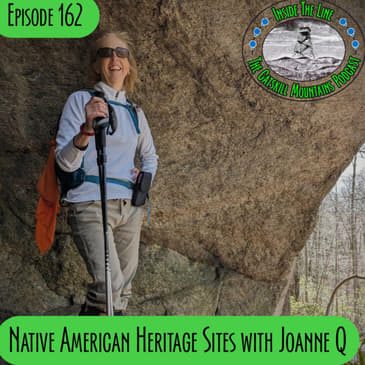
[00:00:52] You've been listening to Inside The Line, the Catskill Mountains Podcast. So episode 162 Native American Heritage Sites with Joanne in the Hudson Valley. So how are you doing? I'm not going to try to say your last name, Joanne. I will. I'm going to take a stab.
[00:01:23] Joanne Ocdoloni. Good, Tad. You painted a stab during that lesson earlier. Nice! I want a blue ribbon. Yes. Wow, Ocdoloni. So Joanne is with us tonight talking about Native American heritage sites in the Hudson Valley, which has gotten a little bit more popular and stuff like that, that we're starting to have stewards there. Correct, Joanne? Yep, we've had a steward program here actually for probably about 20 years now. Oh, wow.
[00:01:53] So are the stewards, are you guys armed with guns or just bows and arrows? Eyes and ears only. Oh, okay. Good. Well. Yeah. I would hope so. I would hope so. So, wow. So the one big topic that I have so far besides other crap that we're going to talk about is the, did you guys hear about the plane crash that happened up in Vermont?
[00:02:50] No. Yeah. And like he was having trouble with the VFR and stuff like that. The one, the one thing I find really crazy, he says he had no experience in the clouds. That was a... I wonder if the mother knew that. Yeah. Go fly north with your dad in the airplane and he has no experience flying in clouds. Right? I couldn't imagine doing that with my kids. Yeah. No experience.
[00:03:17] And then you're heading up to the area which has the most precipitation and stuff like that, the snow in the past that we've had in the past 10 years. So crazy, crazy stuff. So the, they were talking about the guy that was flying the plane. There was no, no casualties or stuff like that. They, they all escaped with, with minor injuries.
[00:03:37] I think the daughter had some scratch and I remember the, the, the husband just had like a sort of whiplash or the son had a whiplash, but they were flying up towards the green mountains. The one's going to land in Rutland to go over to Killington. And when they started flying in the clouds, the plane gained a lot of ice quickly. The windshield was starting to ice up. There was ice on the wings.
[00:04:04] They were at around 5,500 feet and they were in the valley. They tried to move more west. Now, if you've ever been up in the white mountains, going through the green mountains to the white mountains, you'll know that Vermont has just like almost, I wouldn't say it's, it's, it's like the Hudson Valley. There's mountains on both sides and there's a valley going through these green mountains and 5,500 feet is way higher than Mount Mansfield, their highest peak, which is at, I think 4,300 feet.
[00:04:33] And, but he made a bad decision to decide to descend and he descended a little bit too much. They stalled. He tried to gain up again. They stalled again, tried to gain a little bit more. And when they broke through the clouds, he could see that there was a, uh, there's a mountain ahead of him. And he basically could not really do anything that they knew that this was like, it was going to happen. He was basically bracing for impact, telling all of them that it's going to be okay.
[00:05:03] When they went into the trees, uh, they saw, they were trying to level it out at like 106 miles an hour. So that's, that's pretty freaking fast. I'm going to have been, when they descended and they crashed, they luckily went right between two trees, ripped the wings off, hit the ground, flipped over and sort of skidded a little bit. And, uh, there were smaller trees that acted like a ramp.
[00:05:27] So it kind of like at all the time, it just went like, like you, like you think it was just like that right into the trees and they stopped. And of course, like everybody was like checking on each other. Nothing was bad, but, uh, they got a call. Then Vermont 9-1-1 got a call around 8 30 AM saying that they have crashed up on Mount Equinox mountain. Um, they got the, luckily the 9-1-1 call went through.
[00:05:57] So they got GPS coordinates. They knew exactly where they were. And then all of a sudden, you know, Vermont state police, volunteers came in and then the New York state police came in. And with their aviation efforts to rescue these people, because they had three people up on there in the deep snow needed to be get out. Cause it was cold. It's very cold. They're injured. Who knows? You know, they didn't get any word that anybody had suffered big injuries cause they didn't want to leave and stuff like that. After that, uh, it came out that everybody survived.
[00:06:27] The pilot, John said he had some stitches and a broken bone. His son, Josiah had some stitches as well. And his daughter was unharmed. Definitely a little whiplash. And, uh, they say that they just want to thank everybody for their efforts and saving their lives and stuff like that. Um, it's still going under investigation through Vermont state police and the national transportation safety board. Crazy incident that happened up there.
[00:06:53] We've had, you know, with, we've seen our, our fair share of plane crashes, uh, in the Catskills, of course, within the last 30, 40 years. But, you know, we've recently had this, this plane crash up on. Windham high peak. That was basically at the same exact altitude. Um, but he was coming through the mountains instead of going through the valley. And I don't, I don't remember seeing in the report that he faced difficult icing conditions.
[00:07:21] Of course, this was the summer that he went through there. So he didn't have icing conditions and of course, and he was very qualified to do this stuff. So it's a, it's a crazy incident. Glad that everybody's okay, but you know, it's been happening a little bit too much. Yeah.
[00:07:39] I, I don't know if you saw the article I sent you Stosh, but in addition to the New York state police and their helicopter unit responding to this, that helicopter with the New York state police was going to do a coordinated training effort that morning with two New York state DEC Rangers out of Albany. That training mission was scheduled for 10 o'clock, but interestingly, the two Rangers showed up early at nine o'clock.
[00:08:08] And as you noted earlier, the call came in at eight 30. So the Rangers were arriving at or about the time that, uh, the Vermont police were looking for, uh, the state of New York to respond to that incident. So it was pretty fortunate for the, the folks in that plane, that there was a training mission scheduled that morning. So they, they didn't have to wait for all of that to assemble.
[00:08:38] What do you think, Joanne putting you on the spot? What do you think about that? You're going to take a plane trip up to Vermont and go skiing soon. No, I think those little planes are absolutely terrifying and I will never get in one of those planes. Correct. Yeah. They're 10. Like, I mean, if you've, if you've been, of course, on the escarpment trail and you've seen the plane up on stop a point, just hit the side of that. And it feels like basically you're hitting a little pan that you, you just made your pot roast out of or something. And it's just.
[00:09:07] There's a small plane crash in Harriman that, you know, you can hike right by and you look at it and you're like, somebody went up in the air in that. Yeah. Crazy. And a little, and people do it all the time to fly up to Vermont, to go skiing and stuff like that, to go up to Adirondacks, to go hiking. You know, it's, it's, it's, I would say it's mostly a lot of these plane crashes that has happened in the Catskills has been skiing. People going up north to ski and they hit bad weather and unfortunately they crash.
[00:09:36] And, you know, another incident on the mountain, mountain equinox. I've been up there. I've driven up to the top. I haven't hiked up there, but I gotta admit that's if you're ever up in the, the Vermont area, it's well worth the price to go up there and to have like lunch at the top and just. It's a, it's, it's a phenomenal experience up there. It's pretty cool. Buddhist, I think the Buddhist run it or some sort of sanctuary. I actually looked deep into it.
[00:10:00] Uh, I don't remember what they were called, but I know that when they commit themselves to the sanctuary, it is a lifetime of silence. They cannot speak at all. Nothing. I bet you they have a really interesting podcast. Yeah. Right. I just, I had to, you just teed that up. I had to go for it. I know Joanne was on the edge of her seat writing to say that, but I stole it from her. Yeah. You gotta be quick on the draw here tonight, Joanne. We're just shouting out the answers and we know them. Right.
[00:10:31] Yeah. So once again, awesome job by all the people who rescued those people, another crazy plane incident. Let's hope we don't see very many more of these. So Ted, we talked about this about last week, a little bit. I didn't want to go into debt, but it's getting a little bit more real. So the, the, the cuts of the national park, uh, national forest service employees. So I went both ways. I looked in research both ways. We're looking at both sides of the story.
[00:10:59] I want to get both sides of the story and such, which you can't really fricking do because it's just absolutely insane, especially to us who hike and stuff like that. So, uh, they cut full-time probationary associates back full them with temporary. So it's just some people were promoted and cut because they were on probationary status from their promotion, which I find is a really big dick move. So they move them up and they cut them off because they were on probation because they were going to move up.
[00:11:25] So, uh, in February, 20, 25, the administration, the new administration aiming to decrease government spending initiated layoffs affecting approximately 1,000 national park, uh, employees and 3,400 forest service employees nationwide. These layoffs have led to a foreclosure or a closure of facilities, reduced services and increased concerns about public safety and environmental stewardship. The national park service. The national park service. Now this is the other side.
[00:11:53] The national park service aims to hire up to 7,700 seasonal workers this year, an increase from the previously promised 5,000, uh, above three year average of 6,300. The initiative is intended to address staffing needs during the peak visitation periods and ensure that parks remain operational for safe visitors. Once again, it's tough to see both sides.
[00:12:16] I'm trying to have this, uh, uh, an equal podcast, but I can't, I can't, that's just, that's, that's a little, a little messed up. I like to say the other word, but it's, it's tough. You know, I've been experience of, uh, visiting several national parks like Zion, you know, uh, Sedona, uh, Red Rocks, stuff like that. Um, I've once encountered people coming up a national park employee and, uh, an assisted ranger coming up to,
[00:12:45] to take off graffiti off of, uh, good Lord. I'm trying to think of the bridge name that's in Sedona. That's a huge bridge that everybody goes to. Um, but somebody went up and put graffiti spray paint on the, on the side of the bridge. And I'm just like, the fuck, the fuck. So now we got to rely on volunteers to do this. What if, uh, you know, because of this stuff that's going on, the volunteers are just like, you know, I don't want to do this.
[00:13:15] So crazy shit. Silence. Is this, is this the, the, the, the podcast that's going on over in Vermont or something like that? We, Joanne and I, while you were saying that we both have pledged a vow of silence tonight just to make your life. Yeah. And we just want your life to be frustrating and interesting stash. So, yeah, I look, I don't see necessarily there being two sides to the story.
[00:13:40] These, all these cuts that have been made to my knowledge have been made without any in-depth study as to the resulting efficiencies or level of service that's going to be provided after the cut. You know, it's just as if let's cut people back now, see how bad it gets.
[00:14:06] And then we'll add money and bodies back to build the service up, but we'll just do deep cuts now and try to fix it later. And in terms of bringing in seasonal employees, I doubt the seasonal employees are going to have the level of training knowledge and experience is the full-time people that are getting cut. seasonal employees typically aren't folks that, you know, we're going to come back year after year.
[00:14:35] They're going to go where they get full-time work, full-time benefits, job security. So, it just seems to be that this is a trajectory that's going to result in a deterioration in the level of service, the quality of the park experience in those areas that you need rangers and others to, you know, manage and police the park.
[00:15:02] So, hopefully in due course, this will be corrected. But that's only my opinion. We're anxiously awaiting what Joanne has to say. Sorry to bring you in on this podcast, this episode, Joanne. You have to break your vow of silence now. I think the parks are already underfunded and understaffed. So, from my point of view, any cuts are like hard to digest because I already see gaps and, you know, things that could be improved.
[00:15:30] So, it just makes me sad and wonder what the state is going to look like as it moves forward. Correct. And, you know, with the overflow of hikers that we've had in the past four years, ever since five years since COVID and stuff, it's just astronomical. And like you said, Joanne, great point that there's already gaps here. Like, what the hell is this going to do?
[00:15:54] Save the government some money, but then make our national parks look like shit and overpopulated, overflowed, trash everywhere, stuff like that. You know, it's just one big cluster. And then, you know, we got that. Sorry. Yeah, it's really sad.
[00:16:17] And I think as sad is the executive order authorizing the harvesting of timber over 280 million acres of national forests because you can hire back people in a week, but you can't grow back those trees in a week. Mm-hmm.
[00:16:41] So, those forests which have developed their present character is something that's taken, you know, not just decades, but centuries, and if not centuries, thousands of years. And going in there with the machinery and harvesting, you know, tens of thousands of trees, in a few years, you can do damage that our great-grandchildren will not see recovered from.
[00:17:09] So, I think that's particularly sad. Yeah. Yeah. And, you know, we can compare this. You know, I, once again, I looked up from both sides of the story. Let's hope that what they're talking about, the 200 million acres is for fire. I don't think they're smart enough to do this, but for like fire prevention and stuff like that, to harvest the timber. I don't think they're going to do that, but that's, that's, I'm trying to, trying to look both ways.
[00:17:36] Well, that wasn't, that wasn't the stated reason for cutting the logs. Exactly. They're cutting the logs because they want cheap lumber. They want cheap lumber and they want a drill. So, it's, I'm trying, I'm trying, I can't. And I know, yeah, I know somebody out there listening to this is going to also be saying, bring up climate change. We need trees to slow down climate change. Yeah. So, I'm just throwing that out there as well. Yeah. Gates, Dr. Gates. There's, there's, yeah, there's a lot, yeah, there's a lot to talk about here. There is. We could go on all night, but.
[00:18:06] I don't want to throw this on all Joanne. Joanne's probably like, Jesus Christ. Yeah. You saw the agenda, you knew what you were getting into. So, once again, it's crazy what's going on and let's hope, you know, I'm very thankful of all of us hiking enthusiasts, enthusiasts, our nature enthusiasts coming together and protesting because I've seen awesome protests in the national parks, the national forest services, stuff like that.
[00:18:34] And who knows what's going to be done up here. We have the white mountains, which is the national forest who are, you know, I would say, you know, 90% of them are already volunteer serviced with, you know, the research and rescue stuff. But the, the, uh, uh, fishing game people up there are very phenomenal, uh, at doing their job as a shown with fricking making a TV show about them.
[00:18:59] So, I mean, yeah, let's, let's fricking cut their, their shit and let's, uh, let's, let's let them go. God, this gets me so triggered. I'm sorry. Joe answered more curse words in the last 20 minutes than, Hey, I've held it back. I have held it back. I could be so much. Yeah. So thankfully we have the Catskills, the Allegheny and stuff like that. That's not national. I don't, I know there's, there's not national parks here.
[00:19:27] I know we have one, I think is Niagara national park. I, I don't know that offhand, but we, the, we don't have any large scale national parks in the state of New York and Pennsylvania. Allegheny is a national park status down there. Okay. But, uh, I'm pretty sure there's one national park and that's down in Brooklyn. Yeah.
[00:19:50] I'm pretty sure that's the only national park in New York state, which is good because our state, you know, we are, we, New York state is thriving to keep the, the parks a better place. I mean, the, they're not funding the, the, the services as well as they should, but they are expanding and you know, hopefully, ah, God damn. Fuck, fuck politics. Sorry. Let's get off of this topic. Yeah. That's why we go hiking to get away from this stuff.
[00:20:19] I have, I have written on my, my little like doodles here. I have 2750 written four times now. What's that? That's my new rule. Once you get above 2750 feet, no politics. So. Okay. Okay. Yes. Thank you. Sorry, Ted and Joanne for bringing this up. Yeah. I'm going to call, I'm going to call my, my little home podcast studio, the 2750. Right. Yeah. So no politics here. No politics.
[00:20:46] That actually, you know, Ted, go with it, but you better stay to this God damn podcast because 2750, that sounds pretty cool. I got to admit. 2750. All right. So Darren white. Send me this. Uh, and you know, I've, I think I saw this really, really quickly, but Darren sent me this, uh, article. So a father and son survived in the wilderness due to a backpack left behind from a previous
[00:21:14] lost teen, uh, up in Utah. Uh, uh, uh, Levy Dittman left his backpack behind while lost in January, only for the bag to be found more than a month later by Julian Hernandez and his 12 year old son. A father has opened up how he and his son survived the night in Utah wilderness. Thanks to someone who left their backpack behind by a teen who got lost in the same area. So, uh, up in a snow Canyon and state park in Washington County in Utah, which actually
[00:21:44] was on my list to go to when we were there. Uh, the dad said his son were in a tough situation due to the frigid temperatures when they stumbled upon a backpack, the backpack, which contains such item as a snack first day kick a tent and other emergency supplies was left behind by 15 year old. Listen to that 15 year old supplied himself with more stuff than most adults supply themselves when they go into the Adirondacks white mountains and the Catskills in upstate New York. Wow.
[00:22:14] All right. Yes. So, uh, he got lost in the same area, uh, early in January. So that was two months ago. Uh, at the time Levy tossed his backpack. He was stuck on a ledge overnight, hoping to remember it later, but he was unable to retrieve the bag when he was rescued, which was a bit frustrating because he spent two months filling it with nearly $300 worth of items. I know that pain. Another month later, Hernandez says most of the items helped him and his son survived the ordeal, which they didn't have the proper things.
[00:22:43] His dad said in the outlet, which shame, shame, shame. Uh, the two even used their emergency blankets that they found inside the bag to keep warm while they were stuck outside for 22 hours. So, uh, he was really glad to get this backpack and survive the chilly night. Didn't hear anything about who found them and stuff like that.
[00:23:04] So I'm guessing they kind of got themselves out and then took the story to the, the reporters or something like that. I don't hear anything about them being rescued. I was confused about them being lost. Were they lost on trail or were they just lost out in wilderness area? Yeah. I'm guessing because that person that got that little kid, the 15 year old was stuck on a ledge.
[00:23:30] Uh, I was guessing they lost out in the wilderness that he was through his bag down to try to get out. So it doesn't say anything about a rescue happening, like a prompt search and rescue effort happening for the, the, the kid and his father. But it says that Levi, uh, was actually rescued by people. So interesting, but Hey, 15 year old kid fricking packs more than Ted in Utah. Yeah.
[00:24:00] Well, good for them. I just, my, my only comment is this is where my daughter had been spending her winter. Was out in that area of Utah. Oh, nice. Snow Canyon. Yeah. That whole St. George area. That's where she was, uh, camping and, and climbing. She's now in Spain for a few months, uh, doing her thing over there. So yeah, this was just down the road from where she was. Nice. Snow Canyon's north of St. George.
[00:24:30] Nice little area, red rock country. It's beautiful. Yeah. Jealous. Good. Good for them. So, uh, Ted, I got to hear your comment. Say that please. Oh yeah. So, uh, so it's great. I think it's great. You can leave a backpack in the woods, but you can't leave the wrapper from your cliff bar. I'm not even getting a change of expression on Joanne. She's like, come on. I'm here to talk about my stuff. All right.
[00:25:00] That's fine. That's fine. So from now on, when you're getting really tired on your hike, just toss your backpack off your shoulder, put it on the trail side. And if anybody bitches it, you can just say, Hey, you never know when a father and son are going to get lost out here and need my stuff. So. Correct. You know, I was, I was kind of hoping, you know, I'd have a hike in today. I was kind of hoping I'd have some, some other backpackers hiking and stuff up there and get something to eat. But no, unfortunately nobody leaves their backpacks anymore.
[00:25:29] I had to pick up a water bottle. Like what the hell am I going to do with a frozen water bottle? Can you guys do the six? Do you not drop your backpack when you're kind of like running down to table and then running back to peek-a-moose to go out? I did that one time Joanne. Cause it made a lot of sense to me. But as I came back to where I had left my backpack, all's I saw running away was the tail of a mountain lion and my backpack wasn't there. Now I'm not, I'm not accusing the mountain lion. I'm stealing it.
[00:25:58] Cause I didn't really see him steal it. And mountain lions have rights and I'm, I'm not going to accuse him of that, but I found it highly suspicious in that corridor where mountain lions are known to roam that my backpack was taken. All right. Well, I have to be more careful when I'm up there. Yeah. You really do that? You, you like you, you slack packet over to a peek-a-moose. Joanne's a fricking flyer. She, you're, you're a quick hiker, aren't you? Yeah. Yeah. Yeah.
[00:26:28] It was kind of like a, yeah, yeah, yeah. Damn fast hiker. So, okay. She's got like, I just, she's right behind her in the backdrop is like this wall of blue ribbons. There's like, I don't know. I count. What do you say? A hundred and fifty. Yeah. It's obscene. So talk about flexing. I'm like so intimidated. So you do that. What, which way do you do the six Joanne? Do you come in from the, the north or the south?
[00:26:55] Do you do it from peek-a-moose to a balsam or Friday, or do you do it the opposite? Well, my favorite way is to do it as a loop from the fisherman's pass. But in the winter, I don't like to mess with the fisherman's pass. So then I just do it the traditional moon hot to peek-a-moose. Okay. And then, so you leave your backpack right at the junction of loan and, or a loan and table, and then you tag table and then run back. Okay. All right. I mean, it's not that far.
[00:27:24] I have to not tell anybody when I'm doing the six. Yeah. And that's sound advice to avoid the fishermen's in the winter when it's snowy conditions. Yeah. It can just be held down there. I avoid the fisherman's path during the summer because it's just so long and. No, it's beautiful in the summer. Oh, it's like my favorite place. Yeah. Early, early morning hike up the fishermen's. It's. Yeah. It's one of the Catskill gems. Yeah. The pro tip is you got to hike up the fishermen's and do it early in the day.
[00:27:53] Cause it's just enchanting there as the light starts coming in. Or if it's going to be a super hot day and you want to like at the end of the hike, hike down the fishermen's and like, you know, every five minutes, just take a dip in the East branch. That's okay. Just don't tell the DEP cause then they got to drain the reservoir. All right. It's been swimming in it, but yeah. Right. Right. So that's good. That's good. Yeah. I'm just, I'm a, I'm a, one of my first times tagging loan and Rocky, I went up the, the fisherman's path and then back down the fishing path from Rocky.
[00:28:23] And it was just a miserable experience. Not only one, because. Uh, I was sort of leading the, the, my, my friends, my two friends, but my one friend was just so far behind and was miserable and was just suffering. I'm just like, can't this end? And then we're like, Oh, we're at the junction. Get ready. You have two miles left to the fricking car. So are those two friends still friends? Yes. Yes. Yeah. That was my friend, Travis.
[00:28:50] He finished with me and then John, my buddy, John, pastor John finished, uh, later on. So they're still friends. So I took a fellow, uh, for his first time up loan and Rocky via the fisherman's path. And, uh, I was keen on when we got down from Rocky back to the East branch. I have this photo of me, uh, before and after I dosed him with so many packets of goo, right? That energy caffeinated product.
[00:29:19] I think I gave him four or five goo packs to just give them like this caffeinated, uh, fructose high before we started our journey. And it was good. He was on like this big bubble for about an hour or so. And then he crashed. But if you're, you're going to come down the fisherman's path, I think you need to like refuel before you start that slog. That's when you need the goo or the glue, whatever you call it. I'm going to open. I'm going to maybe like, instead of a hot dog stand up there, I'll have like a cheap energy
[00:29:48] snack and drink shop up there on weekends for when Joanna and her crew come down, I can get them all charged up with stuff. Oh yeah. So, all right. All right. So long. Yeah. Yeah. Thanks to Joanne and Ted for shooting the shit tonight. So thank you to the monthly supporters, Chris Garby and Jeff Jotz. Vicki for our Mikey S John Comiskey summit seekers, desert city radio, Betsy, a Denise
[00:30:17] W Tom H Vanessa. Thank you guys for supporting the show. Really appreciate it. Love you guys. Also discover camp Catskill and Tannersville, your ultimate hiking store, find top quality gear, apparel and accessories for all your outdoor adventures. Our expert staff is here. I help every hiker from beginners to seasoned pros. We also carry a variety of unique, unique souvenirs and gifts. Visit us online at campcatskill.co or to gear up for your next journey. Adventure starts at Camp Catskill.
[00:30:48] Also discover the beauty of the Catskills, Adirondacks and Hudson Valley with scenic route guiding. Our expert guides to ensure a safe, unforgettable hiking experience tailed to your skill level. From breathtaking vistas to hitting gems or if you're peak bagging to just simple day hikes, we'll lead you to the best spots in back. Book your adventure today and explore nature's wonders with scenic route guiding. Check them out on all social media platforms. Also, if you mention this awesome podcast, you can get 10% off.
[00:31:16] Use the amazing code word mountain lion. Also, if you are a first responder, embark on a transformative journey with another summit. Another summit is dedicated to serving veterans and first responders with free outdoor activities. Activities like walks in nature, paddling, hiking and even backpacking. Join our supportive community to rejuvenate nature's embrace. Experience commodity, adventure and healing at no cost.
[00:31:44] Take your next step with another summit and ascend to new heights of resilience and joy. Apply today on another summit.org. So they have TARP Shelter Workshop on Saturday, May 22nd, 10am in Nelsonsville, New York. Sign up for free. Also, Spring Forest Ecology on Saturday, May 29th at 10am in Rhinebeck, New York for free for veterans and first responders.
[00:32:11] Send another summit a message or Guardian Revival or chat with Henry or me and we'll hook you up. So, hard cider as mentioned, buy us a hard cider to support the show. So Stephanie gave us three hard ciders. She said she loves enjoying the podcast, whether it's on her way to work or driving the trailhead. Apparently she met somebody at Biscuit Brook on Saturday. Was that you? Because I wasn't there. It wasn't me, of course.
[00:32:40] Yeah, that was not this past weekend, but the one before her and a group of two others had arrived there shortly before I did. They were gearing up and ready to go. And somehow she recognized me. I don't know what the giveaway was, but we chatted a little bit. But she said how much she loved the show and really, really enjoyed all my insight and knowledge.
[00:33:02] And she thinks I'm the funniest guy in the world and I should probably up my own show at night like on the comedy channel or something. And I should do stand up. All right. So some of those statements she didn't necessarily say, but at any rate, glad to see that she likes the show. She got us some hard ciders and thanks. Apparently, I need to switch my days off. I mean, see absolutely nobody on a Tuesday, but if I go out on a Saturday, I'll see everybody.
[00:33:32] Yeah. Well, that's not surprising, Stosh. That is fair. Joanne, you surprised by that, that Stosh doesn't see anybody on Tuesdays? Hey, I was out there today. Were you? Good for you. All right. Good. How was it you got out today to go hiking? I took a day off. Congratulations. Getting to the end of winter season and I need to start panic hiking. I knew it. I was going to say, Joanne, Danny has told us about you, you and your single season and stuff like that. You guys are insane.
[00:34:04] So crazy. Awesome. Awesome. We'll talk about that in just a little bit. Our previous hikes. I can't wait to hear about that. Good. Somebody hikes on a Tuesday besides me. Jesus. It's great. So mention the podcast through social media and we'll chat about the show. Usually you put at and then ITL Catskill Mountain podcast, I believe, but put at instead of hashtag that tags us.
[00:34:30] So pinkpony818Tracy said a beautiful morning and a short hike up Mount Egbert to have her morning tea just three miles out and back with Elena. Sunshine, mud, snow, and ice is a very beginner friendly hike. So if you're always saying I want to hike with you, make a plan to hike with her. Mount Egbert. Not familiar with that. Tad or Joanne, are you? I don't know. That doesn't ring any bells with me. I guess it's on the east side of the Hudson. Okay.
[00:34:57] That's where pinkpony818 hangs out. Yes. For her close hikes. She obviously hikes in the cats as well. Yes. Also, Jeff Jotts and Orla. This is amazing, Doug Orla. Did Thomas go Blackstone and Blackhead from Barnum Road? One of my most favorite hikes. Snow is slushy and the weather is warm until the cold front came in that we had. Awesome cold front came in Saturday night. It was beautiful. Tad, you kind of hit that perfectly. I warned you.
[00:35:27] I warned you. Yeah. So we'll talk about that. So awesome, Jeff. Glad you guys had a good time. Your pictures was absolutely phenomenal with Orla overlooking Blackhead. That was a beautiful photo. I suggest you submit that somewhere because it's just an absolutely phenomenal photo. Tom Hoos, of course, Hoos Outdoors was at Indian Head Saturday. He said spikes all the way. I'm guessing everybody had spikes on this weekend, this previous weekend.
[00:35:56] And he looked like he had a great time going up. I'm pretty sure he went clockwise, it looked like. He went up the chute instead of going down the chute. So very smart. But I still think it's fun going down that chute. So Indian Head in the winter is always nice. I always loved the Indian Head. Also, Joanne, your friend Danny, Mighty Mischievous, was at Westkill Falls. Apparently, didn't tag us in anything else. So what is he up to?
[00:36:26] Is he injured? No, he just doesn't pose so much anymore. Wow. What the hell's wrong with him? He has a girlfriend now. So he's off. You can say it, Joanne. Danny's in love. Say it. He's in love. Go ahead. Right? Okay. That's good. That's good. They did the Spruce did loop together. Excellent. The stuff like, like what? Like Hunter, Southwest Hunter and back down. They did, they did the loop.
[00:36:54] They did Southwest Hunter and Hunter and came around. Oh, nice. I mean, why the hell not tag us in that whole thing? Like, like just Westkill Falls. I'm like, all right. He went up there and had a casual, nice little one and a half mile hike, but no, he did the whole fricking thing jealous. Good for him. So also Rachel Jean, the gypsy queen. This is, I think are the most tags that I've, I've ever gotten on this show was that overlook where Ted prohibits to go. Yeah. I'll get there someday.
[00:37:25] Absolutely outrageous. Ted. Yeah. I think when I finished my all trails, I'll, I'll head over there. Cause I have to do it to finish the old trail. So that'll be, that'll be the end point, but it'll be the Ted Ted. I got to admit that to you is just something else. Yeah. She, she did like a video post from there and I was impressed. I'm like, Hmm, maybe, maybe that should get bumped up the list. But then I thought, nah, well, I do it. I do it by date. Yeah.
[00:37:53] Who tags me first and then who tags the show last. Yeah. But I mean, in terms of when I go over there to hike it, you know, I'll, I'll do, I think I'll leave it for sunset. Yeah. You got to do a sunset on that because it's just, God, I love, I love overlook, even though it's, it's, it's over capacitated for overlook. Yeah. That's worth it. That's part of the bummer of going to places like that. But it's worth it. It's so worth it.
[00:38:23] It's just go on a nighttime or early enough in the morning to get a sunrise. And it's absolutely fantastic. So, all right. So also rate the show. You know, we haven't got, Joanne, Joanne, Joanne, Joanne, Joanne. Have you rated the show? Have you rated the show? I don't think I've gone to that, taken that step yet. Outrageous. All right. Well, that's all we have for tonight's episode, folks. Thanks. Uh, Joanne had us leave early. Yeah. Sorry about that.
[00:38:53] Uh, but next week's guest who rates the show often is an avid hiker. Oh, all right. We can continue. Yes, we will definitely continue. So anybody having anything to drink tonight? Besides me, Joanne. Um, well, I guess I can say I have a, uh, a dark bubbly, um, brew. You can find it in any grocery store. You may have heard of it. It's called diet Coke.
[00:39:23] You fooled me. She fooled me. Outrageous. I was sitting there like, like on the edge of my seat. Like, what is she talking about? That's so original. Well done. It is very original. Oh my God. Hey, I don't, I don't. Yeah. All right. All right. So you got one there too. Outrageous. I read the memo. I think it was footnote three. Yeah. Are you guys shared notes behind my back? The blue and two of us have the diet Coke.
[00:39:53] So yeah, this is no, no brew Tuesday for me. First Tuesday of the month in solidarity of any and all listeners who don't drink for whatever reason, don't drink alcohol. I'm not going to have a, a brew or alcoholic beverage on the show to support them. It's my gig. Thank you. I appreciate it. So I'm having an awestruck honeycomb hard cider. I love it. It's so good.
[00:40:23] Uh, I'm trying to find the 7%. Wow. I checked those out in the store. They're mighty expensive, man. I can't afford that stuff. Yeah. Okay. Uh, yeah, these are, this is delicious though. Yeah. Well, even at that price, it's gotta be really, really delicious because I can't afford that stuff. It is really, really delicious. Yeah. Joanne and I are, we have our 25 cent diet Cokes and we're good. We're good with that. How about this?
[00:40:52] Support a small business instead of a corporation. Diet Coke is a small business when you, you know, isn't it? No, the cans are small. Yeah. Nice try. Support a small business, support your local business. Buy a hard cider. Yeah. But kudos to Joanne drinking out of a can, right? Yeah. You gotta stay away from single use plastic. And kudos to both to you, Tad for a no brew Tuesday. That's I gotta admit, that's pretty impressive.
[00:41:20] So Joanne, start off with your previous hikes. Let's, let's go with whatever you've done in the past week, week and a half. Well, I've hiked four of the last five days. Wow. Wow. The hardest one was Friday, South Double Top. South Double Top always completely drains me on the best of days. And we broke trail pretty much the entire way up.
[00:41:49] And it was horrible. You kind of took a step. The snow had like a couple inches of real thick crust. You thought you were gonna float on it. Couple second delay, down you went. And that was just all the way up. And we took a route that had numerous stream crossings. Most of which were pretty narrow and easy to cross. Two of them were wide.
[00:42:17] You can't tell what you're stepping on, whether you're stepping on rocks, ice, snow. And two people crossed in front of me, just fine. And then I went in. Oh no. Wow. So did you do your stream crossings at the beginning of the hike? Yes. Yeah. So did you go across Biscuit Brook and then Pigeon Brook? Yes. Okay. And then take that, the ridge that runs from High Falls Ridge up to South Double Top? Yes.
[00:42:47] Yeah. That's a good way. And that Pigeon Brook is really nice in the winter. I mean, it must have been really beautiful over there. It was absolutely beautiful. So I was actually taking in the scenery, not maybe looking as much where I step and then you hear that sound. Oh God. Yeah. Then in my hurry to pull my foot back up, my snowshoe flipped water all over the backside of my pants.
[00:43:15] So I always carry extra socks, but I think I'm going to be carrying extra pants in my pack for the foreseeable future because I think the streams are probably going to be running pretty high when all this stuff starts melting. Yeah. But yeah, so I did that on the way up. So I got to think about it, the entire hike because I knew we were going back out the same way. So I got to stress about the return crossing. Oh, wow.
[00:43:42] So let me ask you, because I did that hike, you said you did that on Friday? Yes. I did that, I think the week before. You did, because I remember I was wondering how you went. Yeah. So I went, I took, I was going to turn where you guys turn and make it a loop and pick up big Indian and fur on my way back.
[00:44:02] But when I, when I saw how easy it was to punch through the snow and then you'd have to pull your foot up through that hard crusty layer again. And I thought that's going to be rather tiring. Yeah. So I decided just to stay on the trail all the way past the turnoff for big Indian. I think that's exit four on that trail and then just continue, you know, 150 yards further and, and then bang a left.
[00:44:31] And I, I made really good time going out and back that way. Um, but I'm surprised. I mean, you guys must've did an out and back the way you did just to retrace your footsteps. I would imagine. That's why we did it. Cause we did not want to be punching through, um, to find, to make a loop. We were like, we're just going to go, we don't have to think about navigation. We just go back the way we came out. Yeah. Yeah. I've done it that way many times. It's a pleasant hike, but when you have snow, like we've had this past week, it's a tiring hike. Yeah.
[00:45:01] Yeah. Yes. What was next? So then the next day, um, I went out with, um, some of my hiker anonymous friends. They were just like straight up business hikes, but very social, very friendly. Uh, we had a lot of fun. We just went up and down Rusk and then we went up and down Halcott. Nice. Nice. Short, uh, steep hikes. Short steep hikes. There was a little snow storm that happened. That's that was Saturday. That was Saturday.
[00:45:29] It was made everything like really pretty, like being out there in the woods with the snow. So the snow came in on Saturday around one o'clock or so. Yeah. You were out there in that. Did it start where you were? Did it start off kind of as this wet rain? It worked out perfect. We finished Rusk and then on our drive to Halcott, it was raining. And then when we got to Halcott, it, um, turned to snow. So I was like, well, that timing could not have been any better. Yeah. How do you say it again? All right. Fuck it.
[00:46:01] I was like, I was like, watch out. The locals will kill you for that. They'll be like, oh, fuck it. Sorry. Yeah. That's okay. No, uh, like the, I gotta admit going through those, those times of, of the snow, even if it's wet and such, it's just exhilarate. It's something else. It's I, you don't get like the views, but you know, you get that. I don't know. Feeling that it's just, you're out there and peaceful.
[00:46:31] Yes. Peaceful. Yeah. And so that was Saturday, Saturday. We have two out of the four. Okay. So then the next day I stayed local and I just did a Harriman exploration with my friend, Harry. Uh, you just kind of check things out here and there. Nice. And then today. And then Monday I worked. So then today I did the hike. I've been putting off like all winter.
[00:46:58] Cause I just really haven't been super motivated to go do it, which is wind. Um, I just, um, with a plane crash up there, uh, wasn't super excited to go hike it. Did you, I'm guessing you want big hollow, burnt knob stuff like that or Acropoint or did you push back up? I just did the bush. Nice. Yeah. And how is that? That's I have a feeling that's going to be a new trail soon. It's going to be a new hard path. It's very easy. It wasn't super exciting.
[00:47:28] Um, I really miss the escarpment trail because that has that beautiful pine forest when you can hike that way. So, you know, when I have that in my head, like I'm missing that I'm just on like this old woods road hiking up. Were you worried about the weather? Cause you know, today when I was looking at the weather, I was like, shit, we might get some rain a little bit later in the day, but I know you can finish these hikes in like 35 minutes. So yeah, it took about two hours to go up and down.
[00:47:57] Um, and I did it early this morning. So I saw the rain was going to be in the afternoon and I just, I did wind them. Then I went over to Colgate Lake for a while and just kind of walked around there a little bit. Wow. Yeah. That's a long drive for you to just bag wind them. It is, but like, I keep agreeing to hiking with other people and helping them with stuff. And I'm like, well, when am I going to finish my season? So I take days off to do my season. Yeah.
[00:48:27] Same, same. So awesome. You know, got, got out and about the whole fricking weekend. Jesus. This is a shame part for me. And I don't know, Ted, Ted, it's probably still shame part for, for both of us. Cause Joanne kicked our asses. Yeah. Oh, well. What did you, what did you do?
[00:48:47] Um, Friday I got up early and went over to slide mountain, which is about an hour, more or less just inside of an hour from the house. And I just, you know, I call it, I heard Joanne say a business hike. I call them production hikes. We're just going out to bag a mountain. You're just going to take a short and efficient route to get up. So that's what I did. I parked at the slide parking area. It was the second card there.
[00:49:16] Um, just went the Jeep road up. It was, you know, risk, beautiful blue skies. I mean, it was just a perfect morning to be up there. And the fact that you're not working on a work day and you're out, you know, hiking this snow covered mountain in the Catskills. Uh, you just feel like, you know, a king going up there. It was so luxury, luxurious. And I haven't been up there in quite a while.
[00:49:41] I'd have to look at my notes to see when the last time I was up there this winter, but it's been quite a while. So I did that, uh, Friday. It was great hike. I was back home by 11 o'clock. So nobody really noticed I was out of commission in the morning. And then the next day, uh, I had another production day kind of doing what Joanne did.
[00:50:02] I hit a balsam lake mountain in the morning and you know, I just flew up, had my snowshoes on maybe half of the way up and got up there. I ran into, so I'm hanging out at balsam lake mountain by the fire tower and in strolls, a woman with her snowshoes. And she throws her hands in the air and she exclaims that she has just finished the ADK and Catskill fire tower challenge.
[00:50:31] So my obvious question was how long did it take you? Right. You just, is this like in 2025 that you did it or this winter, did she do it? And she's like, it took me five years. Wow. So she obviously doesn't have a lot of opportunities to get out and hike, but that was good for her. And she was very, you know, uh, happy about it, but it was nice up there. And then afterwards I headed over to fly and bear pen.
[00:50:59] And on the way over is when Stosh texted me and told me a storm was coming through. Yeah. At that, at that time we had some crazy snow and only onto like, I couldn't see like a hundred feet ahead of me. And I'm like, Tad, we got some crazy shit heading towards me. I know that you are out and I'm pretty sure you sent me a message back saying, what is crazy shit? Yeah. Um, nothing. So, yeah.
[00:51:26] Well, so as I was on my way over, it was, uh, you know, it just started to do its thing. Um, and I was hoping that it was going to, you know, firm up and whether it was like frozen rain or snow, I didn't care so long as it wasn't wet, but it did. It did start to turn into snow on the way over. I stopped at this coffee shop called, I think it was do littles. And I got a medium, no, a large coffee in Arkville.
[00:51:55] Guess how much it was. A large coffee, large black coffee in Arkville. No additives, just black coffee. $2 and 50 cents. And Joanne. I don't drink coffee, so I haven't a clue. You want to say more or less than Stosh Stosh's two 50. I'm going to say more. It was $4 and 56 cents. Should you stop? Yeah, it's in the store. It's in the in Margaretville.
[00:52:25] Well, this is why nobody lives in Arkville because you can't afford the coffee. Okay. You got to move out of town. It's not the price of gas or eggs in Arkville. It's the price of the fucking coffee. So at any rate, I drove over to the end of Route three and like Stosh said, the parking lot would be full and it was full man. I'm telling you, I've never seen more cars over there. And yeah, and I was, it was, yeah, I was there about a one o'clock, but I guess the 3500 club was out hiking.
[00:52:51] So they pulled in a lot of cars, but I was, I parked a little bit further down the road and I banged out Vli and Bear Pen. It was spectacular because the snow started really blowing and it was just fun to be up there. Um, snowshoes from, you know, the, the hunters shack to, to both mountaintops and back. But I, I did both of those hikes in four hours. Wow. Excluding driving time.
[00:53:21] So FKT man. Yeah, I did. I'm going to, I'm going to put it in the books. I took a few shortcuts, but I'm not telling anybody so I won't get disqualified. But yeah, I think that's a, a fastest known Tad time. And, um, I feel good about that. Nice. And why, why, why did you do balsam lake Vli and Bear Pen? Can you alliterate on why you did that? Um, because I just wanted to do them and that's all I'm saying about that. Bullshit.
[00:53:50] Go with it. What was the, what? I don't want to. I'm like so embarrassed that I actually did this. So, so Tad did this because he finished his four 20 grid. No, I didn't finish the four 20. What do you think? No, I finished that a couple of years ago. Joanne, look at, look at what I have to put up with here. Yes. We're like a married couple. We've been together for like almost a year. He doesn't know anything about, he doesn't know my favorite food.
[00:54:18] He doesn't know where I work, what type of car I drive during the week. Nothing doesn't even know my birthday. Yeah. No. So congratulations on a single season. Yeah. But I didn't set out to do it at the beginning of, of winter. It just kind of like. It's so fantastic out this winter. How could you not? Yeah. Right. The one thing that was my 15th hike.
[00:54:42] Um, so far since the snow started flying back in November, 15 hikes since my first hike in November in the snow, 15 in a row was snow on the ground. Nice. Which I think is unusual for the Catskills. For the past 10 years. Yes. Yeah. Definitely. Definitely. So today I went out and I bagged Southwest center. Um, the greatest thing that I realized is that I did it.
[00:55:12] I came back to write it down on my 3500 winter list and I already did it. Four years ago. So it doesn't count if it's been that long. I was like, are you freaking kidding me? Yeah. It was, it was, it was a good, beautiful day. I got a beautiful, fantastic day. Concrete just did spikes up and back on the way back down.
[00:55:40] It, uh, it got tiny bit mushy where you would slip here and there. But, um, other than that, you know, I was looking left and right all the time, Ted, to try to find some more. Like, uh, spots for the Fenwick lumber company. I'm just like, I know, I know where the, the area, the log road went and stuff. And I looked, I found it, but I was looking up to where I could find more traces of the, the Fenwick lumber company.
[00:56:09] We should, well, so this year we should just drop a car on two 14 drive over to, uh, we'll actually do the reverse. We'll drop a car on Spruxton head over to two 14 and just hike up and over, try to retrace the old, uh, route. And when we're done, we'll go over to Westkill, pull down a brew and then head back and, uh, get the car. And we won't, and we won't put it on the list, you know, no four 20, no single season. Right.
[00:56:36] No, no hiking for patches. Yeah. Like hiking for beers. Yes. It was a great hike. Uh, once again, like concrete slab all the way up. It's going to definitely change by now because on the way back down, it was 45 degrees and, uh, you know, a slip in here and there, you know, to be honest, I'm going to do the, uh, uh, Stas just for Stas is fastest known time. I did that in under three hours.
[00:57:06] So I'm, I'm very proud. Your notes show that you were averaging like three miles an hour. That's yes. That's very fast, man. Then Joanne smiling. She's like, Jesus rookie numbers. Yeah. She's like, you think that's fast? Don't hike. She's like, I did that breaking trail. Yeah. She says I hike so fast in the winter. I'm sweating through my pants. It looks like I just fell in the water. That's how fast I go. That's a good point. So, you know, I started off, you know, you start off that whole hike flat and you get to West go falls.
[00:57:35] I was sweating profusely. I had my Merino wool shirt on, and then like my Bergeron shirt and I'm just like sweating like crazy. So I'm like, screw this. I took my, I call this the spot at West killed the hand warmer station. Cause it looks like you put your hands in that little spot and it could warm your hands up. I don't even know what the hell that's for right at the West kill junction. Oh, going over the bridge. Like, have you ever, you've seen that, right? Mm-hmm That it's like the, it's, it's just two little spots.
[00:58:04] That's where people that stay in the lean to dispose of dirty toilet paper stash. Oh God. And you've been putting your hands in there. That's disgusting. Oh, that's awful. Oh boy. But I changed there and then I flew up the mountain, flew back down, signed in beautiful day. I beat right when I was driving out, I beat the, uh, it was starting to kind of like rain and sleet a little bit. And then it turned nice.
[00:58:28] And then I, I drove, I took a little detour ride because I wanted to go over and see bear pen mountain from the east. You can go over towards Heisendrick rogue and then go up a huge steep mountain to a, uh, spot that has a cemetery. It's, it sounds horrible and morbid, but, um, you could see some of the old ski runs on there. And it's just, I looked back at it and I was like, wow, what a, what a crazy time to, to check this out and stuff like that.
[00:58:57] Like, it was just, it was really neat. And, uh, got back home. Good time. Had nice calzone. And that was about it. So everybody got out. Good. I'm glad I got out. Jesus. Jessica actually kicked me out today. She was just like, I gotta do a lot of work. You either got to stay upstairs or leave. I'm like, I'm out. I'm going hiking. Good for you, man. Yeah. I bag Southwest hunter when I didn't need to bag Southwest hunter. It was still a good time. Yeah. Well, sometimes you hike the mountains.
[00:59:25] You don't need to hike cause it's just fun to hike. Question Geiger point. Should that be opened up? Yes. I'm indifferent, but I do carry a chainsaw with me just in case. I gotta admit what you're going to go ahead. I was going to say he's got the chainsaw. Is he the one that opened up Friday? I'm not admitting to anything. Okay. I have lawyers that told me just to take the fifth. Right.
[00:59:55] Yeah. That's my fifth amendment privilege. When you're going around the bowl on devil's path and you can see down the Spruce and Valley, I gotta admit that's better somewhat than, than Hunter, than going on the fire tower. Cause you can see a little bit more of Rusk East Rusk stuff like that, that just, it opens up. And I'm just like, man, this would be amazing spot for a viewpoint.
[01:00:20] And, and when I was going up there, there was some spots to where the, uh, the trail markers were below my, my hip. And I'm just like, wow, these drifts are pretty high up here. Like unbelievable. But that there was only at certain spots. Other than that, it was pretty low. I wouldn't say level, but we still had like three, three, two and a half, three feet of snow up in the high spots. And that's going to hold. That's going to change. Yeah. Well, you know what that means though?
[01:00:50] It's going to be a big mud season. Yes. Yeah. We're going to, going to be back in the Vermont mud season type. So once again, okay. So awesome hiking. Once again, Catskill news volunteer 3,500 club Catskill trail clue Catskill mountains club visitors center. Jellar was trucker, but my own fire tower volunteer wherever you can. Uh, stickers. You need some get ahold of me. Uh, let's go on to the weather forecast.
[01:01:18] So this weekend, uh, Friday looks like to be clear so far. Uh, once again, the wind from, from the mountain weather forecast, I don't think is accurate. It says 47 miles an hour. It says a high of 19, a low of negative 11. So, I mean, just bring that gear just in case. Saturday looks to be clear as well. A high of 16, a low of negative four with 30 mile per hour wind gust.
[01:01:45] Sunday looks to be a little cloudy with a little bit of snow in the PM. So the later time, a high of 19, a low of zero. So once again, pack those layers just in case, you know, I took snowshoes up today when I, I, I knew of 100. I would say 98% chance. I didn't need them, but I still just took them because you know, who knows, you know, and it's, it's more of a little bit of training for your backpacking experience. So, so Joanne, did you take snowshoes up Wyndham?
[01:02:15] I did. Yeah. And I carried it almost all the way up. So I was carrying my snowshoes, had my spikes on my pack for a while. And it wasn't until I got almost all the way to the top. It was, there was no snow like down low really. Oh really? It's melted low? And melted. Wow. Towards the bottom, there is very little snow. And then once you get up, you're going up, it's, it starts to gain pretty quickly. Yeah. So it's crazy.
[01:02:39] So, but you can't be like lured into this false sense of security that you're not going to need them, particularly if it's warm out or going off trail. It's, if it gets soft, you'll be punching through and. Yeah. We were slippery. It was much slippery coming down as it had melted a little bit. Um, we would both slip in and slide in. Yeah, definitely. Definitely. All right. So let's get onto the last side of the sponsor, then we'll get to on, onto you, Joanne.
[01:03:04] So capture your love story against breathtaking backdrops with outdoor Chronicles photography. Molly specializes in adventure. A couple photography shall immortalize your moments amidst the stunning landscape of the Catskills, Adirondacks and White Mountains. So craft timeless images that reflect your unique bond in nature's grandeur. Embark on an unforgettable photographic journey with outdoor Chronicles photography. Don't hesitate to get a hold of Molly on all platforms.
[01:03:32] Also discover the wilderness with trailbound project. Our expert led hiking and backpacking education programs offered on parallel outdoor. Oh, excuse me. Outdoor experiences. Whether you're a beginner or seasoned adventurer, join us to learn essential skills, explore stunning trails and connect with nature. Start your journey today with trailbound project. Unlock the great wonders of the outdoors. So let's get on to the guest of the night. Let's go.
[01:04:01] So Joanne is going to be here talking to us about Native American heritage sites in the Hudson Valley. So once again, we have like done some, a lot of stuff on Native American stuff in the Catskills, Hudson Valley area. We've chatted about Native American stones and sculptures up in the Catskills.
[01:04:23] But you know, Joanne brought this to my attention that there are Native American heritage sites in the Hudson Valley that they are preserving, that they want to keep unique. Of course, because they're made of American, they're thousands of years old and she's going to be here to talk to us about these heritage sites. And I am looking forward to this because I am one of those crazy people that loves Native American history. And Joanne obviously has to love it as well. Correct? Oh, yeah. It's fascinating.
[01:04:52] You got to admit you, you get a little bit into it and then also it explodes. It's like an atomic bomb. Yep. And then you dig deep. So I'm guessing Joanne, since she's a steward for this kind of stuff, is gone deep into this. So she is going to go full on books, stuff like that. No, just kidding. So how about Joanne, you give us a brief personal background, but not too personal. You don't have to go into love life like Danny and stuff.
[01:05:22] He's going to hate us. So I live in Rockland County, about 20 miles north of New York City. There's tons of hiking options around here. You had Mike last week from Hike the Hudson Valley, talking about a lot of them. So I'm somebody who didn't actually figure out hiking was a thing until COVID happened. And so I did lots of reading to try to figure it out because, you know, here I am, a middle-aged woman.
[01:05:52] Like, I don't want to just go be rumbling about in the forest. So I did a lot of reading and I used to read Mike's blogs because I thought his little camera system for reading trails was genius. And that helped a lot. I was trying to pick hikes. So I live very close to Harriman and Bear Mountain. And so that's where I have really spent most of my time. And that's where I really kind of learned how to hike.
[01:06:18] So over the last five years, I've hiked all the trails in Harriman and Bear Mountain. I've hiked to all the points of interest, all the mines, all the shelters and all the fun stuff that are marked on the trail conference maps. But one of the things people always used to ask me, have you ever been to the Catskill? Why don't you go to the Catskill? You should really try the Catskill. And I was always like, why do I want to drive two hours when I could just drive 10 minutes?
[01:06:47] But I finally cracked and my friend Terry took me up and down slide, which was my gateway drug into the Catskills. And I was like, okay, I guess I see why people come to the Catskills. And I got quite hooked on the Catskills.
[01:07:11] And started doing those hikes and it took me about 10 weeks and I had hiked to all the high peaks for the first time. And I was like, oh, well, that was kind of cool. And then I finished them and it was about winter, last winter. And I was like, well, I just did them all in 10 weeks. Maybe, maybe I should just go for that winter patch. And last winter was not a winter at all compared to this winter.
[01:07:40] So it was pretty easy to get them done last year. And then before you know it, you're like working on a grid. So I'm kind of like halfway through a grid, but I, I like to do interesting hikes. I don't, you know, I talked about like Ruskin Halcott kind of being business hikes. I like to do interesting hikes. I like the hike things. I like to bushwhack. I've probably done Halcott like four different ways. Nice.
[01:08:10] I like to, I've probably done Cornell, like three or four different bushwhacks. I like to get out there and explore and see kind of what's out there. So yeah, sometimes I'm fast, but you know, I like to take the time and really see what's there. Are you, when you, when you hike with other people, are you more of like their, I, I, I'm more of a person that, that adjusts to their pace and stuff like that. Do you, do you kind of push them or do you like hike to their pace? You're the, the behind the pack.
[01:08:40] They always say you're the fastest. You should be in front. And I can't figure this out because then I'm like, keep stopping and waiting. And like, I don't know, like I will hike your pace. Let me, but I have to get behind you to hike your pace. Correct. I'm in front. I can't figure out your pace. Um, so I actually like to be at the back because I like to take a lot of pictures. And if I'm at, and I'm more of a landscape photographer, I'm not so much of a people photographer.
[01:09:09] So if I'm at the back, it's easy for me to just stop and turn around and take all my pictures. Okay. And have you found like doing these, uh, hikes continuously and stuff like that, that your, your love for the Catskills in the areas, it's just grown even more with your respect. Yeah. Because I like my list keeps getting longer and longer. I'm also working on like the highest hundreds. So, um, like my list, like every hike I do, I can like, it just makes my list longer. So.
[01:09:39] Good. Good. And you know, the 100 triads, good luck with that, by the way. Yeah. You go up north. I know. I know. I know. I probably will never finish it just because of, um, you know, some of the private property peaks, but. Mm. I'm just saying those, some of those, those peaks are fricking nasty bitch to get up at during certain times. And you got to do it at the perfect time. Yeah. Um, yeah, I, there's something to be said for that, but I started doing that list and.
[01:10:08] It kind of is a lot of the same in my opinion. So the more off north is, is more of the same kind of stuff that you overdo. And. You can kind of tell like, like a bunch in like the Northwest, they're just like these little green areas and you're like, are you just going to run up and down something? And it's probably not that interesting, but like, you know, peaks like van wick. Um, you know, that's cool. I love that. Yeah.
[01:10:36] But do you go up your north contact, uh, Bobby and Lori haddock. They know like all those awesome ways up South mountain, you know, Richard mountain, stuff like that, Richardson. And, and they'll, they'll take you to those amazing spots and back. And I mean, you think you're going to run up that, but you're not going to, it sucks. It sucks. It sucks. But so now what have you, you're a 3,500 or your winter 3,500 her. What else are you?
[01:11:06] You said you're working on your grid. Yeah. I'm a, I passed the halfway point on the grid last month. So. Wow. And then while that's such a short amount of time. Well, that's just in itself. That's an accomplishment. So. Right. So you're, I just, I just, I just love that. It's called the four 20 grid. Yeah. I'm not a stoner, but like, seriously, come on. You gotta, you gotta, you gotta take that. And Joanne, when you're done with the grid, you gotta move on to the all trails before you
[01:11:35] do your second grid. Well, I kind of am working on that into, you know, all the approaches. Um, I have like some glaring holes on the all trails grub, let you know, I'm sure you know, like the Western. I did, uh, I did the Mond Gap loop. I did that with my friend, Victoria. And we're, she's also doing tall trails and we're like, Oh, the Mond Gap loop is like 10 miles. And then we're like, well, what is it? The Hardenbau trail is like three and a half miles in.
[01:12:05] We're like, well, let's knock that off. So we're up to 17 miles. And then we're like, um, peak is out there. We wish I connected a mile and a half out to that. Cause that's like on the other 67 list. So we're like, all right, let's do that. So you might be the 20 mile hike to knock that out. What time of year did you do that? Impressive. We did that in November. Okay. That's not bad. If, if we heard August, we'd be like, I seriously be like, Jesus. Yeah.
[01:12:34] We didn't see a single person all day. Wow. Yeah. I mean, that's, uh, that's out West besides like trout pond and, and stuff like that. You know, once you get up, up on like one mile on those areas, you would never see anybody. So that's fantastic. So let's move on to the, the big topic, the, the native American site stewards. So you are a steward for the native American like heritage sites.
[01:13:00] Um, we, um, we were kind of the eyes and ears. And then we're kind of, um, we, um, we, um, we, um, we, um, we, um, we, um, we, um, we, um, we're kind of the eyes and ears.
[01:13:31] Um, uh, the park just to kind of see what's going on out there. Our goal is to, you know, the problem is that campers were like, picnickers would kind of find these spots and just think it was a really cool spot. Let's have a picnic here. And they're leaving trash or they're, um, building fire rings and, you know, this kind of camping out there and, you know, we want these places to be respected.
[01:13:58] And so we, you know, try to find ways to discourage use, um, worst case scenarios, you'll find like graffiti happening. Um, so we're just kind of out there to kind of preserve the integrity of the sites. Mark on like, uh, thank you for doing that, by the way. That's fantastic. Yeah. So you're, Joanne, you're doing this in the Bear Mountain State Park area? Harriman and Bear Mountain is where the, the, because we're like an offshoot of the trail
[01:14:27] side museum and zoo. That's kind of like who oversees us. Uh, it's like the, where we work out of. And did you say you started the program? No, I didn't start the program, but I, um, I'm the volunteer manager for the program. So I kind of, you know, coordinate amongst all the stewards that are out there. But do you get a special, do you wear a special hat because you're the manager of the program?
[01:14:55] It doesn't come with anything like that. Yeah. So here, one of the, when, when Stosh brought up this topic, um, the, one of the things I wanted to make sure that we had straight is, uh, somebody who presumably has had training and, you know, has done a lot of reading on the topic. How is it we should refer to our Native Americans, American Indians, Indigenous people, First Nations?
[01:15:25] What is the proper terminology to use? Well, I'm going to guess, um, you know, our program is called the Native American Site Steward Program. That's the term that we're using. Um, I haven't actually spoken to any Native Americans, so I don't actually know what their preferred terminology is. But if you read books, you know, you're going to find less politically correct terms, you, you know, depending on when that book was written. Correct. Yeah.
[01:15:52] And, you know, um, with speaking of the, the people out west that I've spoken to in Sedona and stuff, they prefer Native American, uh, instead of Indian and American Indian, uh, Indigenous, they are, they're, they like, but that's more of towards the, the, the holidays and stuff with more of the heritage, uh, stuff, but they prefer Native American nowadays. So thank you for that. Yeah.
[01:16:18] And, and Joanne, can you tell us what tribe or tribes were sheltering in the shelters that you and your team are protecting? So the area, they were sort of like an offshoot of, um, the Lenape, which, um, would sort of be, uh, aligned with Algonquins and the Iroquois, um, would be the, the general bands, um, that they, they were associated with.
[01:16:48] Cool. And this was mostly, they were formed, uh, of course, of through the Hudson Valley because of the fishing, of course, fishing access, the, uh, the animals that they would hunt. And, and it was closer towards the sea. So that, that, am I correct on that? Yep. Right. You, I mean, it's a perfect area, right? You got like the river here, you know, where the bear mountain is right at the river. You got, um, you know, the game that they were following.
[01:17:18] Cause like all these suburbs weren't here. Um, and you had, you know, the perfect terrain for them. So they were able to, uh, create a whole lifestyle here. And the Hudson Valley, uh, river, the Hudson river was clean at the time. Yeah. The fish were good and not toxic. Yeah. Before general electric was in connected to New York. So, so Joanne, what does the site steward do? What do you guys do?
[01:17:47] I mean, you said you protect these sites. Why don't you, I mean, you're, you're not stationed there 24 seven. What is it that a, uh, site steward does? So, um, again, we just kind of go out and, um, look around. It's a, it's a pretty easy job, um, because you can just incorporate this into your regular hiking and just kind of, you know, glance on over at, um, the sites and see if everything is intact.
[01:18:16] And, um, that's really all we're asking is just for monitoring to make sure everything's okay. And that nothing is, is happening. So, you know, basically what I hope to get is that a steward will email me and say, Hey, I hiked to site XYZ today and everything is fine. And that's like, it makes me happy. Um, you might get, I picked up some trash.
[01:18:41] So anytime I hike in Harriman, it's unfortunate, but I hike with a plastic bag because it's just, there's trash. So, um, you know, you might have to pick up some trash at a site cause somebody said, Hey, this is a cool spot to have lunch. And then they don't clean up after themselves. You know, and like I said, people might build a fire ring and you need to break that up and you disperse it. Like, because you there's in Harriman, you're only allowed to camp at the lean twos, the shelters.
[01:19:09] There is no, um, camping just wherever you want to, uh, like in the Catskills. I know there's rules about the Catskills, but it's more open. So we asked that you kind of clean that sort of thing up. Um, and if you can't, you can just let me know and I'll see that it gets taken care of. But you know, this what's going on there. Do we need to, um, install a camera or something to see what's going on?
[01:19:33] I mean, the worst case scenario that happens and, um, happens very rarely is that actual looting has happened where people have come and they've dug up a site, um, looking for artifacts. Um, it's really pretty disturbing to see when it does happen that not only violates leave no trace principles, obviously. Um, but it's actually illegal to dig up in, um, a state park.
[01:20:03] So you cannot remove artifacts and there, there have been cases where charges have been pressed. So, you know, like, let's come here and dig stuff up. Cause cause we're not joking. So with, uh, do you think these people are unaware that these spots that they camp out and stuff like that are in fact, Northern, like Native American heritage sites? Right.
[01:20:28] I think that like your average, um, picnicker has no idea that it's Native American spot. There's no clue. Like, I didn't know this, how this even existed, you know, until I stumbled upon the program. Like I never occurred to me that those sorts of spots existed out there. So I'm sure they, they just don't know. So we're kind of there, you know, people have gotten recruited in as stewards because they've seen the steward out there.
[01:20:56] And then that steward has explained what he's doing. And, um, that's one way we get new stewards. Um, you know, but then there are people who come along because they're collectors who want to find artifacts and they will dig. Wow. Which makes me sad. Yeah. So you say we, who does this involve? Like who funds this and such? Zero funding.
[01:21:23] Oh, like, uh, so who does the program? No, the program is out of, um, it was once funded, uh, the, the Trailside Zoo and Museum, which is at the foot of Bear Mountain. Um, you know, that's where you would formally go to sign up or, you know, express interest.
[01:21:45] And, um, because they're there and they're, they're run by scientists and, um, archaeologists have been working with the Trailside Museum and do since the early 1900s. The first archaeological work was being done in the area. It's just a continuation.
[01:22:07] So like in the 1990s, the Trailside Museum director sort of realized that there's issues. Um, people are wandering into these sites. People are digging up the sites. We really need to inventory all the sites that are out there. So they went through all the archaeological records that have existed since like the 1900s, compiled them, got a list of the sites.
[01:22:31] And at that time, like back in the late nineties, there was funding and there was a staff who kind of monitored these things. But as we were saying earlier, money runs out and things are unfunded. And so eventually it became a strictly volunteer run program.
[01:22:51] And so we just kind of are out there to be the eyes and ears, um, to see what's going on at the sites and to try to preserve the integrity of them. And, you know, hopefully retain any cultural value in the hopes that one day, once again, you know, possibly an archaeologist would be able to properly study the sites. Wow. So nobody like even, uh, the museum and state park doesn't fund this.
[01:23:22] Like they don't give you any, like you guys do this all yourselves. Yeah. I mean, it's, it's hard, like we're, you know, it's honestly, it's easier than being a trail maintainer, right? Like hopefully you're just walking by and being like, all good. Yeah. But yeah, like the, the, the amount of flow that you guys get up towards that area compared to the Catskills is, I wouldn't say astronomical, but it's very close. That's true. But, and also, um, you know, the sites aren't necessarily on trail.
[01:23:51] So the other thing about Harriman is that you are not, um, supposed to be off trail. Like you could be ticketed if you were found off trail, um, which is very different than the Catskills. So it's not like everybody is walking to these places. Like you have to be meandering a little bit for the most part.
[01:24:13] So is there a conscientious effort then to build and or relocate trails so they do not go near a known shelter site? Nice question. There is absolutely zero that I don't think comes into their planning, um, at all. Um, so are you, are you saying that some of these trails go right alongside? No, I'm trying to think of one that actually does go right. Oh, okay.
[01:24:40] So over the years they, they've been able to keep the trails away from these sites. And the other thing I gather from what you've said, Joanne is, um, there's been some level of investigation, archeological digging by professionals. Um, but is it fair to say that not all of these sites have been, uh, explored or examined by a trained archeologist or team of archeologists? So really it's unknown.
[01:25:08] What would be found if they dug deeper further, however they go about doing that. Right. So we have records on like which shelters have been fully excavated, which have been partially excavated, which ones have been, uh, illegally looted. Um, there's probably about 160 sites that have been confirmed as sites. Yeah.
[01:25:33] And we have a second category of maybe like 250, which are sites that meet the criteria that you would look for to be a native American site, but there's no funding to determine if it actually is a site. And then we keep records on, um, things that other stewards have reported, like, Hey, this kind of looks interesting. Maybe this is a site.
[01:25:57] And, um, you kind of go there and you're like, well, it's probably not a site, but you write it down because then like the next person who comes along and says, Hey, there's an interesting site at this spot. You can be like, Oh, we already checked it out. It's, it's. So if I was, uh, to go over the, to the bear mountain state park, is there, um, in part of the museum area? By the bear mountain state bridge. Is there a display of artifacts that have been found at these sites?
[01:26:25] Yes, there's, there's a huge display. There's a huge exhibit that talks about native American life, uh, as it is thought to have existed. Um, and it has a tremendous amount of artifacts that were found within the park artifacts date back to, um, almost 7,000 years ago. Wow. Wow. You're talking about shelters that were in use for thousands of years.
[01:26:53] So they actually have a display of arrowheads from a single shelter that span 5,000 years. So you can see like the advancement and, um, like arrowhead making capabilities. Wow. They've been able to kind of determine, you know, that they were primarily, you know, hunter gatherers initially, like the 7,000 years ago.
[01:27:20] And then they can kind of figure out based on artifacts found how they moved into, um, introducing agriculture, like maybe 3,000 years ago. And you start to see, um, things like dazes and the clay pottery. And you knew they were kind of staying in one place for longer periods of time. Cause now they like have storage things. Um, so the kinds of artifacts that have been found, it just like, you know, all sorts of things.
[01:27:48] They've got, you know, the arrowheads and they have fish hooks, they have, um, balls and scrapers and then like mortars and mortar stones and axes and knives. And like, just anything you can think of, um, the size of the pottery, like the pottery has was broken, obviously, but like it's sizable pottery. Like we're not talking like little bowl, like little tiny bowls, like good sized pottery. Wow.
[01:28:18] So what is the most interesting thing that you have learned about the, uh, native American people that lived or, uh, you know, traveled through this area? You know, honestly, I just recently learned how they used to, they fished and I find how they fished absolutely fascinating. And how so tell us one of the ways they used to fish.
[01:28:45] Um, so in the streams where you would find fish, uh, they would build like a dam and they would build a dam in like a V shape in the water. And they would leave the point of the V so that the water could flow through. So now you kind of created like a pressure point cause they point the V downstream. And then they would put like a box or a basket at that V point that had holes in it. So the water flows through.
[01:29:12] And then they would start like a mile upstream from that little dam they made. Mm-hmm . And they would have like some sort of net or like, you know, uh, vines woven together. And they would walk and scare the fish, make a lot of noise and walk down the stream with this. And then all the fish would go into that basket, um, or box or whatever they had. And I just like found that, that fascinating.
[01:29:41] So there's evidence. Um, I, I don't remember exactly where, but some of the streams, they found those, um, types of little dams that were put in the streams. Hmm. It's crazy that they lasted that, uh, that long. Yeah. So how did you, who, who took you on these, like, like, like quests to teach you about this? Well, did you, do you have a local person or?
[01:30:09] Well, I found out about this whole thing by like going down an internet rabbit hole. Um, I was hiking in Harriman with a friend and there's the Stockbridge shelter on the map. And if you look on the trail conference map, just a little bit north of the Stockbridge shelter is marked something called the cave shelter.
[01:30:31] And so inside the cave shelter, if you get off trail and go look in there, there's a brick fireplace that somebody built in there. And I was hiking with a friend and she said, what do you know about the brick fireplace? Who built it? Like, why is it there? Like I tried to Google and find the origins of that and I can't find anything. So I made a mental note when I get home tonight, I'm going to go Google that.
[01:30:59] So I started Googling cave shelters, Harriman. And I started to get like pages about Native Americans. And I was like, I don't know, is this what I'm looking for? Like it's not answering my direct question. And I kept Googling and then all of a sudden a form popped up on my screen. It talked about Native American site steward program in Harriman. And I was like, how am I hiking all this time in Harriman? And I don't know what this is. And I was like, is this just some weird page floating around on the Internet?
[01:31:29] So then I went to the Trailside Museum website directly, found the volunteer section. I was like, no, this is here. This is a real thing. And then I had to decide whether I wanted to fill it out because I was like, am I just going to get on some spammy email list or is this a real thing? I was like, OK, well, if it's a spammy email thing, I just lock it. So I filled it out.
[01:31:53] And within my 24 or 48 hours, this woman, Katja, is calling me, who was the prior volunteer manager for the program. And she started talking to me about it and telling me what they do and that there's these sites that are all throughout the park and we're trying to preserve them and educate people that they exist and to respect them. And is this something I'm interested in?
[01:32:18] And one of the things that has always been super interesting to me about Harriman in the first place was all the history. Like, Harriman has so much history. There's like, I was always intrigued by like all the ruins. There's like the Dunderburg Railroad. There's all the mines that are in the park. There's like old farms and you can follow the rock walls and find cellar holes. Like, I loved all of that stuff. And so now she's talking to me about this other layer that I had never considered. And I was like, yeah, I'm interested.
[01:32:49] So then she starts asking me, like, what kind of hikes do you like to do? Like, how long do you like to hike? Are there any limitations on your hiking? And are you okay hiking off trail? And how do you navigate? And like, there's no right or wrong answers to these questions. She's just trying to figure out like where to give me a site that like would work, like would make me happy, like on hikes I like to do. So, um, we settle on.
[01:33:20] She's like, okay, well, I'll get back to you in a few days and I'm going to send you like a site. And so the first email I got from her, she sent me a few sites and I opened it up. And like, I have pictures of them. And like, she totally sucked me in because I had a picture of my rock. And anybody, and anybody who hikes in Harriman knows that Harriman has glacial erratics everywhere.
[01:33:47] And so the glacial erratics are like these large boulders that got left behind when the last glacier receded. And so anybody who regularly hikes in Harriman probably has a favorite glacial erratic. And she just sent me a picture of my favorite glacial erratic. So now she's like, stuck to me and even more. Cause I was like, that's my rock. I was like, you don't even have to tell me how to get there. Like I know where that rock is.
[01:34:16] So like the, it's that easy to, to like hook up with someone that, I mean, to volunteer for this and to preserve these shelters and stuff like that. Yeah. I mean, it's, it's not like super challenging. We just, you know, we're asking people to kind of see what, what's going on out there. And to see if there's anything we need to do. Um, now I, I hate to ask this, but when you sign up, will you get a list of all the, uh, these? No, no. Okay.
[01:34:46] Okay. I mean, I don't want someone to, to, to bad to get, I only want people to get involved that are going to do the work that you do that preserve this stuff. And, but like, you know, I am fascinated with native American culture. And, you know, we, we see this once in a while, of course, over in the Catskills, not as much as down in the Hudson Valley, because that's where they, they always didn't want to go in the Catskills because it was dark.
[01:35:13] It was a more of a, a tougher hike to get up there from the, the, the Hudson Valley and stuff. But now that, you know, you, you've got my interest down in the Hudson Valley, it just, now I'm going to be starting to get books and reading internet stuff about this. And, you know, hopefully to, are you guys always looking for volunteers to more and more volunteers? We totally need more volunteers right now. And how do you do that?
[01:35:41] You fill out the interest form, um, or you get in touch with me, um, and, um, we can sort it out. Um, so, you know, that's one aspect is, you know, just driving by your, you know, even apply by your shelters and, and seeing that everything's okay.
[01:36:00] But what, the other thing I've found also interesting is once you've seen a few and kind of know what they look like, you can go hunting for more, see if there's others, right? Like Harriman State Park is the second largest park in the state of New York. We don't know every single shelter that was possibly out there. It's a huge area. So, um, you can go and see, you know, what else you can find. Um, so I, I kind of like to do that.
[01:36:30] And is there a protocol for reporting your fines to somebody, you know, higher up or somebody in the official park ranks? Are you the top dog? Are you the top dog? Yeah. Um, there was an unfortunate situation last year where I, I found a new shelter and it was heavily looted. And it was, it like breaks your heart when you see it.
[01:36:57] So when that happens, I have to get like the park officials involved because that is, I think it's essentially a crime scene. Um, so they get involved with that. When we find new shelters, there's somebody I talk to when I have like a short list and we'll go through them and, um, I'll tell him what I think, um, of them and I'll show him pictures.
[01:37:24] And then he'll let me know what he thinks of them so that we can classify them in the files. So he, he has an archeological degree, but it's, you know, he is, it's not really part of his job necessarily to focus on this. It's something he does cause he enjoys, um, it's like a little side thing. It's, it's not like his full-time job or anything. What's his name? I like him. Matt Chuck.
[01:37:50] He's, he's, he's, uh, works for the Palisades interstate park. Conservancy. I think that's what they call us. Awesome. So Joanne was, uh, anybody busted for looting that shelter you found? No, because it looked like it, it had been abandoned. Like the tools that were left behind, um, that they were using.
[01:38:15] Um, we didn't think we could get fingerprints off of, unfortunately, because no one had been out that way. Wow. So are we talking about like, like you tools as in like digging or tools as in like making like a shelter and just stay in the night? No, we're talking like every kind of shovel pick acts. Wow. Uh, sifters, uh, coolers, lanterns. Wow.
[01:38:42] So people that are actually into like looking for native American heritage and stuff. Right. Wow. We're out there to like, see that, that, you know, what's going on and making sure that sort of destruction is not happening. You guys need guns. Yeah. That sounds like a pretty, pretty impossible job to, you know. Yeah, it is. But like, you know, the, when we reported that it's like, well, do you think that's an ongoing, is that something that's ongoing currently?
[01:39:11] And, you know, we'll install cameras, um, if we need to. Yeah. So, um, I, I, I went back there a few times and nobody didn't look like, it looked like people were, had pretty much abandoned that. Mm-hmm. And I haven't seen any further activity there. Wow.
[01:39:28] So, Joanne, uh, given that you have confessed to being an off trail explorer in the Catskills and given your knowledge and background in identifying native American shelters, I want to know how many suspected native American shelters have you identified in the Catskills?
[01:39:55] So, obviously I am drawn to every, like, rock ledge I see in the Catskills. Correct. I have to look at them and there's so many cool ones. Mm-hmm. I just don't know. I haven't, um, had time to look into what, what the patterns were, uh, of Native Americans up in the Catskills.
[01:40:17] So I don't know, um, where they were drawn to, you know, like there's, there's caves that are marked on the trail conference map in the Catskills. Right. Like, um, there's one on Twin Mountain, there's one on Westkill, like places I can think of offhand that like there's Bad Man's Cave, like over by North South Campground. You know, those are, you know, I'm sure places like that had use before we were all hiking there. Mm-hmm.
[01:40:47] Correct. And, you know, once again, like, uh, the Native Americans were more drawn to, like, fielding game, uh, that they can, uh, object to. They weren't drawn to the mountains. They always saw the, uh, so base area as a dark area of, of, you know, as I have my, my readings and stuff like, like, it's just, they always saw that the Catskills have more of the dark area and they kind of stayed more towards the Cataskill high peak of Shoken along the escarpment.
[01:41:17] And they didn't really go further into that area. So, you know, that those places that you talk about are, you know, more of the popular places and, you know, Tad, you know, I've always wondered about that. I'm like, hmm, what could be a Native American, like, like spot that they, they camped out at or they hunted at and stuff like that? You know, it's always a big question.
[01:41:39] Yeah, well, I'm sure there's spots that they might've spent one or two nights at or came to, uh, not all that frequently because, you know, they were, so to speak, off the beaten path for them. But I've, I've read some, uh, DEC unit management plans and other DEC reports that talk about sites in the Catskills having been investigated and artifacts found. Um, like the Moonhaw. You heard that Moonhaw is a good place. Yeah.
[01:42:09] In that area, there's, uh, a few. Um, I'm just wondering if like the, the line of the, the line of Manitou that runs through the Catskills, Devil's Tombstone, you know, out past, uh, Diamond Notch Falls, you know, over towards Hawket. If there's any shelters along that route. Tad, I know where you're going with this. Yeah. I'm not going to dive down that rabbit hole tonight. It's kind of late. I'm looking at the time we're closing in on two hours and.
[01:42:39] I don't give a shit. This is, this is good stuff. Tom, Tom, Tom, who's is like almost to his exit to, to get off and go do his hike. So we have to wrap past these today. Oh yeah. Yeah. That's right. Yeah, you did. You're out. I did. So Joanne, what about the, the Karens? What have you heard about the, the navigational Karens, you know, located on Hawket, Westkill, Ashokan High Point and stuff. Do you know, did they give you any background about that? No.
[01:43:08] So down where I am, we, we don't really, um, we don't talk about the Catskills. True. True. But do they have navigational Karens like that? I think Joanne's breaking up. I think we lost her. Yeah. Don't talk about that. That's it. She signed off. So, I mean, I read like that. Some of those that I've seen on Hawket, I've seen like they're, they're giants piles of rock. Um, and they're really interesting to me.
[01:43:33] Um, and I read that some people think they might be thousands of years old and they're possibly native American. Um, but. Right. So what's your, what's your opinion? You have an opinion on that? Are they thousands of years old or were they built by, uh, farm boys who were being punished for misbehaving during the summertime? Dad told them to go out in the field.
[01:43:57] There, there are some stone piles in Harriman, but they look very different than those stone piles that you got up there in the Catskills. Um. How so? Well, for, I guess, first of all, probably because the rocks are a lot different, right? The, they just, just look different. Um, they're just kind of big rounded piles. Um, but I think the ones on Hawket are kind of, they're more rectangular.
[01:44:22] They're, they're like look much more carefully stacked than the, um, piles that I've seen in Harriman. It's a, it's a, it's a big controversy. You know, I've had, uh, I forgot what his name. Chris was on here, uh, previously talking about that and, you know, it could go both ways.
[01:44:43] You know, we have seen stone like rock walls that within the last hundred years have been knocked over by weather and stuff like that. But these year, these stone piles for the native Americans have been up thousands of years. Like I, I kind of questioned that, that they, they can be up. I don't know. Yeah.
[01:45:06] Like, like, like they, they can't be up for thousands of years with all the weather that we've had, the flooding and stuff like that. So it can go either way. Do you know, I, I respect both ways. So it's, it's pretty cool to go walk past, you know, West kill and see those. I'm not going to say that those piles, stone piles, Hawket, you can see those stone piles. I can explore it. Uh, I don't know if you've ever been to a show can high point and seeing, Oh, those are cool. Those are really cool.
[01:45:36] You've never hiked that loop that a show can high point. No, that's one of the loops that glares at me when I think about the all trails talent. Oh my God. But you know, that's like a half day hike for me. So I need something else to go with it. Go down to the knob, go down to the knob. Okay. And that'll, that'll grab your excitement because it's almost like an open summit going down to the knob. The one to the West. To the east. To the east. Okay. You're going over towards more towards the, the, the Hudson Valley.
[01:46:06] Correct. And you go to the knob and it's like the, there's like, uh, like perkers that are, like waist height. It's so good. It's so cool. There's a lot of the native Americans supposedly set that to fire so they can hunt game. Well, that's out, out there is where there's a few known native American shelters, um, that have been professionally explored and confirmed. So because they won't hike them up in Catskills and do that stuff up in the Catskills. Yeah.
[01:46:36] Cause they can do the easy stuff. So Tab, what do you want to go, uh, next? Uh, so what about your, what you, what do you do specifically in the park? So me, I, um, you know, I joke that all the sites that don't have a steward are my orphans. So I'm always like hiking out to my orphans and checking on things.
[01:47:00] Um, and you know, if a steward hasn't reported for a while, you know, try to drive by their, their sites. Um, you know, things happen in people's lives. I just don't get to go out there as often. Like, you know, it's a volunteer position, you know, we're not like less than anybody. Uh, we understand everybody has lives. So, you know, we try to make it enjoyable. So I like being out in Harriman. Um, you know, the way my hiking kind of works out right now is now I seem to spend my weekends
[01:47:30] in the Catskills and then I'm waiting for the days to get a little longer where I can go back out into Harriman after work. So how much time a week do you spend where a month on the management aspect of your position, not out checking others sites or your orphans, but just overseeing and following up with the other stewards. So bad, you know, maybe five or 10 hours. Um, yeah. Yeah.
[01:48:00] That's still a considerable amount. Yeah. No way. They're not hiking so much right, right now. Like when the fall comes, like there's a big flurry. Cause like they all want to go do their fall hike. So, uh, yeah, lots of reports in the fall. Um, but they've been pretty quiet now. Cause I think they're just kind of waiting, you know, maybe for spring. Um, yeah, I mean, you're, you're, you're, you're, I mean, you constantly go out here to, to monitor these areas.
[01:48:28] Cause what have you find the most like interesting upon your, your volunteer efforts and stuff like that, uh, with the native American heritage sites. I mean, I'm just like, I love to go there because they, they seem to like have found like the most beautiful places, you know, like when you're like, you're just like, I could totally see why you would pick this spot. Like they're just so beautiful.
[01:48:57] And, um, the ones I tend to hike to tend to be far away from the trails. So you're just, you're not seeing the hordes of people that sometimes they're in Harriman. Um, and, and that's part of the thing, like sites that are closer to the trails don't necessarily have a monitor because the fact that so many people are on the trails, no one's going to dig them up because there would just be lots of questions.
[01:49:24] So it's the ones that are further away from the trails that need the most eyes on them, I guess you would say. Um, but I just find it peaceful and you're just kind of like, wow, this is, this is just such a great spot. And it just kind of, you can reflect on like, you know, what life might've been like back then. And, you know, in some ways it's harder than what we have now, but in some ways it's harder than what we have now. Right. Like we go out there to kind of get away from the stress of modern life. Um, but then again, at the end of the day, you can go back to a warm bed.
[01:49:55] Yeah. A warm bed, heated bed. Yeah. Nothing wrong with that. Yeah. So we, we pay taxes. We deserve to have a warm bed at night. Correct. Correct. So have you found anything on these, these heritage sites, like, like arrowheads, stuff like that, that you've like been like, oh, wow. Maybe I should turn this into the historical society or something like that.
[01:50:22] Well, it's funny. I, I don't have the eye for it. I just like, I will go to the museum and look at their exhibit and be like, oh, I could kind of see, like, they'll have the arrowheads and they'll have like the awls and the drills and scrapers. And you kind of look and sometimes they just look like a rock. And then I'm like, oh, but I could see like why they say that's an arrowhead or, you know, whatever.
[01:50:46] And then I'm like, okay, this is like Rockland County. There's rocks everywhere. If I saw that in the pile of rocks out there, like, I don't think I could ever pick it out. So, um, but my predecessor, she used to hike, uh, she hiked a few times with, um, the former director. He just like got promoted to another position and she would go out with him and she's like, he would just be standing there for like two minutes.
[01:51:11] And he'd look down and be like, oh, this is how, you know, whatever. And, um, like, I just don't know how you can do that. Do they have any estimate of how many, um, Native American people would be inhabiting this area at any given time? Was it hundreds, thousands, any idea?
[01:51:32] I don't know. I did read something that said like once the agriculture was introduced, like the population started booming. Um, but I don't have any statistics on the actual numbers.
[01:51:45] I know from, from what I've read is the, the readings that I've, I've done that more of the mountainous areas, there wasn't that many, but once you got over towards the, once again, the farming areas, there was a lot more that the more of the dedicated Native Americans came to fish, to hunt more of the mountainous areas, uh, for more of the, like the deer and the rabbits and stuff like that.
[01:52:12] It was, it was really cool stuff to read about. I just, I love reading about the Native American stuff. Once again, that they were rugged people that they would like, like you said, camp to these places, probably, you know, maybe like one or two days a week to hunt and bring it back to their family and stuff like that to survive for a week.
[01:52:34] And just, uh, I love Native American history and the Catskills. It's just, once again, like, like you, I've just, you know, dug a deep rabbit hole of just like, oh my God, what else can I find for?
[01:52:51] Yep. So there's a guy, if you're really interested, Ed Lenick, he used to, he's written a couple books, uh, specifically about the shelters, L-E-N-I-K. Um, he's written a couple books about the, the Hudson Highlands area.
[01:53:07] Yeah. And he used to be associated with the Trailside Museum. He was like an archeologist on staff at one point. Um, he's really, he's been long retired now, but, um, he used to do like, um, you know, lectures, um, and that sort of thing. Nice. Fantastic. I'll, uh, tag him in the show, uh, show notes. Definitely.
[01:53:30] All right. So now, now Joanne, why don't you take a deep breath, relax. We're moving on to the question that I've been dying to ask all night. Are you ready? Go ahead. Okay. Don't roll your eyes. Right. Okay. Here we are. Do you have like a special patch that you get with, you know, being the manager of the Native American? Shelter Patrol? Is it? No.
[01:53:57] Do you, you would, would, if we saw you on the trail, if we saw you on the trail in Harriman State Park, would you, would you look like you're an official out there? Or would you just like, look like any other experienced hiker? So I, I was actually lucky enough that my predecessor gave me a hat. Wow. It's a really nice baseball hat. Nice. Yeah. Come on. You have it handy? Um, I don't have it handy.
[01:54:21] No. You got to send, you got to send Stasha a picture of you with the hat for the, to post the, for the show. But, but, um, no. So I've actually, you know, we're completely unfunded. I was kind of thinking I should fund something myself. And I was like, I could do a patch because hikers love their patches. Yeah. But then I have to come up with the design and then I get stumped. You do one of those cloud sourcing things for the design. Have some, yeah. Yeah.
[01:54:51] Put it out there. You know who's got good, good swag is, um, Matt Smith with the, uh, Catskill trail crew. Yeah. I've jumped in with him. I, I won a $50 gift certificate to Cam Catskill by volunteering with Matt Smith. Wow. Nice. Wow. Why did you wait till now to bring that up? That's like top of the show material. But I give him a plug. I enjoyed volunteering out there in the Catskill. It was a great day. And, and he brings the best swag.
[01:55:20] Yep. He does. He brings some swag and he also brings so much motivational, uh, like inspiration to volunteer. I have never been, I've, I've hiked with Matt before and just the passion he has for the mountains just is, is crazy.
[01:55:40] I mean, Tad, you've done that. Joanne, you've done that and you've got to know. And so Catskill's trail crew, fricking volunteer. We're going to need them, uh, this year because there's a, there's a decent amount of blowdowns. So that's awesome. I'm doing it again. Yeah. So Joanne, what else? Like you're going to like, like Tad said, you're going to create a patch. Like what we did. Patches are needed.
[01:56:04] Yeah. I would totally make a patch. I'm just, I am not creative in that way as far as like the design for the patch. Like I know there's companies that'll make you the patch. It's just being the design of the patch. So how do we get like Bear Mountain State Park and the trail side museums to start supporting this more? Didn't we just talk about earlier how there's all these cutbacks and funding? Jesus. Yeah. It's not going to get any better.
[01:56:30] All right. So I guess I got to donate like a million dollars. So everybody buy us hard ciders. Start supporting the show. I need more sponsors. Yeah. And if there's any, any of our listeners, if you're at all, uh, graphically inclined and creative, uh, hook up with Joanne, give her some ideas for, uh, a stellar patch for her crew. Yes. Yeah. Thank you. And then, you know what, Joanne, thank you for all that you do. Like this is,
[01:56:59] this is phenomenal stuff, you know, to take your time out to preserve our Native American heritage and to preserve what has been here for thousands and thousands of years. It's absolutely phenomenal. Just blows my mind. So thank you for joining us tonight. I'm so glad you, you, you came on. So, um, so thank you, Danny, for telling me about your stuff.
[01:57:23] That's phenomenal. Yeah. So one last question, you know, this post-hype bruising bites. What is your favorite? Do you just run home? Do you just go home? I'm so lame. I stop at Stewart's and I eat their fat and I swear to the best pizza on that stuff. Why is that lame? Ted, Ted, is that lame?
[01:57:48] I'm going to be polite and not comment. No, I can see it. I can see it. It's a good post-hike snack. I'm guilty. I'm guilty of swinging by Stewart's, but I either get the hot coffee or I hit, I hit the ice cream there.
[01:58:02] When you both hike in the Catskills, how far is that away from you to get when you're done hiking? I'm curious because I only have one that's like freaking like an hour away. So like my stomach is rumbling by the time I get there. Half an hour, 15 minutes. It gets you as serious. It kind of depends, you know, um, am I getting on the, on the through 8x at 19 or exit 20? Which Stewart's am I going to?
[01:58:28] Mm-hmm. Okay. Yeah. Sometimes I don't go by a Stewart's and it's, you know, the day's just, you know, normal day. Yeah. It's, you know, it's a rough day out there, you know, long hike, no Stewart's long drive home kind of makes you grumpy when you get home. I could hear those songs. I'm trying to, do you know what love is? I want you to show me. That's not in my cars, Dosh. We don't play stuff like that. So, but I don't even want to know.
[01:58:58] Yeah. No, Stewart's, Stewart's, you know, Stewart's is a great place to hang out. I'll, I'll hang out at the one in Ellenville if I'm running early, you know, I'll swing through Ellenville, stop chat with some of the locals, you know, at the booths they have catch up on the local news. What's going on, buy somebody coffee and then head on out. So. You, you do look like a local over there. Yeah. You know, I, I, I do. I, you know, I, although I have all my teeth, I do fit in.
[01:59:26] Oh, that was so, that was so wrong. I was going to say, cause I have my tattoos and they're just like, what the hell is this? Yeah. Like, come on. Well, good. Joanne, thank you for, for coming on the show and talking to us tonight.
[01:59:40] Uh, let's hope, uh, you get a little bit more funding, uh, from us, maybe, uh, from other people that could just donate towards the area that we could keep these natural, these Native American sites preserved and away from vandalism and stuff. And I hope you, did you have a good time? I did have a great time. Good. Good. Do you, do you still listen to the show? You get bored? Okay.
[02:00:09] That was, I don't know if that was convincing or not. I do. I do. Yeah, yeah, yeah, yeah. Let's get this over with. So I'm glad to, once again, thank you for, for listening to the show. Anybody who's listened to the show and supports the show, the sponsors really appreciate it. Uh, we're 162 episodes in and it's like, uh, you know what? I've been looking back at stats and stuff like that.
[02:00:34] I'm still having a fricking fantastic time and I, I don't want to stop like 162 episodes in. I, I seriously am still smiling with Joanne talking to us about Native American herds. Like, uh, thank you for joining us, Joanne. And the people like you to take your time out, to just come out and just, just chat and just have a good time to, to teach people about these, these areas that we can help. Uh, it's just phenomenal.
[02:01:03] And it, once again, it strengthens my Catskill community. The, the Hudson Valley, you know, my, my, my love is starting to flow into the Hudson Valley. Like two weeks in a row, at least now that you've talked about Hudson Valley. Right. It's, it's starting to flow into the Hudson Valley and. You know, that's cause that's cause we're, we've reached the bottom of the barrel and the Catskills. Everybody's heard about us. They don't want to get on the show and the Catskills. Oh no, not with you guys. And then we have to move on to that.
[02:01:32] So yeah. Next week where we've got somebody coming in talking about the, uh, the boardwalk down on the Jersey shore. So yeah. Yeah. The, the, what is that? Uh, the thing, not in the Jersey shore. Uh, the, the walk over the walkway over the Hudson. Yeah. Talk about that thing. No, Stosh. They, we, I reached out to them. They said, no, no way. I think, I think the guy said no fucking way. So that was the George Washington guy that said that they close at night.
[02:02:01] Cause Kristen wasn't able to go across it. So once again, thank you, Julian, for joining us tonight. Uh, hope you have a good night. And, uh, let's hopefully get together in the future. You'll probably just be like, I'll, I'll take, take it easy. I'm going to finish the three peak while you finish with one peak. Thank you for joining us too. And have a good night. Thanks, Joanne. Hi everyone.
[02:02:30] I just want to thank you for listening to the show. If you enjoyed the show, subscribe and throw down a smooth review on Spotify, Apple Podcasts, or any podcast platform that you use. You can also check daily updates of the podcast, hikes, hiking news, and local news on Facebook, Instagram, Twitter, and the official website of the show. Remember this.
[02:02:58] You gotta just keep on living in the cat skills, man. L-I-V-I-N Wicked. Wicked. Wicked. W-I-K-E-D. Wicked. Wicked. Wicked.