
[00:00:29] The bushwhacks were some of the worst days I've ever had in the mountains, or life really. Whereas Pantsy Mountain is totally opposite, it's a mountain on top of a crater. I think the weather challenges on this incident were particularly difficult. It is really the development of New York State. Catskills will respond to it.
[00:00:52] Passing into Inside The Line, the Catskill Mountains Podcast. A little cold, a little cold this morning, this today, right? Yeah, I'm actually, I'm opening up some hand warmers so I can last two hours back here in the studio with you without getting frostbite.
[00:01:19] But if I do start like chattering and mumbling, it means I'm in the early stages of hypothermia. And listen to this, I'm cracking a cold beer. Really? Will you? Yeah, I'll do it with you here. But I have to... I just did it, sorry. Oh. Let me... Audio settings. Okay. So you ready? Ooh, that sounds good. Yeah. I've gotten good at the cracking open of the beers.
[00:01:47] I have to work on the drinking of the beer. I need practice on the drinkage of the beerage. We'll have to do that in the studio with the Rangers. Just imagine us cracking a beer right in front of them. Yeah. Sorry, boys. Sorry, boys. You're on duty. Sorry. Yeah. Good point. So yeah, so pretty cold. What was it this morning, Don George? You? I heard you might have more cold than we did. Yeah.
[00:02:15] So I actually, I did a screenshot earlier this morning when I was doing chores outside and it was... whoops, that's not it. Where is it? I'm not gonna... I can't waste your time. I know you're important. It's okay. Yeah. Well, I had three degrees. Oh, three to go. Oh, that's lovely. Yeah. It was bitter cold. Negative five here. Really? Wow. You're the winner.
[00:02:44] Winner, winner, chicken dinner. Well, let me extend beyond that. So today I woke up this morning at 630 and I was like, wow, it's a little cold out. You woke up because you had no heat? Is that what we're gonna hear? A little bit. Yeah. So like, so I run downstairs to start the, the, uh, my, so my wife and I recently invested in a, I mean, it's not invested, but it's a French press.
[00:03:12] So we, we love to do French press now that we went to Vermont and they, they only had a French press. It's delicious. The coffee is delicious. So on our days that we have off, uh, one of us likes to do a French press. So I run downstairs and turn it on, turn on the kettle or the, uh, the teapot. And then I look and I see the temperature inside the house is 55 degrees.
[00:03:36] And I'm like, ah, you're saving money then. That's what I'm hearing. You're like, are you trying to get precondition for cold hiking, winter hiking? Is that what you do? I fricking get. So we, we set it at 65 at night. So instantly I go crazy and I run downstairs and my furnace is just doing a short cycle, like on then right off on and right off.
[00:03:57] So, so once again, I run upstairs and I tell my wife, I'm like, well, we're having the same problem we had like two weeks ago. So if we get somebody here, they fixed it, uh, supposedly.
[00:04:07] Supposedly. Uh, and we'll, if this fights, but, uh, yeah, got down to, we kept it around. We have space heaters. So we kept around 55 degrees in the house and I broke out into, I was supposed to go to Balsam Lake mountain today just to hike in the high peaks. I wanted to experience the, the cold weather and just to have a good, but I couldn't, of course, adulting screw that up. So, uh, yeah, but you know, I broke out the, uh, I have,
[00:04:36] I have, oh my God, Nemo sleeping bags that I just broke out and I put my Nemo sleeping bag. It's 15 degrees. God, those things are incredible. So is that what you were drinking your French press coffee in? You were like, cuddled up in the Nemo bag with your cup of coffee, you and the missus. And Dahlia, Dahlia. Well, the good thing is it's a side sleeping bag. So they're, they could fit too tight, very tight.
[00:05:03] Right. Well, we don't, we don't need to know any more of the details that it fits too tight. That's it. This is, you know, I know this is explicit, but it's not that explicit. Yeah. So we had a little cold morning, but eventually it got fixed. So that's good. What was wrong? What was broken? It said that compressor was broken. Oh, so you use forced air. Is that it? Yes. Uh, natural gas forced air. Forced. Yeah.
[00:05:29] Okay. So whatever, um, it happens. So we got to once again, experience kind of like a, I mean, we've been Jessica and I have been in colder situations. We've been down in Sedona, Arizona when it's been in the low forties and stuff. And we had, this was back in the days of when we had cheap shit and not good, expensive, you know, like, uh, durable stuff, stuff from the fricking Walmart.
[00:05:54] So when I was, um, young, really young and really, really into backpacking, I had a sleeping bag that the inside was lined in cotton. Yeah. Yeah. So absorb your sweat. Yeah. Well, you talk about something that's, you know, doesn't go with the sleeping bag. You would, you would absorb it, but it would just sit right there on your skin. Yeah. It wasn't good.
[00:06:24] I mean, but I, I made the best of that. I didn't know any different. I thought that was the best you could do back in the, the seventies. It was, it was that cotton. Yeah. Cotton or wool. Like did you fleece? Like what was the other alternative? Uh, back then maybe just nylon, you know, I don't know. I don't know why whoever thought of aligning the sleeping bag with cotton, but that's, you know, that's where we got it.
[00:06:50] Yeah. That's back then. That's what you bought at Kmart or Sears Roebuck or, you know, Montgomery Ward, those old, old fashioned stores that went out of business long before you came along. Yeah. Bullshit. I still had Sears. I still have, we still have a Sears area. So it's really where you are. You have a Sears. Yes. Wow. It's like a appliance store. So it's like vacuums and, uh, like washers and stuff. So screw you. All right. So you guys survived though.
[00:07:20] Yeah, it was good. It made, made you hearty. That's why when I hike now in the winter, I'm, you know, I'm like wearing one layer. Right. Yeah. Popping a beer right in the middle of the trail. Like, oh yeah, come on. These people. Look, you say that, you say that like it's something you shouldn't do, but aren't you supposed to drink like a beer at every summit? I mean, I, you know, I'll do a six summit hike. I barely get through with the six pack.
[00:07:44] I gotta admit, you know, popping, uh, you know, something at the top, it gets your blood flowing and you get a little bit warmer as you descend. When I first started hiking the Catskills, I thought that's what the canister was for. You were supposed to put your empty in there and crush it. Jesus. All right. All right. Sorry, uh, Mike and, and Jim Bowden. I'm sorry. How was I supposed to know? There was no signage, no warning on it. No, no empty beer cans allowed. I mean, you know, they should give you a sign.
[00:08:15] True. True. So, I mean, we're talking about getting warm and stuff like that. I mean, this is a little bit on the negative side. So, we talked about this a while back. I mean, I talked about this with, uh, Steve Aaron. Uh, he used to work at the Neville Lee and, uh, unfortunately they've gone through a suspicious fire that happened on January 13th.
[00:08:38] So, that was, uh, eight days ago from when we're recording today. So, authorities are investigating a fire that severely damaged the historic Neville Lee resort in Elevent, New York. Uh, Saturday morning, which was like, uh, you know, once again, eight days ago, the blaze reported approximately 630 a.m. and golf, the main building, which included the lobby, kitchen, theater, and dining room. Now, this place is abandoned and it doesn't, it has a trail around it, but it's not near it.
[00:09:07] So, people trespass all the times. Firefighters from multiple departments, uh, contained the two alarm fire by afternoon with minor injury reported. So, uh, I saw a lot of pictures from it and it looked pretty devastating. Like, there was a lot of smoke and stuff like that. This is the second fire report of the property in under a year. In March 2024, it blazed, destroyed the resort's Lunter Lodge, uh, through the mill building, the main building, and it was unaffected.
[00:09:34] The resort's once thriving Borscht Belt destination has been shuttered since 2009 and sold in September 2023 for redevelopment and modern complex with lodging and housing.
[00:09:49] So, unfortunately, that hasn't come along yet. Uh, once again, uh, our friend, Steve Aaron, amazing photographer, amazing explorer of the Catskills, uh, was once worked here as a, I would say, a bell boy and a photographer. Yeah. Yeah. Yeah. I remember when he was on the show, he talked about his days working the Nevely, which is 11 spelled backwards. Nevely 11.
[00:10:18] Yeah. Does that have any significance to the Jewish culture or something? Uh, my understanding is it was started by a group of school teachers and it must've been a thing for them picked a number spelled it backwards. That's how they came up with the name.
[00:10:35] But the Nevely is, uh, just over the, the gunks from my, my house. I drive by it, so to speak, every time I head to the, the slide, denning, peekamoose area, head up out over 52. You can see the top of that building that was on fire.
[00:10:54] Oh, impressive property. I think they had, uh, uh, what? 27 holes of golf. They had a ski area. There's a waterfall on the property, ice skating rinks. I mean, they had all these amenities back in the day when it was a thriving resort. Yeah. Their golf was one of the best in the Porsche ball era. As I remember saying.
[00:11:16] Yeah. I, I'm going to say it was okay. I mean, the, the best courses were at the Concord and gross center grossingers. Uh, the Concord had, was it the Concord had a golf course called the monster, which I think is still open because it was so famous. Concord one. Yeah. It was called the monster. And then I forget what the grossingers course was, but you know, one of the things to attract people was, is they would just, you know, try to outdo one another.
[00:11:44] By, you know, you build the monster. I'm going to build something better than the monster. You build a ski area. I'm going to be built, build a ski area with snowmaking. You have a pool. I'm going to build a bigger pool. So it was kind of like that leap frogging, you know, from the fifties going forward until it all imploded. And we're left with like the nevoli, these ruins.
[00:12:07] Beautiful. I mean, that was a beautiful, like, uh, just, uh, like an icon that was, was sitting about. Yeah. You look at the old photos of these places back when they were, you know, in business and thriving, the promo photos and they were, you know, had this modernistic style to them inside. And this, uh, you know, pretty hip for the time. And then you go with them now and they're just destroyed.
[00:12:36] Yeah. And once again, the, the historic times of the Borscht belt fascinates me of how fast the rise and then how quickly the decline. And then once again, as we see today, the neglect that has happened. And now what has happened? Of course, we have only like the resort that is left is what is that called? The Catskills resort? I don't even know. What is that?
[00:13:01] Well, yeah, there's a, quite a few of them. Some of them are up and coming. You know, some people have moved into the area and started to either, uh, rehabilitate some of the old abandoned places or establish smaller and newer ones. Uh, and I forget which of them is kind of still in existence from the old days. I want to say the Villa Roma, but I could be wrong on that.
[00:13:28] And somebody would shame me for it, but we do happen. The gunks. We have the Mohonk mountain house, which is been in continuous operation by the smiley family for quite a few years. I don't want to say 200 years, but maybe 150. You get them on the show? Uh, I don't know. You know, they're, they're not Catskills. I'll say that they're, they're Schwann gunks.
[00:13:53] But still, I mean, this is a lot of the listeners here are Hudson Valley based people. Yeah. So let's reach out to them. That's a great place to go for any type of hiking you want. It's not really, really far off the beaten path. That means a lot of the hiking is done on carriage roads that you could drive an electric golf cart on, and then you get into the rock scrambles, which gets fairly hardy. So, but you can't stay there.
[00:14:21] Well, you can stay there if you have pockets lined with money. It's pretty expensive. Yeah. It's like five, 500 bucks a night and up. So I can't, I can't afford to do it on my podcast salary. I'd have to get a full-time job. We'll have to get them on here and see if they'll offer a discount to listeners. Yeah. If you yell mountain lion, they'll give you 10% off.
[00:14:43] Yeah. But isn't there that one place in between Monticello and something called Catskills Resort or something that's like huge and like shiny and stuff? Well, they have the casino. Yes. That, that, that. Yeah. Yeah. Yeah. I forgot what it's called, but that's like the only. You forgot, you forgot what it's called because it's, you know, struggling. Right.
[00:15:05] Is it? Well, I mean, the funny thing is, is I see you, you think that they would have kind of like events and stuff like that, but Bethel Woods is kind of like overtaking them and stuff. So it's, it's known as a resorts world. Resorts world. That's yeah. What the hell? It's in the Catskills. Why wouldn't you name it something different? Yeah. Well, I guess it's resorts world Catskill. Oh yeah. Nobody drives by it and sees the top of it and they're just like disgusted.
[00:15:34] But that's like. But, but so you compare and contrast that to what the, the poshie Bors belts resorts provided and what this place provides. Right. Back, back in the day, you could go golfing, horseback riding, sailing, swimming, skiing, ice skating, you name the activity.
[00:15:58] They tried to provide everything imaginable at these Catskill resorts in the Borscht belt and resorts world casino has dining and gambling. Yeah. But if you want good entertainment, you can head over to Bethel Woods at the site of the old Woodstock festival. You ever been there Stosh? You ever been to Bethel Woods? Once. I got the opportunity once to see a band called Megadeth. I don't know if you know that.
[00:16:27] Megadeth. No, it doesn't ring any bells. It doesn't ring any bells. Is that like a church group? Is that a church group? They play at funerals. They play at funerals, mass funerals. All right. So let's go. How about we, we, we talk about a positive note. So Ted, I'm guessing with all this social media stuff that's going on, you heard about the moose rescue that happened on Abenaki Lake in the Adirondacks?
[00:16:52] No, I didn't. Tell me more Stosh. Tell me about the moose rescue in Lake Abenaki. When you don't know how to say it, just say it faster. Lake Abenaki. Abenaki. So it's, well, it says Indian Lake, which is the area, which is more than the Southern Adirondacks. So Thursday looks like, of course they don't have a date on there.
[00:17:16] A moose was trapped out in the middle of the Lake of Abenaki and the DEC forest rangers and the Econ police provided support as they cut a channel with a chainsaw and cleared a pathway for the moose to free itself. Two rangers guided the moose to shallow water and once freed the moose heads, been stuck in ice for about two hours.
[00:17:39] It took several attempts for them to regain its strength and to stand on stable ice, but the DEC cut through the ice and made this possible for the moose. So it was a, it was a fantastic rescue. If you haven't seen it, I think I've shared it on both social media platforms. It's really a remarkable rescue because once again, they didn't just like kind of grab the moose.
[00:18:05] They cut a channel up probably about a hundred feet and then turn it 90 degrees. And then went over about 50 feet to where the moose was trapped in the ice. And they kind of, I'm guessing just, it looks like they kind of pushed the moose towards this area. And the moose had its instincts and followed the channel out into the ice and it eventually escaped.
[00:18:32] And they kept monitor of it for a little bit to make sure that it wasn't in like freezing and it wouldn't die. And it eventually run back into the, uh, into the, the outward area and, and it was fine. So that's phenomenal to hear, especially in the Southern part of the Adirondacks where I would like to see more moose integrated down into the Catskills because in my life, I've never seen a moose in real life.
[00:19:01] And that's one of my kind of a bucket list is to see a moose. So awesome story. Awesome time by the DEC. If you, if you, you know, Ted, I can't believe I shared this. Come on. This was a fantastic rescue. Yeah. I mean, it's, you know, it's a feel good story. You know, this poor animal otherwise would have been left for dead out there.
[00:19:25] And, uh, it's the one DEC ranger said, I guess there's no training manual for getting moose out of the ice. And they, they had to improvise on the fly. And apparently they had a chainsaw handy and cut this channel, but must've been terrifying for the moose. You're first of all, you're in the ice cold water. And then these guys come along and they start up a loud, obnoxious chainsaw.
[00:19:53] And you're presumably in that confined area before they start cutting the channel. But it sounds like it had a happy ending. Yeah. Can you hear the sound effects right now? No, you have what? Moose sound effects or chainsaw sound effects in the background? I'm playing the video of the thing.
[00:20:12] And then the, of course the person who's taking the video is horrible, but it was only 15 seconds, but it looks like once again, there was a spot that was kind of like three, like I would say like a quarter of the way to the halfway of the lake that the moose kind of like hit some thin ice. And unfortunately it wasn't fully submerged, but it had its head above. It was treading. And then awesome, probably local citizen called for help.
[00:20:43] Econ and the DEC. I remember a lot of people just recognized the DEC, but Econ was out there in Econ, which is the environmental conservation police, I guess. Environmental conservation officers. I forgot what their, their, their stand for, but they came out and helped. It was, it wasn't just the DEC. So the forest rangers, they both helped out and they caught a channel.
[00:21:12] Once again, it was like 50 feet by a hundred feet. They guided the moose along. And then once again, got instincts and it went out and it got out of the thing. And it was a young moose. I knew it was a young moose. So once again, like just imagine like a, a bull moose or a full moose getting out there and they're like, Jesus, what are those things? Well, we should try to run down that moose and get it on the show.
[00:21:41] Ask it about its experience. Yeah. Or the DEC, you know, Jeff is going to hook us up with, with DEC official suits. So maybe he'll get us up with this and DEC rescue. That sounds good. It does. I feel happy for the moose. Yeah. Right. Dude. Yeah. Well, hopefully we'll see him. He'll be like, screw the Adirondacks. Let's go to the Catskills. There's not those fricking lakes out there. Yeah.
[00:22:04] Come down, hang out in some of the pristine drinking water from New York city and the reservoirs of the Catskills. Let's go down to the Cairnsville area. Yeah. Yeah. Who's sighting? Yeah. So one last, wow. I don't know why I skipped over this. I think I talked about the cold, but the small snowstorm that happened up here. What did you see that tad down there in the Hudson Valley area? It was a nice winter storm.
[00:22:33] It was cold. The snow was dry and fluffy. We got about at least six inches, I'd say. And, you know, kind of when I was watching the bills game, it made me feel like I was in bills country. With the snow falling and it was cold out and the bills won. So it was a good thing. Yeah. Nice. Yeah.
[00:22:56] So Oneonta, we only got like two inches of snow, but I've heard reports in Tannersville, they got around six, seven inches of snow. Westkill, same thing, six, seven inches. So we're talking about, once again, the valleys area, getting in the reports. Nobody's on the actual summits to get in the reports.
[00:23:15] So I've had a lot of reports up on Facebook and Instagram with people hiking, Catskill Trail conditions on Facebook. A lot of people are using their snowshoes from the beginning. So. Sounds good. It sounds, it sounds fantastic. You know, I was looking so much forward to getting out today.
[00:23:40] I was going to be going to Balsam Lake and breaking out the snowshoes right from the, the, the trailhead. But unfortunately life had other fricking plans. Yeah. And, uh, you know, I saw that everybody was joining one of the guys fricking broke trail from Fox hollow. Oh, I was just like that by himself solo. I was like, that's courageous.
[00:24:07] This, uh, I would say as fuck, like, yeah. Wow. By yourself. Yeah. He went all the way up to what Panther. Yep. Yeah. Said, uh, uh, snowshoes all the way. Yeah. 100%. It was light snow. I mean, it was wet snow. Then it really gets tough, but this, this was light and easy snow. I see. I'm, I'm looking at the website on the snow where ski areas report the recent snowfall activity.
[00:24:36] And Hunter was reporting five inches during that storm. Bel Air reported seven inches. And let me see if, uh, let's look at platykill. Platykill reported, uh, they, um, they reported quite a bit, man. They say, they claim they got two on Friday, three on Saturday, three on Sunday and four on Monday. Wow.
[00:25:06] So, so yeah. So if I do the math right, they, they claim they got 12 inches of snow over the weekend through Monday. Yeah. Yeah. Skiing must be good at platykill. Yeah. Skiing, uh, I heard is good, uh, all over. So once again, a lot of death of snow, bring your snowshoes. Uh, I, you know, if, if you don't need them, who cares? You're traveling with them.
[00:25:32] You're being prepared for the situation and you'll make the conditions better for other people. Just wear them. It's a great time. It's a freaking great time. You and I wore them up through fricking Cheryl and North dome. We probably didn't need them, but they felt good. Yeah. Well, you know, they certainly helped on the uphill. If you have those, uh, televators that go under your heel, they kind of take some of the angle out of that uphill ascent.
[00:26:00] But this weekend, if you're hiking off trail, sometimes known as bushwhacking, you'll definitely need your snowshoes because it'll be difficult to find the trench that existed. And it'll be, you know, when you go off trail, you'll be punching through whatever snow pack is up there. There's probably going to be some drifting.
[00:26:24] So you're going to encounter, yeah, you're going to encounter, um, more than eight inches at these summits. Yeah. So snowshoes, no shoes, no shoes, no shoes. Yeah.
[00:26:38] So how about we thank the monthly supporters, Chris Garby and Jeff Jotz, Darren White, Dickey Ferrer, Mikey S, John Comiskey, Summit Seekers, Betsy A, Denise W, Tom H, Vanessa, Jim, Michael. Thank you guys very much for supporting the show. Really appreciate it. You guys mean everything to me. Also, big shout out to the sponsor of this show, Outdoor Chronicles Photography.
[00:27:05] So capture your love story against breathtaking backdrops with outdoor chronicles photography. Molly specialized in adventure couple photography, and she'll immortalize your moments amidst the stunning landscape of the Catskills, Adirondacks, and White Mountains. She'll craft timeless images that reflect uniquely bonded nature's grandeur. Embark on nature's unforgettable photographic journey with outdoor chronicles photography. Don't hesitate to get a hold of Molly on all platforms.
[00:27:34] Also, discover the wilderness with Trailbound Project. Our expert-led hiking and backpacking education program offer unparalleled outdoor experiences. Whether you're a beginner or seasoned adventurer, join us to learn essential skills, explore stunning trails, and connect with nature. Start your journey today with Trailbound Project. Unlock the wonders of the great outdoors.
[00:27:57] They're doing snowshoe projects all over the Catskills and New Jersey, northern New Jersey, and southern New York as well. So check out Trailbound Project. So once again, hard-ciders, mention the podcast on one of your hikes through social media. All you've got to do is tag the show, and we'll talk about your hike. We'll talk about you and what you did. It doesn't matter. It doesn't matter. It doesn't matter. I forgot the tag.
[00:28:25] So tag us in your recent adventure, and we'll talk about you on the show. Also, if you want to support the show, buy us a hard cider, a.k.a. buy us a coffee. I'm buymeacoffee.com. So one thing I want to mention, Tad, is I chatted with Mikey S., Mikey Sautosky, over the phone. He completed his 3,500 winter this weekend. So congratulations, Mikey. Really appreciate you supporting the show.
[00:28:55] Awesome accomplishment. Yeah, it was a good weekend to wrap up your winter list of mountains. Certainly winter-like conditions up there this past weekend. Yeah, he did it with the 3,500 Club, I think, as well, with their winter weekend. I'm looking to do that next year. What, go up and spend the night in the Cats and hike with the club? Yeah. Yeah. I mean, I wouldn't say spend the night, but go down and check out their stuff at, I think
[00:29:24] it was like the Catska Lodge or something like that. I forgot what they spend their weekend at. They have a little get together. You want to rub elbows and socialize with the club members. Absolutely. Drink some ciders with the gang. Absolutely. Maybe you and Jim Booton do a little arm wrestling or just mud wrestling. Or maybe we can move this winter weekend to the Schneider's Tavern. Yeah. Well, yeah.
[00:29:53] Now you're talking. Now we're talking. Yeah. You can have winter weekend every weekend at Schneider's. They should be our new sponsor. They should be. We like doubled the customer count at Schneider's. So that, that, I think that is the advertisement. You could have your winter weekend every weekend here. Yeah. Yeah. That's right at Schneider's. Yep. Let's do that. We'll propose this to, we got to find out the owner.
[00:30:21] So once again, mention the podcast, uh, buy us a hard cider. If you want to support the show, really appreciate it. Uh, also rate the show. I don't know if this does anything, but, uh, rate the show on Spotify, Apple podcast, whatever podcast platform you use. It makes me feel good when you rate the show. So rate it often and I'll feel better. Correct. That's the best reason to do that. So what about the chronograms?
[00:30:51] Oh yeah. The chronograms, which I kind of caught me off guard, uh, last week when I think you saw that, that somehow we got nominated by some really fantastic person through our hat in the ring. So now that our hat is in the ring, Stosh and I are going all in and we want to dethrone
[00:31:14] the podcast that I think for two or three years, that city at podcast is, has been rated number one. And if you've never listened to it, that's a reason to vote for us. And if you've listened to it and didn't like it, that's a reason to vote for us. And if you listen to it and you liked it, that's even a reason to vote for us. In fact, any reason is a good reason to vote for us. You can vote. And this is true.
[00:31:41] You can vote every day to get us in the final round. Apparently it's like a two stage process where the top five contenders in the first round make it to the final voting round. So vote every day. Stosh and I'll post links. The voting is open until February 15th.
[00:32:05] And you do have to submit your name and email address with your entry to validate the ballot. I've done it. I'm not going to admit how many times I've done it, but I have done it. And so far I haven't received any spam. No, same. Yeah. So if they don't send me spam and they don't send Stosh spam, they won't send it to you. You'll find us.
[00:32:29] A couple of people have asked me, well, where do we find you on the Chronogram Reader's Choice Award? So you will see there is a menu heading for arts and entertainment. And then scroll down the arts and entertainment column almost at the bottom. There's a subcategory for regional podcasts. And that's where you'll find us.
[00:32:53] So vote today, vote tomorrow, vote every day between now and February 15th. Yeah. I don't even know. I don't even think I qualified last year for this. So I didn't promote it as much as this year, but you know what? What the hell vote for the underdog? I would say. Yeah. That's right. Because we're every, mostly every other podcast is within the city, the Hudson Valley area.
[00:33:21] And then we're freaking far into the mountains. So. Yeah. Vote for the fun guys. The other ones. Right. They're like, they're too studious, too serious. You know, they have like their shirts buttoned all the way up to the top. And, you know, they're clean shaven. Right. I mean, my house got to 55 degrees today. And I'm like, I'm going to still do this podcast tonight. That's right.
[00:33:44] Stosh and his wife were snuggled up in the Nemo bag drinking French roast this morning. And he was still voting. The two of them while they were in the Nemo bag. He was like, no, honey, I need to vote. Vote. Yeah. Don't bother me. Leave me alone. Yeah. As I say, if you don't vote, you can't hike. I like that. All right. So that's perfect. If you don't vote, you can't hike. I like that. Yeah. So, Ted, you cracked open something today. What are you drinking?
[00:34:14] Yeah. So I had three cold ones in the fridge. And the choices were the Westkill Black Dome, which I had a couple weeks ago. It's a stout beer. Mighty delicious. I had the Catskill Brewing Devil's Path IPA, also a delicious beer. But instead, I grabbed the third choice, which is the Westkill Brookie.
[00:34:39] I'll say of the three, not my favorite, but it was the last one of the four pack I had. So I thought, why not just get rid of it tonight? So there you go, fans. I cracked it open. She's almost gone. And when I'm done with it, I'm going to vote again for the podcast. You can only vote once. I'm going to come up with another email address. I think I've got like- No, no. I've signed up online with- I think I have 9,000 email addresses now.
[00:35:09] I've hired a company to do the voting for us. I'm totally rigging this. I like it. Yeah. I'll do whatever it takes. Do whatever it takes. To be number one. So Stash, what are you drinking? You said you're having a beer tonight. What do you got? Oh, I'm at cider. I'm not having a beer. Oh, I thought you said you were cracking a brewski at the beginning here. I mean, that's what it sounds like. Oh, all right.
[00:35:33] So it's just a nine pin from Albany, I would think. Yeah, hold on. Yeah. Albany, New York, nine pin, fantastic. Ginger cider. Oh, it's so delicious. It's so smooth. So what's the alcohol content on that? 6.7. Wow. That's pretty potent. I'm only coming in at 4.2. That's what Westkill does? Wow. That's low. Yeah.
[00:36:03] Well, on this particular brookie, which has a neat artist's rendition of what I'm going to guess is a brook trout. 4.2. It's just kind of a mild and mellow beer. But Stosh, what would you pair yours with? We'll sound like we're sophisticated drinkers. What do you think would go well with your ginger hard cider? Talking about food or what? Yeah, food. Like hot dogs, pizza, filet mignon.
[00:36:33] Any of the hard cider would be like a burger or something. A burger? Maybe a flatbread pizza. Okay. Yeah. Maybe that. Yeah. How about you? This brookie, what would I pair my brookie with? I would pair my brookie with maybe just a summit top view and a cold brookie in my hand. That's what I would do it with. So there you go.
[00:37:02] I'm pairing mine with the mountaintop view. So that's where my head's at. I like that. Speaking of that, you have any previous hikes to relate to us? You've been out hiking or you've just been doing home domestic stuff? French press. Freaking adult stuff, I would say. That's nice. So the previous Tuesday I worked and went bowling and stuff like that.
[00:37:29] And this Tuesday, this Sunday, I did, of course, adult stuff. And then Tuesday I'm sitting here like, yes, I have everything set out. Cold weather, negative three degrees. I have everything set up. And then I wake up and it's 55 degrees in my house.
[00:37:50] And I don't know if anybody in America that's besides, you know, in the Northeast that sleeps at 55 degrees. So it brought my attention. I'm like, something's wrong. And unfortunately, I had to stay here and wait for the people to come up by and fix it. So compressor got fixed on the furnace and we have heat. Well, I'm happy you got a fully functioning compressor. We were ready though.
[00:38:19] We were ready to, I know it sounds weird, but we're going to pitch the tent, the two person tent down in the living room floor and get our, our cold weather sleeping bags. We have Nemo 15 degree side sleeping bags that are absolutely phenomenal because I'm, I'm a, I sleep on my side. So I wouldn't say they're lightweight, but it doesn't matter because they're absolutely comfortable. They have like these ventilation areas on the sides.
[00:38:48] They have like your, I would say like the kind of the mummy sleep that you can pull over your head and feel warm. And we had everything going. We had stuff going to keep us warm, but you know, fortunately we had somebody come out and they helped us out. And we have heat again. You guys don't have any auxiliary heaters, backup heaters? No. No. Wow. We have a few in the house just, just in case we need them. Wow.
[00:39:18] So, so my question is we're kind of almost reaching that midway point in the winter season. You're going to be able to finish off your winter list this year. Why do you have to bring that up? Is that a, is that a, is that a, yeah. Is that a sore topic? I mean, I wouldn't say, you know, you know what today I had Balsam Lake in mind.
[00:39:37] I just wanted to reach like somewhat of the high peaks area and get some of that extreme weather and Balsam Lake always has the extreme winds and stuff like that. But that's not on your list. No, no. It isn't. Oh yeah. I don't have, I don't have, I just, I just want to experience that, that time out in the mountains and stuff like that.
[00:40:02] So I have, you know, I think I've told you like cat or skull high peak lone Rocky peak and moose table, uh, all the, the, the, the crazy ones of course to finish. And, you know, if, if I was, I want to do that, I don't want to do this alone. I kind of enjoy, I kind of enjoy, that sounds horrible. I enjoyed my time with it, with you on North dome and Cheryl. So. Yeah. Cause I'm fun to hike with them.
[00:40:30] I'm fun to be on the trail with or off trail. Correct. I'm just saying, you know, have a good time. Correct. Well, so are you, are you going out this weekend? We hooking up this weekend or you got adult stuff to do again? What's going on this Sunday? I got to look at my, uh, my app. All right. All right. You got to talk to your people. So this past weekend, uh, Danny Davis and I got together and we weren't, we weren't quite too sure what we were going to do.
[00:40:57] So we just decided we'd hook up at the, uh, Pika moose trailhead on Pika moose road. And we were contemplating a rather esoteric bushwhack is plan. One plan where the alt was just to do the six. We opted to do the six via the traditional route. For those of you who don't know, but should the six consists of Friday balsam cap, rocky loan table and Pika moose.
[00:41:26] And overall, it's just a fantastic. Fantastic. Yeah. Yeah. Well, you know, we didn't, everything was blown over and there was no point in them putting shoes in that short stretch.
[00:41:54] Um, I mean, it was maybe a hundred yards where it was where we didn't have tracks, but this is the first time I've done the six in the winter with tracks. The whole way where there was snow cover. Yeah. From, you know, the, just before the ridge trail on Friday, all the way to, you know, where we were coming down Pika moose. There was pretty much tracks.
[00:42:20] I'm not going to say a trench, but there was tracks that were faint in spots, but in terms of navigation required, very little, you know, at some places, you know, I used a compass and I will say we, we did check. Um, our GPS between Rocky and loan because the tracks we were following kind of, kind of took a big bite to the North towards slide.
[00:42:47] And that's how I normally go is I'll, I'll head over to the North, but I usually don't make an abrupt turn off of Rocky to the North, like whoever this was did. So we just were like, geez, you know, we do not want to head down towards the, uh, never sink in the fishermen. And I'm going to say around 3,200 he did or she or whomever did head West and back towards, uh, uh, Rocky. And we made good time.
[00:43:17] It was about six and a half hours moving time. Yeah. We, we spent six and a half hours moving time. But when Davis and I get together, we almost had an hour and 40 minutes of stopped or no movement. That's it. And well, yeah, you know, I mean, to me, that's a lot.
[00:43:36] And, but I remember part of it was we, I found this one rock we went by and I pointed out to Danny that, you know, it was very interesting because the, the underside of this rock was nothing but small river run pebbles, cobbles and stones. And so we spent about 20 minutes looking at it. Danny was analyzing it. Danny was analyzing it and telling me the, the, uh, likely story behind its origin.
[00:44:02] And to, to, to look at this as if it's nothing other than a petrified river bed, you know, frozen in time for the last 300 and some million years. So that was fairly cool. And I think the other, other most interesting part of that hike is after we did the traverse from, well, when we were going from loan to table, we had all that drifting. And then as we got up onto table, it was just caked and snow.
[00:44:32] We hadn't seen that type of snow cover the whole day. My post on Instagram today was of the trees. They were just like with cotton candy, textured snow, just caked all over them. It was really interesting. It was when, you know, windy, very wintry up there. And then, um, we headed east and went over peak of moose and got out of there. It was a great hike. Always loved doing the six. Do you visit and see any people?
[00:45:01] The entire day we saw no one. Wow. No one was signed into any of the canisters before us. We were just like two nomads out there by ourselves, had the whole, had that whole, it seemed like we had the whole area to ourselves.
[00:45:19] When we went down Moon Hall, there were two cars parked in the first lot and one car in the lot furthest out by the driveway to the private property. But we, we didn't see tracks for those people. We didn't, you know, whether they were off doing something else, we don't know, but we didn't see any. Any tracks for those people, no fresh tracks for us the whole day. Most of them were lightly blown over. Um, nobody had signed into any of the canisters.
[00:45:49] When you merge onto the trail on table, you head north towards the quote unquote summit of table. And we made fresh tracks to the summit and the snow was coming down now. So on our way back, our tracks were already covered up with a dusting of snow. So, but you, were you grateful that those tracks were already made from in the, in the, in the bushwhacking areas? Uh, I'm going to say it doesn't matter to me. I've done that hike so many times.
[00:46:19] You know how many times I've been to Rocky now? Take a guess. Eight. Eight. Well, I've done the four 20. So, you know, I've been there at least 12. Oh, wow. Right. Yeah. I didn't know you'd done the four 20. Yeah. So I've been to this. Yeah. I, this was my 20th visit to Rocky. Just because of Danny Davis. Uh, Dan, it was Dan, Danny. And I think this was our first time doing the six together. He hadn't done the six since 2019.
[00:46:49] And he and I have been to a Friday and balsam cap several times before never to Rocky and loan together. And earlier this year, he and I bushwhacked up the blue hole. No, the bear hole Creek. Bear hole. Yep. Yeah. To table and Peekamoose that, that was a great hike. And then we took the trail back, but it was our first time doing the six. I've done the six plenty of times and out there a lot. So happy. Do you have any views?
[00:47:18] No, it was all socked in. There was no views. I mean, I did, I did post a, uh, somewhat of a picture of the Ashokan from Friday. But then after that, there was nothing the rest of the day. It was kind of after Friday was lightly snowing and then the snow just continued to intensify. And I'll say this man on my way home, I was running into some bad roads up there. In fact, coming over. Yeah. Coming over the gunks. It was really, really slippery. Oh shit. So. Wow. Good. Good hike. But if you want it, I'll do the six with you.
[00:47:47] I'm jealous. You know, have you ever done the six? Have you ever done the six? I have. Yeah. In the summer. And you know, the one thing that, that sucks with, with me, I know you have the same kind of like, like travel time is, is it's a travel time is my time that I have to travel. You know, that's two hours of travel time from Denning or Moonha. Moonha. It's like two hours and 15 minutes from me.
[00:48:15] So now I got to factor in six hours, eight hours of hiking time, plus two, four hours of traveling time. So I got to, I don't know. It's worth it. It's worth it. I know. You know, I've done, I've done a Friday, Friday balsam clamp alone, Rocky by myself down to Denning and then just hiked right back up Friday and then come back down.
[00:48:45] It was a long ass fucking day. I'm sorry to say that, but it was. When you went, did the up and down on Friday, you were going from Moonha. Yes. Yeah. I started from Moonha and then I went all the way to, to, to, to loan and then came right back. It was horrible. You did a retrace. Ouch. Well, I had only one car. So. Yeah. Well, you got to bring a bicycle with you. I should. I got to learn how to start doing the cycling.
[00:49:13] I mean, like, like, best, best way to do the six solo is right out of Denning. I hike, hike right out the, uh, East branch of the never sink, go up the, the, uh, the back, what I call the backside of Friday, and then just bang out the six end up in your car. But we're, we're, yeah, the hike that Danny and I, and I'll show you the stuff. We almost did a hike into Friday from, uh, Watson hollow road.
[00:49:41] That was our alt plan, but we decided not to do it because, you know, we didn't, we weren't, we didn't want to be too gung ho and, you know, back there winter conditions. Well, yeah, maybe next time you come along, we'll do it. We'll bring you. I will try. You know, I don't know if I can keep up with you old timers. Yeah. Well, I like to enjoy the hike and not be fricking. Like push to the extreme max. Like he does in the fricking goddamn Denali. Silence.
[00:50:11] Yeah. I don't think we're that hardcore. Like I said, we, we spent 20 minutes talking about a boulder. So I could do that. I could do that. That's very interesting. I'll have to, we'll, we'll, we'll definitely have to plan it. So this, I'll have to let you know about this Sunday. Well, the mission needs to be to get your, your winter requirements done. Let's do that. I'm this weekend. I'd be down for a cat or skill high peak round top. That would be a fun hike this weekend. All right. All right.
[00:50:41] Let me discuss that. All right. So awesome. Tad. Glad you had experience. Tell Danny that he needs to join us on this fricking podcast once again. So Danny, Danny wants to do one live on trail talking about shit. We see. I can't fricking do that. Don't you think I'm going to have like a microphone, like a New York city thing? You think I'm. Yeah. Yeah. It's like a satellite uplink. You don't have any of that stuff. No, I can't carry that over my, my pack and then have like, what is it called? The boom? Like. Yeah.
[00:51:11] Yeah. No, Stash. You need, you need to make it happen. Okay. I'll figure it out. I'll figure it out. Rent the equipment. You don't have to buy it, rent it. And yeah, we'll get a spot. We'll get some sponsors. We'll get Snyder's to sponsor us and maybe, you know, another place we'll get like the Pine Hill and. Brett alone. Yeah. Brett alone. Look at the sponsor too. They have no clue. Yeah. All right. So once again, volunteer. We, I know it sounds weird, but we have no volunteering going on right now, but search
[00:51:41] it up in the, the, the spring, winter and the spring, summer and fall. They will have volunteer organizations going around 3500 club, Catskill Trail, clear Catskill Mountains Club, the visitor center, Jellar River Show crew from the fire tower. Volunteer as much as you can. New York, Jersey trail conference. Definitely. So also stickers. You need stickers. I sent out some new stickers this week. It was great to feel that again. I haven't done that in a while.
[00:52:10] So if you need free, free stickers, let me know. Just give me an address and I will send them out free of charge. Weather forecast. So extreme cold has been happening lately and it looks like it's going to continue on somewhat until this weekend. So Friday, it looks to be pretty nice. Cloudy with some clouds, a high of seven degrees and a low of negative 13.
[00:52:41] Now, to be honest, Ted, this Tuesday when I was supposed to hike today, I was supposed to experience extreme weather, kind of like lows of negative 30. But people said the wind was bare minimum. So, but it was still in the negative. So, I mean, if you expect that negative temperature and you pack for that negative temperature, you
[00:53:06] could kind of prepare for that and feel comfortable in that negative temperature. So if you see these negative temperatures, I would expect that you prepare for it and, you know, you have extra layers. Oh, yeah. Well, I think you in the winter in your pack, you should have a set of puffy gear that you can jump into if you're ever incapable of moving. You know, if you have to stop for a long period of time, you're going to start to cool down.
[00:53:35] You should have a set of puffy gear to go into and then some hard shell to go over it to protect you from the wind. But if we're going to have super, super cold temps this weekend with some level of, you know, airspeed, some wind up there on the summit, you've got to worry about exposed skin like your face, your ears, anything like that. Depending on where you're hiking, you've got to look at how much wind you're going to be exposed to and what are you going to do to protect yourself?
[00:54:05] I know the route, like I said, Danny and I took the traditional route over the six. You know, very little of that route is exposed or, you know, the trees are blanketing the wind. Although again, it was kind of weird. That's a section between loan and table. We saw the most wind. We saw some pretty significant drifting, but the way we were going, you were just able to turn your face and protect it from the wind. But that's probably the most important thing is to bring something that, you know, whether
[00:54:32] it's a, just a face mask or something to protect your face from exposure. Yeah. And you know, those calls can be deadly. You know, we, I mean, I don't know if, I mean, Ted, you said you've done the grid for 20 grid and stuff like that. Going between that call of giant legend Panther is one of the most notorious places for wind that I've experienced. Yeah. Yeah. It's, it all depends what direction it's blowing, whether you're being protected by the mountain or not.
[00:55:02] And that's something I look at whenever I do these winter hikes is where's the wind going to be hitting me? When am I going to have it in my back or in my face? And to prepare yourself for that. Yeah. Saturday, it looks like it says some clouds with a high of 16 and a low of negative nine at night. So that's, I mean, that's great winter conditions to me.
[00:55:25] Sunday, some clouds drifting off in the cloudy, a high of 21 with a low of zero. So it looks to be a pretty great weekend to go out and get some high peaks down if you want, or just the hike in general and experience your winter weather gear that you want to test out. Yeah. Don't push it, but you know, have some fun. Yeah. And if you can't get out, you know what you need to do.
[00:55:55] Vote for us on chronogram. No vote for us on chronogram. If you can't get out to the mountain or even if you do get out to the mountains, vote for us. Yes. Correct. I like that. All right. So let's, uh, do our last set of sponsors and then we'll get on to the guest of the night. How about that? Does it sound good? Ted sounds great. As I finish up my West kill brookie. I was going to say, that's why I kind of extended that. So that was good.
[00:56:23] I know you were trying to, but that last sculpt was a big one. Yeah. All right. So we're less sponsors. So discover camp Catskill and Tannersville, your ultimate hiking store. Find top quality gear, apparel and accessories for all your outdoor adventures. Our expert staff helps to hear every hiker from beginner to seasoned pros. We also carry a variety of unique Catskill souvenirs and gifts.
[00:56:50] Visit us online at campcatskill.co or in the store to gear up for your next journey. Adventure starts at camp Catskill. Also discover the beauty of the Adirondacks, Hudson and Catskills with scenic route, but guiding. Our expert guides to ensure a safe, unforgettable hiking experience tailored to your skill level. From taking vistas to hidden gems or if you're peak bagging to just simple day hikes will lead you to the best spots in back.
[00:57:18] Book your adventure today and support nature's wonders with scenic route guiding. Check them out on social media platforms. Also, if you mention the podcast, you can get 10% off. Use the code Mountain Lion. And you can also embark on a transformative journey with another summit. Another summit dedicated to serving veterans and first responders with free outdoor activities. Activities like walks in nature, paddling, hiking and even backpacking.
[00:57:45] Join a supportive community to rejuvenate in nature's embrace. Experience commodity adventure and healing at no cost. Take your next step with another summit. And ascent to new heights of resilience and joy. Apply today at anothersummit.org. All right. So how about we get on to the guest of the night? Let's go! So tonight Mike Chauvey is going to be... Ah, sorry.
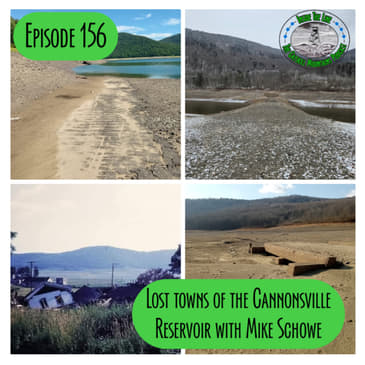
[00:58:13] So tonight Mike Chauvey is going to be joining us tonight to talk about the Cannonsville Reservoir. The history of the Cannonsville Reservoir. Now there's a lot of history. We find every reservoir that we've talked about so far. We're talking about the Shokin, the Captain. And now we're going to hit more west and go over the Cannonsville Reservoir. So Mike, welcome to the show tonight, buddy. Thank you. Thanks for having me. Yeah. Can't wait to talk about this. I have a lot of questions. Ted mostly wrote all the questions. So Ted, I don't know, man.
[00:58:43] You did pretty good this time. Thank you. It's myself and my staff of one little feline by the name of Bean helped me out with this. Well, good. Thank you, Bean. So Mike, why don't you give a little background about yourself? It can go far back as when you're a kid dating back in the Catskill, stuff like that. Whatever you want to say, you know, whatever you did, that involves a history of your life involving the Cannonsville. Sure.
[00:59:11] I was not raised in the Cannonsville or Rock Royal Valleys. I was raised about 80 miles north on the border of Saratoga and Schenectady counties. And I grew up in the shadow of another large man-made reservoir, the Sacondaga Reservoir. And that reservoir was not for New York City. It was for flood control for the North Hudson. And that land was taken by eminent domain, too.
[00:59:39] And my father's boss, my father was an engineer at GE, and his boss had a camp up on the Sacondaga. And we used to go up there in the summers. And I had great times up there and loved the Sacondaga. As I got older, my oldest brother married my father's boss's oldest daughter. So we became more of a family. And he invited me to come up there one summer to rebuild old homes.
[01:00:09] Up on the reservoir. And I saw a lot of the old pictures of the homes going underwater. Just the old roads. And I was just fascinated by that. And so fast forward a few years. I went to college, university at Cornell. I got a degree in microbiology in 1981. I worked as a research microbiologist for Kraft for nine years.
[01:00:35] Then I fulfilled my lifelong dream of starting my own business. I started a farming enterprise. And I started a trucking business, a farm delivery service to dairy farmers and horse owners. And I deliver stuff all over New York State, Vermont, New Hampshire. I've been to Pennsylvania, New Jersey. And I started going around the reservoir more often. The Cannonsville.
[01:01:04] And I remember seeing the old roads when the water would go down. And the old bridge embalmets. I just love stuff like that. I love old things. And in 1993, I started drawing sawdust out of a little mill in Stilesville, which, of course, that's where the dam is located for the Cannonsville. And soon after I went there, it was called Drummond Hardwoods.
[01:01:31] But they sold the mill and the new owners renamed it Cannonsville Lumber. To this day, it's known as Cannonsville Lumber in Stilesville. And I was talking with the art foreman one day. And I said to him, so where exactly was Cannonsville? I mean, I've driven around the reservoir. Where exactly was it? This is before they put the kiosk up on Route 10. And he said to me, well, he looked at me a little funny.
[01:02:00] And he took his index finger and he pointed it down to the ground at his feet. He looked right at me. He said, here. Well, I didn't know that much about the reservoir at that time. But I knew that Cannonsville wasn't in Stilesville. So that started a 30-year adventure of just researching everything I could, trying to find these old towns that were underwater.
[01:02:25] Trying to give a voice to all the residents who sacrificed everything for the sake of New York City. And that's been my burden for 30 years. It started off slow at first, and it's just gone up real fast. 30 years. Yep. Wow. And you've been researching this yourself. Kind of like, would I say solo? Would you say solo? Oh, yeah. I look at Google Earth Maps a lot.
[01:02:54] I used to use them a lot before I went out on my hikes to find out where I was going. I use topo maps. I use hand-drawn maps. Any kind of picture I can find, I try to do then and now pictures on my Facebook group to show people what it looked like before and then what it looks like now. So let's mention your Facebook group. This is how I found you, by the way. This is how. What's your Facebook group again? It's Lost Towns of Cannonsville Reservoir, connecting the past to the present. Nice.
[01:03:24] Yes. That's how I found you, by the way. It was, you have a lot of history in comparing, like you said, comparing then and now. It's just showing and giving people that kind of influence of like, wow, look what has happened in, oh, so many years. Exactly. And you've said you've done that to 30 years. 30 years, yep.
[01:03:46] So basically, when you started going around the Cannonsville Reservoir as your own business, trucking business and stuff, you started to gain interest just by looking at the old history. Especially when the water was, water goes up and down all the time in these reservoirs, as you know. It's never static. And sometimes during real low water levels, you can see a lot of things. Yeah. Now, to backtrack a little bit, I mean, we're talking about, we're still in the western part of the Catskill.
[01:04:15] So Stilesville is further west towards Deposit, correct? Correct. And Cannonsville is now, the former town is underwater now, correct? Yep. It's underwater. And that's why they named it the Cannonsville Reservoir. Exactly. Yep. All the other towns were smaller. Cannonsville was the biggest town, about 400 people. And how, like with what we're talking about, the Cannonsville Reservoir, how big is that compared to like the Ashokan and the Pekaptain? I know it's a pretty big reservoir, right?
[01:04:45] It's number three. The Pekaptain's number one at $142 billion. The Ashokan's number two at $123 billion, plus or minus. And the Cannonsville's at $94 billion. Wow. Yeah. Unbelievable. And now do you, when you do this kind of stuff, are you involved with anybody else, like in local organizations and stuff to help to regain the history of that? Before I started the Facebook group two years ago, no.
[01:05:14] It's just been me and my wife. We just love old things. We love exploring, hiking. After the Walton Historical Society, Jason Schwartz and Deb Bartlett have been just fantastic to me. They've encouraged me. They've helped me with some pictures, other data. They've invited me twice to come to the society to speak about this, like I'm speaking with you.
[01:05:44] They've asked me to do a presentation for the Walton Fair last year, which I did in their booth. And I write for them in their newsletter. They've just been a tremendous encouragement to me. I mean, encouragement is great, especially when you're trying to bring up the history lessons to the younger folk. Oh, my gosh. Of this day and age. It's got to be tough. It is. I love it. Well, yeah, definitely.
[01:06:11] I got to admit, you know, seeing some of the stuff. I mean, Tad can chat about this as well. Seeing some of the former things in the Catskills and former ruins or, you know, you're talking about the reservoirs. It just sparks your interest, and all of a sudden, there's a huge fire going to the next topic. And it's deeper for me because every time, and I speak for my wife too, every time we go to the reservoir, we go there often, as often as we can. We live about 40 miles away.
[01:06:40] Every time we go there, it's like walking through a cemetery, except instead of dirt covering the graves, it's water. And it's very emotional for me. I go through all the stages of grief. Sometimes it takes me hours to get through it, sometimes days. And I wasn't raised there, and I still feel the grief that these folks felt. Yeah. So, Mike, why don't we, we'll pick up with that.
[01:07:04] Let's talk about the communities that were consumed, were buried in water by the reservoir. Yep. Well, of course, Gainesville was the biggest one, about 400 people. It might seem insignificant to a lot of people. You could probably fit all of Gainesville into one floor of a New York City apartment flat, I suppose. But Gainesville was the biggest.
[01:07:30] There was Granton, Rock Rift, Beerstin, Rock Royal. A little place called Slow and Easy. It's my favorite place. I've never been there. I don't know if I ever will be able to get there, because it's so close to the dam. But Slow and Easy, also called Brookville. Johnny Brook was an area, a farming community up in the hills. It's still there, and never went underwater. A new one we found, we call it the Forgotten Lost Town. It's Huntington Mills.
[01:07:59] It was just south of Rock Rift. Part of Stilesville was also condemned by New York City, where the dam is. And the last place was a little place. It's not really a town. It's an area called Drybrook. So we're talking further east, correct? Drybrook area? Drybrook is, from Stilesville, everything is north, northeast. East, so Drybrook is up the Rock Royal Valley.
[01:08:27] The Trout Creek Valley, which we call the Rock Royal Valley, that came down and met at Cannonsville. And then the west branch went from Cannonsville up to Walton. Wow. It's like a V. Yeah. So, Mike, with all this research you've done, what's the story behind a place with the name of Slow and Easy? The idea. That's my favorite. That's my favorite place. Not surprising.
[01:08:55] Tell us if you know the story behind that name. Slow and Easy. There's two possible reasons why it was called Slow and Easy. One is because of the type of sawmill that was there in town. It was a slow and easy sawmill. Imagine sawing with an old saw, sawing a piece of wood. It would just go up and down real slow all day long. Bailey Lumber has one that they recreated that you can see down near Binghamton.
[01:09:25] I've seen it. It just goes up and down real slow. The other reason why it might be called Slow and Easy was because that was a part of the west branch where the river was very slow. It was very, not level, but very slow. The loggers would tie up their rafts there. So they called it Slow and Easy for the rate of the river.
[01:09:46] One of the most interesting stories about Slow and Easy, and it became kind of a local story, is a man was doing searches on his topo maps, and he saw Slow and Easy, and he saw the Slow and Easy School. And he wrote an editorial to the editorial to the editorial to the editorial to the Courier magazine, and he said he was appalled that anybody would make fun of mentally challenged children.
[01:10:18] Wow. Interesting. They wrote back to him and said, no, it's not about the mental capacity of the children. It's about the sawmill that's in town. Oh, well, and I always felt awkward because I'm a graduate of the Slow and Easy School. Same. So now, when we talk about, just a quick little brief into this, now we talk about the communities that were overtaken.
[01:10:44] How big is the dam down at Stilesville to overtake? Now, we haven't really, Ted, I've noticed that we haven't really talked about this. How much feet does it take to overtake these towns and such like that? I believe it's 150 feet tall. It goes up to the 1,150 foot topo map level on your topo maps. Wow.
[01:11:13] So all these towns were former farm towns that was overtaken by a 150 foot dam made for the New York City Sears War. Exactly. It goes for about 12 miles from the dam to Beirston, which is just below Walton. Wow. Unbelievable. Just crazy stuff. I mean, anybody, you know, if you have the time, just go on like a Google Maps and overlook the central part of the Catskills. And you can see the different types of reservoirs that we've had here. So amazing.
[01:11:42] Not all the towns went underwater. Only Cannonsville and Granton went underwater. Rock Rift never went underwater. And Beirston didn't either. Rock Royal went under maybe 25%. A lot of them stayed above water. They're still above water today. You can still walk the old Macadam roads. Oh, wow. Interesting. Where are these roads located? Like, I know.
[01:12:08] The Finger Lakes Trail system goes through the Cannonsville Reservoir. So, you can walk the Finger Lakes Trail through Rock Rift, Rock Royal, and parts of Granton. Okay. And Rock Rift used to have a fire tower, correct? Way up on the hill, yep. Okay. I think that's Bailey Mountain, isn't it? Yeah. Yeah. They're trying to restore that, I believe, to back to... Yeah, I want to try to do that if I can drag my body up there someday. We'll do it. Snow tie.
[01:12:38] In the winter, we can put you on a sled and we'll drag you up. All right. That's pretty good. That's got pretty good stamina, so... Yeah. Just bring a whip. Just bring a whip, crack it, and yell mush, and I'll take off. All right. So, Mike, you mentioned that some of these towns weren't submerged underwater. So, when we walk the trail, like the Finger Lakes Trail, are we going to see any ruins along the way of these old towns? If you know what you're looking for, you'll...
[01:13:05] Like, when you go through Rock Rift to see the old Macadam Road, the old Route 10 is still there. We walk it all the time. If you know what you're looking for, you'll see some ruins, some bricks. They pretty much demolished everything. They either burnt and bulldozed or bulldozed and burned. The Risley Sawmill in Rock Rift... Now, the Finger Lakes Trail goes through that. It's one of the few places in the reservoir you can actually see some ruins. Okay. So...
[01:13:34] They just bulldozed everything. Mm-hmm. So, prior to the eminent domain proceedings and the evicting of the families that occupy these areas, what were the industries? We've heard farming, presumably logging, and sawmills. What other industries are, if anywhere, in that area? Well, sawmills, certainly... It started with logging, right?
[01:14:04] When a person came into the valley in the late 1700s, I mean, that's about the only industry they could do was logging. Floating logs on the West Branch to Philadelphia was the big industry at the time. But as time went on, of course, sawmills would come along. Flower mills were big. Stone quarries, bluestone. Bluestone quarries all over the place. Acid factories.
[01:14:34] They made... There was one in Rock Rift and one in Beirston. They made charcoal, acetate, wood alcohol for gunpowder. Oh, wow. Dairy farms, of course, as time went on. There were two large milk plants, one in Cannonsville and one in Rock Royal. Just as a sidebar, Rock Royal Creamery actually made it to the Supreme Court of the United States.
[01:14:59] They sued for the right of farmers to start cooperatives. And they won their case. And you can find it online. Just do a search on Rock Royal and Supreme Court, and you'll come up with the ruling. But they made all the way to the Supreme Court. Stores. Go ahead. Sorry.
[01:15:23] With the Rock Royal Supreme Court, what does that have to do so they can do their stuff without the interference of New York City? Any farmer that belongs to a cooperative today can thank Rock Royal. Mr. Lewis took his case all the way to the Supreme Court and he won. Yep. The right for a farmer to belong to a cooperative. We take it for granted today, but it was a big thing back then. Yeah.
[01:15:47] So my understanding of that is dairy co-op is kind of like a union. And it would allow the farmers to basically collectively bargain with the milk plants. Exactly. The wholesalers. Get a better price for their milk. Sure. Yep. Wow. My neighbors right down the road, well, they're not there anymore, but they started the South New Berlin Milk Cooperative. And they can thank Mr. Lewis for that from Rock Royal.
[01:16:14] So you travel all the way from New Berlin down to the Cannonsville to explore this place? Well, I've gone down there three days a week, every week for the last 35 years going to that sawmill. Wow. I put over a half a million miles on my truck just going to that mill. So I go down there almost every day anyhow. Wow. And that's to pick up sawdust? Yep. Just to pick up sawdust for dairy farmers and horse owners. And they use that for the farm.
[01:16:44] They use that for bedding in the stalls, the stables. Exactly. Yep. So at this time, everybody, this is when you say God bless America, because this guy is doing the American dream, the American work and stuff like that. So, Mike, God bless you. That is awesome. Amazing work. Thankful for you to be up in upstate New York representing us. That's a bet. That's a fantastic. Holy shit. I got to look for your truck, by the way. Because I live right in Oneonta.
[01:17:13] You come right through me, I'm guessing. I used to. I'm kind of semi-retired now. But I'm still doing my three loads a week to Stilesville. Pretty much, I take the Route 8 corridor from south to Maryland to deposit every day. You'll see me. I'll send you a picture of my truck on Facebook. Sweet. You can see it on my personal page, too, which you have access to. Yes. Yes. So, Mike, is that a pretty cool rig you're driving?
[01:17:41] I have a 2003 Freightliner. It's a 10-wheel dump truck. It's got 675,000 miles on it. It's getting pretty old. And I'm getting pretty old. Yeah. It doesn't look like it, by the way. Thank you. So, when you talk about these submerged towns, I mean, we're only talking about a few, but then there were somewhere 25% and stuff like that. Do we have any, like, local industries and stuff like that that the economy kind of screwed with?
[01:18:09] I know we've, in previous episodes, we've talked about, you know, the Ashokan being overtaken, the captain being overtaken severely and stuff. Does the Cannonsville involve some kind of similar incidences where people were just fighting tooth and nail to say, hey, hell no, this is our area? Oh, I call it the, it's the long life and slow death of the Cannonsville Valley.
[01:18:35] This was going on, water to New York City was going on since the early 1920s. People have been fighting New York City ever since then. Yes, it's been going on for a long, long time. And I'm guessing that these guys, like the Sea Areas, kind of receive kind of the, I don't know, the feeling that they're going to be overtaken when the Ashokan started back in the early 1900s. They're like, wow, we might.
[01:19:02] People couldn't believe it, that they would ever, you know, come and take their valley. They took all these previous reservoirs. Why would they want this one? And it finally happened in 1955. They started evicting residents. And they started building the tunnel from Cannonsville to Rondout, about 45 miles. And people started moving out at that time. They had the last old home days, I believe, was in 1956.
[01:19:34] Unbelievable. No, I'm just, once again, like the fear that overtakes. You're starting the Ashokan, you're moving west, the Pcaptain, and you're right there. You're only like, I'm not sure the distance between the Captain and the Cannonsville. How long? I mean, that's... Can't be more than, what, 20 miles? Yeah. So you're kind of getting that fear that you have, of course, these mountains. And you're like, you know, they might be overtaking us soon. And then all of a sudden, it happens. It happens.
[01:20:02] And there's just a lot of, a lot of, I don't know what the word to use is, just anger at the city. We've heard so many things that this was, the Cannonsville was only a reserve reservoir. It wasn't really intended to be used that much. It was mostly created to keep the West Branch flowing to Philadelphia at a constant rate. That's about what we can figure. That's why a lot of folks call it the taking.
[01:20:32] It didn't have to happen. Do you still, like, keep in contact with some of these? Have you met these people individually, like, of the local residents that... Oh, yeah. I mean, it's been 70 years. Do you still, are there still people kind of alive that can tell you some of this? I've got an amazing story to tell you. When I started the Facebook group two years ago, one of the first members, a nice lady, I'll just call her Sharon, she grew up in Johnny Brook.
[01:21:02] She went to the Johnny Brook one-room schoolhouse. And she's been instrumental in helping me just understand Johnny Brook. Johnny Brook was just basically a four-mile-long dirt road with a schoolhouse in the middle and dairy farms in the north and dairy farms in the south. And we got talking more and more. Come to find out, my daughter-in-law is her second cousin. Wow.
[01:21:31] Sharon's grandmother is my daughter-in-law's great-grandmother. If my son and daughter-in-law ever have a child, grandson, I hope, because I have granddaughters now, no grandsons. If they ever have a grandson, I'll have a direct DNA connection to the Cannonsville Reservoir. Wow. And I never knew this when I started the group.
[01:21:56] Never knew that I would meet Sharon and that my daughter-in-law's family was from the reservoir. I never knew that at all. So what was her thoughts on what was going on at the time? Have you ever asked her about that? Yeah, everybody's pretty amazed. We got her to go with us last year to her great-grandmother's farm. We know where it's at. And we took a picture where her grandfather stood by the house. And that was really quite moving for all of us.
[01:22:26] Wow. Unbelievable. Yeah, it really was. So, Mike, when we're talking about the days before the city came along and took over these properties and evicted the locals, were there any of the Catskill Borscht Belt resorts in the Cannonsville area? Yeah, I saw that question. I thought, I didn't know what you meant by that. I've never heard of that before. Borscht Belt? Yeah. Oh, wow.
[01:22:55] So, Borscht Belt, we've hit on the Borscht Belt topic quite a few times on the podcast here. And in the Eastern Catskills, there were quite a number. And when I say quite a number, I'm talking in the hundreds. Three hundreds. Yeah.
[01:23:13] Of resorts, whether they be bungalows, hotels, motels, poshy places, or just bare-bone basic places that were largely patronized by Jewish families coming up to the Catskills to get out of the New York metro area for the summers and for religious observation during other times of the year. And these were, like I said, they all started off as mom and pop places. Some of them stayed that.
[01:23:43] Others grew as large as Grossingers. You ever hear of Grossingers? I have not. Well, you need to do a deep dive on Grossingers, Cushers, the Concord, the Nepheli, which a few weeks ago had a fire. Yeah, we'll be talking about that. Yeah, but these, the ones that I just mentioned were the largest and the poshest of these resorts in the Catskills.
[01:24:13] So the fact that you're unfamiliar with that phrase is an indication that in this valley that's now occupied by the Cannonsville Reservoir, there were no Horshbelt resorts. Yeah, I have never heard that at all in all my reading, yeah. Well, see, by hanging out with us tonight, you'll learn something. So you'll get hooked onto it, no doubt. It's a fantastic historic topic of the Catskills. Okay.
[01:24:42] Stosh and I are like a virus. We're contagious. We are. All right. So what about famous people? Any famous people from this area? I did a deep dive for you. I knew there were a couple. Okay. Daniel D. Tompkins. I have to emphasize, he was not from the Cannonsville Reservoir or from Granton, but his relatives were.
[01:25:07] And Daniel D. Tompkins was the fourth governor of New York State from 1807 to 1817. And he was the sixth vice president of the United States under James Monroe. And they named the town of Tompkins after him that the Cannonsville Reservoir is in. Wow. So he's kind of a semi-famous person. He was actually born in Scarsdale. But then there was Charles Cook. He was from the area.
[01:25:37] He was in the New York State Assembly and Senate. And he represented Delaware County. He was also George A.W. Bush's Secretary of Health and Human Services. And he lived over in the Trout Creek Rock Royal area. And he helped to broker this agreement between the city and the Catskill watershed towns for tax purposes.
[01:26:06] Road maintenance. It was a pretty big deal back in the 1990s after the taking. So Cook, he was really big into that. Then there's my favorite, Perry Shelton. He was involved in local politics. He's also the local historian for the town of Tompkins. He wrote a book called Tompkins, The First 200 Years.
[01:26:31] And it's kind of my Bible, a small b, small b Bible for everything Cannonsville. And he was the chairman of the Watershed Coalition. And he went to over 250 meetings between the Watershed Council and New York City to work out all these various and sundry. And he, I'll tell you what, there was, well, I guess we can get into that later.
[01:27:00] And then there's Pam Dauber. Everybody hear of Pam Dauber? Does it ring a bell? Mork and Mindy Days with Robin Williams. Oh, wow. Remember that show? You guys are probably too young for that. I know I am. Ted, I don't know about you. I'm not going to admit that I remember that show. Yeah, it was a famous TV show back in the 70s, I guess. I'm not sure if she still does, but she lived in the Trout Creek Rock Royal area.
[01:27:29] She was a famous actress, yep. She's still alive as far as I know. That's interesting. Wow. That's all that I have as far as famous people go. Now, when we talk about, of course, the 1950s, stuff like that, how did the DEC, New York State, kind of recognize these towns that were overtaken by the reservoir?
[01:27:58] Did they give, besides those, I'm sorry to say I make their cool, but those posts that are just like former site of Ashokan. Most of them are not really near where the towns were. Some are close. Rock Royal is about a tenth of a mile away. Granton is about two tenths of a mile away. Cannonsville is probably a good half mile away. They put a Cannonsville kiosk up on Route 10, which is, it's okay. You can stop there, look at some old pictures.
[01:28:28] It's better than nothing, I guess. Yeah. About it. And you can, like, basically when the water is super low, like we recently, so let's, so I'm sorry. Let's recently talk about the low waters that we've had and the explorations that we had. You know, I remember, you know, you probably saw my post about the arena place. Yes. That I did. So back, you know, a month or two ago.
[01:28:56] Yeah, I found just so much stuff. I couldn't only, like, I remember seeing your post about, like, a bridge that you saw. Oh, yeah. Well, one of the questions you were going to ask is what was saved. The Granton double span bridge wasn't saved. It was never taken out. It's still there. Oh, wow. Perry Shelton saw it upright in the 1990s. And then it disappeared from view.
[01:29:23] So I can only imagine it fell off its abutments or possibly the DEP went in there and blew it off its abutments. I don't know. But it's not standing anymore. Just the abutments are there. So that's the middle and the end, correct? The what now? The abutments. I'm just going with it. There's actually only one abutment on the east, on the west side. I have a picture of it that I put on the group. It's still there.
[01:29:50] But the superstructure, I think, is laying on its side. Yeah. So, I mean, this is, once again, during these low times of drought and stuff, we can see so much history. Well, right now what they're trying to do is, for the last 20 years, the Hudson River has been leaking about a million gallons a day into the New York City water supply. And what they've done is, for the last 20 years, they've been trying to repair it.
[01:30:20] And they were in the final stages last year. And they had to drain down the reservoirs to work on the aqueduct on the final process. But then the drought came along. They couldn't finish it. So it got down to about, Cannonsville got down to about 38% last year. About the lowest that I saw it. But they still have to fix that aqueduct. So they have to lower it again sometime this year. But we don't know when. I remember hearing about that, the repair of the, is it the Delaware that had to be repaired?
[01:30:50] It was the aqueduct underneath the Hudson River. Oh, yeah. The Catskill. Yeah. Yep. That's what they're trying to fix. Okay. Wow. Yeah. They've been trying to get at that for quite a few years now. Oh, yeah. 20 years. Yeah. Yeah. Wow. New York City has been drinking Hudson River water for the last 20 years. And they don't even know it. Mike, we got some Hudson's, or New York City listeners on board. So let's not mention that. They'll tell your water. Yeah.
[01:31:19] That might be why the bagels from New York are so tasty. So we've heard several times from prior guests about cemeteries and gravesites being relocated when they built the Ashokan. Can we assume that the same occurred when they did the Cannonsville Reservoir? They were all dug up. And, of course, this is kind of gross.
[01:31:44] Depending on when they died, how much was left, they would put in bone boxes for the older ones. They were probably 18 inches by, I don't know, 10 inches or so. They would just put them in bone boxes and they reinterred them all over the place. Wow. Wherever the relatives wanted them to be reinterred. Mostly papactin. And, wow, I haven't heard that before, Tad, have you?
[01:32:13] Yeah, that's pretty interesting. So I want to know, Mike, if you know, how was it they went about digging up someone then, the remains of somebody who had been dead for so long that alls they were going to find is bones? Was it more methodical? Was it more slow and easy, if you will, to not damage or disrupt the remains of somebody? Or did they go in with excavation equipment and just with a bucket, haul it out of the ground?
[01:32:43] I don't know. I don't know if they hand dug them. I don't know if they brought in backhoes. Back in the early 1960s, I don't really know what they had. That's not like today. I don't know how they did it. I've heard testimonies from people whose lives were changed from digging up all these bodies. Yeah, that's got to be fairly troubling.
[01:33:05] I mean, I know with respect to my father, I kind of take great pride in the grave site that I've established for him. And, you know, whether it's 25 years or 100 years from now when I'm gone, but it would be distressing to me that, you know, all of that got relocated. Oh, yeah. It still upsets people today. Yeah. Very upsetting. We came across the Brewer Cemetery in Granton.
[01:33:34] Maybe Stosh remembers seeing that post. I called it the Brewer Kids. Two children buried in the back of a farm in Granton. And all there was was a little blue stone marker. Then somebody came along and put in a regular stone marker for them back in the 1950s. But very, very sad. I don't know how much of them would have been left.
[01:34:00] They weren't buried in the public cemetery in Granton. They had to be premature babies. Wow. And what could have been left? What could they have saved, you know? Yeah. Yeah, just imagine. Sorry, Ted. Just imagine somebody coming up to your door and saying, hey, are your loved ones buried in the back? You got to move them because we're building a reservoir. Yeah. Wow.
[01:34:28] I know on the Ashokan, you could do it yourself and make money. I know one of your previous guests that you had talked about that. I've heard the same thing for Cannonsville, but I have lost the records of the person giving the testimony how it changed their lives, digging up their loved ones. Wow. Unbelievable. I know. Yeah. It's very sad. It's very sad.
[01:34:59] Thousands were dug up and removed. Wow. And they weren't relocated to a particular cemetery? They were just dispersed? The DEP would, or the Board of Water Supply, sorry. They looked for interested relatives of where they wanted to be relocated. Mm-hmm. And they would put them there. If they didn't have a relative, then they went to the Papakdon, I believe. Okay.
[01:35:24] What about the families that were alive and had to move out? Was there any particular area that the people of Cannonsville or the people of Rock Riff moved to? Oh, boy, that's a good question. Ironically, we've been here for 40 years in south of Berlin. I actually came across a couple people who were from down there.
[01:35:54] They live right up here in New Berlin, some in Bainbridge. They all became friends. And then when I started this group, I realized that they had come from Cannonsville and moved up here. So many came to Shenango County, some over towards Walton. They went to Walton, Hancock, Pennsylvania, I suspect, all over the place. Mm-hmm. Wow. What about in terms of relocation?
[01:36:24] Were there instances that you're aware of where the water authority or the city gave folks replacement land? Or were they just handed a pile of cash, a check, and told, you know, go out and buy what you want? Yep. But eminent domain is legal, but it's evil. You're basically given the opportunity to bargain with them for a price.
[01:36:52] The Board of Water Supply surveyed every single bit of the 20,000 acres in the Cannonsville Reservoir. And they're all at the Walton Historical Society. High-quality surveys. Excellent information for me. But all the land was appraised. And I have the number here somewhere.
[01:37:15] Perry Shelton figured it out that before the taking, all of Tompkins County, where the reservoir was going to go, the 20,000 acres, was appraised for $1.4 million. The total awards given by the Board of Water Supply was about $656,000. So roughly 50 cents on a dollar. Wow. Wow.
[01:37:42] Did any of the locals, you know, lawyer up and fight the city? Was there a lot of skirmishing in court? They tried to fight it, as any of us would. Yeah. But Perry Shelton hit it on the head. He said, there's more lawyers and politicians in New York City than the entire population of Delaware County. They didn't have a chance. Yeah. No chance at all. No chance at all. All right.
[01:38:10] So you said this was in, what, $1.4 million? That was the appraised value of Perry Shelton said back in, let's say, 1960. Okay. I'm trying to figure out. They got about $6,000. $16 million today. Yep. There's 941 people involved, 94 farms, 20,000 acres.
[01:38:35] And those were the appraised values that they didn't get but 50 cents on a dollar. Helen Zant was still alive. She wrote two books on the reservoir. You want the books they're called so I can... Yes. Memories 1 and Memories 2. Oh. All right. I'm surprised you remembered that. Yeah. She wrote two books. She said, nobody came out of the Cannonsville Valley making any money.
[01:39:07] And she's probably right. It'd be interesting to compare the $650,000 against what the overall cost of this project was. Right? I think it was... I've heard different numbers. It was a lot of money, even back then. It took 10 years. Yeah. But, you know, you would really think that the city of New York could have done better than $650,000, first of all, given what they were spending on the overall project.
[01:39:33] And I just find it interesting that, you know, these people had to take a check, sell their land, give up their rights going forward. But in perpetuity, the city of New York gets the water off of this. Right. You know, the city profits from all of this. And these folks were basically forced to accept this money. You can't fight City Hall, especially when it's, you know, New York. Right.
[01:40:02] With, as you say, all the lawyers in the world seem to gravitate towards New York. Right. And these poor souls, I mean, they were, from what you tell us, some of them were just farmers that went to one-room schoolhouses. Yeah, right. And they had been there for, some of their families have been there for 200 years. Yeah. In that valley. Yeah, and their relatives were buried in the backyard. Exactly. There's many cemeteries like that. Just backyard cemeteries. Yeah. What a shame. Yeah.
[01:40:32] So, Stosh, why don't you pick it up from wherever you want? So, with kind of the Lost Heritage stuff like that, do you see anybody kind of like coming together? I know you remember, I remember you talking about the Walton Historical Society.
[01:40:50] Do you see anybody coming together and, you know, getting together and chatting about the old days of the Cannesville Reservoir or kind of like the memories and stuff like that that they once had before this crazy event happened? Helen Zant, like I mentioned before, she gets together with anybody who wants to come. We went last year. It's held in deposit at the pavilion. Anybody can come. And it's dwindled over the years, you know, obviously, after 60 years.
[01:41:20] But people still come. I've had a chance to meet some great people there. The Rock Rift folks get together once a year. They have a little group that gets together. They're very small, maybe 12 people. And, of course, the Lost Towns of Cannesville Facebook group. It's been a great source of people to reconnect with each other. Yeah. And, you know, a lot of, you know, that group, I got to admit, is fantastic with people exploring, like you.
[01:41:49] And there's one other guy that I know. I don't know if he listens to the show. I highly doubt it. But he explores a lot. I'm trying to think of his name. But besides you, he's the other person that explores the area a lot. Yep. You just have to go back over and over again just to look for things. You really have to use your imagination to say to yourself, I guess this could have been the spot that I, you know, the picture of my hand. This could be the spot. The mountains are the same.
[01:42:18] The stream's in the same location. This could be the spot. Yeah. Kind of like the then and now. So, with that, how do we get the, I mean, you said it's dwindling and stuff. How do we get the younger generation? I mean, I'm 42 years old. I still have interest in this. And I still, like, kind of bring myself to this stuff. But how do we get to, like, the 20-year-old people into this, interested in this heritage stuff, this history that we have, this huge history?
[01:42:47] Well, the only thing I can say is it's groups like my Facebook group that help. There's a lot of young people on there. Facebook allows you to look at the age distribution. Most of the group is in their 60s to 80s. But there are, you know, maybe 10% of the, there's almost 5,000 people in the group. I would say probably 20% are young people. Wow. And that's good. Yeah. That's impressive. Yeah. Yeah.
[01:43:15] Get these young people to explore more and to do the work for us. Right. That's why it's been such a blessing in the last two years. You're getting more and more people out there with eyes on the ground. And they take pictures. And I try to get them, please tell me where you took the picture. What direction were you facing? You know, there's stuff like that. It helps me greatly.
[01:43:44] Two peaks separate. It's kind of tough with that whole valley just flowing. Because the Cannonsville is just like the Captain. It's just in and out, in and out. You know, there's valleys. And you can only do so much from one picture. And if you say, hey, I'm facing west, that makes a whole bigger difference. Sometimes my wife and I, we've had to go back several times just to get the right shot. Yep. Correct. And you've done a fantastic job.
[01:44:11] And I will tag your Facebook group, Lost Towns of the Cannonsville Reservoir. Fantastic group. If you want awesome history about the Cannonsville Reservoir. Thank you.
[01:44:20] So, Mike, to what extent do the folks that are relocating to this area, moving up, whether from the New York metro area or elsewhere, to what extent do any of these newcomers have an appreciation for what was there before the reservoir was there?
[01:44:42] And what this community went through, you know, in the years that the city was making its plans and then started coming in house by house, evicting people and tearing down houses. Are the newcomers aware of this or are they oblivious to it? I don't think many people really care to come up here and they don't really know. They don't know enough to care, you know.
[01:45:08] They see the old road there at the Nine Mile Bridge in Cannonsville. The old Sands Creek Road goes right down into the Cannonsville Reservoir. I call it the road to nowhere. And they have no idea what happened there, you know. It takes groups like mine, I think, to bring it alive. And is there any resentment between the old crowd and the new crowd? Oh, yeah. I have resentment and I wasn't even raised there. Yeah.
[01:45:38] It really gets, it really grates on my nerves every time I go there, like I mentioned previously. And the people that were displaced still are very hard feelings about the whole thing. Yes. Yeah. Just imagine being pushed out of your, hey, you got to move because we're making a place to preserve water for New York City. Like, well, back in my day when you took something from somebody without your permission, it was called stealing.
[01:46:08] Yeah. Exactly. It gets kind of personal when they take your land. Yeah. Yeah. And it's crazy. Once again, you're talking about just people not appreciating. Maybe hopefully when they come up here and the locals can more like, I wouldn't say greet them, but preserve them with what happened here. You know, once again, the history.
[01:46:34] When the Walton Historical Society had their booth, like I said, this past summer at the Walton Fair, I put together that display for them. And they said it was the best display they've ever had there. Because there were a lot of city people going in there looking at the display and not realizing what had happened at the Cannonsville Reservoir. They just thought it was a giant lake. That's so sad. So sad.
[01:46:59] That's why I'm trying to tell people, don't make the Cannonsville into a lake. Always at least call it a reservoir. There's a difference between a lake and a reservoir. The Sacandaga, they succumb to calling it a lake finally. If you look on your Google Maps, they'll say Sacandaga Lake. It used to be Sacandaga Reservoir. Let's at least have some decency and keep the Cannonsville as a reservoir. You'll get shot on a reservoir.
[01:47:27] You'll get shot on a reservoir but not a lake. For trespassing. So, Mike, I think that's a great point that there is something in that designation, that it's a reservoir. And while we have your attention on this topic, what is it that you would say? Because be mindful that a lot of our listeners are from the New York, New Jersey, downstate area that benefit from this water supply.
[01:47:54] I mean, this water just doesn't go only to New York, the five boroughs. It goes to places like New Paltz, Newburgh, New Windsor. Sure. You know, Yonkers, etc. So, what's your message to them about what was lost in their hurt feelings? What would you like to convey to those listeners?
[01:48:17] Just remember the sacrifices that these people made for their well-being, for their safety, for their water safety. That's all I really am trying to strive with this group. Just remember the sacrifices they made. Yeah. And appreciate what you have. Yeah, appreciate what you have. There's an old Chinese proverb that goes, if you like the water, remember the source. Oh, I like that. Yeah, yeah.
[01:48:47] Yeah. Amazing, yeah. It's just, you know, that's the purpose. That was the purpose of this podcast, is kind of get the word out, not just about hiking in the Catskills, but everything that I have found when I started hiking in the Catskills. You know, I started with the Ashokan Reservoir, and I found out of a captain, and then I found out of a scary, and then it just, once again, I mean, I hate to say it, the floodgates opened. Like, I just purchased books.
[01:49:17] I started, like, just doing research, and then I'm just like, wow, the amount of stuff that happened to displace these communities, these towns, and stuff like that, was absolutely insane. And have we heard it so far? Ted, we've gotten in for every reservoir. We've got to get the Roundout. And what's the other one? The Skahari we already heard about. The Croton system was the first one. Never Sink. Roundout. Never Sink. Yeah.
[01:49:47] The Skahari, Ashokan, and Kansville. Yeah. Yeah. So we got the Never Sink and the Roundout that we've got to get people about. It's just so much sorrow. So much sorrow in all these reservoirs. It's really sad. Yeah. Yeah. Moment of silence. I know, right? Moment of silence. I don't know what else to say.
[01:50:14] I'm glad you joined us on the show, and I'm glad you're doing this for the Cannonsville Reservoir. Once again, we have a good amount with every single reservoir, and the Cannonsville doesn't get as much appreciation as it should, because it's the furthest west. Right. And I think it should.
[01:50:35] It once again should, because it was one of those places that was overtaken by New York City for its water supply, and it needs a recognition just like any other the reservoirs need for the sacrifices they made. And hopefully... Give them a voice. Yeah. Let's try to give people a voice.
[01:50:57] And, you know, with that, Mike, do you have any, like, local, like, books about the reservoirs that you've read that you would like to kind of give a shout-out to that we could, like, recommend? I mean, not just about the Cannonsville area, but have you researched any books or any organizations somewhat that you would like to give a shout-out about to people to do their research on?
[01:51:21] Well, the Walton Historical Society, like I said, Jason Schwartz and Deb Bartlett are just amazing. It's worth your $25 a year to join up with them. They are just fantastic people, and they've been so encouraging to me. They have some of the books that I'm going to mention here. Helen Zant Shriver's. Helen Shriver Zant's two books are great. They're scrapbooks.
[01:51:47] They're a little fuzzy picture sometimes because they're just basically printed on the page. But great information on all the towns. Let's see. There's two great books on Rock Rift out there that the Walton Historical Society has. Perry Shelton's book, Great History of the Reservoir, Tompkins' The First 200 Years. I would just encourage you to get those books. They're great. Awesome. Awesome.
[01:52:18] I wrote those down, and I will tag them in the show notes. Absolutely fantastic. I hate to end this with a crazy question and a bad question. Do you think there was any greater good that happened from this? Well, you know, I saw that question on there, Stash, and this is the deal. Okay. By the way, so, Mike, I'm going to interrupt you there. Yeah. Thank you for saying Stash because everybody says Stash.
[01:52:47] My wife is standing behind me with a board. If I didn't say it that way, I was going to get hit. So everybody says Stash. So thank you, Mike. Go ahead. Yeah. Was there any greater good from this? The deal is that we have a nice farm here. We've been here for 40 years. Let's say a land developer comes up to my place and a real estate person and says, Mr. Chauvy, nice farm you have here. And I would say, thank you. Thank you. Thanks for that.
[01:53:17] You know, this would make a great place for a casino. You're up here on a hill. Beautiful view of the Unadill Valley. Would you want to sell so I could put a casino up here? Oh, no. No, thank you. I love my place here. I want to give it to my son someday. I want to continue the tradition here. I'll double the value. Nope. Nope. Sorry. I'm not going to do it. Okay. You know, the greater good here, the greater good is so much better with a resort than
[01:53:46] a stinking old hill farm. I'm going to take you to court. I could have you out of here in about 30 to 60 days. You better take my offer now. It could happen, Stosh. That's not a greater good. It could happen to anybody. Yeah. That's the truth. That is it. That's how eminent domain works. You put your finger on a map and you can say, I want this. It's for the greater good. Tad is silent with this. Yeah.
[01:54:15] Well, you know, I feel for the folks of Kenyfield. Yeah. Well, that's, yeah. I mean, that's, it's pretty interesting that it's pretty easy for the government to conquer one person when everybody else steps, sits back and does nothing. Yeah. It's happening right here in South New Berlin now. They're going to, they're going to redo Route 8 from South New Berlin to Mount Upton.
[01:54:44] It's going to be a three-year project. And I have friends that live on Route 8 and I've asked them, how is this working? He said, well, the state comes in and says, we need your house. It's for the greater good to straighten out Route 8. We'll give you three chances at giving us offers. And then you're going to, then you're going to get what we tell you you're going to get. Wow. That's how it works. Yeah. I didn't know about that. And I live close to you, so I didn't know about that. I'll have to look into that.
[01:55:14] Yeah. So I have one just out of left field question for you, Mike. Sure. While we have you, I read somewhere a couple months ago and I haven't been able to find it since. Was there a baseball bat manufacturing plant in that area? I don't know if it was in Walton or further west that recently in the last five, 10 years went out of business. Oh, boy.
[01:55:43] Unadilla, the Unadilla factory went out of business. And they made baseball bats there? Oh, I almost hauled sodas out of there. I'm not sure if they made the plugs for the bats or the bats themselves. I'm not really sure what they made there. But the ash, the emerald ash borer really put them out of business. They couldn't, had a hard time getting ash logs anymore. Mm-hmm. Yeah. Oh, interesting.
[01:56:12] Yeah, let's look into that because it involves the ash trees, which we all walk by and some Catskill history with that. Sure. Interesting. Yeah. We'll maybe get that on in a future episode, give our listeners something to look forward to. Interesting. Especially the people to the west. So hopefully we have some listeners that go to the west. So I know Darren. Darren is one of our listeners. There's my friend Darren White. He lives in Binghamton. So he comes over from the west.
[01:56:41] So he travels through 17 and stuff like that. So Mike. There's one. I know you're probably getting short on time. But there's one more person that I'm doing research on that used to go to camp in the Cannonsville area back in the 1950s. And his name was Donald Trump. No way. The hillside camp up on Sands Creek Road. Up here. Up here. Yeah. Yeah. His father sent him to this camp.
[01:57:12] A lot of city kids came up to this camp. And he was one of them. So he would have certainly have visited Cannonsville back in the day. Wow. I did a search on my Facebook group just for some reason. I put Trump in for a search for people. And there he is. Donald Trump as a member of the group. I don't believe it. Nobody else can get him to come up on their particular accounts. But it comes up on my account. Wow. Go figure that out. I don't understand.
[01:57:42] Unbelievable. You're targeted. Yeah, I'm targeted. Stop sending secret information. Finding secret information about the New York City water supply, Mike. You're going down. Well, Don Jr. has a camp in Hancock somewhere. Not Hancock. Roscoe. Oh, okay. I mean, Roscoe is a beautiful area. I can only imagine. So one last question, Mike. Post-hike, bruised and bites. When you're down in the reservoir area, when you're sculpting, it doesn't matter,
[01:58:11] reservoir area, where do you like to go get something to eat when you're out doing all this amazing digging and research information? We like the Hancock Diner. We go there quite often. I think it's D&D. They're good. We always stop at Bob's Diner in Bainbridge on our way down to the reservoir, especially breakfast. They're great. That's really about it. Yeah, right. There isn't much. No. I mean, it's a wall.
[01:58:38] And I drive through there all the time when I have to go down to Roscoe and to kind of like the Denning area to hike and stuff like that. So it's not much. I'm sorry. But if you do hike too in the Canisville area, that's another issue. If you hike on the Finger Lakes Trail inside the reservoir, you don't need any permits. But as soon as you step off of the Finger Lakes Trail, you have to have your DEP permit.
[01:59:08] And you have to have a fishing license on you, a valid New York State fishing license. And it would be good to carry your fishing pole with you. Please, please do. I got shot like three times when I was out doing the arena area in the Captain House. I got helicopters. Oh, yeah. We've had helicopters fly over us. And just be careful. Just follow the law. Get a permit. It's not crazy.
[01:59:38] It's not that big of a difficult to do. So that prompts me to ask one last question to Mike. Yeah. Are you a fisherman? I am not. Yeah. Mm-hmm. I'm not a fisherman. But you have been seen carrying a fishing pole around the Canisville area. I always have a fishing pole. Yeah. Okay. Always actively fishing. Yeah. That's another key term you have to remember. You must be actively fishing. Gotcha. So you have bait with you, or is your story that you're going to dig some bait when you
[02:00:07] get closer to the shore? Okay. So you have this all thought out, right? Yeah. Every step of the way. I don't want to get arrested. Gotcha. When we first went to get our DEP license, I don't know how many years ago, before you could get it online, we went to the Beirsten DEP office to get our handwritten permit. He says, what do you want this for? I said, I want to go find some of the old places in the reservoir, the old foundations, old roads. He says, you're not going to find anything.
[02:00:37] And that really motivated me. Yeah, right? Yeah. At that time, you didn't have to have a fishing license. You just needed a DEP permit. Mm-hmm. Nice. Yeah. Once again, follow the law in the New York State. You're going to get shot. Yeah. Yeah. You better. Especially in the reservoirs. Just make sure you have all your permits. Yep. Yeah. Awesome. And a fishing pole. And a fishing pole. And bait. And a lure. Yeah. And make sure you're actively fishing when they catch you. Gotcha.
[02:01:07] Yeah. All right, Mike. So thank you for joining us tonight. Really appreciate your... Thanks for having me. Yeah. I really appreciate your history and, once again, your time that you've donated to digging up the history of the Cannonsville Reservoir, New York City Reservoir system. It's fantastic. And thank you once again. And once again, check out his place on Facebook, the Lost Towns and the Cannonsville Reservoir. Amazing place to find out history amongst just the Cannonsville Reservoir, but all the
[02:01:37] reservoirs. Everybody is very active on that spot. So, Mike, thanks again. I really appreciate it. I hope you have a good night and let's get together in the future and you can teach us more about the Reservoir. Absolutely. I'll be happy to take you out there if you want to go out there and I'll see you on Facebook. Awesome. Excellent. Okay. Thanks, Mike. Thanks, Mike. Thanks, guys. Have a good night, Mike. Good night. Hi, everyone. I just want to thank you for listening to the show.
[02:02:05] If you enjoyed the show, subscribe and throw down a smooth review on Spotify, Apple Podcasts, or any podcast platform that you use. You can also check daily updates of the podcast, hikes, hiking news, and local news on Facebook, Instagram, Twitter, and the official website of the show. Remember this, you gotta just keep on living in the Catskills, man.
[02:02:35] L-I-V-I-N Wicked, wicked, wicked, wicked.