
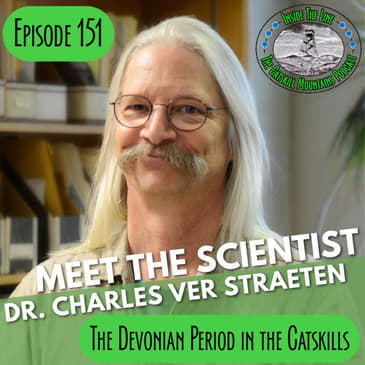
Welcome to episode 151! Tonight, Tad and I chat with geologist Charles Ver Straeten. Charles, aka Chuck, is a geologist from the New York State Museum and we do a deep dive into the Devonian period in the Catskills. If you need a sticker, email me or go to Camp Catskill! Subscribe on any platform! Share! Donate! Do whatever you want! I'm just glad you're listening! And remember... VOLUNTEER!!!!!!
Links for the Podcast: https://linktr.ee/ISLCatskillsPodcast, Donate a coffee to support the show! https://www.buymeacoffee.com/ITLCatskills, Like to be a sponsor or monthly supporter of the show? Go here! - https://www.buymeacoffee.com/ITLCatskills/membership
Thanks to the sponsors of the show!
Outdoor chronicles photography - https://www.outdoorchroniclesphotography.com/, Trailbound Project - https://www.trailboundproject.com/, Camp Catskill - https://campcatskill.co/, Scenic Route Guiding - https://adventurewiththescenicroute.com/, Another Summit - https://www.guardianrevival.org/programs/another-summit
Links:
Chuck’s Page, NYS Museum, Devonian Period Catskills
Volunteer Opportunities:
Trailhead stewards for 3500 Club - https://www.catskill3500club.com/adopt-a-trailhead?fbclid=IwAR31Mb5VkefBQglzgr
fm-hGfooL49yYz3twuSAkr8rrKEnzg8ZSl97XbwUw, Catskills Trail Crew - https://www.nynjtc.org/trailcrew/catskills-trail-crew, NYNJTC Volunteering - https://www.nynjtc.org/catskills, Catskill Center - https://catskillcenter.org/, Catskill Mountain Club - https://catskillmountainclub.org/about-us/, Catskill Mountainkeeper - https://www.catskillmountainkeeper.org/, Bramley Mountain Fire Tower - https://bramleymountainfiretower.org/
Post Hike Brews and Bites -
#geology #catskillsgeology #devonianperiod #husdonvalley #hikingNY #kaaterskill #bluehole #catskillhiking #visitcatskills #catskillstrails #catskillmountains #catskillspodcast #catskills #catskillpark #podcast #catskillshiker #volunteers #catskillmountainsnewyork #catskillspodcast #catskillshiker #catskillshiking #hiking #catskill3500club #insidethelinecatskillmountainspodcast #volunteercatskills #catskill3500 #hikethecatskills
[00:00:29] The bushwhacks were some of the worst days I've ever had in the mountains, or life really.
[00:00:36] Whereas Pantsy Mountain is totally opposite, it's a mountain on top of a crater.
[00:00:42] I think the weather challenges on this incident were particularly difficult.
[00:00:47] It is really the development of New York State. Catskills will respond to it.
[00:00:52] Passing into Inside The Line, the Catskill Mountains Podcast.
[00:01:09] Nice. We'll talk about that later. So welcome to Episode 151.
[00:01:14] Tonight geologist Charles Ver Straeten joins us tonight and we're going to talk about, of course, geology and the Catskills.
[00:01:21] It's going to be absolutely phenomenal. I've been waiting for this for a long time.
[00:01:25] Charles and I, aka Chuck and I have been in talks for a very long time.
[00:01:30] My friend Carl Backus, who's previously on the podcast, geologist Charles Carl Backus,
[00:01:37] joined me and introduced me to Charles, aka Chuck.
[00:01:41] And it's been a long time coming, so I've been waiting for this for a while.
[00:01:46] So welcome to Episode 151.
[00:01:50] So we had recently a winner to the tickets to see Jamie's film Variable.
[00:01:56] Congratulations to Chrissy G, but unfortunately she couldn't attend.
[00:02:01] So it went to Kate RPB.
[00:02:03] So congratulations, Kate, on going to see the screening for the Variable.
[00:02:08] Make sure you say hi to Jamie for me. I'll be at the Hunter one in January.
[00:02:13] So enjoy it. The film is absolutely phenomenal. Chrissy, if you can go to any other time, I know there's one in New Paltz that you said you wanted to go to.
[00:02:21] And there's one in Hunter that you can attend. Go to one of those, because I'll be at the Hunter one.
[00:02:29] And there'll be one in New Paltz at the Rock and Snow.
[00:02:32] Yeah.
[00:02:33] Great place to buy gently used or really, really abused gear.
[00:02:39] Yes. Yeah. I heard about that. I've heard of Rock and Snow has great, great, great place to buy gently used or really, really abused gear.
[00:02:43] Yeah. Rock and Snow is legendary.
[00:02:47] Legendary. I'll have to get down there sometime.
[00:02:49] I gotta, I gotta get, I gotta get out west. So out west out east. Jesus.
[00:02:53] What am I talking about?
[00:02:55] It's been a long day. Not really actually been a nice day. Talk about that later.
[00:03:00] So once again, congratulations to Kate.
[00:03:03] Hope you enjoy the event because it's going to be phenomenal.
[00:03:06] Jamie is going to be having a Q and a about it and stuff like that.
[00:03:08] Woodstock is the event that was sold out.
[00:03:12] It's going to be awesome. We had a great time talking with Jeremy about his stuff doing the, the Adirondack 46 and the 3500.
[00:03:20] He was, it's just, I want to hear more stories about him stuff.
[00:03:25] It just sounds crazy.
[00:03:26] And Tad you're a skier. So you probably have a lot more questions than I do.
[00:03:31] Yeah. I mean, I, you know, I, I get what they did.
[00:03:34] I would never, even in my crazy days of skiing, I never would have dreamt of doing what they did or see how it could be completed.
[00:03:44] But kudos to them, man. Cause to me, that's just totally incomprehensible what they did.
[00:03:50] The determination. I mean, slogging through that snow, you know, on, on snowshoes is one thing.
[00:03:57] Trying to go up there on skis and then ski down it is just completely different.
[00:04:01] I just, my hat's off to them.
[00:04:03] Yeah. The film shows it.
[00:04:05] And like, like, like you said, doing snowshoes in one thing, but like going up in the skis and their ski boots that I saw, I was like, what the, what the hell is wrong with these guys?
[00:04:16] No, I mean, you know, some, sometimes when you're out bushwhacking and you need to go under something and you duck down and then your pack catches on it.
[00:04:25] Right. As you're ducking under a tree branch or something else, you're going under blow down, you're trying to get under it.
[00:04:30] So you're bending down, but the top of your pack gets caught up on it.
[00:04:34] Could you imagine having skis strapped?
[00:04:39] Right. I mean, so what do you do?
[00:04:40] You have to take them off when you need to go under stuff like that.
[00:04:43] Or if you're skiing and you get to something like that, you would, you have to take them off, put them on.
[00:04:48] It's just like a constant, like slog to get up there with stuff like that.
[00:04:53] And then when you start to head downhill, I mean, sometimes there's not a lot of snow cover or like when I was out hiking this weekend, there was plenty of snow cover, but there's still spots where you're punching through and you're not seeing that blow down.
[00:05:07] That's, you know, inches above the ground, but under the snow.
[00:05:11] So if you're skiing down with skis, you're going to hit that, not knowing it's there.
[00:05:16] Are your skis going to submarine and go under it?
[00:05:19] No, this is the stuff they're constantly dealing with the whole way down.
[00:05:22] So it's very dangerous.
[00:05:25] And again, I just, as much as crazy stuff I did 30 plus years ago as a skier, I just don't have that, you know, and I skied in the Catskills, but not, we wouldn't go to the top of the mountains.
[00:05:38] We would do these, these open, not clear cut areas, but where there wasn't a lot of blow down and under brush.
[00:05:46] Those are the areas that we would ski.
[00:05:48] And they were very easy to ski for us compared to what, you know, Jamie and Julie and Doug and now others.
[00:05:56] I saw somebody up on bear pen when I was there a couple of weeks ago, had skied at his name.
[00:06:01] I, he's got to tag us in some of those.
[00:06:02] I gotta, I gotta mention his, I gotta, I'll look it up while we're doing this.
[00:06:07] And then there was a fellow this weekend.
[00:06:09] I saw his name was McKinley.
[00:06:11] That's how we introduced himself.
[00:06:13] Uh, who was on skis at done Rossk East Rossk.
[00:06:17] I met him at the top of Hunter.
[00:06:19] And then he was on his way over to Southwest Hunter.
[00:06:22] Wow.
[00:06:23] Yeah.
[00:06:24] It's crazy.
[00:06:24] It's crazy that people are, uh, doing this with the, with once again, with what we talked about, like you said, fricking just even bushwhacking, dipping below some sagging trees that have, that have amounts of, uh, like snow on them.
[00:06:40] And you're just like, God damn, this sucks.
[00:06:42] Just imagine coming down that.
[00:06:44] Yeah.
[00:06:44] So you really have to want it to do it, but it seems like this is like going to take off and a lot of people are going to do it.
[00:06:51] So is this going to be like with the, the trail is mountains that the DEC is going to get all wound up because people are skiing these summits.
[00:07:00] Um, is the DEC going to say, we need to put chair lifts in.
[00:07:04] Is that what's coming?
[00:07:06] Yeah.
[00:07:07] Is the window mountain club going to want to fly people to these summits via helicopter so they can ski them?
[00:07:13] Is this like the new thing?
[00:07:14] I hope not.
[00:07:16] Yeah.
[00:07:16] Yeah.
[00:07:17] Thanks Jamie and Julie for not tagging us.
[00:07:21] So whatever.
[00:07:23] So, um, you know, I hate to go from this positive story to what's kind of happening.
[00:07:29] The, the biggest story that we have going on is that the search for the 22 year old missing guy in the Adirondacks has shifted to a recovery.
[00:07:39] Now.
[00:07:40] Uh, like six, seven days ago, Leo, uh, the four was missing up in the Adirondacks up an island mountain.
[00:07:47] And he, I gotta admit that we're coming from all my friends talking from all my friends that have been up there.
[00:07:53] You know, even in the summer, that's a tough hike.
[00:07:56] It's nine miles to the top of the mountain.
[00:07:59] So 18 miles round trip.
[00:08:01] And, uh, they said it's brutal in the summer.
[00:08:04] So being in the winter, it's absolutely even more crazier.
[00:08:07] And he's 22 years old.
[00:08:09] Uh, he was missing more than a week ago as of today.
[00:08:12] And they have talked about the forest rangers authorities have said heavy snow, cold temperatures has made it essentially a possible.
[00:08:20] Um, the guy from Quebec was, uh, thinking they think that he was on island mountain on November 29th.
[00:08:27] They found a water bottle.
[00:08:29] That was the last clue that they had.
[00:08:31] And they have found absolutely nothing since then.
[00:08:35] And they have done mouth.
[00:08:37] Like they said that they've done over 400 miles or 400, 400 miles, right.
[00:08:44] Of searching.
[00:08:45] Um, and 60 rangers, uh, have been searching over the area.
[00:08:50] And they have found absolutely nothing.
[00:08:53] So they have said that they have scaled back and they have, uh, limited resources, of course, of this area because of the insane weather conditions.
[00:09:03] Now, if you think that, you know, hiking, you know, three, four miles up to the summit of slide mountain or something, breaking trail is bad.
[00:09:12] But imagine hiking nine miles up to a 4,000 foot summit.
[00:09:16] I remember that Alan and I haven't been up there, but I remember reading the Alan is 3,500 feet elevation gain.
[00:09:22] And that doesn't start until you're like six miles into the hike, probably even more than that.
[00:09:29] Uh, that's brutal.
[00:09:30] And that's, that's another reason why I won't go into the Adirondacks because I just want my elevation gain to start right away.
[00:09:38] Like the Catskills in the white mountains.
[00:09:40] And, uh, you know, just to think about this in the winter, uh, and with all my friends contacting me saying that this is brutal.
[00:09:48] And even before when they started first reporting this, that this guy had no chance, it sucks, it hurts.
[00:09:58] And it just, you know, to the Rangers out there battling these, these conditions that they had, you know, I can't say anything, but thank you because it's just been a crazy thing to think about.
[00:10:12] You know, it's always on your mind, like, is he alive?
[00:10:16] Is he, is he, you know, hanging on and it's tough to even after two days up there to think that up above tree line and up above these harsh conditions that anybody could survive with hypothermia and stuff like that.
[00:10:31] It's just, it's brutal.
[00:10:33] And, you know, what can you say?
[00:10:37] Yeah, it's very sad.
[00:10:39] But it's really, it's tough for, I mean, beyond tough for his parents.
[00:10:42] I can't imagine the position that they're in and, you know, other family members and those that are close to him.
[00:10:51] So, you know, the best, the best is to, to learn from what happened to this fellow.
[00:10:56] And even though you think you're prepared, you, you're never really are takes a fair amount of luck to get you, you know, out and back on one of those long excursions.
[00:11:07] So, yeah.
[00:11:09] And you know, it, you don't, I say this all the time and not just the Catskills.
[00:11:14] You don't always need to summit the fricking mountain.
[00:11:16] If you don't feel something is right, turn around.
[00:11:20] There's always another day that you can do it.
[00:11:23] Yeah.
[00:11:23] Yeah.
[00:11:23] I, I, I see in the brief review, I did a valid mountain.
[00:11:28] It looks like it's one of these, uh, mountains in the ADK above tree line.
[00:11:32] You get up there and who knows how well or how poorly he was prepared to get himself off the top.
[00:11:38] You know, uh, he could have been in whiteout conditions or something and set off to go down, you know, the wrong slope and just got himself into a really, really bad situation.
[00:11:50] And so if he summited and then it wasn't able to retrace his footsteps, well, you know, Lord knows where he ended up.
[00:11:59] Yeah.
[00:11:59] Yeah.
[00:11:59] Just a horrible thing.
[00:12:01] You have winds, uh, cover your tracks when you, when you break trail and stuff like that, you know, winds, they're constant 30, 20, 30 mile per hour winds can just drip the snow over your tracks.
[00:12:12] So you don't know where you're going and stuff like that.
[00:12:16] It's just so many different factors go into what could make this a bad situation.
[00:12:22] And, you know, it's not just the Adirondacks, the whites, the greens, the Catskills as well.
[00:12:27] You know, it's happened here before and, you know, we don't have the tree line like they have up, uh, up in the Adirondacks and white mountains, but, you know, we do have these factors of extreme weather that could create these possibilities of where you will be stuck in this situation.
[00:12:43] And it has happened before.
[00:12:46] And with this situation that the, you know, authorities said that they will be scaling back their, their rescue mission and, but they will be still flying, flying people to the top of the mountain so they can search from the top down.
[00:13:00] So, uh, that'll be on a limited basis once again, because we have this weather that is, uh, absolutely changing every day, each day and every day up here, you know, today, uh, it was 44 fricking degrees and raining at where I lived.
[00:13:14] Who knows what it was in the Catskills.
[00:13:16] I read reports from Mo that it was, uh, misty and raining up there as well.
[00:13:22] And it was horrible conditions.
[00:13:23] So I'm glad I didn't go out.
[00:13:25] So once again, it's, it's not all worth it.
[00:13:28] The summit is not worth it.
[00:13:30] You know, if you, if you have that gut feeling fricking turn around, it'll be there.
[00:13:35] Well, and, and maybe for our, our friend, uh, Leo, you know, the, the first mistake he made was actually going that day.
[00:13:45] Just, it might've been the wrong day to go for a hike.
[00:13:48] And so that's something I carefully look at this past weekend with what the weather forecast was and how much base depth there was up in the Catskills.
[00:13:57] I, I did not hike what I thought I was going to hike earlier in the week.
[00:14:02] I changed my plans, you know, right down to the morning of, but yeah, you know, it's, you, you gotta, you know, be looking at the prevailing weather, what the forecast is.
[00:14:14] I look at color radar to see what's coming in and be better to, to make a change, which might even include not hiking that day.
[00:14:22] Yeah.
[00:14:23] And, you know, having another person with you maybe.
[00:14:26] Yeah.
[00:14:26] That surely can help.
[00:14:28] Yeah.
[00:14:28] To make that decision of like, Hey, you know, we're halfway up the mountain.
[00:14:32] This sucks.
[00:14:33] Let's turn around, you know, having that 50, 50 kind of vision, you know, might persuade you to get off the mountain instead of saying, Hey, you know, we're, we're halfway up.
[00:14:44] We can still make it.
[00:14:45] And you know, it sucks.
[00:14:46] Suck 22 years old, man.
[00:14:48] That hurts.
[00:14:49] Yeah.
[00:14:50] Well, yeah, I, I've got a daughter who's 22 and one who's 25 so I can relate with him and his parents.
[00:15:00] Yeah.
[00:15:01] It's yeah.
[00:15:03] Very sad.
[00:15:04] Yeah.
[00:15:04] So thank you to all the Rangers who have been involved.
[00:15:09] And the only thing that's, that's crazy that I think about this and I, I wish not to bring up like negative stuff is that, you know, one thing that I found interesting about this is that there was no outdoor outside resources that were called into this.
[00:15:26] You know, lots of us like a search and rescue teams up in the Adirondacks and stuff like that.
[00:15:30] You know, if we all, if we listened to this, the podcast over and over again, you know, I always tell of the little white mountains, green mountains.
[00:15:39] They have amazing outside resources, volunteer search and rescue teams, the Pemigawaset team, the Stowe rescue team.
[00:15:46] I follow them exclusively on Facebook.
[00:15:50] They're awesome things, but no outside resources were brought into this.
[00:15:55] And, you know, could that have changed the aspect of this?
[00:16:00] You know, Ted, I hate to bring this up, you know, like.
[00:16:03] More bodies on the ground involved in the search, that would definitely statistically seem to give you a greater prospect of finding Leo.
[00:16:15] And there's also other technologies such as drones with the infrared, you know, heat cameras that we remember, you know, months ago now we had that fellow on who searched for the dog using that infrared technology.
[00:16:31] So you would seem to think that the DEC would have good and sufficient reason for not calling in volunteers on the one hand.
[00:16:40] But on the other hand, gee, you know, we hear on the Slasher podcast all the time and the Whites, they have a number of trained volunteer organizations that are called out.
[00:16:54] So why is it they didn't do it in the ADK?
[00:16:57] Why didn't they bring in, you know, one or more than one?
[00:17:00] Was it just too risky?
[00:17:01] If it was too risky, then why wasn't it too risky for the Rangers to go out?
[00:17:05] They went out.
[00:17:06] So that's just an interesting-
[00:17:08] I hate to, I'm sorry.
[00:17:09] It's an interesting question, but if you're the parents, man, that really, really has to baffle you, if not make you mad.
[00:17:21] Yeah.
[00:17:22] That more resources weren't put out there.
[00:17:24] And kind of somewhat on a different tone or note is you look at the manhunt search that went into identifying, locating, and finding the fellow that murdered the CEO last week.
[00:17:40] You know, that was a tremendous display of resources for that.
[00:17:45] What if more of an effort had been made to find Leo?
[00:17:48] You know, certainly in the-
[00:17:49] A 22-year-old kid.
[00:17:50] Yeah.
[00:17:51] So.
[00:17:52] Yeah.
[00:17:52] It's just tough.
[00:17:54] It's tough to talk about, you know, with having friends up in search and rescue places.
[00:17:59] I know I've worked with a bunch of Adirondack groups up there with search and rescue, and they are phenomenal people.
[00:18:05] We've had a bunch of 24-hour searches with them, mock searches, and they know what the hell they're doing.
[00:18:12] And it's just, I hate to be negative, but, you know, bringing in the volunteer resources, New York State, they need to do it a little bit more often.
[00:18:22] And we need to get those people that are motivated to get up there and kick some ass and to help because that's what we're here for.
[00:18:29] You know, that's what I'm here on the search and rescue team.
[00:18:31] I'm here to help.
[00:18:33] So once again, to the family, I know they probably don't listen to this, but, you know, our heart breaks for you.
[00:18:41] And hopefully they will find him later on.
[00:18:44] And thank you to the Rangers that have been kicking ass up there.
[00:18:48] It's a truly brutal situation, of course.
[00:18:52] So once again, the summit isn't everything.
[00:18:57] Save it for another day.
[00:18:59] So let's get on to a, you know, we always talk about the, I mean, I always talk about the Catskill Reservoirs.
[00:19:07] And my friend Todd Bold brought this up to me.
[00:19:10] And this has been going on for a while.
[00:19:12] So, Ted, are you familiar with the anti-fluoride movement in Yorktown?
[00:19:16] Did you hear about this?
[00:19:18] Well, I get my water from a well.
[00:19:20] So I, you know, I'm not a proponent of putting fluoride in water because you can get it in your toothpaste.
[00:19:30] Right.
[00:19:30] Right.
[00:19:31] Okay.
[00:19:31] So, and I, look, I know dentists who advocate the use of fluoride.
[00:19:38] And then I know dentists who say it's, you know, unnecessary.
[00:19:43] And it's amazing.
[00:19:44] Here we are.
[00:19:45] It's the year.
[00:19:46] I think it's the year 2024 BC.
[00:19:49] Is it 2024 BC?
[00:19:51] I mean, I don't know.
[00:19:52] But why is it we're still arguing whether we should or shouldn't put fluoride in somebody's water?
[00:19:56] You would think we would know by now, but maybe we spend too much attention on fluoride or no fluoride when we have all these other forever chemicals that through negligence and carelessness and inadvertence and intentionally we're putting in our water supplies.
[00:20:16] Like nearby where I live, we have the Stewart Air Base Air National Guard and they have contaminated the local water supplies with the chemicals that they use to put out airplane fires.
[00:20:34] Oh, wow.
[00:20:34] Yeah.
[00:20:35] So, and it's, you have to ask yourself, they were surprised by this?
[00:20:41] Really?
[00:20:42] They were surprised that you're using, you're spraying or hosing down however you apply these materials on the tarmac.
[00:20:50] Why isn't it that something's in place, whether it's just ditches or gutters that drain into a holding tank?
[00:20:59] So after you use this stuff, you can wash it off the runway and collect it as opposed to just letting it mix with the regular stormwater and flow into the streams and whatever.
[00:21:11] And then all these, like we have in the Catskills, we have reservoirs in communities upstate and throughout the country.
[00:21:17] We have reservoirs, it's a main way of people getting their public water supply.
[00:21:21] And apparently at the Stewart Air Force Base, they were not taking measures to protect that from entering the water.
[00:21:31] So fluoride, yeah, I don't drink public water, so it doesn't bother me, but why are we debating it?
[00:21:39] And why aren't we focusing more time and energy on getting other chemicals out and preventing them from contaminating our public water supplies?
[00:21:50] True.
[00:21:51] True.
[00:21:51] So, like Todd pointed out this as it's been an ongoing discussion, that there's a plant north of New York City, a water treatment plant that was bringing, of course, water down from the Catskills that we all know.
[00:22:08] And it was pumping fluoride into it to strengthen heat and prevent decay.
[00:22:14] But it was dripping into the ground where it soon had eaten through the concrete.
[00:22:18] So this leak in 2012 was followed by repairs and upgrades that took more than a decade.
[00:22:25] For much of that time in the Yorktown area, the northwesternester County drank unfluoridated water.
[00:22:31] By then the time, the new fluoridation system was up and running August of 2024.
[00:22:38] And they had now accustomed to drinking it.
[00:22:41] And they said it was fluoride, fluoride, fluoride, he recalled.
[00:22:45] But in a few years, he consisted that my body, my choice.
[00:22:49] So, wow, just freaking keeps going on and on.
[00:22:53] And a month after resuming it, the mayor said reverse the course of spending it in September.
[00:23:01] He cited that an unexpected development, a federal judge in San Francisco, the complete opposite side of the country,
[00:23:08] had concluded that fluoride, long known to be toxic at high level,
[00:23:11] poses an unreasonable risk of reduced IQ in children,
[00:23:15] even amounts of what closest typically added to the nation's drinking water.
[00:23:22] Goddamn, this is taking a little turn that I didn't think it would.
[00:23:26] But this has gone total national debate.
[00:23:30] So now it's gone over to Trump and Kennedy and stuff like that.
[00:23:37] It's just going all over the place.
[00:23:39] And, you know, once we have Kennedy involved, that is involved with New York City, of course, with JFK,
[00:23:48] it is just hitting nationwide attendance.
[00:23:51] And, you know, reading some of this, it just gets blown way out of proportion.
[00:23:59] I don't know.
[00:24:00] Did you read this?
[00:24:01] Did you happen to read this, Dan?
[00:24:03] No, I didn't.
[00:24:03] I didn't dive into it.
[00:24:05] Oh, my God.
[00:24:07] I'm past fluoride.
[00:24:08] All right.
[00:24:09] So we're going to, thank you, Todd, for that.
[00:24:12] I'm just going to end it here because some of this stuff that is going on with what the New York Times has said,
[00:24:19] it's a communist plot, blah, blah, blah.
[00:24:23] We're going to skip politics, but yeah.
[00:24:26] So we'll keep this ongoing as it comes about.
[00:24:31] But this, of course, has to do with the Catskill water that comes from the pure, amazing Catskill water.
[00:24:38] But Tad said once again that you have places up at the Stewart Air Force Base that continues to put out, you know,
[00:24:46] the fires and stuff with some chemicals and stuff that might harm that stuff that is going down into the Catskill Creek and stuff like that.
[00:24:55] So the shit that's hitting the fan these days.
[00:25:01] My God.
[00:25:02] No comment.
[00:25:04] Let's talk about hiking.
[00:25:05] Yeah, we'll get into this.
[00:25:08] I view some of our really, really faithful and loyal listeners in their cars driving up to the Catskills, all stoked to hike.
[00:25:17] Yeah, all stoked to hike are now soggy, snow, probably really, really icy mountains this weekend.
[00:25:27] Like fluoride?
[00:25:29] What the fuck?
[00:25:30] Yeah.
[00:25:31] Thank you, Tad.
[00:25:32] Thank you, Tad, for going a little split right there.
[00:25:35] Right now.
[00:25:35] Let's talk about hot.
[00:25:36] Hit the E on the freaking episode.
[00:25:38] Yeah.
[00:25:38] What do you have in your thermos?
[00:25:39] Hot cocoa, tea, coffee?
[00:25:42] I mean, that's what I want to talk about that.
[00:25:45] What are you carrying in your hydration department for winter hiking?
[00:25:52] Well, no, I mean, just because you can't, like, carry water around as readily in the winter as you do in the summer.
[00:25:59] You bring hard ciders, that's it.
[00:26:01] Stosh is holding up his, his, his, his, his, like 20.
[00:26:03] No, it's, what is that, like a 48-ounce can?
[00:26:05] Isn't that the Julie McGuire way?
[00:26:07] Okay.
[00:26:09] Julie McGuire just brings a freaking warm brew to the top and then she gets herself going.
[00:26:14] Actually, if you look at her Instagram account, you'll see that's not true.
[00:26:18] She does not pack in her beer.
[00:26:21] According to a recent post that she had on Instagram, she pulls the cold beer out of the canister when she reaches the summit.
[00:26:29] At least that's what it looks like to me.
[00:26:31] Yeah, she has her people stocking the canisters with her, you know, select beers and then they're waiting for her when she gets to the summit.
[00:26:42] So that's her motivation to get up to the summit.
[00:26:45] Yeah, that's what it takes.
[00:26:47] Outrageous.
[00:26:48] So Julie, tag us in your stuff, you know.
[00:26:51] Make us popular, please, because you are already popular.
[00:26:55] All right, so thank you to the monthly supporters.
[00:26:57] Chris Garby, and thank you very much.
[00:26:59] You have started the sports show.
[00:27:00] Really appreciate it.
[00:27:01] Darren White, Vicky Furrow, Mike Sawatosky, Jim Kamisky.
[00:27:05] Summit Seekers, new monthly participator.
[00:27:10] Betsy A., Denise, Tom H., Vanessa, Peggy, Jim C., Michael, and Derek.
[00:27:15] Thank you guys for supporting the show.
[00:27:17] Really appreciate it.
[00:27:18] We got a bunch of new people, which is absolutely insane.
[00:27:21] It's crazy.
[00:27:22] So hopefully to get in some T-shirts out to you guys really soon.
[00:27:25] So also the sponsors of the show, Outdoor Chronicles Photography.
[00:27:31] So capture your love story against breathtaking backdrop of Outdoor Chronicles Photography.
[00:27:35] Molly specialized in adventure couple photography, and she'll mortalize your moments amidst the stunning landscapes of the Catskills, Adirondack, and White Mounds.
[00:27:44] So craft timeless images that reflect your unique and nature's grandeur.
[00:27:49] Embark an unforgettable photographic journey with Outdoor Chronicles Photography.
[00:27:54] Don't hesitate to get a hold of Molly on all platforms.
[00:27:57] Also, discover the wilderness with Trailbound Project.
[00:28:00] Our expert-led hiking and backpacking education programs offered unparalleled outdoor experiences.
[00:28:07] Whether you're a beginner or seasoned adventurer, join us through essential skills exploring stunning trails and connect with nature.
[00:28:14] Start with your journey today with Trailbound Project.
[00:28:17] The wonders of the great outdoors.
[00:28:20] They teach a lot of stuff from wilderness first aid to wilderness first recovery and stuff like that.
[00:28:25] Amazing stuff.
[00:28:27] So, Hard Ciders mentions.
[00:28:30] We got a bunch of mentions last minute of this weekend, of course, about the show.
[00:28:36] If you want to buy us a Hard Cider, go to the Buy Me a Coffee website that I have on the site.
[00:28:43] It's Buy Me a Coffee, but I changed it to Buy Me a Hard Cider because that's what the show is about.
[00:28:48] So, that can support the show and it can support the Catskills as well.
[00:28:54] So, Pink Pony 818 to the AT from Hoyt Road to 22 in Pauling.
[00:28:59] She said she saw nobody but boot tracks.
[00:29:01] So, are you familiar with this area, Ted?
[00:29:04] I am not.
[00:29:04] Of course, I've never been over there.
[00:29:06] No.
[00:29:07] No.
[00:29:07] I didn't look it up.
[00:29:11] But it seems like it could be interesting terrain, particularly this time of year with a little snow on the ground.
[00:29:19] Yeah.
[00:29:20] I'm looking up right now.
[00:29:22] Here we go.
[00:29:23] All trails.
[00:29:25] Yeah.
[00:29:25] All trails.
[00:29:26] Yeah.
[00:29:26] All trails.
[00:29:27] I mean, we're never going to use it.
[00:29:29] That's where we get all of our material from, folks.
[00:29:32] We just Google it.
[00:29:32] We pull up all trails.
[00:29:34] We just read it as you would read it on all trails.
[00:29:37] And every now and then, we laugh and joke about it.
[00:29:43] Yeah.
[00:29:43] I couldn't find anything.
[00:29:44] Yeah.
[00:29:44] I did a big segment of the Tychonic Ridge Trail this summer.
[00:29:49] I will say I enjoyed it.
[00:29:52] There wasn't as much intense vertical gain or as our pal says, vertical madness.
[00:29:58] So, that was somewhat of a disappointment.
[00:30:00] So, I would imagine the AT over there is probably the same.
[00:30:03] Yeah.
[00:30:04] Yeah.
[00:30:05] Well, we'll definitely check it out.
[00:30:07] Yeah.
[00:30:07] Pink Pony.
[00:30:08] Thank you, Tracy, for tagging us.
[00:30:11] Really appreciate it.
[00:30:13] Richie's Nature Escapes.
[00:30:15] My friend Richie, Rich Scarfony, said he went up on Balsam Lake Mountain, broke out in waist-deep snow.
[00:30:22] And, you know, I got to admit, there's some areas that could be waist-deep snow up there.
[00:30:30] Maybe in the drifts.
[00:30:32] Exactly.
[00:30:33] Yeah, exactly.
[00:30:34] And it just looked like a phenomenal day being up there.
[00:30:39] Balsam Lake never disappoints, even with the no views.
[00:30:43] Yeah, I mean, if you're looking for an easy to moderate intensity hike, good any time of year, particularly in the winter, Balsam Lake Mountain.
[00:30:56] It's got to be on the top of the list.
[00:30:58] Definitely.
[00:30:59] I will agree with that one.
[00:31:02] And even, I've been up there through like some treacherous snowstorms after like two, three feet of snow.
[00:31:10] And it's still been enjoyable, even though I'd have to break trail.
[00:31:13] But the winds are absolutely insane.
[00:31:16] And it looked like Rich, from your pictures, I don't know if you saw pictures, Ted.
[00:31:21] He didn't approach it from the eastern side of the trail.
[00:31:27] He approached it from the western side.
[00:31:33] The Neversink area.
[00:31:35] Yeah.
[00:31:35] Is that what you, great day, broke some trail.
[00:31:38] Well, that's, you're more likely to break trail coming in from that direction because it's, I don't think it's as popular to hike up that way to it.
[00:31:47] Yeah.
[00:31:48] But that, I've been up that way a few times.
[00:31:53] It's fun.
[00:31:54] I like it.
[00:31:55] Either way, like I said, that's a hike that has got to get high ratings for, depending on your fitness, easy to moderate intensity.
[00:32:04] Intensity, hiking it up from either direction is cool.
[00:32:08] Coming in from the Beaverkill side, Catskill Brewery on your way home.
[00:32:15] So, yeah.
[00:32:17] And I have to say, I've said it before, I'll say it again.
[00:32:21] That drive along the Beaverkill is a Catskill gem.
[00:32:26] Yeah.
[00:32:27] You may not get the rock cuts that we hear about later tonight, but it's just a great valley to drive along.
[00:32:35] The road keeps getting narrower and narrower as you go along to the last three miles.
[00:32:41] Whipping and winding, people staring at you.
[00:32:43] Yeah, it's a dirt road.
[00:32:44] A lot of rich people live along that road.
[00:32:48] Sure.
[00:32:49] You know, another person I would like to point out that sent me an email, his name is Garrett, and he said he loves the podcast.
[00:32:58] He would like to add a new thing called post-hike bruise and brights, like bruise, like you get bruises on your arms.
[00:33:08] He would like to hear more about the TCT.
[00:33:10] So, Tad, I think we should do a full through hike of the TCT.
[00:33:15] I'm looking for the connect drill.
[00:33:17] All right.
[00:33:18] So, I might not be up for a through hike of the TCT because it's more mileage in one day than my hips can handle.
[00:33:26] I don't want one day.
[00:33:27] I don't want one day.
[00:33:28] No?
[00:33:29] So, I still have like the southern third to do.
[00:33:34] So, we can go out and we can knock that down.
[00:33:36] I frankly, I would love to do it after a snowfall and do it on some Nordic skis.
[00:33:43] Because unlike what McGuire and company do in the Catskills, this is very passable on Nordic skis, whether it be traditional or backcountry Nordic ski equipment.
[00:33:55] But you could, if it's 20 some, 30 miles, you could knock it off.
[00:34:00] I'm not going to say easily, but.
[00:34:03] You could fly up, though.
[00:34:04] So, yeah, I mean, on the downhills, you would, you know, be flying and there's a lot of moderate uphill.
[00:34:10] And I think I just ran into one steep uphill grade, nothing really significant.
[00:34:15] But, you know, it's interesting in a number of different respects because you're not as high of an elevation as you are in the Catskills.
[00:34:22] So, you're not going to get into the boreal forests.
[00:34:27] You're in a different type of rock.
[00:34:30] It's probably a metamorphic rock, as opposed to a sedimentary rock.
[00:34:35] The rocks, I can't say they're more weathered, but they're a lot more rounded, in my opinion, than in the Catskills.
[00:34:44] So, it's different, different, different.
[00:34:49] And, you know, it's, for the most part, it seems like it's side-by-side hiking.
[00:34:55] So, if you're with two, three, four people, you know, you can go shoulder to shoulder for most of the way through it.
[00:35:03] But, I like one to two is good enough for me.
[00:35:07] So, it'll be you and me.
[00:35:08] So, let's do it.
[00:35:09] Yeah.
[00:35:09] Or, Garrett will join us.
[00:35:10] So, let's just end the show here and let's just head out now.
[00:35:14] Let's get this done.
[00:35:15] So, Garrett, thanks for contacting me.
[00:35:17] I really appreciate it.
[00:35:19] So, Tom, our good guy who's outdoors, got to Twin Mountain, finally, after, you know, last couple weeks ago, he went to Westkill because the roaring kill wasn't plowed out.
[00:35:30] So, he got to go to Twin and it looked absolutely fantastic that he enjoyed the snowshoes once again.
[00:35:36] And I'm so jealous of you guys that got out this weekend.
[00:35:39] God.
[00:35:41] Just.
[00:35:42] Yeah.
[00:35:42] Well, you know, what can I say?
[00:35:45] It's been, last couple weekends have been some awesome hiking in the Catskills.
[00:35:49] And who knows if we'll get this again this winter season.
[00:35:54] I hope so.
[00:35:55] Right?
[00:35:55] You know, we're right in a melt-thaw cycle now.
[00:35:59] It's going to freeze up for the coming weekend.
[00:36:02] So, it's going to be hard ice.
[00:36:05] It's not going to be.
[00:36:05] It's going to be absolute ice.
[00:36:07] It's not going to be hard.
[00:36:08] It's going to be freaking ice.
[00:36:09] Yeah.
[00:36:09] But, you know, the beauty of that is if you have the right traction device and you're not punching through that ice layer when you're bushwhacking, you can make some great time.
[00:36:18] You can go anywhere you want.
[00:36:19] And getting there is a lot easier than in the summertime.
[00:36:23] So, stay tuned, folks, because next show, hopefully getting out with Davis this weekend.
[00:36:30] We haven't decided what we're doing yet.
[00:36:31] But I hope it's interesting.
[00:36:34] It'll be insane.
[00:36:36] So, once again, thank you, everyone who tagged the show.
[00:36:40] Thank you, everyone who has donated and mentioned the show.
[00:36:44] Really appreciate it, getting the show out there.
[00:36:48] So, rate the show if you can.
[00:36:52] We got one.
[00:36:53] No, it's not if you can.
[00:36:56] If you can.
[00:36:56] If you can rate it five stars or more.
[00:36:59] No, it's just rate the show.
[00:37:01] No ifs.
[00:37:01] No buts.
[00:37:02] Rate the show.
[00:37:03] Rate it often.
[00:37:05] Even if you don't like the old music.
[00:37:07] Yeah.
[00:37:07] We're doing this to boost our ego, so help us out.
[00:37:12] Five stars or more.
[00:37:13] I'm working on the music, man.
[00:37:14] My friend's working on the music.
[00:37:17] It's going to be epic and hilarious.
[00:37:20] Like a four-string quartet?
[00:37:23] Is that what it's going to be?
[00:37:24] Like some classic music?
[00:37:27] More Weird Al kind of music.
[00:37:29] That's great.
[00:37:30] So, I might have to hand in my resignation.
[00:37:33] Exactly.
[00:37:34] I was just like, he's going to.
[00:37:36] So, what do you have in the drink, Ted?
[00:37:39] Oh, so I cracked open a Founders, which apparently is a popular and well-known brewery.
[00:37:50] Founders Porter.
[00:37:52] Roasted coffee.
[00:37:53] The label says roasted coffee notes, graham cracker sweetness.
[00:37:58] Whoa.
[00:37:59] So, yeah, I'm not, and that's what captivated me when I saw it on the shelf at the beer store.
[00:38:04] Because I do like Porters, and I like that roasted Porter taste.
[00:38:11] I didn't really pick up the graham cracker sweetness.
[00:38:14] I didn't pick up any sweetness at all.
[00:38:15] But it's a very smooth, very drinkable.
[00:38:20] It is all gone already Porter.
[00:38:23] Nice.
[00:38:23] So, yeah.
[00:38:25] Is that Irish?
[00:38:27] No, it's domestic.
[00:38:29] Okay.
[00:38:29] Yeah, I think they're more well-known for their IPA.
[00:38:33] But they, I guess when they put their heads to it, they make a nice Porter.
[00:38:38] Because this was smooth, and it didn't have any edginess to it with other flavors or tones coming in at the beginning or the edge.
[00:38:50] Imagine how some people, like, they do these reviews on beer with, you know, it had such and such finish and such notes.
[00:38:58] I mean, I'm not, yeah, I'm not into any of that.
[00:39:01] But, and I didn't pick up on that.
[00:39:04] It was just like from the sniffing it to sucking it, it was good, right?
[00:39:11] The whole, the whole experience was worth it.
[00:39:14] So, so let's get, let's finish up this show because I want to go grab another.
[00:39:19] Right.
[00:39:20] Yeah.
[00:39:20] Right.
[00:39:20] So I was having a, uh, I'm having a 1911 Honeycrisp hard cider.
[00:39:27] Honeycrisp is so good.
[00:39:28] I got to admit.
[00:39:29] It's just, I don't know.
[00:39:31] It's just fantastic.
[00:39:32] So.
[00:39:32] Yeah.
[00:39:33] I keep meaning to pick up some ciders, but, uh, I just, you know, I'm just getting into some, a little IPA action.
[00:39:41] And some of these dark beers and it's satisfying.
[00:39:46] You know, Todd told me that you should be trying some hard ciders and I'm guaranteeing your daughters probably should be like saying hard ciders are healthier.
[00:39:54] Yeah.
[00:39:55] Well, they brought some home.
[00:39:56] Yeah.
[00:39:56] Maybe I will.
[00:39:57] Um, I, I do know, I sent you that video, the beer cave and the Phoenicia market has got, yeah, seems to have a decent selection of hard ciders, but stop in and check it out for yourself.
[00:40:10] Yeah.
[00:40:11] I, I actually tagged them in our lap as at last episode and it was, it looked pretty phenomenal.
[00:40:17] So, uh, awesome.
[00:40:19] So previous hikes, I will say that once again, I have done nothing Sunday.
[00:40:26] I had to work Saturday and Sunday.
[00:40:28] I had to work and then coming up Monday up here.
[00:40:33] And then the Catskills, it was 42 degrees and raining.
[00:40:37] So becoming Tuesday up with my day off, it was still 40 something degrees and raining.
[00:40:43] And I did not want to deal with that shit that I dealt with, uh, you know, years ago on plateau mountain and everything.
[00:40:51] So I just stayed home and slept in for a pretty amazing amount of time.
[00:40:58] And I got some decent sleep for the first time in probably like six months.
[00:41:02] Wow.
[00:41:05] I mean, I work sometimes I work like 60, 70 hour weeks.
[00:41:10] So it's gotta do what you gotta do to have fun.
[00:41:13] Right?
[00:41:13] Yeah.
[00:41:14] Well, my, my daughter who has a full-time job works maybe 30, 36 hours a week.
[00:41:20] And the other one is doing nothing.
[00:41:23] And I gotta work on you to, to rearrange your life.
[00:41:28] I'm going to be like your, your uncle that gives you advice that you don't want.
[00:41:32] That's going to be my new role in life.
[00:41:34] So, so what did I do this weekend?
[00:41:36] Yeah.
[00:41:37] Yeah.
[00:41:37] So I'm sorry.
[00:41:38] I'm sorry.
[00:41:39] Uh, Ted, I gotta admit you were probably out and about just ripping it up.
[00:41:44] Yeah.
[00:41:45] So I was planning on, uh, doing something different leading into this weekend, but with the forecasted cold temperatures and it seemed like Friday night,
[00:41:57] the cat's got another four to maybe eight inches in places.
[00:42:02] I decided to go with a, just kind of a standard hike.
[00:42:08] That's I think one of the greatest hikes to do if you, you know, have moderate or better fitness.
[00:42:14] And that's what I call the Hunter loop starting off the end of Spruxton road, hiking up and doing Southwest Hunter Hunter East Rusk and Rusk.
[00:42:23] And then back to the start going in that counterclockwise direction.
[00:42:27] So you avoid that initial uphill on, uh, Rusk mountain, but I didn't, I was, I meant to calculate it.
[00:42:36] I think it has one of the longest, if not longest stretches where you're going to be above 3000 feet on a trail and the cat skills.
[00:42:47] So you're hitting Southwest Hunter above Hunter and you're, are you staying above 3000 going to East?
[00:42:54] Well, you add East Rusk and Rusk.
[00:42:56] Yeah.
[00:42:57] Yeah.
[00:42:58] Yeah.
[00:42:58] And it's correct.
[00:42:59] Yeah.
[00:42:59] And if you talk to Mike Kudish, he'll go into the forestry of the, that whole segment.
[00:43:03] Um, once you're above like 3000, 2900, something like that coming up the, um, the devil's path off of Spruxton and then around Southwest Hunter Hunter.
[00:43:17] And then down almost, well, I guess I'm going to say almost down to the spring on what I call the Jeep or horse trail, that whole area you're going through either a boreal or a, uh, spruce wood forest.
[00:43:34] And parts of it are on the edge of that old growth forest that he maps out there.
[00:43:39] It's just fantastic.
[00:43:41] I mean, look at some of my Instagram shots.
[00:43:43] I mean, it's, it's almost like walking through one of those Christmas cards or a Christmas movie with all the snow clinging to the trees and you're up there for mile after mile after mile.
[00:43:54] So.
[00:43:55] Stop making me so jealous.
[00:43:57] I'm getting tired of this.
[00:43:58] Yeah.
[00:43:58] So coming out of the parking lot, I was obviously behind a group of other hikers cause the trail was really trenched in.
[00:44:06] I ran into those folks on Southwest Hunter and, uh, left them there.
[00:44:13] They were still hanging out.
[00:44:14] I, I moved on.
[00:44:15] And by the time I got to the devil's kitchen, I was, there was one guy ahead of me who actually coming in the other directions and snowshoes.
[00:44:24] And I passed a matter about that point and then almost to Hunter.
[00:44:29] I was, um, other than that one fellow that wasn't trenched out yet.
[00:44:35] And, uh, it was, uh, it was a good hike.
[00:44:38] It was cold conditions and a lot of fun.
[00:44:42] So that's, that is, I, I tallied up my tracks.
[00:44:45] I did.
[00:44:45] I've done that loop now 10 times.
[00:44:48] Wow.
[00:44:49] Yeah.
[00:44:50] So great.
[00:44:50] Did it?
[00:44:51] Uh, well, I've gridded it already.
[00:44:53] I I'm kind of on the second grid now.
[00:44:56] Um, yeah.
[00:44:57] So not that I'm going to go public with that yet, but I did see of all the people I saw.
[00:45:02] I said two guys out there, bare boots.
[00:45:04] I tried to subtly let them know that even though you're not punching through a lot, it it's cooler.
[00:45:10] If you wore your snowshoes, instead of just carrying them around the whole day with you, they had them on them though.
[00:45:16] Yeah.
[00:45:17] They had them on their packs, but they didn't have them on their feet.
[00:45:21] Um, and, uh, but it wasn't so, I mean, they weren't really chewing up the trail a lot.
[00:45:27] Cause they were the only two guys I saw all day bare booting it.
[00:45:31] Um, I did see this guy McKinley who was, uh, out on skis, uh, back country Alpine setup for those of you who are interested in that type of stuff.
[00:45:42] The one thing I did note, cause there was a couple of times I got behind some other hikers.
[00:45:48] Um, it occurs to me that some people, when they put on their snowshoes, they don't pay really, really close attention.
[00:45:57] To where the ball of their foot is relative to that pivot point on the platform.
[00:46:05] So I saw one group of hikers where it was evident that some people, two guys in that group had their foot really, really far back.
[00:46:15] On that platform, that pivoting platform.
[00:46:18] And so the problem with that is that when you are going uphill, especially in something that we'll call it technical, because your toes are so far back.
[00:46:30] The ball of your foot is not on top of the claws that are in that platform.
[00:46:37] So when you're trying to go up and over one of those technical areas, you're not getting maximum grip.
[00:46:43] And that's the whole point of having those claws and the snowshoes is to give you that grip to get up and over, whether it's a little rock outcropping or something like that.
[00:46:53] You want your foot forward for that.
[00:46:55] The other thing that I saw was this one fellow in that group had his foot far enough forward that the toes were hitting the front portion of the snowshoe.
[00:47:12] You know what I'm talking about, Stosh?
[00:47:14] Yeah.
[00:47:14] He kind of had an overlap there.
[00:47:16] So the snowshoe couldn't fully swing under his foot.
[00:47:21] What's the big deal?
[00:47:23] The big deal is when you lift your foot up, the snowshoe, the back of the shoe can't drop down, which means that if you have any snow on the top of your shoe, it's not sliding off.
[00:47:35] Yeah.
[00:47:35] And that means every step you take, every time you lift up your feet, particularly in the wetter, heavier snow, that snow is being lifted up by you as opposed to sliding off your shoe.
[00:47:47] So you're just fatiguing yourself unnecessarily by doing that.
[00:47:51] So I have, with the snowshoes, I use the MSR Evo Ascents.
[00:47:56] That's what I got.
[00:47:57] Yeah.
[00:47:58] I mean, I think it's one of the best, if not the best shoe to wear bushwhacking.
[00:48:04] But I have it for myself.
[00:48:06] I know exactly what I need to do to get that right placement of my foot over that pivot point.
[00:48:14] So I'm getting a lot of bite when I'm going uphill, particularly over technical stuff, but I'm also getting that swing of the shoe.
[00:48:22] So whatever's on top of it is falling off.
[00:48:24] So when you're putting those shoes on, don't rush through it.
[00:48:28] Make sure you get good, good placement with that.
[00:48:31] So that's my tip of the night.
[00:48:35] Who also did you meet?
[00:48:37] You met somebody else.
[00:48:38] I met a lot of people.
[00:48:40] Are you talking about Betsy?
[00:48:41] Yes.
[00:48:42] Yeah, I ran into a prior guest, Betsy Anderson, show supporter.
[00:48:48] She was with that group I ran into on Southwest Hunter, and then I bumped into them again on Hunter proper.
[00:48:55] She seemed like she was having a really, really, really good time, and I'm glad to see that.
[00:49:00] And hopefully she'll be getting out more and more often this winter.
[00:49:05] Good.
[00:49:06] Yeah.
[00:49:08] She sent me an email where she was just like, somebody was behind me, and I kind of heard their voice, and I knew who it was.
[00:49:17] But I didn't want to say anything because I didn't know if it was really their voice that liked them.
[00:49:24] And she was just like, oh, are you Tad?
[00:49:29] And you're like, no, I'm sorry.
[00:49:31] You were like a dick.
[00:49:33] You're like, no, I'm Stasha's cousin.
[00:49:35] Oh, I wouldn't say I was a dick.
[00:49:37] No, I said I was Tad's cousin.
[00:49:39] Tad's cousin.
[00:49:40] Yeah, that didn't last long.
[00:49:42] You can't, it's your voice, man.
[00:49:44] It's.
[00:49:45] Yeah.
[00:49:45] Oh, well.
[00:49:46] And you know, once again.
[00:49:48] So now if you come across some guy, some older guy hiking in the Catskills that pretends he can't talk, it's me.
[00:49:55] I'll just like try to like fake hand signal my way through any encounter with other people on the trail.
[00:50:01] Yeah.
[00:50:01] Yeah.
[00:50:04] That's horrible.
[00:50:05] That's horrible.
[00:50:06] Horrible.
[00:50:06] I'll pretend I've had one cider too many.
[00:50:09] Yeah.
[00:50:09] Right.
[00:50:09] Yeah.
[00:50:10] Yeah.
[00:50:10] It would be a chewing McGuire.
[00:50:11] It took like four or five different IPAs at the top and then skied down.
[00:50:15] Jesus, I'm jealous.
[00:50:18] I'm jealous as you can do that because I have like two sips of hard cider when I'm at the top and I'm just like, this is a little bit too much for me.
[00:50:25] I'm not going to be able to make it down.
[00:50:26] Really?
[00:50:27] Well, I have to say, man, not that I drink when I'm on the trail, but only twice, both times, well-deserved, tasted really good.
[00:50:36] I think the two, three times that I've had something at the top, one of them was my last finish on Rocky.
[00:50:46] So I had to lead the people down.
[00:50:49] So I'm just like, oh, I'll have a sip or two, but I got to lead you guys down back to safety.
[00:50:55] So I wouldn't, and then like the rest was like Wittenberg in the winter, which was absolutely insane.
[00:51:03] And I was like, I'll have a little tiny sip so I don't, we don't die.
[00:51:06] So who wants a cold beer or a cold cider on a super cold winter day hiking?
[00:51:12] That's when you have a shot of something like a fireball, a real liquor fireball shot or a shot.
[00:51:20] Shot on Rocky.
[00:51:23] That was what I had on Rocky.
[00:51:24] Okay.
[00:51:25] Well, like two or three shots actually.
[00:51:27] Oh, well now the truth comes out folks.
[00:51:29] Yeah.
[00:51:30] Gee.
[00:51:31] Yeah.
[00:51:31] Rocking on Rocky.
[00:51:33] Rocking on Rocky.
[00:51:34] That's when we camped overnight and decided that this would be the time.
[00:51:39] So no.
[00:51:40] Uh, yeah.
[00:51:41] Where'd you camp on Rocky?
[00:51:42] We didn't.
[00:51:43] We, that long.
[00:51:45] So I made the mistake of my, my last finish with the 3,500.
[00:51:49] I made the mistake of going down the ridge, going down into the never sink.
[00:51:54] From Rocky?
[00:51:56] Instead of, yeah.
[00:51:57] Instead of going to the Donovan Brook area, that ridge, we just went right down.
[00:52:01] Why was it a mistake?
[00:52:02] Why was it a mistake going straight from Rocky down to the East Branch?
[00:52:06] Because that fricking like walk out from, from the, the branch of the never sink was so long and deadly.
[00:52:14] It's never ending, but what time of year, what time of year was it?
[00:52:18] Oh, this was beautiful time.
[00:52:19] October.
[00:52:20] Yeah.
[00:52:20] So I look, I've done that many times and like in the winter, I'll agree.
[00:52:25] Sometimes it's just best to retrace from Rocky.
[00:52:28] Don't go down to the never sink and try to break trail along the fisherman's path because it sucks.
[00:52:34] That's the only word for it.
[00:52:35] It sucks.
[00:52:36] Okay.
[00:52:36] It's long, it's relentless, and you want that hike to be done miles before it's actually over.
[00:52:44] But other times it's fantastic.
[00:52:48] And I'll say the best time to hike from Rocky East Branch fisherman's path is early in the morning.
[00:52:58] Do that loop in reverse and hike up the fisherman's path in the morning, all the way to the turn to go up Rocky.
[00:53:06] Even go in deeper than what most people do.
[00:53:09] There's a great hemlock forest that brings you into the cull between a balsam cap and Rocky.
[00:53:16] Go up through that.
[00:53:17] It's kind of magnificent.
[00:53:18] And then make your turn towards Rocky and then do Rocky alone and back down to the fisherman's path.
[00:53:26] Or if you really want to get out, go over to table because that's easy to get to when you can take the trail out.
[00:53:34] True.
[00:53:34] Just some alternatives there.
[00:53:37] But there's between balsam cap and Rocky, there's a great spot to camp.
[00:53:42] True.
[00:53:43] So if you're looking to camp out there, there's a cool spot.
[00:53:46] And if you're looking for kind of last minute, last second, refugee when you're doing that huge loop.
[00:53:54] So that was one of the things I was thinking last weekend was to do the six.
[00:53:58] And I might be doing it this weekend with Davis.
[00:54:01] We just got to look at what the surface conditions are going to be like.
[00:54:05] The six, that'll turn into the 25 hour hike because he wants to check out everything.
[00:54:11] Yeah.
[00:54:12] I don't know.
[00:54:12] I mean, I've done it a few times in the winter.
[00:54:15] I've done it fairly quickly.
[00:54:17] Davis and I, if we want to, we can make time.
[00:54:20] Yeah.
[00:54:21] It'll be tough this weekend, man.
[00:54:23] Yeah.
[00:54:23] It depends how.
[00:54:23] So again, if you're punching through the snow, then it's going to be a slog.
[00:54:27] If you're not, it won't be, but we'll come up with something.
[00:54:30] We'll be safe.
[00:54:32] Relatively speaking.
[00:54:33] Well, you know, speaking of safe, I'll bring up the weather forecast for this weekend.
[00:54:38] All right.
[00:54:38] Let's hear it.
[00:54:38] Let's hear it.
[00:54:39] So you're talking about doing the six, man.
[00:54:42] I brought up Lone Mountain for the weather forecast.
[00:54:45] So, you know, as we're talking, we're on Tuesday night and it's been freezing, thawing, freezing, thawing, just been absolute atrocious weather.
[00:54:58] And as we go into the weekend, you know, it's getting on Wednesday, you know, we're talking about this two days before this releases 48 degrees of a high.
[00:55:08] And then it drops down into Thursday of 12 degrees as a high and then a low of negative 15 on Thursday.
[00:55:17] So extreme freeze conditions.
[00:55:20] And then as we go into Friday, Saturday, Sunday, the highest it will be on Sunday will be 36 with clear skies.
[00:55:28] And then the lowest it will be will be Friday will be negative four.
[00:55:31] So we're having temperatures, differential is extreme and we're going to have crazy freezing stuff.
[00:55:40] So crampons spikes.
[00:55:43] I don't need it.
[00:55:44] I don't even know if snowshoes will be needed, but carry them just in case.
[00:55:49] Yeah.
[00:55:50] If you're off trail and snowshoes.
[00:55:53] Yeah.
[00:55:54] Yeah.
[00:55:54] If the, the, that thick ice cover that's going to form because of all that rain and then the freezing conditions, if that's not thick enough and firm enough, you're going to punch through it in your bare boot.
[00:56:07] And you might not do it with the snowshoe on.
[00:56:10] The problem is, is when you have the snowshoe on and there's that thick ice layer, but you're punching through it.
[00:56:15] But when you take that step forward, every time you pull up your foot, you got to pull it through the ice again.
[00:56:21] Yeah.
[00:56:22] So that's, that's the really tiring part about walking on or hiking and that type of condition.
[00:56:30] So, and snowshoes, you know what, carrying them is, isn't a big burden, you know, adds a couple pounds to your pack, you know, but it's, it's safety measures.
[00:56:40] Yeah.
[00:56:41] So, you know, you got to do that and, you know, just be safe out there this weekend.
[00:56:46] I'm always thinking of this freeze, thaw freeze stuff.
[00:56:50] I'm always thinking of that time that I hiked up a plateau from the, the Eastern side.
[00:56:56] And I just dealt with ice from the base to the top.
[00:57:00] And it was one of the most terrifying moments of my life.
[00:57:03] You know, I've hiked on glaciers before.
[00:57:07] Um, I've hiked, you know, up 8,000, 9,000 foot mountains, but I've never been terrified going down a mountain because of how steep it was and how icy it was.
[00:57:19] Even with my full on fricking massive 10 point crampons.
[00:57:24] I, I just don't know why.
[00:57:26] I don't know why that I was just so terrified.
[00:57:28] And just, that could be the time of when you're going up and it's like, oh, I'm fine.
[00:57:34] You know, these, these micro spikes, these 12 point crampons are good enough.
[00:57:39] But then when you look down, you are just like, oh fuck, this is not good.
[00:57:45] Yeah.
[00:57:46] Well, your, your body's made to go uphill and climb all of your articulating joints, your feet, your knees, all of that works very well climbing uphill.
[00:57:58] But when you go downhill, the articulation of your feet and your knees is different.
[00:58:04] And that you're, you don't have the same stability going downhill that you do going uphill.
[00:58:10] So sometimes you get to those sketchy sections.
[00:58:13] The best thing to do is turn around, face the mountain, go down, go down facing it.
[00:58:19] Like you were going uphill or better yet, bring a rope with you.
[00:58:24] Right.
[00:58:25] And then you can just, you know, put out a rope and learn how to do a twin rope, kind of like a repel and get yourself down through it.
[00:58:32] And I did that my first couple of years of winter hiking in the Catskills.
[00:58:36] I haven't brought the rope out in quite a while because I, you know, figured out what I can get away with and what I can't.
[00:58:44] But having, having the right traction things on your feet is the big thing to it.
[00:58:50] Don't, don't, one of those, one of those things called, they have the, this ones you wear like on sidewalks, you'll see somebody with the case.
[00:58:57] Yeah.
[00:58:57] You'll see somebody occasionally out there with those.
[00:59:00] You're like, what the?
[00:59:02] Yeah.
[00:59:02] Yeah.
[00:59:03] But you know what?
[00:59:04] That's what like the, the podcast is here for education.
[00:59:08] You know, we can bring out micro spikes, crampons, you know, hill sounds, uh, you know, uh, uh, goddamn, what's the other one?
[00:59:18] Hill sounds, you know, they, they, they do that.
[00:59:22] And then they go up from there on to the more extreme stuff that I, I, I used back on, uh, on, uh, plateau, you know, and it's just.
[00:59:32] Yeah.
[00:59:33] I'll say this.
[00:59:34] If, if you, you know, I have a pair of cheap, uh, micro spikes, they're like 20, $25.
[00:59:39] And then I have the, uh, uh, uh, hill sound trail trail, trail crampons there.
[00:59:45] I think they're around 75 bucks.
[00:59:47] Now you, you can do 95 to a hundred percent of your Catskill hiking with that combination as well as snowshoes.
[00:59:58] And if you're going to do a lot of hiking and you're really motivated to finish off your, your winter list or single seasons or gridding, and you're going to, you know, have to be out on days where maybe you shouldn't be going out.
[01:00:15] But if you're going to go out on those days, then you pick up a pair of K tool, K tool, a K tens.
[01:00:20] Yeah.
[01:00:21] And I found that those things they're not going to say they're overkill for the cat skills, but they kill it when you're, you got them on and you're going up sugar twin Cornell crack.
[01:00:35] Those things will get you up or down.
[01:00:37] Yeah.
[01:00:38] I, um, some outdoor research like K tens, I would have to say, I forgot what they're called, but, uh, they were absolutely phenomenal.
[01:00:47] And, you know, you never, you, I hate to say, you never know.
[01:00:52] Like that time I was going up, I was confident as heck.
[01:00:56] And then like, once I reached the summit and I, I like was like, Oh shit.
[01:01:02] What I had to battle going up like was nothing.
[01:01:06] What I, I, I feared going down and, you know, with, with, with, uh, plateau, you know, there's not trees all along the way, like on the side.
[01:01:15] So I'm like, if I fall, what the hell am I going to grab onto?
[01:01:20] Like, it's, it's those terrifying moments that you're just like shit.
[01:01:24] Yeah.
[01:01:24] Well, it's, you, you take shorter steps.
[01:01:26] And like I said, when you get to those sketch situations, I just turn around, you know, I put my face, my, my body facing my torso.
[01:01:35] You know, the front of me is facing the mountain and I just go down it.
[01:01:39] Like I went up and it works for me.
[01:01:42] Um, knock on wood.
[01:01:45] I haven't had a bad fall yet.
[01:01:47] So.
[01:01:48] Yeah.
[01:01:48] I mean, well, so be prepared this weekend, please be prepared.
[01:01:54] So.
[01:01:54] Yeah.
[01:01:55] Cause we want you to listen to the show next week and the week after that.
[01:01:58] So don't hurt yourselves out there.
[01:02:00] Please.
[01:02:01] Please.
[01:02:02] So we'll go last of it as sponsors and then we'll get onto their guests in the night.
[01:02:06] Awesome.
[01:02:07] Yeah.
[01:02:07] So to cause discover camp Catskill and Tannersville, your ultimate hiking store, find top quality gear, apparel and accessories for all your outdoor adventures.
[01:02:16] Our expert staff is to help every hiker from beginner to seasoned pros.
[01:02:21] We also carry a variety of unique souvenirs and gifts.
[01:02:25] This is us online camp Catskill.co or in the steer in the store to gear up for your next journey.
[01:02:31] And venture starts at camp Catskill.
[01:02:34] Also discover the beauty of the Catskills, Adirondacks and Hudson's Valley with scenic route guiding.
[01:02:40] Our expert guides ensure a safe, unforgettable hiking experience tailored to your skill level.
[01:02:45] From breathtaking vistas to hidden gems or if you're peak bagging to just simple day hikes.
[01:02:50] We'll lead you to the best spots and back.
[01:02:52] Book your adventure today and explore nature's wonders with scenic route guiding.
[01:02:57] Check them out on social media platforms.
[01:03:00] Also, if you mention the podcast, you can get 10% off using the amazing code word mountain lion.
[01:03:07] And also, if you want to embark on a transformative Germany with another summit, you can join another summit.
[01:03:13] They are dedicated to serving veterans and first responders with free outdoor activities.
[01:03:18] Activities like walks in nature, paddling, hiking, and even backpacking.
[01:03:22] Join a supportive community to rejuvenate in nature's embrace.
[01:03:26] Experience commodity, adventure, and healing at no cost.
[01:03:30] Take your next step with another summit and ascent to new heights of resilience and joy.
[01:03:34] Apply today on another summit.org.
[01:03:38] I was going to keep on going, Chuck.
[01:03:41] We haven't...
[01:03:41] Oh, yeah. Okay.
[01:03:41] All right.
[01:03:42] One second.
[01:03:43] So, let's welcome the guest of the night.
[01:03:46] Let's go.
[01:03:49] Tonight, geologist Charles Verstraten.
[01:03:51] Did I say it?
[01:03:53] Yeah, but I go by Chuck.
[01:03:54] Chuck.
[01:03:55] We're going to call him Chuck tonight because he is a cool, cool dude.
[01:03:58] And tonight, he's going to be talking about the Catskills during the Devonian period, geology in the Catskills, and expanding as much.
[01:04:06] We'll talk about as much as we can, but I don't think we'll get through all we want to tonight because we just have so much more to talk about.
[01:04:16] And, you know, Chuck, with your background and with what you sent me through emails, I have so many freaking questions and I can't wait to get these answers and stuff.
[01:04:25] You know, Tad's already learned all this from previous times with Danny and stuff, but I have not.
[01:04:32] So, welcome to the show, Chuck.
[01:04:34] How are you doing tonight?
[01:04:35] Yeah.
[01:04:35] Doing good.
[01:04:36] Doing good.
[01:04:37] Good.
[01:04:37] Miserable weather, right?
[01:04:38] What is going on with this weather?
[01:04:41] Well, where do you live?
[01:04:43] I live up in Oneonta.
[01:04:46] Oneonta.
[01:04:47] So, on Thanksgiving, we've got 10 inches of snow, and we've probably had about eight more since then.
[01:04:53] But we're getting rain now, and it's been warmer, so it's starting to melt away.
[01:04:58] The driveway won't be an icy driveway coming up, it seems.
[01:05:01] Where are you located again?
[01:05:03] We live up in western Albany County, up in the Helderbergs.
[01:05:07] Same.
[01:05:08] So, actually, going up in Escarpment, which is a set of steps and rises going south up the hill.
[01:05:19] And that's because of the bedrock under it, which is the marine rocks that are underneath the terrestrial rocks that we're going to talk about tonight.
[01:05:29] Awesome.
[01:05:29] Awesome.
[01:05:30] Yeah, it's just been really weird weather, and I'm disappointed.
[01:05:33] But, hey, Chuck, why don't you give a little background about yourself?
[01:05:37] Go as deep as you want from your early days of when you were a kid up here in New York and stuff like that,
[01:05:42] and then maybe to the time now when you're now a doctor.
[01:05:46] Sorry, should we call you Dr. Chuck?
[01:05:49] I don't go by.
[01:05:50] I'm not formal about much of anything.
[01:05:52] Okay.
[01:05:53] Okay.
[01:05:53] Go right ahead.
[01:05:54] Go to the background.
[01:05:55] Yeah.
[01:05:56] I grew up in Des Moines, Iowa.
[01:05:58] The second trip to Colorado at age eight, because we had family out there, we'd go over three or four years,
[01:06:05] I couldn't wait to move out of Des Moines and Iowa and get around mountains and forests.
[01:06:11] Well, I escaped from Des Moines at 21.
[01:06:13] I was already playing jazz trombone from back in Des Moines.
[01:06:19] What brought me out east was a music school where the people who were at the cutting front edges of avant-garde jazz,
[01:06:29] avant-garde classical, and also people from other cultures brought their music in.
[01:06:34] And so I played trombone for 26 years.
[01:06:37] When I went to grad school for geology, I didn't have the incentive or the time to keep it up,
[01:06:42] but voice had already started becoming my instrument.
[01:06:44] So at core, I'm a naturalist and a musician,
[01:06:49] and the geology is the main part of my nature these days.
[01:06:58] But if you look back over here, which is not lit up enough, behind me is a whole shelf unit focused on porcupines.
[01:07:08] Oh, interesting.
[01:07:09] That's one of my hobbies that for about five years in the wintertime, from mid-December to early April,
[01:07:17] I would go out three and a half to five hours a weekend looking, keeping track of them around where I live.
[01:07:23] Interesting.
[01:07:24] I learned some things that are very interesting.
[01:07:28] It sounds like we can do a whole show just on porcupines.
[01:07:30] Yeah, right?
[01:07:31] Let's get a porcupine show on this.
[01:07:33] Wow.
[01:07:33] Chuck, you're going to be like an every five-episode person.
[01:07:37] Oh, I don't know.
[01:07:39] If you could do that.
[01:07:40] Yeah, but yeah, I went back to school when I was 30,
[01:07:44] because in my mid to late 20s, I got so interested in geology and fossils and stuff,
[01:07:50] I would sneak into the quarries around Catskill, back when you could do that,
[01:07:55] and pick up all these fossils and look at the rocks.
[01:08:01] And then I went back at 30 to go to school.
[01:08:06] At the same time, the state paleontologist at the New York State Museum took me under wing and said,
[01:08:13] if you start taking some classes, you can start working in the paleontology collection.
[01:08:20] So I did that, and I did that for five years.
[01:08:23] I would drive to New Paltz, and then I would drive up to Albany.
[01:08:26] I'd get home about 10 or so at night.
[01:08:29] It was a great adventure.
[01:08:30] There's all these Devonian road cuts along the throughway,
[01:08:34] from south of Kingston to, well, not quite Albany County line.
[01:08:39] So that was great, and then I went off to grad school to Rochester.
[01:08:44] And then after I got the PhD,
[01:08:50] I got a couple jobs in the Midwest where I really didn't want to go back to.
[01:08:55] Forests and hills, at least, if not mountains.
[01:08:57] And yeah, but yeah.
[01:09:01] And so then in 2000, I got the job that two years before the job at the New York State Museum
[01:09:09] that I thought would be a really cool job to have someday.
[01:09:13] And so I work on the Devonian period from various ways,
[01:09:17] looking at the rocks in the terrestrial.
[01:09:19] A lot of my years were focused in the rocks in the marine,
[01:09:24] and finding certain layers, including Devonian volcanic ash layers that you could correlate.
[01:09:32] The same exact layer, state to state to state, here in the eastern U.S.
[01:09:39] Anyway, but the last 13, 14 years, most of my work's been in the Catskills.
[01:09:44] I'm trying to work that out.
[01:09:45] And I don't know that we'll get to this today,
[01:09:49] but the rise of LIDAR for the first time,
[01:09:57] the LIDAR that goes over the mountains on the Catskills,
[01:10:01] it sends down lasers that penetrate through the forest and the thin soils on the slopes.
[01:10:09] And with this one type of 3D LIDAR,
[01:10:12] you can not just look down from above, but you can look from the side.
[01:10:18] And for the first time, you can see the layers in the mountainsides of rocks.
[01:10:27] And some of them you can follow mountain to mountain to mountain to mountain for the first time.
[01:10:34] But that might be for another time.
[01:10:36] Oh, yeah.
[01:10:37] Oh, yeah.
[01:10:38] Anyway, I love my job.
[01:10:40] And I could retire, but I have too much stuff to do.
[01:10:45] And I enjoy the job.
[01:10:47] And I get to play music once a month with an improviser's orchestra down in Kingston.
[01:10:56] And so that's always a good adventure.
[01:10:58] Everybody inventing music on the spot with a few pieces inserted here and there.
[01:11:04] Is that a heavy metal band that you work with?
[01:11:07] No, no.
[01:11:08] I can see you doing the drums and waving that hair and just...
[01:11:12] I stand in front of the microphone and constantly moving around while...
[01:11:17] That's metal.
[01:11:18] We are looking for a new intro for the podcast.
[01:11:22] If you want to do a submission, we need something that's a little more understated.
[01:11:27] Chuck, I've been told that my music is a little bit too loud in the intro.
[01:11:32] So if you ever listen to it, listen to the intro.
[01:11:35] Yeah.
[01:11:36] Oh, I'll listen to it after this.
[01:11:38] But also, Chuck, I want to take a little moment to thank Carl Backus for joining us together.
[01:11:44] Carl, is he a fellow worker of yours?
[01:11:47] Yeah.
[01:11:48] Yep.
[01:11:48] He works at the State Museum and other geologists in a different wing of geology there.
[01:11:53] But yeah, the geological survey.
[01:11:55] Yeah.
[01:11:55] He does stuff up in the Finger Lakes region and stuff.
[01:11:58] And Carl hooked us up.
[01:12:00] So I want to thank Carl on this 100% because hooking us up with Chuck is...
[01:12:05] I mean, so far you've only done your background and I'm super excited.
[01:12:09] Yeah.
[01:12:09] So when you're like later on towards your life, you're in your 30s.
[01:12:14] What got you like into geology?
[01:12:16] You know, you push yourself over wanting to go more to the mountains, but geology is a
[01:12:20] whole different level than just like hiking and stuff.
[01:12:23] Yeah.
[01:12:24] No, I had a little bit of interest in it when I was a kid.
[01:12:27] But it was just an extension of the naturalist thing.
[01:12:31] And I was always reading, you know, besides all these other books about mammals and plants
[01:12:38] and stuff like that and getting good at identifying different things.
[01:12:43] I would always read a geology book once or twice and a year, you know.
[01:12:49] But it would talk about things that were in South Africa and Arizona and Germany.
[01:12:55] And then I went to the library one time in Woodstock where I was living.
[01:13:00] I was there for about 12 years, a young musician.
[01:13:06] And it spoke about the geology right where I lived.
[01:13:09] It's an old New York State Museum bulletin that starts from a little north of Catskill
[01:13:14] and runs down to a little north of Kingston, but goes up into the Catskills also.
[01:13:21] And so I started getting in my car on my two days off and driving out.
[01:13:27] To look at various sites that he spoke about.
[01:13:30] And back in the days when you could sneak in the south gates of some of the quarries,
[01:13:35] and they didn't worry about that.
[01:13:37] But anyway, so that really got me wound up.
[01:13:42] I'm not necessarily a really smart person or anything.
[01:13:46] Okay.
[01:13:46] I just get very obsessed with stuff and really dig in deep.
[01:13:51] I really put the time in to try to learn and understand things rather fully.
[01:13:59] I don't like just speaking off something that crosses my mind.
[01:14:04] Except maybe it was a speculation for something.
[01:14:07] So when you did this kind of like researching and stuff with the books,
[01:14:11] were you like hiking a lot in the Catskills and doing like what I do
[01:14:14] in kind of like the winter months and visualizing these layers?
[01:14:18] And I just see this and I'm like, God, what happened here?
[01:14:22] What is this layer of and stuff like that?
[01:14:25] Were you as curious as I was?
[01:14:26] I did that some in the Catskills, but in the early years,
[01:14:31] I mainly went to sites down on the west side of the Hudson River
[01:14:36] where you're in the marine rocks from the Devonian period.
[01:14:40] And however, I did go up Catterskill Clove in the creek in the lower part of it
[01:14:45] and one time found a little thin limestone layer in red shales,
[01:14:51] which means it was out on floodplains and the water table was really low.
[01:14:56] But I found a little thin limestone, an inch and a half or something.
[01:15:00] And there was a little fish fossil on it and some other animals that lived in fresh water.
[01:15:06] They're very rare to find generally.
[01:15:09] But yeah, and so, you know, I just got into all this stuff.
[01:15:14] Yeah, the curiosity.
[01:15:16] I wouldn't say it kills you, but it kills you.
[01:15:19] You just want more.
[01:15:20] Yeah, yeah.
[01:15:21] It's a great driver.
[01:15:22] You know, that's one of the things about anything with teaching,
[01:15:25] whether it's an informal thing like we're doing tonight
[01:15:28] or, ah, like the talk that I'm going to give at the Left Bank Cidery
[01:15:34] in Catskill on a Sunday afternoon, February 2nd.
[01:15:38] So there, there'll be slides of a lot of what we're talking about tonight.
[01:15:43] And cider.
[01:15:45] Yeah, it's a cidery there in Catskill.
[01:15:47] Where is that again?
[01:15:49] It's in Catskill.
[01:15:51] You said cider.
[01:15:52] Yeah, yeah.
[01:15:53] Yeah, cider.
[01:15:53] I think they have brews also, but.
[01:15:57] Awesome.
[01:15:58] I will put that in the show notes.
[01:15:59] Yeah.
[01:16:00] So, Chuck, I've got a couple, couple questions here for you.
[01:16:04] You mentioned paleontology.
[01:16:07] Yeah.
[01:16:08] What the hell is that?
[01:16:09] Yeah, I was going to ask that too, but.
[01:16:11] Yeah.
[01:16:12] Paleontology.
[01:16:12] Well, geology is the study of rocks.
[01:16:16] Paleontology is the study of fossils.
[01:16:21] Okay.
[01:16:22] And so whether we're talking about snail or a clam that comes out of marine rocks that are,
[01:16:29] oh, like at Catskill.
[01:16:31] So once you get west of Catskill and those beautiful road cuts on Route 23, you pass a last outcrop of marine environments.
[01:16:43] And then you cross into the earliest terrestrial rocks here in the Catskills region.
[01:16:52] And that's even in the valley out front of the Catskill escarpment.
[01:16:58] And so what is it you're referring to as a terrestrial rock versus a marine rock?
[01:17:04] Just so we're clear on that distinction.
[01:17:06] Yeah, the marine rocks were deposited in a seaway, salt water.
[01:17:11] And at the time, well, let's say in those road cuts going out 23 from Catskill towards the Catskills,
[01:17:21] that was about 420 million years ago.
[01:17:24] And you would have animals that lived in a salt water sea that at that time stretched into central New York, at least.
[01:17:34] But by the time you get out to around Cairo and this famous Cairo fossil forest that's in the town of Cairo,
[01:17:43] at that time, a shallow seaway, meaning at deepest, a few hundred feet deep, not oceanic depths.
[01:17:51] But at that time, it stretched all the way out to west of the Mississippi River, to the modern Mississippi River.
[01:18:00] There was no such river then.
[01:18:02] Yeah.
[01:18:03] Yeah.
[01:18:03] And a lot of the continents were actually flooded by those shallow seas in those days.
[01:18:09] The only one we have in North America today is Hudson Bay.
[01:18:14] And that's one of these shallow seas on the continents.
[01:18:18] A couple hundred feet deep, a few hundred feet at the deepest.
[01:18:22] Yeah.
[01:18:23] So you're telling us 420 million years ago, more or less.
[01:18:27] Yeah.
[01:18:28] The shallow seas were over what we now know as land.
[01:18:34] Yeah.
[01:18:35] Actually, before the Devonian and after the Devonian for about, I think here, about 300 million years.
[01:18:45] There was a good amount of time where a good portion of North America that's not underwater now was underwater then.
[01:18:56] Wow.
[01:18:57] Before I hand it back to Stosh, and he's going to pick up the Devonian period with you.
[01:19:03] Why don't you just, and I don't want to put you on the spot and, you know, pin you down, but can you tell us exactly what it is you do for the state, New York State Museum?
[01:19:15] I find it interesting that a geologist working for a museum, you know, I just look at a museum as being something where, like, old stuff goes, but not millions of years old.
[01:19:29] Yeah.
[01:19:29] I mean, we even have rocks that are billions of years old.
[01:19:34] Wow.
[01:19:35] A few.
[01:19:35] Crazy.
[01:19:36] Are those on display that we can go in?
[01:19:39] Like, can I touch a rock that's a billion years old?
[01:19:41] They were on display for 15 years or so.
[01:19:48] That's been changed about four years ago or something.
[01:19:53] So they're not visible.
[01:19:55] And they were behind glass, so you couldn't touch them.
[01:19:57] Yeah.
[01:19:58] I mean, I have a couple rocks that are like over a billion years old.
[01:20:03] And, you know, if somebody comes to my office, they could touch that.
[01:20:07] Crazy.
[01:20:08] Yeah.
[01:20:08] So tell us, what is it you do for the state museum?
[01:20:11] And then you can pick up with the Devonian.
[01:20:12] It's a combination of things.
[01:20:16] I've helped with exhibits, of course.
[01:20:17] But my main role is taking care of a collection of sedimentary rocks that some will go on display sometimes, but most of it is kept in the museum.
[01:20:32] And we have rocks that go back to the—I mean, there's soils that I found in a drawer in a collection earlier this year that were collected in 1820.
[01:20:45] Damn.
[01:20:47] Damn.
[01:20:47] Wow.
[01:20:48] Yeah.
[01:20:48] And so it's materials that can provide information to researchers trying to understand how the Earth works and to learn the history of, in this case, New York.
[01:21:06] And so those fossils tell us about what the environment was like.
[01:21:11] Some of the rocks—and this isn't my work, but some of the rocks show us—well, part of it is my work—that during the Devonian period, we were somewhere a little north of 30 degrees south latitude.
[01:21:27] Well, since the 1960s, it became increasingly known that the continental masses moved over time.
[01:21:38] And so at that time, eastern North America was a little above 30 degrees south of the equator.
[01:21:46] It was rotated, so what is east now is more like southeast.
[01:21:52] So we were in the tropics.
[01:21:55] During the Devonian.
[01:21:57] Yeah.
[01:21:57] And so that's one part of my job is to—I consider myself a detective.
[01:22:02] I consider myself a historian.
[01:22:05] But I'm reconstructing deep history over about 45 million years of the 60 million years of the Devonian period, starting at about 420 million years ago.
[01:22:19] That's an interesting number, 420.
[01:22:22] Yeah.
[01:22:22] Jesus.
[01:22:23] I mean, I thought I was going to go with that one, but no, Ted, did me to it.
[01:22:28] Yeah.
[01:22:29] You know, part of what got me really engaged in my mid-20s, and I didn't say that earlier, was that to think about time like geologists.
[01:22:41] Think about time in hundreds of thousands, millions, hundreds of millions, billions of years.
[01:22:49] Just so stretched things out.
[01:22:54] My grandma DeCoaster, my mom's mom, she was born in 1888.
[01:22:59] She could tell me stories.
[01:23:04] She lived in rural Iowa, grew up on a farm.
[01:23:08] I don't know how old she was when she saw her first car.
[01:23:12] She was no doubt in her 20s at least.
[01:23:15] And so that's one scope of time.
[01:23:18] Think about Homo sapiens, us.
[01:23:22] That goes back maybe a million years of time.
[01:23:27] But to think about when the dinosaurs died off 65 million years ago,
[01:23:33] when the dinosaur fossils first show up in the Reckland,
[01:23:37] they first evolved out of earlier, more primitive reptiles.
[01:23:43] That was like 230 million years ago.
[01:23:48] And the history just goes and goes.
[01:23:51] So part of it was just the fascination of thinking about time.
[01:23:55] I mean, thinking about, as a glacial geologist would tell us, like your friend Carl, like my friend Carl,
[01:24:03] about 24,000 years ago, there was a mile of ice over the city of Albany.
[01:24:12] Damn.
[01:24:14] Things change.
[01:24:15] Oh, yeah.
[01:24:15] I mean, thinking about time and thinking how much things change over time,
[01:24:20] it dwarfs one's own life and so much more.
[01:24:26] Oh, yeah.
[01:24:27] Yeah.
[01:24:28] Yeah.
[01:24:28] So, like, we're talking about the Devonian period.
[01:24:31] Can you chat more about 400 million years ago?
[01:24:33] You want to describe a little bit more of the Devonian period?
[01:24:37] Yeah.
[01:24:38] Yeah.
[01:24:38] I mean...
[01:24:39] You find Devonian rocks on all the continents, even Antarctica.
[01:24:45] Some places where there isn't so much ice.
[01:24:48] But, yeah, it was this time when the globe, the world, was in a greenhouse climate time.
[01:24:58] Hotter times, right?
[01:25:00] Hotter times, yeah.
[01:25:01] Where the temperatures between the poles and the equator were not that different.
[01:25:08] It was like that during the age of dinosaurs.
[01:25:10] The latter part of it, the Cretaceous, where huge herds of dinosaurs in the summer would migrate north of the Arctic Circle
[01:25:19] to feed on the same kind of vegetation, not necessarily the same forms,
[01:25:26] but feed on deciduous vegetation north of the Arctic Circle forests like we have in New York now.
[01:25:36] Wow.
[01:25:37] I mean, there's a big blow away.
[01:25:39] Yeah.
[01:25:39] Yeah, so they'd migrate up there for into summer when the sun didn't go down,
[01:25:44] and then they'd migrate south again as it got cooler and darker.
[01:25:49] Somewhat cooler and darker.
[01:25:51] Back and forth, back and forth.
[01:25:53] So, at this time...
[01:25:55] Yeah, go ahead.
[01:25:56] The Devonian was kind of like that.
[01:25:58] Although, towards the latter part of the Devonian,
[01:26:00] it started to cool and descend into an ice age like we went through the last two million years
[01:26:07] that Carl knows so much about.
[01:26:11] Yeah.
[01:26:12] Yeah.
[01:26:13] Yeah.
[01:26:13] So, at this time, where...
[01:26:15] Like, what was the Catskills look like for...
[01:26:18] I mean, it's a stretch.
[01:26:20] 400 million years ago.
[01:26:21] Like, what did we look like back 400 million years ago?
[01:26:26] Um...
[01:26:27] I'm going to start in New England.
[01:26:28] Around 420 million years ago.
[01:26:32] Some smaller continents began to collide with Eastern North America.
[01:26:38] And this is along the lines of India colliding with Southern Asia the last 30 million years.
[01:26:45] And it built up a very high mountain belt.
[01:26:50] That mountain belt extended from East Greenland all the way down to Alabama.
[01:26:57] And some of the people who work in the mountain belt have at least conjectured
[01:27:02] that along that mountain belt...
[01:27:05] Remember, it was various small continents colliding with Eastern North America.
[01:27:10] Along parts of that mountain belt, they were probably as high as the modern-day Andes Mountains.
[01:27:17] Damn.
[01:27:18] There were volcanoes erupting, tremendous earthquakes, and massive volumes of mud and sand and gravel
[01:27:27] eroding off the mountains.
[01:27:30] And being carried eastward on the other side of the mountain belt and on our side of the mountain belt
[01:27:36] carrying all that sediment, all the mud and the sand and the gravel
[01:27:43] into places west of the Appalachian Mountains.
[01:27:49] And slowly the seaway, because in the early part of the Devonian,
[01:27:55] like the rocks in those road cuts just west of Catskill on 23,
[01:28:01] that seaway extended out into New England.
[01:28:07] But slowly as the mountains built and the mountains were being pushed by the small continents behind,
[01:28:14] they migrated and a tremendous amount of the sun, the mud and sand and gravel,
[01:28:20] came into New York all along it, all along the mountain belt,
[01:28:25] and began to fill in the sea to above sea level.
[01:28:30] And that is where these famous Catskill forests, like the Gilboa Forest and the Cairo Fossil Forest.
[01:28:42] Yeah.
[01:28:43] If you go back to the beginning of the Devonian, 420 million years ago,
[01:28:49] the Devonian period was really the time when life really massively colonized the lands.
[01:28:58] If you go back to the beginning of the Devonian, about 420 million years again,
[01:29:03] your tallest plants are going to be basically the stretch between the end of your thumb
[01:29:07] to the end of your index finger, if you have them stretched out as far as they can be apart.
[01:29:14] That was your tallest plants.
[01:29:16] And they only lived right along the edge of the waters.
[01:29:20] Wow.
[01:29:21] Yet, by halfway through the Devonian period, you had trees tens of feet tall.
[01:29:29] And especially the biggest one known now is the one with the big roots.
[01:29:33] We don't know how tall it was.
[01:29:34] But the roots on this big tree at Cairo, which was the first discovery,
[01:29:40] three of us were walking across the floor of this old quarry,
[01:29:44] and I saw some kind of thing that looked like a little gutter in the rock floor.
[01:29:48] And it's like, what is that?
[01:29:51] We looked around, and we found some others, and we all walked, and we met at one place,
[01:29:57] and there were 11 of these big gutters that got narrower as they went out.
[01:30:04] It dawned on us, it didn't take long for it to dawn on us,
[01:30:09] that we were looking where a tree stood 385 million years ago.
[01:30:19] So before you talked about the location at like 30 degrees longitude,
[01:30:25] we're at 42, right?
[01:30:26] Right now?
[01:30:27] Yeah, we're at 42.
[01:30:28] So that's latitude, etc.
[01:30:30] That was a little less than 30 degrees south of the equine, in the tropics.
[01:30:37] In the tropics, lost the moon mounts.
[01:30:40] So that's where we were at 400 million years ago was 30 degrees.
[01:30:45] Yeah.
[01:30:46] Wow.
[01:30:47] And we've been 30 degrees south.
[01:30:49] Wow.
[01:30:50] And then we've been pushed up.
[01:30:51] And now, would you say, at the time you said we were kind of like the mountains
[01:30:56] were kind of like the Nepal mountains, so 20,000 something.
[01:31:00] Would you say that the...
[01:31:02] More like the Andes, probably.
[01:31:03] Andes, okay.
[01:31:04] So we're...
[01:31:04] I mean, it's analogous where India collided with southern Asia,
[01:31:08] pushing out that big Himalaya mountain range.
[01:31:11] So was our mountains similar in type of profile as to those mountains with like rock,
[01:31:17] or we were more sedimentary kind of stuff of less pointy or more kind of round and stuff like that?
[01:31:24] It was all rock that was being pushed up into the air as the mountains rose.
[01:31:28] Wow.
[01:31:28] And some of it had been buried miles deep.
[01:31:31] Was it like metamorphic rock?
[01:31:33] And it was rock to the surface.
[01:31:34] That metamorphic?
[01:31:37] Metamorphous rocks, yeah.
[01:31:38] Wow.
[01:31:38] You can see green...
[01:31:39] You can see a little bit of green flakes like up at North South Lake in some of the rocks.
[01:31:46] And that's from rocks that were buried.
[01:31:50] They originated as sediments and then sedimentary rocks,
[01:31:54] but they got buried under the mountains so deep
[01:31:56] that some of the muds turned into other minerals,
[01:32:01] like a green one called chloride.
[01:32:04] Yeah.
[01:32:05] And that was green in the mountains, in the Catskills.
[01:32:09] Anyway, the Catskills at that time were just a great plain of sediments
[01:32:14] with rivers coming out of the mountains,
[01:32:16] carrying all this mud and sand out into the sea,
[01:32:19] but also being deposited in the river channels
[01:32:22] and off on floodplains to the side.
[01:32:25] Yeah.
[01:32:26] Wow.
[01:32:27] So would it be like the Mississippi River Delta?
[01:32:30] Yeah, in a way, but picture Delta, rivers like that,
[01:32:36] all the way from East Greenland down to Alabama.
[01:32:40] Yeah, massive rivers.
[01:32:42] So is this same process occurring presently relative to the Andes Mountains,
[01:32:48] where you have this erosion and the depositing of the eroded material
[01:32:54] into a Delta or a plain?
[01:32:56] Yes, but it's not the same kind of mountains,
[01:33:02] because those formed differently.
[01:33:05] They didn't form from continents colliding,
[01:33:07] smaller continents colliding with the Western South America.
[01:33:13] Let me ask something.
[01:33:14] Am I talking at a good level here?
[01:33:17] Absolutely.
[01:33:18] Oh, you're doing great.
[01:33:19] You're doing great, Chuck.
[01:33:20] Okay, I really try to pay attention to that.
[01:33:22] I'm on the edge of my seat.
[01:33:24] I know, right?
[01:33:24] I don't know about stash, but yeah.
[01:33:27] I usually am drinking like crazy right now, but I'm not drinking.
[01:33:30] I'm focusing.
[01:33:30] I'm just like, he is, I'm not saying you're all over the place,
[01:33:34] but goddamn, I just can't.
[01:33:36] I'm not this smart, so I'm just trying to figure out everything
[01:33:39] and keep with it.
[01:33:41] The one last question I got before Tad takes over.
[01:33:44] So with this, between 400 million years ago and now,
[01:33:48] you're saying those Andes types of mountain have eroded to what we have today.
[01:33:53] That's a lot of weather and movement and stuff.
[01:33:59] Yeah, most of it from water.
[01:34:02] The ice just came in more recent times, and that just modified it,
[01:34:06] but most of it's from just water erosion.
[01:34:11] Okay, you probably know about, oh, downstream of the Papacton Reservoir,
[01:34:19] there are these deeply incised loops that go back and forth.
[01:34:25] I can't remember the town that's at the top of it,
[01:34:27] but it's like 700-foot cliffs to get down to the river and the highway.
[01:34:33] And talking about like Phoenicia and Fleischmann's and stuff?
[01:34:37] No, no, you'd go out to Margaretville
[01:34:39] and then get on the highway that goes alongside the...
[01:34:43] Oh, you're going west?
[01:34:44] Is it Downsville?
[01:34:45] The Papacton Reservoir.
[01:34:46] Down by Downsville Arena, stuff like that.
[01:34:49] I can't remember all the names,
[01:34:51] and I can't remember the one that's up on top where it's really the deepest.
[01:34:56] Oh, wow.
[01:34:56] Yeah, yeah.
[01:34:57] You can see a lot of people don't travel that far
[01:35:01] because the high peaks are over there.
[01:35:03] But you get on something like Tremperskill,
[01:35:05] you can see those deep valleys going through the Papacton and stuff.
[01:35:09] Yeah, you're right.
[01:35:10] You're right.
[01:35:10] Yeah, just winding out.
[01:35:12] Yeah, the glaciers totally went crazy over that.
[01:35:16] But that's been weathering down for, I don't know, a million,
[01:35:22] a couple million years.
[01:35:24] No, it has to be more than that.
[01:35:26] Tens of millions of years to get these deeply incised meanders
[01:35:30] going back and forth that the river does there.
[01:35:35] So, Chuck, you mentioned the greenhouse climate at the time.
[01:35:40] Is that what was generating all this precipitation,
[01:35:43] the rain, the melting snow,
[01:35:45] whatever it was coming down this mountain range causing the erosion?
[01:35:50] Yes, not that much during the Devonian.
[01:35:53] But since that time, the last 300 million years,
[01:35:58] it's eroded down to the level.
[01:36:00] So, like, at the time of, well, let's say the Cairo Fossil Forest,
[01:36:07] there near Cairo,
[01:36:09] at that time, the shoreline of that sea that extended west of today's Mississippi River,
[01:36:16] the shoreline was basically the Schahari Valley,
[01:36:21] maybe a little farther west of there.
[01:36:23] But so much mud and sand kept coming that it kept filling it in like shoveling sand into a puddle
[01:36:31] or gravel into a puddle to where you've got, you know, a little bit of a pothole or something.
[01:36:37] We have a gravel driveway, so I think that way.
[01:36:39] But it would be like that, shoveling in sand or gravel into a mud puddle,
[01:36:48] into a puddle that it just keeps filling in from the side that you're shoveling towards.
[01:37:21] Mm-hmm.
[01:37:24] Variables at play that the day was longer, shorter, or something else.
[01:37:28] Wow.
[01:37:29] You really hit one of the big stories of the Devonian.
[01:37:33] But it's happened all through time.
[01:37:37] Tell us about it, Chuck.
[01:37:39] Yeah.
[01:37:39] Back in the late 1800s, astronomers came up with this crazy idea.
[01:37:47] Just, people must have just thought, even their parents thought they were just nuts,
[01:37:52] saying that they thought, they suggested, they hypothesized, there's a good word,
[01:38:03] that the spin of the Earth, a day going around from one position to the next,
[01:38:11] one position and back to it, that that had slowed down,
[01:38:17] and that the days were shorter than they used to be.
[01:38:22] No, sorry, they used to be longer.
[01:38:24] Up, up, up.
[01:38:26] Yeah, that the days used to be longer than they are now.
[01:38:31] What a crazy idea.
[01:38:32] Yeah, but back in the early 1960s, a paleontologist studying fossil corals from central New York,
[01:38:42] he started looking.
[01:38:44] They have, like, these bulging rings.
[01:38:46] Some of them are good-sized bulges.
[01:38:49] Some of them are just very small little things.
[01:38:53] He started counting the three different sizes of these kind of rings that bulge out a bit.
[01:39:01] These are the kind of corals that they call horn corals.
[01:39:04] They have kind of a shape where they're broader at your head,
[01:39:07] and then they get narrower to a tip.
[01:39:10] And so they look kind of like horns,
[01:39:12] but actually the narrow part is down in the sediment on the seafloor,
[01:39:16] and then basically a sea anemone would be at the top of that in a cup.
[01:39:23] But anyway, he started counting those.
[01:39:27] And within the big bulges, the big growth rings that were fat,
[01:39:31] he found 399 very small ones.
[01:39:37] And they, when you looked at them under a high-powered scope,
[01:39:43] you would see that there was a little bit of the skeleton that comes out,
[01:39:47] and then not, and then a little bit, and not,
[01:39:50] which reflected the growth during a day in the light,
[01:39:56] and then no growth overnight.
[01:39:58] And he found 399 of these in between the fat ones.
[01:40:06] And so, yeah, I mean, we don't have 399 days in a year now, do we?
[01:40:14] That ever since the early history of the Earth,
[01:40:17] the rotation of the Earth going around day-to-day
[01:40:22] has basically slowed, and we have longer days.
[01:40:26] And they've showed that in the pre-Cambrian,
[01:40:28] you know, way back billions of years ago,
[01:40:31] through other things.
[01:40:32] And you can see it in some of the fossils in the age of dinosaurs.
[01:40:38] I don't remember the numbers of those,
[01:40:40] but to go from the middle of the onion about 385 million years ago,
[01:40:46] when there were 299 days, yeah.
[01:40:51] Now there's 365.
[01:40:53] So the dinosaur time would have been partway in the middle of that.
[01:40:58] Wow.
[01:40:58] Those two numbers.
[01:41:00] Yeah.
[01:41:00] So a lot of, you know, I'm very curious.
[01:41:02] A lot of the times I hear about breakthroughs
[01:41:06] in, like, discoveries and stuff
[01:41:08] has always been in upstate New York
[01:41:11] or somewhere around that area.
[01:41:13] Why is that?
[01:41:13] Like, it seems like everything in the breakthrough of geology
[01:41:18] and stuff and different discoveries have been up here.
[01:41:21] That's phenomenal that that happens in such a small part.
[01:41:25] Are we, like, just that far ahead of people?
[01:41:28] Or is it just this area is very unique
[01:41:31] for the study of geology and stuff like that?
[01:41:34] I don't know that that's fully the pattern.
[01:41:39] We hear about the things in our region more than elsewhere.
[01:41:43] We only hear about the big global stories,
[01:41:46] which actually the Cairo fossil forest.
[01:41:48] Yeah, that's phenomenal.
[01:41:49] When the first paper came out,
[01:41:50] it was in papers on every continent.
[01:41:53] Who knows?
[01:41:53] Somebody probably got a delivery in the mail in Antarctica.
[01:41:58] Another geologist and paleontologist studying down there.
[01:42:02] But anyway, yeah, that was all over.
[01:42:05] I've seen it in Japanese.
[01:42:07] It was in Romanian.
[01:42:08] It was in Brazilian, etc.
[01:42:12] Yeah.
[01:42:13] Anyway, sorry, I got sidelined.
[01:42:18] But, significantly,
[01:42:21] back in 1836,
[01:42:25] the state of New York
[01:42:26] created a geological survey
[01:42:29] in five different parts of the state.
[01:42:34] A Maine geologist
[01:42:36] and then some assistants
[01:42:37] would go out
[01:42:38] and just study
[01:42:40] one-fifth of the state
[01:42:41] and build towards
[01:42:44] a final report
[01:42:45] in 1842.
[01:42:48] I mean,
[01:42:48] they were walking,
[01:42:49] they were riding horses,
[01:42:51] they were
[01:42:51] in maybe sometimes
[01:42:53] in carriages.
[01:42:55] But, you know,
[01:42:56] they just went all around
[01:42:57] their part of the state.
[01:42:59] And so,
[01:43:00] in that way,
[01:43:02] New York
[01:43:03] became
[01:43:05] one of the most
[01:43:06] important states
[01:43:09] that,
[01:43:10] for the study of geology.
[01:43:12] Other states
[01:43:13] were catching up
[01:43:14] and stuff.
[01:43:14] I think the South Carolina
[01:43:16] geological survey
[01:43:17] was the year before
[01:43:18] the New York one.
[01:43:19] But,
[01:43:20] it ended up
[01:43:21] that the work
[01:43:22] that was done
[01:43:23] by my predecessors
[01:43:24] at the New York State Museum
[01:43:26] back in
[01:43:26] the 1830s,
[01:43:29] 1840s,
[01:43:30] drew so much attention
[01:43:32] that geologists
[01:43:33] from Europe
[01:43:35] and other places
[01:43:36] were coming,
[01:43:37] geologists
[01:43:38] and paleontologists,
[01:43:39] fossils
[01:43:39] for the fossils,
[01:43:40] they were coming
[01:43:42] to Albany
[01:43:42] to speak
[01:43:44] with those people.
[01:43:45] And for the Devonian period,
[01:43:47] the Devonian of
[01:43:49] New York
[01:43:50] has been,
[01:43:51] since that time,
[01:43:52] the main reference
[01:43:54] for the strata
[01:43:58] in North America.
[01:44:00] Wow.
[01:44:01] Yeah.
[01:44:02] That's awesome.
[01:44:03] Because I just remember
[01:44:04] when that hit the press,
[01:44:06] like,
[01:44:06] it was huge.
[01:44:08] Yeah,
[01:44:08] the Cairo story.
[01:44:09] Yeah.
[01:44:10] I mean,
[01:44:10] we know that,
[01:44:12] like,
[01:44:12] from the pictures
[01:44:13] and stuff like that,
[01:44:14] that that area
[01:44:15] has been,
[01:44:15] like,
[01:44:16] sectioned off
[01:44:17] and been studied
[01:44:17] ever since.
[01:44:18] And then all of a sudden
[01:44:19] it's expanded.
[01:44:20] You know,
[01:44:20] we've talked,
[01:44:21] Ted and I have talked
[01:44:22] to a bunch of people
[01:44:24] who up in Grand Gorge
[01:44:25] have done geology
[01:44:26] and stuff.
[01:44:27] Carl,
[01:44:28] Dr. Titus.
[01:44:29] I mean,
[01:44:30] it's just,
[01:44:30] it's just the whole
[01:44:32] geology of New York State
[01:44:34] and New England
[01:44:35] is just expansive
[01:44:36] beyond
[01:44:37] of what
[01:44:38] we can comprehend.
[01:44:39] It's just all over the place.
[01:44:40] You guys are all over the place.
[01:44:42] Yeah.
[01:44:43] Actually,
[01:44:43] I was going to say this,
[01:44:46] for any geologists
[01:44:47] who might be out there
[01:44:48] listening and don't know
[01:44:49] about this,
[01:44:50] the group of us
[01:44:51] whose main focus
[01:44:53] is really on the
[01:44:54] Devonian period
[01:44:54] and in New York,
[01:44:56] but also how it relates
[01:44:57] to the states around
[01:44:58] and actually
[01:45:00] the core of us
[01:45:01] are also
[01:45:03] representatives
[01:45:03] for New York
[01:45:05] internationally.
[01:45:07] We've been elected
[01:45:08] to this international
[01:45:09] organization
[01:45:09] of Devonian researchers,
[01:45:11] both the fossils
[01:45:12] and the rocks.
[01:45:15] And so,
[01:45:16] yeah.
[01:45:17] Wow.
[01:45:17] We put together
[01:45:18] a three-volume set
[01:45:20] called
[01:45:21] Devonian of New York.
[01:45:23] Wow.
[01:45:23] And it looks at
[01:45:24] a lot of different things,
[01:45:26] including
[01:45:27] the last chapter
[01:45:28] in the third volume,
[01:45:30] 120 pages
[01:45:31] on the terrestrial rocks
[01:45:34] and fossils
[01:45:35] and environments,
[01:45:38] mostly focused
[01:45:39] on the Catskills
[01:45:40] rocks deposited
[01:45:42] on land.
[01:45:43] Well,
[01:45:44] I got a lot of reading.
[01:45:47] It's fairly technical.
[01:45:50] Nothing's too technical
[01:45:51] for us.
[01:45:51] We got this,
[01:45:53] Doc.
[01:45:53] So, Chuck,
[01:45:54] I want to,
[01:45:55] first of all,
[01:45:56] I want to ask you,
[01:45:58] and you don't have
[01:45:59] to be modest here,
[01:46:00] are you like
[01:46:01] one of the top
[01:46:02] five people,
[01:46:05] let's say,
[01:46:05] in the country
[01:46:06] on the Devonian?
[01:46:09] Be honest.
[01:46:11] Don't shake your head.
[01:46:12] I mean,
[01:46:13] seriously.
[01:46:14] We'll limit to those
[01:46:15] people who are alive.
[01:46:16] Look at that smoke.
[01:46:16] He knows he is.
[01:46:17] Yeah,
[01:46:18] yeah.
[01:46:18] Oh,
[01:46:18] yeah.
[01:46:19] Chuck,
[01:46:19] when he says no,
[01:46:20] he's like lying
[01:46:21] through his teeth.
[01:46:22] His face is turning green.
[01:46:23] Chuck,
[01:46:24] your nose is so long
[01:46:25] now it's hitting
[01:46:26] your television camera
[01:46:28] on there,
[01:46:28] computer camera.
[01:46:29] All right,
[01:46:30] we're going to move on
[01:46:30] to the next question,
[01:46:31] folks.
[01:46:31] I will stay away
[01:46:31] from the modesty
[01:46:32] to say that
[01:46:33] the first chapter
[01:46:34] in Devonian of New York,
[01:46:38] it
[01:46:39] first gives
[01:46:40] an overview
[01:46:41] of some of these
[01:46:42] big stories
[01:46:42] like how many days
[01:46:44] a year
[01:46:44] in the Devonian,
[01:46:46] some of these
[01:46:46] big global
[01:46:47] Devonian stories
[01:46:48] and then
[01:46:49] it goes through
[01:46:51] and gives an overview
[01:46:52] of all the areas
[01:46:53] in North America
[01:46:54] including Central America
[01:46:56] where you find
[01:46:58] Devonian rocks
[01:47:00] and then
[01:47:01] it went
[01:47:01] to look at
[01:47:02] Eastern North America
[01:47:04] where the mountain belt
[01:47:05] was
[01:47:05] and where these
[01:47:06] volcanoes were erupting
[01:47:08] which has been
[01:47:08] one of my big
[01:47:09] interests since 1989
[01:47:11] in these Devonian rocks
[01:47:12] because we have
[01:47:14] volcanic ashes
[01:47:15] even in the
[01:47:16] Cat's Kills
[01:47:17] not just in the
[01:47:18] marine rocks
[01:47:19] and
[01:47:21] then I got
[01:47:22] to New York
[01:47:23] and I gave a history
[01:47:24] of who studied
[01:47:25] and what they looked
[01:47:27] at in the early days
[01:47:28] and
[01:47:30] then
[01:47:31] walked from
[01:47:32] the
[01:47:33] base of the
[01:47:34] Devonian
[01:47:35] and the Salurian rocks
[01:47:36] like at Thatcher Park
[01:47:37] five miles north
[01:47:38] of where I live
[01:47:39] Thatcher State Park
[01:47:41] and
[01:47:42] then
[01:47:43] just walked
[01:47:44] all the way
[01:47:44] to the top
[01:47:45] of the Devonian
[01:47:45] which is just
[01:47:46] it's over in Ohio
[01:47:48] we don't have
[01:47:48] the top most
[01:47:49] Devonian rocks
[01:47:50] here in New York
[01:47:51] but almost
[01:47:52] yeah
[01:47:53] so I really
[01:47:54] spent a lot
[01:47:55] of time
[01:47:55] digging down deep
[01:47:56] and stuff like that
[01:47:57] still didn't answer
[01:47:59] the question
[01:47:59] yeah
[01:48:00] yeah
[01:48:00] no pun intended
[01:48:01] with the digging
[01:48:02] down deep
[01:48:03] either
[01:48:04] so Chuck
[01:48:04] let me
[01:48:05] let me ask you
[01:48:05] just to kind of
[01:48:06] cement this concept
[01:48:07] with the Devonian
[01:48:08] period
[01:48:09] because
[01:48:09] as I understand it
[01:48:11] and I don't have
[01:48:12] my PhD
[01:48:13] in rocks
[01:48:15] but my
[01:48:16] my wife does say
[01:48:17] I have a rock head
[01:48:18] but that's another
[01:48:19] episode maybe
[01:48:21] something to talk
[01:48:22] about afterwards
[01:48:23] too
[01:48:23] yeah
[01:48:24] I would
[01:48:25] assume so
[01:48:26] so the Devonian
[01:48:27] period
[01:48:28] leading up to
[01:48:28] the Devonian
[01:48:29] period
[01:48:29] life on
[01:48:31] earth
[01:48:31] living
[01:48:33] things
[01:48:34] organisms
[01:48:35] and
[01:48:36] plants
[01:48:37] as I understand
[01:48:37] from what you
[01:48:38] told us earlier
[01:48:39] it's all happening
[01:48:40] in the marine
[01:48:41] environment
[01:48:42] in the water
[01:48:43] is that true
[01:48:44] yes
[01:48:44] beginning about
[01:48:45] 3.5
[01:48:46] million
[01:48:47] billion
[01:48:48] sorry
[01:48:48] 3.5
[01:48:49] billion years
[01:48:50] ago
[01:48:50] they find
[01:48:52] microscopic
[01:48:53] fossils
[01:48:54] of
[01:48:55] boy
[01:48:56] and here's
[01:48:57] a big
[01:48:57] story coming
[01:48:58] that blows
[01:48:59] even the Devonian
[01:49:00] away completely
[01:49:01] so
[01:49:02] I'm going to
[01:49:02] put my seatbelt
[01:49:03] on
[01:49:03] hold on
[01:49:04] all right
[01:49:04] 5 billion
[01:49:06] years ago
[01:49:07] they can find
[01:49:08] these microscopic
[01:49:09] fossils
[01:49:10] that are
[01:49:11] of types
[01:49:12] of bacteria
[01:49:14] in the rocks
[01:49:15] in certain
[01:49:16] places around
[01:49:17] the world
[01:49:17] Australia
[01:49:18] some of those
[01:49:18] rocks are that
[01:49:19] older
[01:49:19] older
[01:49:20] is this
[01:49:21] but is this
[01:49:22] terrestrial
[01:49:23] life
[01:49:23] this is
[01:49:24] marine life
[01:49:25] and in fact
[01:49:26] get this
[01:49:27] the original
[01:49:28] atmosphere of
[01:49:29] the earth
[01:49:30] had no
[01:49:30] oxygen
[01:49:32] the oxygen
[01:49:35] that we
[01:49:36] have now
[01:49:37] was generated
[01:49:39] by one of
[01:49:40] these types
[01:49:41] of bacteria
[01:49:41] that we
[01:49:43] not uncommonly
[01:49:45] see in
[01:49:45] waters
[01:49:47] and I use
[01:49:48] this word
[01:49:49] technology
[01:49:50] purposely
[01:49:51] they developed
[01:49:53] a new
[01:49:53] technology
[01:49:54] to get
[01:49:55] their
[01:49:55] nutrition
[01:49:56] they took
[01:49:58] the sunlight
[01:49:59] from the
[01:49:59] sky
[01:50:00] coming in
[01:50:01] from the
[01:50:02] sun
[01:50:02] and
[01:50:03] CO2
[01:50:04] from the
[01:50:05] waters
[01:50:05] and created
[01:50:07] a new
[01:50:09] form of
[01:50:10] getting your
[01:50:11] food
[01:50:11] getting your
[01:50:12] own energy
[01:50:14] however
[01:50:16] up to
[01:50:17] that point
[01:50:18] and afterwards
[01:50:19] and still
[01:50:19] today
[01:50:21] the other
[01:50:22] forms
[01:50:23] very simple
[01:50:24] bacteria
[01:50:25] they didn't
[01:50:25] even have a
[01:50:26] nucleus for
[01:50:26] those who
[01:50:27] know about
[01:50:27] those things
[01:50:28] they put
[01:50:30] off one of
[01:50:30] the most
[01:50:31] toxic
[01:50:31] pollutants
[01:50:32] ever to
[01:50:34] hit
[01:50:35] planet
[01:50:36] earth
[01:50:38] the
[01:50:39] byproducts
[01:50:40] of
[01:50:42] sun
[01:50:43] and
[01:50:44] CO2
[01:50:44] to make
[01:50:45] their
[01:50:45] food
[01:50:45] emitted
[01:50:47] the
[01:50:48] toxic
[01:50:48] pollutant
[01:50:49] oxygen
[01:50:49] and
[01:50:53] over time
[01:50:54] you know
[01:50:55] at first
[01:50:55] well
[01:50:56] it's a
[01:50:56] complex
[01:50:56] story
[01:50:57] maybe
[01:50:57] we can
[01:50:58] explore that
[01:50:58] another
[01:50:58] time
[01:50:59] that's not
[01:50:59] necessarily
[01:51:00] the Devonian
[01:51:00] but anyway
[01:51:02] that's why
[01:51:02] we have
[01:51:03] oxygen
[01:51:03] nowadays
[01:51:04] yeah
[01:51:05] so
[01:51:06] before
[01:51:06] the
[01:51:07] Devonian
[01:51:07] there's
[01:51:08] no
[01:51:09] oxygen
[01:51:09] or very
[01:51:10] little
[01:51:10] in the
[01:51:11] atmosphere
[01:51:12] by
[01:51:14] 2.5
[01:51:15] billion
[01:51:16] years ago
[01:51:16] I think
[01:51:16] it started
[01:51:17] to escape
[01:51:17] from the
[01:51:18] oceans
[01:51:18] into the
[01:51:19] atmosphere
[01:51:20] but very
[01:51:21] slowly
[01:51:21] built up
[01:51:22] but certainly
[01:51:24] by
[01:51:25] I don't know
[01:51:27] how far
[01:51:27] to go back
[01:51:28] but certainly
[01:51:28] by 500
[01:51:30] million years
[01:51:30] ago
[01:51:31] there was
[01:51:31] a reasonable
[01:51:32] amount of
[01:51:32] oxygen
[01:51:33] in
[01:51:34] the
[01:51:35] atmosphere
[01:51:36] not as
[01:51:37] high as
[01:51:37] we have
[01:51:38] today
[01:51:38] but
[01:51:39] but all
[01:51:40] life
[01:51:40] was marine
[01:51:41] until
[01:51:42] sometime
[01:51:43] before the
[01:51:44] Devonian
[01:51:44] period
[01:51:45] before the
[01:51:46] Devonian
[01:51:46] there's a
[01:51:47] Silurian
[01:51:47] period
[01:51:48] it's about
[01:51:48] 25 million
[01:51:49] years
[01:51:49] and then
[01:51:50] an
[01:51:53] Ordovician
[01:51:53] period
[01:51:54] and during
[01:51:56] that Ordovician
[01:51:56] period
[01:51:57] they see
[01:51:57] they find
[01:51:59] they find
[01:52:01] the reproductive
[01:52:01] materials
[01:52:02] that like
[01:52:04] um
[01:52:04] think of
[01:52:05] the darn
[01:52:06] word
[01:52:06] right
[01:52:06] now
[01:52:08] not
[01:52:09] seed
[01:52:09] and not
[01:52:10] pollen
[01:52:11] but
[01:52:11] what
[01:52:12] ferns
[01:52:13] use
[01:52:14] to
[01:52:15] reproduce
[01:52:15] spores
[01:52:16] right
[01:52:17] they found
[01:52:17] spores
[01:52:18] in land
[01:52:19] environments
[01:52:20] so
[01:52:22] you said
[01:52:22] reproductive
[01:52:23] materials
[01:52:23] but it
[01:52:24] really
[01:52:24] wasn't
[01:52:25] until
[01:52:25] the
[01:52:26] Silurian
[01:52:26] where more
[01:52:27] stuff
[01:52:27] moved
[01:52:28] on to
[01:52:28] land
[01:52:28] but then
[01:52:29] it was
[01:52:29] Devonian
[01:52:30] but it
[01:52:30] was very
[01:52:31] minor
[01:52:31] and very
[01:52:32] very
[01:52:32] small
[01:52:33] but
[01:52:34] by the
[01:52:34] time you
[01:52:35] got to
[01:52:35] the beginning
[01:52:36] of Devonian
[01:52:37] again
[01:52:37] the stretch
[01:52:38] from your
[01:52:39] far end
[01:52:40] of your
[01:52:40] thumb
[01:52:41] to the
[01:52:41] far end
[01:52:41] of your
[01:52:42] index
[01:52:43] finger
[01:52:43] that was
[01:52:44] your
[01:52:44] tallest
[01:52:44] plant
[01:52:45] wow
[01:52:46] so
[01:52:46] before I
[01:52:47] hand it
[01:52:48] back to
[01:52:48] Stosh
[01:52:49] and maybe
[01:52:50] he can
[01:52:50] pick up
[01:52:51] the conversation
[01:52:51] with sedimentary
[01:52:52] rocks
[01:52:53] why is
[01:52:54] it
[01:52:54] what is
[01:52:56] it that
[01:52:57] marks
[01:52:57] the beginning
[01:52:58] of the
[01:52:58] Devonian
[01:52:59] period
[01:52:59] and the
[01:53:00] end
[01:53:01] why is
[01:53:02] it that
[01:53:02] that period
[01:53:03] has those
[01:53:03] two bookends
[01:53:04] to it
[01:53:05] if you
[01:53:06] will
[01:53:06] what the
[01:53:06] early
[01:53:07] geologists
[01:53:07] did
[01:53:08] was
[01:53:09] look at
[01:53:11] the fossils
[01:53:12] and when
[01:53:13] there was
[01:53:14] a major
[01:53:15] change in
[01:53:16] the fossils
[01:53:18] that you
[01:53:18] found in
[01:53:19] the rocks
[01:53:19] that would
[01:53:20] separate out
[01:53:21] different periods
[01:53:22] I mean
[01:53:23] a very
[01:53:23] drastic
[01:53:24] one
[01:53:25] is the
[01:53:26] end of
[01:53:26] the
[01:53:26] dinosaurs
[01:53:26] 65.5
[01:53:28] million
[01:53:29] years ago
[01:53:30] that was
[01:53:31] enough
[01:53:31] to even
[01:53:32] make it
[01:53:33] not just
[01:53:34] a period
[01:53:34] but the
[01:53:36] end of
[01:53:37] an era
[01:53:38] too
[01:53:39] which is
[01:53:39] a longer
[01:53:40] time period
[01:53:41] with
[01:53:42] multiple
[01:53:42] periods
[01:53:42] so what
[01:53:42] is it
[01:53:43] that marks
[01:53:44] the beginning
[01:53:45] of the
[01:53:46] Devonian
[01:53:46] period
[01:53:48] so there's
[01:53:49] certain fossils
[01:53:50] that happen
[01:53:51] that you find
[01:53:51] all around the
[01:53:52] world
[01:53:53] they're very
[01:53:53] strange
[01:53:54] fossils
[01:53:54] they're kind
[01:53:56] of like
[01:53:56] a bulb
[01:53:56] type
[01:53:57] thing
[01:54:01] and I
[01:54:02] don't mean
[01:54:02] a light
[01:54:02] bulb
[01:54:02] it's more
[01:54:03] like
[01:54:06] some kind
[01:54:07] of the
[01:54:07] squashes
[01:54:08] that are
[01:54:08] not very
[01:54:09] tall
[01:54:09] but very
[01:54:10] broad
[01:54:10] across
[01:54:12] but they
[01:54:13] were more
[01:54:14] like you
[01:54:14] know like
[01:54:15] a squeeze
[01:54:15] down
[01:54:16] baseball
[01:54:18] about that
[01:54:19] size
[01:54:19] so they
[01:54:21] were
[01:54:21] something
[01:54:22] connected to
[01:54:23] relative of
[01:54:24] the starfish
[01:54:25] called
[01:54:25] crinoids
[01:54:28] crinoids
[01:54:28] are like
[01:54:28] starfish
[01:54:29] at the
[01:54:30] top of
[01:54:30] a stem
[01:54:31] that would
[01:54:31] be anchored
[01:54:32] into the
[01:54:32] sea floor
[01:54:33] and they
[01:54:34] look like
[01:54:35] they call
[01:54:35] them
[01:54:35] water
[01:54:36] lilies
[01:54:37] or no
[01:54:37] they call
[01:54:37] them
[01:54:38] sea
[01:54:38] lilies
[01:54:38] or something
[01:54:39] like that
[01:54:39] because
[01:54:40] they had
[01:54:41] arms
[01:54:41] that would
[01:54:41] reach out
[01:54:42] and grab
[01:54:42] food
[01:54:43] like a
[01:54:44] like a
[01:54:45] starfish
[01:54:45] does
[01:54:46] underneath
[01:54:46] the body
[01:54:47] they would
[01:54:47] do it
[01:54:48] up above
[01:54:48] and there
[01:54:49] would be
[01:54:49] a cup
[01:54:49] and so
[01:54:50] when those
[01:54:51] fossils
[01:54:51] disappear
[01:54:52] and a few
[01:54:53] other types
[01:54:53] of fossils
[01:54:54] that's how
[01:54:55] they define
[01:54:55] the boundary
[01:54:56] between the
[01:54:56] salurian period
[01:54:57] before
[01:54:58] and the
[01:54:59] formian period
[01:54:59] above
[01:55:01] and that
[01:55:02] boundary
[01:55:02] is right
[01:55:04] in those
[01:55:04] road cuts
[01:55:06] along route
[01:55:07] 23
[01:55:07] the first
[01:55:08] road cuts
[01:55:08] that you
[01:55:09] go through
[01:55:09] on the
[01:55:10] north side
[01:55:11] of 23
[01:55:11] there's an
[01:55:12] exit ramp
[01:55:12] and that
[01:55:14] boundary
[01:55:14] is right
[01:55:14] there in
[01:55:15] those rocks
[01:55:16] at the
[01:55:17] lower
[01:55:17] elevation
[01:55:18] yeah
[01:55:19] okay
[01:55:20] so and
[01:55:21] now what
[01:55:21] what marks
[01:55:22] the end
[01:55:23] of the
[01:55:24] devonian
[01:55:24] period
[01:55:24] and what
[01:55:25] follows
[01:55:25] yeah
[01:55:26] the end
[01:55:26] of the
[01:55:27] devonian
[01:55:27] is marked
[01:55:28] by
[01:55:29] one of
[01:55:30] the
[01:55:30] major
[01:55:31] mass
[01:55:32] extinctions
[01:55:35] since
[01:55:35] over the
[01:55:36] last
[01:55:37] 520
[01:55:38] million
[01:55:38] years
[01:55:40] it
[01:55:41] wasn't as
[01:55:41] big as
[01:55:41] the
[01:55:42] extinction
[01:55:42] of the
[01:55:42] dinosaurs
[01:55:43] it
[01:55:44] wasn't as
[01:55:44] big as
[01:55:46] a couple
[01:55:47] of the
[01:55:47] others
[01:55:48] but
[01:55:49] actually
[01:55:49] in the
[01:55:49] devonian
[01:55:50] there
[01:55:50] were
[01:55:51] four
[01:55:52] significant
[01:55:54] extinction
[01:55:55] events
[01:55:56] global
[01:55:56] extinction
[01:55:57] events
[01:55:57] and we
[01:55:59] have
[01:55:59] three of
[01:56:00] them here
[01:56:00] in New
[01:56:00] York
[01:56:01] we have
[01:56:02] three of
[01:56:02] them in
[01:56:02] the rocks
[01:56:03] here in
[01:56:03] New
[01:56:03] York
[01:56:04] and
[01:56:05] and they
[01:56:05] are
[01:56:06] for
[01:56:06] for our
[01:56:08] listeners
[01:56:08] what are
[01:56:09] those
[01:56:09] three
[01:56:09] extinctions
[01:56:10] you're
[01:56:10] referring
[01:56:10] to
[01:56:11] that
[01:56:11] are
[01:56:11] out
[01:56:11] in
[01:56:12] our
[01:56:12] Catskill
[01:56:13] sedimentary
[01:56:14] rocks
[01:56:14] yeah
[01:56:15] two of
[01:56:18] occur
[01:56:18] occur in
[01:56:19] the
[01:56:19] middle
[01:56:19] part of
[01:56:20] the
[01:56:20] devonian
[01:56:22] so
[01:56:23] people
[01:56:23] have
[01:56:24] heard
[01:56:24] about
[01:56:24] the
[01:56:24] Marcellus
[01:56:25] Shale
[01:56:26] probably
[01:56:27] from
[01:56:28] all the
[01:56:28] things
[01:56:29] of the
[01:56:29] oil
[01:56:29] and gas
[01:56:30] that
[01:56:31] has been
[01:56:32] in the
[01:56:32] news
[01:56:32] for the
[01:56:33] last
[01:56:33] 15
[01:56:33] years
[01:56:34] or
[01:56:34] 20
[01:56:35] so
[01:56:36] one of
[01:56:37] them
[01:56:37] occurs
[01:56:37] within
[01:56:37] those
[01:56:38] rocks
[01:56:39] another
[01:56:40] one
[01:56:40] occurs
[01:56:41] up
[01:56:42] a bit
[01:56:43] higher
[01:56:43] in the
[01:56:43] devonian
[01:56:44] middle
[01:56:44] devonian
[01:56:45] so
[01:56:46] that
[01:56:46] might
[01:56:46] be
[01:56:46] about
[01:56:47] 380
[01:56:48] million
[01:56:48] years
[01:56:48] ago
[01:56:49] and
[01:56:50] then
[01:56:50] one
[01:56:51] of
[01:56:52] the
[01:56:52] biggest
[01:56:53] five
[01:56:54] or so
[01:56:54] is
[01:56:56] in
[01:56:57] about
[01:56:57] the
[01:56:57] middle
[01:56:58] of
[01:56:58] the
[01:56:58] late
[01:56:58] devonian
[01:56:59] so
[01:56:59] about
[01:57:02] 375
[01:57:03] million
[01:57:04] years
[01:57:04] ago
[01:57:05] yeah
[01:57:06] can we
[01:57:07] can we
[01:57:07] find
[01:57:07] these
[01:57:08] rocks
[01:57:08] when we're
[01:57:08] hiking
[01:57:09] along
[01:57:09] at all
[01:57:09] like
[01:57:10] kind of
[01:57:11] like
[01:57:11] see
[01:57:11] these
[01:57:11] layers
[01:57:12] anywhere
[01:57:12] in the
[01:57:13] Catskills
[01:57:13] lake
[01:57:14] and
[01:57:14] make
[01:57:15] that
[01:57:15] gauge
[01:57:16] we
[01:57:16] have
[01:57:17] no
[01:57:17] idea
[01:57:17] where
[01:57:18] those
[01:57:19] occur
[01:57:21] in
[01:57:21] the
[01:57:22] Catskills
[01:57:22] the
[01:57:22] first
[01:57:23] one
[01:57:23] I
[01:57:23] mentioned
[01:57:23] is
[01:57:24] in
[01:57:24] the
[01:57:25] marine
[01:57:25] rocks
[01:57:25] down
[01:57:26] in
[01:57:26] the
[01:57:26] Hudson
[01:57:26] Valley
[01:57:26] or
[01:57:27] spreading
[01:57:27] all
[01:57:27] the
[01:57:27] way
[01:57:28] out
[01:57:28] to
[01:57:28] Lake
[01:57:29] Erie
[01:57:29] or
[01:57:30] going
[01:57:30] all
[01:57:30] the
[01:57:30] way
[01:57:30] down
[01:57:31] to
[01:57:33] southwestern
[01:57:33] Virginia
[01:57:35] but
[01:57:35] that's
[01:57:35] in
[01:57:36] the
[01:57:36] marine
[01:57:36] rocks
[01:57:36] and
[01:57:37] it's
[01:57:38] kind
[01:57:38] of
[01:57:38] subtle
[01:57:38] and
[01:57:39] then
[01:57:39] the
[01:57:40] two
[01:57:41] above
[01:57:41] there
[01:57:42] probably
[01:57:43] the
[01:57:43] third
[01:57:43] one
[01:57:44] I
[01:57:44] spoke
[01:57:44] of
[01:57:44] is
[01:57:45] higher
[01:57:45] than
[01:57:45] the
[01:57:46] rocks
[01:57:47] in
[01:57:47] the
[01:57:47] Catskills
[01:57:48] unless
[01:57:48] you're
[01:57:49] down
[01:57:49] around
[01:57:49] the
[01:57:50] Pennsylvania
[01:57:50] border
[01:57:51] somewhere
[01:57:52] and the
[01:57:53] middle
[01:57:53] one
[01:57:53] would be
[01:57:54] it
[01:57:57] should
[01:57:57] fall
[01:58:00] yeah
[01:58:01] the
[01:58:01] top
[01:58:01] of
[01:58:02] the
[01:58:02] Catskill
[01:58:02] escarpment
[01:58:03] a
[01:58:03] little
[01:58:03] below
[01:58:04] there
[01:58:04] somewhere
[01:58:04] probably
[01:58:05] but
[01:58:05] we
[01:58:06] have
[01:58:06] no
[01:58:06] idea
[01:58:06] where
[01:58:07] in
[01:58:07] the
[01:58:08] Catskill
[01:58:08] escarpment
[01:58:09] rising up
[01:58:09] to
[01:58:09] north south
[01:58:10] lake
[01:58:10] cliffs
[01:58:11] and
[01:58:12] mountain
[01:58:12] house
[01:58:13] site
[01:58:14] so
[01:58:14] with
[01:58:14] the
[01:58:15] like
[01:58:15] a lot
[01:58:16] of
[01:58:16] a lot
[01:58:16] of
[01:58:16] chat
[01:58:17] in
[01:58:17] the
[01:58:17] Catskills
[01:58:18] we all
[01:58:19] know
[01:58:19] about
[01:58:19] is
[01:58:19] the
[01:58:19] sedimentary
[01:58:20] rock
[01:58:20] can
[01:58:21] you
[01:58:21] explain
[01:58:21] what
[01:58:21] is
[01:58:22] the
[01:58:22] sedimentary
[01:58:23] rock
[01:58:23] in
[01:58:23] the
[01:58:23] Catskills
[01:58:23] because
[01:58:24] I'm
[01:58:24] pretty
[01:58:24] sure
[01:58:25] that's
[01:58:25] all
[01:58:25] over
[01:58:25] the
[01:58:25] Catskills
[01:58:26] yeah
[01:58:27] yeah
[01:58:27] yeah
[01:58:27] it's
[01:58:28] mainly
[01:58:28] two
[01:58:29] types
[01:58:30] and
[01:58:30] as
[01:58:31] you
[01:58:31] get
[01:58:31] higher
[01:58:32] it
[01:58:33] becomes
[01:58:33] less
[01:58:33] and
[01:58:33] less
[01:58:34] of
[01:58:34] one
[01:58:34] of
[01:58:34] those
[01:58:55] it's
[01:58:55] just
[01:58:55] very
[01:58:56] fine
[01:58:56] you
[01:58:56] can
[01:58:56] if
[01:58:57] it's
[01:58:57] coarse
[01:58:57] silt
[01:58:57] you
[01:58:58] can
[01:58:58] feel
[01:58:58] it's
[01:58:58] a
[01:58:58] little
[01:58:59] sandpapery
[01:59:01] sand
[01:59:01] stone
[01:59:02] and I
[01:59:02] have
[01:59:03] a piece
[01:59:03] here
[01:59:04] oh
[01:59:04] I
[01:59:04] didn't
[01:59:05] get
[01:59:05] that
[01:59:05] one
[01:59:05] out
[01:59:05] yet
[01:59:07] got a
[01:59:08] whole
[01:59:08] collection
[01:59:08] there
[01:59:09] yeah
[01:59:10] I brought
[01:59:10] some
[01:59:10] things
[01:59:11] home
[01:59:11] digging
[01:59:12] deep
[01:59:13] don't
[01:59:13] don't
[01:59:13] stosh
[01:59:14] don't
[01:59:14] you
[01:59:14] have
[01:59:14] rocks
[01:59:15] in
[01:59:15] your
[01:59:16] room
[01:59:16] I
[01:59:17] do
[01:59:17] I
[01:59:18] mean
[01:59:18] I'm
[01:59:18] not
[01:59:18] going
[01:59:18] to
[01:59:18] say
[01:59:19] that
[01:59:19] I
[01:59:19] got
[01:59:19] them
[01:59:19] from
[01:59:21] the
[01:59:22] backyard
[01:59:23] that's
[01:59:23] nothing
[01:59:24] of a
[01:59:24] rock
[01:59:24] I
[01:59:25] got
[01:59:25] fossils
[01:59:25] I
[01:59:26] can't
[01:59:26] see
[01:59:26] enough
[01:59:27] detail
[01:59:27] but
[01:59:28] I
[01:59:28] have
[01:59:28] in
[01:59:28] my
[01:59:28] hand
[01:59:29] a
[01:59:29] chunk
[01:59:29] of
[01:59:29] rock
[01:59:30] from
[01:59:30] the
[01:59:30] catskills
[01:59:31] it's
[01:59:31] some
[01:59:32] of
[01:59:32] that
[01:59:32] sandstone
[01:59:33] that
[01:59:33] you
[01:59:34] can
[01:59:34] immediately
[01:59:34] feel
[01:59:35] it
[01:59:35] when
[01:59:36] you
[01:59:36] feel
[01:59:36] it
[01:59:36] if
[01:59:36] it
[01:59:37] hasn't
[01:59:37] been
[01:59:37] smoothed
[01:59:37] off
[01:59:38] in
[01:59:38] the
[01:59:38] creek
[01:59:38] or
[01:59:38] something
[01:59:39] you
[01:59:39] feel
[01:59:40] it's
[01:59:40] like
[01:59:40] sandpaper
[01:59:41] so
[01:59:42] that's
[01:59:42] an
[01:59:42] easy
[01:59:43] way
[01:59:43] to
[01:59:43] tell
[01:59:43] the
[01:59:45] sandstones
[01:59:46] and
[01:59:47] also
[01:59:47] they
[01:59:47] stand
[01:59:48] out
[01:59:48] making
[01:59:48] ledges
[01:59:49] like
[01:59:50] when
[01:59:51] you're
[01:59:51] driving
[01:59:51] up
[01:59:51] caterscale
[01:59:52] clove
[01:59:53] and
[01:59:54] you
[01:59:54] see
[01:59:54] you
[01:59:55] get
[01:59:55] above
[01:59:55] the
[01:59:56] trail
[01:59:56] to
[01:59:57] the
[01:59:57] old
[01:59:58] trail
[01:59:58] to
[01:59:58] caterscale
[01:59:59] falls
[01:59:59] you'll
[02:00:00] see
[02:00:00] ledges
[02:00:01] sticking
[02:00:01] out
[02:00:02] of
[02:00:02] the
[02:00:02] rock
[02:00:02] and
[02:00:02] that
[02:00:03] would
[02:00:03] be
[02:00:03] the
[02:00:03] sandstone
[02:00:04] it'll
[02:00:04] tend
[02:00:04] to be
[02:00:05] gray
[02:00:05] in
[02:00:06] color
[02:00:07] the
[02:00:08] color
[02:00:08] of
[02:00:08] the
[02:00:08] famous
[02:00:09] blue
[02:00:09] stones
[02:00:10] and
[02:00:11] then
[02:00:11] there's
[02:00:12] also
[02:00:12] shales
[02:00:13] and
[02:00:14] so
[02:00:15] the
[02:00:15] sandstones
[02:00:15] mostly
[02:00:16] were
[02:00:17] in the
[02:00:18] river
[02:00:18] channels
[02:00:18] it
[02:00:18] never
[02:00:19] got
[02:00:19] carried
[02:00:19] all
[02:00:20] the
[02:00:20] way
[02:00:20] out
[02:00:20] to
[02:00:20] the
[02:00:21] seaway
[02:00:21] again
[02:00:22] like
[02:00:23] west
[02:00:23] of
[02:00:24] the
[02:00:24] Skaharie
[02:00:24] Valley
[02:00:25] if
[02:00:25] you're
[02:00:25] at
[02:00:26] the
[02:00:26] Cairo
[02:00:26] quarry
[02:00:27] and
[02:00:28] then
[02:00:28] the
[02:00:28] muds
[02:00:28] would
[02:00:29] be
[02:00:29] carried
[02:00:29] out
[02:00:29] I
[02:00:29] grew
[02:00:30] up
[02:00:30] in
[02:00:30] Iowa
[02:00:30] so
[02:00:30] we
[02:00:31] had
[02:00:31] flood
[02:00:31] plains
[02:00:32] that
[02:00:32] would
[02:00:32] stretch
[02:00:33] out
[02:00:33] sometimes
[02:00:34] for
[02:00:34] a
[02:00:34] couple
[02:00:34] miles
[02:00:35] from
[02:00:36] the
[02:00:36] river
[02:00:36] channel
[02:00:37] and
[02:00:37] when
[02:00:38] the
[02:00:38] floods
[02:00:38] would
[02:00:39] come
[02:00:39] when
[02:00:40] big
[02:00:40] rains
[02:00:40] came
[02:00:40] it
[02:00:41] would
[02:00:41] just
[02:00:47] out
[02:00:48] of
[02:00:48] the
[02:00:48] Appalachian
[02:00:49] mountains
[02:00:49] during
[02:00:49] the
[02:00:50] Devonian
[02:00:50] you'd
[02:00:51] have
[02:00:51] the
[02:00:51] river
[02:00:52] channels
[02:00:52] they
[02:00:52] would
[02:00:52] move
[02:00:53] over
[02:00:54] time
[02:00:54] and
[02:00:54] when
[02:00:54] they
[02:00:55] filled
[02:00:55] above
[02:00:55] the
[02:00:56] level
[02:00:57] of
[02:00:57] the
[02:00:57] land
[02:00:57] around
[02:00:57] it
[02:00:58] then
[02:00:58] the
[02:00:58] river
[02:00:59] channels
[02:01:00] would
[02:01:00] shift
[02:01:00] into
[02:01:00] the
[02:01:01] lower
[02:01:01] areas
[02:01:01] during
[02:01:02] floods
[02:01:03] but
[02:01:03] anyway
[02:01:03] so
[02:01:04] that's
[02:01:04] the
[02:01:04] sandstones
[02:01:05] and
[02:01:05] then
[02:01:05] there's
[02:01:06] a lot
[02:01:06] of
[02:01:06] shales
[02:01:07] and
[02:01:08] actually
[02:01:09] a lot
[02:01:10] of
[02:01:10] people
[02:01:10] have
[02:01:11] noticed
[02:01:11] the
[02:01:11] red
[02:01:12] rocks
[02:01:12] as
[02:01:12] they
[02:01:12] drive
[02:01:13] around
[02:01:13] the
[02:01:13] catskills
[02:01:14] at least
[02:01:14] the
[02:01:14] eastern
[02:01:15] more
[02:01:15] catskills
[02:01:17] and
[02:01:18] the
[02:01:18] red
[02:01:19] color
[02:01:20] tells
[02:01:21] you
[02:01:21] something
[02:01:22] when
[02:01:23] it's
[02:01:23] green
[02:01:24] shale
[02:01:25] that
[02:01:25] tells
[02:01:26] you
[02:01:26] something
[02:01:26] when
[02:01:27] it's
[02:01:27] dark
[02:01:27] gray
[02:01:27] or
[02:01:27] black
[02:01:28] shale
[02:01:28] that
[02:01:29] tells
[02:01:29] you
[02:01:29] something
[02:01:31] and
[02:01:31] you
[02:01:31] can
[02:01:32] see
[02:01:32] some
[02:01:32] of
[02:01:32] this
[02:01:32] even
[02:01:33] at
[02:01:33] the
[02:01:34] Cairo
[02:01:34] Quarry
[02:01:34] when
[02:01:44] red
[02:01:48] rocks
[02:01:49] were
[02:01:50] situated
[02:01:51] above
[02:01:52] a
[02:01:53] water
[02:01:54] table
[02:01:54] so
[02:01:56] that
[02:01:56] oxygen
[02:01:56] could
[02:01:57] come
[02:01:57] in
[02:01:57] from
[02:01:58] the
[02:01:58] atmosphere
[02:01:58] and
[02:01:59] rust
[02:02:00] the
[02:02:00] iron
[02:02:01] reduce
[02:02:01] it
[02:02:02] sorry
[02:02:03] oxygen
[02:02:05] oxidize
[02:02:06] oxidize
[02:02:07] thank
[02:02:08] you
[02:02:09] sounds
[02:02:10] smart
[02:02:11] if
[02:02:12] you
[02:02:13] were
[02:02:13] if
[02:02:13] the
[02:02:13] water
[02:02:14] table
[02:02:14] was
[02:02:14] higher
[02:02:15] than
[02:02:15] your
[02:02:15] sediments
[02:02:16] then
[02:02:17] the
[02:02:17] muds
[02:02:18] the
[02:02:18] shales
[02:02:19] would
[02:02:19] be
[02:02:20] green
[02:02:21] and
[02:02:22] if
[02:02:22] it
[02:02:22] was
[02:02:22] a
[02:02:22] swampy
[02:02:23] wetland
[02:02:25] like
[02:02:25] the
[02:02:25] kind
[02:02:26] that
[02:02:26] many
[02:02:27] of
[02:02:27] us
[02:02:27] did
[02:02:27] when
[02:02:27] we
[02:02:28] were
[02:02:28] kids
[02:02:28] and
[02:02:28] had
[02:02:29] our
[02:02:29] rubber
[02:02:29] boots
[02:02:30] on
[02:02:30] and
[02:02:30] when
[02:02:30] we
[02:02:43] stosh
[02:02:43] and
[02:02:43] i
[02:02:43] have
[02:02:44] been
[02:02:44] there
[02:02:44] with
[02:02:44] mike
[02:02:45] kudish
[02:02:45] those
[02:02:46] bogs
[02:02:47] those
[02:02:47] bogs
[02:02:48] are
[02:02:48] nasty
[02:02:49] yeah
[02:02:49] yeah
[02:02:50] mike's
[02:02:51] great
[02:02:51] wow
[02:02:51] yeah
[02:02:53] the
[02:02:53] other
[02:02:53] rocks
[02:02:54] that
[02:02:54] were
[02:02:54] common
[02:02:55] were
[02:02:56] conglomerates
[02:02:57] and that's
[02:02:57] where you
[02:02:57] see
[02:02:58] gravel
[02:02:59] like
[02:02:59] you go
[02:03:00] up to
[02:03:00] north south
[02:03:01] lake
[02:03:01] and go
[02:03:02] along
[02:03:02] the
[02:03:02] trails
[02:03:03] to
[02:03:03] the
[02:03:03] south
[02:03:03] or
[02:03:03] to
[02:03:03] the
[02:03:04] north
[02:03:04] and
[02:03:12] that
[02:03:13] really
[02:03:13] means
[02:03:13] some
[02:03:14] high
[02:03:14] energy
[02:03:15] water
[02:03:15] was
[02:03:16] moving
[02:03:17] gravel
[02:03:18] out of
[02:03:18] the
[02:03:18] mountains
[02:03:19] that
[02:03:20] means
[02:03:20] something
[02:03:21] either
[02:03:21] happened
[02:03:22] in the
[02:03:23] mountains
[02:03:23] to make
[02:03:23] it
[02:03:23] steeper
[02:03:24] or
[02:03:25] that
[02:03:26] sea
[02:03:26] level
[02:03:27] in
[02:03:27] the
[02:03:27] seaway
[02:03:28] out
[02:03:28] in
[02:03:29] first
[02:03:29] eastern
[02:03:30] new
[02:03:30] york
[02:03:30] going to
[02:03:30] central
[02:03:31] new
[02:03:31] york
[02:03:31] going to
[02:03:31] western
[02:03:32] new
[02:03:32] york
[02:03:32] the
[02:03:33] seaway
[02:03:33] the
[02:03:34] sea
[02:03:35] level
[02:03:35] dropped
[02:03:36] the
[02:03:37] sea
[02:03:37] level
[02:03:37] dropped
[02:03:38] so
[02:03:38] anyway
[02:03:38] so
[02:03:39] when
[02:03:39] you
[02:03:39] drive
[02:03:40] to
[02:03:40] cats
[02:03:40] go
[02:03:40] and
[02:03:40] you
[02:03:40] see
[02:03:41] the
[02:03:41] red
[02:03:41] or
[02:03:42] green
[02:03:42] or
[02:03:43] the
[02:03:43] dark
[02:03:43] shales
[02:03:44] you
[02:03:44] can
[02:03:44] talk
[02:03:45] about
[02:03:45] the
[02:03:45] water
[02:03:46] tables
[02:03:46] at
[02:03:47] that
[02:03:47] time
[02:03:48] of
[02:03:49] those
[02:03:49] rock
[02:03:49] layers
[02:03:50] yeah
[02:03:51] crazy
[02:03:51] so
[02:03:52] speaking
[02:03:52] about
[02:03:53] roaming
[02:03:53] around
[02:03:54] in
[02:03:54] this
[02:03:54] area
[02:03:55] where
[02:03:55] the
[02:03:55] catskills
[02:03:55] are
[02:03:56] just
[02:03:57] further
[02:03:57] to
[02:03:58] the
[02:03:58] east
[02:03:58] we
[02:03:58] have
[02:03:59] the
[02:03:59] schwan
[02:03:59] gunk
[02:04:00] ridge
[02:04:00] right
[02:04:00] i'm
[02:04:01] sure
[02:04:01] you're
[02:04:01] familiar
[02:04:01] with
[02:04:02] that
[02:04:02] and
[02:04:03] those
[02:04:04] rocks
[02:04:04] are
[02:04:05] can
[02:04:05] we
[02:04:05] agree
[02:04:06] Chuck
[02:04:06] are
[02:04:07] different
[02:04:07] than
[02:04:08] sedimentary
[02:04:09] rocks
[02:04:09] so
[02:04:09] why don't
[02:04:10] you
[02:04:10] compare
[02:04:10] and
[02:04:11] contrast
[02:04:11] the
[02:04:11] two
[02:04:11] because
[02:04:12] many
[02:04:12] of
[02:04:12] our
[02:04:12] listeners
[02:04:13] are
[02:04:13] familiar
[02:04:13] with
[02:04:14] both
[02:04:14] areas
[02:04:15] and
[02:04:16] how
[02:04:16] are
[02:04:16] the
[02:04:17] the
[02:04:17] schwan
[02:04:18] gunk
[02:04:18] ridge
[02:04:19] and
[02:04:19] its
[02:04:19] rocks
[02:04:19] different
[02:04:20] from
[02:04:20] catskill
[02:04:21] rocks
[02:04:21] yeah
[02:04:21] the
[02:04:22] i've
[02:04:23] done
[02:04:23] a few
[02:04:24] uh
[02:04:25] three
[02:04:25] maybe
[02:04:25] trips
[02:04:26] at
[02:04:27] um
[02:04:28] anyway
[02:04:29] up in
[02:04:29] minnewaski
[02:04:30] in the
[02:04:30] new part
[02:04:30] of the
[02:04:30] park
[02:04:31] um
[02:04:31] there
[02:04:32] where
[02:04:33] the
[02:04:33] ice
[02:04:33] caves
[02:04:33] are
[02:04:34] you know
[02:04:35] the
[02:04:35] travel
[02:04:35] the
[02:04:35] old
[02:04:36] um
[02:04:36] tourist
[02:04:37] ice
[02:04:38] caves
[02:04:39] sam's
[02:04:40] point
[02:04:40] area
[02:04:40] exactly
[02:04:41] exactly
[02:04:42] so
[02:04:43] one
[02:04:44] time
[02:04:44] when we
[02:04:45] were prepping
[02:04:45] maybe it was
[02:04:46] the first
[02:04:47] hike we
[02:04:47] were going to
[02:04:47] lead up there
[02:04:48] going through
[02:04:49] the ice
[02:04:49] caves
[02:04:50] um
[02:04:52] we looked
[02:04:53] we got
[02:04:54] under
[02:04:54] a surface
[02:04:56] where the
[02:04:56] rock
[02:04:56] the rock
[02:04:57] had collapsed
[02:04:58] under it
[02:04:58] so there
[02:04:59] was an
[02:04:59] open space
[02:05:00] we could
[02:05:00] sit there
[02:05:00] and look
[02:05:01] at the
[02:05:01] rocks
[02:05:02] on the
[02:05:02] surface
[02:05:02] and
[02:05:03] this
[02:05:04] must
[02:05:04] have
[02:05:04] been
[02:05:05] 12
[02:05:06] foot
[02:05:06] by
[02:05:07] 8
[02:05:08] foot
[02:05:08] or
[02:05:08] 15
[02:05:08] foot
[02:05:09] by
[02:05:09] 8
[02:05:09] foot
[02:05:09] surface
[02:05:10] and
[02:05:11] we
[02:05:11] went
[02:05:11] around
[02:05:11] and
[02:05:12] we
[02:05:12] looked
[02:05:12] there
[02:05:13] were
[02:05:13] a
[02:05:13] lot
[02:05:13] of
[02:05:13] these
[02:05:14] white
[02:05:14] pebbles
[02:05:15] and
[02:05:16] then
[02:05:21] surface
[02:05:21] like
[02:05:21] that
[02:05:22] I
[02:05:23] don't
[02:05:23] know
[02:05:23] 15
[02:05:24] 20
[02:05:24] little
[02:05:25] black
[02:05:26] grains
[02:05:26] of
[02:05:27] sand
[02:05:28] size
[02:05:28] material
[02:05:29] everything
[02:05:30] else
[02:05:31] was
[02:05:31] milky
[02:05:31] quartz
[02:05:33] that
[02:05:34] got
[02:05:34] that
[02:05:35] white
[02:05:35] color
[02:05:35] um
[02:05:37] whether
[02:05:37] it
[02:05:51] this
[02:05:51] gravel
[02:05:52] I
[02:05:52] have
[02:05:52] in
[02:05:52] my
[02:05:53] hand
[02:05:53] from
[02:05:53] up
[02:05:54] on
[02:05:54] the
[02:05:54] catskill
[02:05:54] escarpment
[02:05:55] um
[02:05:56] I
[02:05:56] see
[02:05:56] gray
[02:05:56] ones
[02:05:57] I
[02:05:57] see
[02:05:58] red
[02:05:58] ones
[02:05:58] I
[02:05:59] see
[02:05:59] other
[02:06:01] things
[02:06:01] I
[02:06:02] know
[02:06:03] that
[02:06:03] there's
[02:06:03] even
[02:06:04] red
[02:06:04] jasper
[02:06:05] rock
[02:06:06] sometimes
[02:06:06] up there
[02:06:07] at the
[02:06:07] of the
[02:06:08] escarpment
[02:06:08] and
[02:06:09] higher
[02:06:10] um
[02:06:10] and
[02:06:11] some
[02:06:11] of
[02:06:12] the
[02:06:12] milky
[02:06:12] quartz
[02:06:12] that
[02:06:14] came
[02:06:14] out
[02:06:14] of
[02:06:14] the
[02:06:14] mountains
[02:06:15] but
[02:06:15] yeah
[02:06:15] so
[02:06:15] those
[02:06:16] two
[02:06:16] ranges
[02:06:16] are
[02:06:17] very
[02:06:17] different
[02:06:17] um
[02:06:18] the
[02:06:19] Sean
[02:06:20] gum
[02:06:20] shawangunk
[02:06:21] depending
[02:06:22] on if
[02:06:23] you
[02:06:23] know
[02:06:23] about
[02:06:23] the
[02:06:24] locals
[02:06:24] or
[02:06:24] not
[02:06:24] local
[02:06:25] lore
[02:06:26] um
[02:06:26] that's
[02:06:27] all
[02:06:28] milky
[02:06:28] quartz
[02:06:28] and
[02:06:28] it's
[02:06:29] cemented
[02:06:29] by
[02:06:29] quartz
[02:06:30] and
[02:06:30] quartz
[02:06:30] is
[02:06:31] the
[02:06:31] hardest
[02:06:32] common
[02:06:32] mineral
[02:06:33] on the
[02:06:33] planet
[02:06:34] earth
[02:06:34] so
[02:06:35] it
[02:06:35] doesn't
[02:06:36] dissolve
[02:06:36] it
[02:06:37] doesn't
[02:06:38] break
[02:06:38] easily
[02:06:38] so
[02:06:39] that
[02:06:40] ridge
[02:06:40] can
[02:06:40] just
[02:06:41] stand
[02:06:41] up
[02:06:41] there
[02:06:42] like
[02:06:42] that
[02:06:42] um
[02:06:43] and
[02:06:44] it
[02:06:44] continues
[02:06:44] all the
[02:06:45] way
[02:06:45] down
[02:06:45] into
[02:06:45] west
[02:06:46] virginia
[02:06:46] at
[02:06:46] seneca
[02:06:47] rocks
[02:06:47] another
[02:06:48] famous
[02:06:48] um
[02:06:49] rock climbing
[02:06:50] area
[02:06:50] down there
[02:06:51] it's the
[02:06:51] same rocks
[02:06:52] as we
[02:06:53] have in
[02:06:53] new york
[02:06:53] down there
[02:06:54] in shawangunk
[02:06:54] so
[02:06:56] which
[02:06:56] of the
[02:06:57] two
[02:06:57] rock
[02:06:57] formations
[02:06:58] is older
[02:06:58] um
[02:07:00] the
[02:07:01] shawangunk
[02:07:02] that's
[02:07:03] from the
[02:07:03] silurian
[02:07:04] period
[02:07:04] so that's
[02:07:05] the older
[02:07:05] and they
[02:07:07] go
[02:07:07] underneath
[02:07:07] the
[02:07:08] cats
[02:07:09] gills
[02:07:09] and some
[02:07:10] of that
[02:07:11] gravel
[02:07:11] shows up
[02:07:12] in central
[02:07:12] new york
[02:07:13] up towards
[02:07:13] lake
[02:07:14] ontario
[02:07:16] same
[02:07:16] same rock
[02:07:17] layer
[02:07:18] they were
[02:07:19] buried
[02:07:19] i always
[02:07:21] knew that
[02:07:21] like just
[02:07:22] just by
[02:07:23] reading and
[02:07:23] stuff like
[02:07:24] that that
[02:07:24] you know
[02:07:25] the
[02:07:25] shawangunk
[02:07:25] ridge
[02:07:26] the
[02:07:26] the
[02:07:27] closer
[02:07:27] area
[02:07:27] to the
[02:07:28] hudson
[02:07:28] valley
[02:07:28] is
[02:07:28] more
[02:07:29] solid
[02:07:29] than up
[02:07:30] in the
[02:07:30] catskills
[02:07:30] there's
[02:07:31] there's more
[02:07:31] eroding happening
[02:07:32] up in the
[02:07:33] catskills
[02:07:33] and down in the
[02:07:34] the hudson
[02:07:35] it's more a little
[02:07:35] bit more solid
[02:07:37] and that's
[02:07:38] you know
[02:07:38] that's my only
[02:07:39] knowledge i have
[02:07:40] but uh
[02:07:40] that's
[02:07:41] you know
[02:07:41] that kind of
[02:07:42] the quartz
[02:07:43] or uh
[02:07:44] stuff like that
[02:07:46] is is less
[02:07:46] eroding
[02:07:47] and stuff like
[02:07:47] that it's
[02:07:48] crazy
[02:07:48] it's crazy
[02:07:48] to think about
[02:07:49] that you
[02:07:49] know you look
[02:07:50] when you drive
[02:07:51] along
[02:07:51] you know
[02:07:52] i'm not
[02:07:52] familiar with
[02:07:54] but you can
[02:07:54] see along
[02:07:55] you know
[02:07:55] uh
[02:07:56] those
[02:07:57] those drives
[02:07:58] that you can
[02:07:58] see that the
[02:07:59] solid rock
[02:08:00] is below that
[02:08:00] and then above
[02:08:01] above the
[02:08:02] catskills
[02:08:02] that it just
[02:08:03] they're more
[02:08:03] rounded
[02:08:04] instead of
[02:08:05] being edgy
[02:08:05] and stuff
[02:08:06] like that
[02:08:06] yeah
[02:08:07] i mean
[02:08:08] that's
[02:08:08] yeah i mean
[02:08:09] the catskill
[02:08:09] rocks are
[02:08:10] not
[02:08:12] as hard
[02:08:14] as the
[02:08:15] shawangunk
[02:08:16] rocks
[02:08:18] but they still
[02:08:19] are pretty hard
[02:08:19] and that's why
[02:08:20] the mountains
[02:08:20] are still so
[02:08:21] high
[02:08:22] you know
[02:08:23] we talked
[02:08:23] about
[02:08:23] the shales
[02:08:24] that were
[02:08:25] deposited on
[02:08:26] the floodplains
[02:08:27] that's fine
[02:08:28] when you first
[02:08:29] go into
[02:08:30] the catskill
[02:08:30] rocks
[02:08:31] in the western
[02:08:32] part of the
[02:08:32] valley
[02:08:32] and going
[02:08:33] up
[02:08:33] the catskill
[02:08:35] escarpment
[02:08:35] but as you
[02:08:36] go higher
[02:08:37] above the
[02:08:38] catskill
[02:08:38] escarpment
[02:08:39] you get
[02:08:39] less and
[02:08:40] less
[02:08:40] of the
[02:08:42] shales
[02:08:43] which were
[02:08:43] muds
[02:08:44] which erode
[02:08:45] more easily
[02:08:46] yeah
[02:08:46] certainly
[02:08:47] so as you
[02:08:48] go up
[02:08:48] to the
[02:08:49] higher peaks
[02:08:49] in the
[02:08:50] catskills
[02:08:50] I mean
[02:08:51] you know
[02:08:51] even down
[02:08:52] in the
[02:08:52] lower part
[02:08:53] of Hunter
[02:08:53] Mountain
[02:08:54] and lower
[02:08:55] part
[02:08:55] of
[02:08:58] Wittenberg
[02:08:58] and Slide
[02:08:59] you
[02:09:00] those rocks
[02:09:01] have become
[02:09:02] more
[02:09:03] stronger
[02:09:04] because they
[02:09:05] don't have
[02:09:05] much of any
[02:09:06] mud in them
[02:09:07] at all
[02:09:08] there's some
[02:09:09] in places
[02:09:09] but
[02:09:10] yeah
[02:09:10] and that's why
[02:09:11] we have our
[02:09:11] problems
[02:09:12] kind of
[02:09:12] with
[02:09:13] the trail
[02:09:14] systems
[02:09:14] and stuff
[02:09:14] like that
[02:09:15] because stuff
[02:09:15] is still
[02:09:16] eroded
[02:09:16] of course
[02:09:17] and we
[02:09:17] got to
[02:09:18] clean out
[02:09:18] those water
[02:09:18] bars
[02:09:19] and areas
[02:09:20] and you
[02:09:20] know
[02:09:21] it's just
[02:09:22] so fascinating
[02:09:23] I'm sorry
[02:09:24] I'm just
[02:09:24] lost in
[02:09:26] outer space
[02:09:27] with all
[02:09:27] this stuff
[02:09:28] it's just
[02:09:28] I'm sorry
[02:09:29] so Chuck
[02:09:31] can I ask
[02:09:31] you where
[02:09:32] would we
[02:09:32] go
[02:09:33] in the
[02:09:34] Hudson
[02:09:34] Valley
[02:09:35] area
[02:09:35] or in
[02:09:36] New York
[02:09:37] State
[02:09:37] New
[02:09:37] England
[02:09:38] to stand
[02:09:39] on
[02:09:40] the remains
[02:09:41] of one
[02:09:42] of these
[02:09:43] old
[02:09:44] Arcadian
[02:09:45] mountains
[02:09:45] is there
[02:09:48] any knob
[02:09:49] or outcrop
[02:09:50] of that
[02:09:51] mountain
[02:09:51] range
[02:09:51] which is
[02:09:52] still in
[02:09:52] existence
[02:09:53] it's
[02:09:54] eroded
[02:09:54] down
[02:09:55] miles
[02:09:56] and miles
[02:09:57] since
[02:09:58] it was
[02:09:59] at its
[02:09:59] peak
[02:10:01] just so
[02:10:02] everybody
[02:10:02] has
[02:10:03] you brought
[02:10:03] up the
[02:10:04] Acadian
[02:10:04] mountains
[02:10:05] and the
[02:10:05] Acadian
[02:10:06] mountain
[02:10:07] building
[02:10:07] event
[02:10:07] that was
[02:10:08] during
[02:10:08] the Devonian
[02:10:09] little bit
[02:10:10] off the edges
[02:10:11] beyond
[02:10:11] either side
[02:10:12] but anyway
[02:10:13] it was
[02:10:14] three different
[02:10:15] mountain
[02:10:16] building
[02:10:17] events
[02:10:17] that
[02:10:18] formed
[02:10:19] the
[02:10:19] modern
[02:10:20] Appalachians
[02:10:21] and so
[02:10:22] the Devonian
[02:10:23] Acadian
[02:10:24] Orogeny
[02:10:25] we use
[02:10:25] a different
[02:10:26] name
[02:10:26] than the
[02:10:26] one
[02:10:27] that was
[02:10:27] in the
[02:10:28] Ordovician
[02:10:29] period
[02:10:29] two periods
[02:10:30] the second
[02:10:31] period
[02:10:31] before the
[02:10:32] Devonian
[02:10:32] and then
[02:10:33] in the
[02:10:34] late
[02:10:35] part
[02:10:36] of what's
[02:10:36] called
[02:10:36] the
[02:10:36] Paleozoic
[02:10:37] era
[02:10:37] after the
[02:10:38] Devonian
[02:10:40] that's
[02:10:41] when all
[02:10:41] of the
[02:10:42] continents
[02:10:42] came together
[02:10:43] to form
[02:10:43] one big
[02:10:44] continent
[02:10:46] Pangaea
[02:10:47] which people
[02:10:48] might have
[02:10:48] heard of
[02:10:48] but anyway
[02:10:49] so it was
[02:10:50] those three
[02:10:51] episodes that
[02:10:52] we see the
[02:10:53] remains of
[02:10:54] in the
[02:10:55] Appalachian
[02:10:56] mountain
[02:10:56] chain
[02:10:56] so
[02:10:58] yeah
[02:10:59] the Devonian
[02:11:00] ones
[02:11:00] if you
[02:11:01] drive
[02:11:01] towards
[02:11:02] Boston
[02:11:03] on
[02:11:04] 90
[02:11:04] you
[02:11:05] will
[02:11:06] drive
[02:11:06] through
[02:11:07] metamorphic
[02:11:08] rocks
[02:11:08] that have
[02:11:09] been
[02:11:09] altered
[02:11:09] some
[02:11:15] on a
[02:11:16] sunny
[02:11:16] day
[02:11:16] and you
[02:11:17] see all
[02:11:17] these
[02:11:17] shiny
[02:11:17] rocks
[02:11:18] reflecting
[02:11:19] out at
[02:11:20] you
[02:11:20] that would
[02:11:22] have been
[02:11:22] down
[02:11:22] in the
[02:11:23] bowels
[02:11:24] of
[02:11:24] the
[02:11:25] Devonian
[02:11:25] mountain
[02:11:26] belt
[02:11:26] the
[02:11:26] Acadian
[02:11:27] mountain
[02:11:28] belt
[02:11:28] multiple
[02:11:29] small
[02:11:30] continents
[02:11:31] were colliding
[02:11:33] and now
[02:11:33] we have
[02:11:34] the
[02:11:35] Appalachian
[02:11:35] with the
[02:11:36] Appalachian
[02:11:37] mountain
[02:11:37] right
[02:11:37] just a
[02:11:38] combination
[02:11:39] of all
[02:11:39] three of
[02:11:40] those
[02:11:40] mountain
[02:11:40] buildings
[02:11:40] oh wow
[02:11:41] yeah
[02:11:42] so the
[02:11:42] stuff like
[02:11:43] before you
[02:11:44] get to the
[02:11:46] Connecticut
[02:11:46] River Valley
[02:11:47] that was
[02:11:48] the real
[02:11:49] deep
[02:11:49] stuff
[02:11:49] of
[02:11:52] Vaticanian
[02:11:53] orogeny
[02:11:53] wow
[02:11:54] yeah
[02:11:55] so
[02:11:55] so Chuck
[02:11:56] we're going
[02:11:56] to totally
[02:11:56] complete
[02:11:57] or like
[02:11:58] skip the
[02:11:59] volcanic
[02:11:59] stuff
[02:12:00] and we're
[02:12:00] going to do
[02:12:01] a deep
[02:12:01] dive
[02:12:01] episode
[02:12:02] on that
[02:12:02] later
[02:12:02] like
[02:12:03] I need
[02:12:04] a whole
[02:12:04] thing
[02:12:05] about
[02:12:05] that
[02:12:06] yeah
[02:12:07] I
[02:12:08] do
[02:12:08] you
[02:12:09] don't
[02:12:09] mind
[02:12:09] that
[02:12:10] we
[02:12:10] do
[02:12:10] this
[02:12:10] again
[02:12:11] right
[02:12:11] because
[02:12:11] like
[02:12:12] the
[02:12:12] volcanic
[02:12:12] question
[02:12:13] is
[02:12:13] just
[02:12:14] yeah
[02:12:15] Chuck
[02:12:16] I'm
[02:12:16] having
[02:12:16] so much
[02:12:17] fun
[02:12:17] with you
[02:12:17] right
[02:12:17] I'm
[02:12:18] gonna
[02:12:18] I'm
[02:12:19] gonna
[02:12:19] nominate
[02:12:19] you
[02:12:20] as
[02:12:20] our
[02:12:21] geologist
[02:12:22] in
[02:12:22] residence
[02:12:23] and
[02:12:25] we'll
[02:12:26] give
[02:12:26] you
[02:12:26] a
[02:12:26] handsome
[02:12:27] stipend
[02:12:27] to
[02:12:28] your
[02:12:28] current
[02:12:29] pay
[02:12:29] rate
[02:12:30] I'll
[02:12:30] I'll
[02:12:31] give
[02:12:31] you
[02:12:31] I'll
[02:12:31] give
[02:12:31] you
[02:12:32] money
[02:12:32] for
[02:12:32] any
[02:12:33] programs
[02:12:33] I
[02:12:33] do
[02:12:33] yeah
[02:12:34] I'll
[02:12:34] give
[02:12:35] you
[02:12:35] well
[02:12:35] free
[02:12:35] sticker
[02:12:35] this isn't
[02:12:36] really
[02:12:36] yeah
[02:12:37] you'll get a free sticker
[02:12:38] and we'll give you twice as much as Stosh is paying me
[02:12:43] to be his sidekick on this show
[02:12:45] okay so you can get and you only have to show up like once out of every four or five shows
[02:12:50] but you'll collect your your paycheck will bounce twice as high as mine
[02:12:54] if you know what I'm saying
[02:12:55] oh I thought when he uh when Stosh raised his two hands with the ten fingers I thought he was gonna give me ten pennies and then take them away from me
[02:13:05] and ten high five or high fives
[02:13:07] so high five
[02:13:08] so you know
[02:13:09] I
[02:13:10] I enjoy doing
[02:13:11] stuff like this
[02:13:12] I really enjoy it
[02:13:14] and
[02:13:15] I've done hundreds
[02:13:16] I had to count them up
[02:13:17] um
[02:13:18] recently for
[02:13:19] a talk
[02:13:20] I'm gonna give at a
[02:13:21] a meeting in March
[02:13:22] that's talking about
[02:13:24] that the
[02:13:25] uh
[02:13:26] the
[02:13:27] um
[02:13:27] session is gonna be focused around
[02:13:29] talking to
[02:13:30] students
[02:13:35] grade school
[02:13:36] uh
[02:13:36] K-12 students
[02:13:37] talking to the public
[02:13:39] talking to
[02:13:40] other geologists
[02:13:41] it's gonna be about
[02:13:42] communicating
[02:13:43] um
[02:13:44] geology
[02:13:44] and paleontology
[02:13:46] cause I do both
[02:13:47] but uh
[02:13:48] so that's one of the talks
[02:13:49] I'm gonna give at a meeting
[02:13:50] in late March
[02:13:51] yeah
[02:13:52] and the other ones
[02:13:53] are gonna be
[02:13:54] at two different meetings
[02:13:56] and um
[02:13:57] they're gonna be about
[02:13:58] the Devonian terrestrial
[02:13:59] in New York
[02:13:59] okay
[02:14:00] okay
[02:14:01] we're not done yet
[02:14:01] Chuck
[02:14:01] excellent
[02:14:02] a couple more questions
[02:14:03] so yeah
[02:14:04] so Chuck
[02:14:05] I have
[02:14:06] this is one of my
[02:14:06] favorite questions
[02:14:07] but
[02:14:07] I didn't even think
[02:14:09] of asking you this
[02:14:09] it comes in from
[02:14:10] one of our
[02:14:11] faithful listeners
[02:14:13] so I want you to
[02:14:14] listen intently
[02:14:15] and closely
[02:14:16] are they listening now
[02:14:18] no
[02:14:18] no
[02:14:19] but they're
[02:14:19] presumably
[02:14:20] they're gonna listen
[02:14:20] they're gonna listen
[02:14:21] to the show
[02:14:22] and no
[02:14:23] yeah
[02:14:23] nobody actually
[02:14:24] listens to the show
[02:14:25] Chuck
[02:14:25] that's the
[02:14:25] big joke
[02:14:26] it's
[02:14:26] I don't know
[02:14:27] not even our wives
[02:14:28] not even our wives
[02:14:29] listen to it
[02:14:30] right
[02:14:31] yeah
[02:14:31] shows in
[02:14:32] you guys
[02:14:32] have really
[02:14:33] been
[02:14:34] doing this
[02:14:34] a good while
[02:14:35] it's great
[02:14:36] to see
[02:14:37] great to see
[02:14:38] so
[02:14:38] I didn't even know
[02:14:39] about it
[02:14:39] now I'll start
[02:14:40] watching it a lot
[02:14:41] yeah
[02:14:42] you and millions
[02:14:43] of other people
[02:14:44] don't know about
[02:14:44] this great podcast
[02:14:45] billions
[02:14:46] we're
[02:14:47] yeah
[02:14:47] that's right
[02:14:48] all right
[02:14:48] Chuck
[02:14:49] this is the
[02:14:49] big question
[02:14:50] of the night
[02:14:51] are you ready
[02:14:53] ready
[02:14:54] okay
[02:14:55] are
[02:14:56] the
[02:15:03] mountains
[02:15:03] and why
[02:15:04] aren't
[02:15:04] they
[02:15:05] but we
[02:15:05] want to
[02:15:05] know
[02:15:05] we have
[02:15:06] you
[02:15:06] you're
[02:15:06] like
[02:15:06] the
[02:15:07] leading
[02:15:07] guy
[02:15:07] even
[02:15:08] though
[02:15:08] you
[02:15:08] won't
[02:15:08] admit
[02:15:08] it
[02:15:09] we
[02:15:09] want
[02:15:10] to
[02:15:10] know
[02:15:10] from
[02:15:10] New
[02:15:10] York
[02:15:11] States
[02:15:12] authority
[02:15:14] are the
[02:15:14] Catskill
[02:15:15] mountains
[02:15:15] really
[02:15:15] mountains
[02:15:16] I
[02:15:17] will
[02:15:17] take your
[02:15:18] time
[02:15:18] take your
[02:15:18] time
[02:15:19] I
[02:15:19] will
[02:15:20] talk
[02:15:20] about
[02:15:20] it
[02:15:20] I
[02:15:21] see
[02:15:22] those
[02:15:23] two
[02:15:23] sides
[02:15:24] very
[02:15:24] clearly
[02:15:25] depends on
[02:15:26] your
[02:15:31] article
[02:15:31] that
[02:15:31] Danny
[02:15:32] Davis
[02:15:32] did
[02:15:33] oh
[02:15:34] I
[02:15:34] don't
[02:15:34] know
[02:15:34] four
[02:15:35] years
[02:15:35] back
[02:15:35] or
[02:15:35] something
[02:15:36] about
[02:15:37] this
[02:15:37] question
[02:15:38] and he
[02:15:38] really
[02:15:39] analyzed
[02:15:39] it
[02:15:40] he's
[02:15:40] a
[02:15:41] brilliant
[02:15:41] brilliant
[02:15:43] person
[02:15:43] and
[02:15:46] I can
[02:15:47] see both
[02:15:47] sides
[02:15:47] I mean
[02:15:48] really
[02:15:48] if you
[02:15:49] want to
[02:15:49] know how
[02:15:50] they
[02:15:50] formed
[02:15:52] then
[02:15:52] you
[02:15:53] would
[02:15:53] say
[02:15:54] this
[02:16:01] things
[02:16:02] you
[02:16:02] know
[02:16:02] with
[02:16:02] the
[02:16:02] razor
[02:16:03] blade
[02:16:03] on
[02:16:03] the
[02:16:03] end
[02:16:03] and
[02:16:04] cutting
[02:16:05] down
[02:16:05] through
[02:16:05] the
[02:16:05] books
[02:16:06] in
[02:16:07] V's
[02:16:07] and
[02:16:08] that's
[02:16:08] what
[02:16:09] would
[02:16:10] be
[02:16:11] like
[02:16:11] water
[02:16:12] dissecting
[02:16:13] a
[02:16:13] flatland
[02:16:14] a plateau
[02:16:15] as they
[02:16:15] would
[02:16:16] call it
[02:16:17] and
[02:16:18] forming
[02:16:18] the
[02:16:19] valleys
[02:16:19] and
[02:16:20] leaving
[02:16:20] behind
[02:16:21] more
[02:16:22] resistant
[02:16:23] places
[02:16:23] that
[02:16:23] peaks
[02:16:25] so
[02:16:25] if
[02:16:26] you're
[02:16:26] talking
[02:16:26] about
[02:16:27] it
[02:16:27] in
[02:16:28] a
[02:16:28] context
[02:16:28] like
[02:16:29] that
[02:16:29] how
[02:16:29] did
[02:16:30] it
[02:16:30] form
[02:16:31] and
[02:16:32] what
[02:16:32] are
[02:16:33] the
[02:16:33] physical
[02:16:33] characters
[02:16:34] of
[02:16:34] it
[02:16:35] then
[02:16:36] you
[02:16:36] would
[02:16:37] not
[02:16:37] say
[02:16:37] that
[02:16:38] it
[02:16:38] was
[02:16:38] mountains
[02:16:40] because
[02:16:40] the
[02:16:41] other
[02:16:41] definition
[02:16:42] of
[02:16:42] mountains
[02:16:43] is
[02:16:43] that
[02:16:44] you
[02:16:44] have
[02:16:44] of
[02:16:45] which
[02:16:45] actually
[02:16:46] those
[02:16:46] road
[02:16:47] cuts
[02:16:47] west
[02:16:48] of
[02:16:48] Catskill
[02:16:48] there
[02:16:49] going
[02:16:49] through
[02:16:49] those
[02:16:49] limestones
[02:16:50] from
[02:16:50] the
[02:16:50] early
[02:16:51] part
[02:16:51] of
[02:16:51] the
[02:16:51] Devonian
[02:16:52] with
[02:16:52] the
[02:16:53] fold
[02:16:53] there
[02:16:55] curving
[02:16:56] up
[02:16:56] and down
[02:16:56] and the
[02:16:57] faults
[02:16:57] where
[02:16:57] the
[02:16:58] rocks
[02:16:58] have
[02:16:58] broken
[02:16:58] and
[02:16:59] been
[02:17:00] moved
[02:17:01] on top
[02:17:01] of
[02:17:02] younger
[02:17:02] rocks
[02:17:03] and stuff
[02:17:04] that
[02:17:05] is
[02:17:05] and
[02:17:06] metamorphism
[02:17:07] not
[02:17:08] good
[02:17:08] preserved
[02:17:09] sedimentary
[02:17:10] rocks
[02:17:10] the
[02:17:10] sweet
[02:17:11] rocks
[02:17:11] of
[02:17:11] them
[02:17:12] all
[02:17:14] not
[02:17:15] that
[02:17:15] scum
[02:17:15] on the
[02:17:16] surface
[02:17:16] the
[02:17:16] soils
[02:17:17] and
[02:17:17] the
[02:17:17] glacial
[02:17:18] stuff
[02:17:18] and
[02:17:19] not
[02:17:19] the
[02:17:19] Adirondack
[02:17:20] Davis
[02:17:21] is going
[02:17:21] to consider
[02:17:22] those
[02:17:22] fighting
[02:17:23] words
[02:17:23] yeah
[02:17:24] we used
[02:17:25] to joke
[02:17:25] when we
[02:17:26] do our
[02:17:26] earth science
[02:17:26] teacher
[02:17:27] workshops
[02:17:27] in the
[02:17:28] early
[02:17:28] years
[02:17:29] after
[02:17:29] 2000
[02:17:30] 2001
[02:17:31] was our
[02:17:31] first one
[02:17:31] we still
[02:17:32] do them
[02:17:32] the
[02:17:33] rocks
[02:17:34] Neanderondacks
[02:17:34] it's like
[02:17:35] taking a
[02:17:36] wonderful
[02:17:37] cake of
[02:17:38] some kind
[02:17:38] and compacting
[02:17:40] it down
[02:17:41] to
[02:17:42] on all
[02:17:43] sides
[02:17:44] the
[02:17:46] thickness
[02:17:46] of a
[02:17:47] penny
[02:17:47] or less
[02:17:48] and baking
[02:17:50] them
[02:17:50] in the
[02:17:51] oven
[02:17:51] where
[02:17:52] there's
[02:17:52] just
[02:17:52] you can't
[02:17:54] eat that
[02:17:55] stuff
[02:17:55] so the
[02:17:56] sweet rocks
[02:17:57] are the
[02:17:57] seven
[02:17:57] all right
[02:17:59] sorry
[02:17:59] sidetracked
[02:18:00] there
[02:18:01] that's
[02:18:02] fine
[02:18:02] oh
[02:18:03] right
[02:18:03] so
[02:18:04] in the
[02:18:05] mountain
[02:18:05] belts
[02:18:06] those rocks
[02:18:07] have been
[02:18:07] under
[02:18:07] deep
[02:18:08] burial
[02:18:09] since they're
[02:18:10] eroded down
[02:18:11] now here
[02:18:12] not like
[02:18:12] say
[02:18:13] the Andes
[02:18:14] or the
[02:18:15] Himalaya
[02:18:16] or
[02:18:18] moderately
[02:18:19] not so
[02:18:19] old
[02:18:20] would be
[02:18:20] the Grand
[02:18:21] Tetons
[02:18:21] and those
[02:18:22] sharp
[02:18:22] sharp
[02:18:23] things
[02:18:23] yeah
[02:18:23] yeah
[02:18:24] yeah
[02:18:26] so
[02:18:27] it's
[02:18:28] when you
[02:18:29] have
[02:18:30] rocks
[02:18:31] that are
[02:18:31] all
[02:18:31] deformed
[02:18:32] as a
[02:18:32] mountain
[02:18:33] belt
[02:18:33] is pushing
[02:18:34] up
[02:18:34] into the
[02:18:35] sky
[02:18:36] that's
[02:18:36] the other
[02:18:37] clear
[02:18:37] definition
[02:18:38] of a
[02:18:39] mountain
[02:18:40] belt
[02:18:40] so those
[02:18:40] are the
[02:18:41] two
[02:18:42] main
[02:18:42] perspectives
[02:18:43] on that
[02:18:44] and I
[02:18:45] just see
[02:18:45] both of them
[02:18:45] you know
[02:18:46] are you
[02:18:46] talking about
[02:18:47] how they
[02:18:47] formed
[02:18:47] are you
[02:18:48] talking about
[02:18:48] what they're
[02:18:49] formed of
[02:18:50] how did
[02:18:51] you get
[02:18:52] peaks
[02:18:53] etc etc
[02:18:54] i mean
[02:18:55] the Adirondacks
[02:18:56] have their
[02:18:56] peaks because
[02:18:57] of water
[02:18:57] weathering too
[02:18:58] but the
[02:18:58] rocks aren't
[02:18:59] formed in
[02:19:00] the Catskills
[02:19:01] there's
[02:19:02] something
[02:19:02] yeah
[02:19:03] there's a lot
[02:19:03] of controversy
[02:19:04] between that
[02:19:05] a lot of
[02:19:05] people talk
[02:19:06] about that
[02:19:07] and you
[02:19:07] know
[02:19:07] what defines
[02:19:09] a mountain
[02:19:09] is it
[02:19:10] elevation gain
[02:19:11] is it
[02:19:11] how they
[02:19:12] were formed
[02:19:12] is it
[02:19:13] you know
[02:19:14] what like
[02:19:15] a lot of
[02:19:16] people say
[02:19:16] like the
[02:19:17] Catskills
[02:19:18] aren't
[02:19:18] mountains
[02:19:18] because
[02:19:18] they don't
[02:19:19] have
[02:19:19] you know
[02:19:20] open
[02:19:21] summits
[02:19:21] like
[02:19:22] really
[02:19:23] like
[02:19:23] come on
[02:19:24] that doesn't
[02:19:24] matter
[02:19:25] that doesn't
[02:19:26] matter to me
[02:19:26] open summits
[02:19:27] that's a matter
[02:19:28] of how high
[02:19:30] elevation
[02:19:30] it is
[02:19:31] and
[02:19:32] the weather
[02:19:33] conditions up
[02:19:34] there
[02:19:34] how cold
[02:19:35] it gets
[02:19:35] exactly
[02:19:36] I don't
[02:19:36] consider that
[02:19:37] as anything
[02:19:38] and that's why
[02:19:39] everybody goes
[02:19:40] to the Adirondacks
[02:19:40] because they
[02:19:41] have open
[02:19:42] summits and
[02:19:42] then unfortunate
[02:19:43] things happen
[02:19:44] beautiful to
[02:19:45] see up
[02:19:46] there
[02:19:46] so if
[02:19:47] I can
[02:19:48] Stosh
[02:19:49] just one
[02:19:49] more
[02:19:50] question
[02:19:50] for
[02:19:51] Dr.
[02:19:52] Chuck
[02:19:55] and
[02:19:57] this is
[02:19:58] something
[02:19:58] that I'm
[02:19:59] not
[02:19:59] as studied
[02:20:00] up on
[02:20:01] as other
[02:20:01] things
[02:20:02] regarding
[02:20:03] the Catskills
[02:20:04] their history
[02:20:04] formation
[02:20:05] etc
[02:20:05] but can
[02:20:06] you
[02:20:14] part
[02:20:15] the sediment
[02:20:16] the sedimentary
[02:20:17] layers
[02:20:17] that built
[02:20:18] up over
[02:20:18] millions
[02:20:19] and millions
[02:20:20] of years
[02:20:20] this
[02:20:21] plane
[02:20:22] or delta
[02:20:23] is pushed
[02:20:24] down
[02:20:25] into the
[02:20:25] earth's
[02:20:26] crust
[02:20:26] and then
[02:20:27] as that
[02:20:28] sediment
[02:20:28] is eroded
[02:20:29] away
[02:20:29] is it
[02:20:30] true
[02:20:30] that it
[02:20:31] rises
[02:20:31] up again
[02:20:32] can you
[02:20:33] talk to
[02:20:33] us
[02:20:33] about
[02:20:34] that
[02:20:34] part
[02:20:35] of it
[02:20:35] was
[02:20:35] from
[02:20:35] the
[02:20:35] weight
[02:20:36] of
[02:20:36] the
[02:20:36] Catskills
[02:20:36] themselves
[02:20:37] you know
[02:20:37] the sediments
[02:20:39] that stacked
[02:20:39] up so high
[02:20:40] coming off
[02:20:42] of the
[02:20:42] mountain
[02:20:42] but
[02:20:43] also
[02:20:43] the
[02:20:43] mountain
[02:20:44] belt
[02:20:44] it
[02:20:45] I don't know
[02:20:47] specifically
[02:20:47] with the
[02:20:48] Appalachians
[02:20:49] but it's
[02:20:53] like a
[02:20:53] glacier
[02:20:54] you only
[02:20:55] see the
[02:20:55] very tip
[02:20:56] top
[02:20:56] of it
[02:20:56] everything
[02:20:57] else
[02:20:57] sinks
[02:20:57] down
[02:20:58] in the
[02:20:58] water
[02:20:58] when you
[02:20:59] build up
[02:20:59] a big
[02:21:00] mountain
[02:21:00] belt
[02:21:00] most
[02:21:01] of the
[02:21:01] rock
[02:21:04] weighs
[02:21:04] down
[02:21:05] and
[02:21:05] descends
[02:21:06] down
[02:21:06] into
[02:21:08] the
[02:21:10] into
[02:21:11] maybe
[02:21:11] to the
[02:21:12] mantle
[02:21:12] of the
[02:21:12] earth
[02:21:12] I don't
[02:21:13] remember
[02:21:13] the
[02:21:14] details
[02:21:14] of that
[02:21:15] but
[02:21:16] and then
[02:21:16] as rock
[02:21:17] erodes
[02:21:17] off the
[02:21:18] top
[02:21:18] in
[02:21:19] either
[02:21:19] case
[02:21:19] then
[02:21:20] it
[02:21:21] all
[02:21:21] can
[02:21:21] rise
[02:21:22] again
[02:21:22] but
[02:21:23] building
[02:21:23] that
[02:21:23] mountain
[02:21:24] belt
[02:21:24] made
[02:21:25] the
[02:21:25] seaway
[02:21:25] here
[02:21:26] in
[02:21:27] New York
[02:21:27] and up
[02:21:28] and down
[02:21:28] the
[02:21:28] Appalachians
[02:21:29] west
[02:21:29] of the
[02:21:29] mountain
[02:21:30] belt
[02:21:30] became
[02:21:31] like a
[02:21:31] moat
[02:21:32] out there
[02:21:33] in front
[02:21:34] of the
[02:21:34] mountains
[02:21:36] so
[02:21:36] right now
[02:21:37] I'll just
[02:21:37] say this
[02:21:38] there's
[02:21:38] an estimated
[02:21:40] and hopefully
[02:21:41] in three
[02:21:41] years from
[02:21:42] now
[02:21:42] four years
[02:21:43] from now
[02:21:43] I'll have
[02:21:43] a sense
[02:21:44] of how
[02:21:44] thick
[02:21:45] the actual
[02:21:46] terrestrial
[02:21:46] rocks are
[02:21:47] in the
[02:21:47] Catskills
[02:21:48] say going
[02:21:49] from
[02:21:51] from
[02:21:53] Catskill
[02:21:54] Saugerties
[02:21:55] west of
[02:21:55] Catskill
[02:21:56] west of
[02:21:56] Saugerties
[02:21:57] to the top
[02:21:58] of Slide
[02:21:58] Mountain
[02:21:59] but anyway
[02:22:00] but there
[02:22:01] is estimates
[02:22:02] based on
[02:22:03] a couple
[02:22:04] different
[02:22:05] analyses
[02:22:06] that says
[02:22:07] there
[02:22:08] probably
[02:22:09] was on
[02:22:10] the order
[02:22:10] of three
[02:22:11] miles of
[02:22:12] rock
[02:22:12] on top
[02:22:13] of Slide
[02:22:13] Mountain
[02:22:14] in the
[02:22:15] past
[02:22:15] wow
[02:22:16] wow
[02:22:16] wow
[02:22:17] three miles
[02:22:17] who lives
[02:22:19] in Kingston
[02:22:19] now
[02:22:20] he
[02:22:21] and I
[02:22:22] have been
[02:22:22] in touch
[02:22:23] the last
[02:22:23] four months
[02:22:24] or so
[02:22:24] talking about
[02:22:25] things
[02:22:25] um
[02:22:26] and
[02:22:27] he thinks
[02:22:28] there had
[02:22:29] to be
[02:22:29] a lot
[02:22:30] more than
[02:22:30] that
[02:22:31] for the
[02:22:32] Catskills
[02:22:33] to still
[02:22:33] be that
[02:22:34] tall
[02:22:34] that thick
[02:22:35] um
[02:22:36] you know
[02:22:37] like
[02:22:37] about a
[02:22:38] mile
[02:22:38] 1.4
[02:22:39] miles
[02:22:40] thickness
[02:22:40] of rock
[02:22:41] he said
[02:22:42] there must
[02:22:43] have been
[02:22:43] a lot
[02:22:43] more
[02:22:44] to weather
[02:22:44] down
[02:22:44] over the
[02:22:45] last
[02:22:45] say
[02:22:45] 300
[02:22:46] million
[02:22:47] years
[02:22:47] wow
[02:22:48] wow
[02:22:49] crazy
[02:22:49] so
[02:22:50] the time
[02:22:50] to go
[02:22:51] hike up
[02:22:52] Slide
[02:22:52] Mountain
[02:22:52] it was
[02:22:53] just like
[02:22:53] you know
[02:22:54] not even
[02:22:54] two and
[02:22:55] a half
[02:22:55] miles
[02:22:56] uh
[02:22:56] maybe a
[02:22:57] little
[02:22:57] bit
[02:22:57] over
[02:22:57] you would
[02:22:58] have to
[02:22:58] hike
[02:22:59] double
[02:22:59] that
[02:23:00] to get
[02:23:00] to the
[02:23:01] top
[02:23:01] of Slide
[02:23:01] Mountain
[02:23:01] back
[02:23:02] 300
[02:23:03] million
[02:23:03] years
[02:23:03] ago
[02:23:03] i'm not
[02:23:04] talking about
[02:23:05] the elevation
[02:23:06] of Slide
[02:23:06] Mountain
[02:23:07] i'm talking
[02:23:07] about the
[02:23:07] stack of
[02:23:08] rocks
[02:23:08] that go
[02:23:09] from
[02:23:12] the stack
[02:23:12] of rocks
[02:23:13] that first
[02:23:14] get deposited
[02:23:15] on land
[02:23:16] west of
[02:23:17] Catskill
[02:23:17] and Saugerties
[02:23:18] oh wow
[02:23:20] west
[02:23:20] of Kingston
[02:23:22] the terrestrial
[02:23:23] land
[02:23:24] that first
[02:23:25] terrestrial
[02:23:25] layer
[02:23:25] the rock
[02:23:26] that were
[02:23:27] deposited
[02:23:27] by rivers
[02:23:28] carrying
[02:23:29] sediment
[02:23:29] out to
[02:23:30] the
[02:23:30] big
[02:23:30] seaway
[02:23:30] shallow
[02:23:31] seaway
[02:23:31] on the
[02:23:32] continent
[02:23:32] wow
[02:23:33] yeah
[02:23:33] i think
[02:23:33] i think
[02:23:34] of it
[02:23:34] all
[02:23:34] as
[02:23:35] like
[02:23:35] a
[02:23:35] big
[02:23:36] layer
[02:23:36] cake
[02:23:36] out there
[02:23:37] yeah
[02:23:37] it is
[02:23:39] and some
[02:23:39] and
[02:23:40] between the
[02:23:41] ice sheets
[02:23:42] the glaciers
[02:23:43] the water
[02:23:44] those are
[02:23:44] like the
[02:23:45] knives
[02:23:45] cutting into
[02:23:46] the layer
[02:23:47] of cake
[02:23:48] yeah
[02:23:48] you know
[02:23:49] contours
[02:23:50] and
[02:23:50] changing
[02:23:52] and transforming
[02:23:53] that landscape
[02:23:54] to what it
[02:23:54] is today
[02:23:55] most of it
[02:23:56] happened
[02:23:57] from the
[02:23:58] water
[02:23:58] exactly
[02:24:00] for hundreds
[02:24:01] of millions
[02:24:01] of years
[02:24:02] the glacial
[02:24:03] ice over
[02:24:04] the last
[02:24:04] we don't
[02:24:05] know how
[02:24:05] many
[02:24:06] glacial
[02:24:06] episodes
[02:24:07] extended
[02:24:07] down
[02:24:08] to the
[02:24:08] Catskill
[02:24:09] certainly
[02:24:09] um
[02:24:10] andy
[02:24:11] koslovsky
[02:24:12] and
[02:24:13] carl
[02:24:13] um
[02:24:14] would
[02:24:15] say
[02:24:16] four times
[02:24:17] at least
[02:24:18] um
[02:24:19] and they're
[02:24:20] finding evidence
[02:24:20] for some of
[02:24:21] these earlier
[02:24:23] glaciations
[02:24:24] um
[02:24:25] too
[02:24:26] anyway
[02:24:26] actually i'm
[02:24:27] gonna have
[02:24:28] andy
[02:24:28] on the
[02:24:29] show
[02:24:29] soon
[02:24:29] oh
[02:24:30] i think i
[02:24:31] have him
[02:24:31] on a later
[02:24:31] date
[02:24:32] i'm
[02:24:32] excited
[02:24:32] he knows
[02:24:33] about that
[02:24:34] stuff
[02:24:34] very well
[02:24:35] yes
[02:24:36] yes
[02:24:36] more geology
[02:24:37] love it
[02:24:37] yeah
[02:24:38] so
[02:24:38] before i
[02:24:39] hand it
[02:24:39] back to
[02:24:39] stosh
[02:24:40] um
[02:24:40] i did
[02:24:41] have that
[02:24:42] question
[02:24:42] about whether
[02:24:43] the
[02:24:43] Catskills
[02:24:43] are or
[02:24:44] are not
[02:24:45] mountains
[02:24:45] in my
[02:24:46] list of
[02:24:46] questions
[02:24:47] but when
[02:24:48] i but
[02:24:48] when i
[02:24:49] asked
[02:24:50] davis
[02:24:50] what
[02:24:51] questions
[02:24:52] i should
[02:24:52] ask you
[02:24:53] that was
[02:24:53] on the
[02:24:53] top
[02:24:53] of the
[02:24:54] list
[02:24:55] yeah
[02:24:55] yeah
[02:24:56] danny
[02:24:57] danny
[02:24:57] put that
[02:24:57] out there
[02:24:58] as well
[02:24:58] so and
[02:24:59] he did
[02:24:59] he did
[02:24:59] write that
[02:25:00] nice article
[02:25:00] in the
[02:25:01] canister
[02:25:01] a few
[02:25:02] years ago
[02:25:02] which i
[02:25:02] thought he
[02:25:03] really packaged
[02:25:04] up that whole
[02:25:05] concept
[02:25:06] uh
[02:25:06] brilliantly
[02:25:07] yeah
[02:25:07] so
[02:25:08] back to
[02:25:09] stosh
[02:25:09] yeah sorry
[02:25:10] no no
[02:25:11] that's all right
[02:25:11] i had chuck
[02:25:12] what are you
[02:25:12] gonna say
[02:25:13] i just say
[02:25:14] it depends how
[02:25:14] you look at
[02:25:15] it you know
[02:25:16] there are
[02:25:17] different definitions
[02:25:18] and there
[02:25:18] might be
[02:25:19] trying to
[02:25:20] remember if
[02:25:20] there were a
[02:25:21] couple
[02:25:22] one or more
[02:25:23] additional little
[02:25:24] things that
[02:25:25] you know
[02:25:26] would more
[02:25:27] finally detail
[02:25:27] the argument
[02:25:28] but
[02:25:29] yeah right
[02:25:30] i was one
[02:25:31] of the people
[02:25:31] who um
[02:25:32] reviewed it
[02:25:33] before we
[02:25:33] submitted it
[02:25:34] wow
[02:25:35] yep
[02:25:35] nice
[02:25:36] great
[02:25:37] geologist
[02:25:37] great person
[02:25:38] yeah
[02:25:39] phenomenal
[02:25:40] uh
[02:25:40] he was a
[02:25:41] great time
[02:25:41] on here
[02:25:41] so
[02:25:42] what
[02:25:43] like
[02:25:43] we have
[02:25:44] two more
[02:25:44] questions
[02:25:45] lot
[02:25:45] one last
[02:25:46] question
[02:25:46] for me
[02:25:46] uh
[02:25:47] what was
[02:25:48] the most
[02:25:48] surprising
[02:25:49] or kind
[02:25:50] of like
[02:25:50] exciting
[02:25:50] discovery
[02:25:51] that you
[02:25:51] have found
[02:25:52] in
[02:25:52] catskill
[02:25:52] so i'm
[02:25:53] guessing
[02:25:53] that's
[02:25:53] the gotta
[02:25:54] be the
[02:25:54] fossil forest
[02:25:55] down in
[02:25:55] kyle
[02:25:55] it's
[02:25:56] the
[02:25:56] fossil
[02:25:56] core
[02:25:57] oh nice
[02:25:57] yeah
[02:25:58] yeah
[02:25:59] so with
[02:26:00] that
[02:26:00] with that
[02:26:00] being said
[02:26:01] i remember
[02:26:02] pictures
[02:26:03] how
[02:26:04] like
[02:26:05] my wife
[02:26:06] and i
[02:26:06] plan on
[02:26:06] going to
[02:26:07] see the
[02:26:07] uh
[02:26:07] the sequoias
[02:26:08] within the
[02:26:09] next year
[02:26:10] i remember
[02:26:11] seeing a
[02:26:11] picture
[02:26:12] of that
[02:26:12] kind
[02:26:13] of the
[02:26:13] fossil
[02:26:14] and that
[02:26:14] was like
[02:26:15] three four
[02:26:15] times the
[02:26:16] size of a
[02:26:17] sequoia
[02:26:17] correct
[02:26:17] no no
[02:26:18] no
[02:26:19] oh
[02:26:19] i thought
[02:26:20] i saw
[02:26:20] a person
[02:26:21] on there
[02:26:21] and it
[02:26:21] was like
[02:26:22] nothing
[02:26:22] compared
[02:26:22] to that
[02:26:24] oh
[02:26:24] no
[02:26:25] no
[02:26:25] sequoias
[02:26:26] these
[02:26:27] trees
[02:26:27] we don't
[02:26:28] know how
[02:26:28] tall they
[02:26:29] got
[02:26:29] the big
[02:26:30] okay so
[02:26:31] the carol fossil
[02:26:32] forest
[02:26:32] it's been
[02:26:33] known for
[02:26:34] uh
[02:26:35] to paleobotanists
[02:26:36] since the
[02:26:37] 50s
[02:26:37] and there was
[02:26:38] one guy who
[02:26:39] published four
[02:26:40] scientific papers
[02:26:41] about the
[02:26:42] different plant
[02:26:42] fossils that were
[02:26:43] found in there
[02:26:44] in the rocks
[02:26:45] um
[02:26:46] that quarry
[02:26:47] was empty
[02:26:48] you know
[02:26:49] taken out
[02:26:49] to um
[02:26:50] put hard rock
[02:26:52] underneath the
[02:26:52] throughways
[02:26:53] they were
[02:26:53] building it
[02:26:54] uh
[02:26:55] northward
[02:26:55] through the
[02:26:56] catskill
[02:26:56] area
[02:26:57] and a bit
[02:26:58] farther north
[02:26:58] as they
[02:26:59] continued
[02:26:59] um
[02:27:00] to albany
[02:27:02] and then
[02:27:02] to montreal
[02:27:03] um
[02:27:04] so it
[02:27:04] laid there
[02:27:05] for just
[02:27:06] decades
[02:27:07] decades
[02:27:08] wow
[02:27:08] and then it
[02:27:09] just took
[02:27:10] somebody who
[02:27:10] already had
[02:27:11] a search
[02:27:13] image of
[02:27:13] a gutter
[02:27:14] like thing
[02:27:15] that i'd seen
[02:27:16] that's a story
[02:27:17] for another
[02:27:17] time
[02:27:18] that my eye
[02:27:19] unconscious
[02:27:20] i wasn't even
[02:27:20] looking down
[02:27:21] my eye just
[02:27:21] unconsciously
[02:27:22] caught
[02:27:22] this shape
[02:27:24] of kind
[02:27:24] of like a
[02:27:25] gutter
[02:27:25] shallow gutter
[02:27:26] um
[02:27:27] and then we
[02:27:28] started looking
[02:27:29] around and there
[02:27:29] were more
[02:27:29] so the first
[02:27:32] ones that the
[02:27:33] first roots that
[02:27:33] were found
[02:27:34] um
[02:27:35] were of the
[02:27:36] big tree
[02:27:37] and the roots
[02:27:38] on that one
[02:27:39] um
[02:27:40] maybe a couple
[02:27:41] of them went
[02:27:41] out about 24
[02:27:42] feet
[02:27:43] and then the
[02:27:44] one that i
[02:27:45] measured out
[02:27:46] certainly went
[02:27:47] down into the
[02:27:48] ground
[02:27:48] it wasn't at
[02:27:49] the end
[02:27:49] it went down
[02:27:50] into the
[02:27:50] rock that
[02:27:51] was the
[02:27:51] soil at
[02:27:52] that time
[02:27:52] wow
[02:27:53] unbelievable
[02:27:54] just hopefully
[02:27:56] one day we
[02:27:57] could get that
[02:27:57] that area opened
[02:27:58] up to the
[02:27:59] public or
[02:27:59] just me and
[02:28:00] ted and so
[02:28:01] we can see
[02:28:03] what it was
[02:28:04] like just
[02:28:05] just that
[02:28:05] feeling you
[02:28:06] know you
[02:28:07] can go up to
[02:28:07] like a
[02:28:08] gilboa museum
[02:28:09] and check out
[02:28:10] some old
[02:28:10] fossil trees
[02:28:11] right correct
[02:28:11] up there
[02:28:12] yeah yeah
[02:28:12] they have
[02:28:13] some of the
[02:28:13] fossil plants
[02:28:14] up there
[02:28:14] um
[02:28:15] it's a nice
[02:28:16] little museum
[02:28:16] they have some
[02:28:17] good stuff
[02:28:18] very small
[02:28:19] that's very
[02:28:19] there's been
[02:28:19] five different
[02:28:20] levels up in
[02:28:21] the gilboa
[02:28:22] area where
[02:28:23] they found
[02:28:24] the stumps
[02:28:25] um so
[02:28:26] there's probably
[02:28:28] more than that
[02:28:29] you know
[02:28:29] up in the
[02:28:30] gilboa area
[02:28:31] and also down
[02:28:32] the catskill
[02:28:33] front and going
[02:28:34] up the mountains
[02:28:34] i mean you
[02:28:35] know
[02:28:37] 1.4 miles
[02:28:38] of rocks
[02:28:39] deposited on
[02:28:40] land
[02:28:41] uh
[02:28:42] and the
[02:28:43] times of
[02:28:44] some of
[02:28:45] the earliest
[02:28:45] forests on
[02:28:46] right now
[02:28:47] the cairo fossil
[02:28:48] forest is the
[02:28:49] oldest known
[02:28:49] one on the
[02:28:50] earth there's
[02:28:51] one in on
[02:28:52] the west coast
[02:28:52] of england
[02:28:54] that's been
[02:28:54] found a number
[02:28:56] of places but
[02:28:56] when i talked to
[02:28:58] the authors of
[02:28:58] that they
[02:29:00] told me well
[02:29:01] maybe these are
[02:29:03] like proto
[02:29:04] trees and so
[02:29:05] maybe those are
[02:29:06] like proto
[02:29:07] forests so in
[02:29:09] that sense um
[02:29:10] because they get
[02:29:11] two meters you
[02:29:13] know like uh
[02:29:15] seven feet tall
[02:29:16] something like
[02:29:17] that
[02:29:17] english terms
[02:29:18] we're not
[02:29:19] this is english
[02:29:20] like 18
[02:29:21] hamburgers right
[02:29:22] yeah
[02:29:24] yeah
[02:29:24] anyway
[02:29:26] so chuck
[02:29:27] last last
[02:29:28] question for
[02:29:28] the night
[02:29:29] we have a
[02:29:30] question called
[02:29:30] post hike
[02:29:31] bruising bites
[02:29:31] uh when you're
[02:29:33] out in the
[02:29:33] catskills your
[02:29:34] hudson valley area
[02:29:35] where do you go
[02:29:35] after you you
[02:29:36] take a good
[02:29:37] excursion out in
[02:29:38] the catskills to
[02:29:39] get something to
[02:29:39] drink and
[02:29:39] something to eat
[02:29:40] yeah after
[02:29:42] one of your
[02:29:42] kingston nights
[02:29:43] uh playing
[02:29:44] uh jazz improv
[02:29:46] music yeah
[02:29:47] where do you go
[02:29:48] hang yeah
[02:29:48] um i actually
[02:29:50] usually drive home
[02:29:52] yeah i mean
[02:29:53] that's yeah i
[02:29:55] mean you know
[02:29:56] speak about
[02:29:57] a contrast i
[02:29:59] don't know how
[02:30:00] many years ago
[02:30:00] 10 years ago
[02:30:01] maybe i went
[02:30:03] up onto the
[02:30:04] devil's path
[02:30:05] i don't remember
[02:30:07] if it was
[02:30:10] sugarloaf
[02:30:10] or if it
[02:30:11] was uh
[02:30:12] twin
[02:30:13] but i went
[02:30:14] up there
[02:30:14] it was the
[02:30:15] 29th of
[02:30:15] november
[02:30:17] i went up
[02:30:18] there
[02:30:18] by noon
[02:30:20] i was up on
[02:30:21] top eating my
[02:30:22] lunch in my
[02:30:23] t-shirt
[02:30:25] by the time
[02:30:26] i got down
[02:30:27] after dark
[02:30:28] with the
[02:30:28] headlamp on
[02:30:29] a good ways
[02:30:30] down
[02:30:30] i was still
[02:30:31] in my t-shirt
[02:30:32] wow
[02:30:33] that fall
[02:30:34] stayed warm
[02:30:35] for such a
[02:30:36] long time
[02:30:37] yeah
[02:30:38] yeah it was
[02:30:39] you know
[02:30:40] talking about
[02:30:40] you know
[02:30:41] the the
[02:30:41] climate change
[02:30:42] has a big
[02:30:42] crazy uh
[02:30:45] aspect up on
[02:30:46] up on our
[02:30:46] areas
[02:30:47] you know
[02:30:47] like years
[02:30:48] ago we could
[02:30:49] always say
[02:30:50] that there was
[02:30:50] like you know
[02:30:51] 20 30 inches
[02:30:52] of snow right
[02:30:52] now and now
[02:30:53] there's you know
[02:30:54] there's a pretty
[02:30:55] good decent
[02:30:55] amount of snow
[02:30:56] who knows
[02:30:56] but then there's
[02:30:57] rain
[02:30:57] it's it's
[02:30:59] melting
[02:30:59] it is it's
[02:31:00] just it's
[02:31:00] just crazy
[02:31:00] and then you
[02:31:02] know we talk
[02:31:02] about the ski
[02:31:03] areas and that
[02:31:04] they everybody
[02:31:05] has if you're
[02:31:06] if you don't
[02:31:07] have snowmakers
[02:31:07] you're not a
[02:31:08] ski area nowadays
[02:31:09] yeah right
[02:31:09] exactly
[02:31:10] and you know
[02:31:11] to say like
[02:31:12] 10 years ago
[02:31:13] when i when i
[02:31:14] you know 10
[02:31:14] 15 years ago
[02:31:15] when i first
[02:31:16] started hiking
[02:31:16] i didn't need
[02:31:17] like uh
[02:31:19] you know
[02:31:19] just spikes
[02:31:20] i needed snowshoes
[02:31:21] right away
[02:31:22] and it's just
[02:31:23] it's crazy to say
[02:31:24] that you know
[02:31:25] like to be out
[02:31:26] there in a t-shirt
[02:31:27] and stuff like that
[02:31:28] so so nothing
[02:31:29] nothing chuck
[02:31:30] what do you got
[02:31:30] the the local
[02:31:31] stewards i'm guessing
[02:31:35] no i just make
[02:31:37] the drive home
[02:31:37] you know
[02:31:38] coming from
[02:31:38] blide it's like
[02:31:41] almost an hour
[02:31:42] and a half i think
[02:31:42] to get to the
[02:31:43] helderbergs up here
[02:31:44] by eastburn
[02:31:45] yeah it's it's
[02:31:47] tough it's tough
[02:31:47] to stop and
[02:31:48] and take that
[02:31:49] extra hour
[02:31:49] that you're like
[02:31:50] uh
[02:31:52] so excellent
[02:31:53] so chuck uh
[02:31:54] thank you for
[02:31:55] joining us tonight
[02:31:56] i really appreciate
[02:31:57] it uh
[02:31:57] let's get together
[02:31:59] in the future
[02:31:59] and we'll talk
[02:32:00] about the
[02:32:00] volcanic explosions
[02:32:01] in the catskills
[02:32:02] that that's
[02:32:03] what we totally
[02:32:04] wiped that out
[02:32:05] of this conversation
[02:32:06] just to let you
[02:32:06] know everybody
[02:32:07] there was so much
[02:32:08] of this that
[02:32:09] we wiped out
[02:32:11] yeah
[02:32:11] this was this
[02:32:12] was just the
[02:32:13] the like the
[02:32:14] flyover
[02:32:14] of info
[02:32:15] that chuck
[02:32:16] is gonna
[02:32:17] the preview
[02:32:19] yeah maybe we'll
[02:32:20] let him next
[02:32:20] time pick a topic
[02:32:21] he wants to do
[02:32:22] the deep dive
[02:32:23] you know
[02:32:24] uh graduate
[02:32:25] level course
[02:32:27] on and we'll
[02:32:28] just hang on
[02:32:29] and just enjoy
[02:32:29] the ride
[02:32:30] yeah maybe chuck
[02:32:31] you can convince
[02:32:32] danny to come on
[02:32:32] too you two
[02:32:33] could both be
[02:32:34] on the same
[02:32:34] time
[02:32:34] yeah wow
[02:32:35] wow
[02:32:36] that would be
[02:32:37] a guess
[02:32:37] four hour
[02:32:38] freaking episode
[02:32:41] four different
[02:32:42] shows
[02:32:42] yeah right
[02:32:43] yeah
[02:32:44] so chuck
[02:32:46] really appreciate
[02:32:46] very much
[02:32:47] yeah we had a
[02:32:48] fantastic time
[02:32:49] yeah
[02:32:50] yeah
[02:32:51] yep
[02:32:51] thanks chuck
[02:32:52] happy holidays
[02:32:54] buddy
[02:32:54] and um
[02:32:55] again
[02:32:56] at the uh
[02:32:57] left bank
[02:32:59] cidery
[02:32:59] on uh
[02:33:01] sunday afternoon
[02:33:02] the second of
[02:33:03] february
[02:33:03] i'm gonna give a
[02:33:05] talk that will
[02:33:06] talk about this
[02:33:06] stuff and have
[02:33:08] a it'll be
[02:33:09] very good slides
[02:33:10] of a lot of
[02:33:11] different things
[02:33:11] all right
[02:33:12] all right
[02:33:14] i'll have that
[02:33:15] in there
[02:33:15] i wrote it
[02:33:15] down
[02:33:17] 2225
[02:33:17] yeah
[02:33:17] all right
[02:33:18] so maybe
[02:33:19] right here
[02:33:20] cut it off
[02:33:20] because i have
[02:33:21] a couple
[02:33:21] things i want
[02:33:22] to bring up
[02:33:22] yeah yeah
[02:33:23] so uh
[02:33:24] we'll say our
[02:33:25] goodbyes and i'll
[02:33:26] edit all that out
[02:33:26] so have a good
[02:33:27] night chuck
[02:33:28] uh thank you for
[02:33:29] everything and i
[02:33:30] hope you uh
[02:33:31] we get together
[02:33:31] in the future
[02:33:32] yeah thank you
[02:33:33] i had a great
[02:33:34] time you guys
[02:33:38] hi everyone
[02:33:39] i just want to
[02:33:40] thank you for
[02:33:41] listening to the
[02:33:42] show if you
[02:33:43] enjoyed the show
[02:33:44] subscribe and
[02:33:45] throw down a
[02:33:46] smooth review on
[02:33:47] spotify apple
[02:33:49] podcast or any
[02:33:50] podcast platform
[02:33:52] that you use
[02:33:53] you can also
[02:33:54] check daily
[02:33:55] updates of the
[02:33:56] podcast hikes
[02:33:58] hiking news
[02:33:59] and local news
[02:34:00] on facebook
[02:34:01] instagram
[02:34:02] twitter and
[02:34:04] the official
[02:34:04] website of
[02:34:05] the show
[02:34:06] remember this
[02:34:07] you gotta just
[02:34:09] keep on living
[02:34:10] in the cat
[02:34:11] skills man
[02:34:12] l-i-v-i-n
[02:34:15] wicked wicked
[02:34:17] wicked
[02:34:17] wicked
[02:34:18] wicked