
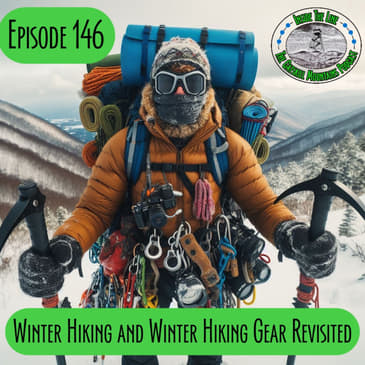
Welcome to episode 146! Tonight, Tad and I do a revisit on winter hiking and winter hiking gear. These are our suggestions so we will not be held responsible for injuries! We also chat about a hiker death in the Hudson Valley, more plans for Windham ski club and Peanut the squirrel. If you need a sticker, email me or go to Camp Catskill! Subscribe on any platform! Share! Donate! Do whatever you want! I'm just glad you're listening! And remember... VOLUNTEER!!!!!!
Links for the Podcast: https://linktr.ee/ISLCatskillsPodcast, Donate a coffee to support the show! https://www.buymeacoffee.com/ITLCatskills, Like to be a sponsor or monthly supporter of the show? Go here! - https://www.buymeacoffee.com/ITLCatskills/membership
Thanks to the sponsors of the show!
Outdoor chronicles photography - https://www.outdoorchroniclesphotography.com/, Trailbound Project - https://www.trailboundproject.com/, Camp Catskill - https://campcatskill.co/, Scenic Route Guiding - https://adventurewiththescenicroute.com/, Another Summit - https://www.guardianrevival.org/programs/another-summit
Links:
Incident in HV, Peanut The Squirrel, Windham Mountain Club Project
Volunteer Opportunities:
Trailhead stewards for 3500 Club - https://www.catskill3500club.com/adopt-a-trailhead?fbclid=IwAR31Mb5VkefBQglzgr
fm-hGfooL49yYz3twuSAkr8rrKEnzg8ZSl97XbwUw, Catskills Trail Crew - https://www.nynjtc.org/trailcrew/catskills-trail-crew, NYNJTC Volunteering - https://www.nynjtc.org/catskills, Catskill Center - https://catskillcenter.org/, Catskill Mountain Club - https://catskillmountainclub.org/about-us/, Catskill Mountainkeeper - https://www.catskillmountainkeeper.org/, Bramley Mountain Fire Tower - https://bramleymountainfiretower.org/
Post Hike Brews and Bites - The one and only Snyder’s Tavern
#winterhiking #winterhike #wintercatskills #wintergear #winter #hellyhansen #husdonvalley #hikingNY #kaaterskill #bluehole #catskillhiking #visitcatskills #catskillstrails #catskillmountains #catskillspodcast #catskills #catskillpark #podcast #catskillshiker #volunteers #catskillmountainsnewyork #catskillspodcast #catskillshiker #catskillshiking #hiking #catskill3500club #insidethelinecatskillmountainspodcast #volunteercatskills #catskill3500 #hikethecatskills
[00:00:28] The bushwhacks were some of the worst days I've ever had in the mountains, or life, really.
[00:00:35] Whereas Pansom Mountain is totally opposite, it's a mountain on top of a crater.
[00:00:41] I think the weather challenges on this incident were particularly difficult.
[00:00:46] It is really the development of New York State. Catskill's responsive.
[00:00:52] You're listening to Inside The Line, the Catskill Mountains Podcast.
[00:01:09] So, 146 up to 146.
[00:01:12] Let's do it!
[00:01:13] Yeah, almost a year ago I was reminded that we almost had the 100th episode
[00:01:18] thing down in the Camp Catskill, that was crazy. So, we're going to be going on with this 146.
[00:01:23] We'll talk about that a little bit later. We're going to do a little kind of winter hiking revisited with Tad and me.
[00:01:30] I've done this before with Sean, and that was pretty cool. We did our winter hiking stuff.
[00:01:37] But, you know, I'm curious what Tad brings for his winter hiking, because he's a very good winter hiker.
[00:01:42] You like to hike a lot in the winter, right?
[00:01:45] Oh, yeah. Yeah. Can't get enough of it. Love that winter hiking.
[00:01:49] Same. Same. So, we're going to go back and forth with our kind of like winter gear or winter hiking,
[00:01:55] what we want to do and stuff like that. Kind of give you a little influence of maybe what you should get
[00:01:59] or what you shouldn't get or what's too expensive, what's not too expensive.
[00:02:02] More of that. It'll be mostly what's most expensive because that's the name of the game nowadays.
[00:02:09] Well, I'm not sure. Look, I just bought a new backpack for winter hiking and I got it more than half off.
[00:02:18] Nice.
[00:02:19] Of all places, I did buy it online. Shame on me. But guess where I got it from online?
[00:02:27] Osprey?
[00:02:29] No.
[00:02:31] I'm not sure of your backpack.
[00:02:33] Name an online retailer that you would expect somebody to buy gear from.
[00:02:38] Amazon?
[00:02:39] No.
[00:02:41] No, not them either.
[00:02:43] REI?
[00:02:44] No. Next.
[00:02:45] Oh, God.
[00:02:46] You'll never guess it. It's the most like, no, you would go there to buy a soccer ball.
[00:02:51] Big clue.
[00:02:53] Dicks?
[00:02:53] Yes.
[00:02:54] Yes, I got it at Dick's.
[00:02:55] No way.
[00:02:56] It was like a $250 pack. I got it for 127 bucks. Close out. Close out. So I went with that.
[00:03:05] I procrastinated for years over getting a new pack. The existing one is easily over 25 years old.
[00:03:12] Nice.
[00:03:14] If it works, it works.
[00:03:16] Well, we'll see. That doesn't come in yet. We'll see if it works or not. If it doesn't, I'm going to have to call SAR.
[00:03:21] Yeah. Yeah, probably. Probably. Or Danny. One or the other.
[00:03:26] But tonight, 1.46, we're going to do winter hiking revisited. We're going to talk about some winter hiking and our gear, basically.
[00:03:33] So the big question is November 5th, 1955, Ted, where were you? What were you doing?
[00:03:41] So on November 5th, 1955, I think I was trying my second ascent of Mount Everest.
[00:03:53] Awesome.
[00:03:53] Yeah. That's what I was doing. I was trying to be the youngest unfertilized embryo or egg to climb Everest.
[00:04:02] Nice. Nice. Do you know what that reference is from?
[00:04:08] Obviously not. It doesn't refer to my bogus attempt to climb Everest.
[00:04:13] This guy has really crazy hair. He's a scientist. Well, scientist. And he hit his head on a toilet on November 5th, 1955.
[00:04:24] That's when he thought of the flux capacitor. Oh, okay. Do you know what that is?
[00:04:30] No. I want to hear all about it. Back to the future.
[00:04:34] Oh, really? I can take it winter hiking?
[00:04:36] Yeah. Back to the future. Come on, Doc Brown.
[00:04:39] I could go back to when winter was winter in 1955.
[00:04:43] God. Yeah. I can only imagine.
[00:04:45] When you had to wear your snowshoes all the time. It was a Saturday. It was a Saturday. I'm looking it up right now on Google. It doesn't say anything about, oh, here it is. Invention of time travel and back to the future. Okay.
[00:05:00] My God, Ted, you don't know what that is. I'm kind of sad that you're not like a movie kind of bluff kind of guy.
[00:05:07] I'm just a bluff kind of guy. No movies. I just bluff, bluff through life. That's how I make it.
[00:05:14] So November 5th, 1955 is when Doc Brown hit his head on the, uh, his toilet and, uh, invented the flux capacitor in the DeLorean and they travel time traveled.
[00:05:24] So very cool. If we had Tom on the show tonight, I bet Tom would know that he wouldn't let us down. Tom or Joe. Yeah.
[00:05:33] I bet you both of them would know that. Yeah. So we've had some crazy weather here. Of course, today, you know, when I went out hiking, it was 70 degrees. It was absolutely insane.
[00:05:43] But with, with the previous week was, was massive winds. And unfortunately there was an incident that a hiker was struck and killed by a tree down in the Hudson Valley area.
[00:05:54] So Anthony is knows in the Highland state park on Saturday, October 26th, a 51 year old hiker was struck and killed by a fallen tree.
[00:06:01] Uh, police identify the victim as Elkin Fabian Gomez of Nino Queens, uh, native of Columbia.
[00:06:09] And, uh, unfortunately his friends were with him and they were just walking along.
[00:06:17] And unfortunately they heard a tree crack and it was a little bit too late.
[00:06:20] It hit Gomez and they called for help. Group of eight hikers were able to lift the tree.
[00:06:26] Now one hiker went down to the mountain to get first responders to the scene, but he was pronounced dead on the scene.
[00:06:33] Crazy unfortunate incident down on Anthony's nose. This is one of those instances.
[00:06:38] I mean, you, you, the wind is of course there and you know, it's happening, but you can never expect those widow makers and stuff like that.
[00:06:48] Those trees to fall on you. It's one of those crazy unfortunate incidents is that happens.
[00:06:54] And, uh, you know, our thoughts and prayers go out with the family at this time, because that's just absolutely insane.
[00:07:02] It's one of those things that I cherish. I love the wind. I hear the wind.
[00:07:06] It's one of my things that I love to hear when I'm hiking.
[00:07:10] But at times when you hear those trees going swaying back and forth, you wonder, man, can I, can I, can that, can that happen?
[00:07:17] And unfortunately it did for sure. Yeah, that's very sad.
[00:07:22] Um, I did check out the memorial page that was, uh, put up or posted for him.
[00:07:30] And it, it appears that, uh, 52 memorial trees have been purchased and will be planted in his memory.
[00:07:39] Somewhat ironic.
[00:07:41] Cause of the age, right?
[00:07:43] Well, a cause of his age, but also because he was killed by a tree.
[00:07:48] True. True.
[00:07:50] But Hey, you know, understandable you familiar with Anthony's nose, like, uh, with that area.
[00:07:55] I'm sure you are.
[00:07:56] Yeah. I've never hiked that, uh, in particular, but I do recall on Sunday in the afternoon, I'm going to say from about 11 o'clock onward, it was very windy in the valley.
[00:08:07] Oh yeah. It was windy up here, up here in Oneonta. Like it's just, uh, on Friday, you know, Jessica and I went, went hiking and we'll, we'll chat about that.
[00:08:16] But it was just, the wind was whipping.
[00:08:18] And I, I know Anthony's nose doesn't have the high trees like we do up in the Catskills.
[00:08:24] We don't have, they don't have the high, uh, you know, birch and stuff like that, but you know, one little snap and that could be 200 pounds that falls on you.
[00:08:35] That's instant.
[00:08:37] I don't, I don't even know how to say it. It's just, it sucks.
[00:08:41] Yeah. Well, yeah. It's a risk associated with hiking is getting hit by a tree.
[00:08:49] Yeah. What a, what an unfortunate incident, uh, that happened.
[00:08:54] And once again, our thoughts are with the family and, you know, thank you to the first responders and such for, for dealing with that and helping the people out because it's definitely one of those incidents that you cannot forget.
[00:09:05] I forget and you know.
[00:09:08] Yeah. So, uh, speaking of unfortunate incidents, have you ever heard of peanut the squirrel, Ted?
[00:09:16] Uh, not, not until this past week.
[00:09:19] Right. I knew it. I knew it.
[00:09:21] Yeah.
[00:09:22] You weren't a fan?
[00:09:23] Well, I, yeah, I had no idea that peanut the squirrel was a thing, but he's, he sounds like he's more in your neck of the woods than mine.
[00:09:30] I mean, he has, I, I, it's, it's the cutest thing.
[00:09:33] They, I mean, he was, he was an Instagram squirrel for a while and the guy just documented all the stuff they did and they were, they were adorable together and stuff like that.
[00:09:43] You know, I'm a, I'm a dog lover.
[00:09:44] I love seeing all that stuff.
[00:09:46] And he was rescued with this guy that, uh, just kind of documented his life together with the, with the squirrel.
[00:09:54] And I got to admit, it was adorable.
[00:09:56] It was absolutely fantastic to see that the squirrel was adapting to his human life and somewhat with each other's life really.
[00:10:05] And.
[00:10:05] Well, were, were you a fan of peanut the squirrel before or after he was euthanized?
[00:10:14] Before.
[00:10:14] Before.
[00:10:15] Before really for, so for how long had you been following peanut?
[00:10:20] Probably with my other accounts.
[00:10:22] So I have two accounts.
[00:10:23] I have my Instagram, my, my, my Instagram for the podcast.
[00:10:26] And I have my regular Instagram, which is my, my personal Instagram.
[00:10:30] And I've been following him for about three years.
[00:10:33] Wow.
[00:10:34] So, uh, like the stuff that I, my, of course my wife showed me to him and was just like, oh, we can adopt these little squirrels in our backyard.
[00:10:41] I'm like, there's 18 of them in our backyard.
[00:10:43] No, let it go.
[00:10:47] And this guy adopted a little red squirrel.
[00:10:49] Well, someone, he came into his life and he, uh, kind of brought them into life.
[00:10:55] And all of a sudden the DEC comes in and says, Hey, you know, this, this squirrel might have rabies.
[00:11:00] We're going to euthanize him.
[00:11:02] And then bam, it's the fan.
[00:11:05] You know, this term before, Ted, you said like, what does that mean?
[00:11:08] Shit hits the fan.
[00:11:09] Yeah.
[00:11:10] What's that all about?
[00:11:11] I heard, I heard there was a little more, there was like a raccoon involved as well.
[00:11:17] And when they came in to, uh, confiscate or apprehend the squirrel and the raccoon, they weren't suspected of being rabid.
[00:11:27] That's what I understood.
[00:11:29] Yeah.
[00:11:30] So that's, I mean, that's the whole thing.
[00:11:31] They, they came in.
[00:11:33] Uh, and the funny thing is, it's like the white, it's his name is Longo.
[00:11:38] Uh, the guy that owns peanut and Fred, Fred was the raccoon.
[00:11:42] So they came in and, and marched up in and said, uh, you know, we have a possible investigation where something might have rabies.
[00:11:50] And it was, uh, instead of being the, the, the raccoon, which more carries rabies than squirrels, squirrels have like a 99.9, 9, 9, 9% chance of not carrying rabies because they're, they're too small.
[00:12:04] They will die before the rabies gets to them.
[00:12:07] But you know, they went in, seized, uh, uh, peanut and then sees Fred's euthanized both of them because they were being tested for rabies.
[00:12:17] And all of a sudden, because peanut and Fred were so popular amongst Instagram and social media, it just hits the fan.
[00:12:30] And then from there on, it just goes on a huge downfall of, you know, this long ago guy comes out and talks about it.
[00:12:38] Every news company is contacting him all of a sudden, you know, like the, the, the drama that happens goes catapulting and it's insane.
[00:12:49] And then later on, you showed me about, uh, the DEC receipt bomb threats later.
[00:12:55] Yeah.
[00:12:57] Apparently there's been, uh, 10 bomb threats and the news story I read didn't, uh, spell out that they were attributable or traceable back to this incident with peanut and Fred.
[00:13:12] But you know, given the timing and the number of threats, there's surely a correlation.
[00:13:19] And I, and I do want to point it out in the, the two news stories I read on this, the DEC went into confiscate the raccoon and peanut, the squirrel, because long ago was harboring wild animals.
[00:13:36] And during the course of the DEC recovering these two animals, somebody was bitten, presumably a DEC officer.
[00:13:45] And then the DEC decided that they needed to test the animals for rabies.
[00:13:52] So they didn't go in because they suspected the animals to have rabies.
[00:13:56] It was after they were in and in the process of confiscating them that the squirrel bit somebody.
[00:14:06] And the supposition was made that the squirrel could have rabies.
[00:14:11] So, yeah, so, so it wasn't even as if the DEC was looking for rabid animals.
[00:14:16] They were looking for wild animals.
[00:14:18] Long ago supposedly needed a rehabilitator's license to have these animals, uh, and they were looking for wild animals.
[00:14:21] Long ago supposedly needed a, uh, rehabilitator's license to have these animals, uh, and they were looking for wild animals.
[00:14:26] And, uh, it was in his possession, which apparently he didn't have.
[00:14:30] He was in the process of getting it according to the news story, but he didn't have a rehabilitator's license.
[00:14:38] He also, I don't know if you saw this.
[00:14:39] He also operates a animal sanctuary.
[00:14:43] Did you see that?
[00:14:44] Wait, what?
[00:14:45] Yeah.
[00:14:46] Long ago his, uh, check it out.
[00:14:48] He's got an animal sanctuary, rescue animals there, accepting donations.
[00:14:56] There's a GoFundMe page.
[00:14:58] Last time I saw it, there was like $156,000 raised for the animal sanctuary.
[00:15:06] And so Longo is making all this traction before Peanut is euthanized in terms of going from rescuing one animal to...
[00:15:18] making this enterprise of having animals.
[00:15:23] And that's why he moved upstate.
[00:15:24] He moved upstate with Peanut and eventually gets into owning a place, converting it into an animal sanctuary, soliciting donations.
[00:15:35] Peanut's euthanized.
[00:15:37] The GoFundMe page, $165,000, and presumably more is coming in day by day.
[00:15:43] Yeah.
[00:15:44] Under state law, only one way to legally rescue squirrels is to become a licensed wildlife rehabilitator.
[00:15:51] Correct.
[00:15:52] It can take months.
[00:15:53] But with New York State, shit can take years.
[00:15:56] It's absolutely insane.
[00:15:57] Well, he had Peanut for seven years.
[00:16:00] So if he knew, he had plenty of time to get the license.
[00:16:04] Again, it's just interesting that apparently the DEC unannounced goes in to confiscate these animals.
[00:16:16] Why don't they just give the guy a phone call and say, hey, we know you have these animals.
[00:16:20] Put them in a cage.
[00:16:22] And we're going to come and take them because you're not allowed to have them.
[00:16:25] And understand if somebody gets hurt in the process of taking your animals, we might have to euthanize them to test them.
[00:16:33] Yeah.
[00:16:34] And so maybe a simple phone call would have avoided all of this craziness.
[00:16:40] A bite practically by a squirrel would probably.
[00:16:43] Yeah.
[00:16:44] Yeah.
[00:16:45] Hey, man, we're coming to check out your squirrel and your raccoon.
[00:16:48] Hey, how about you keep them okay or something like that?
[00:16:52] Wow.
[00:16:52] Yeah.
[00:16:53] Yeah.
[00:16:53] You know, cage them up.
[00:16:54] I mean, you know, Stosh, if you were harboring a mountain lion, just for way of example, I'm sure the DEC would call you in advance and say, hey, Stosh, put the mountain lion in a cage because we're coming over to take it.
[00:17:07] You don't have a rehabilitator's license.
[00:17:10] And eventually you would agree to do that and nobody would get hurt.
[00:17:14] But because poor Peanut was just a little squirrel, they went in, grabbed them.
[00:17:19] Guns and blazes and stuff like that.
[00:17:21] Yeah.
[00:17:21] Right.
[00:17:21] And, you know, a squirrel's a squirrel.
[00:17:24] Of course it's going to nip at somebody.
[00:17:26] It's going to nip.
[00:17:27] I mean, how much of, you know, I'm just thinking all this off the top of my head, but if you're going in to apprehend a squirrel, don't you think you'll have gloves on?
[00:17:37] Right?
[00:17:38] Yeah.
[00:17:38] Don't you have like those thick leather gloves, like with the cuff on them that goes up to your elbow and maybe beyond?
[00:17:44] No.
[00:17:45] How is it somebody got bit?
[00:17:47] Well, you're also getting the raccoon.
[00:17:49] You're also getting the raccoon.
[00:17:51] That's true.
[00:17:51] They got a little bit more bigger things.
[00:17:53] Yeah.
[00:17:54] So you got to be prepared for both of them.
[00:17:56] True.
[00:17:57] Right?
[00:17:57] Particularly the raccoon.
[00:17:58] But somehow, somebody had an area of exposed skin or an area of their body that wasn't appropriately protected.
[00:18:08] They got bit.
[00:18:09] And now they had to euthanize these two animals.
[00:18:13] Sad.
[00:18:13] Sad.
[00:18:14] Sad.
[00:18:15] Especially with, you know, people that are harboring some, you know, crazy ass animals.
[00:18:21] Like, you know, not mountain lions, but, you know, tigers and boa constrictors and stuff like that.
[00:18:27] And then you have a red squirrel and a raccoon.
[00:18:30] You know, it's just, it's, it's, it's crazy.
[00:18:32] It's crazy to, and, and like, I posted some stuff with this on my personal page and I've gotten some rabid responses.
[00:18:44] No pun right there.
[00:18:45] There we, there we go.
[00:18:47] It's just, the, the, the people go crazy of this.
[00:18:50] And there's some people defending, of course, you know, the DEC because of what they did.
[00:18:55] Because it wasn't, you know, it was a wild animal.
[00:18:58] But, you know, to be honest, Ted, what are your thoughts of like taking a feral cat off of the streets?
[00:19:05] Is that the same thing?
[00:19:07] Right?
[00:19:08] Well, in certain respects, it is the same thing.
[00:19:11] But, again, I just don't understand if, if I had whatever animal in my house and the DEC was going to come and take it.
[00:19:22] Why don't they just call you in advance and say, hey, we're coming over.
[00:19:27] We want to take your cat, your squirrel, your boa constrictor, your mountain lion, your giraffe.
[00:19:34] I mean, you know, it's like Noah's Ark here.
[00:19:37] And, you know, I would, it would be on me to, you know, to, to make the safe transfer.
[00:19:42] And if I didn't, am I to blame because somebody got hurt in the process and an animal had to be euthanized?
[00:19:50] I don't know.
[00:19:51] I don't know.
[00:19:52] I'm glad I don't have to make those kind of decisions.
[00:19:55] Right?
[00:19:55] And then you get bomb threats later on.
[00:19:57] Yeah.
[00:19:58] All I know is the whole time this is going on and you're looking at all the attention it's getting.
[00:20:02] I'm asking myself if those DEC agents would have been better off driving over to the Slide Mountain parking area.
[00:20:14] Yes.
[00:20:15] With some, with some two by sixes, two by fours, you know, and building a bridge over a certain west branch of the Never Sink.
[00:20:25] So.
[00:20:26] Or even going right down the street and doing the frickin', the Panther Mountain Giant Ledge kiosk.
[00:20:32] The kiosk.
[00:20:32] Come on.
[00:20:32] Yeah.
[00:20:33] Yeah.
[00:20:33] Well, we should start a GoFundMe page.
[00:20:36] Oh, God.
[00:20:37] You know how much money?
[00:20:38] Oh, dude.
[00:20:39] Dude, don't even, don't tempt me.
[00:20:41] Well, we say don't tempt you, but on the one hand.
[00:20:43] But on the other hand, I think with our three listeners, right, if that's all we have in terms of listeners, we shouldn't branch out to GoFundMe.
[00:20:52] To be honest, this, this podcast, I'm, I'm, I can't say that I'm surprised because the Catskill community is so tight.
[00:20:59] We have, this podcast had donated a great amount of money towards the Catskills.
[00:21:05] And we've had, of course, you know, listeners volunteer for the Catskills, stuff like that.
[00:21:10] I guarantee if, if we did something like, you know, uh, an organized event to go like at least remove that in the back of a truck.
[00:21:18] So it didn't look as disgusting as it did.
[00:21:21] You know, I went by there today and I drove by and I looked over to the left and I could see it off of the corner of the turn.
[00:21:27] I could see the, the deteriorated spot.
[00:21:30] And I was just like, God, that's disgusting.
[00:21:32] Yeah.
[00:21:32] But like, if we, if we went online and we did like a fundraiser, like you said, a GoFundMe, what would you have to freaking raise?
[00:21:39] People would, it would be done in two hours.
[00:21:42] Yeah.
[00:21:43] $200.
[00:21:44] Yeah.
[00:21:45] What's crazy is that's, I don't know where it ranks in terms of most popular trailheads in the Catskills, but it's, it's gotta be in the top five.
[00:21:55] It's gotta be, it's gotta be number four, number three.
[00:21:57] Yeah.
[00:21:59] And, uh, Danny Davis and I, we were over at Peekamoose Blue Hole Trailhead this past weekend.
[00:22:06] And you look at the register to sign in and there's two years of entries there.
[00:22:12] Right.
[00:22:13] And one book.
[00:22:14] So that's not very popular for hiking or if it is not a lot of people are signing in and that register in that area is in pretty good shape.
[00:22:26] And then you go over to the, one of the most popular areas and the Catskills and the kiosk is all banged up.
[00:22:34] Yeah.
[00:22:35] I don't get it.
[00:22:36] Yeah, I don't.
[00:22:37] I don't.
[00:22:37] So, yeah.
[00:22:38] So the petition has to be is to make Stosh commissioner of the DEC.
[00:22:44] DEC supervisor.
[00:22:45] Yeah.
[00:22:46] You've got the hat on.
[00:22:47] You'd make a good supervisor.
[00:22:49] I mean, this is a good hat.
[00:22:50] It's from Overlook Outdoors.
[00:22:51] So, so, I mean, that's, that's good stuff.
[00:22:54] So Todd, once again, got me this and, you know, crazy, crazy stuff.
[00:22:59] So you, you heard something.
[00:23:01] How did you get this from William Shatner?
[00:23:02] Do you want me to say this?
[00:23:03] How did you get this?
[00:23:04] Uh, I just got on Twitter or something.
[00:23:07] No, it just came up on Google when I searched for peanut.
[00:23:10] Cause I wanted to find, I saw you put it in the show notes.
[00:23:12] I wanted to find out what this peanut character was all about.
[00:23:15] Kind of, and this somewhat ties in with your back to the future, you know,
[00:23:18] Wilhelm Shatner, right?
[00:23:21] Yeah.
[00:23:22] Okay.
[00:23:22] You can rip it off.
[00:23:23] Tell us what William had to say.
[00:23:25] So William said, just, I just heard about peanut the squirrel.
[00:23:28] He was seven years old and had pet for seven years.
[00:23:30] How could he consider it a wild animal when all he knew was, was being a pet?
[00:23:35] You can say that all about an animal, but then the state of New York shame on the New York state.
[00:23:39] DEC.
[00:23:40] So that was William Shatner.
[00:23:41] That's a pretty big influence.
[00:23:43] I got to admit.
[00:23:44] So if you heard it, other people heard of it.
[00:23:46] Like I said, shit hits the fan.
[00:23:51] Let's see.
[00:23:51] We're going to, we're going to have to keep it going with this.
[00:23:54] Yeah.
[00:23:54] Well, maybe we ought to get Longo on the show.
[00:23:57] Ah, I mean, Hudson Valley is probably said he moved upstate.
[00:24:02] Where was this happened?
[00:24:03] Did you see where this happened?
[00:24:05] Uh, I could not find out where, where it was.
[00:24:08] The, the addresses in there was, uh, was it Pearl city, pine city, pine city, New York.
[00:24:15] It's probably considered upstate by everybody.
[00:24:18] It's fricking ridiculous.
[00:24:19] It's across the George Washington bridge.
[00:24:22] Oh yeah.
[00:24:22] That's definitely upstate.
[00:24:25] 100%.
[00:24:25] Pine city, New York.
[00:24:27] 100%.
[00:24:27] Let's go.
[00:24:29] What really?
[00:24:30] Pine city.
[00:24:31] Yeah.
[00:24:32] Elmira.
[00:24:32] That's, that's over outside of Binghamton.
[00:24:36] So when he moved upstate, he really went upstate.
[00:24:39] He, well, I would say, yeah, he went, uh, he went over near horse heads and stuff like that.
[00:24:42] So below the finger.
[00:24:43] Wow.
[00:24:45] Well, he got away from the DEC, but the DEC caught him.
[00:24:48] So tried to run.
[00:24:51] So unfortunate incident with peanut squirrel and Fred the raccoon.
[00:24:55] So RIP, you guys are the best.
[00:24:58] Uh, one thing that I, I don't know how I, I, with Tom on the show, I was going to bring this up, but I didn't put it in the show notes.
[00:25:04] So I heard this through the DEC, through New York state planning.
[00:25:09] So over in Wyndham, there's some, some stuff happening that could be behind like our radar behind everybody's radar.
[00:25:18] But I found this.
[00:25:19] I don't know how I found this.
[00:25:20] I just went on searching.
[00:25:21] I don't know, Ted, if you knew about this.
[00:25:23] So in green County town of Wyndham planning board, at least agency.
[00:25:27] has determined that the proposed Wyndham mountain master plan redevelopment project will not have a significant adverse environmental impact.
[00:25:38] So the action plan involves an application by Wyndham mountain partners, LLC.
[00:25:43] We all know it's Wyndham mountain club to the town of Wyndham planning board for the site to have a major subdivision approval implement on the master plan for development.
[00:25:54] That will include new residential development at the base of the ski mountain.
[00:25:59] And the last two, the project also includes proposed changes and expansions of the existing Wyndham mountain private membership club and related access restrictions.
[00:26:21] The total project area close to the 245 acre spreads over 36 tax parcels.
[00:26:29] The plan includes the following components construction of 66 residential units, 46 townhouses and 20 single family house lots of residential development, expansion and construction of additional facilities and applicants existence of adventure park expansion of an existing golf course known as the Wyndham
[00:26:51] golf club and associated maintenance facilities.
[00:26:54] And the project is once again, located 245 acres plus 36 tax parcels in the town of Wyndham.
[00:27:03] So Ted, you are a very smart man.
[00:27:08] What do you got to say?
[00:27:09] What do you, what do you think?
[00:27:09] This is crazy, right?
[00:27:10] Did you know about this?
[00:27:12] Yeah.
[00:27:13] Oh, you did.
[00:27:13] I knew you did.
[00:27:14] Yeah.
[00:27:15] I always thought I got, I'm one of the more ahead of you, but I'm never, it's never like that.
[00:27:19] The only one who's one ahead of me is my wife.
[00:27:22] So, right.
[00:27:24] So on the one hand, this kind of seems like a big project, but did you know in 2007, the state
[00:27:35] of New York gave the green light to a $400 million project to develop two hotels and 259, uh, lodging
[00:27:46] units and residences on 273 acres of land next to what ski resort?
[00:28:03] Probably Wyndham.
[00:28:04] Nope.
[00:28:05] Hunter.
[00:28:06] Nope.
[00:28:07] You gotta be kidding me.
[00:28:08] Belair.
[00:28:09] Belair.
[00:28:10] Oh, I mean, well, that's, I mean, that's state area and high mountain.
[00:28:13] They probably bought it.
[00:28:14] Well, no, it was owned by private developers, but because of its proximity to the Belair ski
[00:28:22] area and, um, the, you know, the watershed concerns and all of that, uh, jurisdictions with
[00:28:30] the state, the DEC.
[00:28:32] And again, it was like this mega project compared to what they're proposing at Wyndham.
[00:28:40] Um, so again, one of my pet peeves is you have the state of New York next to its not for profit
[00:28:49] Belair mountain ski center approving this $400 million project of, you know, hotels, 259
[00:28:56] lodging units, uh, a ton of residential units, et cetera.
[00:29:03] Right.
[00:29:06] And what do you, what do you expect Wyndham to do to survive?
[00:29:10] They have to make a profit.
[00:29:11] They need, they need to buy insurance.
[00:29:14] Belair doesn't need to pay for liability insurance.
[00:29:18] They have the state of New York backing them up.
[00:29:20] They don't need to have liability insurance.
[00:29:23] Wyndham does that's expensive.
[00:29:25] That's one of the reasons why most ski areas have a hard close date.
[00:29:27] Now it's because it's when their insurance policy runs for the season.
[00:29:32] So no matter how much snow they have on the slopes, they shut down because the most expensive
[00:29:36] thing going forward for them is continuing the coverage.
[00:29:40] Oh, wow.
[00:29:41] Yeah.
[00:29:41] So when you have a ski season, which is getting shorter and shorter and it's more expensive
[00:29:48] because you've got to blow the snow on the mountain, then it rains and your snow turns to
[00:29:53] ice and you have to groom it.
[00:29:55] Um, yeah, it's no surprise Wyndham is doing what it's doing.
[00:29:58] And at some point in time, Belair that project of Belair never got built.
[00:30:02] I was going to say, I don't remember ever like anything ever happening except for the,
[00:30:06] Yeah.
[00:30:07] The new, uh, the new blowers and the new, what's it called?
[00:30:11] Uh, the gondola.
[00:30:12] Yep.
[00:30:13] Right.
[00:30:13] Which you really don't need in the Catskills.
[00:30:15] A gondola doesn't really get that cold.
[00:30:17] Okay.
[00:30:18] But if you have the state of New York and you have unlimited like borrowing and spending
[00:30:22] power, it's not that big of a reach to do that.
[00:30:25] But the, the project at Belair never made traction because the, uh, housing market fell apart in 2008.
[00:30:34] So that project never went forward again.
[00:30:37] At any time they can, you know, dust off the plans, renew their approvals and go forward with that.
[00:30:43] But in the meantime, you got Belair Hunter to a lesser extent, platykill that are privately owned, trying to make a profit and a tougher and tougher conditions as each year goes by.
[00:30:57] So it's not surprising what they're doing at Wyndham.
[00:31:00] I do take note that apparently their, uh, peak capacity is 4,000 skiers, uh, on a weekend.
[00:31:08] And they're projecting that of those 4,000 skiers, 1500 will be private club members.
[00:31:17] 2,500 will be the public of the 2,500.
[00:31:22] That's a public, the public, the reserving passes or tickets for people who are lodging in nearby hotels and resort lodging.
[00:31:33] So those places don't go out of business.
[00:31:36] And then the other thing I didn't realize they did over at Wyndham, but if you go to the Wyndham public school, you get a season's pass at Wyndham ski area.
[00:31:46] I remember seeing that, uh, before.
[00:31:48] So, I mean, that's, that's pretty cool.
[00:31:50] Yeah.
[00:31:51] But I mean, we all, we all know what they they've done in the past two years have with their, uh, God, what do they call it?
[00:32:00] They're the, I'm in a private membership, but I forgot what they said, breathe that fresh mountain air.
[00:32:05] And everybody's just like, oh, wow.
[00:32:06] Yeah.
[00:32:07] You get that limited mountain air up at Wyndham when you pay X amount of money to, to ski here at this awesome private club.
[00:32:15] Yeah.
[00:32:16] Well, they, yeah, other, their prices are probably in line with what you would pay elsewhere.
[00:32:21] Other than if you want to be a member of that club, I'm sure there's a big initiation fee and then annual fees that you pay.
[00:32:31] But lift tickets aren't cheap anymore.
[00:32:33] And it's one of the reasons I got out of skiing is just the thought of paying, you know, a hundred and some dollars for a lift ticket to go stand in a lift line for most of the day.
[00:32:43] I ski on crappy manmade snow.
[00:32:47] And I could be out in the winter.
[00:32:50] If it's a good snow day, snowshoeing in the Catskills, not waiting in any line, didn't have to pay for a lift ticket.
[00:32:59] Just having a good time going anywhere I want.
[00:33:01] So, so as a non skier, Ted, like I'm curious, can you hike up to like, like Colonel's chair and Belair and then ski down?
[00:33:12] Well, Julie McGuire, queen of the Catskills does it all the time.
[00:33:18] Does she?
[00:33:19] Okay.
[00:33:19] And that's, is that a big F you?
[00:33:22] Like you flip everybody off that you're going down?
[00:33:24] No, no.
[00:33:24] So the different areas have different policies for what they, they call it skinning.
[00:33:29] You put skins on the bottom of your skis, which gives you uphill traction.
[00:33:34] There's a different binding system or different binding systems that you use for skinning up the hill.
[00:33:41] You get to the top of the hill, you take off the skins, you throw them in your pack, you ski down.
[00:33:45] Uh, some areas charge a nominal fee.
[00:33:49] Other areas let you do it for free early in the day.
[00:33:53] Uh, it differs from place to place.
[00:33:56] Some, some places just have one run open for it.
[00:33:59] Others don't have restrictions on it, but you want to talk about.
[00:34:03] Good, good exercise skiers.
[00:34:05] They call it earning your turns when you, uh, skin or hike uphill to, to ski down.
[00:34:11] True.
[00:34:12] Yeah.
[00:34:12] So Julie did that a lot, but like, I'm curious if you can like go up to Sprucedon like Valley and then hike up down the colonial colonel's chair and then.
[00:34:23] Oh yeah.
[00:34:23] Yeah.
[00:34:24] Yeah.
[00:34:25] You can just flip off everybody.
[00:34:26] People I've seen people on that, uh, horse trail or Jeep trail with split boards, tele skis, skins, who, um, go up to the fire tower and then ski down bang a right.
[00:34:43] Go over to the ski area.
[00:34:44] Wow.
[00:34:45] It's mostly rush.
[00:34:47] I haven't snowboard in so long, man.
[00:34:49] I, I, I should try it sometime and not, but I don't want to hurt my hip or something.
[00:34:56] And he's like, that's like, I hear you, man.
[00:34:58] I hear you.
[00:34:59] That's the problem.
[00:34:59] Yeah.
[00:35:00] Well, you know what, one of the reasons I don't go to ski areas anymore is there's just so much skier traffic.
[00:35:05] The, the, like the, the thing that's most likely to cause an injury is skier to skier contact.
[00:35:12] It's not, not your falling and hurting yourself.
[00:35:14] It's just getting hit by another skier.
[00:35:17] And if you really want to get into it, one of the things that is a problem at ski areas, particularly on the East coast is snowboarders.
[00:35:25] When they're going downhill, their field of view is limited because they have their back.
[00:35:32] True.
[00:35:33] To, to 90 degrees of the fall line or where they're turning.
[00:35:39] So if somebody is coming from their blind side and neither is paying attention, chances are there could be contact.
[00:35:48] Not good.
[00:35:49] But when you're snowshoeing, when you're like snowshoeing, particularly bushwhacking somewhere between lone and Rocky, the likelihood of getting hit by another bushwhacker on their snowshoes.
[00:36:01] Not very high.
[00:36:03] Not high at all.
[00:36:04] Yeah.
[00:36:04] Frankly, I think statistically you're more likely to be attacked by a mountain lion back there than hit by another snowshoes.
[00:36:11] You'd never know who, like if Julie will go crazy and fricking come down one of those mountains run into you.
[00:36:17] She does it.
[00:36:19] She does it.
[00:36:20] Exactly.
[00:36:20] Yeah.
[00:36:20] That's the thing.
[00:36:21] Like, what if you're going up fricking Rocky and all of a sudden she's coming down?
[00:36:24] Watch out.
[00:36:25] Hits you in the face.
[00:36:26] Well, you able to get out of the way, but that's, I'll tell you now what she's doing.
[00:36:30] I mean, that is, that's pretty hardcore.
[00:36:32] I put that right up there at a number 10 in terms of hardcore activities and the Catskills skinning, skinning up those mountains and then skiing down where there's no trail, maybe thin cover.
[00:36:47] You know, there's not enough snow to cover blow down and stuff like that.
[00:36:51] What she's doing is frankly, it's pretty dangerous.
[00:36:54] Yeah, exactly.
[00:36:56] She needs to go pro that all that shit.
[00:36:58] So I mean, she's, she's almost already done it.
[00:37:00] So, so what do you think of the chances really quickly of this going into like development and the starting like ETA kind of stuff?
[00:37:10] That's, that's, that's a big project.
[00:37:11] I gotta admit.
[00:37:12] Yeah.
[00:37:13] You know, look, I don't know what type of outside agency approvals they need in terms of water and sewer.
[00:37:19] That's always a big issue with these projects is water and sewer capacity and then what type of financing they have to put together for it.
[00:37:29] But I think ski areas need stuff like this to, to keep them viable.
[00:37:34] Yeah.
[00:37:35] And they got, uh, uh, of course the condos and stuff like that to keep them going kind of like year round.
[00:37:41] I know a lot of people that have them, uh, of course in the, the Windham area and stuff like that, you know, I mean, who would've wanna own a condo over there and to go on a Friday night to, to Windham and then be right there to hike 15 minutes away.
[00:37:58] Yeah.
[00:37:58] Well, I dunno.
[00:38:00] I'm not rich.
[00:38:01] Yeah.
[00:38:01] You, you probably find a better deal elsewhere or why lay out that kind of green to own something year round when with an Airbnb, you can just pick and choose where you wanna go.
[00:38:13] If you're gonna take a long, if you're gonna take a long weekend, you know, you can head up to the whites, you can head up to like Placid.
[00:38:20] You could hop on a plane, fly out west, do a lot of different things instead of being like saddled to a house at Windham mountain.
[00:38:28] Doesn't sound too appealing.
[00:38:29] Doesn't sound too appealing to me.
[00:38:31] Good sound.
[00:38:32] Good way to say it.
[00:38:33] So we'll, we'll see where this goes.
[00:38:35] I will keep an update on it.
[00:38:36] Of course we'll keep an eye.
[00:38:37] We have been, uh, once again, and, uh, thank you to everybody who is, uh, kind of like throwing us stuff back and forth.
[00:38:45] You know, we've talked about the, of course the incinerator of Sullivan County.
[00:38:48] And I've gotten emails about that.
[00:38:51] So hopefully we'll keep in the loop about this and we'll hear about it.
[00:38:54] I just found this like from searching the DEC website.
[00:38:58] So I got lucky.
[00:38:59] So, all right, Ted.
[00:39:01] So thanks for shooting the shit up.
[00:39:03] Really appreciate it.
[00:39:05] I know that was boring as heck for you, but whatever.
[00:39:08] It always is.
[00:39:09] I'm kind of always.
[00:39:10] Right.
[00:39:11] So thank you to the monthly supporters, Darren white.
[00:39:14] Thank you for Mike.
[00:39:18] Joseph Jim C and Michael.
[00:39:20] Thank you guys very much.
[00:39:22] And really appreciate you supporting the show.
[00:39:24] Once again, we'll get that, uh, time of year.
[00:39:26] We'll get a nice donation.
[00:39:28] Going back to the cats.
[00:39:29] Girls.
[00:39:29] So also capture your love story against breathtaking backdrops with outdoor college schools.
[00:39:35] Photography.
[00:39:36] Molly specializes in adventure couple photography, and she'll mortalize your moments amidst the stunning landscape of the cats.
[00:39:43] Skills Adirondacks and white mountains show cast timeless images that reflect your unique blonde nature's grandeur embark on unforgettable photographic journey with outdoor chronicles photography.
[00:39:54] Don't hesitate to get ahold of Molly on off platforms.
[00:39:57] I suggest you check her out in every platform because her stuff is absolutely stunning with just the stuff she does.
[00:40:03] It's just, it blows my mind.
[00:40:06] I kind of wish my wife and I were into this when we were doing our engagement stuff back then.
[00:40:11] So also discover the wilderness with trailbound project expert led hiking and backpacking education programs offered on parallel outdoor experiences, whether you're a beginner or seasoned pro or adventure.
[00:40:24] Join us for learning essential skills and poor studying trails and connect with nature.
[00:40:29] Start with your training today with trailbound project and unlock the wonders of the great outdoors.
[00:40:33] They have a lot of stuff going on with the next previous months with wilderness first aid wilderness responder stuff like that.
[00:40:39] Uh, there is a link in the show notes.
[00:40:42] Check them out.
[00:40:46] So mentions coffees.
[00:40:48] Once again, uh, buy us a coffee slash hard cider on buy me a coffee.
[00:40:52] If you look up, buy me a coffee, uh, inside the line, the cats go mom's podcast.
[00:40:56] You can support the show.
[00:40:58] I think it takes anything from $5 to whatever you want to donate.
[00:41:02] It's a hard cider or coffee, whatever it supports the show.
[00:41:05] Once again, it'll any costs that goes to the show, uh, that doesn't support the show.
[00:41:10] We'll go right back into, uh, the cat skills and we usually donate it to an organization and stuff.
[00:41:17] So also if you mention the podcast, we'll through social media, we'll chat about it.
[00:41:23] So we got a couple actually this week, a couple, it's usually like one.
[00:41:27] So, uh, scion 72, October 31st, 2015.
[00:41:33] So this was nine years ago, his first time up slide in Cornell.
[00:41:37] Uh, it was pre inside the cats go mountains podcast.
[00:41:40] No all trails or GPS.
[00:41:42] I'm guessing that's what Sean uses now is just all trails.
[00:41:45] Cause he's always lost.
[00:41:46] Uh, the plan on this day was to do Wittenberg also, but he had to go home and work in the city that nice.
[00:41:52] And it was processed for time.
[00:41:53] I understand that was my deal today somewhat.
[00:41:56] So, uh, Sean, thank you for joining us, uh, on the show.
[00:42:01] Uh, you were there with a hundred episode where Ted wasn't.
[00:42:04] So, uh, unfortunate Ted was actually doing some epic.
[00:42:08] You were doing an epic vet.
[00:42:10] But look at where I am now.
[00:42:13] Oh, damn.
[00:42:15] Who's behind the mic now?
[00:42:17] Huh?
[00:42:18] Damn.
[00:42:19] Sorry.
[00:42:19] Yeah.
[00:42:20] So Sean, there you go.
[00:42:22] Once again, uh, check out, uh, scion 72 on, uh, Instagram also, uh, chaotic, uh, chaotic,
[00:42:32] chaotic, is that how you say chaotic, chaotic, right?
[00:42:34] I have no idea.
[00:42:36] It's chaotic, chaotic, uh, spent Halloween as an adventure.
[00:42:39] First solo hike pushed through his and, and spontaneously did the devil's path in a day.
[00:42:45] Uh, he planned on just, yeah.
[00:42:47] Uh, he planned on just Indian head twin sugar loaf as an out and back and then did 24 miles.
[00:42:53] So I don't know how you just plan on doing kind of like the first four and then like, just say, screw it.
[00:42:59] Let's do all of them.
[00:43:01] Uh, okay.
[00:43:06] We, we, we, we kept them company, which I dunno how we could keep them company up.
[00:43:11] These, these areas, he probably hated us.
[00:43:14] so yeah well we're having some influence yeah exactly and then he said somebody picked them
[00:43:20] up at laces spruced and so uh three dogs uh under slash in a trench coat for picking me up
[00:43:27] a lathe space and that's that's interesting so I'm gonna have to hopefully tad while you're
[00:43:32] while I'm talking about this please look this up because that sounds a little risque yeah
[00:43:38] that's what I was gonna say I was like in a trench coat mostly that's like the Undertaker kind of
[00:43:43] stuff but uh chaotic exotic chaotic quesotic uh awesome job on devil's path you know that's that's
[00:43:51] tad was doing that of course when he uh was supposed to be at the 100th episode but you
[00:43:57] know I don't blame him with Danny it probably took him 18 hours to just look at different rocks going
[00:44:02] up into your head so it did it took us a little bit longer that day we did a nice side excursion
[00:44:07] to check out some uh uh really really cool talus slope and some ledges I can only imagine Danny's
[00:44:16] like always side excursion hey hey let's go over here yeah four hours later well there's only so
[00:44:24] much trail hiking you can do right correct correct so also who's outdoors Tom from our last episode
[00:44:32] uh went up the van van shoten trail from moon ha now if you're not familiar with that uh it's not a
[00:44:39] trail they say it's a trail it's it's marked very faintly but it's an absolute fantastic voyage up
[00:44:47] the moon hog going up to Wittenberg mountain old boy scout camp trail 7.83 miles uh 3,000 feet of
[00:44:54] elevation gain I gotta admit if you go anywhere from the moon up to any peak you're gonna have
[00:44:59] the most elevation gain in the Catskills so um he went to uh Shokin Reservoir before Sunwise I got
[00:45:08] an awesome few pictures headed up uh Wittenberg and Cornell and along very steep old Catskill Trail
[00:45:14] uh they didn't want to go up where they came up so we went to Wittenberg Cornell dink Friday and
[00:45:20] came back down which is uh I gotta admit awesome time uh yeah I've actually actually in my grading
[00:45:28] days I did that hike a couple times it's nice have you ever come down the the dink go go to the moon
[00:45:35] hall come down from the dink proper to the moon hall yeah no it's absolutely horrible yeah I could
[00:45:43] imagine that's why I've never done it it's it's this one of the stupidest ideas I've ever done yeah
[00:45:49] yeah uh but I'm glad he didn't do it uh definitely I I don't think he says the dink
[00:45:56] should count as a 3,500 peak it's it's it's not even I would even think is it a bump it doesn't even
[00:46:02] feel like a bump when you're going across it um is it a part of there yeah there's there's you know some
[00:46:09] moderate elevation gain but those of you who haven't done the dink ever and do it sometime in
[00:46:16] the future it's not what it used to be oh no not at all yeah four or five years ago it was really
[00:46:22] tight with you know dead branches on the trees you know interlocked it was really long and slow
[00:46:30] traveling through there and now it's just all blown out there's a couple tracks leading through you can
[00:46:36] make really good time going through the dink but like I said five years ago pre-covid it was tough
[00:46:44] going yeah so there I wouldn't say it's horrible it was enjoyable but horrible at the same time
[00:46:49] but yeah it depends what type of you know suffering you like exactly exactly so this is also the first
[00:46:57] time Tom hit the Cornell crack I saw his I saw its video so that's yeah yeah and we talked about
[00:47:03] video yeah what'd you think of his technique let's quit now that he's not on the show tonight let's
[00:47:08] criticize him what'd you think Stosh I think it was too bad you don't know um I just when I when
[00:47:15] I've done it a couple times it's just kind of wedge myself and push myself up so well when you say
[00:47:20] wedge yourself what exactly are you wedging I like my body I like kind of got as close as I can and
[00:47:28] I did like some spider band stuff I guess no I I'm really good at just getting putting my toe
[00:47:35] right in the crack and because the crack it's such a tight v crack you can kick your toe in not too hard
[00:47:43] because number one that's not good on your toes and a couple times I've had a hard time pulling my
[00:47:49] foot out once I kick it in there too far but I just just a little kick to get my toe to lock
[00:47:56] into the crack and it's like standing on a step you know just step up three or four steps and
[00:48:02] you're right up and over it's not that bad when the for me when the dink is at its worst is when
[00:48:08] it's packed with ice and you were kind of complacent because you only came out with a crappy pair of
[00:48:16] micro spikes yeah right that don't give you any traction on steep ice and then and then the dink
[00:48:24] becomes a challenge or the the Cornell crack becomes a challenge so that's that's why and we
[00:48:31] can hit this here often in the winter I'll bring two sets of spikes with me a pair of crappy rock
[00:48:37] spikes and then something with good points on them so if you get to something technical you can just
[00:48:42] throw them on and clobber it God sound like you're a safe kind of guy you know like safety first God
[00:48:51] I got a wife and two kids to take care of I can't spend the night that's true winter I need to get
[00:48:57] it true so he's been on Cornell four times gotta admit that's more than me really wow I gotta
[00:49:06] admit I haven't been on Cornell as much as him three three so we'll get there Cornell is one of the
[00:49:15] harder mountains to get to because you have to go over something else it's freaking it's one of the
[00:49:20] loneliest mountains I gotta admit yeah so I'll have to I'll talk about this later and I'm embarrassed
[00:49:26] to talk about this but we'll talk about this and I will admit it all right so uh he's done social
[00:49:31] hikes two more Peaks uh he said this is social likes the best thing that's happening but so many
[00:49:36] great people so Tom glad you are enjoying the Catskill so uh don't forget to rate the show go on
[00:49:44] Apple Podcasts uh Spotify whatever uh to rate the show I don't know if that helps share the show on
[00:49:51] social media any any way possible you know your stories on Instagram Facebook share it whatever anything
[00:49:57] helps whatever and we can just get it out and get the uh show rolling and maybe build some kiosk
[00:50:03] around here damn son so you're drinking anything Ted hold it let's let's see if tonight if it gets
[00:50:12] picked up you ready oh that was good yeah yeah I won't enhance that what is it um so it is a
[00:50:24] Allagash white Belgian style wheat beer 5.2 alcohol content and it's a leftover from when my daughter
[00:50:35] was here she likes wheat beers and so I got a a stack of wheat beers to knock off
[00:50:42] slowly and I'm doing this one tonight nice you ever had it you ever had it I don't have a beer guy no
[00:50:49] no I'm having a Hudson North caramel apple hard cider of course look at that I mean that looks good yeah
[00:50:59] it looks beautiful you kind of pour that perfectly have you done this before no no I've never poured
[00:51:05] my own beer before I usually have my butler come in crack for me because I don't want to like you
[00:51:09] know mess up my manicure or is it a manicure or a pedicure right yeah and because I'm very vain about
[00:51:18] that so James James could you bring in a couple more cold ones for me thanks thanks that's that's
[00:51:25] lame it should be like Butler homespree or something I'm spree or like you know like a Nordic name yeah
[00:51:30] right right go with the outdoors yeah well excellent so enjoy it enjoy I've gotten tad back into drinking
[00:51:38] uh I hope this doesn't lead to catastrophic injuries later on you're proud you're proud of your
[00:51:45] accomplishments my wife my wife has left my wife has left me I got fired for my job but I'm still doing
[00:51:53] the podcast yeah using all my camping gear to sleep under the overpass by the interstate and
[00:52:00] but I managed to sit outside the local McDonald's and use their Wi-Fi for podcasting it's gonna say at
[00:52:07] least you're not sleeping in a porter Johns like Chris no but I am I am not now that I know that it's
[00:52:13] uh economically worthwhile I am gonna be out on the lookout for a squirrel to try to get some social
[00:52:22] media start my own go fund me oh wow wow turn of events all right so previous hikes Ted you know I
[00:52:31] know you sent me pictures but you know I can't remember what you did okay so uh Danny Davis and
[00:52:38] hooked up on Saturday the weather was your classic late fall pre-winter uh some wind blowing uh temperature
[00:52:49] was kind of up and down when the sun came out and when it went away but we met up over at the
[00:52:55] Pika Moose Blue Hole parking area and hiked up the Bear Hole Brook and we hiked up to a
[00:53:08] about uh an elevation of just shy of 3000 then we uh headed almost due north up the one of the
[00:53:18] ridge lines that comes off a table and I'm gonna say if you haven't done it the first quarter of a mile
[00:53:35] stellar stellar on my instagram I did a little reel didn't come out great but it'll give you an idea of
[00:53:42] what you encounter that first quarter of a mile or so and then going up the Bear Hole Brook was
[00:53:49] you know it was fairly easy going it wasn't as bad as some of these uh streams or brooks
[00:53:55] and I think we kind of got bored of just blue lining it so we we turned north it was fairly steep uh
[00:54:03] steep enough to give you an idea that I was basically crawling up at like a bear you know feet
[00:54:10] hands going up the mountain hit um uh a little birch forest to make it easy to get some hand and
[00:54:21] foot holds made it to the ridge got over to the table and then uh went over you know trail to
[00:54:28] Pika Moose and then the the long long hike down yeah I don't know which is worse um uh uh
[00:54:38] Wittenberg or this I think this is better than Wittenberg Wittenberg is just so coming down
[00:54:45] so ho-hum uh not a lot of exciting stuff going on there but that forest coming off of Pika Moose down
[00:54:53] to uh the notch it's pretty cool it's it's open you get a you know good view with the leaves off you
[00:54:59] can see a little rocky Ashokan high peak um and other other mountains so it was a fantastic hike
[00:55:06] and I don't know when Davis and I are hooking up again but it was it was a good time so you went
[00:55:14] like extremely high up the Barrow Brook like you almost went to a source yeah we went past the curve
[00:55:21] to the west and we were planning on going all the way up but you know just a few things factored into
[00:55:28] it um you know there's there was a fair amount of you can't call it blow down because most of these
[00:55:36] trees fall over because of the bank erosion on the side uh and so that takes time getting over them
[00:55:42] uh after a while you kind of get tired of hiking on top of the rocks they were mainly moss covered
[00:55:48] but there was really very very low flow water through there so you know water crossings weren't an issue
[00:55:56] but if you remember the call between Table and Pika Moose
[00:56:04] you remember how tight those trees are on that what I guess would be western side of it
[00:56:13] southwestern yeah so I mean even if you go up the like you said you went to 3,000 feet
[00:56:18] you go up that that side up the table the the it's tight as heck it's one of the tighter spots of the
[00:56:24] Catskills no so we we got really lucky because the line we picked up um traction was somewhat of an issue
[00:56:32] uh and that's where the the little saplings were really handy because there's so much blow down on
[00:56:38] that there's not a lot of soil it's mainly uh talus rock if you will or maybe better to call it uh
[00:56:47] glacial till without any fines in it and so we were using the the the little trees is basically hands and
[00:56:55] the little trees are not going to be in the middle of footholds and we just picked a line that had us
[00:56:59] come in uh just to the west of where the balsams were so basically yeah so basically we hit the ridge
[00:57:09] um hung out for a couple minutes and then uh turned to the right east and made a beeline to the summit it
[00:57:18] wasn't so bad I mean if if we had gone through the call that would have been slow going because
[00:57:24] nobody goes through there right but I think a fair number of people come over from van wick through
[00:57:30] that area so um you know it wasn't one of those things where you have to walk through it like a
[00:57:37] drunken hiker you know one step forward two steps back go to the side forward again back to the side and
[00:57:44] it looks like you've been drinking on your way up the mountain so sorry it was good it was good
[00:57:53] you know we bumped into there you know one of the funnest things is when you you spend all morning um
[00:57:59] to midday you know out just the two of you bushwhacking and then you get to the summit on table and
[00:58:06] there's a couple there with the dog you just want to like non-stop talk right you become very social
[00:58:11] and um Danny had to pull me away and then we went down yeah we went over to peekamoose and um again
[00:58:20] there was more people so I was very chatty and then uh we we went on our way down the long descent
[00:58:28] it's a great hike I'm glad we did it it's so funny like I gotta admit the difference between you and
[00:58:34] Danny is like Danny Danny is is awesome amazing human being just that the knowledge is is vast it goes
[00:58:42] beyond what you can comprehend and then like like he's just like yeah let's let's check this out but
[00:58:48] he'll show you all this knowledge but when you get to a social aspect he'll be like yeah let's keep going
[00:58:54] no he's you know we're good together he's I yeah but you you love people you love talking with people
[00:59:00] you're like I don't know I could strike up a conversation with anyone it's one of my past
[00:59:05] times talking I can get paid to talk if you think about it I could make a living out of talking to
[00:59:11] people true true very true but I can't make a living doing a podcast not not in the Catskills
[00:59:19] not the Catskills you got to go the whites Adirondacks stuff like that or the Rockies so tell
[00:59:28] Friday I took the day off I actually called into work I was like screw this I'm going with Jessica
[00:59:33] it's her birthday we're gonna go out and we're gonna she wanted to hike an easy trail so uh I'm like
[00:59:40] she she loves waterfalls and I you know I love waterfalls as well and I'm like listen we are in a
[00:59:46] severe drought there's going to be no waterfalls whatsoever and I could like tell you anywhere anywhere
[00:59:53] there's going to be no waterfalls so there's a place we we went to a while back I don't even know
[00:59:59] when but it's called the plotterkill Reserve up in Albany it's right outside of Walt it's
[01:00:05] Ralph's out of Rotterdam it's to the west of Rotterdam and as like a bunch of probably like two
[01:00:12] or three 60 to 90 foot waterfalls and from the last time that I've been there to this time the
[01:00:19] improvements have been dramatic like I I'm trying to think of when the last time it was like 2014
[01:00:26] so it's been 10 years 9 10 years and uh like the the parking lot was just a a whole area full of
[01:00:36] garbage and stuff like that now the parking area has guardrails stuff like that kiosk stuff uh there
[01:00:42] is the first initial area of like 0.2 miles is a nice paved area where you go into and then you
[01:00:50] take a right and you start going down and you can you can see little platforms in area they have very
[01:00:56] their their mapping system isn't insanely accurate because it doesn't tell you mileage but
[01:01:01] it tells you different points like you'll have 15 stops here and there and this stop is an overlook
[01:01:07] of this waterfall this stop is an overlook of this and uh we get to the first like spot and we look
[01:01:15] and we're like we have to go down that and it's seriously like a vertical drop and uh at this time
[01:01:24] there was just wind blowing crazy all the leads were off the things and there's these these little tie
[01:01:31] lines that you have to follow it almost feels like you're going down what's it called in uh yosemite
[01:01:39] uh half the cable yeah like i'm seriously slipping at every spot and i'm just like oh my god she's
[01:01:46] gonna hate this and like we're i'm slipping she's falling we're just holding on to the cables and then
[01:01:52] it leads down there's this just straight up down area full of dirt and and leaves and then there's
[01:01:57] this nice platform area and then it has steps walking down it's it's so it's so odd and i'm just
[01:02:04] like okay so they're in the plans of it's a preserve so they're in the plans of doing this area in this
[01:02:09] area and the first overlook is a 90-foot waterfall absolutely dry nothing of course when we're just
[01:02:16] like she's like yeah yeah let's keep going on so we go on it's still i forgot how much the drop was
[01:02:22] but it was probably like three to four hundred feet within like i would say a tenth of a mile
[01:02:30] wow it was dramatic as heck and did you have to climb back up that no we did a loop we luckily i
[01:02:37] remembered what we did and i'm like i do not want to come back up that because i was i was falling and
[01:02:43] like seriously my hand i kind of wish i had gloves because my hands i was like sliding down these these
[01:02:49] areas but you didn't bring gloves you didn't bring gloves with you you're like mister i have everything
[01:02:54] in my pack i can do open heart surgery on a hike that's the the correct image i have of you but you
[01:03:01] didn't have something as simple as gloves with you wow listen i didn't even have my pack with me oh
[01:03:07] really were you carrying the were you carrying a polar spring water bottle was that you with like
[01:03:12] flip flops on just saundering through the woods nail chain yeah two nails bottles wow this is like so
[01:03:21] the total distance that you're giving catskill hikers a bad name man it's 1.2 miles but like the
[01:03:27] elevation drop was insanely dramatic and it's really it's just really weird how they have like
[01:03:32] a set of stairs and then a complete dirt drop with leaves and it's just seriously like hold on to your
[01:03:40] life you might survive and then it gets to the creek it's awesome and then you go back up and it's a nice
[01:03:46] gradual climb awesome beautiful like if you're in the albany area rotterdam area this is a great place
[01:03:52] to see especially when there's not a weekend day because i could just imagine how crazy it is on
[01:03:58] there on weekend but we hit times of where we were looking up into the trees and the trees were swaying
[01:04:05] so far that we were just like we got to keep moving this is getting scary like there has to be like
[01:04:10] there must have been like 50 to 60 mile an hour gust in this city area with no elevation gauge so i'm just
[01:04:18] like i look at jessica i'm just like i hope people in the catskills are being safe right now because
[01:04:23] they got to be hitting some crazy gusts and i didn't hear anything so but yeah so it's plotterkill
[01:04:29] reserve awesome uh beautiful area it's great great kind of like interactive time of where you can see
[01:04:37] where you're at and stuff and beautiful waterfalls if they were flowing and i have i i'm going to post
[01:04:43] a picture of where i was 10 years ago of where i was standing like three or four feet from the edge of the
[01:04:49] falls and they will not get you you cannot approach that falls within 15 feet now they're just like stay
[01:04:55] away from the falls you will die i'm just like all right i was here 10 years ago and i was at the edge
[01:05:00] of the fall so good times but today today tuesday i went up slide mountain and i went up the curtis
[01:05:10] almsbury trail i gotta admit i haven't been up there in a while and i forgot how absolutely fantastic that
[01:05:18] trail is i gotta admit that's one of the hidden gems of the catskills so now with that photo you posted
[01:05:25] now that ties because i was having a hard time placing that section of trail in it for a moment
[01:05:32] i thought you were over um between camel's hump and thomas cole with those with the dirt track
[01:05:40] oh the beach okay okay i showed you i was gonna say i was gonna i was gonna think you guessed because
[01:05:46] i sent you that video of me just walking on the uh trail and i was just like he's gonna know instantly
[01:05:51] yeah i mean that's that really threw me but then the the trees i thought well because that's your
[01:05:56] section to maintain maybe you were over there but now that you say it was curtis ormsby yeah that's
[01:06:02] definitely that's that's the gem of the catskills and we'd like like to keep it that way yeah we'd like
[01:06:08] all of our listeners to stay away from that area uh it's just off limits it's for stash and i and our
[01:06:14] select guests but if you haven't been there you got to go over and hike get it it gives you a better
[01:06:20] feel of slide mountain oh yeah oh yeah and the funny thing is is i when i was climbing up it i was
[01:06:28] just i wasn't like noticing time or distance and stuff like that you know when you get to that junction
[01:06:36] you're just like 2.3 miles jesus christ that's a long ways away but all of a sudden i was at that
[01:06:42] that junction hitting the the red trail and i was like are you kidding me because of just the gradual
[01:06:49] gain the beautiful especially when when there's no leaves on the trees i remember the last time i
[01:06:55] was on it was during the summer and i didn't have views of the you know you can see rocky and pika
[01:07:00] or a table or uh a table and uh what's it called uh yeah rocky and table and i was just like lonely
[01:07:09] just say them mountains over there yeah lone and table and like i was just like all of a sudden i hit
[01:07:16] the trail the trail junction i was like are you kidding me i'm like it was that easy but then
[01:07:21] when i was coming down i took the actual slide trail down and i'm like this is the absolute difference
[01:07:27] between a hiking trail and a social trail because of how freaking wide and how nasty and dirty and i
[01:07:37] wouldn't say nasty but how loose the dirt is on the social trail but how awesome the curtis almsbury trail
[01:07:46] is uh that you can kind of like fly up fly down and just enjoy it yeah and not worry about time and i
[01:07:54] suppose that's one of the the nice things is that you you hit the jeep trail first and that then takes a
[01:08:02] lot like 80 percent 90 percent maybe 95 percent or more of the traffic going up slide and coming down
[01:08:10] slide takes the jeep trail because it's the shorter and presumably the faster route out up
[01:08:16] and then people that really you know they want to get out there hike a bit further and have a better
[01:08:22] mountain experience get more into the forest that curtis ormsby is the cat's meow oh yeah just going
[01:08:30] in and out of the balsams and there's like a one time you know i put this in the show notes because
[01:08:36] on the way up i was just like i don't want to forget this but it kind of felt like being on top
[01:08:40] of graham with those short trees the short birches and stuff yeah they're not they're not as short as
[01:08:48] the ones were on graham but it still felt like that like you were going into that that time and i was
[01:08:54] just like wow this is like i was in there like i said i was in there in the summer like years and
[01:08:59] years ago but in the fall and on a center of 70 degree degree day i was just like wow this is
[01:09:06] magical and i had no concept of distance and time and then all of a sudden i was at the trail
[01:09:13] rupture i was like wow it's that crazy it's that nice yeah so was there a view up there did you get
[01:09:20] a view at the top of uh absolutely absolutely stunning view that's that's you know i had i had all
[01:09:27] intentions to go to bel air i wanted to do bel air and do uh the pine west the pine hill west branch and
[01:09:36] then go back down uh not lost clothes giggle hollow but i was just like 70 degree day i want to be on top
[01:09:46] of freaking catskills so is is this where you go public with the fact that you're you're doing the
[01:09:51] all trails that's what i'm sensing i was 100 all trails i am starting to do that so we hear it tonight
[01:09:59] right stosh is is working on the all trails finally on another and another what's it called uh list yeah
[01:10:08] yeah it's it's worthwhile it is i can't wait to get out uh out west a little bit more and do that stuff
[01:10:15] i'm gonna i think my next quest is going to be out and do uh oh god you gotta be kidding me why am i
[01:10:24] forgetting this all the way out west the furthest out west uh cannonsville go to cannonsville and start
[01:10:29] to win that stuff but then but then all that you know i don't understand all these times that you have
[01:10:34] to have two cars like it makes more sense well yeah and i've done all those solo oh god damn it doesn't
[01:10:43] make sense though well i do it with a bike and a jeep drop the jeep off ride the bike start and start
[01:10:51] and hike back to the jeep or or um one of the things i'll do is i'll drop the jeep off and then i ride
[01:11:00] the bike to some place where i'll bushwhack to the trail and then you're that yeah and then you can
[01:11:06] eliminate like a lot of uh uh re-hiking trails that you've already checked off the list because you just
[01:11:14] bushwhacked where you left off and i've done that a few times it works out well and you like i the last
[01:11:21] time i did it i went through some really really interesting terrain i enjoyed it and that's where you
[01:11:25] you can turn what might be considered some ho-hum trail hiking into more of a forest adventure true
[01:11:34] and that's you know i had i have i've been searching myself on on the ultra challenge you know i was
[01:11:41] actually like thinking about doing kelly hollow or campbell mountain or something like that but then i was
[01:11:48] just like today is going to be one of those studying days where i need to get that viewpoint and i'm very
[01:11:53] glad that i did the viewpoint of course of slide mountain because it's absolutely something it's
[01:11:59] absolutely phenomenal yeah well it's hard to say no to slide on any day right yeah and i'm dude nobody up
[01:12:07] going up the chorus umspree trail and then down i saw two people like yeah not all that surprising
[01:12:14] um yeah on a tuesday yeah right but kelly hollow is something you can do with your wife you know exactly
[01:12:21] yeah that's the thing is we're gonna i'm gonna start i i told her that and i told her even even uh
[01:12:27] the curtis almsborough trail would be phenomenal for her because you know she would enjoy the slow leisurely
[01:12:34] hike up being secluded from people and just the in and out of the balsams like i i thought that was
[01:12:43] i like a like once again when you're when you're out of the the summer season you don't get that
[01:12:50] darkness so you get total darkness going almost all the way up but you get in and out of these balsams
[01:12:56] you're like oh damn i'm hitting the balsams again and yeah that's yeah we i'll tell you this on the the
[01:13:03] blue hole brook man we ran into some mammoth pemlock trees nice yeah i don't i don't know how old they
[01:13:11] were i mean that's a like kudish question but these were just some huge monsters and you know we we did
[01:13:18] run into a grove of dead ones we don't know necessarily what caused them to die if it was uh
[01:13:24] a disease or or something but there was you know about almost a dozen within i don't know what the
[01:13:33] radius was but they were all next to each other so could have been some some invasiveness going on there
[01:13:40] you ain't gonna get them up there nowadays yeah that's that's gonna take two days to get them up
[01:13:46] there who's who's that uh kudish mike yeah like becoming my buddy mike's becoming my buddy i'm getting
[01:13:54] emails from him all the time i like he's he's such a cool guy you're a servant now doesn't doesn't
[01:14:00] bother doesn't bother me i'll agree i'll agree so awesome awesome looks like we had
[01:14:05] at absolute fantastic times uh once again get out there have some fun uh also volunteer 3500 club
[01:14:14] catskill trail clue catskill mountains club visitor center shelly rovers trail crew bradley
[01:14:19] mountain fire tower volunteer wherever you can it'll help out immensely uh also if you need stickers send
[01:14:27] me a message any way possible email social media whatever i'll send you a sticker for free no cost
[01:14:34] why don't we go from stickers to patches why don't we get some patches that's the patches that's i don't
[01:14:39] want to spend that much money i'm gonna i'm sure i'm sure if you well but i'm sure if you got some people
[01:14:45] who wanted patches they'd pay how much would it be like 250 five bucks for a patch there's only so
[01:14:52] much you can do with the sticker i mean you put it on your nalgene i have one on my jeep you know my
[01:14:57] daughter has one on her uh i didn't see what i hear yeah it is you gotta look closely buddy okay you're
[01:15:05] you're not like uh dea material yeah that's it you gotta like it's right next to my 420 sticker
[01:15:12] i'm gonna send your wife a message be like tell me tell me i'm gonna send you a photo in the morning
[01:15:18] all right please do on the on the jeep so weather this weekend let's take a quick look at the weather
[01:15:25] i mean tuesday uh it looks like friday and saturday from tuesday it's going to be clear
[01:15:31] with a low of at night on friday of 16 and a high of 45 looks fantastic for friday and saturday
[01:15:40] sunday looks a little bit shitty so far light rain in the morning consisting to heavy rain in the later
[01:15:46] afternoon area uh anywhere from uh a quarter of an inch to a half an inch of rain a high of 48 a low
[01:15:54] of 39 so get out there friday and saturday if you can sunday bring your rain gear bring your extra socks
[01:16:00] stuff like that uh tonight we're going to be talking about that kind of stuff uh for sunday so so while
[01:16:06] we're on the topic of weather where are you getting the forecast from uh mountain forecast.com
[01:16:11] and and why are you looking at mountain forecast.com and not just like weather.com or something like that
[01:16:18] because usually the mountain forecast.com gives more of the higher elevation
[01:16:23] precisely yeah instead of like down low because i always get like you know i always see stuff at
[01:16:28] freaking shandaken and stuff and it's like 72 degrees and we all know the peak uh today at
[01:16:35] slide mountain down bottom i guarantee it was 70 70 degrees but at the peak i would say it was around 52.
[01:16:42] so what is what is the low well let's take this the high temp on saturday what are you reporting
[01:16:48] on mountain forecast 45. 45 and then it gives the wind chill right what's the wind chill wind chill
[01:16:56] goes down to 28 degrees uh in the morning 28 degrees so that's 30 yeah that's almost a 20 degree swing and
[01:17:06] you know that's significant so when you start off in the parking area leaving your car
[01:17:13] you're in a warmer area you're warm because you just hopped out of your car and then you're going to
[01:17:18] be hiking uphill generating a lot of heat you get to the summit it's 28 degrees in the wind and you're
[01:17:23] not prepared for it because you thought wow it's it's like 48 in the parking lot so that's where
[01:17:30] you need to look at um the weather on uh the mountain summit forecast in addition to the the
[01:17:39] weather forecasting app that comes with your smartphone yeah as well as check out the color radar
[01:17:45] because that's where you get to see it live as it's happening yeah it's uh it's definitely a big
[01:17:51] difference you know once again like you today to be honest i didn't take anything out from
[01:17:58] when it would be winter hiking i had my hard shell i had my my kind of inner layer of sweater i had my
[01:18:06] i had my micro spikes in there and stuff like that my pack was i don't know why but i just did because
[01:18:11] you know get used to you know a 30 40 pound pack it's nothing it's absolutely nothing yeah so how many
[01:18:19] liters is your pack uh 42 yeah so that's that's on the big side for the cast skills in my opinion most
[01:18:28] most people i come across like danny and myself are our winter kit typically fits in a 30 liter pack and
[01:18:35] my new pack is 30 liters nice that's on that's i mean i don't have anything below 40. yeah 40 liters wow
[01:18:47] and in the summer i'll i'll go down to 12. oh wow jesus christ i'm feeling like a daredevil um you know
[01:18:55] i got a couple liters of water in there some some cliff bars and jesus you know a bandana and i'm
[01:19:05] really living on the edge wow that's uh that trail hiking that's a little bit crazy for me because i
[01:19:13] got to carry everything so yeah let's uh let's go straight to the sponsors and then we'll get on with
[01:19:20] winter hiking winter gear how's that sound uh sounds okay it sounds okay yeah who likes to hike in the
[01:19:30] winter what yeah who likes to hike in the winter i mean if you do you can go discover camp catskill in
[01:19:35] tarnersville your ultimate hiking store find top quality gear apparel and accessories for all your
[01:19:41] outdoors adventures our expert staff is to hear every hiker from beginner to seasoned pros we also help
[01:19:48] carry a variety of unique catskill souvenir and gifts visit us online at campcatskill.co or in the store to
[01:19:56] gear up for your next journey adventure starts at camp catskill also discover the beauties of the
[01:20:01] catskills adirondacks and hudson valley with scenic route guiding our expert guides ensure a safe
[01:20:07] unforgettable hike and experience tailored to your skill level from breathtaking vistas to hidden gems or if
[01:20:14] your pee bag into just simple day hikes will lead you to the best spots and back book your adventure
[01:20:19] today and deploy nature's one door with neat scenic route guiding check them out on all social media
[01:20:25] platforms also if you mention the podcast you can get 10 off use the code mountain lion so you can embark on
[01:20:34] a transformative journey with another summit another summit is dedicated serving veterans and first
[01:20:40] responders with free outdoor activities activities like walks in nature paddling hiking or even
[01:20:45] backpacking join a supportive community to rejuvenate and nature's embrace experience commodity
[01:20:51] adventure and healing at no cost take your next step with another summit ascending the heights of
[01:20:57] resilience and joy apply today on another summit.org so let's get on to the topic of the night
[01:21:06] let's go winter hiking revisited so i don't know when i did this i think it was in the 60s that i did this
[01:21:15] episode of uh winter hiking with gear and stuff like that uh so i thought we'd revisit it after a year or two
[01:21:23] i would say because things have changed of course i mean ice axes are now needed and the catskills required
[01:21:32] required required required required required required required required required required required required
[01:21:34] yes all right i actually actually uh twice um not that i do a lot of pikes but i remember two group hikes in the catskills
[01:21:45] where somebody showed up with an ice axe and it's a great way to tell everyone else in the group
[01:21:55] that you've never winter hiked before in the catskills when you strap an ice axe to your pack you actually
[01:22:02] had got to experience that yeah i saw i saw uh one one time it was it was funny because the fellow
[01:22:10] portrayed himself as somebody who hikes a lot in the catskills and there he is with this like ice axe
[01:22:17] thinking that it was going to be needed and then another time a fellow had all new gear
[01:22:28] for winter hiking he was taking the tags off in the parking lot and that day i was hiking the six
[01:22:35] uh with marv friedman and my assignment that day was to watch this guy
[01:22:43] he is like his buddy yeah and i look at the end of the hike coming we we did the six we came out at
[01:22:49] the blue hole and i told marv to just hike ahead with everybody else and i'll stay back with this guy
[01:22:55] because he was just dragging his feet and having a lot of difficulty and his idea of winter traction
[01:23:04] was a big set of like mountaineering crampons you know with like the three inch points or whatever it
[01:23:12] is on the toes yeah so when he needed them when he needed when he traction the most he didn't need
[01:23:19] three inches of it he just needed like little nubs so i had with me i had a set of trail crampons and
[01:23:27] then micro spikes and so i gave him the trail crampons and i used the micro spikes and made his day um
[01:23:34] and got him back got him back to his car in one piece nice so the big question is why would you
[01:23:41] want to try wicker hiking well of course the the kind of answer is to mostly everybody who is in the
[01:23:48] catskills is to finish 3500 plus you have to do four mountains slide panther blackhead and balsam
[01:23:57] but you know another reason of why they do this in the 3500 club is to introduce you to a whole nother
[01:24:05] aspect of of hiking is to prepare you for what else is out there to prepare you that that summer hiking
[01:24:14] is not just the only thing that winter hiking is absolutely phenomenal and it'll blow your mind away
[01:24:21] and you know to be honest yeah i was one of those people i was just like why would i want a winter
[01:24:27] hike and then i did panther mountain during a little snowstorm and i gotta admit
[01:24:35] i i i'm gonna say it hooked never looked back i was just like yeah this is the greatest time of my life
[01:24:43] i i i've had the most best time i didn't have any views but you know what i enjoyed it 100 yeah that's
[01:24:51] that's where we need to give a little disclaimer we're not responsible if we get you totally addicted
[01:24:57] to winter hiking because it it is addictive to get out of the house or your apartment or wherever it is
[01:25:04] you call home in the winter get up to the mountains when there's snow on the ground snow on the trees
[01:25:11] blue skies or snow in the sky and start hiking around if you have the right equipment and if you're in
[01:25:19] shape then you know where you're going you have a lot of fun oh yeah and if you have the right company
[01:25:24] too that will enjoy it and kind of give you that i don't know you you can uh we'll we'll talk about
[01:25:33] that experience uh you know ted i want to know your experience we'll talk about that later uh of course
[01:25:40] but uh it just gives you that kind of mindset that you're gonna like be hooked and speaking about
[01:25:47] mindset i gotta admit we'll start things off with the winter hiking aspect you will be going nowhere
[01:25:55] near as fast as you did with summer uh conditions will change periodically if not you know you don't
[01:26:05] know with a couple hundred feet of elevation gain you will be changing your pace dramatically whether you
[01:26:11] have to put on gear you have to take off gear you have to put on gear again you have to put on layers
[01:26:16] you have to de-layer you won't be going as fast as you will in the in the winter times i mean
[01:26:26] that's controversial but i would say 95 percent of the time well yeah if there's a rail you can be flying
[01:26:33] yeah i mean when the snows pack down and those trails basically become a white snowpack sidewalk and
[01:26:41] everything's under the snowpack and you can either use your micro spikes or trail crampons you can
[01:26:48] really fly i mean you fly you can fly going uphill you can fly going downhill you're getting really
[01:26:53] good traction maybe this time of year when you're hiking on wet leaves you have to slow down more than
[01:26:59] on a good day in the winter but when it really really gets slow for you in the winter is when you're
[01:27:05] breaking trail and freshly fallen snow particularly dense snow and drifting and you're either going
[01:27:12] solo or just have a few people in the group on trail you'll be down to a mile an hour oh yeah and
[01:27:21] especially you know whether when they're first experiences of uh having you know micro spikes or
[01:27:27] trail compounds or stuff like that you will be going slow because once again you'll be kind of second
[01:27:32] guessing but uh after you know a couple hundred feet of gain you'll start getting that confidence
[01:27:40] up and uh it'll it'll it'll grow trust me yeah my my winter experience has has just i've the confidence
[01:27:47] has grown so much yeah so don't do blackhead in full winter conditions for your first winter hike okay
[01:27:55] especially on the east side yeah even though it's on the list of one of the four that's required
[01:28:02] don't do it at your first one if you're you know do do slide a petite trail before yeah or panther
[01:28:09] before you do blackhead yeah so uh when we talk about traction now what what's your go-to traction
[01:28:19] at first so we we have let's say the scenario is at the base we have nothing but as you gradually go up
[01:28:28] you get a little bit frostier and then all of a sudden you're you're just skeptical of like hey maybe
[01:28:34] i need to put on some some small traction what do you have in your back then yeah so overall i i have the
[01:28:42] three devices i have the micro spikes i have the hill sound trail crampons which has got about 50
[01:28:51] more bike than bite than the micro spikes and then i have the katula k10 which is very aggressive but i
[01:29:00] think it's all you need in the catskills and i i make i only carry two of those flavors with me when i go
[01:29:08] out max some sometimes i'll just bring one along um but to me i look at how much icing there's been
[01:29:15] during the prior week how much freeze-thaw cycle we've had and how likely i'm going to be to encounter
[01:29:21] ice and if i have any really really steep um ascents to make or descents such as the cornell crack
[01:29:30] or doing the eastern for the devil's path then definitely if i'm going to be hitting ice like that
[01:29:36] the trail crampons are in the pack the question becomes is my secondary means attraction do i am i
[01:29:44] using the k-10s or the micro spikes stash you know what the k-10s are you ever seen them of course yeah
[01:29:51] so those those are very aggressive but they're overkill for a lot of conditions but you hear people
[01:29:58] come you'll hear people complain about sugar loaf in the winter oh yeah but on a really really bad day
[01:30:04] on sugar loaf or blackhead or anything that's steep and icy in the winter if you have those k-10s with
[01:30:11] you it's not a problem so you we talk about micro spice trocoms ice crampons so with the micro spikes
[01:30:20] of course that's for kind of like i'm trying to trying to say it little little bit of ice
[01:30:29] ice more of ice trail compounds aggressive ikes ice crampons full-on ice when you're kind of like
[01:30:36] thinking about your life like this needs to happen and you know with the micro spikes i will carry them
[01:30:46] probably when i hear about the first frost till the end of the first the last frost kind of like
[01:30:52] until i'm like okay it's nothing's done trail camp bonds will be there i always have
[01:30:58] two pairs of of crampons micro spikes in my pack one for me one for somebody else because you never
[01:31:07] know of course i mean i'm not not this in 3500 club but a lot of these people that want to do 3500 club
[01:31:16] are uh that prepared with going up some of these ascents like you talked about of course blackhead
[01:31:22] we go up the east side of blackhead it is one of the most craziest sense that you have in the catskills
[01:31:27] especially in the winter because it just it is complete ice all the time and i've met people
[01:31:33] coming up through there from the batavia kill area that have not had any traction at all and i'm just
[01:31:39] like having you hit ice for the past like 30 minutes what do you how the hell have you gotten up here
[01:31:45] and yeah unfortunately off trail yeah yeah foot or two off trail when they do that yeah and then i'll
[01:31:51] give them my i unfortunately i'll give them i've been given away at least two or three sets of spikes
[01:31:57] that uh have been dulled i i feel bad because because they're not really spikes anymore they're
[01:32:04] rounds micro rounds really like the rock they're rock spikes exactly and you know that they've hit the
[01:32:12] rocks too much and they get ground down but there's still there's still some level of traction and
[01:32:17] maybe i just want to throw out there that if you're going to go winter hiking in the catskills you don't
[01:32:23] need all three of these um you can get through all winter and you can do all of this with a pair of
[01:32:29] micro spikes you just got to be more careful if that's all you have but if you if the ice here and steeper it
[01:32:36] gets if you've got a bigger set of spikes you can just go faster with them correct on so and you know
[01:32:45] where we can talk about like prices go from like 60 bucks to probably like 120 bucks you want to go from
[01:32:52] the the micro spikes to the trail camp are the big ice crampons the k-10s stuff like that and you know
[01:33:00] the micro spikes will kind of get you through the the four but if you want to go like the devil's path
[01:33:07] you want to do some of the harder ascents you will need more aggressive and you will need to spend more
[01:33:13] money and you know tad and i both have been there i went up plateau one time with uh snowshoes two weeks
[01:33:21] later i went up with micro spikes but i came down with full-on k10 crampons because it was just one
[01:33:30] huge sheet of ice and i gotta admit that was the one time of my life where i've been scared that i was
[01:33:37] either gonna fall and die or i was just i i don't know i was it was just one of the most times where i
[01:33:45] was the most scared of my life i've been on planes 30 000 feet but yeah i seem to remember you telling
[01:33:52] that story and i'm the other way man when i have my k-10s on i almost throw caution to the wind because i
[01:33:59] just have that confidence once your foot makes contact with whatever it is your your foot's gonna stop in
[01:34:04] that spot they're so like that really nah it's just i've come down when the ice on the trees you know
[01:34:13] how you'll get like an inch coating or more of ice on the trees and then it falls off and it's almost
[01:34:18] like you're hiking in ice cubes on the trail and i just have this sense that once my foot you know
[01:34:26] plows through that initial layer of ice it's going to hit what's underneath it and just stop and it does
[01:34:31] and i'm pretty successful just i'll have to take you on on a time when it was like because i was
[01:34:39] terrified so and while we're talking about fast downhill descents have you ever hiked hiked with
[01:34:44] jim booton in the winter i haven't ah wait a minute yes we did uh west kill we went down st anne's peak
[01:34:52] yeah he flies and he does yeah he almost runs downhill it's like a little rabbit out there he's like a
[01:34:59] yeah he's like four legs and freaking flying yeah good point just motors along but he he embodies
[01:35:05] yeah so no no uh will catskill hikers don't carry ice axe it's not a thing for us and i've seen people
[01:35:17] ask that question and i've seen people carry that there is absolutely no need for an ice axe in the
[01:35:24] catskills you know it's it's sometimes i wonder somewhat in the northeast but i do above treeline
[01:35:31] and and the adirondacks and the whites but i would have to say 75 of the time you wouldn't need it yeah
[01:35:38] you're going to hit a tree before you could deploy your ice axe right so before you're smart enough
[01:35:44] yeah save your money don't buy the ice axe buy us a cider so you want to move on to snowshoes you want
[01:35:52] to move talk about snowshoes i mean i mean do we really need to talk about it is that going to be a
[01:35:57] an issue within the next couple years what snowshoes yeah we're not going to have we're going to have all
[01:36:03] ice yeah i'm just kidding yeah i see uh so uh one one one thing is uh we're going to try i'm going to
[01:36:11] try to kind of like go in the show notes of everything that we we're kind of talking about
[01:36:16] so to kind of give you a perspective of what we carry and stuff i will try if you have any questions
[01:36:24] send me a message uh through instagram send tad a message gs bar one uh and we'll try to give you
[01:36:31] some help so biggest thing in the catskills is microspike trocom that's a nice crampons those are the
[01:36:37] biggest because ice is absolutely uh substantial in anywhere in the catskills in the winter it's
[01:36:45] it's definite but let's move on to our favorite uh ted and i snowshoes what do you what do you got
[01:36:53] on your pack slash multiple times yeah so snowshoes um i started off with the uh msr evo ascents which is
[01:37:06] the hard plastic platform has the traction rails inbound or inside of the outer edge of the plastic
[01:37:15] which i thought is more under your foot so you get more weight on them and get better traction and
[01:37:21] then they have like those bear claw uh crampons uh under the the ball of your foot and the things i have
[01:37:31] beaten the crap out of them over what this would be this is going to be my seventh year using them
[01:37:39] they're indestructible they've never broken uh i do maintain them you know check them out before each
[01:37:46] hike uh replace some parts on them from time to time but those things are beasts you can buy the
[01:37:54] optional tails for them if you're mountain hiking you don't need the optional tails for them because they
[01:37:59] do nothing for you going up or down a mountain correct um yeah i i have picked up on ebay used i
[01:38:07] picked up a pair of the msr uh i free lightning ascents and they have that soft deck on them it's not hard
[01:38:16] it's made out of like a plasticized uh canvas type material inside of the the metal traction rails and i got
[01:38:25] those because there are times during the year when the snow is so wet it cakes up and just sticks to
[01:38:32] the bottom of your hard snowshoes and so the the plastic decking is flexible and what's nice about
[01:38:38] that is with each step you're kicking off the snow that's kind of like snowballing on the bottom of your
[01:38:45] snowshoes and the other thing i'll point out is when you go to buy your first pair of snowshoes you'll realize
[01:38:52] that the length of the snowshoe is sold to you were recommended to you by how much you weigh
[01:39:01] and i think you should just basically disregard that go with the average 22 inches or 24 inches you don't
[01:39:09] need these super long snowshoes because when you're bushwhacking and tight terrain or trying to get your foot
[01:39:16] in uh between a couple rocks going up something on the devil's path you don't want some 30 inch snowshoe
[01:39:24] like like you know making making Alaska snowshoes yeah it's like everything you do becomes a pain
[01:39:30] in the ass you can't turn around with them you can't you know get your foot in here or foot in there
[01:39:35] because of them and everyone i see that that uses those big snowshoes
[01:39:41] it's it's it's in the winter mountain hiking is not about flotation which is what the big shoe gives you
[01:39:48] it's all about giving yourself a base to push off of and you you get that with the smaller shoe you're
[01:39:56] never going to be walking on top of the snow or within a few inches of the top of the snow
[01:40:01] you're going to be packing it down and pushing off of it and that's where the the smaller shoe is better
[01:40:08] in my opinion no 100 agree with you and i have the same exact socialists too so the evo sense i agree
[01:40:17] that having some sort of traction on the bottom some aggressive grip definitely helps you with number one
[01:40:25] breaking trail uh because once again you got to push yourself up to the next spot breaking trail
[01:40:31] is absolutely insane just to let you know by yourself it sucks um but then then you get up to
[01:40:39] these these areas of course you talk about the the devil's path and we'll talk about the the higher
[01:40:46] ascents you need these snowshoes you need to have some sort of grip down below to get you up these steep
[01:40:52] ascents and uh you might need the snowshoes around these little chutes but then you might not need them
[01:41:01] through these like 10 to 12 feet of chute but if you have snowshoes with no traction on the bottom
[01:41:09] how the hell are you going to get up this chute that's why you need these lightning ascents that have
[01:41:13] these crampons on the bottom they're not crazily aggressive like the decay tens that you talk about
[01:41:19] but there's something to help you up to get you to the next spot yeah i don't know i mean they're
[01:41:24] they're not they're aggressive yeah they they work well and i remember my first few times hiking with
[01:41:31] them i was like wow these things are insane because you're you're literally going up stuff in the summer
[01:41:38] you would have trouble with like the the cliffs on slide right you know when they're coated with ice
[01:41:46] whether you have k10s on or your msrs you're just going to walk right up that now you're just going
[01:41:54] to they're just going to bite right in so here's the interesting question uh betsy a few weeks ago
[01:41:59] mentioned she uses the tsl snowshoe you familiar with those stosh i don't think i am yeah so they're
[01:42:09] they're they're uh they have a flexible platform uh they don't have the rigid traction rails like the
[01:42:16] tubs and the msrs have uh they've got crampons on the bottom and it's a much smaller footprint
[01:42:26] than either the tubs or the msrs and so i've always wondered how well they would do on those days where
[01:42:36] you don't need the snowshoes because the trail is reasonably packed down but you if you don't have
[01:42:43] the snowshoes on you're going to punch through it enough that you're going to be post-holing so you
[01:42:48] should have something on your foot but you can probably hike faster with the tsl and with that
[01:42:56] with the flexible base it's going to be less fatiguing and feel more natural than a rigid base so
[01:43:05] all these options there's too many options yeah well that's how life is you know this reminds me
[01:43:10] this is a good time for me to point out when i was a young kid growing up in southwestern new york south
[01:43:15] of buffalo heart of the snow belt over 300 inches of lake effect snow per winter one year i bought
[01:43:24] like those old wooden snowshoes with the that got like webbing on the inside and then these things
[01:43:32] were used and i had to do some work on them to make them work but you know i was maybe at the time
[01:43:37] like five two or something you know not even 12 years old and i had these things and they were like
[01:43:44] enormous but those would float on top of the snow because i was so light and these things were so
[01:43:49] enormous and but back then that's you had there was really nothing on the bottom to give you traction
[01:43:57] over ice or anything that was harder than the soft pack snow or this the freshly fallen snow but now you
[01:44:04] have all these options and it's like anything you know it's like golf is golf you have to bring around
[01:44:09] a bag of clubs with you because of all the different shots you take so i mean that's the way it is in the
[01:44:16] catskills you know every elevation is going to offer a different uh kind of challenge you know you never
[01:44:24] know down in the bottom we might have nothing but at the top you might have three or four feet of snow
[01:44:28] oh yeah all the time you show up at the parking lot and the question is what is it going to be like
[01:44:33] a thousand vertical feet up from where you are you don't need snowshoes the first part of the hike
[01:44:38] but once you get further out are you going to run into snow and and many times you do many times
[01:44:44] you start off bare boating on your way up and get up a thousand feet and you need some traction and
[01:44:50] before you know it you like you have to pull out the snowshoes so here is a good time to ask stosh
[01:44:58] just when is it do you need to put your snowshoes on or when can you continue bear booting or going
[01:45:05] along with your micro spikes what is post hole what is post and what what are the ethics around
[01:45:14] post-holing the do's and don'ts it's you know it's it's very controversial topic of course now like
[01:45:23] when you start like sinking a little bit uh it comes you get gets you concerned and then you want
[01:45:31] to of course have the the thoughts of others of when they're going to be sinking and you sink a little
[01:45:38] bit they'll sink even more but uh then you you throw the the snowshoes on you won't be sinking at
[01:45:44] all and you'll be following that old awesome monorail and a lot of a lot of people don't like to throw
[01:45:52] the snowshoes on early but it's the same thing as throwing micro spikes on like you'll just it'll
[01:45:58] let a flippity flap that's what i count i kind of make it sound like a flippity flap you'll still be
[01:46:04] going at the same pace somewhat uh if you know what you're doing if you've been doing this stuff
[01:46:10] once again my friend john threw on his first pair of snowshoes going up plateau mountain and he felt
[01:46:17] like he was god he was like he's like holy crap this is how these things work it was it was incredible
[01:46:23] because we were sinking at at times and during coming up bank hollow we were thinking like a foot or two
[01:46:29] and i'm like it's time to throw them on and he's like i don't want to i'm like throw them on don't be
[01:46:34] a freaking idiot and he threw them on and he thought he was he was like wow these things are incredible
[01:46:39] yeah so when when you have a base to push off which is what the snowshoe gives you it's it's less
[01:46:44] fatiguing than the bare booty booting but the the rule is with the dec when there's eight inches of snow
[01:46:51] or more you're supposed to have your snowshoes on and my my rule of thumb is when my boot is going in
[01:47:01] uh and punching a hole that puts the the level of the snow above my boot laces then i should put my
[01:47:10] snowshoes on so that's about that's about a two to three inch punch into the snow yeah that's what
[01:47:16] it's like is my general rule and the the thing of it is is if you get a bunch of people that are going
[01:47:22] up a trail and they're creating post holes and that and then there's a light dusting snow overnight the
[01:47:29] next day people are going to hike on that trail and they're going to step into these post holes and it
[01:47:33] creates an opportunity for them to get injured and and also in my experience it kind of takes away from
[01:47:41] the experience of hiking in the winter if somebody's come where a bunch of people come up or down the
[01:47:46] trail and chewed it up by post holing um it's just a rougher hike it's not as enjoyable it's more
[01:47:53] enjoyable if people put their snowshoes on pack down the trail and it becomes a nice surface for
[01:48:01] your followers to hike up and down so wear your snowshoes when you can yeah that's fun it's fun
[01:48:07] yeah hiking is fun yeah and it can and it kind of gives you more of that endurance too to hike with
[01:48:15] them on you get a little bit more uh i don't know how to say it it's just you get a little bit more uh
[01:48:23] i'm gonna send endurance like with with the the snowshoes on instead of just the trail compounds and uh
[01:48:28] or the micro spikes and stuff like that so uh real quick taz fast how do you carry your snowshoes
[01:48:37] that's a good question i carry one under my left arm and one under my right arm yeah all right no
[01:48:43] no that's one of the things that you'll see people show up at the trailhead and
[01:48:47] they have their snowshoes and they think that they put them on when they leave the parking
[01:48:50] lot to go on the trail but often you don't so how are you going to carry them and uh some people strap
[01:48:58] them to the top of their pack which creates a wider pack and makes it harder to bushwhack with that
[01:49:04] the best way is to try to strap them on either side of the pack uh running you know the length of
[01:49:11] your pack or on the outer back of your pack away from you so what i do is historically i use one of those um
[01:49:24] bungee netting devices and then use some uh carabiners to
[01:49:30] uh strap the webbing onto my backpack with the snowshoes underneath it and that way i can stuff
[01:49:36] whatever i want under that webbing as well as i take on or off layers it makes it really accessible
[01:49:42] this winter with my new pack i'm going to devise a different system but um you need to think about
[01:49:48] that in advance and again you'll see people with the webbing you'll see people with bungee cords you'll
[01:49:53] see people using straps to hold them on but think about that in advance oh you'll see people like me
[01:50:02] who put them under the brain of the top of your pack i put mine my brain and then i hook them under
[01:50:10] and then it's it's a little bit wide but it's not bad yeah yeah and that's the problem with that is
[01:50:16] you got the weight up high and then that's where you want it though oh you want the way you want the
[01:50:21] weight to be on your shoulders not on the bottom the back so it's slouching down yeah i like to keep
[01:50:26] them i like to keep the heavier weight in the middle of the pack i mean that's yeah so that's
[01:50:31] whatever you do what you want to do tad yeah yeah all right i'm going to do my own podcast so if you're
[01:50:36] listening and you want to join my podcast it's going to be on outside the line the catskills
[01:50:42] nice in the hudson valley yeah so layers what do you what do you have going on with layers now what
[01:50:51] this is a big big topic this is this is where i feel for other hikers i'm going to say from 20 degrees
[01:51:00] up the cold is not an issue for me uh i'll be hiking in the winter with just a pair of more durable pants
[01:51:10] than i would wear in the summer um i wear typically when it's in the 20s to the mid 30s i'll wear a
[01:51:19] tight-fitting base layer and the base layer i i use is one that's made for uh cyclists because it has
[01:51:29] an extra wind protection in the front because when you're riding a bicycle you're getting the wind
[01:51:33] hitting you from the front when you're out hiking you should pack on your back protecting your back from
[01:51:39] the wind but nothing is protecting your chest from the wind so i have that a tight-fitting base layer
[01:51:45] and then most often just a thin mid layer over it and i'm good to go uh if i need more protection than
[01:51:55] that like a hard shell i have a really really thin um patagonia houdini with the hood because a
[01:52:03] hood is important in the winter or i have a very thin i don't even think it's a hundred weight fleece
[01:52:10] with the hood and a wind barrier uh front that i would wear as well but usually in the winter
[01:52:19] don't need uh much in terms of layers so stosh how about you do you need to bundle up more than than i do
[01:52:27] or you i mean you know you and i are very like uh i like to look at the weather and then of course
[01:52:36] i'll have i have kind of all my layers always in my pack always i'll have a kind of under layer you
[01:52:44] know for my my legs under layer for the top always in there and then i have a kind of like a moisture
[01:52:51] wicked they're all moisture wicked by the way and then i'll have my pants like you said uh kind of
[01:52:57] like a little bit more aggressive in the winter uh i would say an outdoor research kind of pants that
[01:53:05] kind of has the wind resistance in the front like you do with your uh your lower layer you you always
[01:53:12] got to have that kind of like you're never going to be going against the wind kind of like it'll be
[01:53:17] to your to your back on the way down but you're going down so that's not going to matter but going
[01:53:23] up you always got to have that wind resistance but i always have like all my layers in my pack
[01:53:29] when available so once again you're gonna it always depends on how the day is you're gonna
[01:53:36] you're always gonna the the big the big saying is what does it be bold start cold
[01:53:42] you know when it when it comes to that you know what i tell people is when you leave the parking lot
[01:53:49] you should be dressed like you're already 20 minutes down the trail right you're like as if
[01:53:55] you've already generated some body heat from hiking and that i see all too often people overdress when they
[01:54:06] get out of their car and then the next thing you know they're starting to sweat they've got to deal
[01:54:11] now they have that moisture that's making them feel cold and they're kind of like chasing that
[01:54:20] equilibrium throughout the day but they started off on the wrong foot so i just want to backpedal
[01:54:25] to where you say that you keep under layers in your pack i mean are you taking off your pants and
[01:54:31] putting on like a layer or is this something that would go over your pants so both ways actually okay
[01:54:38] if i know it's going to be extremely cold day i would say below like you said like 20 degrees
[01:54:45] with the wind chill that could happen i will have an under layer
[01:54:49] but i went on already on yeah but that's it's very rare in the catskills and if i know you get above
[01:54:57] kind of like the the coals area you'll hit kind of like those those good times of where you'll get some good amount of wind
[01:55:03] but it very rarely happens uh but i always have them with me and my outer layer is usually always
[01:55:12] work well but then there's always those times of when you you you might have to kind of reconsider
[01:55:18] what you're doing to keep your legs warm and stuff like that and yeah it's always moisture wicking
[01:55:23] everything is moisture wicking and i don't get the top quality like uh you know like
[01:55:29] i don't know outdoor research stuff like that like i do yeah i get i get moisture wicking stuff from
[01:55:35] freaking walmart like all my shirts are from walmart's reebok stuff like that well you can you can get a
[01:55:41] lot of stuff that performs well without spending a lot of money but when it comes to keeping your legs
[01:55:46] warm when it gets really really cold uh i might start off with the base layer on my legs but if i do i have
[01:55:54] a pair of pants that has thigh zips on them so i can zipper open the pants yeah don't give me nice
[01:56:01] yeah or i have these or research pants that pretty much your whole thigh you can zip open so when you're
[01:56:09] going uphill you can have your legs venting and you're not generating a lot of heat or the heat you're
[01:56:16] you're generating is is being let out and then when you get towards the summit you can zip those up and
[01:56:21] and stay warm um nice i like that so yeah you got to check them out so all right so you do you wear
[01:56:29] any pants that have built-in insulation or you just wear shell pants in a base layer just shell plants in
[01:56:35] a base layer is the most extreme but i mostly it's mostly shell pants i the base layer has to be at like
[01:56:41] extreme cold temperatures and i've i've have to say it's been very few times before i'd love the cold
[01:56:50] and i've i've faced the cold uh overlook mountain i face like negative 30 degree temperatures
[01:56:57] uh because of wind chill and i did have those base layers on but i knew that beforehand any other times
[01:57:03] i just have my my regular kind of outer shell pants that kind of reject the wind when you talk about those
[01:57:10] extreme temperatures on overlook is this where we transition into what your outer layer your your
[01:57:18] wind protection is oh yeah i mean that would be a good thing i mean like i have my shell is a heli henson
[01:57:27] i'm not sure what type it is uh what's it called but i can definitely look it up but it's an outer layer
[01:57:34] shell that's uh water resistant uh weather resistant wind resistant to be honest it wasn't cheap but it
[01:57:43] was well worth the money because i have never not used it in any sort like sort of weather type and not
[01:57:52] been kind of like uh disappointed with it yeah so that's it's an uninsulated shell yep by heli hansen
[01:57:59] does it have pit zips it does yeah so what are pit zips for our listeners who don't know what pit zips
[01:58:05] are uh kind of like a like a i wouldn't say moisture wicking but it kind of lets the hot air out under
[01:58:11] your armpits you unzip them right yeah you there's a zipper that runs from maybe mid bicep under your arm
[01:58:20] to mid torso you can unzip that and it'll allow venting to get heat and moisture out of you and
[01:58:29] then and without taking off your jacket you can zip it up and keep the wind out and the heat in yeah and
[01:58:36] it's it's acted you know i've been in the whites and stuff like that during rain i use that during the
[01:58:43] the rain storms when i did my pemmi gossip loop and that was phenomenal it's been i used in the catskills when
[01:58:49] like i said negative 30s up on overlook mountain with an under layer of a puffy jacket and it's
[01:58:57] been phenomenal and i i i do not regret spending a decent amount of money that i paid for it so so
[01:59:05] unlike you i um for my outer layer wind protection i have a single layer uh wind shell that maybe cost me
[01:59:17] a hundred dollars it has pit zips it packs up relatively small um what you have is probably a
[01:59:25] double layer two layers of wind barrier fabric um which costs more money but is good for being above
[01:59:35] tree line and and you know environments that are prone to high and sustained winds what i do to
[01:59:42] compensate for the fact that i only have one layer in that jacket is i also bring along my uh summer
[01:59:49] windbreaker and so if i need two layers i'll wear the summer windbreaker underneath my outer shell which
[01:59:57] kind of gives me the two layers but it just also gives me the versatility because there's times where
[02:00:03] you're you're hiking uphill you need the extra protection a wind barrier but you don't need
[02:00:09] something as beefy as that one layer wind shell the more hard duty one i have but you know the whole
[02:00:16] thing is you get out there and you start realizing as you hike around uh how much heat you're generating
[02:00:22] and how much you know how much insulation you need and how much is too much and the important thing
[02:00:29] is to understand uh what you need without being too warm because the warmer you are the more you're
[02:00:37] going to sweat and the more you sweat the harder it is to regulate your comfort level um at least
[02:00:44] that's what i've found so definitely no and that's all it's all it's all experimentation like it just
[02:00:52] it kind of it kind of sucks but it doesn't you know you kind of go back and forth and you're just
[02:00:57] like man this is a little bit too warm let me de-layer and then you get up a little bit further like
[02:01:02] man i'm cold i need to put a belly but that's that's what winter is is you need to realize kind of
[02:01:09] experiment what you can regulate too and it's all going to be based upon your needs and that's the way
[02:01:17] i found it to happen with within the past like four or five years when i started winter hiking and
[02:01:25] i i've found different needs and i found different ways to kind of like to uh to adapt to the winter
[02:01:35] conditions and you know and i will always carry like i said my my inner layers just in case just in
[02:01:44] freaking case that that little point happens of when you get like you never know of that that call i know
[02:01:51] you're not familiar with this with the lockwood gap between blackwood blackhead and black dome
[02:01:57] always has wind there's never been a time where i haven't been up there with wind and in the winter
[02:02:02] it is extremely cold and if you're like hey let's take a break before we get to the summit of black
[02:02:09] dome or blackhead or any of these coals you're going to get cold and you have to layer up but then
[02:02:15] you layer down when you go back up it's it's all it's a struggle but it's fun it's fun
[02:02:20] it's an anticipation so before we move on to more more exotic elements of winter gear let's talk about
[02:02:30] wool and what's all the fuss about things made of wool for winter hiking i have some wool stuff yeah but
[02:02:40] i'm not like you know sometimes it's really good but sometimes it's way too much yeah well i guess
[02:02:45] it depends on how thick it is it is yeah sometimes you think that oh look at that big thick wool sweater
[02:02:52] and and i suppose if you know if you go out you're more prone to getting cold and if you're not a
[02:02:59] fast hiker so you're not generating a lot of body heat maybe you need a thicker wool layer um my daughter
[02:03:07] did buy me some smart wool last winter for christmas and so i have this a thin really really thin smart
[02:03:14] wool top and the coolest thing about it is it's got a really really broad range of temperatures
[02:03:22] that it's comfortable in uh unlike you know putting on a fleece a fleece seems to have more of
[02:03:28] a narrow temperature band that you feel comfortable in and then you either need to take it off or put
[02:03:34] something over it to maintain warmth but with the wool it just seems to cover a broader spectrum of
[02:03:43] temperatures so a little bit more expensive but it's worth it yeah well my kid bought it for me so
[02:03:50] it didn't cost me anything right so what do you want to move on to boots i mean i'm i gotta admit wool
[02:03:58] it's awesome especially uh you're moving uphill like i said anything accumulates sweat and stuff
[02:04:06] like that and you're gonna have to like wick it off uh wool will keep you kind of like a little bit
[02:04:14] warmer higher up to where you you won't have to kind of de-layer and layer and stuff like that
[02:04:20] but once again anything and everything is going to have to wick that that moisture off that you accumulate
[02:04:26] when you go up to higher elevations so i suppose i should just add in before we move on the the one
[02:04:32] thing that i do have with me in the winter that's made out of wool is a hat yeah the wool hat is the
[02:04:39] best and it is because it has that broad temperature spectrum that it it works in and it doesn't lose
[02:04:46] much if any of its insulating properties when it gets wet so when you're out hiking in the winter
[02:04:53] and snow is dropping on your head from the trees as you move through them your wool hat is still
[02:05:00] going to function yeah very well so wear a wool hat yeah i gotta agree i gotta there's a bunch of back
[02:05:08] and forth with the hats of course i'm a bald guy so uh i have a bunch of different areas i have light hats
[02:05:16] uh winter hats that of course that you're going up with and then i have a little bit more thicker
[02:05:22] winter hats that i do when i'm higher up you have them made out of wool uh one of them is made out of
[02:05:28] wool the the higher up one and the moisture wicking one down below isn't so it's just a moisture wicking
[02:05:35] material how many hats do you carry how many hats do you carry with you more than one or just the one
[02:05:41] three three wow in the winter higher up down lower and in the middle where i kind of use it when i
[02:05:49] don't sweat so it doesn't get sweaty and i don't have to kind of like it it's not cold or something
[02:05:55] like that it's really weird i i sweat a lot i'm a headband guy i just i'll just i just cover up my ears
[02:06:03] right with the headband and i'm usually pretty good until it gets really really cold and then i throw on
[02:06:09] the hat nice and you know i never saw you that kind of guy you never hike with me other than that time
[02:06:19] we went out with mike so all right we are we moving on to boots boots what are your thoughts what do you
[02:06:25] have uh for winter hiking uh when it is cold i do have a pair of vasquez insulated boots they have the
[02:06:34] 200 weight insulation in them and for me i don't have a problem with my my feet being you know
[02:06:43] particularly cold in the winter and when i do need a warm boot these things are the go-to items
[02:06:49] uh they are a little worn from a few years of hiking but i just haven't found anything else to replace
[02:06:54] them with so they're going out with me this winter and when i don't have those i have the la sportiva
[02:07:01] uh hiking boots which are killer nice nice take a minute they go anywhere man they're awesome
[02:07:09] i still say i'll say this when when you go looking for boots in the winter um and if you need insulated
[02:07:15] boots then obviously buy insulated boots but when you're also looking at the boot look for a boot that
[02:07:21] has a notch along the back of the boot above the heel for your uh trail crampons strap to go up and over
[02:07:32] so it stays more secure on your boot as well as the back heel strap of your snowshoe so it again you know
[02:07:41] stays up above the heel and doesn't fall off yeah most most well made and thought out winter hiking boots
[02:07:50] will have that feature but i've noticed some don't and those are the ones to stay away from
[02:07:55] agreed agreed anything uh with a decent amount of traction on it i i suggest boots are very good
[02:08:04] for you because of stable stabilization with your ankle even outside of winter hiking uh i have
[02:08:12] marils that i need to replace as soon as possible which i'm looking to do but you know boots are are
[02:08:21] great for winter hiking of course with like i said the stabilization and stuff like that where you're
[02:08:26] going uphill with your with your snowshoes with your crampons stuff like that and uh if you get the
[02:08:33] insulated boots like ted said uh it'll help the your feet stay warm your feet are kind of like the most
[02:08:40] important part of your winter hiking aspect because your feet get cold you'll start getting cold and
[02:08:47] then it'll just be catastrophic from there and your feet are the most important because they're going to
[02:08:53] get you down the mountain and stuff like that so yeah with boots it's it's one of these things that
[02:09:00] whatever boots you pick to take on the hike or the boots you're stuck with for the hike so yeah if
[02:09:06] you're going to wear your insulated boots great if you're going to leave them in the car or leave
[02:09:11] them at home and you get to the trailhead and you realize that wow it's a lot colder than i thought
[02:09:17] you know you're going to wish you had a with you so it's a decision you live with when you set out
[02:09:23] on the hike is you're stuck with those pair of boots for the day yeah i mean what about like
[02:09:29] socks do you have like any specific socks that you you wear upon yeah i you know look i'm uh uh what is
[02:09:38] it called uh darn tough sock fan and i do have a pair of wool darn tough socks and so if it's a super
[02:09:47] cold day and when i say super cold i'm talking about single digits or less um i might throw on a
[02:09:57] liner inside of the wool sock but i don't have a problem with my getting cold thank goodness
[02:10:06] that's good that's good yeah i i have wool socks i don't know which specific type they are uh it goes
[02:10:14] from darn tough to everything else uh but i just i just have some good moisture working socks that
[02:10:22] once again if you have during the uh the colder winter times you need an extra layer you can throw
[02:10:26] that layer down of the liner of course to help you out with the the moisture working time of when you
[02:10:36] kind of like just uh have a little bit more uh time you need to help you get up at the mountain and
[02:10:46] stuff like that so um ted did i lose you yeah i hear you breaking in and out oh wow we're going back and
[02:10:54] forth man zoom is suck bigger you know yeah so uh i mean we kind of we kind of went over a little bit of
[02:11:02] outer layers a little bit so what else you said you had kind of like your two layer system um you know
[02:11:11] i have my heli hansen but what about kind of like your your puffy jacket do you have any specific type
[02:11:18] that you you would suggest yeah so um with puffy insulated gear i think the first thing you need to
[02:11:25] decide is are you going with down or synthetic there are pros and cons to each of them go down or
[02:11:35] synthetic i do have a down jacket uh that i got used at the annex in new paul it's a place where
[02:11:46] hikers climbers outdoors people you know buy and sell used gear so i i had a a puffy jacket
[02:11:55] i got from there i think it's 600 fill and i also got a pair of puffy pants uh there as well filled
[02:12:02] with insulation and i keep the puff those two puffy layers uh spare pair of socks a pair of really really
[02:12:09] burly um gloves and um hat all those items i keep in a separate waterproof stuff sack in my backpack
[02:12:22] nice uh just in case i i you know think other things get wet these won't get wet and they're all
[02:12:30] together in one spot if i need to get warm really really quick but i'll say in six plus years of
[02:12:37] winter hiking in the catskills nothing has ever come out that stuff sack i've never used my puffy
[02:12:45] jacket my puffy pants my burly gloves that extra hat or socks i've never had to go to those
[02:12:51] i've just been really good at regulating my temperature by taking on or off the windbreaker
[02:12:59] probably the thing i change the most is the gloves you know whether it's going from just a pair of
[02:13:03] shell gloves which i'll wear most most of the day to something with a little insulation in them
[02:13:09] but the it's really the hat the gloves and my shell are the most that i do for transition as well
[02:13:16] as on colder days where i'm wearing those pants with the thigh zippers on them you know i'll i'll
[02:13:21] open or close those as i need to yeah what about you what are you caring for puffy layers so i have
[02:13:29] a 800 fill down jacket from yellow bean that i'm looking to replace it's been it's been a while i've
[02:13:36] had that for a long time i think i'm going with a a wrap down jacket that i usually use and that's one
[02:13:43] once again like you said it's more up to the higher parts when you're going when you're at the top and
[02:13:49] you're going down is when you want to dress a little bit more aggressively so you can kind of like
[02:13:57] regulate your heat and you can keep it kind of flowing into the the zone of where you can keep it
[02:14:03] at a certain temperature instead of going downhill and you know we we talked about before you know going
[02:14:09] up and going down is a whole different story going up you're going to use a lot a lot more uh energy
[02:14:16] a lot more you're going to exert a lot more what's it called like heat and then when you're coming
[02:14:23] down you're you're i mean it's still you still use a good amount of heat but you're not in the winter
[02:14:28] it's going to not be aggressive as you will so you won't you'll you'll start going down i guarantee
[02:14:33] you'll start going down with your down jacket or stuff like that but you're going to delay
[02:14:36] air and you're going to put that hard shell on so i just have an ll bean 800 fill down jacket that uh
[02:14:44] i like to use but i mean it stacks really nice in the in the pack so but i'm looking to replace that
[02:14:52] so i'm going to get a rab i think it's called a rab i've looked well into this and some guy i'll have
[02:14:57] to post it on reddit some guy posted on reddit that he did like a hundred tests of different down jackets
[02:15:05] and it was pretty cool it was pretty cool to see the price the the weight the the uh
[02:15:14] the warmness and stuff like that the packness he did a credible study yeah yeah and that's what when
[02:15:19] you the puffy layers like that um their pack ability is a factor especially you know somebody
[02:15:26] who like me that i'm i just have a 30 liter pack so i have to be very conscientious about uh what i'm putting
[02:15:33] in there and how much space i'm using but if you're over 40 liters that's that's like you're you
[02:15:38] know hiking around with an rei store on your back um during the winter and uh you can put
[02:15:47] everything in there yeah so uh synthetic do you use synthetic mostly yeah well so like i said the the
[02:15:56] puffy layers i have are down base which is uh warmer and lighter than the synthetic and they they do pack
[02:16:04] down a little bit better but they lose their heating property when they get wet but again i've been
[02:16:11] fortunate enough not to need them in terms of the synthetics that i have um i do have fleeces on a
[02:16:18] a day when it's going to be you know say mid 20s or lower i might have a a fleece in my pack to take
[02:16:28] on and or off if i need it and i do also have a pair of fleece lined pants um that i'll hike in when
[02:16:37] it's like single digits or lower but those also have thigh vents which is important i think it's important
[02:16:43] if you have insulated pants or you're doubling up with um a base layer and a pair of shell pants that
[02:16:53] you have that venting capacity because sometimes just going uphill especially if you got the hammer
[02:16:58] down you're going to generate some heat you need oh yeah yeah and you know when you talk about synthetic
[02:17:04] you know kind of like the moisture wicking aspect ratio and stuff like that you also got to remember
[02:17:10] that if you have any sort of weather and it doesn't matter if it's snow or such the snow will stick
[02:17:15] stick to your pack will stick to your layer and stuff like that and it could make you cold so it
[02:17:21] might not it might not be rain but you might need your your rain poncho with you uh an outer rain jacket
[02:17:29] or your rain shell that that covers your your backpack because this stuff will get wet and it'll get
[02:17:35] heavier and it'll make your hike a little bit more miserable than you think because i've been in those
[02:17:41] times of when i battled the snow and i've forgotten my my rain shell for my pack and my pack has just
[02:17:48] gotten so much heavier because the snow just keeps accumulating on that backpack well and this is where
[02:17:54] you said your pack has a brain on it which is kind of like a a hood that goes over the top of the pack
[02:18:00] that also has storage in it yep my my old winter pack and the new one i just bought also have brains
[02:18:07] and frankly i eliminated a lot of packs from consideration because they did not have a brain
[02:18:14] and one of the nice things about a brain is you it covers however the pack would otherwise open at the
[02:18:22] top if there's a zipper across the top or some other type of opening at the top uh when you're hiking
[02:18:30] in the woods in the winter snow is going to fall off the trees land on you it's going to get between
[02:18:36] the back of your head and your pack and it's going to melt and if you know if you have a hood on uh
[02:18:43] that's great because it's not going to go down your back between your your layers and your skin the hood
[02:18:49] is going to keep it out of there but it is going to stick in that space between your back and your
[02:18:54] backpack and melt and get the stuff inside your backpack wet so having a brain is important and
[02:19:03] having like any sort of protection once again if you if you know you're going to get out yourself in
[02:19:08] the snow there's going to be moisture on your pack on your low clothes and stuff like that it's it's good
[02:19:15] to have something that kind of like a either moisture resistant outer layer uh and we talked about that
[02:19:22] before of course with your your outer layer you know i have the hard shell you have the soft shell
[02:19:28] kind of like and then a harder shell you know anything that has like a moisture wicking you might
[02:19:33] not think that they're not moisture wicking but a moisture resistant shell with this time so the snow
[02:19:40] is just like rain it just sits there actually and then it'll accumulate more and more yeah it's important
[02:19:48] to have uh waterproof layers um for winter hiking because when you do get wet you're going to get cold
[02:19:58] and that's where one of the one of my late fall early winter rituals is getting the nikki wax rejuvenator
[02:20:07] to rejuvenate the water resistance or water repellency of my layers you just spray it on it's non-aerosol
[02:20:15] and i was going to wait i didn't want to say that first that i did that i stole your thunder yeah
[02:20:21] no no i didn't want to say if it was good or bad or not i was just like oh is he going to say that
[02:20:26] yeah so it's it's good stuff do it every do it every uh late fall early winter to just give them that
[02:20:33] you know fresh protection so gators do you use gators in the winter yeah of course you have to use
[02:20:41] gators in the winter um and i've always toyed with how much money do i need to spend on gator
[02:20:48] frankly i just use these cheap 20 gators i buy on amazon because invariably during the course of the
[02:20:55] winter you're going to put at least one hole in your gators from your spikes yep you're on the spike
[02:21:04] yeah so you're gonna you're gonna stab your gators and i just i can't see myself you know chewing up a
[02:21:12] pair of 50 or 75 gators so i get the 20 gators and you'll know me on the trail because i'll be the
[02:21:20] guy that's got duct tape on his gators and you know they look like junk but they work and that's
[02:21:26] all i need is just a pair of 20 gators yeah so gators also if you don't know will keep kind of
[02:21:32] like the moisture out of your your boots and stuff like that and keep it more of the upper level of
[02:21:39] your your pants and then to the lower level of our shoes so they won't get in between your shoes and
[02:21:44] get your socks all wet and you'll get cold so yeah they're pretty nice i gotta i i just transitioned
[02:21:50] within the past year year and a half not even a year wow and you weren't using them before then
[02:21:56] not at all not even in winter hiking crazy yeah no i think uh gators are important they keep your feet
[02:22:05] dry or drier and they keep the water off your lower leg they help retain some warmth down there so at least
[02:22:13] for me it seems like that's one of the things that keeps my feet warmer and i don't think you need to
[02:22:19] spend a lot of money on gators yeah so it's not like their attraction device it's not like weight
[02:22:25] is an issue with them twenty dollars is good for me they're i think they're like maybe sixteen dollars
[02:22:31] and fifty cents or something there there's not a lot to them velcro and some fabric
[02:22:38] yeah they work they work well duct tape yeah and a roll of duct tape do you carry duct tape in
[02:22:45] your backpack you have duct tape i carry duct tape uh a little bit in my backpack and a little bit on my
[02:22:50] uh my hiking poles okay so just in case just in case so uh do you have like emergency shelters do you
[02:23:00] have one of those like uh kind of like those bivvies that the the reflective bivvies and stuff like that
[02:23:07] do you carry that yeah i don't know if it's reflective but i in the winter i carry two of them oh nice
[02:23:13] yeah because i figure you can with the if if you had to you you get into both of them one inside of
[02:23:22] the other and then you could maybe put a hole the inner one to help vent if you're you're getting
[02:23:30] too much moisture inside of it without exposing that tear that opening in the inner one to the outside
[02:23:39] because you have the outer layer going around it that's not expensive they're not expensive at all
[02:23:44] yeah they're they're throwaways they're light they don't take up a lot of room and if there was
[02:23:48] ever that instance where i had to stop and spend the night yeah i've got the the two cheap uh bivvies
[02:23:57] and then i have the tarp and some paracord and i i think i have sufficient skills so long as i'm mobile
[02:24:05] to be able to make a temporary shelter and hang out overnight darren darren white he uh he listens to the
[02:24:12] show and he supports the show he had an episode on here where he used one just below the summit of rocky
[02:24:18] and him and his son used one of those emergency bivvies and they say they helped him so much because
[02:24:25] they had a rough time getting over there and i was just like i mean i've had one ever since i've started
[02:24:31] i've had like one of them and i always carry it kind of like a a small tent that i have i have a
[02:24:37] one person tent that i always carry in the winter because i'm just paranoid that something's going
[02:24:41] to happen and i do not want to be that that person that's on the news that died from a you know thing
[02:24:48] but i'll never go out there in those instances of where it'll be like hey you know we're getting
[02:24:53] 10 to 12 inches yeah let me go freaking hike no not at all you say that but i i remember a couple
[02:24:59] times i've been out there when they haven't called for that kind of weather and the next thing you
[02:25:04] know you feel it you you feel the pressure drop dropping and you can start to hear the wind roaring
[02:25:12] you know towards you and i've been out there where it's been like you know 45 minutes an hour and a
[02:25:17] half of just non-stop snow and it's beautiful though yeah it's great you know and it's it's even
[02:25:23] better when you know where you are and what direction you have to go to get where you want to be
[02:25:28] um and then when you get back to your car it's kind of nice to get back to your car and have to
[02:25:32] brush off the snow as opposed to not getting back to your car but yeah it's only happened a few times but
[02:25:39] i survived so i could be on this podcast yeah yeah right my destiny god we have a lot more to go over
[02:25:48] let's go let's go quick let's let's quick go because we're we're hitting pretty good amount of time
[02:25:54] um so tom hooses almost to the catskills from his place in central jersey now he's like you know
[02:26:00] he's like getting off the through way he's like when is this show going to be over so some of the
[02:26:05] we have a lot more for you so some of the extras to carry uh hand warmers definitely do that uh
[02:26:14] sunglasses uh you seriously don't think you need sunglasses until you see it start seeing that snow
[02:26:19] for the first five minutes and you're like god damn i need to go back and get my sunglasses it's
[02:26:24] essential let's talk about sunglasses they know some uh suntan lotion because the reflectiveness of the
[02:26:33] the the sun off of the the oh my god the the snow really goes crazy and i've gotten sunburned many
[02:26:41] times i'm just stupid extra battery charger i always carry like uh i think it's a three i i have a 30 000
[02:26:49] megawatt one i think it's got that megawatt uh mega amps or something yeah m a h or yes h a whatever it is
[02:26:59] 30 30 30 000 is damn you can like repower a whole city with that it's huge trust me you could start
[02:27:06] your tesla with that and drive it home it works it works i did that i i carry extra weight for everything
[02:27:14] talk about extra light sources you know two headlamps you know tad we we both know that the
[02:27:19] the sun is going down with daylight saving times a little bit earlier you know yeah one of the
[02:27:25] big things that i i like to to tell people is that uh you know breaking trail is beautiful
[02:27:33] but it's a especially by yourself that's true okay okay i was waiting for you to say please agree with
[02:27:41] me on that one yeah well you know look i figure for winter hiking when i'm going solo if there's
[02:27:46] fresh snow on the ground i i usually figure about a mile an hour is what i'm going to average correct
[02:27:52] and sometimes i've gotten in trouble with that where you can't even do that it's been so bad
[02:27:58] oh yeah and there's been a few hikes where i've had a cut short because you know i set out i was too
[02:28:05] ambitious thought i'd cover a lot of ground and no sometimes you just you can't do it you know the snow
[02:28:13] is so deep you and it's not what the worst part about it is what really slows you down
[02:28:19] is not what the accumulation was during that snowfall whether it was eight inches 12 inches 14 inches
[02:28:26] it's the drifting because you'll hit those drifts right you'll hit the drift it's like three feet
[02:28:31] or four feet and you it's impossible to get through a three or four foot drift without a lot of effort
[02:28:41] and it takes a lot of time especially going uphill i mean i've been out there where i just searched for
[02:28:48] you know a part of the valley where it wasn't drifting and you just can't find it it seems like
[02:28:53] you you're no matter where you go you're just going to keep hitting one after the other and
[02:28:57] yeah it's like and with that time you're also layering and de-layering because you're freaking
[02:29:03] huffing and puffing up and then you stop to catch your breath and you're starting to get cold
[02:29:07] so you layer up and then you freaking start moving you're like god damn i got to take this like
[02:29:13] it is amazing i have had some of the most amazing experiences bacon trail by myself
[02:29:19] but it's it's like two or three times and i'm just like damn i'm sick and tired of this but i love it
[02:29:26] it sucks but it's great it's like it's hiking in general which would you rather have you know
[02:29:34] conditions like that or humidity bugs and nettles all right right so winter starter hikes uh chad what are
[02:29:44] your suggestions on winter starter hikes well obviously uh for our catskill uh new hikers new
[02:29:52] hikers yeah yeah you can um you know balsam mountain you you know hit the required ones balsam
[02:29:59] uh maybe slide believe it or not you go to the tallest mountain in the catskill slide mountain but
[02:30:04] you go up the jeep trail and it's relatively constant pitch chances are by the time you get there it's going
[02:30:11] to be broken out by other hikers you're not far from a rescue if you're going to need a rescue if
[02:30:18] you're doing it and there's going to be a lot of people around to help you out if you get in trouble so
[02:30:23] that's a good starter that if i was a beginner in the catskills blackhead would not be my first winter
[02:30:30] hike okay um you know you want to work your way up to it but then uh panthers good balsam lake is good i
[02:30:39] think windham if you want to get away from the required i think windham is the best place to go
[02:30:45] and start your winter hiking experience or not even what about you stosh what about you i mean not even
[02:30:52] any of the the high peaks uh are pretty good you know you do any of the scarpen i mean that's
[02:30:59] pretty good that'll require some traction and some maybe show shoes sometime it'll either be packed down
[02:31:04] or i'll be posted you freaking get the post holes or you know like hunter hunter is a long one but
[02:31:13] it's usually packed out or usually like any any cross-country skiers will be up at already uh they
[02:31:20] love that that ski to ski up and down the spruce area yeah um and then like you said any of the the fire
[02:31:27] towers overlook will either be post-told or broken in you know and as a balsam lake is always a good one
[02:31:37] to start off in your your first yeah i i would say though if you really want a great one yeah if you
[02:31:45] want a great winter hiking experience head over to air pen yes which which way though heisenberg or from
[02:31:54] the uh route three route three go right up through the call bang a left past the hunter's cabin predict
[02:32:02] do the traditional hike uh it gets a lot of snow and it's just very beautiful up there in the winter
[02:32:09] you could see whether they wanted to make it a ski area good point good point very good point it's
[02:32:14] toughing the the parking is tough on that time of year though drive a jeep it doesn't matter yes it
[02:32:21] does it so awesome awesome so uh ted uh prepare your vehicle for the winter in the catskills i mean
[02:32:28] i know you have a jeep and you can get out of anything but what do you i mean what do you require
[02:32:34] tires yeah yeah it's upstate new york what the yeah i do you need snow tires in the catskills
[02:32:42] it all depends i mean you you'll get to the parking area but some of these places like
[02:32:47] you're not going to be able to get through the parking area especially if it hasn't been plowed out
[02:32:52] so that's where it's good to have a snow shovel with you uh particularly if you get to the parking
[02:32:58] area you park and then they come and plow it and you end up finding yourself plowed in yeah it's good to
[02:33:05] have the shovel with you the other thing i carry with me stosh wouldn't have a need for this but i have this uh
[02:33:14] no code genius battery booster box which uh you comes with a pair of jumper cables it's about the
[02:33:24] size of a stack of three or four smartphones and you can jump start your vehicle with this thing so if
[02:33:32] you get back to the trailhead and your battery is dead you're going to want one of these things they're
[02:33:38] like 50 bucks on amazon what is it called again it's uh a noco genius boost and you buy the model
[02:33:47] that is sufficient for the size of the motor in your car if you have a two liter motor
[02:33:52] you buy the smaller one if you have a six liter motor you buy the bigger one because it it needs to
[02:33:58] have enough jewels to crank over the motor so the one i have works of course on my jeep and like i
[02:34:07] said it was like 50 60 bucks well worth it i've never needed it but i have jumped other people's
[02:34:13] cars and the nice thing about having this thing is you don't have to like put your car up against
[02:34:16] theirs and run jumper cables you just like this little thing fits in your hand comes with little little
[02:34:22] cables you just put it right next to the battery works really well the other thing is you ought to have
[02:34:27] is um some blankets in your car in case you're stranded you can stay warm without keeping your motor on
[02:34:36] so uh extra layers stuff like that yeah make sure your car battery is uh good because in the winter um
[02:34:44] it's harder on your battery so i think that's most of what i had for winter vehicle preparation yeah i
[02:34:53] always carry a shovel uh i've been in several times of where i've had to dig my own parking spot
[02:35:02] because i know they're gonna plow to a certain extent of the area like up on windham high peak
[02:35:07] up in peck road i had to shovel my own parking spot uh roaring roaring kill road i had to shovel my own
[02:35:14] parking spot i had to shovel my own two ways through there because i knew they were only going to part
[02:35:19] to a certain extent mink hollow i've had to shovel my own parking spot uh and that was with the good
[02:35:26] old days of the prius that i had so and i always have blankets with me no matter what uh it doesn't
[02:35:31] matter what time of year just in case anyway and you just want to have that all the time just in case
[02:35:39] of any kind of emergency not just in the mountains anywhere you never know so um on the good thing that
[02:35:47] we we like to end this off with is a lot of the places you could check for updates is of course the
[02:35:55] catskill truck conditions page uh any any forums on websites uh facebook instagram stuff like that
[02:36:03] there's several places to check where updates are people with plowed areas that are unplowed you know
[02:36:10] after storms and stuff like that i would suggest waiting a couple days after a storm a big storm to go
[02:36:16] up to those parking areas especially the more secluded areas i would say to like like before you start
[02:36:25] hiking uh check out those pages first because a lot of the locals post in there it's really good and uh
[02:36:32] the biggest thing you know i i know ted put this in there is uh my friend sean said uh was a big thing uh
[02:36:44] uh what is it uh be bold start cold right and that's that has to do with you what you said uh don't
[02:36:53] overdress in the parking area before you go up definitely i i see i see newbies do it all the time
[02:36:59] they they think they're out in the winter so they need to bundle up and you really don't because you're
[02:37:07] not standing around you're going to be moving um eventually whether it's within the first few
[02:37:14] feet like you would at hawk it or you know a longer distance like maybe it's slide before you start the
[02:37:21] uphill journey but you're you're going to be generating a lot of heat then so don't overdress
[02:37:26] when you leave the parking lot dress like you're 20 minutes into the hike or so and that's a good way
[02:37:32] to keep yourself from overheating because once you overheat and you generate all that sweat it's hard
[02:37:38] to get rid of that moisture and you're going to be cold be bold start cold be bold start cold okay
[02:37:48] so i can end our discussion about winter hiking so hopefully we didn't confuse you so much it
[02:37:54] funds it all over the place i'm going to try to post anything and everything with that we talked
[02:37:58] about let me know if you have a question i will give you a link tab we'll give you a link gs bar
[02:38:03] one check them out on instagram uh post-site bruising bites tad you went to someplace special
[02:38:09] oh yeah so uh it's someplace special so danny and i after our tremendous hike up the uh bear hole brook
[02:38:19] table picamoose we headed over to snyder's and hung out and snyder's with the local crowd
[02:38:27] pulled down a couple brewskis and it was fun no what you know what you think
[02:38:34] snyder's uh you know exactly what i expected snyder's to be you know um it was uh
[02:38:42] low energy low energy low energy the beer was cold the beer was good they don't i i was disappointed they
[02:38:49] don't have anything on draft i was expecting like you know draft beer no draft beer uh bottles and cans
[02:38:55] and that was okay you know we we had a beer we got some strange looks by the locals but we were
[02:39:02] expecting it and we made it we made it out alive well i i gotta admit uh i i actually loved schneider's
[02:39:11] when i went first went there i mean where i live i'm used to it yeah it's it's it's just out of the
[02:39:18] the ordinary i'm just like yeah whatever this the decaying rotting walls and the outer layer that
[02:39:25] just doesn't look like it should be but i mean isn't that i was heard isn't that the oldest they
[02:39:32] have the oldest liquor license in america or something uh supposedly i doubt that because
[02:39:38] that presupposes that some place in manhattan manhattan or massachusetts or something yeah i
[02:39:44] mean you but you would think that there's other places that would have a license before them they're
[02:39:48] probably the oldest continuous operating bar in ulster county at least and yeah just to look at the
[02:39:58] place from the outside kind of credits that statement um but but it does look like they cut back some of the
[02:40:03] overgrowth uh this summer and inside it it's not as bad inside and i don't even want to say it that
[02:40:13] way i mean you get inside it's i'm not going to say it's nice i mean it's it's fitting for the area you
[02:40:19] know it's got that smell that you know there's probably 85 different types of mold growing and maybe
[02:40:27] and maybe you don't want to eat bar food there but look the beer was cold it was good it was fun to
[02:40:33] hang out there chill for a little bit catch up with danny and uh plan our next excursion nice nice i
[02:40:40] went to the speedway that's all i went to so the oh the the uh margaritville yeah yeah well actually
[02:40:47] jessica and i went to a place up in uh an albany that was a mexican restaurant i forgot what it was
[02:40:53] called but it was absolutely phenomenal she had a free margarita so because it was her birthday so
[02:40:58] oh yeah so that place every place should offer that i gotta i'll tag it in there but but awesome
[02:41:05] don't forget to tag snyder's then oh absolutely what is it what is it www.snyder's
[02:41:14] oldbar.com beyond that i don't even know if they're they have a ww it's like a url or something like
[02:41:20] that so i'll tag dev and see what they say i'll stop we we need to do a show live from snyder's
[02:41:27] we will we will sometime with the bartender he was giving me the dirty look the whole time
[02:41:33] that's good good maybe i'll come down there with my metal shirt on and he'll be giving me a dirty look
[02:41:38] he typecast me so all right so i guess that wraps up the show so thank you to the monthly supporters
[02:41:46] and the monthly sponsors really appreciate you guys supporting and uh representing the show uh thank
[02:41:52] you to everybody who is uh still listening to the show 146 episodes in uh yeah we're coming up pretty
[02:42:00] good uh amount 146 episodes who's on next uh i think it's uh andrew from the borscht belt museum
[02:42:09] oh okay we're going we're going back in time back in time yeah i felt this indeed and he's going to be
[02:42:16] a good time he just had a huge show that they did uh recently down in uh ellenville so correct so
[02:42:22] hopefully uh he'll have some great stuff to talk about he will he will actually so all right so uh have
[02:42:30] a good night ted and uh i hope you enjoy your your weekend and stuff like that and i'll talk to you later
[02:42:37] excellent buddy all the best all right have a good night man over and out bye bye out
[02:42:45] hey everyone i just want to thank you for listening to the show if you enjoyed the show
[02:42:51] subscribe and throw down a smooth review on spotify apple podcasts or any podcast platform
[02:42:59] that you use you can also check daily updates of the podcast hikes hiking news and local news on
[02:43:08] facebook instagram twitter and the official website of the show remember this you gotta just keep on
[02:43:17] living in the cat skills man i the i am wicked wicked wicked wicked