
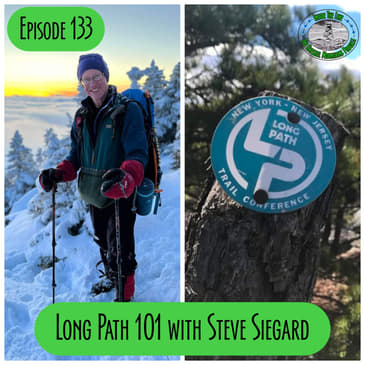
Welcome to episode 133! Tonight, Tad and I chat about the long path with Steve Siegard. Steve is a long path enthusiast and we chat all about the 357 mile Long Path that goes all the way from NYC up to Cranberry Lake. If you need a sticker, email me or go to Camp Catskill! Subscribe on any platform! Share! Donate! Do whatever you want! I'm just glad you're listening! And remember... VOLUNTEER!!!!!!
Links for the Podcast: https://linktr.ee/ISLCatskillsPodcast, Donate a coffee to support the show! https://www.buymeacoffee.com/ITLCatskills, Like to be a sponsor or monthly supporter of the show? Go here! - https://www.buymeacoffee.com/ITLCatskills/membership
Thanks to the sponsors of the show!
Outdoor chronicles photography - https://www.outdoorchroniclesphotography.com/, Trailbound Project - https://www.trailboundproject.com/, Camp Catskill - https://campcatskill.co/, Scenic Route Guiding - https://adventurewiththescenicroute.com/, Another Summit - https://www.guardianrevival.org/programs/another-summit
Links:
Long Path, Friends of the Long Path page, Long Path wikipedia, Mohawk Land Conservancy
Volunteer Opportunities:
Trailhead stewards for 3500 Club - https://www.catskill3500club.com/adopt-a-trailhead?fbclid=IwAR31Mb5VkefBQglzgr
fm-hGfooL49yYz3twuSAkr8rrKEnzg8ZSl97XbwUw, Catskills Trail Crew - https://www.nynjtc.org/trailcrew/catskills-trail-crew, NYNJTC Volunteering - https://www.nynjtc.org/catskills, Catskill Center - https://catskillcenter.org/, Catskill Mountain Club - https://catskillmountainclub.org/about-us/, Catskill Mountainkeeper - https://www.catskillmountainkeeper.org/, Bramley Mountain Fire Tower - https://bramleymountainfiretower.org/
Post Hike Brews and Bites - Maple Inn
#longpath #longpathNY #catskilllongpath #NYlongpath #longpath101 #visitcatskills #catskillstrails #catskillmountains #catskillspodcast #catskills #catskillpark #podcast #catskillshiker #volunteers #catskillmountainsnewyork #catskillspodcast #catskillshiker #catskillshiking #hiking #insidethelinecatskillmountainspodcast #volunteercatskills #catskill3500 #hikethecatskills
[00:00:00] The President of the Long Path North has a DR trimmer mower that he mows over 10 miles of trail on his own two to three times a year. And the guy is in his 70s. Wow, crazy. And he's Mark Traver.
[00:00:18] And there's another guy in Altamont who was up there yesterday and he has a very bad back and bad knees. And he loads his garden tractor in the back of his truck and brings it up here and mows the trail.
[00:00:37] And well, you know, I don't know how he gets... He has this whole scientific method he's engineered about how to get it in and out of the truck without ending up in the hospital. And you know, on I've tried...
[00:00:49] I remember one particular day last summer, there's one mile of trail with me and a pushmower and it took me three hours mowing a path down through the E-2 half. So that's one of our challenges, how to get it into the woods in the off of boundaries.
[00:01:18] The bushwax were some of the worst days I've ever had in the mountains or life, really. Whereas Pansom Mountains is totally opposite to the mountain on top of the faith. I think the weather challenges on this incident were particularly difficult.
[00:01:36] It is really the development of New York State. Catskills were responsible. How you're listening to Inside the Light. Catskill Mountains Park Gas. All right, so I don't know why it feels like... It's only been like a week, but it feels like a couple of weeks, doesn't it? Like...
[00:02:07] It's been a while. I don't know why it said that. It seems like you got a couple of weeks worth of hiking in over the last few days. So that could explain it. That's true, but I'm not as active as Steve is here.
[00:02:18] Steve's like out there every day, Steve. You're gone every day. Well, the older you get, the more you got to do to stay in the same place. Yeah, that's good. You know, I'm glad you're out and about. So welcome to episode 133 of Inside the Line, the Catskills podcast.
[00:02:37] Tonight, we're going to be talking about the Long Path 101 with Steve Seagard. Steve is a... I call him the Long Path entrepreneur would say that extraordinary. I think I put that in there. Steve and Andy are the ones that basically take care of the whole long path.
[00:02:58] And it's amazing what you guys do. So welcome to the show, Steve. Thank you. I just also clarify that the Long Path is kind of divided into different sections for maintenance and Charlie Gidal manages the Catskills and he does an incredible job down there.
[00:03:16] I'm for the section that's from Green County North. And there's actually other people that manage the like the Appalachian Trail sections and has gone and harrowed in other areas. Nice. Well, thank you for that's three people for three hundred and seventy five miles.
[00:03:34] So that's a little that's a little insane if you ask me. So we're talking, Steve, you've been doing some recent stuff with rerouting trails and stuff. So did you know that you could now go to college for trail building?
[00:03:50] Yeah, I saw an article on that a couple of weeks ago and it's encouraging that they could develop programs like that. Also shows just how much there is to know that you could.
[00:04:02] I didn't see if it was a two or four year program, but they had 50 students in it in the article I was seeing. So that's encouraging that more people are getting to know about trails.
[00:04:14] Yeah, it's it's it's great to see that this is coming along with the amount of the popularity of hiking now and the amount of help we need with our trails as Steve would know, you know, rerouting the long path to take them off of
[00:04:28] walkways and bring them off by properties and stuff like that. It's just great that they are bringing this to a dream of someone who wants to do this for a living, to once they get paid for this and wants to help out the other areas.
[00:04:44] So a lot of people said, you know, that this is a to trail build to build trails is definitely very skilled. You can't just go out there with, you know, a hacksaw cut something down and then it's a trail.
[00:04:59] You have to make it to where the erosion's not going to be significant. You got to make it to where there's mud and stuff like that. You might have to put some steps in there. You know, elevation gain, you have to calculate what could, you know,
[00:05:13] a rainfall or snowfall do. There's so much into it. So why not go to school for it and become, you know, kind of like a skilled entrepreneur of trail building? Like it's fascinating. Well, Stosch, the first thing you're going to learn is that
[00:05:30] you don't use a hacksaw to build a trail. That's old school. That's old school. Well, I don't even think the old schoolers used hacksaws. For those of you who don't know, hacksaws are made for cutting metal. Whatever. Yeah. So yeah, I'm just.
[00:05:47] I can see how this is going to go. Yeah. No, I'll pull the reins in later on. Don't worry, Steve. But what I found of interest in this article was that it says the National Park Service and Bureau of Land Management each maintain
[00:06:06] thousands and thousands of miles of trails. The Forest Service maintains more than 158000 miles of trails. And then they point out that you can't use machinery like bulldozers, rollers, dump trucks to build these trails. These trails are predominantly built by hand using hand tools,
[00:06:31] maybe chainsaws, things of that nature. But you're not going out there with, you know, significant excavation equipment like you would use in road building. I don't know. Yeah, Steve knows that. Yeah. Yeah, it depends on the classification of the level of wilderness it is
[00:06:50] on public lands, what you can use and when. But for most of the work we do with the New York New Jersey Trail Conference, most of the trails, you can only use a chainsaw if it's on state land for about two weeks a year.
[00:07:08] And then there's very specific requirements that is required for the person who is using the chainsaw as far as certifications and even certification of a person who helps them, that they call a swamper. And all the rest is pretty much done by hand.
[00:07:29] And on more private lands we do have more latitude in how we use chainsaws. But it's expected that people would still have those levels of certification regardless of where it is that they're working. Yeah.
[00:07:47] So why is it just two weeks out of the year you can use the chainsaw on some lands? On lands in New York and also in some areas of federally, in New York we call it the forever wild clause, and that you're not supposed to
[00:08:06] have any motorized vehicle or implement operating within that wilderness area. There's two weeks per year that they make exceptions for that. One is at the end of winter in May and the other is just before winter.
[00:08:25] And that allows crews to come in and just kind of run through as hard as they can with as skilled and greater crew as they can to clean everything out. And there are exceptions that are made after hurricanes, after significant
[00:08:45] storms like for instance that ice storm we had that affected so much of southern and central New York. Just on one trail, the burles ranged in the Catskills, Charlie Goodall and Andy Garrison cut out 65 trees. Yeah, I remember hearing about that. Yeah, and that was an exception period.
[00:09:10] So you can make exceptions given certain natural disaster sort of events. The rest of the time we're using hand saws. Wow. Unbelievable. And this is all for volunteering. You're volunteering your time. Yes. Yeah. Unbelievable. So once again, you can go to school for trail maintenance now.
[00:09:32] And a lot of I was reading a lot of stuff about that, that, you know, the amount of people who wanted to do this job from 1992 to 2018 drop by 49%. And the pay is not really that great.
[00:09:46] So they're trying to get that back into the programs that they want to do in colleges and stuff like that to make people interested in doing this and to make a better place for us out in the forest.
[00:09:59] So I thought that was a pretty cool article to build up, especially with Steve here who was going to be talking about that kind of stuff tonight. So it's pretty neat. So one other thing I wanted to chat about is that a four year old
[00:10:13] completes the New Hampshire 48 footers, so 48 hundred footers. That's crazy. As I was there this previous weekend, what an awesome accomplishment. You know, we've had the young people complete 35ers here, 48 years are a whole nother story like just their beast. You know, what do you think, Ted?
[00:10:35] I think it's incredible she started out before she was four years old hiking with her mother primarily, I suppose, but hiking using her own power to get up these mountains. According to the article, her mother started hiking with her
[00:10:53] when she was just two months old, carrying her up in a child carrier. And then within a couple of months, her and her mom had finished the initial round of 48, but albeit that this little lady was infant at the time, so she was in the backpack.
[00:11:12] And then it goes on to say that their longest outing was a 45 mile variation on the PEMI loop, which they completed, which they completed in a single day. So that's 45 miles. That's 45 miles mom with Lydia, the young infant child in tow doing 45 miles in a single day.
[00:11:37] So when you're out hiking this weekend and you're like mile 15 and you're ready to start complaining, just think of those two and suck it up. Right? Yeah. So Lydia, Lydia Pearson did the four thousand quarters in New Hampshire.
[00:11:52] And to be honest, you know, these are these are beastly peaks. You know, some of them gave four thousand feet and in just a couple of miles. And apparently she finished on top of the most famous one, Mount Washington, six thousand two hundred feet.
[00:12:06] And she's the youngest person to do so. And it's just so cool. Hopefully we'll see them on the Sounds Like A Search and Rescue podcast and have a they can show a chat of her. Lydia talking about her favorite time because, you know, seeing that picture
[00:12:21] of her on top of it shows a picture of her on the Webster Cliff Trail, the Crawford Notch. I think I was pretty much there. She looks like she was on Pierce or something. And I was there and her smile is just huge.
[00:12:34] And to have that kind of enthusiasm at that young age, just it puts a big huge my heart growth bigger. Just to say that they did the 45 mile penny loop in a day really scares the crap out of me because, you know,
[00:12:50] I did that over three days and it was absolutely horrible. That's a crazy amount of distance to cover in a day. I also note in the article it says that Lydia looks forward to hiking because she gets to eat trail food
[00:13:07] that she wouldn't regularly be allowed to eat at home like cookies, chocolate and candy. She's also fond of singing songs on the trail and is frequently joined on her hikes by two imaginary friends, Lake and Reedy. So food, I guess, is a strong motivator.
[00:13:27] That's what I'm here for. I'd like to work a friend on a trip. It really helps kids imagine area or not. Yeah, yeah. Steve, have you done any in New Hampshire? Yeah, I've done what they call the one 11 all the peaks of a 4000 in the northeast.
[00:13:43] And the rounds of the 46 two rounds of the 35, you know, so this that those are beasts for a four year old to do. Oh, yeah. Yeah. Yeah, so on awesome stuff. So can't wait to hear more from from Lydia.
[00:14:02] It was crazy to see the sum of the stats, you know, four thousand footers, two hundred and thirty miles. Usually it takes 80,000 feet of elevation gain. And then it says it took her with her stats to 308 miles with 105 feet of elevation gains
[00:14:20] because she has smaller steps, number one. And sometimes her mother mapped out longer alternate routes to tackle peaks over multiple days. So so I'm happy to say that this little girl is going to be having fun with the outdoors. So that's pretty cool.
[00:14:39] So I just, you know, we'll go over really quickly. Just got the DEC Ranger reports. Oh my God. So the amount of stuff that has been happening up in the Adirondacks is absolutely insane. Like there was over the last two weeks,
[00:14:54] the amount of calls that were out there, broken ankle, lost person, you know, a person that was off trail. It just goes on and on and on. And like July 15th, I think they got over like four or five calls from different areas.
[00:15:09] And I'm glad to say of that report, there was none in the Catskills. So yeah, well, obviously, everyone's listening to this show and they're picking up on our tips and advice. And it's keeping them out of trouble.
[00:15:24] And it's given the DEC, you know where I'm going with this? It's given the DEC all that extra time on their hands. They started up their own podcast. So exactly. Don't be. Yeah. Don't be. Don't be falling down just to stop them from recording.
[00:15:39] So we're doing good in their free time. We're doing good. So keep keep being safe out there, everybody in the Catskills. So all right. So thank you to the monthly supporters, Darren White, Vicki Ferrer, John Kamiski, Betsy Anderson, Denise Weiss, Vanessa Leong, Joseph Hayda, Jim C.,
[00:15:55] Michael and David. Thank you guys for supporting the show. Really appreciate it. Also, thank you to our awesome sponsors. Capture your love story against breathtaking backdrop with outdoor Chronicles photography. Molly specialized in the adventure couple of photography and she'll immortalize your moments amidst stunning landfills
[00:16:12] and the Catskills Adirondacks and White Mountains show craft timeless images that reflect your unique bond and nature's grand door embark on the unforgettable photographic journey with outdoor Chronicles photography. Don't hesitate to get a hold of Molly on all platforms.
[00:16:27] I actually when I was in the whites, I introduced so many to Molly, so hopefully they will do their little project with them up in the White Mountains. Also discover the wilderness with Cheryl Brown project. Our expert led hiking and backpacking education programs offer unparalleled outdoors experiences,
[00:16:45] whether you're a beginner or a seasoned adventure. Join us for to learn essential skills, explore studying trails and connect with nature. Start your journey today with Cheryl Brown project and unlock the great wonders of the outdoors. They have a couple of events going on.
[00:17:01] So on Sunday, July 28th at seven, there is a virtual campfire talking. Anyone can easily learn and be confident. So you got a RSVP ask me for some info and they got a bunch of other stuff going on. Check that out online.
[00:17:16] So it looks like I'm the only one drinking anything tonight. And, Ted, what are you having? Coffee? I'm having what's called a three C. Have you ever heard of a three C? I have not. No, it's Coca Cola. And coffee, the three C's.
[00:17:37] What? Yeah, it's a Coca Cola. Coca Coca Cola and iced coffee right here in one of my daughter's trusty Yeti cups. Nothing's better than using one of your kids' cups to drink out of. Was this her suggestion? No, that's something I've been something I've been doing for years.
[00:17:58] I was a joe. Well, you put Steve, you making fun of me. What kind of guy are you? He's a cool guy. How long do you got? Yeah, that's right. True. Steve, you having anything to drink, sir? No, no. No, not even water. People like water. Yeah, I.
[00:18:20] I drink a lot of this is less interesting than his drink. But if I aim to drink a gallon a day, that's half ice, half green tea and half water. And that's so that's pretty routine, not that interesting. But that's my that's what I drink most a long.
[00:18:41] Downs healthy. That's it. So I'm having a good ginger ale and Rev spirits conundrum. So Rev spirits, they were on a previous episode, one of my early episodes, I think like episode 16 or stuff. And they have some really good spirits located in Jefferson.
[00:18:58] They have an open hunter and stuff to really good stuff. So previous hikes. Steve, what do you got for us? I know you're out and about every time you have been some crazy places. What are your some of your previous hikes you want to talk about?
[00:19:12] Well, I have a couple of friends that we go down doing a lot of rock scrambles in the Catskills. There's been our main events of recent and looking for some set of cliffs or ravines that we can pull off a map
[00:19:27] and go find out what they're like when we get there. And so that's at least one day a week, just doing that. And then getting ready for a trip for a trek in Peru to Machu Picchu for the second day of the trek.
[00:19:44] So with our group, we have a full going with that that I'm coordinating. We're doing a lot of just warm up hikes for that. And they're always out, you know, whatever. It's such a great area around here.
[00:19:58] There's just such an enormous amount of opportunity within a day trip of here that it's all, you know, hucking up with people. So what do you feel like today? Well, I haven't done this in a while. Let's give that a shot.
[00:20:10] And is that you're always hooking up with my gross, right? Oh, yeah. Yeah. He's a he's a. Mike and Jim Hopson and that they're the two leading instigators. And they're up for anything, anytime. Yeah. James, I've hiked with I've actually hiked with James and Mike both
[00:20:34] and Mike's Mike's a beast and James just wants to explore anywhere and anywhere possible. Yeah. He gets very excited about anything with water and slides. Yeah, it's geology. It's good stuff. Yeah. Well, it's it just make it doesn't matter what else is happening that day
[00:20:53] if it has water and a slide, he's just talking about it for the next two weeks. That's I mean, Tad, maybe James and and Danny should hook up if they haven't already sounds like a classic combination. Yeah. That's that's fantastic.
[00:21:10] So when did you what was the last did you go in the gunk a lot, Steve, and did some crazy scrammels? Correct? Oh, kind of go through periods of hitting up different areas and doing everything around them or earlier this summer we were down in the gunks more.
[00:21:27] Did quite a few things down there. We've also been up in Vermont and a lot of things up around the castles and then when things cool down more in the fall, we'll we'll get up north and hit up some of the slides up in the other round decks.
[00:21:42] But yeah, it's just kind of wherever there's a set of cliffs that they'd like to see what it's like when you get there. We go check them out. Nice. Nice off trail Explorer. I like that. So, Tad, what about you, sir? Well, I don't know.
[00:21:58] I it's kind of hard to follow that up. So in my my quest to red line the Catskill all trails, I set out to Jenny Notch this weekend and 13 and a half miles. Yeah, 13 and a half miles from Jenny Notch
[00:22:14] to Ashlyn Pittacle, part of that sound the long path. Right. And it's you know, it's just different terrain from the high peaks. It's very pleasant, generally easy going, rolling over one knob or no to another. But it's remarkable the fact that
[00:22:32] there is little to no foot traffic evident on these trails. There's no trash, really no sign of any high traffic or anything like that. I also know that there was virtually no water to be had along the entire route.
[00:22:50] Yeah, you're basically once you set out from Jenny's Notch, you do a couple road crossings, but you're not really crossing any streams or any rivers, but it was a fun hike. I enjoyed it tremendously, took a lot of snapshots.
[00:23:03] I only saw one person, a trail runner and it was fun. Had a good time. So Stosh, did you get out at all? I mean, did you do anything over the last week that you want to share with us? I can't. I don't think I can.
[00:23:18] I can do the whole thing in one five minute session. So well, next week I have planned talking about that whole. I did the presidential traverse. Oh, the the Pemmie. Yeah. No, no, not the Pemmie, the Prezi, the Prezi. The Prezi.
[00:23:35] So did you do it with like a four month old strap to your back? Not like that woman, Jesus. No, no, I didn't. I didn't see any of that. But now I did the presidential traverse, which is like a 20, 21 mile hike in
[00:23:49] the and then New Hampshire, mostly like I would say 85 percent of that is about treeline. And I got to say this was probably the greatest experience in my life. I've never gotten this. It's just wonderful weather, wonderful people to be with just everything clicked together.
[00:24:12] And, you know, I wish I could talk about it right now, but it would take it would seriously take hours to talk about it. So next week. Yeah, we're glad to have you back and everybody, I guess, has got to tune in
[00:24:23] to episode 134 to get the inside scoop on Stosh and the presidential traverse. It was it was magical. I couldn't I couldn't say everybody, you know, there were so many people out. You know, the one thing you talked about, you saw one trail runner.
[00:24:41] You know, I got to admit, trail runners suck. Like they are annoying. I didn't I didn't hear that, Stosh. What did you say about trail runners again? What was that? They suck. You know, I don't know if that's issues. Is that is that a capital?
[00:24:56] S. U. C. K. 100 percent. So I don't know if that was just the being on New Hampshire and they they had an event going on. But it seemed like every time they were behind us, they didn't say like,
[00:25:09] you know, on your six or hey guys, I'm behind you or anything. They would just feel like you're there on the back of your ear and they would breathe and expect you to move out of the way like a mountain lion. Yes. 100 percent. Definitely. Definitely.
[00:25:22] And I was I was just disgusted by like every time it would just be like they wouldn't be like on your six like, come on, like I know it would turn around or like runner behind you, I would turn around and I would suspect that.
[00:25:33] But no, they was like like that. And then I'd be like, oh, I'm sorry. I didn't see you there. It sounds like when you you do that traverse the 11th essential is a side view mirror. Oh, yeah. So you can see the 11th essential exactly. Yeah. So yeah.
[00:25:50] Why, you know, look, we have nothing against trail runners and and folks who, you know, carry on at a accelerated pace over the mountains or the trails. But everybody needs to be polite and courteous. That's true.
[00:26:06] And I met, you know, to be honest, there was I couldn't even tell you how many people that were on the trail, just even the the secluded part going from Madison Hut to kind of like the base of Mount Washington, you know, Mount Washington,
[00:26:21] it starts to get crazy. But yeah, it was just there was one part I called the Hillary step of New Hampshire over the Northeast. I saw that post. It was so many people. There was like 30, 40 people trying to get up this one area.
[00:26:37] And I'm just like, let's wait right here for like 20 minutes and then we'll we'll get going. It was crazy. But I don't blame them. I don't freaking blame it was beautiful weekend. Yeah. And I can't, you know, I had last weekend and I'm sorry,
[00:26:50] I'm not a nine year old girl. Her name is maybe did the presidential's traverse and the next day did the Franconia traverse. Oh, man, shame, shame, Stash, Sam. And when they got done and got back to camp, she went for a run. And nine years old. Yeah.
[00:27:11] Nine years old. Well, oh, man, she doesn't have any problems. That's why somebody's got to buy that nine year old a smartphone. She's got too much time on our heads. Wow, unbelievable. So if that was the week I wonder if that that I don't remember seeing
[00:27:29] a nine year old, but she was so fast. She went right by you. You name's here. Probably one of them that jumped over me when it's just like and then was just like, hey, I'm trail running. Sorry. Yeah. Well, it also comes your way.
[00:27:40] So you might not have noticed she just went right. Yeah. You you you might have been like in such, you know, anaerobic shock from carrying all that weight and hiking. You know, it's such an elevation that you were your surroundings were rather foreign to you. And it's true.
[00:27:57] Plus I'm I'm that whole hike, that whole trek was I was in the moment of just enjoying the views, enjoying the wind blown on my face 20 mile per hour constant winds. I was just like I found myself sometimes just standing there
[00:28:14] with my eyes closed and then my team would be, you know, like 300 yards ahead of me and like waiting for me. I'm just like, oh, don't wait for me. Well, I'm enjoying this. So it sounds like one of those moments you had your eyes
[00:28:26] closed is when the nine year old was gone. Yep. It's part of the wind, the wind sound. That's what I'm hearing. Awesome. So awesome guys. Glad everybody gets out soon. We'll talk about Steve getting out in a long path. So Catskill News volunteer 3500 club, Catskill trail
[00:28:45] Clue Catskill Mountains Club visitor center, Jolly Rovers trail clue, brother mountain fire tower is doing some volunteering efforts. Steve, does the long path do specific like volunteering or do you have to go through the New York New Jersey Trail Conference?
[00:29:01] Well, there are different sections of the trail are managed by different kind of small clubs that were all associated with the New York New Jersey Trail Conference. And if you become a formal maintainer that we're all we're all members of the Trail Conference Center
[00:29:21] supervised by their what they call their long distance trail crew coordinator. And but for the section that I was a club that I'm a part is called the Long Path North and manage a larger area than they do. They're there, what we call the volunteer service
[00:29:43] agreement with DEC covers, uh, Schahari Albany and Schenectady counties. So we are the people responsible for maintaining the trails in those areas that DEC gives us a signs the trail to us gives us direction about what they allow or don't allow what they'd like to see, but they
[00:30:06] give us a lot of latitude and how we approach it. And so then we coordinate with them if there are occasionally something that's a larger problem or a larger project than we can manage from our volunteers who reported to them and they make choices
[00:30:21] with groups like the Trail Conference about whether to bring a professional crew into to manage a situation such as after a natural disaster or something like that. But most of it we're managing like for the three counties here were we're managing about 90 miles
[00:30:41] of trail out of about a dozen people. Oh, wow. Jesus. So I also remember that there is a Facebook page called Friends of the Long Path that where you guys post this room post random stuff as well. Right. You can check out on there.
[00:30:56] Yes. Let me add that to the ever growing list because I like to, you know me. Well, I don't know if you know me, but I love volunteering so. Yeah. So definitely put that on there. Check out Friends of the Long Path, volunteer and opportunities.
[00:31:12] Also, if you want stickers, ask me. I'll send you new ones. I'll send you ones and Camp Catskill will send you ones also once again, I forgot to rate the podcast on any platform. We had two more five star ratings, so it was pretty cool.
[00:31:26] I actually liked it. Someone said something about like if you want to learn more about mountain lions and the Catskills check out this podcast. Definitely. We're I think we're becoming the renowned experts on mountain lions in the Catskills and all over the place.
[00:31:41] They're getting them, but they're not in the Catskills. They're down in New Jersey. Well, I think in part that's because, you know, they just don't feel welcomed in the Catskills anymore. I mean, the DEC is not doing much of anything for them, not promoting their habitat.
[00:31:58] People are going out with bear spray. It's scaring them off. I think people need to go out. They need to buy from us. What they ought to do is just send in $25 to Stosha myself and we'll mail you back five dollars worth of mountain lion food
[00:32:13] for 25 bucks, shipping and handling included. I heard it was the trail runners. They just kind of sat on cliffs and shook their head. Yeah, scared them off. Yeah, it's a trail runners that are scaring them off because they're running like right by those mountain lines.
[00:32:28] No, it's not that. Don't be ridiculous, Stosha. It's trail runners are too thin and too lean. And if you're a mountain lion and you had the choice of eating like some thin, lean trail runner versus a plump and round hiker, which would you rather have?
[00:32:46] Obviously, a plump and round hiker. So I think that's the explanation. And they don't know it. Yeah, that's our story. We're sticking to it. I agree. I agree. Also, Bee from Recovery Hike wanted me to mention that they are doing on August 17th. I camp out.
[00:33:04] So check them out on Instagram, Facebook, send them a message on recoveryhike at gmail.com if you want to be involved. Once again, Bee was on episode 25 talked about how basically recovering from any sorts of abuse through hiking was absolutely phenomenal and it heals. So check them out.
[00:33:25] Recovery Hike. So weather forecast for this weekend as we've gotten a phenomenal weekend. Oh, look at that. My weather forecast was located in New Hampshire. But now so this is a weather forecast. Looks like I'm going with Sugarloaf Mountain this weekend.
[00:33:44] It looks like this weekend is going to be absolutely phenomenal. Judging by Tuesday's forecast, it says Friday, Saturday and Sunday all clear in the clear highs of sixty three to seventy two degrees lows down to the mid to low fifties. The whole freaking weekend. No rain whatsoever.
[00:34:05] Friday, Saturday, Sunday clear. Get out there, hike, volunteer, have some freaking fun. That's all I got to say. All right. So I don't have any history. I should have probably pulled up some history on the long path. But yes, as I remember, that was a fan favorite.
[00:34:22] So that's horrible. Yes, it was. Oh my God, I haven't done that in a very long time. Yeah. Our readers or our listeners are becoming like uneducated and Catskill Mountain history. We need to fill them up with some good history.
[00:34:38] That's horrible. So all right, I'm going to get on to the sponsors and then Steve will get onto your interview. All right. OK. All right. So discover camp Catskill in Tannersville, your ultimate hiking store, find top quality gear, apparel and accessories for all your outdoor adventures.
[00:34:54] Our expert staff is here to help every hiker from beginner to season pros. We also carry a variety of unique Catskill souvenirs and gifts. Visit online at campcatskill.co or in the store to gear up for your next journey. Adventure starts at Camp Catskill.
[00:35:09] Also discover beauty of the Catskill's Adirondacks and Hudson Valley with scenic route guiding. Our expert guides are here to ensure a safe, unforgettable hiking experience tailored to your skivel level from breathtaking visits to hidden gems
[00:35:23] or if your peak bagging or just a simple day hikes will lead you to the best spots in back. Book your adventure today and spoilers, nature's wonders with scenic route guiding. Check them out on all social media platforms. Also mentioned the podcast you can get 10 percent off.
[00:35:37] Use the code mountain lion. Also embark on a transformative journey with another summit. Another summit is dedicated to serving veterans and first responders with free outdoor activities, activities like walks in nature, paddling, hiking and even backpacking. Join our supportive community to rejuvenate and nature's embrace.
[00:35:57] Experience camaraderie, adventure and healing at no cost. Take your next step with another summit and a cent in new heights of resilience and joy. Apply today on another summit dot org. Now this previous trek up presidential range was done by another summit.
[00:36:14] So I can't wait to talk about that. So I'm all time. So let's get on to the guests of the night. So tonight Steve Segar joins us and we're going to talk about the long path. I call him the long path extraordinaire.
[00:36:31] We're going to do long path one on one, basically. And we're going to hopefully get people involved with the long path. So Steve, welcome to the show, sir. All right, thank you. I know you've been already talking for almost 40 minutes.
[00:36:44] So you're already I don't know why I welcome people two or three times to the show, right? It's weird. So you even think it's under your skin as it goes on. And oh, yeah, yeah. I'm here. Let's let's not try to figure that out tonight. Yeah, yeah, right.
[00:37:02] Although we're making we're making great time. This is where like 36 minutes into this and we're already to the guest. So right, right? Usually it's like an hour and 12 minutes in. So so Steve, why don't you give a little background about yourself?
[00:37:15] You know, kind of like where you started out, where you live, stuff like that. And then how you progressed into the Catskill area. Sure. Well, I live in the Helderberg Mountain South Southwest of Albany and in Clarksville, New York, famous for our caves around here and waterfalls
[00:37:34] and all the many preserves in our area that are particularly managed by the Bohawk Hudson Land Conservancy, a wonderful organization. And it's a very convenient place because there are only two hours from the high peaks, an hour from the Northern Catskills,
[00:37:52] an hour from the Berkshires, hour from Vermont. So we got a little bit of everything going on. And that, you know, I started hiking with the help of my grandfather when I was a kid. We had the Finger Lakes Trail went right on the edge of our property.
[00:38:10] And he got me started hiking on that. And then he and my father taking me up Mount Marcy when I was 12. And then there was a big gap until as an adult and after after college and got to be about 30 and decided it was time
[00:38:28] to go back into the woods. And I got involved with the Albany chapter of the Adirondack Mountain Club and was very appreciative of the mentorship that they provided for a lot of things, particularly about learning the routines of winter hiking. And from there got involved also in the
[00:38:52] with the 3500 Club doing trips in the Catskills. But I was the trail coordinator for the chapter for the Adirondack Mountain Club back in the mid 90s for about 10 years. And from that we had one of our members of our
[00:39:14] trail committee, Fred Schroeder, a very famous person in our area at the time. He was part of the group that moved that grew the long path from where it originally ended at the home Ridge Parking Area on 23 outside of Wyndham
[00:39:33] and about a four year period they built over 80 miles of trail going from from there in Wyndham up here through to Aldamot and from there on an off road all the way to Northville. And as Fred was, Fred had cancer and he was looking for somebody
[00:39:54] to pick up his legacy after he was done. He kind of drafted me and another person to take up the mantle from him and we got involved with the Long Path North Committee. So that was about 25 years ago.
[00:40:09] And and really just even after 25 years is such an extraordinary group. I still feel like I'm the new guy in the group and I'm still learning from them every time we get together. But from from there developing into from just volunteering is on their different projects
[00:40:33] to then becoming the coordinator for Albany County and from then developed into the role I have now, partly because Andy's role got a little too big. And as he was once honest with me,
[00:40:46] my primary skill set that got me drafted was I knew how to take part in a Zoom meeting. Hmm. Somebody else would have it if they had known how. And so that's what that's why Gary or Andy
[00:41:01] like didn't want to talk to me because he knew you would. Well, he's a good guy. It's quite a jackrabbit. He's just I don't know how he sleeps at night. He's always so busy. Yeah. Yeah. So it's been a great experience getting to know other parts
[00:41:19] of the New York New Jersey Trail Conference is part of my current role and the other trail crews around, particularly the trail crew that Charlie has and that Charlie and Andy manage. They came up last summer with a crew and helped me with the reroute
[00:41:36] and partridge run that was important. If I hadn't had their help, we probably wouldn't have finished it. And like Andy was up last weekend helping us with a project in Aldamot where we're going to move the
[00:41:51] official end and for end and back packers from Thatcher Park down to Aldamot. And we're building a trail off the escartment right now. We had 23 people there last week. Nice. Working on the trail. And we'd appreciate it.
[00:42:08] Andy being a part of that with his expertise with the Rockwork Convention and things of that nature. Yeah. So then it's always about trying to support the volunteers that are out there. We have a lot of places downstate. A volunteer might manage one mile of trail up here.
[00:42:27] If we did that, we would have about 10 volunteers. So that would mean 80 miles weren't getting covered. And that we have extraordinary volunteers that go well above what's expected. And besides whatever they've been assigned, they're always working on other
[00:42:46] people's and backing each other's up and always there at a seconds notice to try to go out and do what they can. But one of the things you find with that level of high motivation, first off, to have that usually requires you're being retired.
[00:43:03] Like I have myself say, you have the time that you could devote to this. But along with that also at any one point, a lot of us are injured. So we're always trying to back each other up with who's got the back problem,
[00:43:15] who's got the knee problem, you know, whatever the family issues that are going on with taking care of other family members. And so we have a real. Gaps at times for being able to cover the whole trail.
[00:43:29] And so we're always looking for new people that can come in and particularly younger people that are less injury prone or whatever and getting them started and getting them to love the trail so that 25 years later,
[00:43:43] they could be in a role like mine and and mentoring other people. Wow. So Steve, do you have any like kind of stats going into the long path that you could share with us with and that sort of history of the long path?
[00:43:59] Are you well acquainted with that? Yeah, somewhat. Well, currently there is about 240 people that have officially officially completed the trail and which is defined as coming from the, you know, near the George Washington Bridge with the, you know, the subway there
[00:44:19] at 157th all the way to Thatcher Park, that old stage road. But then a lot of people have actually continued all the way up to Northville, which is another 70 miles. And that we've had in any particular year, there's about 10 to 12 people that finished the trail.
[00:44:42] And then during COVID, that about doubled it went up and went into the 20s for that. And this year we're on track probably to be actually higher than that. So things are starting to pick up steam for how many people are finishing the trail.
[00:44:58] And we do find that a lot of people will get started with it down downstate and they make it up into the Catskills and get that far. And then often kind of like can happen with a long trail in Vermont,
[00:45:12] that it gets so far for driving and the logistics get complicated. But a lot of people will end up not making it much farther north than the Catskills. But we do have people that can help out with the logistics up here.
[00:45:27] And I've helped people with spotting their vehicles or getting them to trail heads or getting information about where could I stay or things of that nature and supporting people all the way up through on the trail.
[00:45:41] But as far as when the trail started, it recently was a concept that was started by Paul Schaefer back in the 1920s. And he had the concept of a trail that would go from from city to wilderness.
[00:46:02] And he had the idea of 88 points that were historic points that he had plotted out that went from New York City to Whiteface Mountain. And he suggested, he put them all on a map and suggested that people just get there
[00:46:19] however they can by as he put it, dead reckoning by compass. That would be quite an exploit. Yeah. A little easier now with better roads and driving conditions for people to come to a lot of these, though a lot of those 88 points are, while they're wonderful,
[00:46:41] are also a number of them around private land where there's the landowners that ask for respect of their privacy. But there is a site in Warren County that has a website that has the lifting of all the 88 points and a lot of information
[00:46:59] if somebody wanted to visit them about how to get to them, including the access issues for allowed access. But then back in the late 20s, we started getting more of the concept of actually building a trail with it and developing out of a poem by Walt Whitman
[00:47:20] called The Long Brown Path. And that led to the trail being developed from the George Washington Bridge and Fort Lee up to the Elm Ridge parking area on Route 23 in Wyndham. And there was a lot of areas of that that like are often with different long trails,
[00:47:46] on and off trail with road walking and on and off of private land. And it's always been a matter of how we can get the trail more on land and off road over time. And there's been tremendous work that's been put into that.
[00:48:05] And Andy is actually the head of the committee that was kind of charged with how to preserve the trail into the future with getting it more and more off trail onto either private land with easements that we've purchased or agreements that will allow us to
[00:48:24] be there or in whatever possible on public land. But then back in 1989, there was the concept of moving the trail farther north than Wyndham High Peak trailhead. And a group of about eight people, Fred Schroeder being one of them,
[00:48:42] worked on building the trail in about, from the time they started to about 94, about a four year period, they built about 70, 80 miles of trail. And to me that's like building the pyramids. That's just a phenomenal accomplishment.
[00:49:00] And we've been working on ever since then about once again how to get the trail more preserved on public lands and off of road. And more working with, you know, right now from just Cahari Albany and Connectedee County, we have 40 landowners
[00:49:24] that the trail crosses their property. And we're always working on our relationships with them, making sure that the trail is working within their needs and interests and the goals that they had and even allowing it on their property
[00:49:37] and how to preserve it more such as people will sometimes bequeath the land that the trail is on to the trail conference for the trail to be protected in perpetuity or, you know, gift us easements or provide with their relationships access to other landowners that would help
[00:50:02] coordinate for going through their properties. So it's a real group community effort. It's more than any one group of just volunteer maintainers. It takes a, you know, it's you're probably talking across the trail hundreds of people that are involved in trying to keep the trail running
[00:50:23] and preserved and to be there ever more into the future for people to use. Awesome. So 357 miles that it goes all the way to Thatcher Park, and then it's gonna hopefully
[00:50:40] be continued all the way up to Whiteface was a dream, right? Right. Right now it goes as far as Northville that if you ever went to Northville, they have this large wooden arch that it's just an absolutely beautiful structure and it has on the arch it both
[00:51:01] memorializes the long path and the Northville Placid Trail. And that is determinist for the Northville Placid Trail as well. So then you could go from the long path and join with the Northville Placid Trail and that would get you all the way to Averyville outside of Lake Placid.
[00:51:20] And then there's still plans for how we could even go from there further up to not only Whiteface, but to the Canadian border. That sounds fantastic. Once again, like almost like the Vermont
[00:51:31] long path, long trail and and the Coho's trail up in New Hampshire and stuff like that. We need to get that done. That's awesome. Phenomenal. One of the things I'd like to know is so it's the long path. It's almost 350 miles. What's camping like along the long path?
[00:51:51] Well, that's a great question. It's easier in certain sections of, of course, in the Catskills you have more access to lean twos. Below the Catskills, a lot of it is in state parks like the Schwagungs and Harriman in areas like that. Now, Harriman has lean twos that
[00:52:13] you can stay at. The Schwagungs not as many, but within this the Stenamonk Ridge that it goes through and a variety of other public areas. But when you get north of the Catskills, it gets a little
[00:52:26] trickier because it's more on private land than it is on public. And they, it sometimes in and out of areas that are designated more like what's such as Partridge Run is near us. That's,
[00:52:40] it's more a hunting area that they don't have as much access to camping. But we, it's one of the things we try to provide people coming through is access to where could I stay and, you know,
[00:52:55] that we have different landowners than and even like in Middleburg there's a laundromat that will let you stay behind the laundromat. And so different places that we know of that will, that we can coordinate for people for staying. So the, the arrangements for camping or sleeping
[00:53:14] over very, over the entire length of the long path, is there some where, where I can online look up where I can camp and where I don't have access to camping overnight?
[00:53:28] That isn't developed as of yet. That it's a little easier for the areas that are going through state parks where you have the access to lean twos. But for the areas more of the north,
[00:53:42] we're still kind of developing the inventory of that. And some of that is also based on what are for private landowners, how open are they to it? What's their experience of it? Do they want
[00:53:57] us to kind of vet somebody for whether we feel like they're appropriate for it? Which, you know, if somebody's coming through from downstate, we're not going to net, probably not going to
[00:54:08] know them. We can ask them questions. And what we're trying not to make this like start to feel like big government or something in a day, it should feel easy. But we're, you know,
[00:54:21] like I completed the Finger Lakes Trail, and they had a list of such as you're saying, maintainers for each section, and a catalog of information that each maintainer had about where you could stay. We're not there yet. I'd say we're probably a few years yet
[00:54:45] in developing that for this more north of the Cascals. So the best thing is for people to just ask us, and we give them the best information we had, you know, including where are the stores
[00:54:58] that you could do for doing, you know, getting supplies, doing drops, you know, who's all who could help you with access for for car spotting or for what landowners are open to having
[00:55:12] you camp. But right now we don't have a an online tool that has all that information in one place. Got you. Not yet, but you're working on it. That's amazing. So
[00:55:24] yeah, I would hope we could have it in three or four years. But I know that it's something that it's the kind of thing that you want it to develop without feeling forced on people. And I think that there's there's growing enthusiasm for it would be that
[00:55:41] that a lot of landowners have had very good experience with hikers on their property. And when they had people that camped on their property that it's gone fairly well. There are exceptions that happened to that where we had sections that were closed, the one that was
[00:55:57] a extremely popular section up here. A landowner had where a trail came off his property, he had stored a lot of farm equipment. And someone didn't understand it was his property and made formal complaints about it. And things like that, those kind of misunderstandings can
[00:56:21] lead to losing access to something. Yeah, yeah. So speaking of spots and sections outside of the cat skills because I'm assuming our listeners are very familiar with the cat skills, what sections of the long path would you recommend as having the best views?
[00:56:41] Well, it depends on the areas that you know they call it picture perfect, Caharie County on purpose. It's just a beautiful place and some of the more famous areas north of the cat skills for views are like what's called the Middleburg cliffs that the trail goes
[00:56:59] over and Romans knows. And they're probably the two most famous areas, but you know even you know that areas up here in in parts were drawn in Albany County. And the trail we're
[00:57:18] building right now along the escarpment in Thatcher Park is going to rival things that are in the Schwagungs when it's finished. It's a fabulous trail. Nice. That so you don't have the jam packed
[00:57:34] for the views as you do in the cat skills or the Schwagungs or something like that, but there are still a lot of very, very nice areas up here. Yeah, and that's just a north spot.
[00:57:45] Like we got long path goes through Devil's Path, Catterskill High Peak and down below that. So down through Wittenberg, right where I read around Wittenberg. Yeah, so I mean. Down through Fenecha, Mount Trempere, you know and the Schwagungs and down through the
[00:58:07] Scenamonk Ridge and into Harriman it's all fabulous areas. Yeah. So what Steve, what do you find special about the long path? You know to me of course it means going through
[00:58:20] the different parts of New York State like just and then hopefully and beyond. What do you think about that? Well, it first of all, by a comparison like when I did the Finger Lakes Trail which
[00:58:35] at that time was exactly 555 miles, I wondered how they pulled that off, but it was mostly a mix of going through farms and state forest, but not quite the same kind of mix that we have
[00:58:54] with the long path. Mostly people think of the state park land that it goes through, but the part that I find the most special about it is all the parts going through people's private land that they've allowed us this special privilege to go through
[00:59:15] and look forward to our coming through and have been such a help to us that it's just such a privilege to be able to do that and it's not something we take forever, take for
[00:59:29] granted. You know that these people are only doing it out of the kindness of their heart. Nobody's paying them, they're not getting anything out of it other than you know maybe
[00:59:38] they get a trail across their land and they like the hike too, but they don't have to allow us on it and it is there's just such a tremendous sense of privilege that comes with all of these private
[00:59:51] people that are allowing us to come across their lives and through such and you know the Finger Lakes Trail goes through some extraordinarily rural areas, you know parts of western New York are some of the only remaining designated frontier country east of the Mississippi,
[01:00:14] but there are parts of the long path that felt more rural to me than the Finger Lakes Trail did and farther from a road and more wilderness and it so there's just a different quality to it with that
[01:00:32] and it isn't all you know to the north, it isn't all about big mountains. It's more about such a variety of experience in the Catskills. Probably I don't know how much even people notice that
[01:00:48] they're on the long path until unless they're trying to do the trail that the peaks themselves get all of the attention when you're up here it's more about this is a very different experience being on this
[01:01:01] kind of a trail. Well, nice. That's an interesting take from a fellow who started off the night by telegus of these rock scrambles and ravines and and slides that you get into and you're
[01:01:15] we're seeing the the mellower side of Steve but let's swing back into that you know out of bounds adventure seeking side of Steve and tell us about those areas of the long path that you
[01:01:32] consider to be the most difficult, most technical parts again though outside of the Catskills if you will because I think we all know what's going on in the Catskills. Well, technical probably wouldn't be the first word that would come to my mind it's more about
[01:01:56] you know there's not a lot of technical areas at north of the Catskills as in needing significant climbing skills or that the average hiker couldn't manage you know that in most areas that kids and families couldn't manage. It's more the
[01:02:19] maybe the exception to that would be the Middleburg cliffs that particularly depending on the conditions there it's not a really high set of cliffs it's a couple hundred feet but it is a
[01:02:29] technical rock scramble that if you have people ever show pictures of it you can't imagine how a trail went up it but in the winter it can be very icy but once you're up on the escarpment
[01:02:42] there's just an incredible view over the valley and they used to have you know as a good example of you know what's different with different sections they used to have a long string of Christmas lights that went tree to tree down the escarpment and they were powered by
[01:02:58] solar powered battery and you could see them at night unfortunately the string is kind of deteriorated it doesn't work anymore but I think probably people would more less about a technical aspect than I just wonder where I'm going I've never been up in an area like this
[01:03:16] this is a whole new experience for me it's just so different than other parts of the state up here and and then there's just the logistics that you can get so far away from a village
[01:03:29] that there's a little bit more involved in the planning than there is if you're hiking the trail more in the castles or downstate got it with that the we can see the long path by the blue
[01:03:41] blazes right they're blue right well we call them teal teal teal blazes right you go green depends on which uh which store color color match the paint to what it's called
[01:03:57] yeah right we got to get that we got to get a woman to identify that because it's like a now now stash please mint with sensitivity so I mean like like you said the past you know
[01:04:11] like five to ten years it's been very successful in the long path I mean we recently saw Kim go through there Kim Levinsky she did the the fastest no time for a woman's pace and it was
[01:04:22] phenomenal she got yeah domina we got tom walsh doing doing his long path fundraiser today yeah he did he finished yeah third time wow his third time doing the long path that
[01:04:37] guy lives up near me and I just can't get enough of him I gotta get him on a show I gotta he is such a riot yeah so tad maybe maybe the week after that we'll get my buddy Tom on here
[01:04:48] well chat you guys will mix in well so Tom's also a great resource in that uh anytime he hears somebody is up here hiking the trail he wants to be helping them nice see you know he just
[01:05:03] has a tremendous amount of volunteering with people coming along the trail yeah it's it's it's grown popular which is good we need that because you know the dream was to extend it all
[01:05:13] the way up to Canada and that sounds like a fantastic dream to have that go from New York City all the way up to Canada to have another long trail of the Vermont you know co-host trail of
[01:05:24] New Hampshire and to have that in New York State would be great to see somebody go from the depths of New York City of the most one of the most beautiful craziest places in the world all
[01:05:34] the way up to Canada in the lakes of the 1000 lakes of New York so it would be amazing to do that so we're always improving on on the long path can you talk about your your most recent improvements
[01:05:49] with the long path that you guys have done here well one of our challenges and certainly one that kim ran into is uh sometimes to get it off the road you end in a field and uh and in a field
[01:06:06] it needs mowing and that is one of the larger challenges up here about how to keep the trail mowed uh the president of the long path north has a dr trimmer uh mower that he mows over
[01:06:22] 10 miles of trail on his own two to three times a year and the guy in the 70s wow crazy and uh he's mark traver and uh and i there's another guy in ultima who was up there yesterday and he has
[01:06:41] a very bad back and bad knees and he low loads his uh garden tractor in the back of his truck and brings it up here and mows the trail and well you know we i don't know how he gets he has this
[01:06:55] whole scientific method he's engineered about how to get it in and out of the truck without ending up in the hospital it uh and you know i've tried i've tried i remember one particular
[01:07:06] day last last summer there's one mile of trail with me and a push mower and uh it took me three hours mowing a path down through that through that so that's one of our challenges is how to get it
[01:07:23] into the woods and off of farm fields so that's one of the challenges we're always looking at and uh that uh that requires different you know farm fields are probably second easiest to
[01:07:37] roads for getting access to but uh we really need to get them under the trees where first off it's just a different experience hiking in the woods than through a field uh but it gets us out of
[01:07:50] it say as you say as andy says we want to get out of the mowing business yeah but uh but then also trying you know always working on getting it off road there's a 13 mile section down in
[01:08:05] orange county right now that uh we're able to get off roads so it cut it from 13 miles of road walking uh to i think it's three miles of trail in the woods 13 miles of road walking yeah yeah
[01:08:24] down there wordsboro and uh we just had a section down in skahari county that uh we were able to get off road by the trail conference purchased a parcel of land that allowed us to get it off the
[01:08:38] road and into the woods the trail conference does they don't really have a fun for this that occasionally they'll have land that is either donated to the or that they have money that's
[01:08:52] left to them in people's uh estates or something and they may use that to buy a property that property then preserves the trail for that section they then may subdivide that say it has a house
[01:09:05] on it or something and they divide that off sell that then use that money to buy another section to protect the trail uh or try to then sell that section that they bought to to the state who then
[01:09:19] provides money to them where they can go and then buy another section so it's this kind of slow you know leaping forward from project to project based on what the available resources we
[01:09:34] have at the time and also working with our local conservancies like the moho cuts and land conservancy has been an incredibly important resource and that they're they're currently working to try to help us uh in al damat with uh access you know the purchase of some land that's
[01:09:51] available right now that the trail might be able to go through to come down into the center of alpamont so of the 358 miles more or less how many of that is road walking well i don't have an actual
[01:10:07] figure for that i never found he was here he would he'd know it right to the tenth of a mile but uh it my guess is that if you went back 10 years ago it would probably be somewhere around 60 miles
[01:10:22] of it that were on road out of the you know so you're talking approaching one seventh of the trail one fifth rather and it uh right now i'd say that's probably cut in half
[01:10:39] but that's if you're including all the way to northville if you're only including up here to Thatcher park it's probably down more at this point more like 20 miles hmm wow at that point out of 357 miles it's a much smaller percentage than it used to be
[01:10:57] and it's a difficult task to achieve but definitely to to figure out where to bring it to ask people you know if they can bring it on their property and these people are not
[01:11:07] well that's difficult yeah yeah but 30 30 miles of road walking you know really isn't all that bad all things considered and some sometimes after a long day hiking on trails over rocks routes and
[01:11:23] whatever else is in your way a few miles on the road isn't such a bad deal well it gives variety yeah and you know a lot of the road walks are very nice it's just that
[01:11:33] we'd always be preferred to be in the woods sure yeah definitely all along all long trails go through this issue it's you know if you were the pct the at you know the long trail we all go
[01:11:47] through these kind of situations of it's just a perpetual evolution of the trail to get more and more of it into the woods yeah awesome well that's great for the improvements and stuff like
[01:11:59] that it's really good to see that it's going in a good direction so steve um we kind of covered a little bit about the camping um aspect of hiking the long path but is there any particular tips or
[01:12:13] pointers you have for somebody who's going to through hike the long path well there they first thing would be to ask a lot of questions and the the first the best place to do that as
[01:12:27] a start is the facebook friends of the long path page there's just besides people such as andy or tom or myself or uh who might have more firsthand information about resources there's where you can learn from the experience of all the recent people who have completed the trail
[01:12:50] and it uh and everyone's asking questions and sharing resources you know like something I get asked on a perpetual basis is where is there water between plateau and sugarloaf and uh you know that uh well depending on the season that there that's a pretty darn good question
[01:13:09] but you know often be asking about camping or where's a hotel I could stay at or where is parking and and all of those things the that facebook page friends of the long path is a great place to
[01:13:23] start that uh also people such as myself or andy or tom or charlie gedal uh are you know can help people get connected with other people that are working on the long on the long path
[01:13:41] or give you firsthand you know information about I you know this person said they had a good experience here or doing this or that um so that that's a always a good resource so we can
[01:13:52] help connect you with other people that have recently done the trail and have you know it's one thing about for us that are more managing it you have one view of it it's a different view if you're
[01:14:03] actively you know section hiking it you know that it's a different experience yeah so if I was setting out which I'm not but if I was setting out to hike the long path as a through hike
[01:14:19] and let's say I'm an average backpacker going to cover what you would consider to be an average distance per day how many days do you think I should set aside a question the average for
[01:14:33] an experienced hiker is in the the mid 20s yeah that um you know it's similar to uh you know the long the long trail similar sized trail is about also about the same you know about
[01:14:49] the mid 20s uh it uh you know if you think of like the northo classic trail which is about a third of the distance there you can do that in nine to ten day nine to twelve days
[01:15:03] but one of the places that it's also a great resource for when you're planning that out is on the New York New Jersey trail conference site they have an interactive map for the long path
[01:15:15] and it gives you all of the point to point information mile to mile all along the trail including broken up by sections and we used to have a guidebook for this but we found that
[01:15:30] the trail was was changing so often that the guidebook would come up would go out of relevance faster than you can get it produced so it's actually and then with everything being able
[01:15:45] to be more online now that people don't depend on as much on written guidebooks the interactive map is and the narrative that goes along with it is a great help in planning things out
[01:15:58] and each each uh section you know from from New York City to Thatcher park is 36 sections and each section is roughly a day trip but you know well I just said that you could do it in
[01:16:15] mid 20s not 36 days it's because you know there are some sections that lend themselves more to doing more you know others that you know and letting the Catskills that would be more
[01:16:25] challenging to do more than section a day so because the long path starts off in New York City around the edge of New York City are there any and I'm not making any assumptions here but I'm
[01:16:40] just asking a question that some folks might have on their mind um are there any sections or any areas of the long path where safety is a concern well I I've never personally hiked the
[01:16:54] sections that are down in New York City so I can't speak to what it's like I I've talked to people that are that are doing their end ends they have done those sections and I haven't heard that they're
[01:17:08] having any problems with it um so that's good news different different experience walking on sidewalks and roads for a little bit but it uh but at least that you know that might be the
[01:17:20] first question somebody might have at least it's not from the area there what am I looking at coming through New York City well I haven't heard of any any other than it would be nice to be in the woods
[01:17:31] instead of on sidewalks and roads I'm not hearing that anyone's having trouble that's all the experience though yeah and and Stosh wouldn't have to worry then about having all of his expensive backpacking gear stolen from him then I have expensive stuff I'm weak I have
[01:17:49] less expense I mean mine's I'm not lightweight I'm nowhere near lightweight so I don't pay 400 dollars for a two ounce tense you're such a label guy yeah me either I always have more pack than the
[01:18:01] rest of the group combined I mean but that's I'll leave that a present only we don't have to bring it because Steve and my wife Leslie they'll have it we don't need to bring it they'll
[01:18:11] have it yeah I'm one of those guys I count on the other person to pack it in but then you know as far as other challenges when it comes up through the palisades you know
[01:18:22] it's kind of paralleling the palisade parkway I hear that that is a lot of people feel like that's the most beautiful section of the entire long pen but it can also be some complications there with the traffic and and trails and things of that nature but it's
[01:18:40] supposed to be really beautiful do you have views of the Hudson River when you're coming through that section oh yes yeah yeah very nicely and I'm reminded that our friend Danny from Mighty mischievous fame told us uh that the curbing along the palisades parkway has a special
[01:18:59] angle to it to remember why it's angled stash so it's so the little animals can get over the curbing so they can go across the road without getting hung up on the curbing I thought it was
[01:19:11] I thought it was for mobsters to be able to pull over with the Lincoln and and pull Tony out of the the trunk and then heck head back to Mama Maria's for some meatballs and pasta but I was wrong
[01:19:25] yeah I mean go in I wouldn't think there would be like safety issues I mean that's the whole experience going from New York City up to hopefully Canada soon would just be the whole
[01:19:35] I mean we're not hitting the western part of New York State which is like waterfalls and open lakes and stuff like that but still you're getting kind of like the full experience yeah I'm just I'm just
[01:19:46] concerned with um you're you're in that high density urban area you get people that don't appreciate hikers and backpackers and whether they're harassing them or you know stealing you know gear overnight or things like that would be something I would I would have a concern of
[01:20:05] I know when my one daughter is out doing stuff I try to check out where she's going and what she's into yeah I haven't heard of any problems that anyone's had though yeah that's remarkable
[01:20:17] it's not going to be difficult either where you can get into issues is more up here not so much safety issues is is uh that you know up here and you know around our area people are
[01:20:36] they don't know what to think about people from New York City and are they going as a as the local person are they going to not be safe because of the hiker that's coming through
[01:20:48] yeah and uh so there can be hesitancy when you meet people that they're trying to figure you out while you're trying to figure them out and mainly it's about if you know if everyone is just showing
[01:21:03] respect to each other everything goes smoothly yeah well there's I think there's a lot of truth to that because you know Roomba has had a lot of these folks from New York City when they're
[01:21:11] out hiking long days if you can't give them a good pastrami sandwich at the end of the day they get a little unruly so a strong sandwich and a shot of something patron or something like that
[01:21:24] and so sparkling sparkling water yeah right so now with the long path the new improvements and stuff like that what's in in store what do you think you steve and andy and all of them
[01:21:38] what do you think in stores for the future for the long path are we gonna have like a a bigger I don't know turnout but for more kind of like an advertisement from New York state about this
[01:21:47] hopefully like support it would be it would be great if in time that's something like I love New York picked it up as part of their their advertising I'd actually think at this point it would
[01:22:02] actually be a little premature for that the trail is still a little like a young kid that you know needs needs some development and you know a little bringing it up in the
[01:22:17] ways of the world or something but it uh that there are still sections of it that feel pretty primitive and need more development than you know so that more the average person coming through
[01:22:34] would have a good experience instead of oh I didn't know that I was going to run into this high grass or I didn't know that uh you know there wouldn't be a store for the next 10 miles
[01:22:47] or something of that nature it I feel like we're in a process of getting there that's fantastic you know that uh you know if you think of the fame of the Appalachian
[01:23:00] Trail it certainly has and it did uh which quite frankly is not as old the trails are but uh I'd like to rub that in um but uh it it had a much one of the things that helped for developing
[01:23:16] the Appalachian Trail to what it is today is the amount of sponsoring organizations and volunteers that it is a very very well supported trail not just financially but the amount of people working
[01:23:31] the trail and uh that's what we need too um you know that uh like the Long Trail in Vermont has the the the Green Mountain Club that is a very large organization that manages it
[01:23:45] and that they do a very good job out with that um but I'm sure they didn't start out that way that they started off as a slowly growing trail like we are and uh and it uh so it can he can still
[01:23:59] kind of feel like uh uh we got a ways to go but we're getting there um and things like Kim coming through brings a lot of attention there was a a guy last the end of last
[01:24:13] winner Sean Gitlin who was the first person to do the trail in winter and and uh he brought a lot of attention to it and and then a few years ago uh back to back years a guy did a race event
[01:24:28] uh he's unfortunately I'm blanking on his name right now but he has the current record for the trail and it uh and he besides just running it really fast he did a great job of promoting
[01:24:41] things as he's going along and going doing speaking engagements in places to teach people about the trail and he gave a lot back that way I need a lot more of that to get there to um but
[01:24:53] you know well you know a few I think a few years from now it's going to look much more developed than it is even now a lot of that what will be the difference someone experience I think it'll
[01:25:03] be more off-road and more volunteers per mile not that you know across the miles so that it can have more investment in every mile as you go along instead of one one person that maybe is
[01:25:20] trying to do the this massive amount of work across the 10-mile section and can't really devote as much as the trail deserves for any particular mile so that's that's great to see it kind of
[01:25:34] like keep growing as we as we move along as hopefully we everything with trail maintenance and stuff like that you know and hopefully more support from uh like New York state you know I know
[01:25:45] the New York New Jersey Trail Conference is involved but you know DEC and hopefully they will get more involved with building this beautiful trail that that shows you the beauty of
[01:25:55] going from the lowest point of New York state all the way to the top of New York state up in Canada to I couldn't even imagine going beyond like up to whiteface and then beyond the
[01:26:06] a thousand lakes and stuff like that I would be stunning yeah well DEC is already I just want to be clear that it was already a great partner with us we are the it's just that they're underfunded too
[01:26:19] and uh you know part of why we end up with the contract to manage the trail is because they don't have enough staff and it uh so for DEC to be an even more involved partner with us
[01:26:35] means they need more resources and uh in and uh but I would say overall that I you know DEC has done what is in their ability and have been very helpful to us on a variety of things it's just for both
[01:26:52] of us so there's more we could do to grow into that relationship hopefully we'll get this all thrown into one and we'll get the ball more rolling on that and it's great to hear that
[01:27:03] once again that we have extended this beyond Thatcher Park and it's doing what what the plan was you know back in what did you say the 1920s is when they started this wow unbelievable I had no clue
[01:27:15] about that history of of in the 1920s it was blossom and I marked that down the long brown path which doesn't sound too appealing that sounds a little yeah yeah yeah but on a positive note
[01:27:30] green and some flowers and pine tree you know just finish the bathroom but on a positive note Steve what you guys are doing is you're just preserving and maintaining this corridor for future generations
[01:27:43] you know it might might just be 10 to 20 people a year now finish hiking the long path from end to end but 10 15 20 30 50 years from now you know that number's likely to go up and
[01:27:57] the areas around it will just get more and more developed and this will become more of a an uncommon you know artifact from the past that's now been preserved well and you know
[01:28:10] a little aside you know that uh uh Bill Gates is the the largest landowner in the country and and they asked why are you buying so much land he says because they don't make it anymore
[01:28:23] and uh that with time is going to be more and more the case that it's going to be more unfortunately the exception experience about being outside of crowded urban suburban areas and access to the to the outdoors the woods the country is going to it's going to take
[01:28:47] you know it moving from somewhere where you're comfortable and you know what you can expect to moving to something where you don't know what to expect and it uh but also appreciating that
[01:29:03] if we don't make the investment in things like trails like this they may not be there for you to expect them you know that trails volunteers for trails are probably 90% retired people part of it is we all have an investment in giving back from our hiking careers
[01:29:27] part of it we have the time but you know with the aging of the population there it leads to fewer and fewer people that are in that natural group of people that maintain trails we need to get younger people involved and so like when fred was at his
[01:29:43] point where he knew he was passing that he could pass it on to me where at that point I would you know 25 years ago I was in my late 30s we need more people that age that can then grow through
[01:29:55] their lives and be be ready to pick up the trail yeah hopefully this will like people like kib and Tom and stuff and people like you and Andy can influence people of the younger generation to
[01:30:10] take care of trails you know it only takes oh so many hours to do something a year to do this and I preach about that all the time and that's that's what we need is just people to just go out there
[01:30:21] and volunteer eight hours of your your life per year to help out you know these certain sections so once again Steve thanks for joining me on the show get Andy you and Andy should come on the
[01:30:32] show and talk talk about this full on long path again because Andy's been been ghosted me ever since so I'm glad you got to come on here well thank you appreciate it yeah last thing you know I like
[01:30:46] to talk about local places to eat and drink after you do some section of the long path or anywhere what is your local favorite spot to go out to after you know maybe hiking or doing
[01:30:57] something what's your favorite spot for the long path for I would say anywhere where would you recommend oh in our area the maple Inn in Eastburn is a great place and yeah that's a family restaurant it had been known as a German restaurant swickelballers
[01:31:21] but that's probably the biggest happening place in our area is the maple Inn and it's on Warner's Lake in Eastburn that's a great place in Middleburg is Mrs. Kay's kitchen which is a small diner it was just a wonderful place makes great pancakes
[01:31:43] and then here in in the Altamott there's a Peisano's pizza which is a great place to go there's a lot of little places like that here in Parkesville we have a diner that has changed hands
[01:31:58] a few times but it's now called the Sun's Diner and that's a good place for just getting something on there you know they don't have a Eden service but you can get things there to take with you
[01:32:12] easy enough that are good well probably our biggest place in our area is the maple Inn that's the most famous place for people to go to nice I'll write that down it's but
[01:32:23] the Mrs. Kay's kitchen once again if you're up north above there do you do have any suggestions of in the Catskills that you like to go to well everyone talks about Westkill brewery
[01:32:35] of course you know that's a pretty amazing place and then I always like it is Selena's diner there in Tannersville and particularly like they have that 50 and over menu or multi-course meal for like 10 bucks and there's the Mexican place there in Hunter that's I'm forgetting
[01:33:00] the name over there are really excellent places I forget that I went there too yeah I know Selena's I don't know the Mexican place in Hunter I know what you're talking about I feel so bad but yes
[01:33:13] I will write that down so excellent thank you Steve for joining us tonight really appreciate it um thank you also to the monthly supporters monthly sponsors really appreciate you guys
[01:33:23] supporting the show uh it means a lot to me it means a lot to the Catskills as well because your money just doesn't go straight to me or to the show we're donating it back in the
[01:33:31] Catskills so once again I gotta hold the Catskills Center for that to see if it goes straight to the fire towers I haven't gotten a direct response so I want to get it to the fire
[01:33:40] towers maybe I'll just give it to the long path and see what they can do so but thank you everybody who has donated so far it's really appreciated uh thank you one who is still listening 133 episodes
[01:33:52] in we get Steve Seaguard here talk about the long path 101 so thanks a lot Steve for joining us really appreciate it thanks Steve thank you yeah have a good night and uh hopefully let's get
[01:34:05] together all right great thank you hi everyone I just want to thank you for listening to the show if you enjoyed the show subscribe and throw down a smooth review on Spotify Apple Podcasts
[01:34:21] or any podcast platform that you use you can also check daily updates of the podcast hikes hiking memes and local news on Facebook Instagram Twitter and the official website of the show remember this you gotta just keep on living in the Catskills man
[01:34:43] and I'll be I wake up wake up wake up