
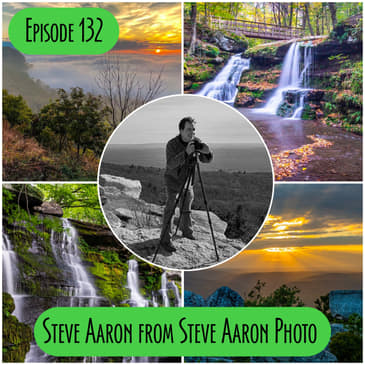
Welcome to episode 132! Tonight, Tad and I chat with Steve Aaron from Steve Aaron Photo. Steve captures amazing photos of the Catskills and Gunks and he shares his experience doing something he’s great at and something he loves. If you need a sticker, email me or go to Camp Catskill! Subscribe on any platform! Share! Donate! Do whatever you want! I'm just glad you're listening! And remember... VOLUNTEER!!!!!!
Links for the Podcast: https://linktr.ee/ISLCatskillsPodcast, Donate a coffee to support the show! https://www.buymeacoffee.com/ITLCatskills, Like to be a sponsor or monthly supporter of the show? Go here! - https://www.buymeacoffee.com/ITLCatskills/membership
Thanks to the sponsors of the show!
Outdoor chronicles photography - https://www.outdoorchroniclesphotography.com/, Trailbound Project - https://www.trailboundproject.com/, Camp Catskill - https://campcatskill.co/, Scenic Route Guiding - https://adventurewiththescenicroute.com/, Another Summit - https://www.guardianrevival.org/programs/another-summit
Links:
Steve Aaron Photo, Long Path exhibit, New Catskill Center challenge, Manitou's Revenge, Mountain Lion story, Geyser Car Accident
Volunteer Opportunities:
Trailhead stewards for 3500 Club - https://www.catskill3500club.com/adopt-a-trailhead?fbclid=IwAR31Mb5VkefBQglzgr
fm-hGfooL49yYz3twuSAkr8rrKEnzg8ZSl97XbwUw, Catskills Trail Crew - https://www.nynjtc.org/trailcrew/catskills-trail-crew, NYNJTC Volunteering - https://www.nynjtc.org/catskills, Catskill Center - https://catskillcenter.org/, Catskill Mountain Club - https://catskillmountainclub.org/about-us/, Catskill Mountainkeeper - https://www.catskillmountainkeeper.org/, Bramley Mountain Fire Tower - https://bramleymountainfiretower.org/
Post Hike Brews and Bites - Brio’s,
#steveaaronphoto #landscapephotography #catskillslandscape #catskillphoto #visitcatskills #catskillstrails #catskillmountains #catskillspodcast #catskills #catskillpark #podcast #catskillshiker #volunteers #catskillmountainsnewyork #catskillspodcast #catskillshiker #catskillshiking #hiking #insidethelinecatskillmountainspodcast #volunteercatskills #catskill3500 #hikethecatskills
[00:00:00] The Bushwax were some of the worst days I've ever had in the mountains or life, really. Whereas Pants and Mountains are totally opposite to the mountains on top of a cliff. I think the weather challenges on this incident were particularly difficult.
[00:00:44] It is really the development of New York State. Catskills were responsible. Yeah. All you're listening to Inside The Line, The Catskill Mountains Podcast. It's too hot. It's too hot. It is, yeah. Speaking of hot, are we recording now? Yes. Yes. Are you triple sure of that?
[00:01:15] 100% sure. Now that I mean, Steve and I will talk about our time last time of this. How do I meet myself over here? You don't meet yourself at all. Yeah. Now, when I want to cough.
[00:01:28] Yeah. If you're married, you just bring your wife into the room and that'll mute you automatically. Yeah, no shit. All right. So Episode 132, Steve Aaron from Steve Aaron Photo is here. Talk about his photography lifestyle and what he does to get these amazing photos of the Catskills
[00:01:48] and the Shawngunts in the Hudson Valley area. So Steve, welcome to show again. Well, thank you. Thanks for having me, Stas and Ted. It's great to be here once again. Yeah, it's good to have you here, man. I'm excited.
[00:02:01] Hopefully this won't go like the last episode we had. We'll discuss that later. Okay. So something that you were involved in recently that happened, Manitou's Revenge Recap. Let's chat about that. How was that? Steve, you were there firsthand. I was there firsthand.
[00:02:20] And I've been to quite a few, well, a few of them since 2018. And it's always a great experience to be out there with those athletes. They're really quite amazing. You know, it's like so amazing to me.
[00:02:34] I can't even really imagine the reality of what they put themselves there. But it's great to be out there. I've been photographing that race since, I believe, 2018. And I go to different spots, but every time I go to the race,
[00:02:50] I do hike up the west side of Sugarloaf Mountain, which is beautiful, dramatic terrain. And the runners are coming down the mountain and they're flying. Many of them are flying and coming down those steep ledges and things like that.
[00:03:08] So it makes for great spectating and great photos shooting up there on Sugarloaf. Definitely. And if you don't know about Manitou's Revenge, it is a 53 mile, 53 to 56 mile. It depends on the permits and the variability. But it's the hike through all the way through Wyndham High Peak
[00:03:30] from Wyndham High Peak all the way to where is it? Where is it in, Steve? It ends in Phoenicia. Okay, the lanes. Right down to Phoenicia. So it kind of catches up onto the long path. You know, out of Wyndham, the escarpment trail slash long path
[00:03:49] and goes up to Blackhead and then, you know, Arizona and all the way out to North Point and around through North Lake and down to Palinville and back up towards Catterscale High Peak over towards Platt Clove into the top of Platt Clove.
[00:04:11] And then it does the eastern section of the Devil's Path with Indian Head, Twin Sugarloaf, goes up Plateau and then hangs a left and continues on the long path towards Trempor and eventually down into Phoenicia. Wow. So 53 miles, 15,000 feet again. This year there was 117 runners
[00:04:35] and it was about 90 degrees with humidity all the way up there. People were crazy to do this. I couldn't even imagine, you know, I did six and a half miles today and just doing that is insane. It looks like they said last year's winner Dan Grip
[00:04:55] and Ben Quarthami were fighting it the whole way and eventual winner Justin Koski by mile 40 was 10 minutes behind and then the time we reached him at the last age station was about six miles to the finish was only two minutes behind. Holy shit. So he was flying.
[00:05:13] Yeah. And then he took the win with a course record time of 10 hours. Is it 10 hours and 24 minutes? Yeah. Yeah. 10 hours and 24 minutes, just four minutes back at 10.28 was the next going. So he beat them by four minutes.
[00:05:28] He was back by 10 minutes and beat them by four minutes. Wow. What an amazing finish. But as I said, a great day overall and I don't know if it keeps getting bigger and bigger in Manitou's Revenge. Have you seen it getting bigger and bigger, Steve?
[00:05:45] I think they kept the registration number. Okay. And I believe it sells out. There's some qualifications that the runners have to meet. I don't know exactly what they are, but something like finish a competing finish in an ultra previously or a trail runner or something.
[00:06:03] So you need some experience to be able to qualify for the event and I believe they do cap the number of participants. And per this article in ultra running that Stash was reading from, it indicates that the organizer then goes through the people
[00:06:19] who meet the minimum requirements and screens them and tries to weed out those who he doesn't think were eligible. But one thing I want to point out is I was reading this article and I was caught by the photos.
[00:06:34] I'm like, wow, these are some pretty good action shots of the first thing and then this one of the trail itself. Then I look at photos by Steve Aaron. Did you see that Stash? Did you notice that? I did. Damn. Did I send it to you?
[00:06:51] No, not at all. I saw this online and I'm just like, oh my God, that's Steve and he's doing these amazing photos once again. Kudos to Steve for hauling himself up there to do these photos and kudos also to those volunteers and people
[00:07:06] for the first aid stations because some of those areas are pretty crazy one and a half miles up with 1500 feet with water. I heard 40 gallons of water, that's got to be insane and they're up there for a long time, right? Yes, they're up there for hours.
[00:07:27] Like mink hollows where usually I go through because I'm going up sugar level. So these guys, they had a ton of water up there. They had food. They had canopy tents. They had tables and they hauled all that stuff up
[00:07:40] and they gave me a big bag of trash to take out when I left. Hey, hey, I mean, you're helping out. That's good. Yeah, I did my bit. Yeah, we're not going to make you haul out the trash tonight, Steve, so don't worry about that. That's good.
[00:07:53] I have to say I'm not really impressed by the 40 gallons of water that's a typical day hike for me in August is about 40 gallons plus your mind leaves. Your pack is like five pounds. You carry like two gallons of water. I use ultralight water. Nice, just water.
[00:08:10] It's just H-O. There's no two. OK, nice. So Charlie Gettle is the organizer of this. He also does the Catskull Churro, correct? Yes. With Matt Smith. So good for him. Yeah, he's really involved, Charlie. And they've been doing this for a long time. So good for them.
[00:08:30] Awesome recap of that, Steve. I will poster the link on here for people to check out your photos and to talk about the recap. I'm trying to get ahold of John to get on this. So if you have any inside information with Steve,
[00:08:43] with Steve, with John, please let me know. The guy who won it. Justin, Justin, sorry. Oh, oh. I don't put Charlie, Mike. OK, I'll get ahold of Charlie. So next topic to come up. Once again, these times we have another mountain lion spotting in somewhat of the Catskills,
[00:09:10] but more of the Hudson Valley area. And it's near Orange County, of course. Reported in New Jersey before. Orange County now in the Hudson Valley. And I'm pretty sure this guy is just looking for attention. That's writing these. This was Sussex County in West or New Jersey.
[00:09:29] A listener to listen to this is this is the best. A listener told WPG talk radio. What the hell that is? I mean, like they probably have less listeners than us. I spotted a wild animal walking along the edge of a hayfield
[00:09:42] in Frankfurt Townships a few miles from Stokes State Forest. Another Sussex County said she had to save her child from a mountain lion. We've already talked about that awesome experience that that person had to deal with. And it's unclear what they spotted and they say it might have
[00:09:58] been a bobcat, but they are 100% sure it was a mountain lion. And that's basically it on this thing. So I'm going to highlight this guy's name Bobby Welber. So everybody get ahold of him and say that you spotted
[00:10:13] a mountain lion in the Catskills to get this guy going. Because this is like fifth time of saying somebody has spotted a mountain lion. Maybe what we need to do is get our writing staff together and do a brief like 50, 75 word narrative with some photos
[00:10:33] that might come across as being Photoshopped but actually legit photos by our art department. And then we'll get about a dozen people to start calling up this fellow. And reading from our script. And so he gets like some firsthand witness accounts
[00:10:50] and we'll get some traction with these mountain lion stories. So the mountain lions are in the limelight that they deserve to be in. Not that we're attention seekers or anything like that. I mean, it's just, I just find it incredible
[00:11:08] that people like, you know, I had a big, I love discussing things on social media like Facebook and stuff. Like I forgot what place posted it about this but it did the same exact post that someone saw about Lion and I'm like, give me evidence.
[00:11:24] And a guy's like, oh, I've seen them on my trail cams. Like give me evidence. Nothing. Like and the guys and then the guy finally posts, oh, I got a picture and it's a picture of two mountain lions laying together on top of like a canopy.
[00:11:38] I'm like, dude, that's a freaking zoo. I'm like, you took that picture at a zoo. And he's like, no, no, no, he's like, I shot them. They were in my backyard. So did you see in this article where they bring up the stealth cam photo from July 2022?
[00:11:57] Did you see that? It's like it's further down in the article. So they have this screenshot of a mountain lion on a trail camera. It looks like he's running across a road that goes through a farm road that goes through a corn field.
[00:12:13] And it says the DEC went out there in 2022 and they show this photo where the DEC did a mock up of a mountain lion made out of plywood. Do you see that photo? I do see that.
[00:12:27] And so they say that based upon the size of their mock up that it's not really a mountain lion in that screenshot that it must be something else. But come on, let's look at the mock up. Look at it closely.
[00:12:42] Does it look like it's even closing in on the same size and the same position? Not at all. I think they're just playing with the camera angle, maybe the focal length of the camera, the field of view. And that's where Steve, you see that?
[00:12:57] I haven't shared that with them. I'm sorry. Yeah, show it to Steve because he's our expert. Well, I cut them off because I don't want to read what I'm saying. So yeah, so he knows the answers in advance. Yeah, yeah. Give me one second.
[00:13:12] I clicked on something and lost the share. Nope. Nope. Got it. So Steve, look at that. Do you think that's real? I don't see it. So I don't know. Oh, okay. Yeah, I messed up something here. What kind of photographer are you?
[00:13:29] You can't even see what's on your screen. How do you take these photos? Oh, my God, this is absolutely ridiculous. I see what yours... Yeah. Right? They have like a tape measure there and they try to make it look like
[00:13:42] they're doing a scientific job, but can you really believe them? Right? Not at all. No. No. Dude, that's not easy apparently, though. No, yeah. This is... I'm going to have to get a hold of it and be like, I want to have the...
[00:13:57] I got to lie to him and be like, and we're going to do a full out of investigation of this guy. What have you seen? Yeah. Once again, this is like crazy in the Hudson Valley and upper... Yeah. ...over the area. It's like everybody sees them every...
[00:14:10] It's like seven days. Yeah. So I'm going to throw this out there. I don't know if you're going to approve of this or not. Stash, you can edit it out if you don't like it. But I think we should buy a mountain lion suit. And any listener...
[00:14:25] Any listener who fakes out the DEC wearing that suit gets on the show. Wow. Okay? Right? So if you can go out and run through some parking areas and scare some people in trailheads
[00:14:38] and get them to take your photo and get the DEC to do a full-on investigation, then you're on the show. And we're going to show how we spoof the DEC with the fake mountain lion. Inside the lion mountain lion challenge. Yeah. Exactly. New challenge. Great idea.
[00:14:58] And then Steve, you can... As our action photographer, you can provide the photographic exhibits to substantiate our claim. Have you guys seen my picture of me on Graham with the mountain lion in the background? Steve, I know you've seen that. Is that the year you were wrestling?
[00:15:13] You went up there to raise funds for a charitable organization. You were wrestling a mountain lion? I gave them a stone cold stunner from the second set of steel. There you go. Yeah. But Steve's seen that.
[00:15:26] I don't know if you have, Ted, but like I photoshopped the mountain lion and people are like, no way. This isn't real. And I'm like, no freaking shit that a mountain lion's crossing the rebar. But whatever. All right. Next topic. Sit on these stupid mountain lions. Yeah.
[00:15:42] We can go on all night about mountain lions. There was a mountain... I saw a mountain lion at your hunt truth anniversary show. That's 100% true. Chad wasn't there. Shane. That's right. That was my only mountain lion sighting in the cascades. And you survived and you survived.
[00:15:58] They're not as dangerous as people think. No. Yeah. Sarah Bacon is pretty dangerous. So she's ripping it up like crazy. So scenic route guide and check them out by the way. So one of the things that this was brought back a couple months ago that I was looking
[00:16:15] into, EMS stores files for bankruptcy. Now EMS, of course, Eastern Mountain Sports located on the eastern side of the United States. They had a store over in Albany and I went over there one time and I see things of just huge sale like big sale 50 to 80% off.
[00:16:37] You know, I'm just like, oh, excellent. I chose a good time to go in here. I go in and I asked them. I'm like, hey, what's going on? And they're like, oh, we're moving across the street. And I was like, oh, cool.
[00:16:49] You know, bigger spot and they're like, no, it's actually smaller. We're downsizing. And I thought nothing of it. And I posted to my, my, my Facebook page and I'm like, look at this EMS in Albany. You know, they're selling stuff. They're downsizing.
[00:17:04] And I seriously thought I'm gonna know that I bought, I think I bought like two things. I got a $40 off card and stuff like that. And then one of my friends is just like, no, no, they're actually, you know, cutting the store off. We're done.
[00:17:19] And I'm like, we're, and he's like, I work there. They told us to lie to the associates. And I was just like, okay, you know, I don't know if I can, I can think of this. His name was Josh Myers. He was, I'm pretty sure he worked there.
[00:17:33] And then all of a sudden, you know, I go on their webpage and their webpage is not working. And I'm like, okay, I'll go the next day. It's not working the next day after, you know, 13 days and then my, my, my 30, $40 off has expired.
[00:17:50] They're finally open up and that store is no more and EMS files for bankruptcy. So I was like, oh shit, this is crazy. Like, I mean, I've bought stuff at EMS before. Have you guys bought stuff? Yeah, absolutely.
[00:18:06] Yeah, I remember my first purchase at EMS was back in the early 80s up in Lake Placid when I was doing a lot of hiking and backpacking up there. They've been around that long? Oh yeah.
[00:18:23] Even before I have a down vest that I got in like the 70s from that store. The late 70s from Lake Placid EMS. Yeah. So that store's been there forever. I haven't been to Lake Placid in a while. I wonder if that store is done.
[00:18:37] Well, it sounds like they're all done. Yeah, it does. You know, if you want, if you want a new down vest to go hiking tomorrow morning, you better have ordered it yesterday from Amazon because Amazon is putting out a business for local outfitters.
[00:18:53] I know I've said this before. I'll say it again. My frequent, my two nearest outfitters just for the sole purpose that while I might be able to get a few dollars cheaper on Amazon, I still can't get it the same day from Amazon.
[00:19:09] But I can go down the street and try it on and walk out the store with it. So there's a big value to that when you want to go hiking Saturday morning and it's Friday night.
[00:19:20] Yeah, it's nice to have that in the area just to go in and buy something and have a chat with the people that are on the store or working in the store. They generally have great intel on the local hiking, climbing and other associated outdoor activities.
[00:19:40] And then once again, you can try stuff out like you said that. You really can't get a feel of what it is until you try it on and stuff like Jessica has women's clothing is all buried in different times and she's tried stuff on.
[00:19:54] She's like, I don't like this, but this one's good. It's the same thing as a different color. It's just really odd. You know, Steve, I checked that out EMS up in Lake Placid is still open.
[00:20:04] I guess as they say on their website, but there is no the Albany one is permanently closed and Saratoga Springs is open. So they had two up in the Albany area. So at least the Saratoga Springs, but that's a little bit further away from me.
[00:20:21] But just really, it really sucks because I went to them and I bought a lot of kind of, I wouldn't say it sounds bad, but secondhand stuff for them, you know, stuff that you wouldn't get from the top notch stuff, you know, like long
[00:20:40] sleeve wicking shirts for winter and and just wicking T shirts, you know, Gator stuff like that, that you wouldn't like want to buy. I'm buying online and then I just want to check it out and socks and stuff like that. They have a good deal on socks.
[00:20:56] So I'm surprised. I didn't know they were been around since the 70s. Yeah. By the way, I was a kid then. So my parents were down fast. I wasn't a kid when I bought my stuff. Oh God. Yeah. You were old. Ted, why didn't you were?
[00:21:13] Why are you in the borscht belt with Steve? You know, I mean sometimes people ask me why I'm always hiking solo and when your original hiking pal was John Burroughs, you know, it's hard to find a replacement. Steve, you think I'm joking about that?
[00:21:26] No, John and I go way back. I remember the time he and I went up Slide Mountain with just this piece of metal, rectangular shape of metal. And he wanted to make a plaque in honor of himself. And we did it.
[00:21:41] I think it's still up there to this day on Slide Mountain. Did he introduce you to any of his friends? Yeah. I mean, I met quite a few of his friends back in the day. I don't remember their names, but yeah. Obviously it's not Jay Gould. Yeah.
[00:21:56] No, it wasn't Jay Gould. They challenged him to a duel and John said I'd rather go hiking with Ted because someday Ted's going to have a podcast, Jay. And I want him to, you know, mention me in my hiking. Ted and Thomas Edison.
[00:22:15] Yeah, Tom, he wasn't much of a hiker. He was always tinkering though whenever you ran into him back then tink and we didn't believe him, you know, telephone. What are you talking about? Right. Just crazy. You want to move on? You're rich in the move on Stosh?
[00:22:29] I'm a little bit. Am I boring you? This is a way. Well, you're old. This is boomer stuff. You got a problem with boomer stuff? Huh? No. There's two boomers here tonight, buddy. There is. I'm out. I'm outranked. Boomer. At least that number. Yeah. Yeah, so show.
[00:22:48] So exactly. So carry on. So one of the big topics I found within the past week was that a car drove into a geyser pool at Yellowstone National Park now in July 12th. So from this recording, four days ago, in Mammoth Springs,
[00:23:07] Wyoming and park officials are investigating after a car drove into 105 degree geyser pool at Yellowstone National Park. So five people inadvertently drove off a roadway into the semi sentinel geyser thermal feature near Roaring Mountain between Mammoth Hot Springs and North Shunks in Yellowstone National Park.
[00:23:28] All five people got in their car, other car on their own, and each of them were transported to an ambulance nearby hospital. Law enforcement closed both lanes and eventually they had to get the car towed out. It took several hours.
[00:23:43] Roadway is, of course, now opened being four days later. It's under investigation and they do not know why they drove into the geyser down in the area. It looks like from the pictures that it's a very easy roadway.
[00:23:59] Maybe they like to swerve and to miss a mountain line or something like that. That's what I'm thinking. Yeah. I don't know if there's mountain lions in that part of the country. Oh yeah, definitely. There is. Jesus, my daughter's out there. Let's scroll back to that photo.
[00:24:18] It's not a Steve Aaron photo but let's have Steve look at it. What do we see? We see a roadway on the left side with some emergency vehicles. Then we see this SUV that's being hoisted out of the 105 degree waters of the geyser. It's being hoisted up.
[00:24:37] What do we call that? The grassy knoll. Well, it's a steep embankment. Isn't it? But what don't we see? A guardrail. No, guardrail. That's it. Okay. So obviously people today driving down the road, they're distracted by multiple things whether it's mountain lions,
[00:24:56] the scenic vistas of a national park, whatever it is they're distracted by. But when there's a steep embankment along this side of the road that goes down to a geyser with like these super hot waters, do you think somebody would put in a guardrail? Right? Yeah.
[00:25:14] Am I wrong? Yeah, I guess yeah. I mean because they sure and Wyoming they figure if you go off the road, you deserve to boil to death in a hot geyser. Maybe that's 30. 105 degrees. That's the temperature of my hot tub. That's not bad. Lucky you. Awesome.
[00:25:31] I mean, when I was in Banff, Canada and stuff like that, I never saw a guardrail anywhere. And this was, you know, of course going up, we were going up towards Jasper and there's, you know, 400 foot cliffs here, right?
[00:25:45] It was just a bunch of S curves and stuff. So I don't know. And you know why they don't have guardrails in country like that in the wild west? Why is that? They don't have personal injury attorneys so nobody uses them when people do stupid things.
[00:26:01] This looks like a laxus though. So they might sue and laxus are an infinity. So, but crazy incident. Of course it's that time of year of when what do they call it? The Torons come out. They're called Torons. They're morons but Torons and they travel into the
[00:26:20] tourist areas of Yellowstone and Yosemite and stuff like that. And they're the ones that get tossed by the bison. Like the people that get really close to fricking all these bears and stuff like that. Like I've seen recent photos of people being within
[00:26:36] 20 feet of a grizzly bear and I'm like, absolutely not. Within 20 feet you see people that are like within pause reach of the grizzly bear, you know, trying to get that selfie moment. It's not. I stayed in my car with that shit.
[00:26:51] Yeah, we can joke about this geyser thing though because nobody got hurt. I'm just going to put that out there. I'm trying to be more sensitive. I've had sensitivity training recently. Yeah, you know, I'm just joking. I'm just joking. I'm not going to be sensitive. Yeah, that's good.
[00:27:08] It's crazy. And next topic. Apparently there is a new challenge going on in the Catskills. So, Ted, do you want to give a breakdown about this? Are you familiar with this new challenge? I checked it out a little bit.
[00:27:23] Let me pull up my screen of what I got here. So, you know, we have the 3,500 club challenge, the winter 3,500, the all seasons, the single season, the fire tower challenge. And now we have from the Catskills center. Did you say all trails? No trails. No trails.
[00:27:44] And then the mountain lion wrestling challenge, of course, right, we'll be announcing the details of that challenge on a future episode. The patches are being drawn up by our art department as I speak. So, at any rate, one challenge that just rolled
[00:27:58] out is the Catskills center now has the Catskill Adventure Challenge. And it says adventure awaits in the heart of the Catskills. What is the Catskills Adventure Challenge? Well, the Catskills Adventure Challenge is a series of guides created to introduce you to recreational and cultural opportunities in the Catskills.
[00:28:24] This region abounds with hikes, breathtaking views, diverse flora and fauna, art spaces, yada, yada, yada, yada. So, at any rate, you go to the Catskills center website, click on adventure challenge, and they have eight different tasks for you to pick six of.
[00:28:47] Pick the six that appeal to you, complete them, submit your log, and you get the patch stashed. Did you check out the patch? Did you see that? I did. It was all right. All right. I thought it was kind of cool.
[00:29:00] I thought even though some of these challenges were relatively short, and I'm going to try to get the Mrs. Tad interested in doing six of these challenges, maybe an exchange for some winding and dining and a patch. I thought the patch was a little bit like it
[00:29:18] looks like you're dragging your feet. It's shadows, but it's pretty good. It's pretty cool with the clouds hanging over and stuff like that. All right. So, it's not as cool as your patch. Okay. We can agree on that. I don't have any patches. My patches are. Yeah.
[00:29:32] So, we have like Diamond Notch Falls is on here, Platacill Falls, Trout Pond. I've never been to Trout Pond. Yeah, I don't know that. Yeah. It says the Trout Pond Trail is a four mile out and back trail near Downsville, New York. Yeah, it's Western Catskills.
[00:29:52] From the Russell Brook Road parking lot. Oh. Trail starts near a small meadow, waterfall, and the ruins of an old mill site. It's awesome. It follows the Trout Pond outlet stream to this human-made and very scenic 19-acre pond. Be wary of large rattlesnakes, small grasshoppers,
[00:30:15] and ferocious mountain lions. Yes. I'm like, what are you talking about? Like this place is one of the most popular areas of the Western Castles. Trout Pond. Really? Wow. Yeah. People camp there. Russell Brook Falls is fairly well known as well. Beautiful. Beautiful area. Yeah.
[00:30:38] I haven't been there to that waterfall yet, but I know. It's schedule-enouting. Yeah. So, yeah. This looks like a nice group of activities. Yeah, it does. Antioch Lake, Vornoi Kill Falls. They have Vornoi Falls on there, but it's Vornoi Kill. Catskills Bitter Center. That's a little lamp.
[00:31:00] Rochester Hollow, beautiful area. Would you say Stosh? I didn't hear that about the Visitor Center. Can we play that? It's a little lame. It's just not my... I like it game, but Rochester Hollow, beautiful for every type of family. Yeah. It just felt phenomenal. Diamond Notch Falls.
[00:31:16] Beautiful area. Of course, Diamond Notch can't beat Black Hill Falls. I love that area. Jessica and I were just talking about that when we were there, like freaking six years ago, and we were the only ones there for like four hours. I'm sorry to say that. Which...
[00:31:32] Black Hill Falls. Oh, Platycle, yeah. Yeah. It's just crazy that we were there for hours swimming and diving and stuff. Nobody there. Trout Pond. Little popular, of course, on the weekends, but you can get a good view of the falls there and all their lake.
[00:31:50] All these areas actually are phenomenal to me and very family-friendly. Yeah, it seems like a real accessible set of places to visit. Mm-hmm. You know? Good intro to the cats. Exactly. Kind of reminds me of the Saranac Lake 6.
[00:32:07] You know, with the six mountain hikes around the village of Saranac Lake, and none of them are super killer hikes. They're all relatively challenging but accessible to many. Yeah. I mean, it's a good start. You say, and you know, speaking of challenges,
[00:32:27] Ted, I've been talking with you about this. I'm thinking about us starting a new challenge and it's not the mountain line challenge. You're doing what? Starting a what? A challenge? Yes. Tell us more, Stosh. I would really like to get people off the high peaks
[00:32:43] and to other areas of viewpoints. I'm a big guy about viewpoints. I love being out in the woods. I do love that, but I love viewpoints. And I'm just blown away by the viewpoints. So I've been thinking about starting a challenge
[00:33:00] about viewpoints a way that doesn't involve any of the 3,500 peaks. Wow. Which I'm sorry to people that are like, probably like, oh, don't do this, but these are trails. They're not that crazy, I would say. But stuff like Burt Knob, Acre Point, Poets Ledge,
[00:33:25] Palinville Overlook, stuff like that. It's a good one. Exactly. You get people on that trail. The parking lot is huge for that area. It does. You get people on the trail. And then you also get more service to that area
[00:33:40] and it'd be a better trail than what it is right now. I wouldn't say it's atrocious, but there's a lot of blowdown right now and there's a lot of nettles and stuff. I mean, today even going up Thomas Cole,
[00:33:51] going up to Camels Hump, I had to battle nettles. I'll talk about that later. That was a fun time. I can't wait to tell you about that. That was great. Oh, so today, once again, we're dealing with the, we have had heat for the past two weeks now.
[00:34:05] Massive heat. So suggestions to beat the heat. What do you guys have suggested? Steve, let's start with you. Go somewhere that you can take a swim or dip into cool water in addition to whatever else you're doing. In this heat, to me, that's the best way to go.
[00:34:28] Yeah. That's it. That's it, Steve. Come on. Like God's had just battled Manitou's Revenge. Yeah. Taking pictures of these psychos doing 53 miles. I carried water. Exactly. I stole some tailwind from the aid station and drank that. And how was it? It's okay. Not bad. They didn't get it.
[00:34:49] Isn't there a, and make hollow right off plateau. There's a spring right there. Yeah. Well, it's, it flows very, very seasonally. It's very weird. Yeah. But I don't, I think this time of year, you want to take advantage of the cool clean water
[00:35:04] of the mountains and take a dip. Correct. Lower your body temperature. Yeah. It's always great fun. Ted, how about you? Oh, you know, as a former competitive road cyclist, I have a lot of thoughts on hydration and heat and humidity.
[00:35:28] So one of the things I recommend is the pre-hydrating at the trailhead. Yeah. I've known some orange juice or some other fluid other than water. I'm not a big water drinker any time of year.
[00:35:45] And I'm certainly not a big water drinker when I'm out hiking and hot and humid temperatures. I drink something with electrolytes in it. I drink something with calories in it, usually just powdered Gatorade is what I mix up on the trail as I go.
[00:36:00] Because it's cheap and convenient to use. And the other thing I'm a big fan of are those electrolyte pills from a sports nutrition company. I like the Hammer Nutrition product called Endurolytes.
[00:36:14] I've been using those for quite a long time because you reach a point where just drinking large quantities of water is not going to be enough.
[00:36:26] And you're arguably depending on the conditions, you know, just drinking Gatorade in and of itself is not going to be enough to keep your electrolytes in balance. So I'm a big fan of popping some of those Hammer Nutrition Endurolytes. Other companies have other products.
[00:36:45] And then kind of to do a deep dive, something that I became accustomed to doing back when I was, you know, racing road bikes all the time is weigh yourself.
[00:36:57] weigh yourself before you go out hiking, weigh yourself when you get back and try to gauge how much water you lost during your hike.
[00:37:07] Because you'll see some people complain that they were out hiking, they finished the hike, they come home, they felt tired and lethargic for quite a while.
[00:37:14] And they're dehydrated and had they been on the scale before and after they would see that and know that they need to keep hydrating. The other thing is, the less hydrated you are, the less you're going to urinate.
[00:37:26] And when you do urinate, your urine's going to be a darker color because it's not as diluted when you're properly hydrated. So those are some things you can look at and be mindful of as you're setting out on that Catskill Center challenge or Stosha's challenge this summer.
[00:37:47] Yeah, all good points. I will agree with the pre-hydrate. I always drink at least, I'm pretty sure it's like 32 ounces of water before I go on the hike on the way there because I have an hour. Usually it's an hour and a half.
[00:38:05] So I drink a whole that and then I have a whole pack like Jessica got one of those like just a kind of cool down pack that I can put in with at least for accessible afterwards.
[00:38:20] And then one of the things I like to do is my hydration bladder. I will either freeze some cold water before that. I'll put it like a quarter of it before then throw in the freezer, tilt it upside down.
[00:38:33] So the part where you hook up your suction and doesn't get frozen. And then I will fill it with water and then put it in the cool pack on the way there or I'll just put ice in it. And I will have probably 75% of the hike.
[00:38:51] I will have cool water. It'll get a little bit warmer on the way down like today on the way down and got a little bit warmer, but not much. And I had at least three liters in there. Once again, New Hampshire is coming up.
[00:39:03] It's going to be, you know, I'm already going to be up there on the way when this comes out. So I kind of filled my soul out. Yeah.
[00:39:11] So when you started off, you had, you say you had at least three liters on a, what was it about a six mile hike? Yeah. Six mile hike. Well, that was three meter liters in the bladder.
[00:39:21] And then I had another liter in the smart water bottle that had electrolytes and then I had another power aid that was on the side. And then the keg of beer. So how much did you have left over at the end of the hike?
[00:39:34] We'll put the keg of beer aside. Just tell us about the fluids, the other fluids. I totally drank the power aid. I was probably down to a half a liter of water and then probably half of the smart water bottle. So I drank a lot. Yeah, you did.
[00:39:50] And one of my concerns always was when I was using a hydration bladder when I was hiking was not knowing how much water I had consumed and how much I had left to go. Right. Was I drinking enough? Was I drinking too little?
[00:40:08] Was I exhausting my supply and still having like five, six mountains to go? And one of the problems you run into in the Catskills is once you get up on that ridge you're hiking, the likelihood of finding water the rest of the day is not that great.
[00:40:22] There's some spots where you might, but like when you're doing the Catskill 6, you know, other than a table, I'm not sure where you're going to find water along that hike. And even to get to the water. Yeah, so you need to supply up before you go.
[00:40:41] So what I've gotten into the habit of doing is I use some of those collapsible, they're like a bladder without the hydration tube. Just some of those carry up, you know, depending on how much water I need, I'll bring either pack in three liters or four liters.
[00:40:59] And then I have my Nelgene which sits in the side pocket. And I know what that capacity is and I look to deplete that every so often during the hike and then, you know, mix up my Gatorade again.
[00:41:13] And I found that's a way of better controlling and knowing how much water I'm consuming with the Gatorade in it and how much I have left. Yeah.
[00:41:26] Because I can tell you that one time I was out doing, I don't know what the hiker's anonymous crew calls it, but I was doing a four pack of off a biscuit brook with a South double top fur eagle and big Indian.
[00:41:45] And I ran out of water on my way down. And so I was kind of, I felt like a pilot navigating in the fog on my way down.
[00:41:53] I was going down to, God, I forget the name of the one road, Barnum Road, I think it was over there. Sounds familiar. Yeah. Barnum is over on what I did today with Thomas Cole. Oh yeah.
[00:42:05] Well, this is, I don't know, it's a popular spot to hike out of when you're doing fur other than biscuit brook. But at any rate, yeah, I was. 37. Yeah, I was kind of bouncing off the trees on the way down that day because I was drawn. Yeah.
[00:42:24] It's tough to navigate those times of dealing with the excessive heat and such, you know? Yeah. Like you said, the bladder, you don't know how much you have left. You don't know how much you consumed. But that's why I have those.
[00:42:39] I have, you know, two extra in the side with electrolytes just to fuel me up. You know, when we stopped, take off my pack. I'll drink some of that just to keep my blood flowing, my everything flowing so I don't get cramps and stuff like that. So yeah.
[00:42:55] And so as I look at my trusty heat map, it's a Burnham Hollow Road. Burnham. Yes. Yeah. Right by, yeah. I could find it without a map. So. Yeah. That was that's off to the north red of her. Yeah. Yeah. Yeah.
[00:43:16] North of her and the east of Eagle. Yeah, I used to start at McKinley Hollow. You're going on private property. You got to go. You better run around that man. That's illegal. McKinley Hollow McKinley. Yes. But Burnham has that little speck of property.
[00:43:32] Well, I check that out and I'm not so sure that there's anything unlawful about hiking from that parking area over the bridge and up that ridge defer. I didn't do the deep dive by going to the county clerk's office itself.
[00:43:55] I did more thorough of a review than what we'll say your average hiker would do and felt confident that I was totally within my legal right to go up there and come down that way. And it is a fantastic hike going that way.
[00:44:12] There's also a couple other nice ridges to get up to fur. I'll say looking at my tracks, Fur Mountain is one of those places in the Catskills that I've beat up from just about every approach.
[00:44:25] But there's one last one on my list that I'm going to knock off this fall. That's good. Awesome. Any views on any of those routes? Well, if you're talking about scenic views over the tops of other mountains... No. Not really. But there's a tough one.
[00:44:46] I'll show you near Fur, one of the coolest rock overhangs in the Catskills. Nice. Yes. Let's talk about that later. Yeah. It's ridiculous. All right. Let's move along. I'm boring everyone here. Keep yourself hydrated during these hot summer times of climate change. And we'll talk about that later.
[00:45:08] I'll hopefully get Adam on the show from Hudson Valley Weather. And we'll talk about climate change. Once again, thank you, Steve, for shooting the shit. Once again, Tad, thank you for shooting the shit. That's a good time.
[00:45:19] Thank you to the monthly supporters, Darren and Vicki, John, Betsy, Denise, Vanessa, Joe, Joseph, Jim C., Michael and David. Really thank you guys for donating the show. Once again, I'm looking to donate to someone and I'm looking to do it soon.
[00:45:35] I'm trying to get a hold of people. So your donations just go to me and they go towards the Catskills, definitely. Also, my sponsor of the show. Once again, sponsors, thank you so much. Check out all these guys there. Fantastic.
[00:45:49] So capture love story against breathtaking backdrops with outdoor chronicles photography. Molly specialized in adventure couple photography and show immortalize your moments amidst the studying landscapes of the Catskills, Adirondack and White Mountains. She'll craft timeless images that reflect your unique bond in nature's grandeur.
[00:46:06] And bark on the unforgettable photographic journey with outdoor chronicles photography. Don't hesitate to get a hold of Molly on platforms. So also to discover the wilderness with trail brown project, our expert led hiking and backpacking education programs offered on paralleled outdoor experiences.
[00:46:24] Whether you're a beginner or a seasoned adventurer, join us to learn essential skills and explore stunning trails and connect with nature. Start your journey with today with trailbound project and the lockdown wonders of the great outdoors.
[00:46:36] So a trailbound project does map and compass wilderness, first aid, wilderness first responder, all that different stuff. Get a hold of them if you want to get your different certifications in hiking. So mentions coffees. Lords. Sonera gave five hides our hardsiders to us.
[00:46:56] Lords, thank you for giving five hardsiders, but you do not need to do this. Number one, because you are kind of like a person that does so much for the Catskills that you do not need to give back.
[00:47:10] Lords has been on the podcast before and she was a starter. She's a person that basically created the stewardship program of the Catskill 3500 Club. And she has definitely made a huge impact and difference in the Catskill Soulboards. Thank you very much for your five hardsiders.
[00:47:30] So what is everybody drinking tonight? Good old Coca Cola for me. Little sugar and caffeine keep things. From the Porsche belt area, you got a little glass one. I got a little. A mini cat. Okay. Ted, how about you?
[00:47:48] Well, you know, I'm drinking a Coca Cola too, but it's Coke zero because my wife tells me we can't afford the sugar. So we have to buy the unsweetened brand. How to raise this? Is it that? I mean, it's really, it's bad. Stosh, what are you drinking?
[00:48:07] So I'm having a Oddstruck hardsider. I've had five of these because Lords sent them to us. So it is a. Is that number five? Is that number five? No, that is number one. It's a lavender hops. So it's very, very good.
[00:48:23] It's a little bubbly for my taste, but it's very sweet. Very nice. It's lavender. So I love lavender, but it's a, it's a little, it's a little. Carbonated for me. I don't like the carbonation that much, but it's still pretty good. I'll still, I'll still drink to that.
[00:48:39] So previous hikes, Steve, you want to go over your, your, your cup previous hikes last couple of weeks? Yeah. This past weekend I was outside of the line up at Minowasca park. And I saw a tad posted some photos from up there as well.
[00:48:56] And I was up with a friend on Sunday and we did a nice bike ride from, you know, the visitor center out to Lake Austin towards the back end there. And we stashed our bikes in the woods and hiked out from Lake
[00:49:11] Austin out to Mudpond and over to Verket or kill Falls. So the falls was barely flowing, very little water. It's really spectacular waterfall, the highest one in the gunks. Really nice. And you know, it's just a nice, you know, some nice typical swung
[00:49:32] on scenery, the waterfall, the cliffs, all that stuff. And on the way back, the cool thing was we were walking back and it's like, oh, look, there's like this spur trail off the main scenic trail. And it looks like they're building a new trail to go around the
[00:49:51] east side of Mudpond, which they actually have built the new trail. It's already built and cleared and it's marked with the purple glazes of the scenic trail. And it bypasses the current trails is goes through a real wet
[00:50:07] land and there's a lot of boards and the boards are rotting and there's a lot of mud. And it's not very scenic, it's just thick woods with a lot of mud. So the new route goes around the other side of the lake. It goes up on the highlands.
[00:50:19] You look down, you get a nice view of Mudpond, which is sort of one of the forgotten lakes up there on the ridge top. And it connects with the trail over there on the north side of it. And you connect back to the original scenic trail.
[00:50:34] So we did, you know, it was like about four and a half miles of walking from a wasting out to the falls and back. And then continued on our way, took a swim at a wasting and continued our way on our bikes up to Castle Point.
[00:50:48] You know, sort of the classic Minawaska mountain bike, gravel bike route. And just great fun. Always a good time doing that at Minawaska. Was it like a lot of people there or not bad? We started early so the parking lot was not full.
[00:51:05] But, you know, when you get close to Lake Minawaska and there were some people at the beach at a wasting, Minawaska had a fair number of people. But all in all, it probably was not as crowded as I expected it to be.
[00:51:18] I think it was kind of hot for people or who knows. Yeah, yeah, or who knows exactly. It's just like nowadays. Yeah. So that was a lot of fun. It's sort of the, the triathlon, the bike ride, the hike and the swim, you know. So all involved, man.
[00:51:37] That's a great weekend. That sounds like a great time. Yeah. It's almost like a triathlon. Right? It's amazing. Your foot, your swimming. Yeah. Jesus, Steve, you're crazy. All done at a leisurely pace. It's like the middle aged guy triathlon. Nothing wrong with that. I thought about you.
[00:52:00] Wait, you were there, right? Why didn't you? So I'm thinking Steve and I, we crossed paths because I did what I call my backyard hike. I live less than four or five miles from an unimproved access point to the park.
[00:52:17] You hike up a little over an hour, brings your light to Lake of Wossing. And yeah, I hung out there for a while because I didn't have much time and you know, I didn't have time to drive up
[00:52:28] with the Catskills, but so we call it the power climb. I did the power climb up to Lake of Wossing, hung out with the ducks for a while. Yeah. Couple middle aged dudes on bikes, one with a lot of camera
[00:52:42] gear went zooming by talking about going out to Mudpond and some good times. Almost ran me off the carriage road and I gave them the finger as they went on. Oh, that was you. Yeah. So, but no, I heard from Danny, AKA Muddy Mischievous about
[00:53:04] the rerouting of the trail to the dry side of Mudpond because the trail on the muddy side of Mudpond is indeed wet and muddy. Yes. And that's kind of like a long hike from where you set out from Lake of Wossing out to Mudpond and then to the
[00:53:29] Falls. Yeah, but it's nice, but it's a lot longer if you just hike all the way from the visitor center. So, yeah. Yeah. So the bike and hike is definitely the way to get back there to that country. Yeah, for sure.
[00:53:41] Or give me a ring and you can check out the way that I get back there. So, Tad, that sounds like a good time. Yeah. How many miles was that? For me, I don't know. It depends how much time I spend going around Lake of Wossing.
[00:53:59] I didn't have much time. I was more in a vegetative state and settled down on the shore of Lake of Wossing at one of the little pull off points if you will and hung out there for a while with the ducks.
[00:54:12] It's amazing how acclimated these ducks are to visitors because literally when they, when I first approached, they came over thinking that I would be like any other person or most other people and offer them food, which I didn't.
[00:54:29] So once they realized that they weren't going to prevail upon me with their cuteness, they waddled away and then swam away. And then no sooner had I opened my cliff bar, they returned. They heard the sound. They're like Pavlos ducks. They heard the sound. It's a 180.
[00:54:49] They came back and mom set up her two ducklings first to try to cajole me out of some pieces. And then mom came over in a little more aggressive manner. I wasn't afraid for my health or well-being, but I just found it interesting how well-adjusted they are
[00:55:11] to the presence of humans there. But it's a great place to go and hang out for a while. And like I said, it's literally right in my backyard. I'd probably go over there now that my daughter is not around
[00:55:23] too infrequently for somebody who lives so close to it. Yeah, it's really nice. I think I'm guessing where you went up from and probably know it, but the lake was beautiful. The swim in the lake was so refreshing after all that.
[00:55:40] By the time we were hiking was kind of like late morning and the sun was strong and it was getting pretty hot. I was up there at high noon. Yeah, so I was surprised we didn't see it, but I did see the duck in the ducklings.
[00:55:56] So they were over by the beach hanging out. I'm glad you had that great adventure in the Hudson Valley. But today, which is Tuesday, recording on 716, today I went up Thomas Cole Mountain to do my trail maintenance again.
[00:56:13] And what's usually people have to do trail maintenance twice a year. Probably I have to do it four or five times a year because of that area between Camelshump and Thomas Cole that I have to do.
[00:56:25] Usually it's just the lower part of the call is atrocious with weeds with tall grass with ferns with just this and that. But, you know, today my good friend John, buttle from previous episodes from the past had decided to join me today.
[00:56:46] He wanted to join me and I'm like, listen, man, I had on my maradar to do this today because I want to get some of my trail maintenance done because it's getting at the time of the year
[00:56:56] where it's starting to overgrow and people are starting to feel like, you know, like it's not nice out there. So he decided like hell yeah, he's been out for like two years with a knee injury and he decided to get back into it.
[00:57:11] I'm like, this is, you know, you know, this is a tough hike. You've done this before and he handled it like a freaking pro. He nailed it. And we had a fantastic time. Me and him are just movie quote fanatics.
[00:57:25] The like music quote fanatics will quote Dave Chappelle all day long. Like our theme, we usually have a theme of the day and it was Pearl Jam, even flow. So if you've ever heard of even flow, you don't know what the hell he's saying.
[00:57:39] So I was like, yeah, that's what we were doing all day long. So all the way up, you get all the way up. It was humid. It was hot. It was, it was, it was, I gotta admit,
[00:57:53] it was nicer than the city when I got back to Ognion. It was 91 degrees when I put them out in the 76 degrees. So and that was Barnum Road, which is pretty. Yeah. Not that high, but you know, we got up to once you get up
[00:58:06] towards that, I gotta admit that that section, that whole section from Barnum Road to Thomas Cole is my favorite section of the Catskills is just the hike has everything and everything the Catskills has. It has beautiful flat walks that bring you just amazing
[00:58:26] walk through the forest, flat walks through the forest. You have a scrambling part right before Claudles Hill. And then you, you have the amazing portal part going right up to Camelshump and then you have the climb going up Thomas Cole,
[00:58:40] which brings you through the balsams and the call of Camelshump and Thomas Cole, which is described like the only other place I can describe of that call is, is Arizona mountain is, is that area. It's just, it's like no other.
[00:58:55] So if you have the time, just go up that area. It is one of the best built trails in the Catskills. It has just a switchbacks, you know, scrambling involved flat walking, some nice elevation gain. The viewpoints unfortunately are overgrown starting to get overgrown.
[00:59:17] Most of us, you know, that have gone up there for years have known like right before that, right after that scrambling section of Claudles Hill was used to be a viewpoint overlooking like Wyndham High Peak or the Cave Mountains, basically area overlooking. It's, it's, it's totally overgrown now.
[00:59:34] For me, there's a little part off of the area. I know of Claudles Hill that has a beautiful viewpoint of Hunter Mountain. I can barely see Hunter Mountain now. Once you get to top of Camelshump, you, you have a,
[00:59:47] you used to have a beautiful view of Thomas Cole Mountain that would show basically the whole mountain. And now it's, it's, it's beginning to get overgrown now. And even Camelshump is starting to, to get a little bit overgrown and it's, you know, they, and they trimmed that
[01:00:05] a couple of years ago. So, and you know, there's a one viewpoint up on Thomas Cole right before you start gaining them elevation right a little bit after that you could overlook part of the Eastern Pass, the Devil's Pass somewhat and that's gone. That's almost completely gone.
[01:00:22] You can barely see the Hunter Mountain. So it's unfortunate because this is one of the, I think one of the best built trails in the Catskills because it offers everything that the Catskills has to offer. And it's not too crazy that you'll, you'll hate your life,
[01:00:39] but you'll still hate your life a little bit. But it's one of the most beautiful trails in the Catskills. I had a tough time, you know, I wish you could see, I have blisters on my hands from doing all the whacking
[01:00:51] that I had to do to cut down this grass and these ferns and these excessive weeds that are growing in. And it was, it was a warm day, but it was an absolute fantastic day where towards the end of the day we got
[01:01:06] some nice wind coming in from the storms and it was just amazing. The best part of the day, best part of the day right here is when I slipped and fell on a rock and fell into a patch of nettles. Nice. Yes. It was hilarious.
[01:01:25] I was just like, oh shit. And I was laughing and John was like, oh my God, are you okay? I'm fine. I'm just like, this is going to be a little bit crazy because my whole side of my right side of my body fell
[01:01:36] into a whole big patch of nettles off of Camel's hump. So just sucked in some water from my bladder and just spit it all over my arm and my leg. And I was fine. There's a little burn in here and there, but nothing too bad.
[01:01:51] But once again, anybody that hasn't been up there through the Barnum Road through Thomas Cole, it's just absolutely phenomenal. That area is the best that Catskills. Yeah. I haven't hiked in that way to Thomas Cole in four years. It's been the last time I've hiked in that way.
[01:02:13] Not that for me as well. It's been a while. When I did it last, there were viewpoints and things like that. When you go up there and do your trail maintenance, Stas, what's your main tool of the trade? Unfortunately, it's with the, of course,
[01:02:30] the New York New Jersey Trail Conference, you can't take weed whackers or stuff like that up there. So I have a old school kind of like, I don't even know what the, it's called a weed whacker. It's pointed down and then it's got a little shelf of steel
[01:02:47] and then it's like ridges. Yeah. What about, yeah. And it sucks. Like a sickle? Yes, like a sickle. You swing it back and forth like an old man Moses type of thing. Yeah, but it's straight up.
[01:03:01] So like my hand has to be positioned at the top and it's like it made those blisters and it sucks so bad with a thick vegetation. Does it like go up as tall as your shoulder or lower than that? Maybe stomach. Yeah. That's old school.
[01:03:19] It's a good day's work. Yeah. It was, you know, and not to be, you know, not to, I don't have much to maintain. It goes kind of up to where you go to that viewpoint and then I don't have to really
[01:03:31] maintain anything, but that area grows the thickest shit. Like we're talking about like vines, prickers that have really thick. Yeah, I remember that spot. Yeah, I do. I have to say, although I haven't hiked in from Barnum Road in quite a while,
[01:03:48] I will when I do do Thomas Cole continue past it and hike out that stretch because I think it's a very scenic stretch. The canopy of those birch trees going through there. I've hiked through there a few times in the winter just because number one,
[01:04:04] you might not break trail up to Thomas Cole because somebody's ahead of you, but they get to the rock on Thomas Cole. They do an about face and head back. And so if you continue onward, you can do some trail breaking and hit that spot.
[01:04:19] Yeah, I usually turn around before the camels hump. Yeah, it's like no other. Like I said, it offers everything the Catskills have to offer. Steeping clients, switchbacks that actually not usually they're awesome flat walks going across amazing vegetation. That I just can't.
[01:04:45] I love that area and there's never been a time where I've come out disappointed. It's the Catskills sampler. Exactly. The only thing is I got to figure out the parking there. I got to talk about the parking because you know, they have the snowplow turned around.
[01:05:00] It says no parking. So in the summer, can we talk? Can we park there? Can we not? Because there's only like on the parking on Barnum Road only has like available for three cars on the right side. So I got to get with the DEC.
[01:05:15] They're not going to get respond to me for like four years. So they're too busy doing the podcast. Yeah, yeah. That's where they're spending their money on, you know, special microphones, headsets, mixing boards. That's where all your trail maintenance money is going to the DEC podcast.
[01:05:33] You know, I think they have like a special podcast studio with big cushy seats and, you know, waiter service. It's quite, you know, one thing I want to, I want to, I want to chat about the first
[01:05:47] thing that I started to use today that I have never used before that I'm very like I'm very fond of now is those short gators. I started using those today. The dirty girl gators. Yes. Yeah.
[01:06:03] And dude, I didn't have to stop and take rocks out of my shoes for the first time. I didn't have to, you know, my shoelaces didn't catch on those like crazy steel clips that I have. So I am very just I'm in love with those things. So yeah.
[01:06:22] Just don't tell your wife you're in love with the dirty girl gator because she she'll take it the wrong way. I guarantee it. That's that's my advice to you. Yeah. There is a way to find out about the parking to verify whether or not it's legal
[01:06:37] or not, and that's just to park there and see what happens. Yeah. That's very true. Uncle Steve says Stosh, park your car there and just take a long hike. Yeah. Put the podcast sign right in the thing and be like, listen, yeah, I own this place. Yeah.
[01:06:55] The DEC will put a boot on it then. Yeah. Awesome. Awesome time when everybody got out. So that's good and good. So once again, volunteer anywhere 3500 club cats, trailhead stewards do that awesome stuff. Catskill trail crew. That's a bunch of stuff going on.
[01:07:13] Catskill Mountains Club, the visitor center, Jolly rovers trail crew brand new out in fire tower. Also, if you want stickers, get a hold of me. All you have to do is send me your address and I'll send them to you for free.
[01:07:25] So the weather forecast this weekend, you know, Tad, you kind of told me it'll just be humid. That's the total opposite. I get supposed to be absolutely phenomenal this weekend. Yeah. I'm going to do a special hike then.
[01:07:39] So I'm doing it from Steve talked about sugarloaf being on sugarloaf. So I'm doing it from sugarloaf. So Friday, Saturday and Sunday, it's supposed to be all clear. Nice. High of 55 on Friday. High of 61 on Sunday and Saturday and high of 63 on Sunday. So beautiful weather. Wow. Yeah.
[01:08:01] Yeah. Well, no. Well, sorry. Sorry. I read that wrong. 61. Yeah. That was the morning. All those days high of maybe like mid sixties. That's it. And that's that's on the top of the peak though. So let's say that, you know, bottom of the peak, it'll
[01:08:18] probably be different mid to low seventies stuff like that. So get out there, have some fricking fun. I'm going to be up in New Hampshire rocking it. So I'm looking forward to this weekend. So I don't have history. Let's skip the history. Yeah. We'll skip the history.
[01:08:36] Steve and I between the two of us know enough history. We do. Yeah. Exactly. And we've lived some of it too. That's right. All right. Some of our amazing sponsors once again, discover camp Catskill in Tannersville, your ultimate hiking store.
[01:08:51] Find top quality gear, apparel and accessories for all your outdoor adventures. Our expert staff is here to help every hiker from beginners to season pros. We also carry a variety of unique Catskill souvenirs and gifts. Visit online store at campcatskill.co or in store to
[01:09:07] complete your next journey. And Ventures starts at Camp Catskill. Also discover the beauty of the Catskill's and the beauty of the Catskill's. And we also have a lot of other products and Hudson Valley with scenic route guiding our expert guide. So ensure a safe unforgettable hike experience
[01:09:24] till to your skill level from breathtaking visits to hidden gems. Or if you just peek bagging the simple day hikes will lead you to the best spots and back book your adventures today and explore nature's wonders with scenic route guiding. Check them out on all social media platforms.
[01:09:38] Also, if you mentioned the podcast, you can get 10% off. If you have missed it, you can see it on the website. You can also get a link to it on our website. Also, if you want to learn more about the Catskill's and the Catskill's, you can
[01:09:51] visit the website of the Hikershop website. And if you just peek bagging the simple day hikes will lead you to the best spots and back book your adventures to find out what you can do with your skills. Also, if you just peek bagging the
[01:10:05] best spots and back book your adventures and hikes will lead you to the best spots and back book your adventures.
[01:10:43] So, Steve, why don't you talk about that amazing background? Starting with your Borsch Belt days. Okay. So, yeah, thanks, Stas. Thanks for having me. And thanks, Ted. It's great to be here. So, I grew up in Ellenville, New York, sort of southern Catskills and I was a
[01:10:59] cat and a cat and a cat and a cat. And then I got a cat and a cat and a cat and a cat. And then I got a cat and a cat and a cat and a cat. And then I got a cat and a cat.
[01:11:09] And then I got a cat and a cat. And then I got a cat and a cat. And then I got a cat. And then I got a cat and a cat. And then I got a cat. And then I got a cat and a cat.
[01:11:16] And then I got a cat and a cat. And then I got a cat. And then I got a cat. And so, there was the Borsch Belt in the valley and the Catskills. In the valley between the Ghunks and the Catskills. And as a kid,
[01:11:28] you know say high school age had a real fascination with the mountains with the Catskills and the Ghunks. I could look out of my bedroom window in one direction and the Ghunks were right in front of me. The other direction I can look north and see the
[01:11:39] pyramid top of a Sheken High Point. and ranges growing up. The photography comes to me through family, I guess. My father did black and white photography when I was a kid. There were some relatives, uncles who were on both sides of the family who were interested in photography.
[01:11:57] So it's kind of natural to gravitate to it. I took a course in high school and did black and white film photography. And of course, growing up where I was, many of the photos were, in essence, landscape photos.
[01:12:13] And you know, it'd go up to Sam's Point or though to Waterfalls and the Catskill side of the valley or other places or just go out in the field and take a picture of a milkweed pod that's popping open in September or October.
[01:12:27] You know, that sort of stuff you do at that stage of things. And you know, it was all film and darkroom and all that kind of stuff. So I did that in high school. Did some work at the Neville Hotel in the Borsch Belt.
[01:12:42] As a high school kid, worked in the dining room as a photographer and walked around the dining room took pictures of everyone seated at a dining room tables. And the next day we get the photos printed at a lab
[01:12:58] and we'd put them in little mirrors or peep things and sit out there in front of the dining room selling pictures to people and then do the same thing Saturday night and again Sunday morning. So had a little introduction to I guess professional photography on the tourism side.
[01:13:13] So that was high school. Many years went by before I really picked it up again had sort of a point and shoot and took pictures here and there. But fast forward to my daughter being born in the advent of accessible digital photography
[01:13:29] and got a little point and shoot with all the baby pictures in that stuff. And it's like, this is a lot of fun. So I finally picked up a DSLR and just started taking it with me hiking. And around the same time, so I have the DSLR
[01:13:45] taking pictures, get a little better at it. Facebook appears somewhere 2009-ish or so. And it all kind of came together for me sort of a perfect storm so to speak of hiking, taking pictures and having a place to show the picture.
[01:14:02] So got on Facebook really in the early days there and just started showing pictures and caught some people's attention who asked me to do some photography for them for their organizations or an event and things like that kind of, one thing led to another
[01:14:23] and that's really the story of this for me. It's just I just kept going sort of just keep hiking and you never know what you're gonna get to. Sorry about the dog in the background Not at all, that's great. That's better than the baby. That's still the hiker.
[01:14:36] It kind of looks like he's more in your lap than in the background. No, no, she's upstairs. There's one down here at my feet, but she's quiet, the noisy ones upstairs. That's great, nothing problem with that man. Yeah, good, thanks. So I'm out hiking, I'm taking pictures,
[01:14:55] I'm posting them on Facebook and as I said, I caught the attention of a few people that wanted their pictures for different things and I entered a few contests here and there and a few things sort of happened in there, 2012 Ulster County tourism had a photo contest
[01:15:14] and the winner gets a night at the Emerson and the photos get published in the Ulster County travel guide and they picked one of my photos for the cover which is like, holy cow, I won this contest. That's pretty cool.
[01:15:31] And then we got a night at the Emerson which is kind of nice and some other pictures got on that within that travel guide, including one my daughter standing at a waterfalls on the Vernoi kill holding a leaf or something. She was an absolute little kid
[01:15:46] so she was on the cover immortalized which is kind of cool. So that was a nice step forward and I've been doing photography work with Ulster County tourism since then. So that's, you know, going out 12 years had a few covers, lots of pictures inside the travel guides.
[01:16:03] They've decorated tourism vehicles with those, you know, those photographic overlays that go on the vehicles, you know, like a statue. It has been, I don't know what they have, but it has been some of my photos on there. Always on the map that's inside the travel guide
[01:16:22] there's my picture on the back cover one of my pictures or something. So I've been working with them for a long time and it's been, you know, really rewarding and fun. And that's like sort of one avenue tourism, you know? So combine that with some Hudson Valley tourism,
[01:16:41] some Ellenville tourism, some Rockland County tourism where I currently live. I've done a fair amount of photography in that regard. Wow. So there's like theories that... So you're all over the place, right? I am, I just keep going like, yeah, I don't know.
[01:17:00] At the end of the day, it's all a lot of fun. It's really personally rewarding. It's fun to do, it's well received. And it's, you know, I work at it and try to get better and it seems to have happened over the years
[01:17:18] is improvement, you know, growth and improvement. And it's fun. It's just really, really fun and rewarding. Yeah. So Steve, let's, you know, you were on episode four. Do you remember kind of what happened? Can I go over what happened with there? Yeah, sure.
[01:17:38] So Steve and I have episode four, one of, you know, the fourth episode, like fifth somewhat because I did a pilot. And Steve, I'm on this platform called... Oh, God, I forgot what it was. It was something different than Zoom.
[01:17:56] But I recorded with him and we recorded some awesome chat over two hours of the Borsch Belt, of his time in the Borsch Belt, genuine stuff. Absolutely phenomenal stuff that I was fascinated with. I hit stop and all of a sudden
[01:18:12] it's just a complete continuous circle of it rolling. And then all of a sudden it doesn't, like, I'm just like I end it with Steve and it doesn't. It says nothing, no recording. I contact several people be like, listen, this has got to be on the cloud.
[01:18:32] Like this was a fantastic two hour episode. We talked about the Borsch Belt, something I'm passionate about, something he's passionate about. Where is it? Nothing. I got absolutely nothing. So unfortunately, Steve and I, which he was phenomenal to rerecord that episode,
[01:18:51] which wasn't as genuine, but it was still phenomenal for episode four. But you know, I was... You know, it sucked. It was great talking with you again. But that first episode, that episode four was definitely genuine as heck. Yeah, we had tremendous flow on that first take.
[01:19:10] It was really quite remarkable. And it, you know, kind of impossible to duplicate. But boy, the flow was really, really good. I was like, geez, this is fun. This is really good. Yeah. Talk about, so check out episode four.
[01:19:23] Steve talks about his time in the Borsch Belt era when he was a photographer and, you know, it goes... It still flows pretty well, but not as well as it originally flowed. So that was called Squadcast. That's what it was called.
[01:19:37] And that was like a new platform I tried. And you know what? To be honest, I hate to say it. You got a... The big corporation Zoom has not been a failure ever since. I think like after episode six,
[01:19:52] I stopped with Squadcast and I started recording the Zoom. And it's been remarkable since. So Steve, once again, thank you for recording. So this is your third episode, literally. I have all the third time speaking with you, but... Yes. First time was a dress rehearsal, I guess, right?
[01:20:10] Yes. Yes. But that one, boy, we hit it out of the park that night. We really did. I wish we could. It's really... Good connection, you know? Yeah, still. So I recently listened to episode four. I don't think I caught it originally when it came out.
[01:20:25] I hadn't discovered this podcast then. And you do... You spent a lot of time talking about the Borsch Belt. It's heyday and decline and now the ruins that are left behind and part how that led to your getting into photography. But what you didn't discuss
[01:20:43] and what seems to be a big part of your life at the present time is hiking. So why don't you tell us how you got into hiking, Steve? OK, so, you know, you grew up in... You grew up in the mountains
[01:20:56] and as a kid, you go in the woods and you play in the woods. And then you start riding your bicycles in the woods and you go further and you find a bridge that crosses the stream and... Voila, the other side of the stream is the gunks.
[01:21:11] And you start hiking up them. So when you're a kid, it's just natural. And then, you know, by teenage years, God would go out with friends and also my dad took me out hiking on the trails up by what is now Minowaska. At that time, Minowaska Park
[01:21:27] did not include Lake Minowaska. But there were still some of the trails and we'd go hiking or I'd go hiking with my friends. And, you know, it's just something always that I did. You know, it was much more informal back then.
[01:21:42] More cut, you know, more jeans and a flatel shirt and maybe bare boots and maybe carried water. I don't know. Yeah, well, we had canteens back then. Remember the canteen? Yeah, the metal canteen with like the felt over it. Yeah. Yeah. So one time we were, you know,
[01:22:00] I guess there was probably a high school senior. We all went up me and like four friends went up to it's not called Bear Hill Nature Preserve. It's up in Craigsmore at the top of the gunks. And back then we called it Bear Cliff.
[01:22:13] And, you know, I went to got myself a sandwich before when I went camping for the night. It's like, oh, I don't need anything to drink. And I go out there for a night with absolutely nothing to drink. And I was dying. Fortunately, some other people came up
[01:22:27] and shared some of whatever it was that happened with me. But, you know, it was informal and it was poorly planned. And we just didn't know. Or I didn't know so well back then. But anyway, you know, you go from there,
[01:22:41] you go to college age, graduate of school, moved down to the New York metro area would start bringing friends up to Ellenville where I grew up and started learning about more hiking. And here and there, I said, oh, we have to go hike
[01:22:53] Slide Mountain. It's the highest mountain in the Catskills. And did that one first. And that was kind of fun and challenging. And I spent a lot of time hiking for many years in the gunks. That's really like my first love. Fascinated by the terrain and the geology
[01:23:15] and, you know, the crevices and the waterfalls and the cliffs. And it's just really a fascinating place. And it is really truly my first love. So started, you know, continued hiking through there and picked up a guidebook. There was this book that came out early 2000s,
[01:23:34] you know, the Schwungland Trail, companion or something like that. And it was almost every trail that was in the gunks. And I just started ticking them off one by one and hiking all over the place. And, you know, we'd go to different places.
[01:23:48] We'd go to places not in the not in the book and go off trail and stuff like that. Find these waterfalls. And it's just great fun. And started taking pictures. And I was really influenced by this guy in New Pulse
[01:24:02] who had a gallery and just a phenomenal photographer, Steve Jordan. And he had a gallery in town. He had beautiful, beautiful photos of the gunks. He published a calendar every year that I would buy and put on my wallet work. And with great excitement, flipped the page
[01:24:21] at the beginning of each month to see what he had captured. It really is beautiful stuff. So, you know, I'd go out in the gunks at hike. I'd find some place that was like off the map. I'd go back into his gallery afterwards
[01:24:33] and tell him what I found and took pictures of it. And he took me out a few times, gave me some tips, taught me a few things about landscape photography for which I am still quite grateful. So it's kind of cool.
[01:24:46] So, you know, it started with the gunks and I just kept going. And the shift over to the Catskills kind of happened through meeting up with my friend Ken Posner who found my photography and got in touch with me to provide some photos for a trail race
[01:25:09] that he was organizing. He wanted photos to use as awards. So I put together some photos in Photoshop, you know, first place, men's whatever, you know and created these awards. And we connected there and we took a hike here
[01:25:25] and we went up to Sam's Point took a hike. And he said, he's thinking about this project to photograph and publicize the long path. He wanted to expand the visibility of the long path to the general community. And he's like, and he had this vision
[01:25:44] to create a photo exhibit and have it travel around the area, the Hudson Valley and speak and have invite people to come and see the exhibit and talk about the long path and raise awareness to the long path. And so, holy cow, this is like, you know
[01:26:00] this is perfect. This is so up my alley. I've been aware of the long path since I was a teenager. You know, the long distance trail go from the George Washington Bridge up towards Albany. I knew where it went when it came through Ellenville
[01:26:14] or went up, you know, past different roads even here in Rockland County where I live and up in the Catskills all over the place. So, yeah, hey, I'm on board Ken, but here's the deal. It costs a lot of money to print and frame images, you know?
[01:26:32] So we have to figure that out. So we put our heads together. Someone suggested a Kickstarter thing and we did a Kickstarter fundraiser and the gifts were prints or long path t-shirts or all sorts of other stuff. You know, you contribute X amount,
[01:26:50] you get a print or you get this or that. So we did that. We raised more than enough to produce the photo exhibit and we were able to give a nice little trucker cast to the Trail Conference to help support trail maintenance and things like that.
[01:27:06] So that was kind of fun and we put this photo exhibit together. And in gathering photos for that exhibit, you know, my view was a need to get photos from every section of the long path, not technically every section that they have on their map,
[01:27:27] but we got to get pictures from the Palisades and from Haramane and from Bashakill and from the Gunks and from the Catskills and from Thatcher. We had to get all along the way. So to capture some images for the Catskills,
[01:27:42] we took a hike and we went up Twin and Indian Head. And that was sort of my first Catskill high peak since I did slide 10 years earlier, 15 years earlier. So like, oh, this is pretty cool. This is great. And you know, I had been in the Catskills
[01:28:02] for Noi Kill Falls and stuff around Hunter Mountain or Bel Air, you know, the ski areas and stuff like that. But it didn't really hike the Catskill peaks. So we did those two peaks and did a few more peaks that first year.
[01:28:19] And I went, I did a wind of high peak by myself and that was 2016. So it did like five or six peaks that year, a few with Ken, a few, I took some of my friends, we did a slide, went and burned a corn out.
[01:28:33] So through the photography, the hiking and the Catskills sort of flow together. One led to the other. The photography led to meeting people led to a project led to hiking in the Catskills led to, hey, might as well do all 35 of these and satisfy the requirements.
[01:28:54] So over the next few years I did all the 35s. It basically got to this point where every time I'm hiking I'm carrying a camera with me. I have a nice strap, it's pretty comfortable. It generally does okay, but you know,
[01:29:10] it's a DSLR, it's a big bulky thing. So tell us what is your standard go-to camera or setup on a Catskill hike? What are you packing with you? Just like customer or customers. God listeners know that DSLR, I mean digital single lens reflex. So it's a very complicated.
[01:29:34] Yeah. And it's like, you know, you look at it and say, that's a real camera. You know, right? The lens has come off. It is sizable. It's been replaced now by a mirrorless, but that's a whole other story. Anyway, so during that time I was using
[01:29:49] what they call a crop sensor body, which is a little smaller. The DSLR is coming to size crop sensor and full frame. I was using a crop sensor, a Nikon D7200, which I got in about nice to support that project really
[01:30:07] and had this great lens that fit perfectly on it. It's a perfect kit. It was big, but it wasn't too much. So much of the photos you guys have seen from me over the years have been photographed with that kit. D7200 within a company, Nikon 1680 lens,
[01:30:27] nice little zoom lens. It's fast. It was compact. And the best thing was that lens takes crystal clear pictures. Awesome photos. I've since retired that camera, because it really just, it took, I had it from, I had it for about seven years of hiking.
[01:30:44] And stuff happens, you know, got wet one time I had to send it in to get it serviced. It got banged around quite a bit. It really was, you look at it, you can see this camera's been through, this camera's been well used, put it that way.
[01:30:59] It's really kind of cool to look at it. And it finally kicked the bucket last year, last fall. And I replaced it with a full frame, also Nikon D780 with a 24 120 lens that comes with it. In addition to that, I have another Nikon D850,
[01:31:22] which is sort of like the granddaddy of landscape DSLRs. And I have a collection of lenses. The big 850 I use when I'm going out to take pictures. The other camera I use when I'm going out to hike or to photograph trail runs or stuff like that.
[01:31:41] So without getting too technical, I know I have two different cameras for two different purposes. And but it's still big and bulky. I was hiking, we were hiking at Whitburg back in April. And I was coming down, Whitburg heading back to Woodland Valley
[01:31:57] and a group of guys were coming up and someone says to me, wow, that's some camera. You're carrying that the whole way. And I'm like, yeah, every time I go out I carry it. And maybe I carry less water than I need to because I'm carrying that camera.
[01:32:12] But you know what? That's part of it. And especially when there's a view, you know, there's great stuff in the woods and there's cliff bands. And you don't know, there's just tons of stuff. But to me, one of those great view places
[01:32:26] is just really sort of the reason for getting out there. I mean, that's me. That's me. I'm sorry, Aaron. I'm just like you. I to take that person hiking and they get them that viewpoint is kind of what gets them snapped into it.
[01:32:44] And to be like, oh, shit, like, you know, any of the fire towers or, you know, Twin Mountain or something like that, you're just like, that gets them caught. And, you know, I mean, yeah, got it. Yeah. So now the viewpoints are the best, you know,
[01:33:03] and there's nothing more fun for me than to go to one of those vistas and look out there and try to, you know, what mountain is that? What mountain is that? And I'll look at a map and I'll figure it.
[01:33:15] You know, you know, most of them, you know, in the Catskills these days and you know, from going out so much, but you know, out in the distance and then there's different perspectives of the same mountains. And I'm a real map freak have been like my whole life.
[01:33:27] So it's a lot of fun to look at the vista, look at the terrain, figure out what you're looking at and take it all in and think about it and think about how to do it differently and get different views and all that sort of stuff.
[01:33:41] I'm not one of those guys with the app that you point out of hell and it tells you what you're looking at, you know? Yeah. So that, I mean, do you, what like, the viewpoints kind of led into your landscape photography kind of stuff or was it like
[01:33:58] you just brought the camera along with you? Well, there was that, the mission to get the photos for the long path exhibit kind of got the ball rolling and it just got to be a thing like I'm hiking. You might as well bring a camera
[01:34:15] and see what you can do with this. And it was kind of, you know, go out and I'll, did digital is really good because you can take an awful lot of pictures and you take a hundred shots and you show people 10 of them, you know?
[01:34:29] So that's the dirty secret right there. So everybody knows now. But so you go out and you spend the day hiking you take a hundred or 200 or whatever, however many shots and then I come home, I bring those home and dump them in the computer
[01:34:46] and I spend my evenings during the course of the week editing them. It's like a gift to myself. It's editing is really fun. It's creative and very different than what I do every day. Every day I'm looking at numbers and spreadsheets and all that sort of stuff.
[01:35:03] So this is the antidote to all that quantitative work I do during the day. And, you know, being creative and making nice prints out of what I photographed and as you photograph, you learn what to shoot to be able to process it later on.
[01:35:21] And just, you know, it's a good one of those what do you call those positive cycles? It's therapeutic. Sure. What is it you use for editing? Lightroom. Like rice. I love that. Is that a free program, subscription program or something else? Yeah. So there's a Adobe offers
[01:35:44] a photographer subscription of Lightroom and Photoshop. And Photoshop sort of, you know, everyone knows Photoshop but you can like do anything on Photoshop and Lightroom is a more user friendly condensed version of that where you can take a nice photo and really make it look good
[01:36:02] and bring the light out of the shadows, reduce the highlights in the brights, make the colors pop. You know, all that sort of stuff. It's a real workable thing. It's a great tool. I know it varies from photo to photo but typically how much time would you spend
[01:36:20] editing a photo? Lord. Yeah, it definitely varies. Some could be less than a minute and some can be 10 minutes, you know. And really. Beyond that. Yeah, it depends what you're looking at and what you really want to make. Now, these cameras shoot in two different modes
[01:36:41] called RAW and JPEG. Ted, you're a photographer, you know this stuff. Yeah, yeah, you know this stuff. I mean, I'm two, I got my own photography. Come on. Sure Stash, sure. Yeah, sure. I'm just kidding. So tell us about RAW and JPEG. What do you shoot at?
[01:36:59] I shoot in RAW. Okay. Okay, he's a RAW kind of guy. So RAW is the uncompressed, on camera side edited image as shot or captured by the sensor. Yes, so it maximizes the information the camera receives. What was going on this planet? Right, the visual information.
[01:37:23] So you have all the information, so you have a much wider range of adjusting where JPEG is a condensed version. The camera does a simplification of all that data. It's kind of analogous to listening to music on an LP or on a CD, for example.
[01:37:42] With help, you get the depth of all the instruments and the sounds and the tones and everything. In CD, you get the song, but it's definitely sort of cleaned up in a certain way. And that's my view of JPEG and RAW.
[01:37:59] And I shoot in RAW almost all the time unless it's like a birthday party or something. Not sure. So my next simple question is, do you need a DSLR to take great photos outside? No, you need something that takes pictures. Yeah, you're fine.
[01:38:23] Yeah, one of my favorite photography quotes is, the best camera is the one you have with you. Yes, absolutely. But for your person who's out there taking landscape photo scenic Vista photos, photos to post on Instagram, is there a benefit to them to upgrade from their smartphone
[01:38:48] to something like the Canon G7X or an APS crop sensor? Yeah, that's a good question. Cause there's some people out there whose work I see posted on Facebook and they're shooting with a phone and editing it in some app. And they're producing beautiful pictures.
[01:39:09] And it comes down to who's behind the lens, framing it, who's doing the editing. At the end of the day, it comes down to what you're taking a picture of and whose eye is taking the picture. You can take a rotten picture with a $5,000 camera
[01:39:27] or you could take a great picture with a $100 camera. So, yeah. You just have more control with a higher end unit going from your iPhone up to a DSLR. I guess now some of them will take multiple shots with different focus settings
[01:39:51] to give you greater depth of field. Does your camera have that? It sucks for photographers, man. My camera does have that capacity and I'll tell you what, I'm kind of a basic guy when it comes to the camera capabilities. I have a lot more to learn
[01:40:08] and I kind of fall back on what I've known for all these years, you know, the fundamentals of stops and shutter speeds in ISO and I don't get too fancy. I do a little HDR once in a while. Where were you? I forgot offhand, I read his autobiography
[01:40:26] but I don't recall Ansel Adams mentioning whether he was an Adobe LightShop user or used some other post-processing photo editor when he took his shot. He was though. He did a lot of post-processing photo editing in the dark room. In the dark room.
[01:40:46] With dodging and burning of light, you know, when you're projecting the image from the negative through the enlarger onto the paper and you overexpose certain dark areas or shade bright areas to make them darker and that's how they did it.
[01:41:02] It was all manual but it was sort of the analog version of what you can do with Lightroom. Yeah, yeah. Unbelievable. So, like, you know, sometimes I use, you know, I used to be into photography. I got into photography before I got into hiking somewhat
[01:41:22] and I did astrophotography. So, I went straight into the shit show basically. Yeah, that's cool. Yeah, it was pretty intense. You know, you got to learn how to do your shutter speed, your ISO, stuff like that. And being up here in Onianto, we had very little,
[01:41:40] like we had a light pollution but we had to go outside of that. So, yeah. But your introduction into kind of like the photography times, was it difficult to enter that stage of like doing photography with a DSLR and stuff like that
[01:41:59] or was it kind of like a smooth sailing process? It was relatively smooth sailing. I think the fundamental concepts between what I learned in Blackaway photography as a high school student are those fundamental concepts are very similar to photography now. It's just the tools are different
[01:42:22] and the software is a whole different tool. But again, it comes down to light, comes down to composition, you know, and those are the fundamentals and those fundamentals haven't changed in years. What you do with them and how you react to them or make adjustments
[01:42:42] to get the effect that you want perhaps has changed. But the fundamentals are there. So that's what I've always, you know, that's my basis. It's your eye too. Yeah. And the eye is, you know, that's a funny thing. I think either you have it or you know,
[01:43:01] and I'm kind of fortunate that a lot of times I have it. Yeah, definitely. What can I say? So are there any tips that you can pass on to folks like myself who don't have a keen eye for the great shot? Oh shit, Ted. Yeah.
[01:43:17] So what is it that you would recommend that, you know, either whether there's some skills that we should acquire or some techniques we should, you know, read up on and try to adopt to get those great framed cat skill shots or gunk shots?
[01:43:36] There are those fundamentals for landscape and one of the good ones, and I didn't know about it until I read about it. Now I do it, of course, is have something in the foreground, right? That's just a real simple thing. There's something called the rule of thirds
[01:43:54] where you place the subject of the picture, not right in the middle, but if you draw two vertical lines and two horizontal lines in the image, sort of like a tic-tac-toe box, you wanna have your subject in one of the lower right or lower left
[01:44:11] or upper right or upper left line intersections as opposed to right smack in the middle. There's another technique, and I don't really know it off the top of my head and I can't describe it, but it's sort of like a spiral
[01:44:26] where you have stuff out on the outside of the spiral and the viewer's eye is led to the center. So those are three real simple things that are easy to read up on and kind of fundamental tricks in terms of composition. So with these, yeah.
[01:44:44] So with these, the times and times that you go out, what inspires you to go out and keep carrying that fricking, I don't even know how, I carried my DSLR once and I was just like, this is absolutely ridiculous. What inspires you to keep going out there
[01:45:01] and carry in that fricking, the two, three pound thing again? Because the result, the product is worth it. It really is fun and rewarding for me. And the fun continues and the rewarding factor seems to increase over time. And that camera sort of opened doors for me
[01:45:23] in terms of projects I've been able to work on and people I've been able to meet here and there. And it's just, it's fun. It's just a whole lot of fun. I seem to be getting better at it as I go.
[01:45:41] And it's just kind of a rewarding thing. I do have a nice strap where the camera doesn't hang around my neck. It kind of comes across my body, my front and back and it's always at my side. So it's easy to control it when you're hiking.
[01:45:55] So I'm kind of used to it. Sometimes I'll take it off and put it on a ledge as I climb up. You know, you learn how to deal with it. It's like another bottle of water or something. So last week, our guest was telling us that she uses,
[01:46:13] I think it was called a peak design camera holding device. Are you familiar with that? I am. That's the strap I use. The peak design strap. And they have this other thing that you can, it's two pieces and you can unscrew it
[01:46:29] and put the back underneath your strap in the top of your strap and screw it in. You can clip the camera right in there, keep it secure. On your backpack? On your backpack. Yeah, which I've used that a few times. I don't really like it.
[01:46:42] It's kind of a pain to unclip it every time. I've gotten used to having my camera hanging at my side. It's usually keep one hand on it, not all the time but certainly when I need to. And like I said, I'll take it off
[01:46:56] and put it on a ledge and climb up and put it back on. It's good to have. I've been thinking about possibly moving to mirrorless where the form factor is much smaller on the camera but it's still a relatively delicate piece of equipment
[01:47:13] that you have to take very good care of. And you move to mirrorless, you really want to get the lenses that go with mirrorless to really maximize that form factor. And that stuff kind of costs me to start investing in camera bodies and lenses
[01:47:29] and all that sort of stuff. So maybe eventually. Right now I'm good with what I have and it works. There you go. There you go, that's all that matters, right? Yeah. Yeah. So where is your... Go ahead, Ted. Yeah, I bought a new camera. Well, new to me.
[01:47:45] I usually buy my cameras one or two generations old on eBay because when you take them out hiking, at least when I go hiking with my gear, it does get banged up. So I don't want to do it to a brand new unit
[01:48:00] so I bought this new unit and I've been just playing around with it around the house. And it's kind of like my old gear, I know my way around that menu and all the different settings, I can just get to where I want to be
[01:48:17] with the setup of the camera pretty quick. And then with this new thing, I just feel like a beginner all over again. All the shots, it's a much better camera but all the shots look like crap. And I don't think Photoshop or Lightroom
[01:48:30] or even Ansel Adams would do those shots I take any justice. So... Is it the same brand that's what you've been working with? No, so for years on hikes, I've been using Olympus now OM system because of a small form factor
[01:48:49] on the one hand but with a lot of features. And so I switched over to a, like I said, used Canon full frame mirrorless. And I got a couple of Pancake lenses. I usually just shoot in prime, I'm not a zoom guy.
[01:49:07] And yeah, I just haven't found my way around the knobs and the menu yet to get what I'm looking for. It'll come after market book might be... You won't say that. He's got one already. I bought this used camera.
[01:49:27] It came with everything, the strap, the after market book, some other goodies but seriously Steve... I know, I have one. I'm not sure it's good. This is like a year's worth of reading here. But you don't have to read a cover to cover.
[01:49:43] You can whatever effect you were looking for that you couldn't find, look it up and figure out how to do it. Yeah, I figured that for me it'll just be easier to pay one of these after market services to buy me likes on Instagram regardless of the photo.
[01:50:00] I'll trade just now. Steve doesn't do that. I hit like, no, no, why do that? Yeah, I'm just kidding. I hit like for you to notice yourself, of course. Yeah, but speaking of Olympus, I'm sorry, I have an Olympus point and shoot
[01:50:16] this, these tough cameras that they make. And it's waterproof and you can put it under water and it shoots raw, which is why I bought it. So that's what I carried with me while I was cycling on Sunday, I keep it my ski jacket pocket
[01:50:31] when I go skiing and you just take it out. Point shoot, it shoots raw and then I bring it home and stick it in Lightroom and again adjust the pictures. And it's great for that type of stuff when you don't wanna carry the DSLR
[01:50:44] but still make a nice, reasonably nice picture. It's kind of a good piece of equipment to have. So Steve, where's your favorite spot to photograph in the Catskills? Where's your hotspot? Well, boy. That's a good question. I'm not as well traveled as you guys in the Catskills
[01:51:08] in terms of repeated trips so many mountains. There's some of the peaks I've done once. Most of them I've done more than once. I've become really fond of Sugarloaf because I go there for Matitudes every year. And it's just, you know, Sugarloaf's a funny mountain.
[01:51:28] You look at it from the distance when you're driving up and it's this nice brown hill, you know? And it looks really smooth and everything. And then you get up there on it and it's, you know, it's kind of rugged but it's not too rugged
[01:51:41] and it's beautiful and the trees have that Hudson River school look about it. And those thick old birches on the way up and the fur on top. And, you know, I love looking at those old birches that make you feel like you're in a Hudson River school painting.
[01:51:59] So Sugarloaf's a great spot. I find myself on Giant Legend Pathurlot for the Catskill Marathon. And, you know, Giant Legend is obviously a great place to shoot pictures. I don't think it's my favorite. It's almost a little cliche. But certainly Twin and Wittenberg are great views
[01:52:19] if you want the sweeping vistas in Indian Head has great views. And of course, Hunter, you know? But, you know, now that we're talking on traveling around the Catskills here, one of my favorite spots is on Rusk. When you get to the summit of Rusk and Head,
[01:52:38] what is it? West out to the Ledges. Out there that overlooked the Spurston Valley. Yeah, yeah. That's a great spot. I was there a few weeks ago, maybe six weeks ago or so. Yeah, I thought it was very nice. You're almost over the Westkill Brewery. Yes, right.
[01:52:56] Yeah, you're hanging right off of there. Yeah, and you can smell the beer. Yeah, you can. And the view of Westkill Mountain from there, it's massive. You know, the pictures you take, you look at the size of Westkill Mountain from there. It is just big. It's huge.
[01:53:13] And that valley is pretty. It's all that glaciated valley that's all rounded out on the bottom and both sides are real similar looking in terms of height and character. And, you know, you can look at it and really imagine the glacier fill on that valley.
[01:53:28] Can imagine that without much effort. And that's a real... You sound like Bob Titus now. Yeah, right? Yeah. Some Bob talks. Well, that's part of my background a little bit. Passion. Yeah, I studied. It took some geology classes and have a degree in geography. So... Oh, nice. Wow.
[01:53:49] Learned something new every day. Yeah, and that kind of affects the pictures I take. You know, sort of looking at the land and understanding the land a little bit. I think in some sort of way has to affect the way I'm shooting pictures.
[01:54:06] It's part of the package, you know? Yeah. So what about like a dangerous spot? Like you have been... Like, you know, the dunks do have their dangerous spots as well as the Catskills. So you got a whole variety. Yeah, so I have this rule
[01:54:22] about taking pictures in certain spots and that is to always know where my feet are. You know, I've been on cliff edges. There's a spot in the Southern Catskills. It's a little bit north of the middle of Round Out Reservoir.
[01:54:39] And there's a really beautiful series of waterfalls there. And the big waterfall at the head of this formation, if you cross the stream and you go up to the top, you're standing on a straight drop cliff, but you have to get close to the edge
[01:54:57] to get a good photo of the waterfall. And I'm just standing there. I'm like, know where your feet are. Know where your feet... You know, you gotta know where your feet are. So that's a great spot. There's cliff edges I was in for Keeter Kill Falls Sunday.
[01:55:11] And that's also a huge drop right there. And almost gives you a little bit of vertigo standing there and looking down and all that sort of stuff. So all those cliffs which provide great views, many of them have a fair degree of danger associated with them.
[01:55:29] And my rule is know where my feet are. Yeah. What's your role, Steve, on leave no trace and geotagging some of these lesser known places? Yeah, here we go. Yeah. We're diving into it now, buddy. Yeah, we are. Yeah, because this has changed over time.
[01:55:48] And when I started out, I was like, you see these guys out there. And here's my picture of Angamanga Falls and I hiked 10 miles in to get to it and stood hung from this tree and held my camera and took this picture.
[01:56:05] And this is how you get there. And when I started, I was really proud of finding these spots and taking people to see them through my photos. And this was a while ago, 10 years, 15 years ago. And it was well before social media was widespread
[01:56:24] and so I'm giving myself an excuse. Since COVID, no more. I'm pretty... I've made up names of places that I've photographed. Nice. Deep Hollow is a good example. So when I post photos from Deep Hollow, it's if you see the photos, you know where it is.
[01:56:47] Other places I provide enough of a clue that if you know, you know, and if you don't know, whatever. Nice. I posted a picture once on a Facebook page a couple of years ago of a waterfall in the gunk. And it was really purposeful
[01:57:03] and not describing where it was or what it was. And it was a really nice picture. The water was flowing, the trees were yellow. It was October. It was beautiful, beautiful picture. And boy did I catch help from the people on that page for not telling them.
[01:57:17] And then the words they called me all these days and you will leave some son of a... Wow. No need to post on that page anymore, you know? So how did you find that waterfall? I had been there before. And you were just roaming around
[01:57:34] when you found it before? I had... No, I went up... I went up the road and this road kind of... This is in the gunks in the eastern side of the gunks and the road kind of switched backs up. So you may be familiar with that.
[01:57:53] And I was looking at a map and saw the contour lines and said, there's gotta be a waterfall there. And I went down into the deep gully and crossed over and went up on the other side. And sure enough, I saw one of these waterfalls.
[01:58:06] I said, holy shit, this is great. Got this really nice picture of this waterfall and this ravine. Look at me. I've never seen a picture of a waterfall from this ravine before. So then I went back a little later after looking at the map again
[01:58:20] and you see the contour lines and I was like, there's gotta be another waterfall out there. So I went up, didn't go to the first waterfall but followed up along that top. And there was like a dirt road that went up there and served an old woods road.
[01:58:33] And it got up there and you're listening. So there is a waterfall. So I found that one that way. The time I took this picture, I was with a small group and another guy was leading us up there. And we wound up there at the same place.
[01:58:46] But if you can read a map and think about things, you can find these places. Yeah, one of my thoughts on that topic is if you're gonna take somebody to a place, you kinda know how cool they are or uncool they are about sharing locations, giving away intel,
[01:59:10] letting the cat out of the bag. And it's a much better way to pass off a location to somebody else than just on social media, putting it out there for everyone to find out about it. And then more people find out and more and more and more.
[01:59:27] And I don't know, I kinda like that I'm gonna go out and explore and find some cool spot on my own or something that somebody's told me about is located generally here, generally there. And spend some time searching for it on my own
[01:59:45] as opposed to just having some coordinates and finding it. Although Abstash is sitting there and he remembers that time that I had looked for a certain plane wreck a couple of times, didn't find it. And he slipped me some intel. But then again, he knows me
[02:00:02] that I took a bunch of photos which I've never posted of it because it's there to remain there as is. Yeah, that makes sense to me. I have a few unposted places and things, but... Exactly. You have those secret spots that you wish to cherish yourself.
[02:00:22] And you kinda hold it back once again, leave don't trace, that's what they do. But some of these places on the trail, you want to be like, hey, someone might cherish this just as much as I did. And then fall in love with it.
[02:00:38] And then fall in love with what we do, volunteer our times and stuff for the Catskills and stuff like that. So that's my philosophy. I try to give people these viewpoints and then hopefully they'll do what I do and do the right thing
[02:00:55] and donate or volunteer their time and stuff like that because they love it so much. Yeah, that's nice. Sometimes it's wishful thinking. Yeah. I think with photography, there's people who've been out a lot lately in these spots that are real kind of special to me.
[02:01:13] These hidden spots in the Northwest Gunk's and there's Waterfalls that really, that hadn't been very well publicized in crevice spots and things like that. And people have been out there in the last year or two and really like finding them and posting them
[02:01:27] and naming them and pointing people to them, which to me is a kind of unfortunate. I get it. Like I said earlier, early in my hiking and photography days, I was happy to post things, but things changed a lot with COVID in terms of... 100%.
[02:01:44] How many people are getting out in these spots? And I think it's kind of a good idea to be a little more discreet these days. Yeah. So let's go to a less discreet topic. Okay. Let's say that you, I went out,
[02:02:00] I got some shots that I think are really, really good shots and I want to print them off. How do you go about doing that? Do you have your own printing equipment at home? Do you send them to a service? What's your recommendation to somebody like me
[02:02:15] to if I want to print off six or a dozen images and get them framed? I do not do my own printing. And it's tough. It's tough. I think that's a whole other skill. In addition to shooting the picture and processing the picture, printing the pictures
[02:02:36] is also a skill and I don't have the equipment, the skill or even the interest, given the fact that it's easy enough to get them printed and cheap enough. We're talking about a regular size print like an eight by 10 or something. As you go bigger, the price,
[02:02:53] the cost for printing increases sort of kind of exponentially. I'm printing and framing out. When you go twice as big, the price becomes like five times as much or something. But for an eight by 10 or 11 by 14, you could send it out to a lab
[02:03:08] and get it back in a few days and the cost is reasonable and there's no reason in my mind. And do you have any recommendations of either online services or other services for printing? Yeah, sure. I've had good results with a service called Npix, MPIX.
[02:03:27] And they do a good job with straight up printing. In terms of getting like canvas prints or metal prints or loose site prints, I've used different labs over the years, different places. And, you know, I don't know, I've just tried different labs, some have been good,
[02:03:48] some have been less than good and I still keep experimenting and seeing where I could get canvas stuff. So for canvas prints, you have nothing that you would be satisfied enough with to give out as a recommendation? Is that what I'm hearing?
[02:04:04] I worked with a lab called Proprints. I don't know if they... I don't know if they print for people who are not pros. I'm not sure how that works. Gotcha. It's not hard to establish a pro account with them, but they do a real good job with canvas.
[02:04:26] Gotcha. And with metal, I found this place called Shiny Prints down in Florida. I was down there in the winter visiting my folks and there was a street fair in the town they live in and this guy had these big, beautiful metal prints of tropical fish and stuff.
[02:04:45] And I asked him where he had it printed. He said shiny prints. So I did some printing with them. They did a nice job, but I need to get my lighting calibrated better with them. The prints came out a little darker than I would like.
[02:04:57] So next time I go to them, I need to figure out how to adjust for that. But that's on me. That's not on them. Gotcha. Yeah. So I got M-Pix Proprints if you get a pro account and then Shiny Prints. Yeah, those are good ones.
[02:05:13] There's a few others, what's it called? Art Beach Studios out west. They do a nice, they do really nice loose site print. So I have this great shot of from Wittenberg. It's part of the Long Path exhibit. And it's a great shot from Wittenberg taken in June.
[02:05:34] So everything's really green looking right at it a shook hand high point and looking at the reservoir. And it's a big panel. I like to do panels like multi-image panels and stitch them together in my room. That's like what I really, really like. That's a separate top.
[02:05:47] But Art Beach Studios did a great job printing that panel on their loose site. It's really bright and shiny. It looks really, really good. So that's another one. Nice. So here I am. You know, I have a suggestion. My friend Jack Walker does stuff.
[02:06:06] He's does stuff for me all the time with business card and stuff like that. If you have any time to go, I think it's Infinity PCD. Check them out. I have to talk to him. Yeah. Jack is phenomenal. He has done so much work for me.
[02:06:22] Steve, get a hold of him. Anybody who needs some help with printing and such like that, get a hold of Infinity PCD. He's absolutely phenomenal. Jack has just been so much help for me. No, I have to definitely get in touch with him. We've communicated a lot,
[02:06:38] especially since he started editing the canister for the 3,500 Club. And we've done a lot of nice collaborations together. Correct. The canister looks great. Yeah, he's done a phenomenal job. The current format is really, really nice. And the photos look really good in there.
[02:06:57] And kind of happy to be by Steve Aaron photo. I mean, what the hell? Yeah. It was the best. He's given me a couple covers. I'm kind of, you know, that it's exciting. What can I say? You know, it's really cool to see
[02:07:11] your picture on the cover of a magazine. You know, I deserve it. Yeah, I'm going to come up with my own magazine to get my photos on the cover. Tad's times. Yeah. Yeah. Tad's times. Oh my God. Tad's photos. All right, Steve, my last question. Yes.
[02:07:28] Hiking with a tripod. Oh, do you do it when you're like taking these panoramic multi-threaded together shots? You're using a tripod handheld. What's the deal? I have hiked with a tripod. I don't usually go on long hikes with a tripod, but if I'm going to like shoot waterfalls,
[02:07:50] I'll bring a tripod with me. Yeah. Long exposure. You definitely have to. Yes. But if I'm doing a pano, I'm at the point where I don't need a tripod. Yeah. And I can figure it out and do it handheld. I've gotten a lot better at handheld
[02:08:08] and understand what I can and can't do because the tripod's kind of a... And I started out with this clunky old metal thing and then got a carbon one, which was a lot better. But it's still kind of bulky
[02:08:20] and it's one less bottle of water to carry in. Yeah. And then there's the whole deal about, you gotta stop, take off the pack, set up the tripod, clip the camera on it. Gotta make the tripod a certain length
[02:08:36] to make it look at the level so it's a bit less. That's a really important point because if I'm hiking with others, I'm just bringing a camera. Yeah. And I'm shooting and we're hiking and I'm not spending an awful lot of time
[02:08:52] holding up whoever's with me to take pictures. Yeah. So again, that's, you know, digital is really good. Number one, you can toss that way, you don't use. Number two, I've learned how to do that pretty well, how to look at things and take quick snaps
[02:09:09] and work with settings. But if I'm with a group, no one wants to sit and wait. But sometimes when you're going up a steep hill and you need to catch your breath, it's really good to stop and take a picture. Yeah. That's why I'm like steep pitches,
[02:09:24] I bring two cameras for longer stops. Well, there's like that part in with the guy with the binoculars looking at the bird while he's climbing a mountain, you know. It's me. But the camera works very well for that. With a lot of this stuff that, you know,
[02:09:41] I've done my overnight tights. I've brought a tripod with me. And it's just, it's just obnoxious because you got to put it between the top of the pack and the like the brain. Yeah. And you got to carry, you got to find a way to carry
[02:09:56] the bottom of it or something like that. And you know, I did landscape or astrophotography on top of Table Mountain. Oh really? At the lean to, oh yeah, I'll have to show you. That's great. That's great. Dude, it was one of my best photos.
[02:10:10] And the funny thing is, is I met with a guy who was at the time, this was before pre-COVID era. This was like 2018. He was like an Instagrammer and stuff. And he never knew about DSLRs. I'm like, what? And I'm like, this is a camera.
[02:10:27] This is a real camera. What the hell do you have? And he's like, well, I got my iPhone. And I'm like, the hell is wrong with you, bro? And you know, I took him to the viewpoint. And I shot nighttime photography with him.
[02:10:39] And he is just blown away by this, like a DSLR. I'm like, Jesus. I'd like to see some of those, see how they look. This reminds me of that time I ran into this guy who was a Pulitzer Prize winning photographer
[02:10:56] when we were at the Eclipse out in Oregon years ago. And so I looked him up on Instagram. Turns out, A, he has his regular Instagram page. And he had another page that was devoted to the shots that he took with his iPhone. Oh, wow. Right?
[02:11:13] And this guy's again, a Pulitzer Prize winning photographer. So when you looked at his iPhone shots, they were so embarrassing and humbling because what this guy could do with an iPhone was blow your mind away.
[02:11:27] And it just, you know, is proof that the eye behind the camera is like 99% of what's going on. Who does to you, Steve? You got a keen eye and talent for the editing side of it. Yeah, thanks. Yeah. Yeah.
[02:11:45] So, uh, I, I, Aaron, Steve, Aaron, Steve, I think that's, that's it of what we have. So do you have anything else to say about, you know, what about the long, your long path experience? That's what another thing we were going to talk about. Oh yeah.
[02:12:00] So, um, I haven't exhibit, right? But I have an exhibit. And, and, uh, it's a schedule to be on display at the Elting Library in New Paul's in October. And usually when we display it somewhere, Ken and I give a talk. I don't know.
[02:12:18] I don't have any information about that now, but I can certainly share it with you, uh, Stash. And I'll post it on Facebook. I'm not shameless, but, you know, I try to, I try to balance between over
[02:12:33] killing and modesty, but I do, I do make things, uh, publicly known. And certainly when that, when we have the dates for that, I'll definitely, uh, definitely publish that on Facebook. Please. Uh, and, uh, if, if, if listeners don't know Ken is, was on a episode
[02:12:52] 116 of ours and he was a barefoot hiker. So he's pretty crazy. Yeah. So, so we have a, we have a good thing. We do these, these long path talks at the exhibits and, and Ken, um, set
[02:13:07] the fastest known time for hiking the long path, uh, at the time it's since been, it's since been eclipsed, but I think that was 2013. So he did the whole thing and however many days, you know, and set the record. And I'm like, and, and that's his perspective.
[02:13:25] And my perspective on the long path is, you know, go hike a piece of it for a lovely day hike. Yeah. You can do loops and connect this and that with the long path.
[02:13:34] And, uh, you know, you don't have to do it and to end in one trip. You can do it and 10 in pieces or you can just go enjoy it for an afternoon. You know, so we have two, two good perspectives and it's been pretty
[02:13:49] well received to get out there and talk about the long path and the photos look good and it's, it's a whole lot of fun to do. And it's great to talk about the long path because not only is it
[02:14:00] the gunk's and the Catskills, but it's far beyond that. It shows above the Catskills. It shows everything New York has to offer and then hopefully more soon to come. Yes. We're going to bring it all the way up to Canada. Yeah. That'll be great. That'll be great. Yeah.
[02:14:16] A lot of work goes into that trail. That's for sure. Exactly. A lot of good. So I have a little piece that I was supposed to maintain in the gunks, the Southern gunks and I'm overdue for a visit. So yeah, I get out there. Volunteer, volunteer everybody. Yeah.
[02:14:34] Absolutely. So once again, Steve, thanks for joining us tonight. Once another your second time on here is great chat. Post-hike bruising bikes. What do you want to suggest, sir? Oh, yeah. You know, I thought about that and then I forgot about that.
[02:14:49] I don't do a lot of post-hike bruising bites. Usually I'm up in the Catskills for a day trip and it's typically Sunday and I'm kind of just ready to come home. So right post-hike bruising bites is a trip to a Stewart's or a
[02:15:03] quick check in Kingston and grab something and drink in a bag of smart food popcorn or something and call it a day. But you know, Brino's is always a good go to and a few other places like that.
[02:15:14] But I don't do an awful lot of post-hike bruising bites. I kind of hike and go home. I'd say I agree. I agree with you. I try. I try if I get out early. I try. So, dad, how about anything you recently?
[02:15:28] Oh, well, you know, because I was hiking out of my backyard. Basically this weekend I came back and my wife and I were lazy and floated around in the pool and listened to a playlist of the summer hits from like 1980 something and it was a lot of fun.
[02:15:47] Nice. Yeah, you know, so it was a good way to spend the afternoon. But this weekend I'm looking to get back up into the cats. You said there's cooler temperatures. So I'm going to hold that to you and do some fun hiking. Yeah, I want to talk about.
[02:16:05] Excellent. So Steve, thanks again once again for joining us. It was really an honor to have you on. Sorry about the once again, the episode four mishap. That was yeah, Stosha, I noticed the record signing went off
[02:16:18] like an hour ago on this recording like with the line through it. What's that? That's yeah. Oh, yeah. So Steve, once again, we can catch you on Steve Aaron Photo on Instagram and Facebook, correct? Yeah, on Facebook, just Steve Aaron.
[02:16:35] I don't really maintain Steve Aaron photo there anymore. It's just too much. OK, a little too much work, Steve Aaron Photo. I'm developing a website once again, SteveAaronPhoto.com. But really, Facebook is probably where I post the most. All right.
[02:16:51] And I just want to thank both of you guys for having me. It's great fun to be here and it was fun to chat about all things Catskills with both of you guys. Yeah, Steve, I'm going to tell you what's more fun.
[02:17:02] And do you know what that is? What's that? It's going to be when you and I hook up for a hike, whether it's in the gongs or in the Catskills. I bet you we're going to have a really good time. OK, be happy to do it.
[02:17:14] Let's all let's all do the that one place that I chatted about before Ted. All right. So yes, let's once again, thank you to the monthly supporters and the monthly sponsors. Really appreciate you guys donating the show. Once again, you also you don't donate to the show.
[02:17:29] You donate to Catskills as well. So that is a very big importance here. Thank you to everyone who is still listening to the show. One hundred and thirty two episodes in one hundred and twenty eight after the last time we had with Steve Aaron. So fantastic time.
[02:17:44] Glad to have you here, Steve. It was a fantastic time. I hope you had a good time. I had a great time. Thanks, thanks, Ted. Thanks, Steve. Great to talk to you guys. All right. Have a good night, Steve. And hopefully it's catch up soon.
[02:17:58] We'll get in the gunk soon. That would be great. All right. Thanks. All right. You too. Bye. Bye. Hey, everyone, I just want to thank you for listening to the show. If you enjoyed the show, subscribe and throw down a smooth review
[02:18:19] on Spotify, Apple Podcasts or any podcast platform that you use. You can also check daily updates of the podcast, hikes, hiking news and local news on Facebook, Instagram, Twitter and the official website of the show. Remember this, you got to just keep on living in the Catskills, man.
[02:18:44] L-I-V-I-N. Wicked, wicked, wicked, wicked.